


Should I open or buy a Cookie Cutters Haircuts for Kids franchise in 2027?
Quality
Certified

Yes — if you can land $250K–$365K in total capital, sign a 1,200–1,500 sq ft retail box in a family-density suburban trade area with 6,000+ kids under 12 within a 3-mile ring, and are willing to owner-operate or hire a working manager for the first 18 months. Cookie Cutters' 2025 FDD reports an AUV of $307,080 and a 22.3% system-reported return on investment, with a $40,000 franchise fee, 5% royalty, and 2% brand fund on gross sales. Breakeven typically lands at month 14–22; conservative Year-1 cash flow runs $35K–$55K before owner draw at the mid-investment level. Probably not if you need a six-figure salary in Year 1, hate retail hiring churn, or sit in a trade area with declining birth rates and weak rooftop growth.
The Real Numbers
Cookie Cutters Haircuts for Kids is a children-focused hair salon brand founded in 1994 and acquired through Quad Partners' platform; it bought Snip-its in 2024, lifting its combined kids-salon footprint to roughly 175 units across both brands. The standalone Cookie Cutters system reported 115 franchised units and 1 affiliate-operated unit in its 2025 FDD filing — making it the largest pure-play kids-haircut franchise in North America.
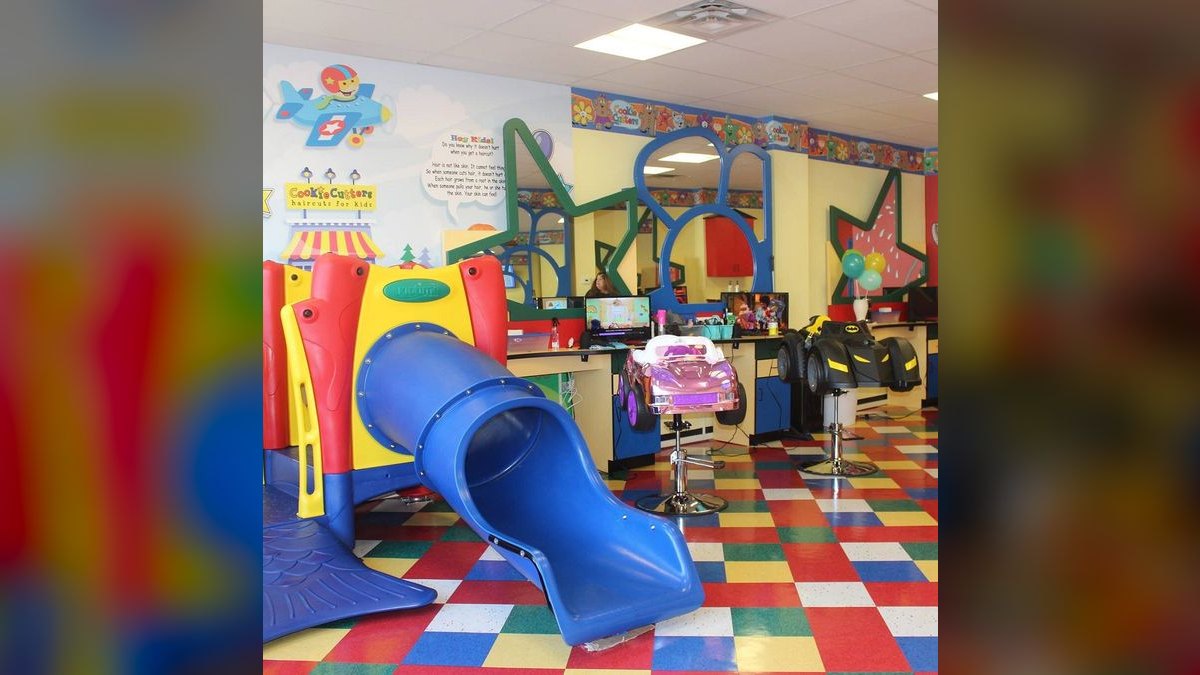
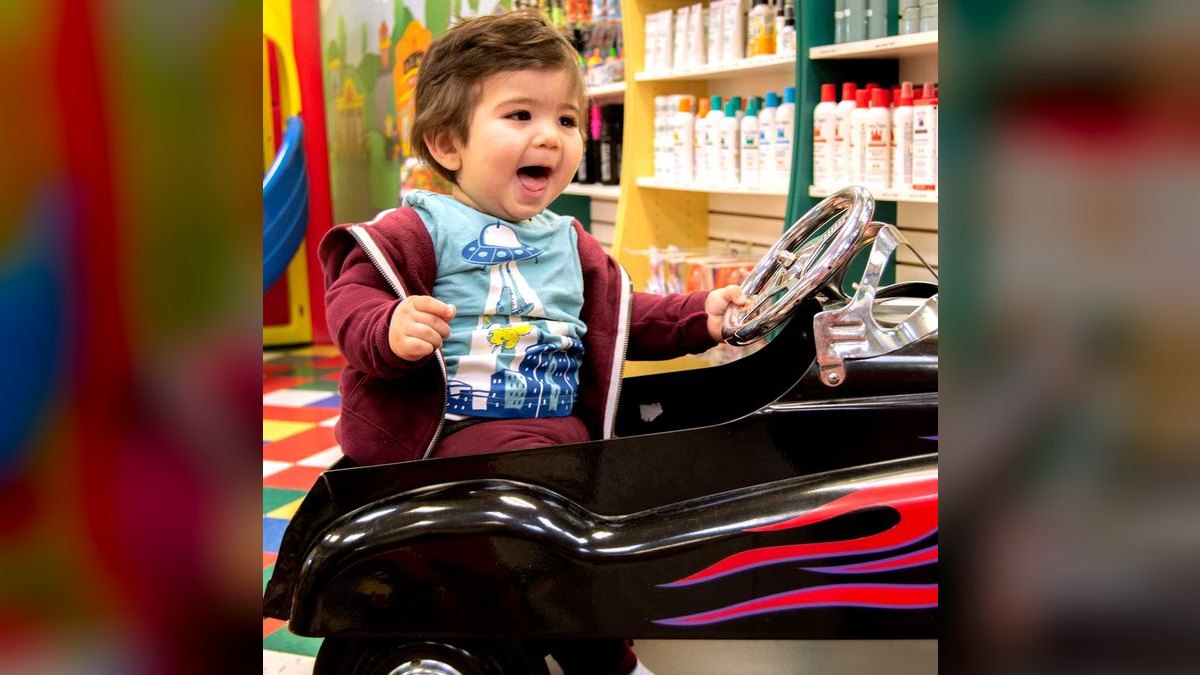
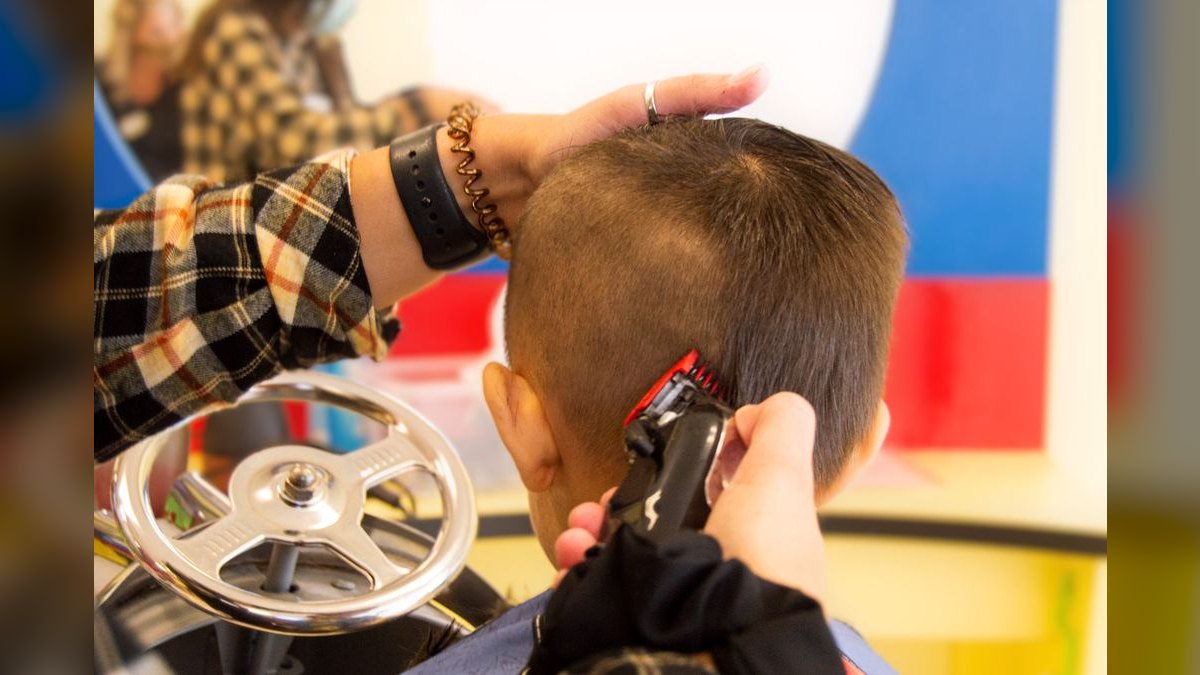
The unit economics are straightforward but capital-disciplined: a single-bay 1,000–1,500 sq ft inline space, 8–10 themed styling chairs (race cars, airplanes, fire trucks), an arcade play area, and typically 4–8 stylists plus a front-desk lead. The cost stack below reflects the 2025 FDD Item 7 disclosure and Item 19 AUV representation.
| Cost Line | Low | High | Source / Notes |
|---|---|---|---|
| Initial franchise fee | $40,000 | $40,000 | 2025 FDD Item 5 (first unit; $20K for second, $10K for third+) |
| Build-out & leasehold improvements | $40,000 | $180,000 | Varies by landlord TI allowance and market |
| Themed chairs, equipment, fixtures | $25,000 | $60,000 | 2025 FDD Item 7 |
| Initial inventory (retail + supplies) | $4,000 | $10,000 | 2025 FDD Item 7 |
| Signage, POS, training travel | $5,000 | $20,000 | 2025 FDD Item 7 |
| Working capital (3 months) | $15,000 | $40,000 | Recommended; covers payroll + rent runway |
| Total initial investment | $118,200 | $365,200 | 2025 FDD Item 7 (publicly disclosed range) |
| Royalty | 5% of gross | 5% of gross | 2025 FDD Item 6 |
| Brand fund / national marketing | 2% of gross | 2% of gross | 2025 FDD Item 6 |
| Local marketing minimum | 1% | 2% | Typical franchisee spend, not FDD-required |
| System AUV (2025 FDD Item 19) | — | $307,080 | Cookie Cutters Item 19 representation |
| Top-quartile unit revenue | $400,000 | $475,000+ | Reported by 1851 Franchise / Sharpsheets |
| EBITDA margin (mature unit) | 18% | 25% | Brand-claimed 22.3% "ROI" maps to this band |
| Payback period (cash-on-cash) | 3.5 yrs | 6 yrs | At mid-investment + system-average AUV |
A single-unit operator at system-average AUV ($307K) with 5% royalty + 2% brand fund + 1% local spend burns roughly $24,500/year on franchise-side fees, leaves $282,500 of net revenue to cover labor (45–52% of gross), occupancy (8–12%), supplies (4–6%), and overhead (6–8%). That math lands an owner-operated unit between $43K and $68K of EBITDA in Year 1, scaling to $65K–$95K at Year 3 as repeat-visit frequency hits 4.5–6 cuts per child per year.
Who Wins With This Business
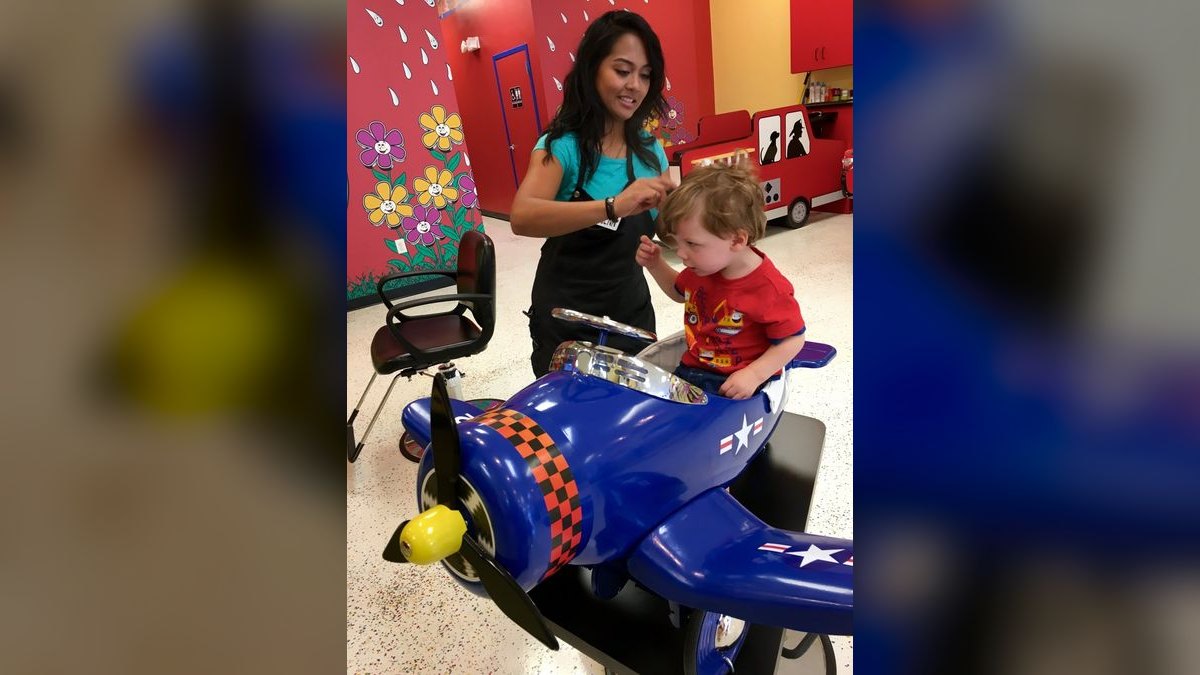
You win if you are an owner-operator parent in a high-birth-rate suburb. Cookie Cutters' best-performing units are run by founder-owners who work the front desk 25–35 hours per week for the first 18 months — they personally onboard stylists, memorize repeat-client kids' names, and monetize the birthday-party room ($199–$329 per party). Multi-unit franchisees who already operate a Sport Clips, Great Clips, or Hair Cuttery translate directly: same labor model, same booth-rent/commission decisions, same license-state cosmetology compliance.
You also win if your trade area has a strong "Mom-2-Mom" referral economy — Cookie Cutters thrives on MOPS groups, school newsletters, pediatrician partnerships, and birthday-party flywheel more than on paid Google Ads. Markets with private-school density, active church networks, and 3+ pediatric dentists within 2 miles consistently outperform pure-rooftop comps.
Existing salon-industry operators win disproportionately. If you already know how to hold cosmetology licenses, schedule Saturdays, hire stylists at 50–55% commission with $14–$17 base, and run a 1099-vs-W2 compliance model, you avoid the first-year mistakes that crater 30% of new franchisees.
Who Loses With This Business
You lose if you need a $120K+ salary in Year 1. Even a strong unit clears only $50K–$80K of true owner cash flow in months 1–12; if your household burn is higher than that, you will starve the working capital reserve, miss a payroll, and lose your two best stylists in month 9.
You lose if you sign a Class A endcap at $42/sf NNN. The model breaks above ~10% occupancy ratio; a $365K all-in build with $8,500/month rent on a $280K AUV is a mathematical loss before stylist commission. Cookie Cutters' corporate real-estate team will tell you the deal is bad — listen to them.
You lose if you cannot tolerate retail hiring churn. The kids-salon industry runs 65–95% annual stylist turnover at the system-wide level; operators who refuse to recruit weekly, run an apprentice pipeline, or pay above the local Great Clips wage will run short-staffed every Saturday — the day that produces 30–35% of weekly revenue.
You also lose in a declining-birth-rate trade area. U.S. births fell to a 45-year low of 3.59 million in 2024 (CDC NCHS); zip codes with negative under-12 population growth over the prior five Census ACS releases will not support a 4.5-visits-per-child-per-year model long-term.
2027 Market Conditions
The kids-haircut category is consolidating fast. Cookie Cutters' acquisition of Snip-its in mid-2024 combined the two largest pure-play children's-salon brands; Sharkey's Cuts for Kids, Pigtails & Crewcuts, and Lil' Cutie Patuties remain the only other multi-unit kids-specific competitors at scale. Industry tailwinds: rising disposable income in the $100K-$200K HHI millennial-parent cohort, post-COVID return-to-experience spend, and persistent shortage of indie kids salons (most independent salons refuse to cut kids under 5).
Headwinds matter. U.S. births are down 23% from the 2007 peak (CDC, 3.59M in 2024 vs. 4.32M in 2007), shrinking the 0–12 addressable population in most metros. Stylist wage inflation added 18% to labor cost lines from 2022–2025 (BLS OEWS 39-5012 Hairdressers). Retail rents in family-suburb endcaps are up 11–14% per CoStar Q4 2025. The franchises that win in 2027 will be those that lean into the birthday-party + retail-product attach + photo-package revenue mix — non-haircut revenue at top-quartile Cookie Cutters units now runs 22–28% of gross.
Private-equity ownership (Quad Partners) means growth pressure is real. Expect continued unit-count expansion targets, periodic FDD updates, and possible technology-platform mandates (booking, payroll, POS) that will bump operating costs 1–3% over the next three years.
The 90-Day Decision Tree
- Days 1–10: Request the 2026/2027 FDD directly from Cookie Cutters franchise development. Read Item 7 (investment), Item 19 (performance), Item 20 (unit counts and transfers/terminations), and Item 21 (financial statements of the franchisor). Note any YoY change in royalty, brand-fund %, or build-out cost ranges.
- Days 11–20: Pull 8–12 Item 19 outlier franchisees and call them. Ask specifically: Year-1 actual gross, months to breakeven, stylist turnover %, best and worst landlord decision, would-you-do-it-again. Aim for at least 3 calls with units under 24 months old and 3 calls with units 5+ years old.
- Days 21–35: Run a trade-area study. Use Placer.ai, SiteZeus, or Census ACS S0101 to validate 6,000+ kids under 12 within a 3-mile drive, median HHI > $85K, and rooftop growth > 1.5% CAGR over 5 years.
- Days 36–50: Get pre-approved for SBA 7(a) financing. Cookie Cutters is on the SBA Franchise Directory, which streamlines lender review. Target a 70/30 debt/equity split, 10-year amortization, prime + 2.75% rate band.
- Days 51–65: Negotiate a real-estate LOI with $40K+ TI allowance, 5-year primary + two 5-year options, and co-tenancy clause tied to your anchor.
- Days 66–80: Visit 2 top-quartile and 2 bottom-quartile Cookie Cutters units in person. Watch a Saturday from 9–12. Count cuts per chair per hour; ask the GM about stylist commission and birthday-party booking pace.
- Days 81–90: Sign the franchise agreement only after a cosmetology-licensure compliance review and a CPA-modeled three-year P&L. If any of steps 2, 3, or 6 produced red flags, walk away — the $40K fee is cheap compared to a $300K loss.
Alternative Plays

If Cookie Cutters' math doesn't pencil in your market, three alternatives are worth modeling. Sharkey's Cuts for Kids has a lower entry point ($85K–$245K total investment) and is a fit for smaller trade areas. Snip-its (now part of the same Cookie Cutters platform under Quad) offers a slightly higher AUV in some markets but a tighter franchisee-relations history pre-acquisition. Pigtails & Crewcuts runs a leaner operating model and lets owner-operators keep more of the margin in markets where labor is cheaper.
Adjacent pivots: an independent kids salon (no franchise fee, no royalty, full menu flexibility) makes sense if you already have 5+ years of salon-operator experience and a personal book of business; a Great Clips, Sport Clips, or Hair Cuttery multi-unit deal spreads risk across a broader demographic; Drybar / Amazing Lash Studio sits in the adult-female premium-services lane with higher AUVs but bigger capital stacks.
FAQ
What is the total investment range for a Cookie Cutters Haircuts for Kids franchise? The total initial investment typically falls between $250,000 and $365,000. This includes the $40,000 franchise fee, leasehold improvements, equipment, inventory, and working capital. Actual costs vary by location size and local construction rates.
How long does it take to break even and start seeing profit? Most franchisees reach breakeven between month 14 and month 22 of operation. Conservative Year-1 cash flow is estimated at $35,000 to $55,000 before any owner draw, assuming the mid-range investment level and steady customer growth.
What are the ongoing royalty and marketing fees? You pay a 5% royalty on gross sales and a 2% brand fund contribution. These are standard in the children’s haircut franchise space and support corporate training, marketing, and operational support.
What kind of location and territory do I need? The ideal site is a 1,200 to 1,500 square foot retail space in a suburban area with high family density. A trade area with at least 6,000 children under age 12 within a three-mile radius is recommended to support the business model.

Can I hire a manager, or do I need to run the salon myself? You are expected to owner-operate or hire a dedicated working manager for at least the first 18 months. This hands-on approach is common in service franchises to ensure quality control and build local brand reputation.
Is this franchise a good fit for someone seeking a high first-year salary? Probably not if you need a six-figure salary in Year 1. The early cash flow is modest, and retail hiring churn can pressure margins. It works best for operators focused on long-term growth in areas with rising birth rates and strong rooftop development.
Bottom Line
Cookie Cutters Haircuts for Kids is a proven, mid-capital, single-bay retail franchise with honest mid-six-figure top-quartile AUVs, a rational $40K franchise fee plus 7% combined royalty + brand fund, and the largest pure-play kids-haircut footprint in the U.S. It is not a passive investment — semi-absentee in Year 1 kills the model — but for an owner-operator with $290K–$365K in capital, retail hiring stomach, and a kid-dense suburban trade area, the risk-adjusted return beats both adult-haircut franchises and most fast-casual food brands at this capital tier. Walk away if your market shows declining births, your capital tops out below $250K, or your day job is non-negotiable for 18 months.
Sources
- Cookie Cutters Franchise Disclosure Document, Item 5, 6, 7, 19, 20, 21 (2025 filing) — kidscuts.com franchise development
- Cookie Cutters Haircuts for Kids Franchise FDD, Costs & Fees (2026) — Franchise Payback
- Cookie Cutters Franchise FDD, Profits & Costs (2025) — Sharpsheets
- Cookie Cutters Haircuts Franchise Insights: FDD, Costs & Fees — Vetted Biz
- Franchise Deep Dive: Cookie Cutters Haircuts for Kids Franchise Costs, Fees, Profit and Data — 1851 Franchise
- Cookie Cutters Buys Snip-its Franchise to Expand Children's Hairstyling Platform — Franchise Times
- Cookie Cutters, Haircuts For Kids Franchise Cost, Fees, Opportunities (2026) — Franchise Gator
- Start a Cookie Cutters Haircuts for Kids Franchise in 2026 — Entrepreneur
- U.S. Bureau of Labor Statistics, OEWS 39-5012 Hairdressers, Hairstylists, and Cosmetologists (May 2024 release)
- U.S. CDC NCHS, "Births: Provisional Data for 2024," National Vital Statistics Rapid Release No. 35 (April 2025)
- U.S. Census Bureau, American Community Survey, Table S0101 (Age and Sex), 5-year estimates 2019–2023
- IBISWorld Industry Report 81211: Hair & Nail Salons in the US (2025 update)
Related on PULSE
- Should I open or buy a Snip-its kids haircuts franchise in 2027?
- Should I open or buy a Cookie Plug franchise in 2027?
- Should I open or buy a Cost Cutters franchise in 2027?
- Should I open or buy a Kids R Kids franchise in 2027?
- Should I open or buy a Drama Kids franchise in 2027?
- Should I open or buy a Sharkey's Cuts for Kids franchise in 2027?
This page will be disappearing soon. Save it to your device for $1 — or read it free while it is here.
@Kory-White- · if Venmo asks, the last 4 of my number are 2012
This page is gone.
This one is off the shelf now. $1 keeps it on your phone for good — the whole page, pictures and diagrams included.
 franchiseShould I open or buy a Wingstop franchise in 2027?
 franchiseShould I open or buy a Dairy Queen franchise in 2027?
 franchiseShould I open or buy a Cinnabon franchise in 2027?
 franchiseShould I open or buy a Hand and Stone Massage franchise in 2027?
 franchiseShould I open or buy a Taco Bell franchise in 2027?
 franchiseShould I open or buy an Orangetheory Fitness franchise in 2027?
 franchiseShould I open or buy a Jeremiah's Italian Ice franchise in 2027?
 franchiseShould I open or buy a Supercuts franchise in 2027?
 franchiseShould I open or buy a Roto-Rooter franchise in 2027?
 franchiseShould I open or buy a Dunkin' franchise in 2027?