


Should I open or buy a Goldfish Swim School (re-do) franchise in 2027?
Quality
Certified

Buy an existing Goldfish Swim School and remodel it — don't build one. A ground-up build runs roughly $1.66M–$3.75M per the franchise disclosure document, while a resale plus full re-do lands near $1.2M–$2.0M all-in with faster payback. Only proceed with audited seller financials, $400K+ liquid capital, and onsite presence.
The outcome you should expect
Strip away the brochure language and a Goldfish re-do produces a fairly predictable shape: a mid-seven-figure asset that generates roughly $1.4M–$1.7M in annual gross revenue at a mature location, throws off owner discretionary cash flow somewhere in the $120K–$220K band in the first year after reopening, and takes three-and-a-half to five years to return the capital you put in. That is a real business, but it is not a passive one and it is not a home run. It is closer to buying a small manufacturing plant than buying a laundromat — heavy fixed assets, a mechanical system that must never fail, and a payroll of hourly staff whose turnover is measured in months.
The reason the re-do specifically outperforms a new build is arithmetic, not sentiment. A new build front-loads $1.1M–$2.4M in site work and pool construction, then hands you a business with zero members, zero reviews, and a twelve-to-eighteen-month ramp before the schedule fills. A resale hands you a member roster on auto-pay from day one. Even if you lose a third of those families during the closure, you reopen with a base that a greenfield unit spends a year and a half building. That difference — starting at 60% of capacity instead of 5% — is worth more than any construction savings.
The second structural reality to internalize: the fee load is heavy and permanent. Six percent royalty, three percent brand fund, and a two percent local marketing minimum means eleven cents of every dollar leaves before you touch rent, payroll, chlorine, or gas. In a category where stabilized EBITDA margins sit in the mid-teens to low-twenties, eleven points off the top is the single largest structural drag on the model. You cannot negotiate it away, you cannot outgrow it, and it compounds against you in exactly the years when you are trying to service acquisition debt.

Where owners are pleasantly surprised is durability of demand. Swim instruction is one of the very few children's activities parents treat as a safety obligation rather than a discretionary enrichment purchase. Drowning is the leading cause of accidental death for children ages one to four according to CDC data, and formal instruction substantially reduces that risk. That framing gives the category unusual recession resistance — parents cut travel soccer and music lessons before they cut swim lessons. Expect your cancellation spikes to come from schedule conflicts and instructor turnover, not from the economy.
Where owners are unpleasantly surprised is the mechanical room. A pool held at 88–90°F year-round is an industrial system. Heaters, dehumidification, filtration, and chemistry controllers all have finite lives, and the previous owner's deferred maintenance becomes your capital call. Budget as if something meaningful fails in year two, because in most re-do deals something does.
What drives that outcome
Four variables drive nearly all of the outcome variance, and only two of them are inside your control.
Roster survival is the biggest lever. Goldfish operates on recurring monthly auto-pay tuition, typically in the low-to-mid three figures per child per month. Annual retention in the category runs well under 100% even in a stable year, which means you are always replacing a meaningful slice of the roster just to stay flat. Now impose a 90-to-150-day closure on top of that. Families do not wait patiently; they find another pool, and the switching cost is one phone call. The operators who reopen strong are the ones who personally called every family before the doors closed, offered a paused-billing option with a guaranteed identical time slot on reopening, and sent construction photos monthly so the closure felt like an upgrade rather than an abandonment. The operators who reopen at 40% are the ones who sent a single email.

Remodel cost overrun is the second lever, and it is where deals die. Most buyers budget the low end of the range because that is what the seller's broker showed them. Actual cost lands higher, and the gap is almost always in three places: the pool shell and tile (which nobody can price accurately until the water is out and the surface is exposed), the dehumidification system (which is expensive, easy to defer, and catastrophic to ignore in a natatorium), and code compliance triggered by pulling permits on a building that was last touched a decade ago. Get two competing bids from contractors who have actually built a Goldfish or a comparable natatorium, then budget the higher bid plus a 15% contingency. If your deal only works at the lower bid, you do not have a deal — you have a hope.
Labor supply sets your realistic ceiling. Your revenue is capped not by demand but by how many instructors you can put in the water during the after-school and Saturday-morning windows when parents actually want lessons. Instructor wages in the fitness-and-recreation category have moved up substantially since the early 2020s, and the talent pool is largely high-school and college students with lifeguard or swim-team backgrounds — a workforce with structurally high churn. The single best pre-close hire is a strong general manager, ideally someone who has run a YMCA aquatics program or a competing swim school, because that person's rolodex of instructors is worth more than any marketing budget.
Market density sets your pricing power. The brand has grown to a large open-unit count, and in metros where three or more locations sit inside a 25-mile radius, existing owners report same-pool revenue softness as families distribute across the nearest option. Before you sign anything, map every competing swim school — franchised and independent, including the YMCA and municipal programs — inside a 20-minute drive of the site. If the map is crowded, the asset's trailing revenue is a ceiling, not a floor.
Benchmarks and realistic ranges
Here is the honest problem with underwriting this brand: Goldfish does not publish a financial performance representation in Item 19 of its franchise disclosure document. That absence is not automatically damning — plenty of legitimate franchisors omit it — but it does mean you have no franchisor-attested revenue or profit figures to anchor a pro forma. Everything you model has to come from the seller's own books and from cross-checking against franchisee-reported figures and general aquatic-industry benchmarks. Treat any number you did not personally trace to a bank deposit as marketing.
Capital. New build: roughly $1.66M to $3.75M total investment per Item 7. Resale-plus-remodel: roughly $1.2M to $2.0M all-in, with the remodel itself typically consuming $400K to $900K and pool-equipment refresh another $80K to $180K. The franchise fee on a new unit runs in the $40K–$50K range; on a transfer, you inherit the agreement and pay a transfer fee instead.
Revenue. A mature single unit in a decent trade area generally sits in the $1.4M–$1.7M annual gross range. Franchisee-reported averages compiled by third-party research sites cluster near the mid-$1.4M mark. That is a useful sanity check, not a projection — unit performance in this category has enormous variance driven by trade-area income, pool size, and schedule utilization.
Margins. Stabilized EBITDA in the mid-teens for a typical unit, potentially high-teens to low-twenties for a well-run post-remodel asset where you have reset the cost base and renegotiated the lease. Anything above that should make you suspicious of the seller's expense allocation — check whether they were paying themselves a manager's salary or running the GM cost through personal books.
Payback. Three-and-a-half to five years on a re-do; five-and-a-half to eight on a new build. That new-build number is the whole argument. A payback horizon that long, against a capital requirement that large, is a worse risk-adjusted trade than a great many franchise categories requiring a quarter of the capital.
Valuation. Target a purchase price around 0.8x to 1.2x trailing revenue on a tired unit that needs work. Push toward the low end when the remodel scope is large, the roster is shrinking, or the brand has already flagged the location for standards remediation. Sellers will anchor on a multiple of adjusted EBITDA; you should anchor on replacement cost minus deferred capex, because that is the actual alternative — you could build new for a known number, and a resale only makes sense at a meaningful discount to it.
Financing. SBA 7(a) is the standard instrument, and underwriting has tightened. Plan on roughly 30% buyer equity, two years of seller tax returns, and a lender that has financed aquatic facilities before — general small-business lenders get spooked by the single-purpose nature of a natatorium build-out because the collateral has poor alternative use. Work with lenders who have a franchise-lending desk and existing familiarity with the brand.
Personal balance sheet. Realistically, $1.5M net worth and $400K–$700K in genuinely liquid capital — not retirement accounts, not home equity you would have to cash-out refinance. The liquidity is not for the purchase; it is for the closure period when you have payroll for a skeleton crew, debt service, and zero revenue.
Risks, edge cases, and failure modes
The failure modes in this business are well-documented and almost entirely avoidable, which is what makes them frustrating.
The absentee structure. Goldfish expects meaningful owner presence, and the model punishes distance. Plan on 15–20 hours a week visible on the deck for the first eighteen months. Retention in a member-based children's program is a relationship business — parents renew because the front desk knows their kid's name and because the instructor who worked well with their anxious five-year-old is still there. A general manager can run the schedule; only an owner sets the culture that keeps instructors from quitting in October. Semi-absentee attempts in this category see retention erode noticeably within two years, and retention erosion in a recurring-revenue model shows up as a slow bleed you don't notice until the annual comparison.

Accepting summary financials. Because there is no Item 19 to fall back on, the seller's books are your only truth. Demand three years of point-of-sale reports, full tax returns, payroll registers, and a raw export from the membership-management system — Goldfish locations typically run class-management software, and the export will show you active members, paused members, and cancellation dates, which no summary P&L will. Then reconcile reported revenue against bank deposits line by line. A discrepancy above single digits is not a bookkeeping quirk; it is a reason to walk.
Underestimating closure duration. Every remodel timeline slips. The failure mode is not the extra six weeks of construction — it is the extra six weeks of paused billing, of families who found somewhere else, and of instructors who took other jobs because you had no hours for them. Build the pro forma on 150 days of closure even if the contractor promises 90, and pre-hire your core instructor team with a retainer or guaranteed-hours arrangement so they are still available when you reopen.
Deferred capex you didn't find. Before closing, get an independent mechanical inspection of the pool systems — heaters, pumps, filtration, chemistry controllers, dehumidification — and a structural look at the pool shell. Pull county permit history on the address. Expired or never-closed HVAC and pool-heater permits are a reliable tell that the previous owner was deferring, and deferred maintenance in a natatorium compounds because chronic humidity attacks the building envelope, not just the equipment.
Energy exposure. Heating a large body of water to 88–90°F every day of the year makes natural gas a top-three line item behind labor and rent. Gas prices are volatile and you have no pricing power to pass them through mid-contract. Mitigations exist and are worth pricing during the remodel: pool covers for overnight heat retention, high-efficiency condensing heaters, variable-speed pumps, and a heat-recovery dehumidification unit that recycles latent heat back into the water. These raise remodel cost and lower operating cost — run the payback math rather than defaulting to the cheapest equipment.
Saturation you created yourself. If you buy one unit and it works, the natural instinct is to open a second nearby. Be careful: in this format, a second location inside the same drive-time catchment frequently cannibalizes the first rather than expanding the market. Growth in this category comes from adjacent trade areas, not adjacent intersections.
The scope-creep remodel. Brand standards evolve, and a re-do is exactly when the franchisor has leverage to require the current specification. Get the required remodel scope in writing from the franchisor before you sign the purchase agreement, not after. A verbal "we'll work with you" from a development representative is not a budget line.
A practical rollout plan

Days 1–15 — prove your own numbers first. Produce a personal financial statement and confirm the net worth and liquidity thresholds before you fall in love with a location. Read the current franchise disclosure document end to end, with particular attention to Item 7 (investment), Item 11 (franchisor obligations), Item 12 (territory), Item 17 (renewal and transfer), and Item 20 (outlet counts and the franchisee contact list). Note the absence of Item 19 and plan your diligence accordingly.
Days 16–30 — call franchisees, not the franchisor. Item 20 gives you names. Call at least ten, weighted toward owners who have been through a required remodel. Ask three questions and let them talk: what was your actual stabilized EBITDA in year three, what did your remodel truly cost versus what you budgeted, and would you buy this franchise again knowing what you now know. If fewer than six of ten answer yes to the third question, that is your answer.
Days 31–45 — build a target list. Work the franchisor's resale channel, franchise resale marketplaces, and direct outreach to owners in high-income trade areas who have been in twelve-plus years. The best targets are tired units in strong demographics where the owner under-invested and wants out. Cross-reference permit records for signs of deferred capex. You want three to five live candidates so you have the option to walk.
Days 46–60 — forensic diligence on two finalists. Tax returns, POS reports, payroll registers, membership-system export, utility bills for the last 24 months, the lease with all amendments, and the franchisor's remediation correspondence. Reconcile to bank deposits. Have an aquatics mechanical contractor and a structural engineer inspect the pool.

Days 61–75 — financing and construction in parallel. Get a non-binding term sheet from an SBA lender with franchise-lending experience, and simultaneously get two competing remodel bids from contractors with natatorium experience. Underwrite the higher bid plus 15%.
Days 76–90 — LOI, transfer application, definitive agreement. Franchisor transfer approval typically takes several weeks, so start it early. Make the purchase agreement contingent on transfer approval, SBA closing, satisfactory environmental review of the chemical storage area, and written confirmation of required remodel scope.
Then the part most buyers skip: a member-retention campaign that starts before closing. As soon as the deal is announced, personally contact every family. Offer paused billing with a locked reopening time slot, a founding-member rate, and a referral credit. Send monthly construction updates with photos. Retain your best instructors with guaranteed hours. Reopen with a two-week soft launch for existing members only before you spend a dollar on new-lead marketing — the schedule should look full on day one, because a full schedule is the most persuasive marketing asset a swim school has.
Adjacent plays worth pricing before you commit
If the re-do math doesn't clear your return threshold, three neighboring structures are worth modeling side by side, because they change the capital profile fundamentally.
Pool-access models rather than pool-ownership models. Some swim-instruction franchises operate inside existing pools — hotels, apartment complexes, community centers, YMCAs — renting water time instead of building it. Investment drops by an order of magnitude, average unit revenue drops too, but margins often run higher because you eliminate the two worst line items in the owned-pool model: construction debt and gas. The trade-off is control. You do not own your schedule, your water temperature, or your renewal terms, and a landlord losing interest can end your business with 90 days' notice. If you are capital-constrained or want to learn the category before committing seven figures, this is the sensible on-ramp.

Smaller-footprint or co-located dedicated pools. Between the light model and the full Goldfish build sit brands and independents running smaller dedicated pools, sometimes co-located inside a gym, gymnastics academy, or multi-activity children's facility. Capital lands in the mid-six figures, and the shared-facility structure spreads rent and front-desk overhead across multiple revenue lines. Utilization is the risk: a smaller pool has fewer teaching lanes, so your revenue ceiling is genuinely lower and peak-hour scheduling becomes the whole business.
Independent, unfranchised. The strongest argument for going independent is the eleven percent. On $1.5M of revenue, royalty plus brand fund plus local minimum is roughly $165,000 a year — more than a general manager's fully loaded cost. Independents who partner with an existing facility, install a compact pool system, and run their own curriculum report meaningfully better margins than any franchised structure. What you give up is real: brand-name search volume, a proven curriculum and instructor certification path, national marketing, supplier pricing, and the operating playbook that keeps a first-time owner from making expensive mistakes in year one. For an operator who has already run member-based businesses, the trade often favors independence. For a first-timer, the franchise fee load is tuition — expensive, but it buys a map.
A note on the broader children's-activity portfolio logic. Many of the strongest swim-school operators do not own only swim schools. They own two to four recurring-revenue children's or service businesses sharing back-office, bookkeeping, and marketing infrastructure, with installed general managers at each. That structure is why their per-unit cash flow looks better than a single-unit owner's: overhead is spread, hiring pipelines overlap, and a soft quarter at one unit is absorbed by the portfolio. If your plan is to open one location and manage it yourself forever, underwrite conservatively. If it is the first of several, the economics improve on the second and third unit in ways a single-unit pro forma will not show you.
Related questions
How much does a Goldfish Swim School franchise cost to open from scratch?
A ground-up build runs roughly $1.66M to $3.75M total investment per Item 7 of the franchise disclosure document, covering site work, pool construction, equipment, pre-opening labor, and working capital. It excludes the substantial mid-life remodel brand standards will eventually require.
Why does Goldfish not publish an Item 19?
Item 19 financial performance representations are optional under FTC franchise rules. Goldfish's omission means you cannot rely on franchisor-attested revenue figures and must underwrite entirely from a seller's audited books plus independent benchmarks. Treat that as a diligence requirement, not automatically as a red flag.
Is a swim school recession-resistant?
More than most children's activities. Parents treat swim instruction as a safety obligation rather than enrichment, so it survives household budget cuts better than travel sports or music lessons. Your real churn drivers are schedule conflicts, instructor turnover, and families aging out — not the macro economy.
How long should I plan for the remodel closure?
Underwrite 150 days even if your contractor promises 90. The financial damage from a slip is not construction cost — it is paused member billing, families switching to competitors, and instructors taking other jobs. Pre-hire staff with guaranteed hours so they are available at reopening.
Can I run a Goldfish location semi-absentee?
Realistically, no — not in the first eighteen months. The brand expects meaningful owner presence, and retention in a member-based children's program depends on relationships a general manager alone rarely sustains. Plan 15 to 20 hours weekly on the deck before stepping back to an oversight role.
FAQ
What total investment should I budget for a Goldfish re-do in 2027?
Plan on $1.2M to $2.0M all-in for a resale plus full remodel, versus $1.66M to $3.75M for a new ground-up build. Within the re-do figure, the remodel typically consumes $400K to $900K and pool-equipment refresh another $80K to $180K. Underwrite the high end of every range and add contingency, because the pool shell and dehumidification system cannot be priced accurately until the water is out.

What revenue and cash flow are realistic in year one after reopening?
A mature unit generally grosses $1.4M to $1.7M annually. In the first year after a remodel reopening, conservative owner discretionary cash flow runs $120K to $220K, assuming most of the member roster survives the closure. If you lose more than a third of the roster, that figure compresses fast — revenue is the binding constraint, not expenses.
How much liquid capital do I actually need beyond the purchase price?
Roughly $400K to $700K in genuinely liquid funds, excluding retirement accounts and home equity. That reserve is not for the acquisition; it covers debt service, a skeleton crew payroll, and remodel overruns during the closure period when revenue is zero. Buyers who close with a thin cushion are the ones who cannot make payroll at reopening.
What is the total ongoing fee load, and can it be negotiated?
Six percent royalty, three percent brand fund, and a two percent local marketing minimum — eleven percent of gross revenue before rent, payroll, chemicals, or gas. It is not negotiable and does not decrease with volume. On $1.5M of revenue that is roughly $165,000 annually, which is the core argument critics make for going independent instead.
What should I demand from the seller before signing anything?
Three years of tax returns, POS reports, payroll registers, and a raw membership-system export showing active, paused, and cancelled members with dates. Add 24 months of utility bills, the full lease with amendments, and any franchisor compliance or remediation correspondence. Reconcile reported revenue against bank deposits line by line before you sign.
When is a new build actually the better choice?
Rarely, but it happens: when you control a suitable building with adequate ceiling height and structural capacity, when no resale exists in a strong under-served trade area, or when landlord tenant-improvement allowances materially offset construction cost. Otherwise the five-and-a-half to eight-year payback on a new build is hard to justify against the capital at risk.
Sources
- https://www.ftc.gov/business-guidance/resources/franchise-rule-compliance-guide
- https://www.cdc.gov/drowning/facts/index.html
- https://www.bls.gov/oes/current/oes399031.htm
- https://www.eia.gov/naturalgas/
- https://www.sba.gov/funding-programs/loans/7a-loans
- https://www.usa.gov/franchise-business
- https://www.redcross.org/get-help/how-to-prepare-for-emergencies/types-of-emergencies/water-safety.html
- https://www.ibisworld.com/united-states/market-research-reports/swimming-pools-aquatic-centers-industry/
- https://www.franchisetimes.com/
- https://www.usms.org/
Related on PULSE
- Should I open or buy a Big Blue Swim School franchise in 2027?
- Should I open or buy a SafeSplash Swim School franchise in 2027?
- Should I open or buy a British Swim School franchise in 2027?
- Should I open or buy an Aqua-Tots Swim Schools franchise in 2027?
- Should I open or buy a Celebree School franchise in 2027?
- Should I open or buy a School of Rock franchise in 2027?
This page will be disappearing soon. Save it to your device for $1 — or read it free while it is here.
@Kory-White- · if Venmo asks, the last 4 of my number are 2012
This page is gone.
This one is off the shelf now. $1 keeps it on your phone for good — the whole page, pictures and diagrams included.
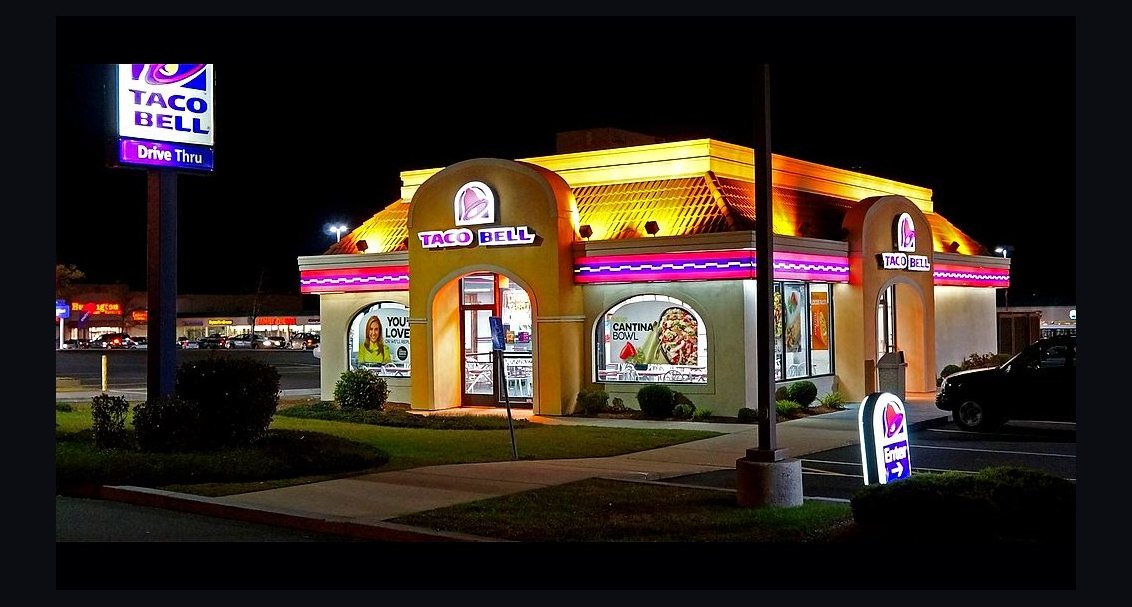 franchiseShould I open or buy a Taco Bell franchise in 2027?
 franchiseShould I open or buy a Planet Fitness franchise in 2027?
 franchiseShould I open or buy a Kumon franchise in 2027?
 franchiseShould I open or buy a Sonic Drive-In franchise in 2027?
 franchiseShould I open or buy a Crumbl Cookies franchise in 2027?
 franchiseShould I open or buy a Primrose Schools franchise in 2027?
 franchiseShould I open or buy a Matco Tools franchise in 2027?
 franchiseShould I open or buy an Ace Hardware franchise in 2027?
 franchiseShould I open or buy a Cinnabon franchise in 2027?
 franchiseShould I open or buy a Marco's Pizza franchise in 2027?