


Should I open or buy a Stretch Zone franchise in 2027?
Quality
Certified
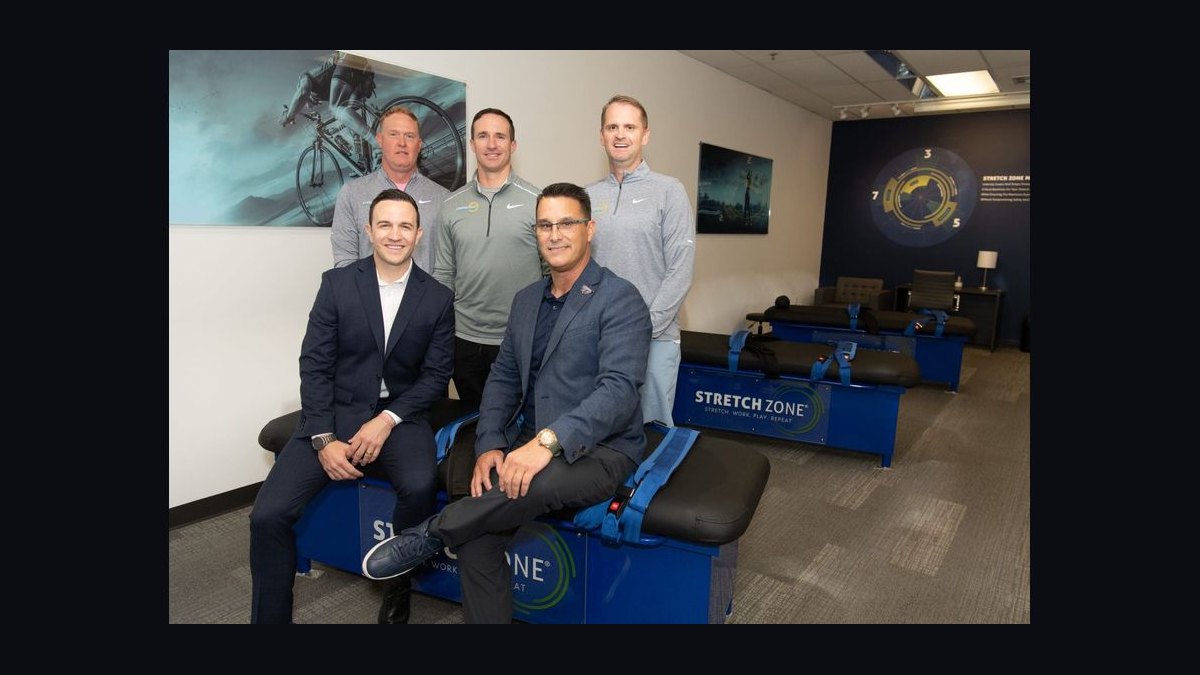
Open a Stretch Zone in 2027 only if you can fund roughly $185K–$240K, own the studio floor yourself for eighteen months, and pick a trade area with no competing assisted-stretch studio inside five miles. Expect breakeven around month nine to fourteen and modest owner cash flow year one. Passive investors should pass.
The operator who thought this was a real estate deal
Picture a buyer with $400K liquid after selling a landscaping company. He likes assisted stretching because the pitch sounds passive: appointment-based, membership-billed, a thousand square feet of retail, no food, no inventory spoilage, no late-night liquor license. He signs a lease at $34 per square foot in a lifestyle center anchored by a national grocer, hires a general manager at $58,000 the week the buildout finishes, and plans to check in on Fridays.
Fourteen months later the studio is grossing $18,000 a month against a $22,000 breakeven, the general manager has quit, two practitioners left for a physical therapy clinic paying three dollars an hour more, and he is wiring $6,000 a month out of savings to keep the doors open. Nothing about the concept failed. The membership model works, the service delivers a real result, clients who stay six months usually stay two years. What failed was the assumption that a boutique wellness studio is a passive asset.
Here is the part that is not obvious from the franchise disclosure document: the first hundred members of a studio like this are almost never sold by marketing spend. They are sold by a person who shows up at the Chamber breakfast, the pickleball league, the orthopedic surgeon's front desk, the local running club, and the two Pilates studios within a mile who will happily cross-refer because they are not competitors. That person is the owner or it is nobody. A hired manager on $58,000 has no equity reason to do relationship selling on a Saturday, and the churn rate on studio managers in boutique fitness makes it unlikely they will still be there when the effort would have paid off.
The same buyer, in the same market, with the same capital, running the floor himself for eighteen months, lands in an entirely different place. He knows every member's name, he catches the cancellation signal three sessions before it happens, and his practitioner turnover drops because he is on the floor solving scheduling problems in real time instead of hearing about them in a Monday report. That is the whole thesis of this business. Everything else — the buildout budget, the royalty rate, the equipment package — is secondary to whether the owner is present.
If you are a RevOps person reading this, the pattern will feel familiar. This is a retention business masquerading as an acquisition business, and the operator who only watches new-member count is watching the vanity number. Net membership movement — joins minus cancels — is the metric that predicts whether you clear breakeven, and it is the one most new franchisees do not build a dashboard for until month ten.
How the money actually moves through a studio
The mechanism is simpler than most franchise models, which cuts both ways. There is no food cost, no inventory shrink, no delivery aggregator taking a bite. Revenue is essentially membership dues plus a smaller layer of single sessions and packages. Cost is essentially rent, labor, royalty, and marketing. That means the model is extremely legible — you can forecast it accurately on one page — but it also means there are very few levers to pull when it underperforms. You cannot cost-engineer your way out of a demand problem.

Membership revenue compounds slowly and drains fast. A member who joins in March at $249 a month contributes about $3,000 over twelve months if they stay. But the cancellation is not random — it clusters at specific moments: the first missed appointment that nobody follows up on, the practitioner change, the billing failure on an expired card, and the summer travel gap. Each of those is an operational failure with a name, and each is preventable by someone paying attention. In a studio doing $25,000 a month, saving four cancellations a month is worth roughly $12,000 a year in retained revenue, which is more than most owners will ever squeeze out of renegotiating a vendor contract.
Labor is the second mechanism and the one that surprises people. Certified practitioners are skilled labor competing against physical therapy clinics, chiropractic offices, massage franchises, and hospital systems for the same pool. The wage floor is set by that competition, not by your unit economics. If your model only works at a wage below what the market clears, your model does not work — it just has not failed yet. Build the pro forma at the high end of local wages, not the franchisor's illustrative midpoint.
Royalty and brand fund come off gross, not net, which is standard but worth internalizing. A seven percent royalty plus two percent marketing means nine cents of every dollar leaves before you have paid rent or a single practitioner. On a studio doing $300,000 that is $27,000 a year. The minimum monthly royalty matters more than the percentage during the ramp, because a studio grossing $9,000 in month three is paying the floor, not the percentage, which is precisely when cash is tightest.
The diagram is worth reading as a leak map rather than a process chart. Every diamond is a place where money exits. The intro-show-rate diamond typically leaks the most volume, the conversion diamond leaks the most value, and the attendance diamond leaks the most future value because a member who stops attending cancels within about ninety days regardless of what your contract says. Instrument all three from week one. Most owners instrument only the middle one because it is the one the franchisor's dashboard shows by default.
Real numbers, ranges, and what they imply

The disclosure documents put total initial investment in a wide band — roughly the high $130Ks at the bottom to the low $320Ks at the top — with the spread driven almost entirely by buildout and rent market, not by equipment or fees. Franchise fee sits around $59,500 with discounts available for veterans and multi-unit commitments. Equipment, training, and pre-opening marketing are relatively fixed. Buildout is where a $140K site and a $45K site diverge, and second-generation space with a usable existing layout is the single largest cost lever a first-time franchisee controls.
System revenue disclosure has hovered around a median in the low $300Ks with an average slightly higher, across a reporting base of a few hundred units. That gap between median and average tells you the distribution is right-skewed: a handful of strong units pull the average up, and half the system is below $308K. Model your deal against the median, never the average, and build a bear case at roughly $240K. If the bear case does not survive, the deal does not survive — you simply have not found out yet.
At the median, after royalty and brand fund, rent in the $10K–$12K a month range for a decent suburban strip, four to five practitioners, and the usual insurance-software-utilities layer, realistic owner cash flow lands somewhere around $46,000 to $55,000 in a stabilized year. That is a job with equity attached, not a passive yield. Payback on the full investment runs five to seven years at median performance. If you were expecting a two-year payback, this category will disappoint you and so will most of boutique wellness.
Three thresholds are worth memorizing before you tour a single site. First, monthly gross breakeven sits around $22,000 for a typically-costed unit — if your rent is meaningfully above market that number climbs and the deal gets fragile fast. Second, liquid working capital of at least $80,000 *on top of* the buildout, because the disclosed ramp and the real ramp are different animals and undercapitalization is the most common cause of a good site failing. Third, on a resale, an AUV below roughly $250,000 requires a specific written turnaround thesis — a lease you can renegotiate, a practitioner bench you can rebuild, a dormant member list you can relaunch — or you are buying someone else's problem at a discount that is not deep enough.
Resale pricing is where the real arbitrage lives in 2027. Distressed units trade meaningfully below new-build cost basis, often in the range of 0.6 to 0.8 times trailing gross, versus the roughly 1.0 to 1.4 times gross it costs to build fresh. You inherit a member base, a signed lease, a certificate of occupancy, and a trained staff — which collapses the nine-to-fourteen month ramp to something closer to immediate. You also inherit a reputation, and that is the thing to diligence hardest. Pull the local review history, call five current members, and ask the seller for month-by-month net membership movement over twenty-four months. If they cannot produce it, that is the answer.
Financing math for 2027 is straightforward but not cheap. SBA 7(a) is the standard path for a deal this size, typically with ten to twenty percent equity down and a ten-year amortization at a prime-plus spread. At current rate levels the all-in cost of capital is high enough that debt service materially eats into that $46K–$55K owner cash flow number. Run the model with debt service as a line item, not as an afterthought, and check whether the deal still clears at bear-case revenue with a full note payment. Many do not.
Trade-offs, and the alternatives sitting right next to this one
The core trade-off in assisted stretching is that the category has a low capital barrier and a moderate revenue ceiling. A thousand square feet and a modest equipment package means anyone with $200K can enter — which is exactly why trade areas saturate. Compare this to a recovery-and-cryo concept at $350K–$650K or a Pilates studio at $330K–$550K in an 1,800–2,400 square foot box: higher entry cost, but higher average unit volume and a wider service mix that gives you more revenue lines to pull when one softens. The cheap door is not always the better door.
Within the category itself the competitive picture is the deciding variable. The largest assisted-stretch brand runs a substantially higher average unit volume but has shown same-store softness in its earliest markets, which is the classic signature of cohort dilution: new units opening into trade areas the existing units were already serving. That is not a brand failure, it is an arithmetic one. Demand for assisted stretching in a given five-mile radius is finite, and once two or three studios are splitting it, everyone's AUV compresses. Your site selection is doing more work than your brand selection.
The non-franchise path deserves an honest look. An independent stretch studio runs materially cheaper all-in, with no royalty and no brand fund — call it nine points of revenue that stay in your pocket. What you give up is the playbook, the certification curriculum, the vendor relationships, the SBA directory listing that speeds underwriting, and the brand recognition that fills your first thirty appointments. For an operator who already runs a chiropractic office, a PT clinic, or a gym with an existing patient list, the independent path often wins outright because they already have the two things the franchise was selling them: a customer base and an operating playbook. For a first-time operator with no book of business, the franchise fee is buying real risk reduction.
There is also a hybrid play worth naming. Adding a stretch service line inside an existing wellness business — a gym, a chiropractic practice, a med spa — costs a fraction of a standalone unit because you are borrowing rent, front desk, and traffic that already exist. The revenue is smaller in absolute terms but the marginal margin is excellent, and it lets you validate local demand for a few thousand dollars before committing $200K to a standalone lease. If you own an adjacent wellness business and you are considering this franchise, test the demand inside your own four walls first.
One more trade-off that gets ignored: multi-unit versus single-unit ambition. The model is genuinely playbook-replicable once unit one is stable, and hub-and-spoke operators sharing a general manager across three or four studios within a metro get real leverage — one marketing budget, one hiring pipeline, one back office. But that leverage only exists after unit one clears breakeven. Signing a three-unit development agreement before you have operated one studio is how capable operators end up with three simultaneous ramps and no cash. Earn the second unit.
Pitfalls that kill otherwise-good deals
Signing the lease before validating the trade area. Rent is a ten-year decision made in a two-week window, and it is the only cost in this model you cannot fix later. Pull five-mile demographics before you fall in love with a space: median household income, the size of the 45–65 cohort, and daytime population. A high-income bedroom community with no daytime population will disappoint you because assisted stretching gets booked around a workday. Target the low-to-mid $20s per square foot NNN and push hard for tenant improvement allowance — an extra $20 per foot of TI on 1,200 square feet is $24,000 you do not have to finance.
Believing the disclosed ramp. Every franchisor's timeline to first revenue is technically accurate and practically misleading, because time-to-first-dollar and time-to-breakeven-cash-flow are different numbers separated by months. Budget for the second one. The specific failure is an owner who capitalized for a six-month ramp, hits month eight at $16,000 gross with a real trajectory toward breakeven, and has to cut marketing spend at exactly the moment marketing spend is compounding. That is a survivable business killed by a cash timing error.
Skipping the franchisee validation calls. The disclosure document lists current and former franchisees with contact information, and that exhibit is the most valuable page in the entire document. Call eight to twelve of them, including at least three who left the system. Ask specific questions with numeric answers: months to breakeven, practitioner turnover in the last year, what percentage of pre-opening founding members were still active at month twelve, honest owner take after everything, and whether they would sign again today. The answers to the last question, taken across a dozen operators, will tell you more than any third-party analysis.
Underestimating practitioner recruiting as a permanent function. New owners treat hiring as a pre-opening project that ends on opening day. It never ends. In a business with four or five practitioners, one departure removes twenty to twenty-five percent of your capacity overnight, and clients bond to individual practitioners, so a departure takes members with it. Run a continuous pipeline: stay in touch with local massage therapy and kinesiology programs, keep two warm candidates at all times, and build the schedule so no single person's absence closes a day.
Treating billing failures as an accounting problem. Expired cards and failed charges are one of the largest silent leaks in any membership business, and they are not finance work — they are retention work. A failed payment that goes unaddressed for three weeks usually becomes a cancellation, because the member has now mentally exited. A simple dunning sequence with a human follow-up call on day three recovers a meaningful share of that revenue. This is the single highest-ROI operational system in the studio and it costs nothing but attention.

Buying a resale on the seller's narrative. Every distressed seller has a story about why the numbers do not reflect the potential — usually a bad manager, a construction project on the road, or a marketing agency that did not deliver. Some of those are true. Verify with primary evidence: bank statements rather than a P&L, the actual membership export with join and cancel dates, the lease including all amendments and the assignment terms, and a franchisor conversation about whether the unit is in compliance and whether the transfer will be approved. If the franchisor is lukewarm about the transfer, find out why before you spend money on legal.
Ignoring what happens in year three. The lease escalates, the equipment needs refresh, and a competitor may open two miles away. Model years three through five with escalating rent and a plausible competitive entry, and check whether the business still services debt. A deal that only works under the assumption that nothing changes for a decade is not a deal, it is a hope. The operators who do well in this category are the ones who assumed a competitor was coming and built the member relationships that make competitive entry a nuisance rather than an extinction event.
Related questions
Is a resale always better than a new build?
No. A resale collapses the ramp and gives you real revenue on day one, but you inherit the lease, the reputation, and the reason the last owner sold. A resale is better when you have a specific, funded turnaround thesis. Otherwise a clean site in an uncontested trade area wins.
How many locations can one owner realistically run?
Three to four within a single metro is the practical ceiling for hub-and-spoke with a shared general manager and one marketing budget. Beyond that you need a district manager layer, which changes the economics. Do not sign a multi-unit development agreement before unit one clears breakeven.
What single metric predicts whether a studio will make it?
Net membership movement — joins minus cancellations — tracked weekly. New-member count alone is a vanity metric that hides churn. A studio adding twenty and losing eighteen looks busy and is dying. Instrument this from week one, not month ten.
Does the category still have room in 2027?
In secondary metros with no assisted-stretch presence, yes. In tier-one metros with three or more studios inside a five-mile radius, demand is already split and average unit volumes compress. Site selection matters more than brand selection in a maturing category.
Should an existing gym or chiropractic owner franchise or go independent?
Usually independent, or add the service line in-house first. You already own the two things the franchise fee buys — a customer base and an operating playbook — so paying nine points of revenue for brand and process is a weaker trade than it is for a first-time operator.
FAQ
What does it actually cost to open a Stretch Zone franchise?
Total initial investment runs roughly $139,000 to $320,000 depending overwhelmingly on your build-out and rent market, with a franchise fee around $59,500 and discounts available for veterans and multi-unit commitments. Plan for the $185,000–$240,000 middle of that range in a typical suburban strip, plus at least $80,000 in liquid working capital held separately for the ramp.
How long until the studio breaks even?
Monthly gross breakeven sits around $22,000 for a typically-costed unit, and most owner-operated studios reach it between month nine and month fourteen. Full payback on the invested capital runs five to seven years at median system revenue. If your plan requires cash flow inside twelve months, this is the wrong category.
Can I run this while keeping my current job?
Not for the first eighteen months. The founding member base is built through owner-led local relationship work that a hired manager has neither the incentive nor the tenure to do. Absentee ownership is the most reliable predictor of underperformance in this model, and it shows up in closure and transfer data across the category.
What revenue should I model?
Model the median — roughly $308,000 — as your base case, and build a bear case at about $240,000. The system average sits higher than the median, which means a handful of strong units are pulling it up and half the system sits below the median. Never underwrite a deal on the average.
Is the assisted-stretching category saturated?
It depends entirely on your five-mile radius. Nationally the category has moved from underbuilt to roughly built, and the largest brand has shown same-store softness in its earliest markets — a signature of new units diluting existing trade areas. Open where you would be the first or second studio in market.
What is the smartest entry in 2027?
Either a distressed resale at a meaningful discount to trailing gross in a metro you know personally, or a new build in a growth secondary metro where no assisted-stretch competitor exists within five miles. Both paths require owner-operation and both require the working capital reserve held outside the build-out budget.
Sources
- https://www.sba.gov/document/support-sba-franchise-directory
- https://www.ftc.gov/business-guidance/resources/consumers-guide-buying-franchise
- https://www.census.gov/programs-surveys/popproj.html
- https://www.bls.gov/ooh/healthcare/massage-therapists.htm
- https://www.franchise.org/
- https://www.sba.gov/funding-programs/loans/7a-loans
- https://www.franchisechatter.com/
- https://www.ihrsa.org/
- https://www.ftc.gov/legal-library/browse/rules/franchise-rule
Related on PULSE
- Should I open or buy a Sky Zone franchise in 2027?
- Should I open or buy a Sky Zone trampoline park franchise in 2027?
- Should I open or buy a Wing Zone franchise in 2027?
- Top 10 GTM Metrics That Matter When Sales Cycles Stretch Past 12 Months
- How do you compensate a sales manager whose reps overperform — pay them on team total or on personal stretch goals?
- What coaching question would you use to challenge a rep who is stuck in a comfort zone with easy, low-value accounts?
This page will be disappearing soon. Save it to your device for $1 — or read it free while it is here.
@Kory-White- · if Venmo asks, the last 4 of my number are 2012
This page is gone.
This one is off the shelf now. $1 keeps it on your phone for good — the whole page, pictures and diagrams included.
 pulse-qWhat Is Gross-Up in a Lease and How Does It Cost Me in 2026?
 pulse-qShould I open or buy a Snip-its franchise in 2027?
 pulse-qHow do you coach a rep to inspect their own pipeline in 2026?
 pulse-qHow Do I Calculate the Right Service Fee to Charge in 2026?
 pulse-qHow Do Change Orders Blow Up a Buildout Budget, and How Do I Cap Them in 2026?
 pulse-qHow do you follow up on coaching so it actually changes behavior in 2026?
 pulse-qHow Many Front Desk Staff Should I Schedule Each Shift at My Hotel in 2026?
 pulse-qHow do you run a weekly forecast call without it taking two hours in 2026?
 pulse-qHow do you coach a rep who over-relies on one big deal in 2026?
 pulse-qHow do you coach the coaches — developing your sales managers in 2026?