


Should I open or buy a Gold's Gym franchise in 2027?
Quality
Certified

Probably not, unless you bring $2M+ in liquid capital, a trade area without a low-price chain inside five driving miles, and patience for a 10-to-12-year payback. Gold's Gym is a big-box premium brand fighting $15-a-month competitors. A resale at 3.5x–5.5x EBITDA usually beats a ground-up build.
What a Gold's Gym franchise actually is, and why the format matters
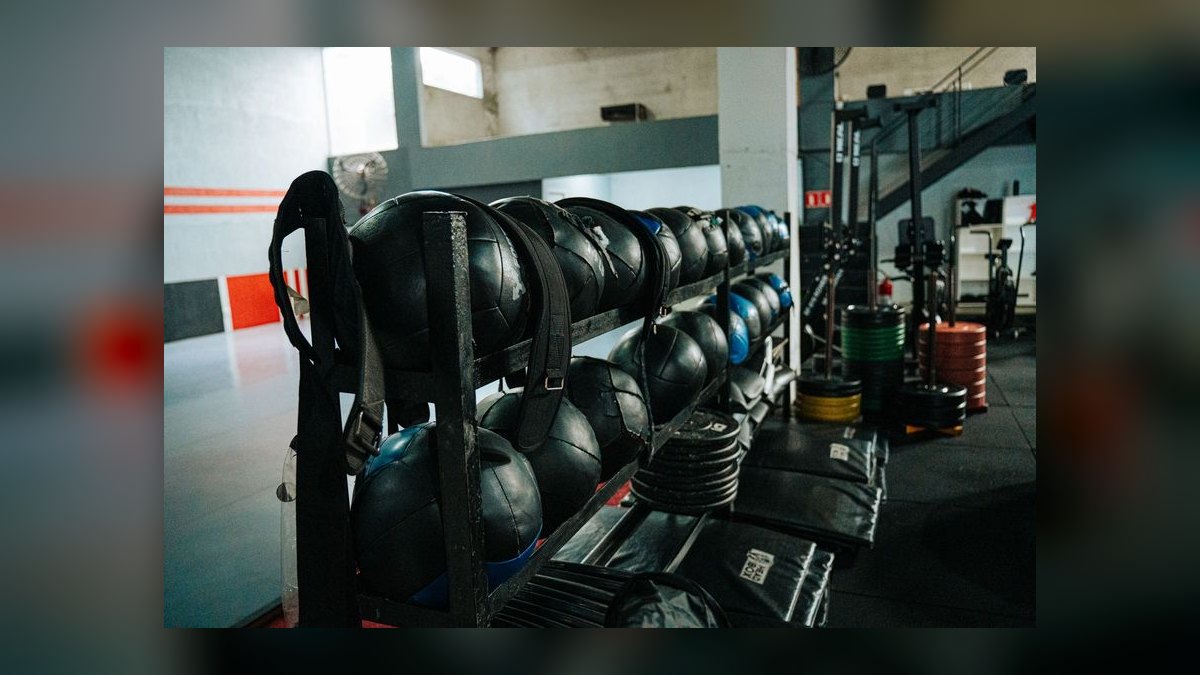
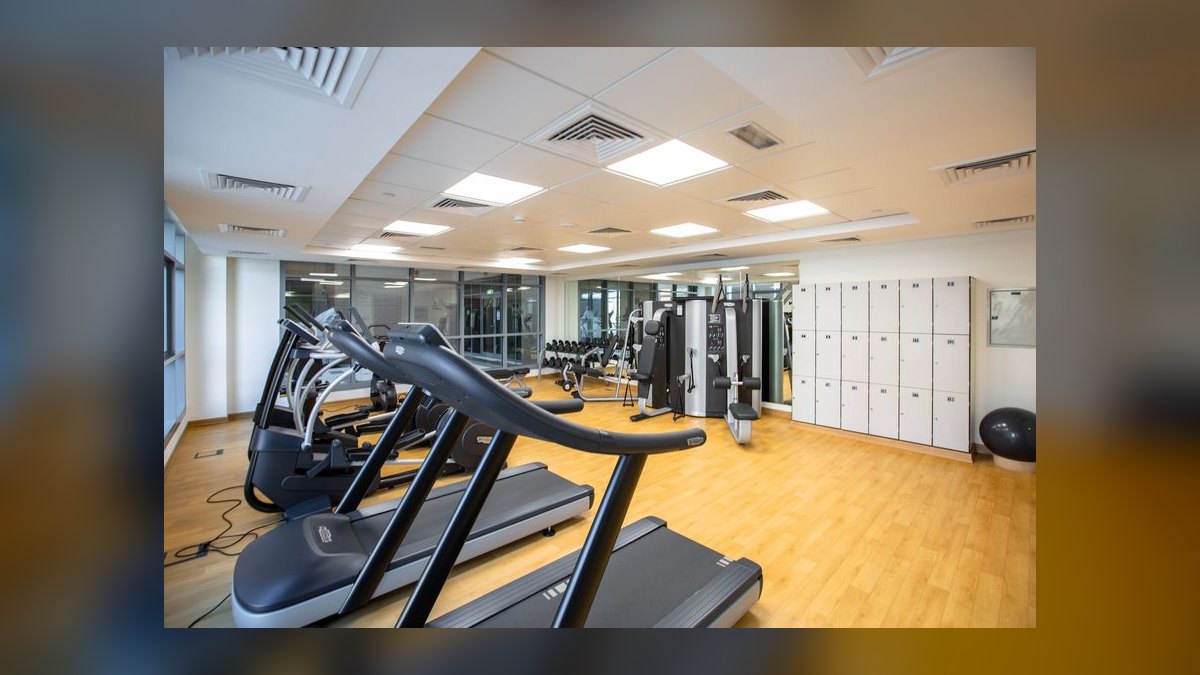
Gold's Gym sells a full-service, big-box membership club: roughly 15,000 to 40,000 square feet of cardio, plate-loaded strength, free weights, group-fitness studios, locker rooms, and in the flagship formats, pools and recovery suites. That footprint is the whole story. Everything that makes this business hard — construction cost, rent exposure, headcount, equipment refresh cycles, the number of members you must hold to break even — flows directly from the decision to operate a box that large.
Compare the shape of the commitment against the two other models in fitness franchising. The keycard 24-hour model (Anytime Fitness is the canonical example) runs 4,500 to 6,000 square feet with a skeleton staff and a flat monthly royalty. The boutique HIIT model (Orangetheory, F45) runs roughly 2,500 to 5,000 square feet, charges $150-plus per month, and lives or dies on class utilization. Gold's Gym sits in neither lane. It is the legacy premium full-service club, priced in the $45 to $85 per month band, selling a serious-lifter identity that the brand genuinely still owns with men aged roughly 35 to 65.
The strategic problem is that the premium full-service segment is being squeezed from two directions at once. Below it, the high-value low-price chains — Planet Fitness, Crunch, EōS, Chuze, VASA — offer a clean, well-equipped floor at $15 to $35 per month, and they have spent the last decade proving that most members do not use enough of a full-service club to justify a $59 price. Above it, boutique studios and standalone recovery concepts (sauna studios, cold plunge, red-light, cryotherapy) are pulling away exactly the high-margin ancillary dollars a big-box club needs — personal training at $80 to $120 a session, small-group HIIT at around $35 a class, recovery add-ons in the $150-a-month range.

RSG Group, the German operator that acquired Gold's Gym out of Chapter 11 bankruptcy in 2020, has invested in a refreshed prototype, new signage, and international growth. But the US system is comparatively flat. Public franchise-industry rankings have placed Gold's Gym around $639 million in US system-wide sales for 2024, with total system units in the high 500s and roughly two-thirds of those units international. The clearest warning shot came in late October 2025, when EōS Fitness absorbed 22 of the 23 Gold's Gym locations in Southern California. That was not a single struggling franchisee. That was an entire dense metro portfolio changing hands to a better-capitalized competitor.
None of that makes the brand unbuyable. It means the profile of the operator who should touch it has narrowed sharply. Being clear-eyed about which lane you are entering — premium full-service, not value, not boutique — is the difference between a defensible 20 percent EBITDA club and a $3 million asset that never clears debt service.
The step-by-step process from inquiry to open doors
The path from first inquiry to opening a Gold's Gym runs 18 to 30 months in most cases, and the sequencing matters enormously. Franchisees who chase real estate before they have verified financing routinely lose deposits. Franchisees who sign a franchise agreement before scoring the trade area inherit a territory that cannot support the model.
A disciplined 90-day evaluation, followed by an 18-month execution window, looks like this:
Days 1–15, capital and credit verification. Pull a personal financial statement. Confirm liquid capital (cash, marketable securities, a retirement rollover structure if you are using one) and total net worth against the franchisor's stated development requirements, which for this concept typically sit around $1 million liquid and $5 million net worth. Get an SBA 7(a) pre-qualification letter from a lender with fitness-sector experience. Assume a 20 to 30 percent equity injection on the financed portion plus a genuine post-opening reserve, and note that on a $3 million project a $2.1 million SBA note at prime plus a spread lands near $22,000 per month in debt service for ten years. That number is your gating constraint for everything downstream.
Days 16–30, trade area scoring. Use a commercial site-selection dataset (SitesUSA, Buxton, Placer.ai) to profile every census tract within seven miles of a candidate site. Reject any site with a major low-price chain inside five driving miles — Planet Fitness, Crunch, EōS, Chuze, VASA. Look for a meaningful adult population in the 25-to-65 band, household income comfortably above the national median, and gym membership penetration below the national average, which sits in the low twenties as a percentage of population.
Days 31–45, FDD deep read with counsel. Hire a franchise attorney — expect $400 to $600 an hour — for a full review of all 23 items. The four that decide the deal are Item 3 (litigation history), Item 4 (bankruptcy), Item 19 (any financial performance representation and its footnotes), and Item 20 (unit counts, transfers, terminations, non-renewals). Item 20 is the honesty check on Item 19: if outflow from the system — terminations plus non-renewals plus transfers-out — runs above roughly 12 percent annually, the average unit volume in Item 19 is describing survivors.
Days 46–60, franchisee validation. The Item 20 contact list is the single most valuable page in the document. Call a dozen operators across at least four regions. Ask for actual Year-1 revenue, EBITDA after debt service, equipment refresh capital cadence, franchisor support quality, and one question that cuts through everything: would you sign again today. If fewer than about two-thirds say yes, that is the answer.

Days 61–75, real estate and broker selection. Engage a tenant rep with fitness experience. Second-generation retail — a former big-box or grocery box — is almost always the better economics than new construction. Target the low-to-mid $20s per square foot NNN, a ten-year initial term with two five-year options, meaningful free rent during build-out, and a tenant-improvement allowance. Verify parking ratios early; a 25,000-square-foot club at peak evening hours needs well over 200 stalls, and a shared-center parking field that fails at 6pm will quietly cap your revenue forever.
Days 76–85, financial model build. Build a 36-month monthly P&L, not an annual one. Ramp founding members through soft open to a stabilized active count, layer ancillary revenue as a percentage of total, subtract the 5 percent royalty and 2 percent brand fund, then payroll, occupancy, and debt service. Run sensitivities on the revenue line across the plausible band. If the median case does not clear a low-double-digit five-year IRR, the deal is not there.
Days 86–90, go/no-go. Sit down with spouse, attorney, CPA, and lender at the same table. Sign only when the capital stack is committed, the real estate letter of intent is signed, validation was positive, and the lower quartile of the Item 19 range still covers debt service.
Costs, timelines, and typical ranges
The 2025 Franchise Disclosure Document discloses a total initial investment range of roughly $1,793,500 to $4,537,000, with some aggregator summaries tracking flagship formats above $5 million. The initial franchise fee is $40,000. Ongoing fees are a 5 percent royalty on gross sales plus a 2 percent brand fund contribution — seven points off the top before you pay a single trainer.
Inside that Item 7 range, the build-out and equipment lines dominate. Construction on a 20,000-to-30,000-square-foot club typically runs from roughly $900,000 on a favorable second-generation conversion up to $2.8 million on a new build with pools and studios. Equipment — cardio fleet, selectorized strength, plate-loaded, free weights, turf — lands in the $450,000 to $900,000 band. Signage, point-of-sale, and member-management technology add roughly $60,000 to $140,000. Pre-opening payroll and marketing consume $150,000 to $300,000, which surprises first-timers: you are paying a general manager, a sales team, and a founding-member campaign for months before a single dollar of dues clears. Working capital in the FDD is a three-month figure in the high five figures to low six figures, and it is almost always too thin. Real-world planning number: add 20 percent contingency to the top of the FDD range and hold a separate $300,000 post-opening reserve.

On the revenue side, the Item 19 financial performance representation puts average franchised unit revenue near $1,419,000 with a median around $1,743,000 across the reporting cohort. Widely circulated third-party analyses estimate franchisee earnings in the $209,000 to $261,000 range at a 16 to 21 percent EBITDA margin before debt service. Payback at those margins works out near 12 years. That is the number to sit with. Twelve years is a bet not just on your club, but on the brand still existing in recognizable form when you exit.
Context helps calibrate whether those margins are good or bad for the category. Industry research on US gym and fitness clubs puts average revenue per facility somewhere around $1.2 million with industry-wide profit margins in the high single digits, and well-run independents landing in the 15 to 20 percent EBITDA band. Federal employment data showed fitness-center employment recovering above its pre-pandemic peak through 2025. Global industry reporting puts the US fitness club market in the mid-$30-billions annually. So the category is healthy. The question is never "is fitness a good industry." It is "does this specific format, at this specific rent, in this specific trade area, out-earn its capital stack."
Timeline realism matters as much as cost. Site selection through lease execution is typically 4 to 8 months. Permitting and build-out on a box this size is 6 to 9 months in a cooperative jurisdiction and longer where plan review is slow. Founding-member pre-sale runs 60 to 90 days before doors open and should deliver a meaningful base — several hundred to over a thousand members depending on market size — because opening cold is how clubs die. Year 1 cash flow is realistically somewhere between zero and negative $400,000. EBITDA-positive typically arrives somewhere in months 14 to 18. Stabilized revenue and real owner take-home show up in Year 2 to Year 3. Anyone projecting Year-1 profit on a big-box gym is selling you something.
One cost line people systematically forget: equipment refresh. Cardio equipment on a busy floor has a service life measured in years, not decades, and the franchisor will have brand-standard refresh expectations. Budget an annual capital reserve as a percentage of revenue rather than pretending the fleet you install in Year 1 carries you to Year 10.
Where operators get this wrong
They underwrite rent as a fixed cost instead of the primary risk. Rent is the silent killer in big-box fitness. On a 25,000-square-foot box, every additional dollar per square foot of NNN is another $25,000 a year straight out of EBITDA. The difference between $20 and $28 per square foot is $200,000 annually — roughly the entire projected owner earnings for the club. Operators who own their building, or who locked pre-2024 leases, are running a fundamentally different business from operators signing at today's asking rates in a hot retail corridor. If you cannot get the occupancy line into a defensible range, no amount of operational excellence rescues the deal.
They plan for absentee ownership. This concept punishes it almost without exception. A big-box club is a service business with dozens of W-2 employees — front desk, sales, certified personal trainers, group-fitness instructors, maintenance, kids' club staff. Member retention, trainer compensation disputes, equipment downtime, and payroll leakage all degrade fast without daily ownership presence. Plan on 50-plus hours a week from a working owner or a fitness-credentialed family member for the first 24 months. Multi-unit operators with a strong district manager can step back to part-time after Year 3, but never to true absentee.
They compete on price against a model built for price. The instinct when membership sales lag is to discount. Drop a premium full-service club below roughly $39 a month and two things happen simultaneously: you fail to beat a $15 competitor anyway, and you permanently reset what your market believes your brand is worth. The correct response to low-price encroachment is differentiation the value model structurally cannot copy — heavy free-weight and platform capacity, credentialed coaching, recovery amenities, community programming, childcare — not price.

They treat ancillary revenue as upside rather than as the business. Membership dues alone rarely get a big-box club to a 20 percent margin. Personal training, small-group training, recovery services, and retail need to be roughly 28 to 35 percent of total revenue for the economics to work. That is a management discipline, not a happy accident: it requires trainer onboarding funnels, session-package pricing, a floor sales process, and holding your general manager accountable to an attachment rate. Operators who staff trainers as amenities rather than as a revenue line consistently land in the low teens on EBITDA.
They score competition as of today instead of as of Year 3. A trade area with no low-price chain today may have two by the time you stabilize. Pull the publicly announced development pipelines of the value and value-plus brands in your region before signing. EōS, after absorbing the Southern California portfolio, has been expanding across the western and southern US; Crunch and Planet Fitness both continue net-new development at scale. Your defensibility question is not "who is here" but "who is coming, and can they reach my members in under a ten-minute drive."
They ignore the demographic gap. The brand's recognition skews strongly male and older. The fastest-growing membership segment industry-wide is women under 35, where a legacy hardcore-lifting brand identity is a headwind rather than a tailwind. If your trade area's growth is coming from that segment, you are asking the brand to do work it is not currently built to do, and your marketing budget has to cover the difference.
They skip the resale math entirely. Existing units trade on business-for-sale marketplaces and through franchise resale brokers at roughly 3.5x to 5.5x trailing EBITDA. A club with genuine $400,000 EBITDA at a 3.5x multiple is about $1.4 million — less than half the cost of a comparable ground-up build, with revenue, a member base, and a staffed floor already in place. The diligence work is different (you inherit deferred maintenance, a member roster of unknown quality, and possibly a bad lease), but for most experienced operators, the resale is the better risk-adjusted entry in 2027.
Adjacent plays worth pricing before you commit
The honest comparison set is wider than Gold's Gym versus nothing.
The keycard 24-hour model. Anytime Fitness discloses an initial investment roughly an order of magnitude smaller than Gold's Gym, with a flat monthly royalty rather than a percentage of sales and a footprint under 6,000 square feet. Payback is meaningfully faster, staffing is a fraction, and suburban-strip real estate is far easier to secure on favorable terms. For a first-time gym franchisee, this is usually the correct entry point — not because it earns more per unit, but because the failure case does not take your house.
The value-plus model. Crunch Fitness has been the momentum brand in the mid-market, priced above the $15 floor but well below premium, with an investment range that spans small conversions up to full builds. Franchisee-led development groups have driven much of that growth. If your thesis is "big-box fitness real estate in a growing suburb," the value-plus brand is often the better vehicle for the same box.
The boutique model. Orangetheory and comparable HIIT concepts run higher revenue per square foot on a much smaller footprint at premium per-member pricing. Capital requirement is lower than a big box but not trivial, and the risk profile is different: you are exposed to class utilization and instructor quality rather than to rent per square foot.
Standalone recovery and wellness. Infrared sauna studios, contrast-therapy concepts, and hyper-wellness franchises have been expanding rapidly because they capture the highest-margin dollars in fitness with a small footprint and low headcount. They also happen to be the direct competitive threat to a big-box club's ancillary revenue. If that is where the margin is migrating in your market, owning a piece of it is a more sensible response than fighting it from inside a 25,000-square-foot lease.
The independent premium club. Run the same real estate and operating playbook without the franchise agreement. You skip the $40,000 fee and the seven points of ongoing royalty and brand fund — which on $1.7 million of revenue is roughly $119,000 a year retained. You give up national brand recognition, the operating manual, the technology stack, and negotiated equipment pricing. This works where you personally have local credibility and a coaching reputation to trade on, and fails where you were counting on the sign out front to fill the floor.

Buying the real estate rather than the operation. For some investors, the more durable position in big-box fitness is landlord, not operator. You capture a long-term NNN tenant in a use class that is hard to displace, without payroll, member churn, or equipment capital. It is a different business with a different return profile, but it deserves to be on the comparison sheet before you sign a personal guarantee on a $2 million note.
Decision framework: when Gold's Gym is the right answer
The framework below is deliberately a series of hard gates rather than a weighted score. In big-box fitness, a single failed gate — rent, competitive proximity, absentee ownership — reliably kills the deal regardless of how strong everything else looks. Weighted scoring lets an enthusiastic buyer average away a fatal flaw.
Work the gates in this order, because they run cheapest-to-verify first:
Capital comes first because it is free to check and disqualifies fastest. Competitive proximity comes second because a drive-time map costs nothing and no operational excellence overcomes a $15 competitor two miles away. Occupancy cost comes third, since a letter of intent tells you whether the deal pencils before you spend real money on legal and design. Owner involvement is fourth and is a question about your own life, not a spreadsheet. Payback horizon is last because it is the most subjective — some operators genuinely want a twelve-year asset with a refinance and resale at the end; most discover, honestly, that they do not.
If you clear all five gates, the next fork is build versus buy. Default to buy. A resale at 3.5x to 5.5x trailing EBITDA delivers cash flow in month one and lets you diligence actual performance rather than a projection. Build new only when no resale exists in a trade area you have specifically validated, and when the tenant-improvement allowance and free-rent package materially close the gap to resale economics.
Related questions
Is it better to buy an existing Gold's Gym or build a new one?

Buy, in most cases. Resales trade near 3.5x to 5.5x trailing EBITDA, produce cash flow immediately, and let you diligence real numbers instead of projections. Build new only when no resale exists in a validated trade area and the landlord's improvement package materially closes the cost gap.
How much liquid capital do I actually need?
Plan on $1 million liquid minimum to satisfy franchisor development requirements, and realistically $2 million or more to fund the equity injection, cover 18 to 24 months of ramp, and hold a post-opening reserve without taking on additional debt at the worst possible moment.
Does the Southern California consolidation mean the brand is failing nationally?
No, but it is a serious market signal. EōS absorbing 22 of 23 Southern California locations in October 2025 shows that dense, value-saturated metros have broken the premium big-box model there. Outside those markets the brand still competes. Score your own trade area rather than generalizing.
What ancillary revenue mix should I target?
Roughly 28 to 35 percent of total revenue from personal training, small-group training, recovery services, and retail. Below about 25 percent, a big-box club generally cannot clear a 20 percent EBITDA margin no matter how well dues are selling.
Which competitor should I map first when scoring a site?
Map every value and value-plus operator by drive time, not straight-line distance: Planet Fitness, Crunch, EōS, Chuze, VASA. Then pull their announced development pipelines. A clean map today with two announced openings nearby is not a clean map.
FAQ
What is the realistic all-in cost to open a Gold's Gym in 2027?
The 2025 FDD Item 7 discloses roughly $1,793,500 to $4,537,000, including the $40,000 franchise fee. A realistic planning number for a 25,000-square-foot club in a secondary market is meaningfully above the midpoint once construction escalation, tenant-improvement gaps, and a genuine $300,000 post-opening reserve are included. Flagship formats with pools push past $5 million. Add 20 percent contingency to the FDD top end.

What are the ongoing fees, and how much do they matter?
A 5 percent royalty on gross sales plus a 2 percent brand fund contribution — seven points off gross before any operating expense. On $1.7 million of revenue that is roughly $119,000 annually. It is a standard stack for full-service fitness, but it is also the single clearest argument for the independent-club alternative if you already have local coaching credibility.
What does Year 1 look like financially?
Expect cash flow between zero and negative $400,000 while you ramp from a founding-member base to a stabilized active count. The Item 19 revenue figures describe stabilized clubs, not first years. EBITDA-positive typically lands somewhere in months 14 to 18, with meaningful owner earnings appearing in Year 2 to Year 3.
Can I run this as a passive investment with a hired general manager?
Effectively no, at least not initially. The concept demands a working owner or fitness-credentialed family member on the floor 50-plus hours a week through roughly the first 24 months. Service-business economics erode quickly without daily oversight of payroll, retention, trainer productivity, and equipment uptime. Step-back to part-time is realistic after Year 3 with a proven district manager.
Is a low-price chain always disqualifying if it is nearby?
Not always, but treat it as a hard gate inside five driving minutes and a serious discount factor inside ten. The premium full-service club survives against value competition on capacity and coaching, not on price. If your differentiation plan is a discount, the site is disqualified.
What is the single most important page in the FDD?
Item 20. Unit counts, transfers, terminations, and non-renewals over three years tell you whether Item 19's revenue figures describe a healthy system or a set of survivors. It also contains the franchisee contact list, which is the only truly independent data you will get.
Sources
- https://www.ftc.gov/business-guidance/resources/franchise-rule-compliance-guide — FTC Franchise Rule compliance guide, disclosure requirements and the 23 FDD items
- https://www.sba.gov/funding-programs/loans/7a-loans — U.S. Small Business Administration, 7(a) loan program terms and eligibility
- https://www.franchise.org/ — International Franchise Association, franchise industry data and member attorney directory
- https://www.bls.gov/oes/current/naics4_713900.htm — U.S. Bureau of Labor Statistics, occupational employment and wages in fitness and recreation
- https://www.ibisworld.com/united-states/market-research-reports/gym-health-fitness-clubs-industry/ — IBISWorld, Gym, Health & Fitness Clubs in the US industry report
- https://www.healthandfitness.org/ — Health & Fitness Association (formerly IHRSA), US fitness club industry research
- https://www.franchisetimes.com/ — Franchise Times, Top 400 rankings and brand system-sales reporting
- https://www.franchisebusinessreview.com/ — Franchise Business Review, independent franchisee satisfaction survey data
- https://www.entrepreneur.com/franchises/directory — Entrepreneur Franchise 500 directory, brand investment ranges and fee structures
- https://www.bizbuysell.com/ — BizBuySell, active listings and multiples for existing fitness business resales
Related on PULSE
This page will be disappearing soon. Save it to your device for $1 — or read it free while it is here.
@Kory-White- · if Venmo asks, the last 4 of my number are 2012
This page is gone.
This one is off the shelf now. $1 keeps it on your phone for good — the whole page, pictures and diagrams included.
 franchiseShould I open or buy a Jimmy John's franchise in 2027?
 franchiseShould I open or buy a Papa John's franchise in 2027?
 franchiseShould I open or buy a Bruster's Real Ice Cream franchise in 2027?
 franchiseShould I open or buy a Drybar franchise in 2027?
 franchiseShould I open or buy a Servpro franchise in 2027?
 franchiseShould I open or buy a Chipotle franchise in 2027?
 franchiseShould I open or buy a Bojangles franchise in 2027?
 franchiseShould I open or buy a Jiffy Lube franchise in 2027?
 franchiseShould I open or buy a Pizza Hut franchise in 2027?
 franchiseShould I open or buy a Cold Stone Creamery franchise in 2027?