


Should I open or buy a Retro Fitness franchise in 2027?
Quality
Certified

Probably not, unless you bring $600,000+ liquid to a $1.8M–$2.9M build, already run multiple gyms, and hold a suburban trade area with 40,000+ households above $75K income. Retro Fitness averages roughly $1.13M gross sales against that cost — breakeven lands month 22–30, payback 6–9 years. First-time single-unit operators usually lose here.
Open a new club versus buying an existing one
The question hides two entirely different businesses. Building a greenfield Retro Fitness club means signing a franchise agreement, negotiating a lease, funding $850,000 to $1,450,000 of leasehold improvements, buying a $385,000–$625,000 cardio-and-strength package, and then spending sixty days pre-selling memberships into a hole. You control the site, the layout, the equipment vintage, and the staffing culture from day one. You also own every construction overrun, every permitting delay, and the entire ramp curve from zero members to the 1,400–1,800 active members the math actually requires.
Buying an existing club — a resale, in franchise parlance — inverts nearly every variable. Mature Retro Fitness clubs trade through brokers and franchise-resale listing sites at roughly 3.5x to 4.5x EBITDA, which on a club generating $1.1M–$1.4M in revenue and $150K–$200K in EBITDA means an asking price in the $550,000–$900,000 range. You inherit cash flow on closing day rather than manufacturing it over thirty months. You also inherit whatever is wrong: a tired equipment floor with three years left before a mandatory refresh, a lease with a renewal bump coming, a churned-out member base padded with delinquent drafts, and a staff that has already learned bad habits from the prior owner.

The third path most first-timers never seriously price is going independent. Skip the $40,000 franchise fee, the 5% royalty, and the 2% national ad fund entirely and you keep roughly $70,000 to $110,000 a year on a $1M revenue line. What you give up is real: brand recognition in a category where consumers recognize maybe six national names, negotiated equipment pricing, a pre-built operational playbook, and — critically — SBA lenders' comfort. Franchise loans get underwritten faster and cheaper than independent gym loans because the lender can look up a system-wide franchise track record instead of trusting your spreadsheet.
There is a fourth option worth naming because it changes the answer for a meaningful slice of buyers: buy the real estate, not just the business. If you acquire the building rather than paying $15–$22 per square foot NNN to a landlord across a 15,500 square foot footprint, you convert roughly $230,000–$340,000 of annual rent into debt service on an appreciating asset. That single structural decision can move a ten-year IRR from single digits into the low-to-mid teens, and it does so without requiring the club itself to outperform. It also makes the exit far more forgiving — a struggling club in a building you own is a real-estate problem, not a total loss.
How to decide between them
Run the decision as a sequence of disqualifying gates rather than a weighted scorecard, because in fitness franchising a single failed gate reliably kills the deal regardless of how attractive the rest looks.
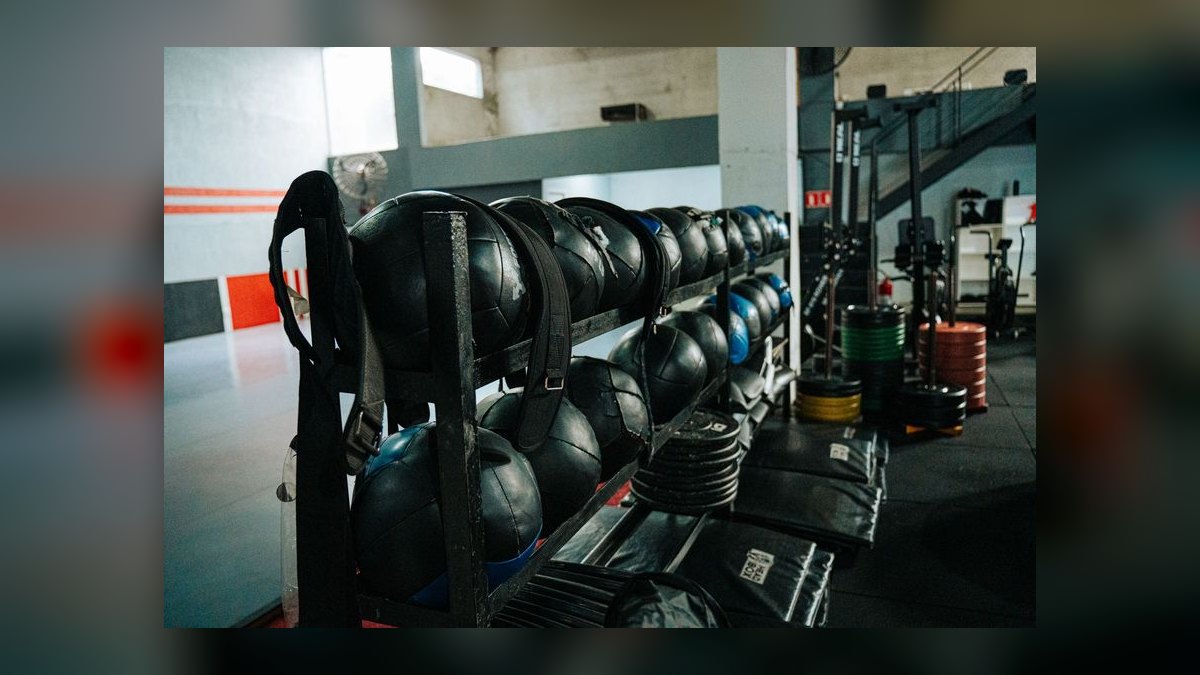
Gate one is capital structure. Retro Fitness discloses a $400,000 liquid capital requirement and $1.5M net worth minimum, but the franchisor's minimum and the survivable minimum are different numbers. Plan on $600,000+ genuinely liquid — not retirement accounts, not a HELOC against your primary residence, not a family member's soft commitment. The reason is arithmetic: on a $1.5M SBA 7(a) note at prime plus roughly 2.5–2.75%, annual debt service runs near $185,000. A mature club on median revenue produces $135,000–$190,000 EBITDA. Layer those and a levered operator is negative or breakeven for twenty-four to thirty-six months while a cash buyer sits at an 8–11% unlevered yield. If your capital stack requires 90% leverage, the standard 1.25x DSCR covenant is mathematically unreachable in year one and you are betting on lender forbearance.
Gate two is trade area. Pull demographic segmentation for 3-mile, 5-mile, and 7-mile rings around each candidate site. Require 40,000+ households, median household income of $75,000 or above, median age roughly 28–48, and — counterintuitively — at least one Planet Fitness within about four miles. That last criterion trips people up. You are not looking for a virgin market; you are looking for a market where a low-cost operator has already spent years converting non-exercisers into gym-goers, some of whom will trade up to a $24.99–$39.99 mid-tier product with more strength equipment and better amenities. A market with no budget gym is usually a market that has not been developed, not a market with unmet demand. Reject any site failing two of the four criteria, and reject rural or small-metro sites outright: trade areas under about 75,000 population tend to cap at 900–1,100 members, well short of the 1,400+ the cost base demands.

Gate three is operator profile. Multi-unit gym operators with three or more existing clubs win consistently because a fourth unit amortizes a regional manager already on payroll, unlocks equipment pricing below the FDD's high-end estimates, and imports a personal-training sales system that already works. Personal training at $45–$85 per session is where the gap between $720K–$840K of membership dues and a $1.06M–$1.13M revenue line gets closed. A first-timer has to build that PT engine from scratch while simultaneously learning construction management and member acquisition — three learning curves stacked during the only period when cash is scarce.
Gate four is your honest time budget. Nobody should enter a fitness franchise expecting an absentee model. Expect a 50+ hour week as owner-operator for the first thirty months, and budget a general manager at $75,000–$95,000 base plus incentive on net new dues if you intend to step back at all. If your plan requires the club to run itself in year one, buy a resale with an intact management team or don't buy at all.
Concrete numbers behind each option
Start with the greenfield build, because every other option gets priced against it. The 2025 franchise disclosure document stacks up roughly as follows: a $40,000 initial franchise fee; $45,000–$135,000 for real estate deposits and three months of rent; $850,000–$1,450,000 in leasehold improvements and build-out; $385,000–$625,000 for the cardio and strength equipment package; $95,000–$175,000 for signage, audio-visual, point of sale, and technology; $30,000–$50,000 in pre-opening pre-sale marketing; $8,500–$18,000 for initial training and travel; $14,000–$32,000 for insurance, licenses, and professional fees; and $145,000–$385,000 of working capital. All in: roughly $1,812,500 to $2,910,000. Ongoing, you pay a 5% royalty on gross sales with a $1,000 monthly minimum and a 2% national ad fund contribution with a $400 monthly minimum.

Against that, Item 19 of the 2025 FDD reports average gross sales of about $1,128,440 and a median of roughly $1,061,228 across 74 franchised outlets open more than a year. On an average footprint near 15,500 square feet that works out to roughly $73 per square foot — a number worth internalizing, because it is the single cleanest way to sanity-check any site you are offered. The year-over-year comparison matters too: the prior FDD reported similar average revenue across 81 outlets, meaning system count contracted by roughly seven units while the dominant low-cost competitor was adding well over a hundred net new clubs annually. Flat revenue on a shrinking base is not a growth story.
Walk the P&L on the median revenue line. Off $1.06M: royalty takes about $53,000, the ad fund about $21,000, rent runs $180,000–$240,000 depending on market and whether you negotiated tenant improvement allowance into the base rate, payroll lands $340,000–$400,000 for a staffed mid-tier club with front desk coverage, trainers, and a sales-capable GM, and equipment maintenance runs $45,000–$70,000 once the floor is past its warranty period. That leaves roughly $135,000–$190,000 of EBITDA at maturity, a 12–18% margin. Realistic year-one cash flow is negative $80,000 to negative $200,000. Breakeven typically arrives month 22–30. Payback runs six to nine years before any transfer fee on exit.
Now price the resale against that. A club doing $1.1M–$1.4M with $150,000–$200,000 EBITDA at a 3.5x–4.0x multiple costs $525,000–$800,000 — roughly a third of a greenfield build for the same cash flow, arriving immediately. Your diligence shifts entirely: instead of validating a trade area you are validating a member base. Pull the last twenty-four months of draft reports and separate active paying members from the roster count. Check the delinquency rate, the month-over-month churn trend, and how much revenue sits in annual prepays that will not recur. Age the equipment floor and price the refresh — a $200,000 equipment replacement two years out is a real reduction in purchase price. Read the lease for remaining term, renewal options, and personal guarantee language, because 2017–2018 vintage leases have been renewing with substantial increases.
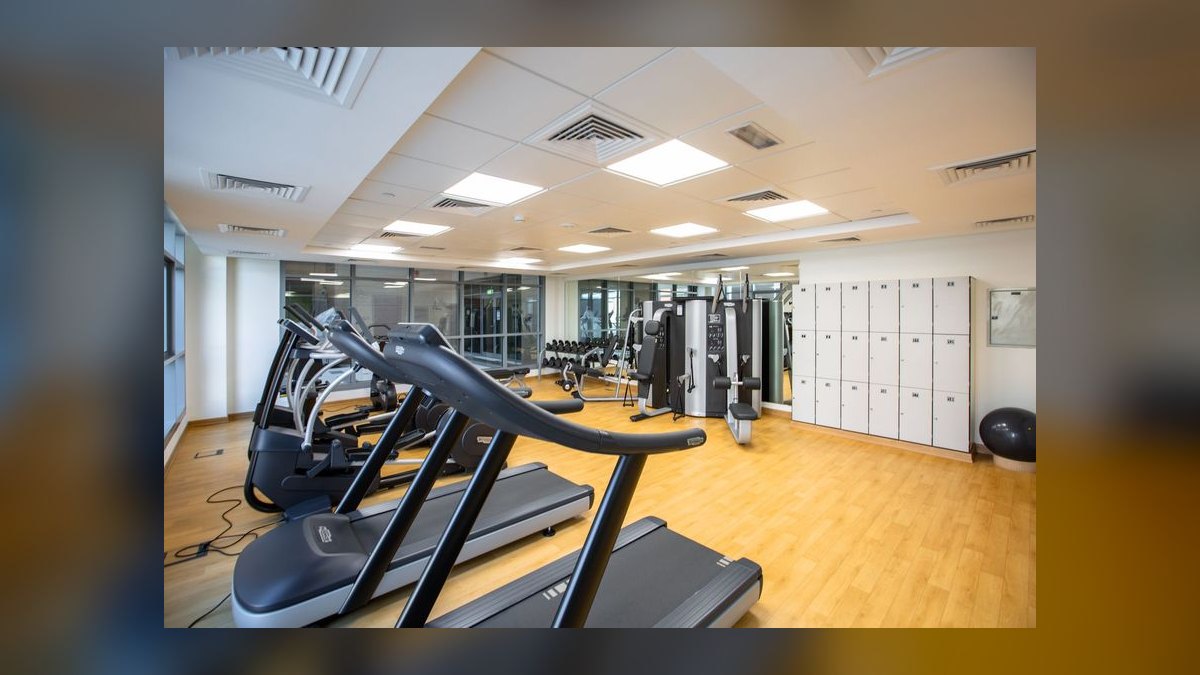
For comparison, adjacent brands frame the trade-off. Smaller-format 24/7 keycard concepts operate on 4,500–6,500 square feet rather than 15,500, which cuts all-in cost dramatically and lowers payroll materially because staffed hours shrink. Average unit revenue is far lower, but EBITDA margins run higher on the lean staffing model — a different bet: less revenue, better margin, less capital at risk, smaller ceiling. Other mid-tier competitors in the same $25–$35 monthly price band have posted stronger recent unit growth and higher Item 19 averages. None of this makes Retro a bad brand; it means the mid-tier is crowded, and you should read at least three FDDs side by side before signing any of them.
One number deserves special emphasis: member acquisition cost. Industry reporting has tracked CAC climbing sharply over the past several years as paid social and search auctions got more expensive and as every gym in every suburb bid on the same keywords. Model your pre-sale and your ongoing acquisition at current CAC, not at the numbers a franchise development rep quotes from a 2019 case study. If you need 1,500 members and CAC is running near $85, that is roughly $127,000 of acquisition spend to fill the club once — before accounting for the churn you must replace every year.
Market conditions shaping a 2027 entry
The US gym and health club market is large and growing slowly — low single digits annually — while boutique studio formats grow several times faster. That split is the strategic fact behind everything else. Money is flowing to the two ends of the barbell: the $10–$25 high-volume low-price clubs and the $150–$250 premium and boutique formats. The $25–$45 value-plus middle, where Retro Fitness lives alongside several direct competitors, is the most contested band in the category. Being in the middle is not fatal — plenty of profitable clubs operate there — but it means you never win on price and never win on prestige. You win on execution: cleaner facility, better strength floor, a PT team that actually sells, and a location the competition cannot easily match.
Three headwinds are specific to a 2027 entry. Commercial lease renewals on 2017–2018 vintage deals have been resetting sharply upward, which raises both your own rent basis and the rent basis of any club you buy. Strength equipment costs have risen materially on tariff and input-cost pressure, inflating the equipment line in the FDD and making a resale's existing floor more valuable than it looks on a depreciation schedule. And acquisition costs keep climbing, which structurally penalizes any operator whose model depends on high churn replaced by cheap new signups.
The notable tailwind is the GLP-1 cohort. Weight-loss drug users have been joining gyms at well above baseline population rates, largely because preserving lean muscle during rapid weight loss requires resistance training, and that advice now comes directly from prescribers. Forecasts for US GLP-1 usage over the rest of the decade run into the tens of millions. That is a genuinely new demand pool, and it disproportionately favors clubs with a serious strength floor and a credible personal-training offer — which is closer to Retro's positioning than to a $10 club's. If you build, over-index on free weights, racks, and trainer capacity rather than adding another row of treadmills.
Two adjacent dynamics are worth watching because they will affect resale values and your exit. First, the fitness sector's consolidation pattern means multi-unit operators are the natural buyers of single clubs, which caps what a lone club sells for and rewards you for building a small cluster rather than a one-off. Second, hybrid digital offerings have stopped being a differentiator and become table stakes; you need a functional app, digital check-in, and clean billing, but nobody joins because of them. Spend the marginal dollar on the physical floor and the sales team instead.
Implementation details and sequencing

Treat the first ninety days as diligence with hard go/no-go gates, then treat the following six months as construction and pre-sale execution.
Days 1–15: trade area validation. Score three candidate sites against the four criteria — household count, median income, median age, proximity to a low-cost competitor. Drive each site at 6am, noon, and 6pm on a weekday and again Saturday morning. Count cars in the competitor's lot. Note the ingress, the parking ratio, and whether the co-tenants generate traffic at the hours a gym needs it.
Days 16–30: FDD and franchisee calls. Request the FDD; under the FTC's franchise rule the franchisor must deliver it on a defined timeline before any signing or payment. Read Item 19 line by line, then read Item 20 for outlet counts and turnover and Item 21 for audited financials. Then make calls — at least ten current franchisees, and specifically five who have exited the system in the past two years. The departed franchisees are the highest-value calls in the entire process and the ones buyers most often skip. Ask each one what their actual gross was, what their rent was per square foot, what their PT revenue was as a percentage of total, and what they would do differently.
Days 31–45: real estate letter of intent. Negotiate for free rent during build-out, a meaningful tenant improvement allowance, a 5+5+5 term structure, and a personal guarantee that burns down to zero over the first several years. The personal guarantee burn-down is the term operators regret ignoring; a full-term personal guarantee on a fifteen-year lease is a bet on your own solvency for longer than most careers. If a landlord will not move on TI allowance, walk — TI dollars are the single largest lever on your total capital requirement.
Days 46–60: capital stack. Confirm liquidity, then source debt from lenders with actual fitness-sector underwriting experience rather than whichever bank holds your checking account. Target 65–70% leverage maximum. Decline 90% LTV offers even when they are available; a lender willing to hand you that much leverage on a gym is transferring risk to you, not sharing it.

Days 61–75: hire and launch pre-sale. Bring the GM on before construction finishes — you want that person selling, not learning. Add sales counselors on hourly plus per-sale commission. Launch pre-sale roughly sixty days ahead of opening with a founding-member rate locked for a defined term. The pre-sale is not a marketing flourish; it is the single best predictor of year-one outcome.
Days 76–90: go/no-go. Set a numeric pre-sale threshold and honor it. If paid pre-sold members are materially short of target as opening approaches, delay thirty days and double local spend rather than opening thin. Opening under-sold is how a club spends its entire working capital reserve in the first two quarters and then has nothing left for the acquisition spend it suddenly needs.
Post-opening, the operating cadence matters as much as the build. Track four numbers weekly: net new members, cancellation count, PT revenue as a share of total, and payroll as a share of revenue. Monthly, reconcile draft failures — declined cards are silent revenue leakage that compounds. Quarterly, re-price your acquisition channels; the channel that worked at open rarely still works at month eighteen. And plan the equipment refresh from day one, funding a reserve rather than facing a six-figure capital call in year four.
Related questions
Is buying an existing Retro Fitness club safer than building one?
Generally yes for first-time operators. A resale at 3.5x–4.5x EBITDA delivers cash flow on closing day and eliminates construction and pre-sale risk. The trade-off is inherited problems: aging equipment, an unfavorable lease, and a member roster that may be thinner than the count suggests.
How many members does a Retro Fitness club need to break even?

Roughly 1,400 active paying members at mid-tier dues, with personal training and ancillary revenue closing the gap to the median revenue line. That threshold is why trade areas under about 75,000 population rarely work — they typically cap around 900–1,100 members.
Can I run a gym franchise as a passive investment?
Not in the first thirty months. Expect owner-operator hours plus a general manager at $75,000–$95,000 base. Passive ownership becomes realistic only after a proven GM, documented systems, and stable churn are in place — or if you buy a resale with that team intact.
Does owning the building really change the returns that much?
Yes. Converting $180,000–$240,000 of annual rent into debt service on an owned asset builds equity instead of expense and materially improves ten-year IRR. It also softens downside: a weak club inside a building you own is a real-estate position, not a write-off.
What is the biggest diligence step buyers skip?
Calling franchisees who left the system. Item 20 lists them, and their accounts of real gross sales, rent per square foot, and PT revenue mix are more predictive than anything a franchise development rep will present.
FAQ
What is the total investment needed to open a Retro Fitness franchise?
The 2025 FDD puts all-in cost at roughly $1.81 million to $2.91 million, covering the $40,000 franchise fee, build-out, the equipment package, technology, pre-opening marketing, and working capital. The franchisor's stated liquid requirement is $400,000 against $1.5M net worth, but $600,000+ genuinely liquid is the safer planning figure.
How much revenue does an average location generate?

Item 19 of the 2025 FDD reports average gross sales near $1,128,440 and a median near $1,061,228 across 74 outlets open more than a year — roughly $73 per square foot on a 15,500 square foot footprint. A meaningful share of clubs fall well below that average, and averages are not projections.
What does year one actually look like financially?
Negative. Typical year-one cash flow runs $80,000 to $200,000 in the red as membership ramps toward the 1,400+ needed to cover fixed costs. Breakeven generally lands month 22–30, and payback on the full investment runs six to nine years before transfer fees on exit.
Is Retro Fitness a good fit for a first-time franchisee?
Rarely for a greenfield single unit. The mid-tier price band is squeezed between high-volume low-price chains below and premium clubs above, and the capital requirement leaves no margin for a learning curve. A resale, a smaller-format brand, or partnering with an experienced multi-unit operator are all better first moves.
How does Retro Fitness compare to other gym franchises on cost?
It sits at the high end. Smaller-format 24/7 keycard concepts require a fraction of the capital on 4,500–6,500 square feet with leaner payroll, though at much lower average unit revenue. Other mid-tier competitors have posted stronger recent unit growth. Read at least three FDDs side by side before committing.
What market trend most favors opening a gym in 2027?
The GLP-1 cohort. Weight-loss drug users are joining gyms at well above baseline rates to preserve lean muscle, and that demand skews toward serious strength equipment and personal training rather than cardio rows — which favors mid-tier clubs that invest in the free-weight floor and trainer capacity.
Sources
- https://www.ftc.gov/business-guidance/resources/franchise-rule-compliance-guide
- https://www.ftc.gov/legal-library/browse/rules/franchise-rule
- https://www.sba.gov/funding-programs/loans/7a-loans
- https://www.ihrsa.org/publications/
- https://www.ibisworld.com/united-states/market-research-reports/gym-health-fitness-clubs-industry/
- https://investor.planetfitness.com/
- https://www.bizbuysell.com/fitness-gym-businesses-for-sale/
- https://www.goldmansachs.com/insights/articles/the-glp-1-effect
- https://www.nih.gov/news-events/nih-research-matters
- https://www.retrofitness.com/franchising
Related on PULSE
- Best fitness and gym franchises to buy in 2027
- Should I open or buy a Fitness 19 franchise in 2027?
- Should I open or buy a Snap Fitness franchise in 2027?
- Should I open or buy an EOS Fitness franchise in 2027?
- Should I open or buy a Crunch Fitness franchise in 2027?
- Should I open or buy a Blink Fitness franchise in 2027?
This page will be disappearing soon. Save it to your device for $1 — or read it free while it is here.
@Kory-White- · if Venmo asks, the last 4 of my number are 2012
This page is gone.
This one is off the shelf now. $1 keeps it on your phone for good — the whole page, pictures and diagrams included.
 franchiseShould I open or buy a Mathnasium franchise in 2027?
 franchiseShould I open or buy an Ace Hardware franchise in 2027?
 franchiseShould I open or buy a Little Caesars franchise in 2027?
 franchiseShould I open or buy a Meineke franchise in 2027?
 franchiseShould I open or buy a Jeremiah's Italian Ice franchise in 2027?
 franchiseShould I open or buy a Merry Maids franchise in 2027?
 franchiseShould I open or buy a Great Clips franchise in 2027?
 franchiseShould I open or buy a Papa John's franchise in 2027?
 franchiseShould I open or buy a Subway franchise in 2027?
 franchiseShould I open or buy a Mac Tools franchise in 2027?