


Should I open a food truck in 2027?
Quality
Certified
Only if you pre-sell it. A food truck in 2027 works when you have $125K–$200K in real risk capital and at least two recurring revenue channels signed before you take delivery. Expect $220K–$420K in Year-1 revenue, 6–18% net margin, and 14–22 months to breakeven. Roughly 60% fail in Year 1.
The outcome you should expect
Strip away the romance and a food truck is a 200-square-foot commercial kitchen that costs six figures, throws off five-figure owner income in Year 1, and demands 60-plus working hours a week. That is the honest baseline. An independent operator in a tier-1 metro who launches with a used, inspected truck and two anchor revenue channels lands somewhere near $320,000 in first-year gross revenue, keeps 12% of it as owner-operator net, and walks away with roughly $38,000 in take-home — less than the W-2 job most people quit to do this.
The distribution around that midpoint is brutally wide. The bottom of the range is $180,000 in revenue at a 6% margin, which is about $11,000 of take-home and a 28-month payback on the truck. The top is $500,000 at 18%, which is $90,000 of take-home and a 12-month payback. What separates those two outcomes is almost never the food. It is whether the calendar was full before the truck was paid for.
That is the single most important reframe. Most first-time operators think of the launch decision as "is my concept good enough?" The operators who survive think of it as "do I have committed days on the calendar?" A truck that serves 18 committed days a month — five corporate lunch days, eight brewery rotation nights, five private events — has a predictable revenue floor. A truck that shows up at a public lot hoping for walk-ups has a revenue floor of zero, and zero is what it earns during a two-week March rain stretch.
Expect the business to feel like logistics with a cooking hobby attached. Roughly 80% of the working week is permits, generator maintenance, commissary scheduling, propane runs, grease pickup, parking enforcement, weather contingency planning, and chargeback disputes. The other 20% is the part that appeared in the food show. If that split sounds like a downgrade rather than a trade, the answer to the headline question is no, and it is better to learn that before the wrap goes on.

One more expectation to set: this is a cash-rich, margin-thin business. Money moves through the truck fast, which feels like success. A $1,400 service day looks spectacular in the POS at 9 p.m. and is largely gone by the time you have paid 33% food cost, the commissary, fuel, propane, insurance amortization, payment processing, and the truck note. New operators consistently confuse gross throughput with profit, spend against it, and hit a working-capital wall around Month 4.
What drives that outcome
Four variables move the needle far more than menu quality: capital structure, channel count, labor model, and food cost assumption. Get all four right and you land in the top quartile. Miss two and the failure statistics become your statistics.
Capital structure. A used, retrofitted truck at $65,000 with $70,000 of working capital behind it is a materially safer position than a $120,000 new build with $30,000 behind it, even though the second looks better in photos. Fixed monthly payments are what kill trucks in slow months, not ugly wraps. The new build also removes the option to walk away cheap if the concept does not land.
Channel count. One channel is a hobby with a loan attached. Two channels — say corporate lunch and brewery rotation — creates a floor. Three channels, adding a private-event or festival pipeline, is where operators start clearing $400K. Direct catering runs 35–45% net, dramatically better than walk-up service, and it books weeks in advance so you can staff and buy against it.

Labor model. Minimum wages have cleared $17/hour in a majority of states and reliable line cooks command $22–$28/hour. That single input has flipped the historical math: the solo-operator truck now out-earns the two-employee truck on net margin, which is why the owner-operator band is 12–18% while the with-staff band is 6–9%. Adding a second body has to buy you meaningfully more revenue than it costs, and on a walk-up-only truck it usually does not.
Food cost. The traditional 28–30% target no longer holds. Tariff-driven input inflation has pushed realistic food cost to 32–35%, and the industry actually contracted slightly in 2025 as operators absorbed rather than passed through those shocks. Model at 34% and be pleasantly surprised, rather than modeling at 29% and discovering the gap in Month 5 when the working capital is gone.
The diagram makes the compounding visible. Each fork is survivable alone. Taking the right-hand branch at two consecutive forks — new financed build plus single channel, or single channel plus a payroll — is what produces the 28-month payback that no undercapitalized operator survives.
Benchmarks and realistic ranges
Here is the startup stack for an independent truck, not a franchise. A used retrofitted truck runs $35,000 at the low end, $65,000 realistically, and $95,000 for a well-maintained late-model unit. A new build-out is $75,000 to $175,000, realistically around $120,000. Kitchen equipment and smallwares add $8,000–$25,000 beyond whatever the truck came with. Point-of-sale and payments hardware is $1,200–$4,500.
Permits, licenses, and health department fees swing wildly by jurisdiction: $2,500 in a permissive county, $28,000 in a hostile metro with separate city, county, fire-marshal, and commissary requirements. This is the line item that most first-time operators underestimate by an order of magnitude, and it is worth a phone call to the actual health department before you budget anything else. A commissary deposit plus three months' rent is $750–$9,000. Initial inventory is $1,500–$6,000. Annual insurance prepay is $2,500–$5,500. Wrap and branding is $2,500–$10,000.

Then working capital, which is the line people cut and should not: $15,000 at the reckless end, $30,000 realistically, $60,000 if you want to sleep. Total startup on a used truck runs $69,000 to $248,000 with a realistic midpoint near $136,000. On a new build, $109,000 to $328,000 with a midpoint near $191,000.
On the revenue side, average annual revenue across all U.S. trucks lands around $346,000, with the top quartile clearing $500,000 and a long tail below $150,000. The industry is roughly a $2.8 billion market that grew about 13.2% annualized over the five years through 2025 before contracting 0.2% in 2025 on input-cost pressure. Growth industry, thinning margins — both things are true at once.
Franchise benchmarks give useful contrast. Cousins Maine Lobster discloses a $194,000–$645,000 investment range across a 66-unit system. Kona Ice, the category leader with over 2,000 trucks and roughly $265 million in 2023 system-wide sales, charges a flat $3,000–$4,000 royalty rather than a percentage of revenue — genuinely operator-friendly at volume, since your marginal dollar stays yours. The trade-off is that Kona Ice does not publish an Item 19 financial performance representation, so you are buying brand strength and a proven playbook rather than verified unit economics. Always read the FDD yourself; never take a franchise development rep's revenue anecdote as data.
Channel margins are worth memorizing because they drive every scheduling decision. Direct catering nets 35–45%. Brewery and venue rotations sit in the middle, since you trade a revenue share or a flat fee for guaranteed traffic. Public walk-up service is the weakest and most volatile. Third-party delivery through DoorDash or Uber Eats takes 25–30% off the top and almost never pencils for a truck — the commission plus the operational chaos of fulfilling delivery tickets from a service window during a rush is a losing trade.
Payment processing is a real line item, not a rounding error. Square, Toast, and Clover dominate the space with effective all-in fees of roughly 2.6–3.1%. On $320,000 of revenue that is $8,300–$9,900 a year, which is a meaningful fraction of a thin net margin. POS reliability over weak rural cell service is a genuine Year-1 operational risk; carry a backup connectivity plan and know your offline-mode behavior before a 200-ticket festival, not during one.
Risks, edge cases, and failure modes

Three failure modes account for most of the Year-1 casualties, and each has a specific countermeasure.
Mechanical failure. A generator, refrigeration unit, or chassis problem does not just cost repair money — it costs booked revenue, and a canceled catering job costs the relationship too. The countermeasure is a pre-purchase inspection by a mobile-equipment specialist for $400–$600 covering generator, propane system, refrigeration, and chassis. Never buy a truck without one. Credible builders like Roush, Custom Concessions, and Cruising Kitchens produce units worth inspecting; a Craigslist retrofit by an unknown welder is a different risk class entirely. Budget a maintenance reserve from day one and treat a spare-parts kit and a relationship with a mobile mechanic as fixed costs.
Commissary lock-in. Many jurisdictions — California, New York, and parts of South Carolina are the commonly cited strict-daily-return examples — require overnight storage, water and waste servicing at a licensed commercial kitchen. That runs $1,500–$3,000 a month. On a slow winter month with $14,000 of revenue, a $2,500 commissary bill is the difference between a small profit and a real loss. Get the written agreement, understand the exact term and exit clause, and price your menu against that fixed cost rather than pretending it is variable.
Single-revenue dependency. This is the quiet killer. A two-week rainy stretch drops walk-up revenue 60–70%. If walk-ups are 100% of the model, the truck note comes due anyway. If catering is even 40% of the model, the rain is annoying instead of fatal. The same principle applies to venue concentration: a brewery partnership that is 70% of revenue becomes an existential problem the day that brewery changes management or closes.
Beyond the big three, several edge cases deserve planning. Seasonality is more extreme than most people model — northern metros can see a genuine four-month trough, and operators there often run a winter catering-only or ghost-kitchen posture rather than fighting the weather. Enforcement risk is real: parking rules, distance-from-brick-and-mortar ordinances, and event-permit revocations can eliminate a prime location with no notice, which is another argument for channel diversity. Menu bloat is a slow failure — every additional SKU adds prep time, inventory carrying cost, and spoilage in a space with almost no storage; eight items is a reasonable Year-1 ceiling.
There is also a growing competitive pressure worth naming. Commercial real estate softness has opened brick-and-mortar conversions at favorable lease rates in secondary markets, which means the fast-casual storefront you are competing against for the lunch dollar may have lower occupancy cost than it would have three years ago. The mobile advantage — go where the demand is — still holds, but the "cheaper than a restaurant" advantage has narrowed in some markets. Check comparable lease rates in your target trade area before assuming mobile is automatically the cheaper path.
Finally, the personal risk. Quitting a $90,000 W-2 with no committed pipeline is the modal Year-1 failure story: working capital burns down by Month 4, the operator starts making decisions from a cash-panic posture, and cash-panic decisions in food service are almost always wrong. If you can keep income while you build the catering book, do it.
Who this actually works for
Career chefs leaving restaurant kitchens have the best hit rate. They already have food-cost discipline internalized, they have run a ticket line under pressure, and a 200-square-foot mobile kitchen does not intimidate them. Catering veterans do even better in one specific way: they arrive with an existing book of corporate clients, event planners, and venue relationships, which solves the number-one killer on day one.
Well-capitalized multi-unit operators win by skipping the single-truck grind entirely. Three trucks rotating across three anchor zones — a weekday central-business-district lunch route, a weekend brewery district, and a festival circuit — produce roughly seven figures in combined revenue with materially better unit economics than one truck grinding alone, because commissary, insurance, admin, and marketing costs spread across more revenue.
Specialty-cuisine operators with a defensible story win on discovery. Third-generation birria, real wood-fired Neapolitan pizza, authentic regional Thai — these travel on social and rank in Google Maps, which has largely replaced random foot traffic as the primary acquisition channel. A generic burger truck with no story is competing on convenience alone against every restaurant in a two-mile radius.
The people who consistently lose are hobby cooks chasing the food-show version of the job, anyone financing a $175,000 new build without proven traffic, and single-cuisine operators with no catering arm in a weather-exposed market. None of those are character flaws — they are structural positions that produce predictable outcomes.
A practical rollout plan
Sequence matters more than speed. This is a 90-day plan that deliberately puts revenue proof before capital commitment.
Days 1–14 — concept and unit-economics validation. Lock a menu of eight items maximum. Price each item against a fully loaded food cost of 34%, not 29%. Then compute break-even tickets per service day. If the model needs more than 120 tickets a day at a $14 average check to break even, the concept is too thin — go back to the menu and raise the average ticket rather than hoping for volume you cannot control.
Days 15–30 — revenue channel pre-sales. Before a dollar goes toward a truck, secure letters of intent or paid catering deposits from at least two anchor channels. A realistic target is one corporate lunch contract at five-plus days a month, one brewery or venue partner at eight-plus days a month, and one private-event referral pipeline. No signed LOIs means no truck. This is the step everyone wants to skip and it is the one that decides the outcome.
Days 31–50 — truck sourcing. Inspect five to seven used trucks. Pay the $400–$600 for a mobile-equipment inspection on the finalist. Negotiate on the findings. Seller-financed deals do exist and are worth pursuing — buying an already-profitable truck with contracts attached at $80,000–$120,000 skips most of the breakeven slog, and operator-financed listings appear regularly on business-for-sale marketplaces.
Days 51–70 — permits and commissary. File health department, mobile-vendor, fire-marshal, and state sales-tax applications in parallel, never serially. Serial filing is how a 90-day plan becomes a 210-day plan while the truck payment runs. Sign a written commissary agreement with a licensed commercial kitchen and read the exit terms.
Days 71–85 — build-out, wrap, soft launch. Run three or four unannounced low-volume services to shake out POS behavior, propane consumption, ticket times, and the physical workflow inside the truck. Discover the problems in front of forty strangers, not in front of a corporate client who booked you for two hundred.
Days 86–90 — catering go-live and cash review. Run the signed contracts at full speed. Then check the model honestly: if gross revenue tracks below 70% of plan in any 14-day window, stop and re-cost the menu instead of pushing through on volume. Pushing through is how operators convert a fixable pricing problem into a terminal cash problem.
Note what the plan refuses to do: it never buys the truck before proving demand, and it never treats a shortfall as a marketing problem to outrun.
Cheaper ways to test the same thesis
If the 90-day plan surfaces doubt, three adjacent plays test the same underlying bet at lower risk.
A ghost kitchen plus catering setup rents a commercial kitchen slot at a fraction of a truck's monthly cost, sells through delivery marketplaces, and pairs with direct catering you book yourself. Startup lands well under $30,000, with no truck financing, no generator, no commissary tax, and no weather exposure. The trade is that you lose the mobility and the physical brand presence that make trucks memorable.
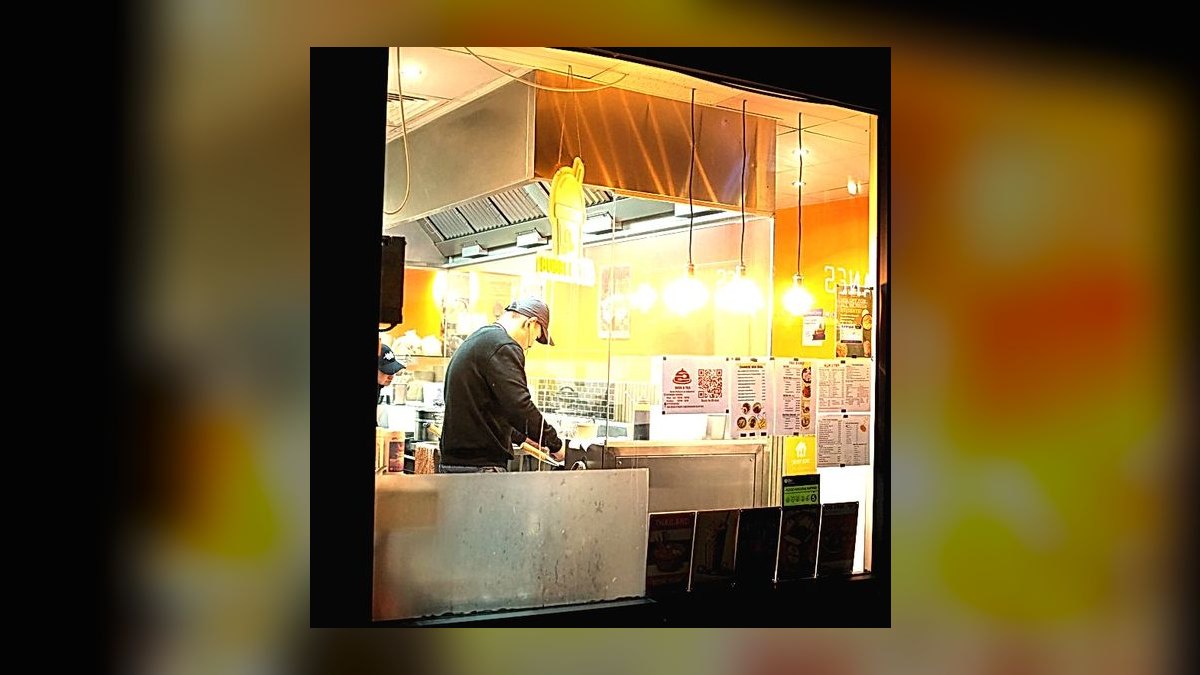
A catering-only LLC using a rented truck at a per-event rate is the lowest-risk entry that exists. Prove the catering book for six months with real paid events, then buy a truck against verified revenue rather than a projection. Operators who do this arrive at truck purchase with the exact thing the failure statistics say they need: signed recurring business.
Buying an existing profitable truck with contracts attached converts an 18-month breakeven into an immediate cash-flowing asset. Diligence is different here — you are underwriting the seller's books, the transferability of their contracts, and the mechanical condition of a used unit rather than validating a concept.
Franchising trades ceiling for survival probability. A flat-royalty structure like Kona Ice's removes menu-development risk and much of the pipeline-development risk, and the operator keeps upside on incremental revenue since the royalty does not scale. Higher-ticket mobile franchises exist at the Cousins Maine Lobster investment level. Whichever you consider, the FDD is the document that matters — Item 7 for investment range, Item 19 for financial performance, Item 20 for unit turnover. A system with high closures and no Item 19 is telling you something.
The through-line across all four alternatives: they all separate the question "will people pay for my food" from the question "can I finance and operate a truck." Answering the first one cheaply, first, is the highest-return decision available to anyone considering this.
Related questions
How many committed days a month do I need before buying a truck?
Aim for 15–18 committed service days across at least two channels. That typically means five corporate lunch days, eight venue rotation days, and a couple of private events. Below ten committed days, walk-up volatility controls your outcome and the truck payment does not care about the weather.
Is a used truck really better than a new build?
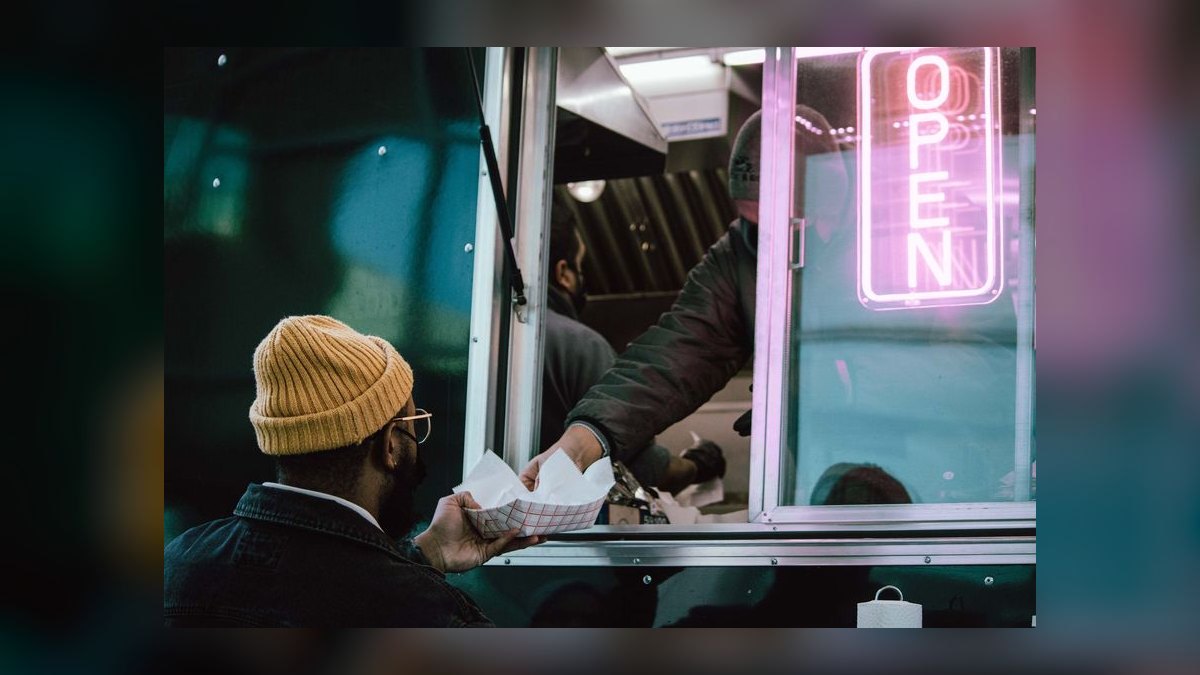
For a first truck, usually yes. A used inspected unit preserves working capital and keeps fixed costs low, which is what actually determines survival through slow months. Buy new only when you have proven demand, a specific equipment requirement, and enough cash cushion behind the purchase.
Does third-party delivery make sense for a food truck?
Rarely. Commissions of 25–30% on an already thin margin, combined with fulfilling delivery tickets from a service window mid-rush, usually destroys both profit and service quality. Direct catering at 35–45% net is a far better use of the same operating hours.
What food cost percentage should I model for 2027?
Model 32–35%, not the traditional 28–30%. Input inflation has persisted and the industry has been absorbing rather than fully passing through cost increases. If your menu only works at 29% food cost, it does not work.
Can I run the truck alone or do I need staff?
Solo is now the stronger margin position for most single-truck operators, at 12–18% net versus 6–9% with employees, because line cook wages have risen sharply. Add a second person only when a specific high-volume channel demonstrably generates more revenue than the labor costs.
FAQ
What is the realistic all-in startup cost for a food truck in 2027?
Plan on $125,000 to $200,000 including the truck, kitchen buildout, permits, insurance, branding, and enough working capital to cover the first few months. A frugal used-truck launch can come in near $70,000 and an ambitious new build can exceed $300,000. Permit costs vary by jurisdiction more than any other line item — call your health department before you finalize a budget.
How much revenue should I expect in Year 1?
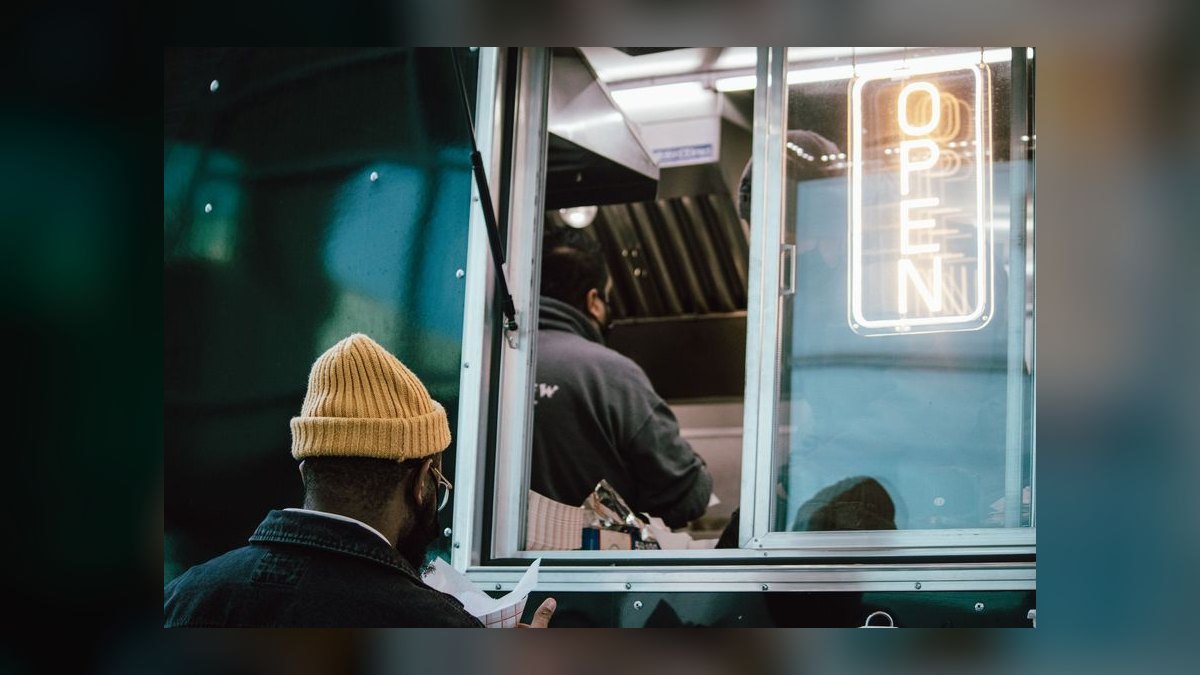
Between $220,000 and $420,000 for most independent operators, with an industry-wide average near $346,000. The spread is driven by committed calendar days and channel mix rather than by menu quality. Trucks with two or more recurring channels cluster in the upper half; walk-up-only trucks cluster in the lower half and carry far more month-to-month variance.
What net margin is realistic?
12–18% if you work the truck yourself with no payroll, and 6–9% once you add employees. Those bands assume disciplined food cost in the low thirties and a commissary cost you have actually priced in. Margin erosion almost always traces back to three inputs: food cost drift, an unnecessary second body on slow days, and payment processing you never modeled.
How long until I break even?
Typically 14 to 22 months. The fast end requires a used truck, low fixed costs, and multiple recurring channels from launch. The slow end — 28 months or worse — is what a financed new build with a single revenue channel produces. Breakeven timing is set at the purchase decision far more than it is set by day-to-day operations.
Why do so many trucks fail in the first year?
Roughly 60% do not survive Year 1, and the causes repeat: mechanical failure that halts revenue, commissary and permit fixed costs that were underestimated, and dependence on a single revenue stream that weather or a venue change can eliminate. Each is preventable with a pre-purchase inspection, honest fixed-cost modeling, and signed recurring contracts before launch.
Do I need catering or event experience first?
Not required, but it is the strongest single predictor of survival. Operators who secure two or more recurring channels — corporate catering, brewery rotations, school or institutional contracts, festival circuits — before the truck arrives have a revenue floor from day one. Without that pipeline, Year 1 is a discovery process funded by your working capital, which is an expensive way to learn.
Sources
- https://www.ibisworld.com/united-states/market-research-reports/food-trucks-industry/
- https://www.sba.gov/business-guide/plan-your-business/calculate-your-startup-costs
- https://www.ftc.gov/business-guidance/resources/consumers-guide-buying-franchise
- https://www.bls.gov/oes/current/oes351011.htm
- https://www.census.gov/naics/
- https://www.irs.gov/businesses/small-businesses-self-employed/starting-a-business
- https://www.fda.gov/food/retail-food-protection/fda-food-code
- https://www.bizbuysell.com/
- https://www.restaurant.org/research-and-media/research/
- https://www.franchise.org/
Related on PULSE
This page will be disappearing soon. Save it to your device for $1 — or read it free while it is here.
@Kory-White- · if Venmo asks, the last 4 of my number are 2012
This page is gone.
This one is off the shelf now. $1 keeps it on your phone for good — the whole page, pictures and diagrams included.
 franchiseShould I open or buy a Drybar franchise in 2027?
 franchiseShould I open or buy a Matco Tools franchise in 2027?
 franchiseShould I open or buy a Marco's Pizza franchise in 2027?
 franchiseShould I open or buy a Servpro franchise in 2027?
 franchiseShould I open or buy a Chipotle franchise in 2027?
 franchiseShould I open or buy a Firehouse Subs franchise in 2027?
 franchiseShould I open or buy a Crumbl Cookies franchise in 2027?
 franchiseShould I open or buy a Kumon franchise in 2027?
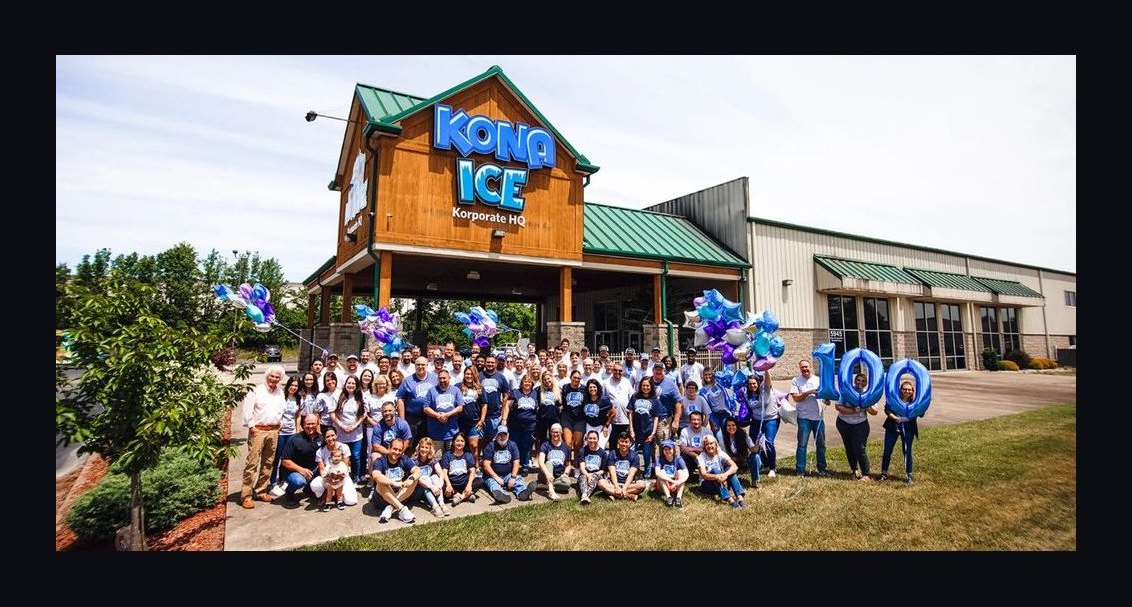 franchiseShould I open or buy a Kona Ice franchise in 2027?
 franchiseShould I open or buy a Planet Fitness franchise in 2027?