


Should I open a landscape design business in 2027?
Quality
Certified

Open a landscape design business in 2027 only if you hold design credentials, a portfolio of eight to twelve finished projects, and $40K–$120K in cash. Design-only studios break even in months seven to eleven at 15–22% net margin. Design-build hybrids gross far more but compress to 5–7% net.
Design-only studio versus design-build firm
Every 2027 landscape design launch collapses into one of two molds, and choosing wrong is the single most expensive mistake a new owner makes. The design-only studio sells drawings, plant schedules, material specifications, grading plans, and construction administration. You never own a skid steer, never carry a crew on W-2, never insure a dump truck. Startup capital runs roughly $18,000–$42,000, and total cash burned before the business supports itself typically lands between $40,000 and $75,000. Year-one revenue for a competent solo principal generally falls in the $140,000–$280,000 band, with gross margins of 65–78% because your only real cost of goods is your own drafting hours plus occasional 1099 rendering help.
The design-build firm sells the finished landscape. You draw it, then you install it — hardscape, irrigation, lighting, plant material, drainage. Startup capital jumps to something like $85,000–$215,000 once you count a truck and trailer, a mini excavator or skid steer, hand tools, a yard or shop lease, and the working capital to float material purchases and payroll for sixty days before the first progress draw clears. Total cash to breakeven realistically runs $180,000–$515,000. Gross revenue is far larger — $650,000–$1,600,000 is a normal first-year figure for a design-build firm that already has crew relationships — but gross margin compresses to roughly 27–44% and net margin to 5–7% after overhead that commonly consumes about a third of revenue.
The counterintuitive part: the smaller business often pays the owner more in year one. A design-only principal can pull an owner's-compensation equivalent of $58,000–$94,000 in year one and $115,000–$185,000 by year three. A design-build owner frequently takes $0–$45,000 in year one because every dollar is feeding payroll and equipment notes, then jumps to $180,000–$420,000 by year three if the firm survives. You are trading immediate income for a larger terminal asset. That trade is only rational if your runway can absorb eighteen to twenty-four months of thin owner pay.

There is a third structure worth naming because it sits between the two: the design-and-manage studio. You sell the design plus paid construction observation and vendor management, but the installing contractor holds the client contract and the liability for the build. You bill 10–18% of installed cost as a management fee on top of the design fee, and you keep the design-only cost structure. It captures a meaningful slice of the build economics without workers' compensation exposure, equipment debt, or a payroll you must feed in February. The catch is that you need two or three installers you genuinely trust, because their workmanship becomes your reputation regardless of who signed the contract.
One structural fact that shapes the whole decision: there is no meaningful national franchise in landscape *design*. The recognizable franchise names in this space — US Lawns, NaturaLawn, Spring-Green, The Grounds Guys — are maintenance-led operations that sell recurring service routes, not stamped plans, and they take royalties in the 5–7%-of-gross range. If you want a design practice, you are building an independent business. There is no brand to buy that improves your unit economics, so evaluate franchise pitches in this category against independent numbers rather than against each other.
How to decide between them
Run the decision in a fixed order, because each gate makes the next one cheaper to evaluate. Start with credentials, not with market research, because credentials can hard-cap your ceiling regardless of how good the market is.

All fifty U.S. states regulate landscape architects through either practice acts or title acts, administered by state boards and coordinated through CLARB. A practice-act state restricts who may perform certain landscape architectural work; a title-act state restricts who may call themselves a landscape architect while leaving some design work open to unlicensed practitioners. Licensure generally requires an accredited degree, documented experience, and passing the LARE examination — a multi-section exam that most candidates spread across a year or more. Before you do anything else, pull your own state board's statute and read the actual scope language. The practical question is narrow: at what project type, dollar value, or drawing type does your state require a stamp? If your target work sits above that line and you cannot stamp, you either pursue licensure over the next two to three years, partner with a licensed landscape architect who stamps your drawings, or scope your practice to work that legitimately sits below the line.
The second gate is market density. Pull three ZIP codes inside a twenty-five-mile radius from your intended base. You want median household income above roughly $85,000 and median home value above roughly $475,000, because average design ticket tracks home value almost linearly. In markets where median home value clears $625,000, typical design tickets run $4,200–$18,000. In median-value markets, the same scope of work fetches $1,800–$3,400 — identical labor hours, roughly a third of the revenue. Below about $70,000 median household income, residential design fees routinely fall under $1,800 per project and the math simply does not support a full-time design practice.
Then count competitors, and read a high count as good news. Search Houzz, your state ASLA chapter directory, and Google Maps for design firms in your radius. Eighteen or more active design firms signals a market that has trained homeowners to expect and pay for design. Fewer than eight signals a market where homeowners still think the guy with the mower draws the plan for free, and you will spend your first two years doing unpaid market education. High competition is a demand indicator; low competition is usually an absence indicator.
The third gate is portfolio. If you have fewer than eight finished projects you can photograph and publish, you do not yet have a business — you have an intention. Fix it before launch: run three friends-and-family or reduced-fee pilot projects at roughly half rate in exchange for full photography and CAD rights, contribute design work to a community or nonprofit installation, or negotiate portfolio rights on work you did at a prior employer before you resign. Do this while still employed. It costs you evenings instead of runway.

The fourth gate is capital, and it is the one people lie to themselves about. Under $25,000 liquid, do not open either structure. Take 1099 design subcontract work at $65–$95 per hour for established firms; at thirty-five billable hours a week that produces roughly $85,000–$140,000 with essentially no capital at risk, no general liability premium, and no marketing spend. Build the runway, then launch. Between $40,000 and $120,000 liquid, the design-only studio is the right structure. Above $180,000 liquid *and* with existing installation crew relationships, design-build becomes defensible. Note the "and" — capital without crew relationships is how design-build firms die in month fourteen.
One financing pattern deserves a specific warning. Funding a launch entirely through an SBA 7(a) loan above $150,000 puts debt service of roughly $1,750–$2,400 per month on the business before a single payroll dollar. Design-build firms commonly need fourteen to twenty-two months to reach consistent profitability. If your only capital is borrowed and amortizing from month one, you run out of cash in month eleven — three months short of the finish line — and you personally guaranteed the note. Debt is a fine accelerant on top of equity; it is a poor substitute for it.
The numbers behind each structure
Run the design-only studio as a unit-economics problem and the picture is unambiguous. Assume a principal billing $100–$275 per hour depending on market and credentials, with an average residential project fee of $2,200–$6,180. To hit $180,000 in year-one revenue at a $3,500 average ticket, you need roughly fifty-two closed projects — one per week, which is aggressive but achievable in a dense metro if inbound is working. At a $6,000 average ticket you need thirty projects, which is far more realistic for a solo principal doing site visits, concept development, revision rounds, and construction administration on each one.

Overhead for a design-only studio is genuinely small. Software is the largest recurring line: a professional landscape CAD package such as Land F/X or Vectorworks Landmark, plus SketchUp Pro for modeling, plus a project and proposal tool such as Houzz Pro, plus QuickBooks or equivalent bookkeeping. Budget roughly $520–$680 per month all in for software, and expect the CAD seat alone to be a four-figure annual commitment. General liability for a design-only practice typically runs a few hundred to low four figures annually — meaningfully cheaper than any operation with crews — and professional liability, errors-and-omissions coverage, is the policy that actually matters when a grading plan sends water toward a neighbor's foundation. Do not skip E&O to save premium; a single drainage claim exceeds a decade of it. Add entity formation with a real operating agreement, an EIN, a business checking account, and total fixed monthly overhead lands near 11–12% of revenue. That is why a well-run studio clears 15–22% net.
Design-build overhead is a different animal entirely. Insurance is the clearest illustration: once you carry crews, workers' compensation enters the picture under landscaping and excavation class codes, and total insurance cost for a design-build firm with employees typically runs several thousand to low five figures annually depending on payroll, state, and loss history. Add a shop or yard lease, truck payments and fuel, equipment maintenance, tool replacement, and the administrative labor to run payroll, certified payroll on any public work, purchase orders, and receivables. Industry benchmarking consistently identifies administrative overhead as the primary destroyer of design-build net margin — the work sells fine, but nobody is watching change orders and collections closely enough. Overhead near 32% of revenue is normal, and it is why a firm grossing $1.2 million can net under $80,000.
Receivables deserve their own line, because it is where design-build firms actually run out of money. Design-only collects a retainer up front and bills progressively against drawing milestones; your cash conversion cycle is measured in weeks. Design-build buys $30,000 of stone and plant material, pays crews weekly, and then waits on a progress draw that arrives when the client's schedule permits. Structure contracts with a deposit at signing sufficient to cover material procurement, progress billing tied to defined completion milestones rather than calendar dates, and final payment due at substantial completion with a small retainage released after punch list. Enforce it. The most common failure is a technically profitable firm that cannot make Friday payroll.

Industry-wide context: landscaping services is a large, fragmented, low-double-digit-margin sector — IBISWorld puts it well north of $170 billion in the United States with average industry margins in the high single digits, and NALP's financial benchmarking work consistently shows the same pattern. The design subsegment outperforms maintenance on growth because outdoor-living spending never fully reverted after 2020, but the aggregate margin figures include enormous maintenance and mow-and-blow operations. Your design-only 15–22% target is above industry average precisely because you are stripping out the labor-and-equipment-heavy half of the business.
Model your customer economics too. Referral velocity is the entire growth engine in this category — a genuinely satisfied design client typically produces multiple additional inquiries over the following two years, whether through direct referral, neighbors seeing the finished yard, or contractor word of mouth. A dissatisfied one costs you more leads than a happy one produces, because the complaint travels through the same neighborhood network faster than the compliment. This asymmetry is the strongest financial argument for construction observation: if you sell a plan and a third-party installer butchers the build, the homeowner blames the name on the drawings.
Building it: sequencing the first ninety days
Treat the launch as a fixed sequence. Each block gates the next, and skipping ahead wastes money on a business that may not clear an earlier gate.
Days 1–7 — Resolve the licensure question. Pull your state board's statute and read the scope-of-practice section yourself rather than relying on a summary. Determine exactly what work requires a stamp, what falls under a title restriction only, and what a licensed collaborator would need to do to cover you. Confirm business registration and any local occupational licensing separately — those are distinct from professional licensure and frequently overlooked. Write down, in one sentence, what you may legally deliver. Every subsequent decision depends on that sentence.
Days 8–21 — Validate the market with real data. Pull Census ACS median household income and median home value for your three target ZIP codes; both are free and authoritative. Count competitors on Houzz and your state ASLA chapter directory. Then call five of them. Ask what their design fee range is, whether they are booked out, and whether they refer overflow. Booked-out competitors who refer overflow are the single best leading indicator you will find, and the call costs nothing. If three firms tell you they turn work away, you have a market.
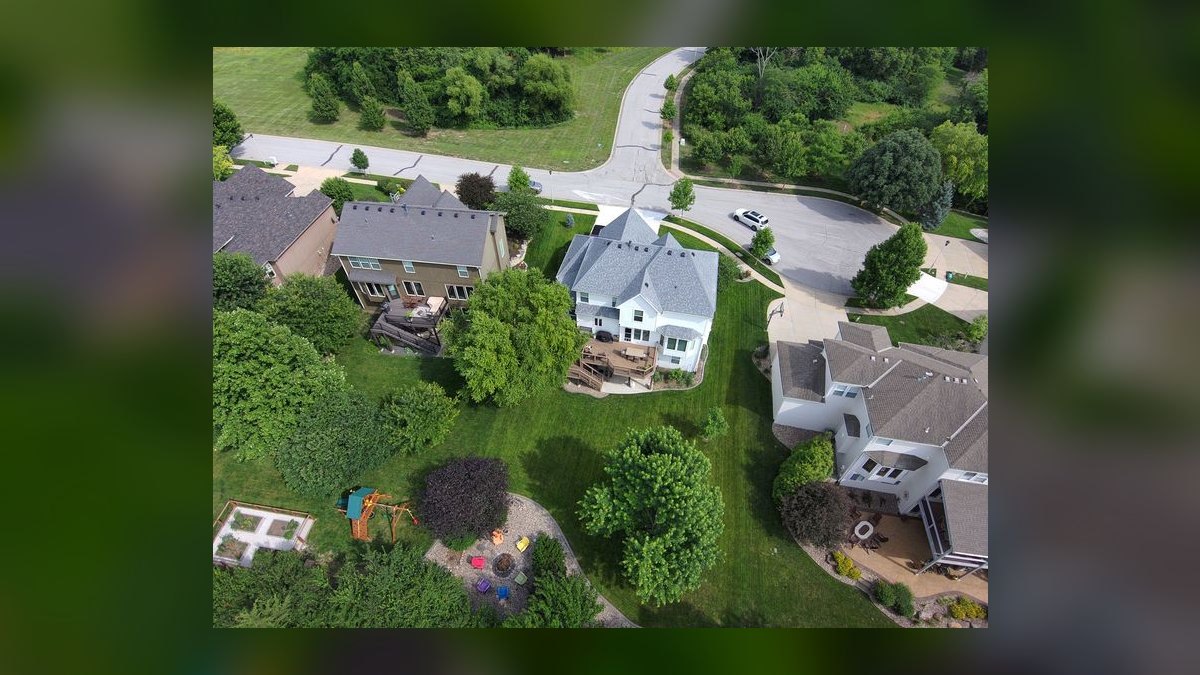
Days 22–35 — Close the portfolio gap. Photograph everything you have rights to. Get proper photography on at least three projects — a competent architectural photographer for a half day produces images that will carry your website for years, and phone photos of good work read as bad work. If you are short, run pilot projects at reduced fee with explicit written photo and CAD rights. Write a one-page case study for each project: the site problem, the constraint, the design move, the outcome. Clients buy the thinking, not just the picture.
Days 36–50 — Stack the toolkit and price the work. Choose one CAD platform and commit; switching mid-year costs you a month of productivity. Set up SketchUp for modeling, a proposal and client-communication tool, and bookkeeping from day one — retrofitting clean books later is miserable. Then build an actual fee schedule with three tiers: a concept package, a full design package with construction documents, and an hourly construction-administration rate. Publish the entry-level number. Clients self-qualify against a published starting fee, which kills unqualified consultations before they consume a Saturday.
Days 51–65 — Stand up the entity and coverage. Form the LLC with a real operating agreement rather than a template, obtain the EIN, open business banking, and bind both general liability and professional liability before the first contract. Have a contract attorney draft or review your design agreement once. The clauses that matter: scope definition, revision-round limits, an explicit statement that you are not responsible for means and methods of construction, an estimate-versus-guarantee disclaimer on installed cost, ownership of drawings, and a payment schedule with a stop-work provision. That review is the cheapest insurance you will ever buy.
Days 66–80 — Lock three referral channels, not one. First, high-end custom builders: approach the top five in your market and offer to handle landscape design on their new builds, either on a revenue-share arrangement or as a preferred subcontractor. Builders hate coordinating landscape and will hand it off gratefully. Second, listing agents working above the $1 million tier: they need pre-listing curb-appeal work on a compressed timeline and pay promptly because the seller's proceeds cover it. Third, one paid channel — a Houzz Pro premium placement or local search advertising — run as a defined ninety-day test with a tracked cost per qualified lead, not an open-ended subscription. Three channels means no single relationship souring can zero your pipeline.
Days 81–90 — Close three paid projects. This is the real test. Target $2,200–$4,800 per project for design-only work, or $18,000–$45,000 installed if you went the design-build route. If you cannot close three inside ninety days, stop spending and diagnose which of the three variables is broken. Portfolio failure looks like consultations that never convert to proposals. Price failure looks like proposals that get verbal enthusiasm and no signature. Positioning failure looks like no consultations at all. Each has a different fix, and spending more marketing dollars fixes none of them.
Alternative plays if the direct launch does not clear the gates
If a gate fails, there are four adjacent moves that keep you in the category without the full capital exposure.
Subcontract design at $65–$95 per hour. Established firms routinely need overflow drafting, rendering, and planting-plan capacity. You carry no general liability of consequence, spend nothing on marketing, and net roughly $85,000–$140,000 at thirty-five billable hours per week. The tradeoff is that you build no brand equity and no client list of your own. Treat it as a two-year runway builder with a hard exit date, or it becomes a permanent job with worse benefits than employment.
Remote design at volume. A photo-and-measurement-based workflow — client submits site photos and dimensions, you return a 3D rendering, planting plan, and sourcing guide without a site visit — supports $1,200–$2,500 per project and scales to well over a hundred projects annually because you eliminate windshield time entirely. Margins are strong because there is no travel and no field labor. Understand the competitive frame honestly: AI-assisted and templated remote services now dominate the sub-$1,500 residential tier and will keep compressing it. Position above that line, where clients pay for a credentialed human who understands their soil, drainage, microclimate, and municipal code.

Buy an existing firm instead of starting one. A large cohort of American small businesses is transitioning ownership this decade as owners retire, and landscape design-build firms in the $800,000–$2,000,000 revenue range change hands at multiples of seller's discretionary earnings in the low single digits. SBA acquisition financing typically covers a large share with a seller note behind it. You acquire crews, a client list, and cash flow from day one rather than burning $215,000 and eighteen months building them. The diligence burden is real — verify the customer concentration, whether revenue is contracted or project-by-project, and whether the departing owner *was* the sales function.
Go commercial-only. HOAs, multifamily properties, corporate campuses, and municipal work run master plans and phased capital improvements at $45,000–$280,000 per contract. Two to four contracts fill a year. Sales cycles run six to fourteen months through committees and RFPs, so you need working capital to survive the gap, but relationships persist for years and revenue is far more predictable than residential. This path rewards patience and administrative discipline over design flair.
Or specialize in native and water-wise design. Xeriscaping, native pollinator plantings, and stormwater-conscious residential design carry tickets in the $3,800–$8,200 range, and many municipal and regional water authorities in the arid West run turf-replacement and water-conservation rebate programs that effectively subsidize your customer acquisition — the utility markets the concept, and you capture the resulting demand. Verify the specific programs in your service area directly with the water authority, since eligibility and funding change annually. A defensible niche beats general practice in a crowded market every time.
Related questions
Do I need a landscape architecture license to sell designs?
It depends on your state's statute. All fifty states regulate landscape architects through practice or title acts, but scope varies widely — some restrict the work itself above certain thresholds, others only restrict the title. Read your board's scope language and, where needed, partner with a licensed professional who stamps.
How many projects do I need to close to replace a $90K salary?
At a $3,500 average design fee and 18% net margin, replacing $90,000 of take-home requires far more volume than most expect. Practically, price higher: thirty to thirty-five projects at $6,000 with disciplined overhead gets a solo principal to a comparable income by year two or three.
Should I offer installation to raise revenue?
Only if you already have crew relationships and $180,000-plus in capital. Installation multiplies gross revenue but compresses net margin to 5–7% and introduces payroll, workers' compensation, equipment debt, and receivables risk. Design-and-manage — a percentage fee on installed cost without holding the build contract — captures much of the upside with far less exposure.
What is the fastest path to eight portfolio projects?
Do it while still employed. Negotiate portfolio rights on employer work before resigning, run two or three reduced-fee pilots with explicit photo and CAD rights, and contribute a design to a community or nonprofit installation. Pay for real photography on at least three; phone snapshots make good work look amateur.
Is a landscaping franchise a shortcut into design work?
No. The recognizable national franchises in this sector are maintenance-led route businesses, not design practices, and they take 5–7% of gross in royalties. There is no franchise brand that improves design-practice unit economics, so a design business in this category is built independently.
FAQ
How much cash do I realistically need to start a landscape design business in 2027?
Plan on $40,000–$120,000 liquid for a design-only studio. That covers entity formation, insurance, a professional CAD seat, portfolio photography, a real website, initial marketing, and six to nine months of personal living expenses while revenue stabilizes. Under $25,000 is not a lean launch — it is a countdown clock, and it pushes you into discounting work to make rent, which permanently anchors your pricing low.
What revenue can a solo principal expect in year one?

A design-only solo principal typically lands $140,000–$280,000 in year-one revenue, translating to owner compensation of roughly $58,000–$94,000 after overhead. A design-build hybrid can gross $650,000–$1,600,000, but net margin compresses to 5–7% and the owner frequently takes $0–$45,000 in year one because cash is consumed by payroll, equipment notes, and material float.
How long until I break even?
Design-only studios generally reach breakeven between months seven and eleven, because fixed overhead is low and you collect retainers before performing work. Design-build firms take fourteen to twenty-two months, since crew payroll, equipment payments, and material purchases all precede collections. Your specific timeline tracks how fast you land the first eight to twelve completed projects and whether they generate referrals.
What market conditions make this a bad idea?
Markets where median household income sits below roughly $70,000 and median home value below $475,000, because design fees there routinely fall under $1,800 per project — the same working hours for a third of the revenue. Also avoid launching where fewer than eight design competitors operate; that usually signals homeowners have not been trained to pay for design, not an untapped opportunity.
How do I compete against low-cost AI and remote design services?
Do not compete below $1,500 per project — that tier is being commoditized and will keep compressing. Sell what remote and automated services cannot deliver: an on-site visit, soil and drainage assessment, microclimate judgment, knowledge of local code and HOA rules, regionally appropriate plant selection, and construction observation. Above roughly $3,000 per project, clients consistently pay for a credentialed human who visits the property.
What is the single most common reason new landscape design firms fail?
Undercapitalized launches paired with underpriced work. Owners open with too little runway, then discount to win the first projects, which anchors their pricing permanently and leaves no margin to hire help. The second most common cause is uncontrolled administrative overhead in design-build operations — change orders that go unbilled and receivables nobody chases while the owner is in the field.
Sources
- IBISWorld — Landscaping Services in the US
- National Association of Landscape Professionals — Industry Statistics
- CLARB — Landscape Architect Licensure Requirements by State
- American Society of Landscape Architects
- U.S. Bureau of Labor Statistics — Landscape Architects, Occupational Outlook Handbook
- U.S. Bureau of Labor Statistics — OEWS, Landscape Architects (17-1012)
- U.S. Census Bureau — American Community Survey
- U.S. Small Business Administration — 7(a) Loan Program
- EPA WaterSense — Outdoor Water Use
- IRS — Employer Identification Number (EIN)
Related on PULSE
- Should I open a interior design business in 2027?
- Should I open a graphic design freelance business in 2027?
- Should I open or buy a Closets by Design franchise in 2027?
- How do I franchise my own business in 2027?
- Franchise vs. independent business: which should I start in 2027?
- Should I open or buy a Padgett Business Services franchise in 2027?
This page will be disappearing soon. Save it to your device for $1 — or read it free while it is here.
@Kory-White- · if Venmo asks, the last 4 of my number are 2012
This page is gone.
This one is off the shelf now. $1 keeps it on your phone for good — the whole page, pictures and diagrams included.
 franchiseShould I open or buy a UPS Store franchise in 2027?
 frShould I open or buy a McDonald's franchise in 2027?
 franchiseShould I open or buy a Supercuts franchise in 2027?
 franchiseShould I open or buy a Panera Bread franchise in 2027?
 franchiseShould I open or buy a Rita's Italian Ice franchise in 2027?
 franchiseShould I open or buy a Whataburger franchise in 2027?
 franchiseShould I open or buy an Orangetheory Fitness franchise in 2027?
 franchiseShould I open or buy a Big O Tires franchise in 2027?
 franchiseShould I open or buy a Hand and Stone Massage franchise in 2027?
 franchiseShould I open or buy a Crumbl Cookies franchise in 2027?