


Should I open a independent painting business in 2027?
Quality
Certified
Yes, if you can estimate and sell — not just paint. An independent painting business in 2027 needs $20,000–$45,000 startup cash, breaks even around month four to six, and can net $75,000–$130,000 solo on $180,000–$320,000 revenue. Skip it if bidding profitably scares you.
The colonial on Maple Street, and why two bidders lost money on it
Picture a 2,400-square-foot two-story colonial in a suburb where homes trade around $475,000. The owners want the full interior — walls, trim, ceilings in four rooms, two bathrooms, a stairwell. Three painters walk it in the same week.
The first is a fifteen-year journeyman. He eyeballs the rooms, thinks "week and a half, maybe two guys," and writes $3,200 on a carbon-copy pad. He's competent with a brush and genuinely faster than most. He also just guaranteed himself a loss, because he priced from a feeling about how long it *should* take rather than from a count of what's actually there. The stairwell alone will eat a day and a half of ladder repositioning and cut-in work. There are 340 linear feet of baseboard he never measured.
The second bidder texts a number the next day: $6,900, no breakdown, no scope, nothing about how many coats or whether he's spraying or rolling the ceilings. The homeowners have no way to evaluate it, so it reads as a random large number. They don't call back.

The third walks the house with a laser measure and a phone app. She counts wall square footage room by room, notes the trim linear footage separately, flags the two rooms that need a stain-blocking primer because of water marks, and asks whether they want the closets included. Ninety minutes after leaving, they have a PDF: line-itemed scope, two-coat spec named by product line, a start window, a payment schedule, a signature block. Her number is $5,400. She books the job at full price and clears roughly $2,200 of gross profit on it after paint and labor.
That gap — $3,200 versus $5,400 versus a number nobody could evaluate — is the whole business. The paint is a commodity. Every operator in that metro buys from the same three stores at similar contractor discounts. The brushwork differences between a good crew and a great crew are real but small in dollar terms. What separates a painting business that pays for a house from one that dies at month seven is the ability to convert a walkthrough into a defensible number fast, and to make the homeowner feel safe handing over their keys.
The uncomfortable implication: the skill you spent fifteen years building is the *least* scarce input. Painting skill is abundant and hireable at $24–$32 an hour in most metros. Estimating discipline and sales follow-through are scarce, and they're what the market pays for. If you go in expecting your craft to be the moat, the market will correct you around the time your working capital runs out.
How a painting job actually converts cash into profit
Follow the money through one job and the mechanics get clear.
Lead arrives. In 2027 the dominant residential channel is Google Local Services Ads — the pay-per-lead placement above the regular search results with the verification badge. Operators in mid-size metros generally see cost-per-lead somewhere in the $30–$50 band, higher in dense coastal markets, lower in secondary cities. Traditional pay-per-click for painting keywords runs meaningfully more per *booked* job because you're paying per click, not per contact. Yard signs, door hangers in the neighborhoods where you just finished, and Nextdoor recommendations cost far less per lead but generate volume in bursts rather than steadily.
Contact to appointment. This is where most operators bleed. A homeowner who fills out a form at 7pm and gets a callback at 2pm the next day has usually already talked to someone else. Answering live, or calling back inside fifteen minutes, is worth more than any marketing spend increase. Same for the appointment itself: a same-week slot beats a next-week slot decisively.
Walkthrough to quote. Measure, don't estimate. Wall square footage, trim linear footage, ceiling square footage, and a separate note for every condition that adds labor — patching, caulk replacement, wallpaper removal, glossy surfaces needing a scuff and bond primer, exterior siding that needs scraping. Quote turnaround is a close-rate variable in itself. On-site or same-day beats next-day; next-day beats three-days-later by a wide margin.
Pricing the number. Build it from loaded cost and mark up. Loaded cost means the wage plus payroll taxes, workers comp, and the real overhead each field hour carries — insurance, vehicle, fuel, phone, software, marketing. A helper at $26 an hour is genuinely costing you well north of $35 once all of that lands on the hour. Multiply loaded cost by 1.6–1.9, add materials at a 30–40% markup, and you have a number that survives a bad week. Painters who mark up at 1.3 are working for wages with extra risk.
Production. Cash leaks here through rework, unplanned second trips, and scope creep the homeowner assumed was included. A written scope with explicit exclusions prevents most of it.
Collection. Residential typically means a deposit and a balance on completion, so cash cycles fast. Commercial and property management work is where net-45 and net-60 terms show up, which is a genuinely different cash-flow business even at better margins.
The loop at the bottom is the part that compounds. Every finished job in a target neighborhood is marketing inventory: before-and-after photos, a review, a reason to knock on forty nearby doors. Operators who work that loop hard see referral share climb past 40% by the second year, which is what actually kills customer acquisition cost and lifts net margin. Operators who treat each job as a transaction keep paying full price for every lead forever.
Real numbers: startup, margins, and the shape of year one
Here's the money laid out three ways. These are grounded ranges, not promises — your metro's wage floor and home values move every line.
| Line item | Solo start | One helper | Two-person crew |
|---|---|---|---|
| Sprayer, ladders, drops, hand tools | $2,500–$3,200 | $5,500–$7,500 | $12,000–$16,000 |
| Used cargo van | $9,000–$12,000 | $15,000–$22,000 | $28,000–$34,000 |
| Liability + workers comp deposit | $1,500–$2,200 | $2,800–$4,000 | $5,000–$7,000 |
| LLC, license, EIN, bond | $500–$800 | $700–$1,000 | $900–$1,300 |
| Initial marketing | $1,200–$2,000 | $3,000–$4,500 | $6,000–$9,000 |
| Working capital (8 weeks) | $4,000–$5,000 | $10,000–$13,000 | $20,000–$26,000 |
| Total startup cash | ~$20,000 | ~$44,000 | ~$85,000 |
| Year-one revenue range | $140K–$220K | $260K–$420K | $480K–$780K |
| Year-one owner net | $62K–$95K | $78K–$135K | $110K–$210K |
| Gross margin | 48–55% | 42–50% | 38–46% |
| Typical breakeven | Month 3–4 | Month 4–6 | Month 6–9 |
| Average job ticket | $1,800–$3,400 | $2,800–$5,200 | $4,800–$11,000 |
A few of these deserve explanation.
Why gross margin falls as you add people. Solo, your labor is your draw, so the "cost" of labor sits below the gross-margin line in how most owners think about it. Add a helper and real wage cost enters, plus the productivity tax of supervision. The trade-off is worth it because total gross profit dollars rise even as the percentage falls — 45% of $340,000 beats 52% of $180,000 by a wide margin. Chasing margin percentage instead of margin dollars is a classic small-contractor error.
Materials as a share of revenue. Paint and sundries typically land in the 12–18% range on interior residential at contractor pricing. Premium contractor-line paint runs meaningfully more per gallon than builder-grade, but it covers better, needs fewer coats, and holds up — the labor saved usually exceeds the material premium. Underspending on paint to protect a thin bid is how you buy yourself a callback.
Labor cost reality. Median painter wages have moved up substantially over the last few years as experienced tradespeople retired faster than new ones entered. Budget your helper at the top of your metro's band, not the bottom, and load it properly. A $26 wage with taxes, comp, and overhead attached behaves like $36–$40 per productive field hour once you account for drive time, store runs, and setup that isn't billable.
Insurance. General liability for a small painting operation commonly runs a few thousand dollars a year for $1M/$2M limits, and it's been trending up — ladder falls and overspray claims drive the class. Workers comp for painting is a high-rate class code; if you hire, price it before you hire, not after.
Billable-hour math. If you bill residential interior work at $65–$95 per hour of applied labor and your loaded field cost is in the mid-$30s, each field hour throws off roughly two to three times its cost in gross profit. That's the engine. It only runs if the hours are *sold*. A painter with a full skill set and an empty calendar earns nothing, which is why estimating appointment volume — three to six walkthroughs a day in the ramp phase — is the real production metric in months one through six.
Ticket size and where the good work is. Generic interior room-by-room work has the lowest tickets and the most price shopping. Cabinet refinishing runs several thousand per kitchen with notably better gross margins and lower material intensity. Exterior repaints in established neighborhoods carry bigger tickets and cluster geographically. Property-management turnover work pays less per square foot but arrives predictably and requires no selling once you're on the vendor list — a genuinely different, calmer business that pairs well with retail residential as ballast.
What else you could do with the same money and the same skills
Opening an independent shop from zero is one of four reasonable paths. Each one buys a different risk profile.
Buy an existing one- or two-truck painting company. Small home-service businesses commonly change hands in the range of roughly three times seller's discretionary earnings, and SBA 7(a) financing can cover most of the purchase with a modest down payment. You get revenue on day one, a customer list, a Google review history that would take you two years to build, and often a crew that already knows the work. You also inherit whatever's broken — a pricing model that never worked, a bad review streak, key-man risk if every customer relationship lives in the seller's head. Diligence on a business this size is mostly bank statements, tax returns, and a hard look at whether revenue survives the owner leaving.
Buy a painting franchise. The national painting brands charge a meaningful upfront fee plus an ongoing royalty in the mid-to-high single digits of revenue. What you get is brand recognition in the search results, an estimating and CRM system that's already been debugged, national account relationships, and a peer network of operators who've solved your problem already. For someone who has never sold anything or run a P&L, that structure demonstrably raises the odds of surviving year one. What you give up is real money forever — a royalty on every dollar, plus a marketing fund contribution, plus territory constraints and brand-standard requirements. Read Item 7 and Item 19 of the Franchise Disclosure Document carefully; Item 19 is where the financial performance representations live, and the absence of one is itself information.
Specialize instead of generalizing. Cabinet refinishing only. Or exterior only. Or commercial and property management only. Narrow beats broad early because your estimating gets accurate fast on repeated job types, your equipment list shrinks, your marketing message is specific, and your referral network self-selects. A cabinet-only operation can run out of one van with a portable spray setup, sell at premium tickets, and never bid a bedroom.
Stay a subcontractor and skip ownership. Painting subs for builders and general contractors trade margin for volume and zero marketing cost. The work arrives; you never sell. Margins are thinner, payment terms are worse, and you're one relationship away from zero revenue. But the operational simplicity is real, and it's a legitimate way to build capital before opening a retail-facing business.
The path you pick should follow your actual gap, not your preference. Strong seller with thin capital: start solo and self-perform. Strong operator who hates selling: franchise or subcontract, and pay for the lead flow. Decent at both with access to financing: buying an existing book is often the highest-expected-value move, because the hardest thing to manufacture in this trade is a warm customer list.
The failure patterns, in the order they usually kill people

Underbidding out of fear. The most common death. A new owner wants the job, senses the homeowner flinching, and shaves the number. Do it enough and you've built a business that runs at capacity and loses money — the worst possible state, because you're too busy to fix it. The defense is mechanical: build every quote from measured quantities and loaded cost, apply your multiplier, and let the number be the number. Losing a bid at a profitable price is a good outcome. Winning at 1.2x loaded cost is a slow-motion failure.
Running out of working capital on a slow-pay job. You take an $11,000 commercial job at good margin. You pay your crew weekly and your paint account in thirty days. The customer pays in sixty-five. If your bank balance can't absorb that gap you are insolvent while profitable, which is the most maddening way to close a business. Rules that prevent it: get a deposit on anything substantial, keep eight weeks of payroll and materials in cash before you hire anyone, and never let a single receivable exceed what you can float.
No pipeline discipline. Month one you're hungry and quoting constantly. Month three you're on a jobsite all day, exhausted, and not booking anything. Month five your calendar is empty and you panic-bid. The fix is protecting estimating time like it's a client — a fixed block every day, non-negotiable, even when you're slammed. This is the single hardest habit for craft-first owners and the most predictive of survival.
Hiring before the work exists. A helper on payroll during a slow stretch burns cash fast. Hire when you have consistent back-to-back weeks booked, not when you hope to. Some operators bridge with 1099 subcontract crews for overflow — real classification rules apply and vary by state, so get that structured properly rather than assuming.
Skipping the license or carrying wrong insurance. Many states require a contractor license above a fairly low job-value threshold, and requirements differ enough that you must check your own state's licensing board directly rather than trusting a summary. Working unlicensed where a license is required can void your insurance coverage on a claim, expose you to fines, and make a lien unenforceable if a customer refuses to pay. Verify before the first job, and confirm your general liability actually covers the work you're doing — some policies exclude spray application or work above a certain height.

No written scope. Verbal scope is how a $5,400 job becomes a $5,400 job with three days of free work stapled on. Write what's included, write what isn't — closets, garage, hardware removal, furniture moving, minor drywall repair — and get a signature. Change orders in writing, every time, even for a friend.
Treating jobs as transactions. Finish, get paid, move on, buy another lead. That's a treadmill. The photo, the review request, the door hangers on the surrounding block, the note in the calendar to check back in five years for the repaint cycle — that's an asset. Existing homes cycle interior paint roughly every five to seven years and exterior every seven to ten. A customer list you actually maintain becomes a predictable revenue base that costs nothing to reach.
Ignoring the adjacent revenue sitting in front of you. You're already in the house. Pressure washing, deck staining, drywall repair, light carpentry, cabinet work, epoxy garage floors — each is a modest add-on that raises average ticket without new customer acquisition cost. The operators who grow fastest usually aren't better painters; they're better at selling the second thing to a customer who already trusts them.
Related questions
Is an independent painting business better than a painting franchise?
Independent keeps the royalty — often mid-to-high single digits of revenue — and the upfront fee in your pocket, which is real money at scale. Franchise buys systems, brand recognition, and lead flow, which raises survival odds if you've never sold or run a P&L. Choose based on your gap.
How many quotes do I need to run to stay booked?
In the ramp phase, three to six walkthroughs a day. At a 30–40% close rate and a $2,800 average ticket, that volume produces enough booked work to keep a solo operator or a two-person crew busy. Falling below it is the leading indicator of a dry month four weeks out.
Do I need a contractor license to paint?
Many states require one above a job-value threshold that can be as low as a few hundred dollars. Requirements vary substantially, so check your state licensing board directly. Working unlicensed can void insurance coverage, block liens, and trigger fines.
What's the fastest way to raise average job ticket?
Sell adjacent scope to customers already in the pipeline — cabinet refinishing, exterior trim, pressure washing, deck staining, drywall repair. No new acquisition cost, and the trust is already established. Cabinet work in particular carries better margins than standard interior wall painting.
Should I take commercial and property management work?
Yes as ballast, cautiously. It arrives predictably and needs almost no selling once you're on a vendor list, but tickets are lower per square foot and payment terms of net-45 or net-60 are common. Don't take it until your cash position can float the gap.
FAQ
How much cash do I really need to open an independent painting business?
Realistically $20,000 solo and $40,000–$45,000 if you're starting with a helper. The van and the working-capital reserve dominate the number; equipment is comparatively cheap. Buying a used van and a mid-range sprayer instead of new gear cuts the total meaningfully, and eight weeks of payroll plus materials in the bank is the line between a slow month and a closed business.
What can I realistically net in year one?

A working-owner solo operator commonly nets $62,000–$95,000 on $140,000–$220,000 of revenue. Add a helper and both numbers rise — roughly $78,000–$135,000 net on $260,000–$420,000. The spread inside those ranges is almost entirely explained by close rate and pricing discipline, not by how well you paint.
How long until I break even?
Solo, typically month three or four, because your only fixed costs are the van, insurance, phone, and software. With a helper on payroll, month four to six. A two-crew launch pushes it toward month six to nine because payroll starts before the pipeline matures. Breakeven is mostly a function of how fast you get quoting volume up.
Is 2027 actually a good time to start, or is the market saturated?
Demand fundamentals are solid: a large and aging existing-home stock means repaint cycles keep firing regardless of new construction, and interior work is relatively insulated from housing-transaction volume. The constraint is labor, not customers — experienced painters are harder to hire than they were a few years ago. If you can recruit and retain a good helper, there's room.
Do I need to be a great painter to make this work?
No. You need to be a competent painter and a disciplined estimator. Painting skill is hireable in most metros. Estimating accuracy and sales follow-through are not, and they're what determine whether the business makes money. The trade rewards the person with a measuring tool and a phone over the person with the best brush technique.
Can I start without any employees?
Yes, and many successful owners run solo for the first six to nine months deliberately. Self-performing keeps labor cost variable, forces you to learn your own production rates — which makes your estimating far more accurate later — and lets you build a cash cushion before payroll starts. Hire when you've got consistent back-to-back booked weeks, not when you're hoping for them.
Sources
- https://www.bls.gov/oes/current/oes472141.htm — BLS Occupational Employment and Wage Statistics, Painters, Construction and Maintenance
- https://www.bls.gov/ooh/construction-and-extraction/painters-construction-and-maintenance.htm — BLS Occupational Outlook Handbook, Painters
- https://www.sba.gov/business-guide/manage-your-business/manage-your-finances — SBA guidance on managing business finances and break-even analysis
- https://www.sba.gov/funding-programs/loans/7a-loans — SBA 7(a) loan program terms and eligibility
- https://www.census.gov/programs-surveys/ahs.html — US Census Bureau American Housing Survey (housing stock age and condition data)
- https://www.nar.realtor/research-and-statistics — National Association of Realtors research and existing-home sales statistics
- https://www.ftc.gov/business-guidance/resources/consumers-guide-buying-franchise — FTC guide to buying a franchise and reading the FDD
- https://www.irs.gov/businesses/small-businesses-self-employed/independent-contractor-self-employed-or-employee — IRS guidance on contractor vs. employee classification
- https://www.osha.gov/laws-regs/regulations/standardnumber/1926/1926subpartX — OSHA ladder and stairway standards for construction
- https://www.epa.gov/lead/renovation-repair-and-painting-program — EPA Lead Renovation, Repair and Painting (RRP) rule requirements
Related on PULSE
- Best painting franchises to buy in 2027
- Franchise vs. independent business: which should I start in 2027?
- Should I open or buy a Painting with a Twist franchise in 2027?
- Should I open or buy a WOW 1 DAY PAINTING franchise in 2027?
- Should I open or buy a 360 Painting franchise in 2027?
- Should I open or buy a Five Star Painting franchise in 2027?
This page will be disappearing soon. Save it to your device for $1 — or read it free while it is here.
@Kory-White- · if Venmo asks, the last 4 of my number are 2012
This page is gone.
This one is off the shelf now. $1 keeps it on your phone for good — the whole page, pictures and diagrams included.
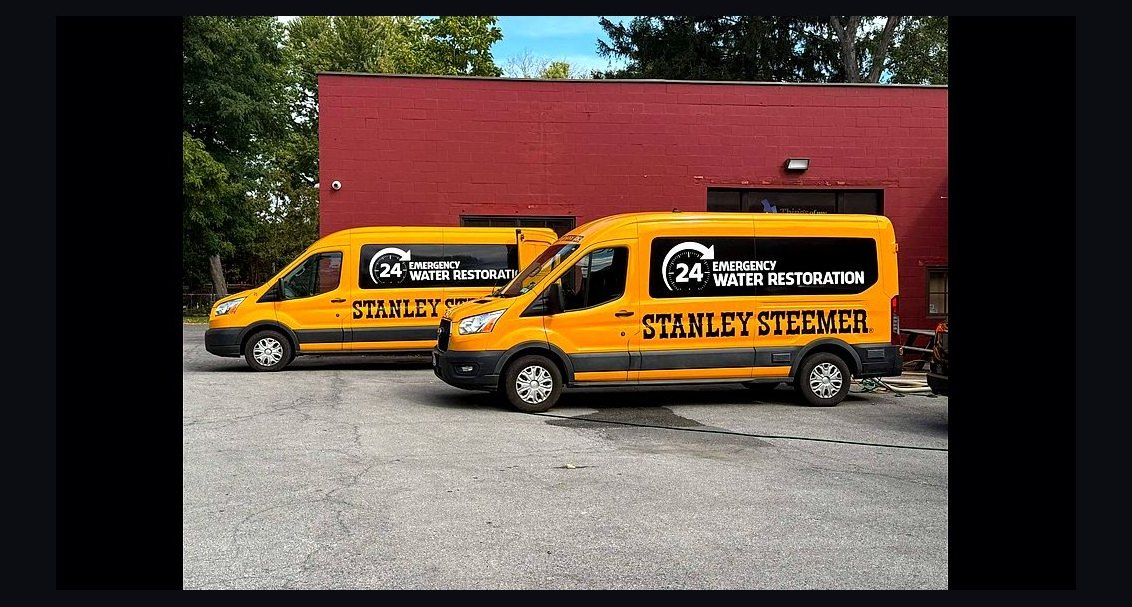 franchiseShould I open or buy a Stanley Steemer franchise in 2027?
 franchiseShould I open or buy a Take 5 Oil Change franchise in 2027?
 franchiseShould I open or buy a Cinnabon franchise in 2027?
 franchiseShould I open or buy a Dunkin' franchise in 2027?
 franchiseShould I open or buy an Anytime Fitness franchise in 2027?
 franchiseShould I open or buy a Little Caesars franchise in 2027?
 franchiseShould I open or buy a Roto-Rooter franchise in 2027?
 franchiseShould I open or buy a McAlister's Deli franchise in 2027?
 franchiseShould I open or buy a Jeremiah's Italian Ice franchise in 2027?
 franchiseShould I open or buy a Papa John's franchise in 2027?