


Should I open a mobile detailing business in 2027?
Quality
Certified

Yes — open a mobile detailing business in 2027 if you can work 40+ hours weekly for a full year, live where fair weather runs 150+ days annually, and start with $15,000 or less. Solo operators typically clear $75,000–$110,000 in Year-1 cash flow and hit breakeven in 60–90 days. Skip it if you need immediate six-figure income, dislike physical labor, or want a hands-off franchise from day one.
A Driveway, A Van, And A Decision
Picture a 34-year-old former dealership detailer in Tampa, laid off after a corporate restructuring, sitting on $9,000 in savings and a 2016 Honda Odyssey that still runs fine. He's good with a dual-action polisher, he's watched every paint-correction tutorial twice, and he's tired of making someone else rich off his hands. That's the exact profile this business was built for — and it's also the profile most likely to talk themselves out of it because "starting a business" sounds bigger than it is.
The reality is less dramatic than the decision feels. He doesn't need a storefront, a loan, or a business partner. He needs a generator, a pressure washer, a water tank, insurance, and a Google Business Profile. The entire mobile detailing model exists because customers will pay a premium to avoid driving to a shop and waiting two hours — the convenience fee alone covers a meaningful chunk of overhead. His first month won't look like a business; it'll look like him driving to five houses a week, charging $150–$250 per car, and banking almost all of it because there's no rent, no lease, and no payroll. That's the scenario every mobile detailer starts in, whether they're 22 or 52, whether they came from a dealership or a desk job. The business only gets complicated once he decides to add a second van — until then, it's one person, one kit, and a calendar.

The question "should I open" collapses into a simpler one: can this specific person, in this specific market, generate enough bookings per week to cover a modest nut and still draw a livable income? For most Sun Belt and coastal operators willing to hustle, the answer is yes, and it's yes faster than almost any other owner-operator service business because the capital bar is so low.
How The Mobile Model Actually Works
A mobile detailing business runs on a route-density engine, not a storefront traffic engine, and understanding that mechanism is the difference between profit and burnout. Unlike a fixed shop that waits for cars to arrive, the mobile operator manufactures their own proximity by clustering jobs geographically and treating drive time as a cost center that eats directly into effective hourly wage.

Here's the mechanical sequence: a customer books online or via phone, the operator confirms a time window, drives to the location with a self-contained water and power supply (tank plus generator, since most driveways don't offer a spigot the operator wants to use), performs the service in 1–3 hours depending on package, collects payment via Square or Stripe on-site, and immediately requests a review or referral before leaving. The entire loop — booking to payment — can close in under 24 hours with zero accounts receivable, which is a structural advantage over B2B service models that invoice net-30.
The economics only work if jobs are batched by neighborhood. A detailer who books one car in the morning across town and another in the afternoon across town has effectively worked a half day for one job's worth of revenue. The operators who hit $75,000+ in Year 1 are the ones who refuse single bookings outside a tight radius unless the ticket is large enough (ceramic coating, paint correction) to absorb the drive.
That diagram is the whole business model in miniature: every booking either reinforces route density or erodes it, and the operator's pricing, scheduling, and marketing decisions all exist to keep jobs sliding toward the left side of that loop rather than the right.
The Numbers That Actually Matter

NAICS 811192 (Car Wash and Auto Detailing) is roughly an $18.6 billion U.S. industry with over 67,000 establishments, and mobile detailing is the fastest-growing slice of it because the convenience premium is real and most markets remain underserved outside major metros. A solo bootstrap operator can get functional with $3,000–$8,000 in equipment: a Honda EU2200i generator (~$1,200), a mid-range pressure washer (~$350), a hot-water extractor for interiors (~$1,400), a 100-gallon water tank (~$400), a dual-action polisher (~$550), a shop vacuum (~$900), and starter chemicals (~$600). A fuller kit with a dedicated cargo van pushes total investment to $10,000–$20,000.
Pricing in 2027 generally lands in these bands: express exterior wash $45–$75, full interior-and-exterior detail $180–$350 on a sedan and $250–$450 on an SUV or truck, paint correction $400–$900, and ceramic coating $800–$2,500. Because the operator is the labor, solo gross margins run 60–80%; the moment an employee enters the picture, margins compress toward 15–35% once wages and workers' comp are added, which is why most successful operators stay solo through at least their first 12–18 months.
Commercial auto insurance runs roughly $1,800–$2,400 a year ($150–$200/month) through carriers like Hiscox, Next Insurance, or Thimble, and that line item has risen 18–24% industry-wide since 2024 — budget for the higher end rather than the number you saw quoted two years ago. Breakeven for a solo operator typically requires $3,500–$5,000 in monthly gross revenue to cover insurance, fuel, chemicals, software, and a basic owner draw, which is roughly five jobs a week at a $200 average ticket. Most self-funded operators clear that threshold inside 60–90 days specifically because there's no rent or buildout eating into the runway while they ramp up booking volume.

Climate is the single biggest variable in the model. Sun Belt and coastal markets — Phoenix, Tampa, Orlando, Houston, San Diego, Charlotte, Jacksonville, Las Vegas, Austin, Miami — offer 200+ working days a year compared to roughly 130 in Chicago or Minneapolis, which translates to a 40–55% revenue swing based purely on geography. An operator in a cold-weather market without a heated indoor backup should expect a 60–80% revenue drop from November through March unless they pivot to interior-only services or ceramic/PPF work that can be scheduled in a heated garage.
Trade-Offs: Mobile, Fixed Shop, Or Franchise
The decision to open isn't just "yes or no" — it's a choice among structurally different paths, and each one trades capital for control, speed, or scale in a different way. A fixed-location detail shop costs $80,000–$220,000 to open because of rent, lifts, and buildout, but it supports higher-capacity work like paint booths and PPF installation that's awkward to do curbside; it's a better fit for someone targeting ceramic and correction specialization in a dense urban market where customers are used to dropping off a car.

A franchise like DetailXPerts sits at the opposite end: total investment of $73,000–$182,000 per the 2024 Franchise Disclosure Document, with breakeven stretching to 9–14 months and EBITDA margins of 35–45% — lower than the independent path because royalties and territory fees eat into the top line. The trade is a built playbook, training, and brand recognition versus the independent operator's faster breakeven and full margin retention. Franchise buyers should always request Item 19 financial performance data and talk to both the five most recent and five longest-tenured franchisees before signing, since outcome dispersion in detailing franchises is wide.
Adjacent niches worth weighing against straight sedan-and-SUV detailing include boat, RV, and aviation detailing, which carry 2–4x the ticket size of a car ($800–$3,500) but demand different equipment (long hoses, oxidation removal skill, marine-specific chemicals) and run on a more seasonal calendar. Fleet contracts — dealerships, real estate brokerages, RV resorts, marinas — offer recurring revenue ($2,000–$5,000/month per account) that smooths out the lumpiness of one-off retail bookings, and most successful mobile operators eventually pursue at least one fleet account once their retail calendar is full.
The honest read: the independent mobile path wins on speed to cash flow and margin retention for almost everyone starting under $20,000, which is why it dominates the segment. The franchise and fixed-shop paths only make sense when the operator specifically wants a proven system or needs the equipment a storefront provides.
Where New Operators Lose Money

The most common failure mode isn't lack of skill — it's pricing like a commodity in a market being flooded by express tunnel washes. Mister Car Wash, Take 5, and Quick Quack are adding hundreds of locations a year with $15–$25 unlimited monthly memberships, and any mobile operator trying to compete on a basic wash-and-vac at $50 a car is fighting a price war they cannot win. The mobile business only works as a premium play — ceramic coating, paint correction, interior shampoo, headlight restoration — services the tunnel can't touch.
A second common mistake is underpricing drive time. An operator who takes every booking regardless of location will spend hours a day in the van instead of on a hood, and that silent cost shows up weeks later as an effective hourly wage far below minimum wage even though the invoice total looked fine. The fix is a minimum ticket size or convenience fee for anything outside a tight service radius, enforced from week one rather than retrofitted after burnout sets in.
A third mistake is skill overreach — attempting paint correction or ceramic application on a customer's expensive vehicle before practicing on cheap panels or junkyard parts. A single swirl-mark mistake on a high-end car can wipe out two weeks of profit in a refund, and it damages the word-of-mouth reputation the entire model depends on for repeat and referral bookings. New operators should treat the first month as paid practice at a discount, not full-price production.

Finally, undercapitalization causes slow bleeding rather than sudden failure: an operator who skips insurance to save $150 a month, or buys the cheapest possible pressure washer and burns it out in six weeks, ends up spending more in replacement costs and liability exposure than they saved. Budgeting the full $8,000–$14,000 range for a credible kit and insurance from day one prevents most of the early-stage cash crunches that push people to quit in month three.
Related questions
How much does it cost to start a mobile detailing business?
Most solo operators launch for $3,000–$8,000 with a bootstrap kit, or $10,000–$20,000 with a fuller setup including a dedicated van. Insurance adds $150–$200/month on top of equipment costs.
Is mobile detailing more profitable than a fixed shop?
Per dollar invested, yes — solo mobile margins run 60–80% with no rent, versus a fixed shop's higher ticket ceiling offset by $80,000–$220,000 in buildout costs and ongoing lease obligations.
What's the biggest risk in starting a mobile detailing business?
Underpricing drive time and competing on price against $15 tunnel washes. The business only survives as a premium, skill-based service — not a commodity wash-and-vac operation.
Do I need a van to start a mobile detailing business?

No — a 4x8 enclosed trailer behind an existing truck (roughly $3,500 used) works for solo operators. A dedicated cargo van ($14,000–$22,000) becomes worthwhile once volume justifies it.
Can I run a mobile detailing business part-time?
Yes, but growth slows significantly. Full-time effort of 40+ hours weekly is what drives the $75,000–$110,000 Year-1 income range most successful solo operators report.
FAQ
How much money do I need to open a mobile detailing business in 2027? Most operators launch viably with $5,000–$15,000 in cash if they already own a usable vehicle. That covers a pressure washer, water tank, chemicals, insurance, and basic marketing setup. Going beyond $15,000 usually means financing a dedicated van, which isn't required to start.
What income can I realistically expect in the first year? Solo operators in warm-weather markets typically report $75,000–$110,000 in personal cash flow during Year 1, working full-time at $1,400–$2,200 in average weekly revenue. Ceramic coating upsells at $800–$2,500 per job drive much of the higher end of that range.

Do I need formal certification to open a mobile detailing business? No certification is legally required, but customers expect competent results. Most owners build skill through YouTube tutorials, practice on friends' and family's cars at a discount, or take a short paid course before charging full price for correction work.
How do I get customers without a physical storefront? Door-knocking, Nextdoor and Facebook neighborhood groups, referral discounts, and consistent before/after content on Instagram and TikTok are the primary channels. Paid advertising can help later but isn't necessary to fill an initial calendar.
What happens to a mobile detailing business in a cold climate? Expect a 60–80% revenue drop from roughly November through March unless you invest in a heated garage or trailer, which adds $10,000–$20,000 to startup costs. Sun Belt and coastal markets with 150+ fair-weather days avoid this problem entirely.
Should I open a mobile detailing business or buy an existing franchise? Open independently if you want the fastest breakeven and full margin retention — most solo operators hit breakeven in 30–90 days. Choose a franchise like DetailXPerts only if you specifically want a built training system and are comfortable with a longer 9–14 month breakeven.
Sources
- IBISWorld — Car Wash & Auto Detailing in the US Industry Report (NAICS 811192)
- U.S. Bureau of Labor Statistics — Occupational Employment Statistics, Cleaners of Vehicles & Equipment (SOC 53-7061): https://www.bls.gov/oes/current/oes537061.htm
- S&P Global Mobility — Average Age of Vehicles in Operation in the U.S.: https://www.spglobal.com/mobility
- Small Business Administration — Microloan Program: https://www.sba.gov/funding-programs/loans/microloans
- Small Business Administration — 7(a) Loan Program: https://www.sba.gov/funding-programs/loans/7a-loans
- International Franchise Association: https://www.franchise.org
- Hiscox — Commercial Auto and General Liability Insurance: https://www.hiscox.com
- IRS — Apply for an Employer Identification Number (EIN): https://www.irs.gov/businesses/small-businesses-self-employed/apply-for-an-employer-identification-number-ein-online
- Google Business Profile: https://www.google.com/business/
- International Detailing Association: https://the-ida.com
Related on PULSE
This page will be disappearing soon. Save it to your device for $1 — or read it free while it is here.
@Kory-White- · if Venmo asks, the last 4 of my number are 2012
This page is gone.
This one is off the shelf now. $1 keeps it on your phone for good — the whole page, pictures and diagrams included.
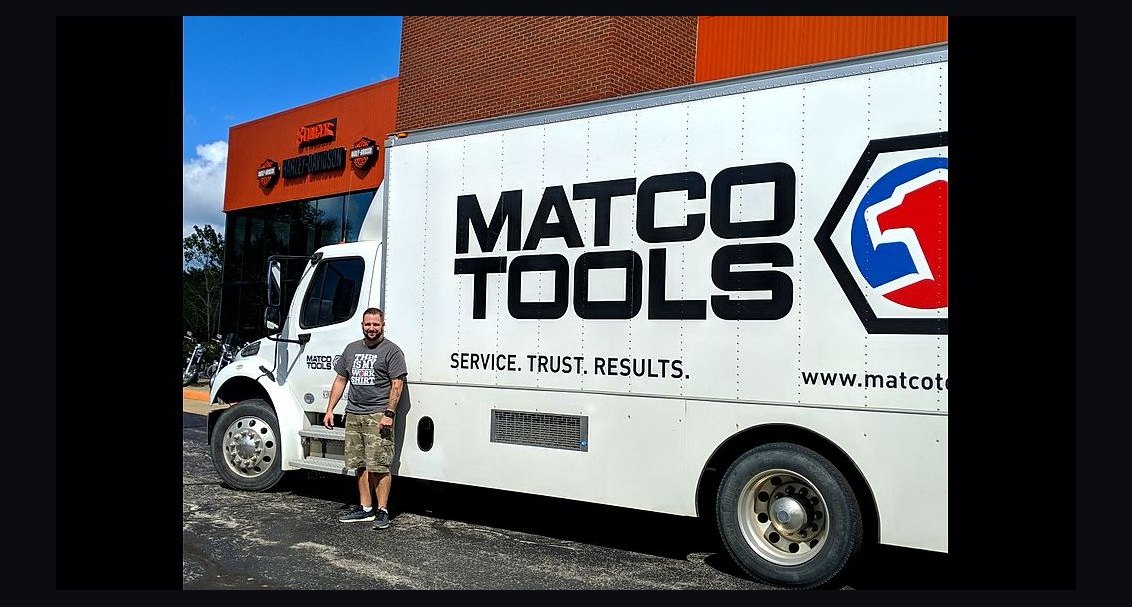 franchiseShould I open or buy a Matco Tools franchise in 2027?
 franchiseShould I open or buy a Drybar franchise in 2027?
 franchiseShould I open or buy a Stanley Steemer franchise in 2027?
 franchiseShould I open or buy a Valvoline Instant Oil Change franchise in 2027?
 franchiseShould I open or buy a Jimmy John's franchise in 2027?
 franchiseShould I open or buy a Papa John's franchise in 2027?
 franchiseShould I open or buy a Jeremiah's Italian Ice franchise in 2027?
 franchiseShould I open or buy a Subway franchise in 2027?
 franchiseShould I open or buy a KinderCare franchise in 2027?
 franchiseShould I open or buy a Bojangles franchise in 2027?