


Should I open or buy a Sit Means Sit dog training franchise in 2027?
Quality
Certified

Buy or open a Sit Means Sit franchise only if you are a sales-driven dog person willing to train hands-on for two years. Entry capital is low — roughly $25,000 to $130,000 depending on mobile versus facility — but the brand does not fill your calendar. Local marketing, e-collar comfort, and trainer retention decide whether it works.
Two paths: buying an existing territory versus opening a new one
The single most consequential decision comes before you ever sign a franchise agreement, and most prospective owners skip past it because they only ever hear about one option. You can open a brand-new territory from zero, or you can buy an existing franchisee's operation as a resale. These are not variations on one theme. They have different capital stacks, different risk profiles, different first-year cash flows, and they suit fundamentally different operators.
Opening new means you pay the initial franchise fee — reported around $25,000 in recent Sit Means Sit disclosure filings — plus vehicle, equipment, technology, insurance, initial marketing, and working capital. On the mobile-only model, where you train in clients' homes and at parks rather than in a leased space, total startup lands near the bottom of the Item 7 range. There is no buildout, no landlord, no facility insurance rider, and no fixed rent obligation while you have zero clients. That last point matters more than people appreciate. A new territory has no revenue for the first eight to twelve weeks while you complete headquarters certification and start booking. If your only fixed monthly costs are a vehicle payment, insurance, and the royalty, you can survive that gap on a few thousand dollars of reserves. If you have signed a five-year lease, you cannot.
Buying an existing territory inverts the math. You are purchasing revenue that already exists — a client list, a Google Business Profile with real reviews, an established referral network with local veterinarians and groomers, and often trained staff who already know the methodology. Service businesses of this type typically trade somewhere in the range of two to three times seller's discretionary earnings, though the multiple varies enormously with size, staff depth, and how much of the revenue walks out the door when the founder does. A territory producing $110,000 in owner earnings might list somewhere in the mid-to-high six figures. That is a materially larger check than opening new, and you will likely need SBA financing rather than cash.

What you buy for that premium is time. A resale can pay you a salary in month one. A new territory usually cannot pay you meaningfully until month six or later. If you have two years of living expenses banked and enjoy building from nothing, opening is the better return on capital. If you need income immediately or you are buying this as a career transition with a mortgage attached, the resale premium is often worth paying.
There is a third path worth naming, because operators discover it late: buying a distressed territory. Franchise systems always contain some number of underperforming units — owners who lost interest, got sick, or never learned to sell. These sometimes transfer for little more than the transfer fee and assumption of obligations. The upside is obvious. The trap is that a territory underperforms for a reason, and if that reason is market density rather than operator effort, you have bought someone else's structural problem. Before touching a distressed unit, establish whether the previous owner failed at marketing (fixable) or the territory genuinely lacks pet-owning households with disposable income (not fixable).
The methodology question that sits underneath everything
You cannot evaluate this franchise without evaluating its training method, because the method is the product and it is genuinely polarizing in a way that most franchise categories never have to contend with.
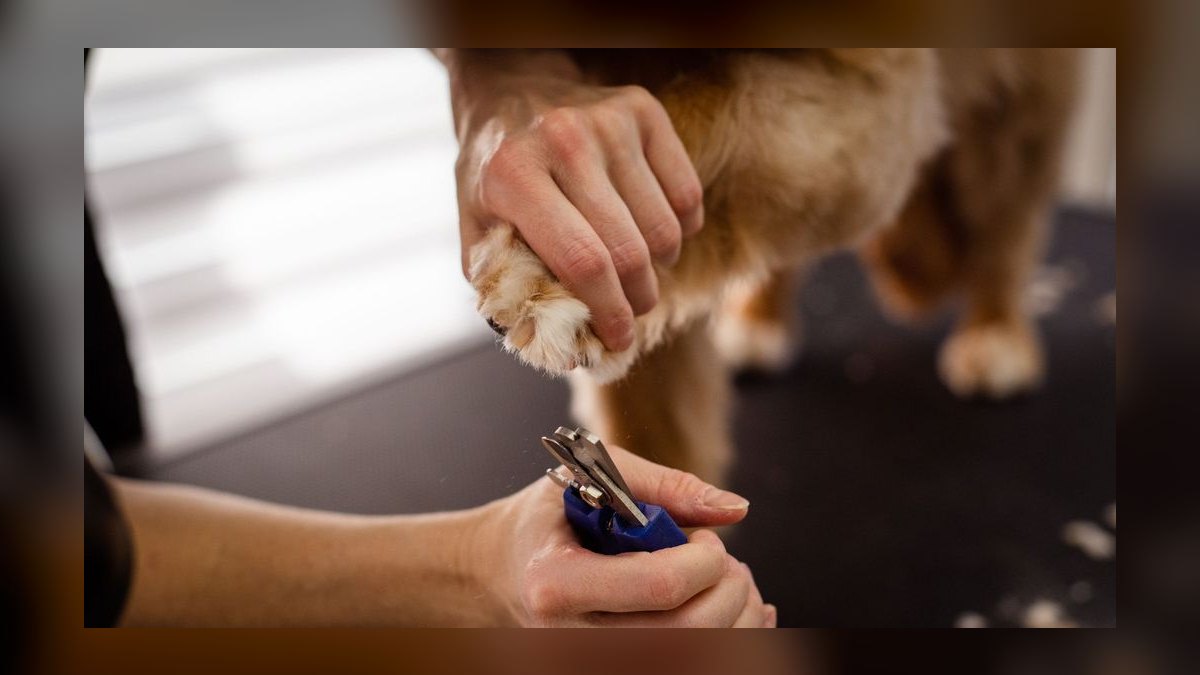
Sit Means Sit uses what the industry calls a balanced approach — remote training collars, commonly called e-collars, combined with positive reinforcement, aimed at reliable off-leash control. The system's competitive claim is speed and reliability: dogs that recall dependably around distractions, faster than many purely positive-reinforcement programs achieve. For a certain client — the owner of a large, high-drive dog with a serious behavioral problem — that speed is exactly what they are buying, and they will pay premium package prices for it.
But a meaningful and growing share of the dog-owning public has been taught, through veterinary behaviorist guidance and social media, that aversive tools are unacceptable. Several major veterinary and animal-behavior professional organizations have published position statements favoring reward-based methods and cautioning against aversive equipment. Some jurisdictions outside the United States have restricted e-collar use entirely. Domestically, the regulatory picture is patchy but not static — municipal ordinances change, and a rule change in your county is a direct hit to your delivery model.
The practical consequences of this are concrete and worth planning for. First, a slice of your total addressable market will never call you regardless of your results, because they have already decided. Second, you will occasionally receive negative online reviews that are not about your service quality at all but about the methodology, and those reviews sit permanently on your profile alongside legitimate feedback. Third, referral relationships with local veterinary practices — which are otherwise one of the highest-quality lead sources in this business — may be closed to you if the practice has a stated positive-only policy. Fourth, if you hire trainers, you are recruiting from a labor pool where many of the most credentialed candidates hold certifications from organizations that discourage aversive tools.
None of this makes the business unworkable. Plenty of balanced trainers run full calendars and long waitlists. But it changes the operator profile required. You need someone who can explain the method calmly to a skeptical client, who does not get defensive when challenged, and who is comfortable being the local business that some percentage of the community actively dislikes. If that description makes you uneasy, look hard at the positive-reinforcement-forward alternatives before you sign anything.
Run one concrete test before you commit: use the method on your own dog, under supervision, at a discovery day. Not a demonstration where you watch someone else. You, holding the transmitter, on your own animal. If you cannot do it comfortably, you cannot sell it credibly for five years.
How to decide between opening, buying, and walking away

The decision is sequential rather than simultaneous. Certain findings should stop the process entirely, and you want to hit those gates before you spend money on legal review or travel.
Start with the market gate. Dog training is a discretionary purchase with a typical program price in the hundreds to low thousands of dollars. The households that buy it skew toward suburban, family-formation, above-median-income, single-family-home with a yard. Pull census tract data for your prospective territory and count how many households actually match. A territory of 100,000 households where only 15% clear the income and housing profile is a very different business from one where 45% do. Then check local ordinances on remote training collars, and check the competitive field — count the independent trainers already ranking on the first page of local search, note whether they advertise as positive-only or balanced, and see whether any national competitor already has presence.
Only after the market clears do you move to the financial gate, and only after that to the operator-fit gate.
The turnover check at the end deserves emphasis. Item 20 of any franchise disclosure document lists outlet counts by year — opened, closed, transferred, terminated, and reacquired. Read the three-year table before you read anything else in the document. A system where transfers and terminations run high relative to total units is telling you something the sales process will not. Compare that pattern against the systems you are considering as alternatives.
What the numbers actually look like on each path

Public franchise disclosure filings for Sit Means Sit have placed the initial franchise fee near $25,000 and total initial investment roughly between $25,000 and $130,000, with the wide spread driven almost entirely by whether you operate mobile-only or add a training facility. Verify the current figures in the current-year FDD rather than relying on any secondhand summary, including this one — Item 5, 6, and 7 change year to year.
For the mobile path, the realistic cost stack looks like this. Franchise fee at roughly $25,000. A suitable vehicle, if you do not already own one, plus wrap and training equipment, somewhere in the $5,000 to $25,000 band depending on whether you buy used. Scheduling and CRM software, a few thousand dollars in year one. Initial marketing, and this is where new owners chronically underbudget — plan $5,000 to $20,000 for launch, because in a service business with no walk-in traffic, marketing spend *is* your revenue engine. General liability and commercial auto insurance, plus any local permits, a few thousand. Certification travel to headquarters. And working capital: three to six months of personal and business expenses, which for most people means $15,000 to $25,000 minimum, not the $5,000 that optimistic spreadsheets assume.
Revenue on a developed territory has been reported in the $150,000 to $500,000 range, built from training packages typically priced from several hundred dollars up to a couple thousand for comprehensive programs, plus group classes, board-and-train, and follow-up sessions. Owner discretionary earnings in service businesses of this structure commonly land at 25% to 40% of gross once the owner is still doing significant delivery work — call it $60,000 to $180,000 across that revenue band.
The royalty structure deserves specific scrutiny because it behaves differently from what most franchise buyers expect. Where many service systems charge a percentage of gross, this system has been reported to use a fixed monthly fee plus a marketing contribution. A flat royalty is a gift at high volume — a $2,000 monthly fee on $400,000 of annual revenue is a 6% effective rate, and on $600,000 it drops to 4%. It is punishing at low volume. That same $2,000 on $80,000 of revenue is 30%, and it does not care that January in a cold-weather market is dead. Model your seasonality honestly. Outdoor-heavy training in a northern territory can see winter months at half of summer volume, and your royalty does not flex.

Now compare against buying. A resale priced at, say, 2.5 times $110,000 of seller's discretionary earnings runs roughly $275,000. With SBA 7(a) financing at a typical 10% to 20% equity injection, your cash out of pocket might be $30,000 to $55,000 plus closing costs — not wildly more than opening new — but you carry a note. Debt service on $230,000 over ten years at prevailing rates runs meaningfully into your monthly cash flow. The trade is straightforward: you convert startup risk into fixed debt. You get paid from month one, but you must produce enough to cover the note whether or not the previous owner's clients stay.
That last risk is the one to underwrite hardest. In a personal-service business, a substantial share of the relationship lives with the individual trainer, not the brand. Ask the seller for a client-retention breakdown, ask which trainers are staying post-close and whether they have signed agreements to do so, and structure a portion of the purchase price as an earnout tied to twelve-month revenue retention. A seller confident in their book will accept that structure. A seller who refuses is telling you the book is fragile.
One more cost line that new owners consistently miss: trainer acquisition. Your staff is the product, and finding certified, reliable trainers who will work the methodology is harder than the recruiting pitch suggests. Budget several thousand dollars per hire for background checks, certification, and the ramp period during which they generate little revenue. Turnover in the first two years is a real and commonly reported pressure in the category, not a Sit Means Sit peculiarity.
Finally: the absence of a full financial performance representation. If Item 19 does not give you system-wide averages on gross sales, margins, and breakeven timing, you cannot get those numbers from the franchisor and must build them yourself from Item 20 calls. Talk to ten franchisees minimum, including at least three from the former-franchisee list, and ask about cost per acquired client, package close rate, cancellation rate, and take-home after all fees. Reluctance to answer is itself an answer.
Sequencing the launch, and what the first eighteen months actually demand

The first ninety days determine whether the next three years are comfortable or grinding, and the ordering matters because certain steps are irreversible.
Weeks one and two go to the disclosure document. Read all of it, but read Items 5, 6, 7, 19, and 20 twice. Have a franchise attorney review it — not a general business attorney, a franchise specialist, because the questions worth asking are about territory protection language, transfer rights, renewal terms, post-termination non-competes, and what happens if you want to sell in year four. Budget for that review. It is the cheapest insurance in this entire process.
Weeks three and four are franchisee calls, and this is the step people rush. Do not accept a curated list. Work through the full Item 20 roster, including departures. Ask questions that produce numbers rather than sentiment: what does a booked client cost you in ad spend, what percentage of consultations convert, how many active clients do you carry, how many hours are you personally training. Note who is guarded — that pattern is data.
Weeks five and six are market validation on the ground. Drive the territory. Count dog parks, groomers, veterinary practices, and pet supply stores. Walk into a few and ask who they refer training to. If three practices name the same independent trainer, you have identified your real competitor, and the brand name will not displace them by itself.
Weeks seven through nine cover certification, entity formation, insurance binding, vehicle and equipment setup, and standing up your booking, payment, and CRM systems before you have clients — because configuring software while fielding inbound calls is how early leads get dropped.

Weeks ten through thirteen are pure demand generation. Local search presence, a Google Business Profile with real photos, targeted paid social in the right zip codes, and relationship calls on every groomer, vet, shelter, rescue, and boarding facility in the territory. Referral partnerships convert far better than cold advertising in this category, and they take months to mature, so start them before you need them.
Months four through nine, you personally deliver almost everything. This is not a phase to shortcut. You are building the review volume and referral base that carries years two and three, and you cannot supervise trainers on a method you have not yet internalized. Expect substantial windshield time — a metro territory with in-home delivery puts real driving hours into every week, and route density is a genuine profit lever. Cluster appointments geographically rather than chronologically wherever scheduling permits.
The hiring gate around month nine is where single-unit owners either break through or plateau. Hire only against a persistent waitlist, never against optimism. When you do hire, your job changes from trainer to sales manager, and many owners struggle with that transition precisely because they bought a dog business to work with dogs. If you would rather train than sell, accept the ceiling of an owner-operator practice and optimize for margin instead of scale — that is a perfectly good outcome at $110,000 to $140,000 of take-home, and it is far better than a badly managed three-trainer operation.
Beyond that, growth comes from adding a facility, which enables group classes and board-and-train and lifts capacity but adds fixed rent, or from acquiring a second territory, which existing franchisees can typically do at reduced fee. Both are appropriate only once the first unit runs without you in the delivery seat.
Where this sits against adjacent options

Zoom out before you commit, because the same operator profile — hands-on, sales-capable, low-capital, comfortable with local marketing — has several viable homes.
Within dog training specifically, the closest comparisons are in-home training systems that use different methodologies, and facility-based dog-training-and-socialization gyms that trade lower capital for a lease but gain group-class economics and recurring memberships. The facility model produces a smoother revenue line; the mobile model produces better return on capital. Which fits depends on whether you optimize for cash-on-cash return or for predictability.
Step one ring outward and the pet-services category offers daycare and boarding franchises, which are dramatically more capital-intensive — real estate, buildout, staffing — but far more scalable and far more sellable at exit, because a buyer is purchasing a facility and a recurring membership base rather than a personal reputation. That exit distinction is worth weighing early. A mobile training territory built entirely around your own delivery is a hard business to sell precisely because so much of the value is you.
Step outward again and the broader mobile-service franchise category — in-home fitness, mobile pet grooming, home services — shares nearly identical mechanics: van, route, local lead generation, owner-operator early, hire-to-scale later. If the underlying model appeals but the dog-training methodology does not, those adjacent categories deserve a look before you conclude franchising is wrong for you.
And there is always the unfranchised path. An independent training practice keeps every dollar and answers to nobody, and in a business where local reputation drives most bookings, the brand contribution is genuinely debatable. What you give up is the curriculum, the certification pipeline, the operational playbook, and the peer network — real value for someone entering the trade cold, less value for an experienced trainer who already has a method and a client base. The honest test: if you already know how to train dogs and how to sell, the franchise fee buys you less than the marketing implies. If you know neither, it buys you a compressed learning curve that is probably worth the money.
Related questions
Can I run this part-time while keeping a job?

Not credibly in the first year. Clients book evenings and weekends, which overlaps with a full-time job's free hours, and consultations must be answered quickly or the lead goes to a competitor. Owners who try part-time typically stall at low client counts and then quit.
How exclusive is the territory really?
Territories are typically defined by household count or geography with protection against another franchisee opening inside them. Read the exact language — protection against a physical location is not the same as protection against another owner marketing digitally into your area.
What happens if I want to exit in year five?
You sell to an approved buyer, subject to a transfer fee and franchisor consent. Value depends heavily on how much revenue survives without you — an owner-delivered practice sells at a lower multiple than one with staff trainers and documented systems.
Is a facility worth the added investment?
Only after mobile demand consistently exceeds your capacity. A facility adds group classes and board-and-train revenue but converts a variable cost structure into a fixed one, which is exactly the wrong trade during a slow quarter.
Do I need certification before applying?
No. The system trains you. But arrive with sales ability, because the training curriculum will teach you to handle dogs and will not teach you to close a $1,500 consultation to a hesitant owner.
FAQ
What does it actually cost to open a Sit Means Sit franchise?
Recent disclosure filings have shown an initial franchise fee near $25,000 and total initial investment roughly between $25,000 and $130,000, with the range driven by mobile-only versus adding a training facility. Confirm current figures in Item 5, 6, and 7 of the current-year FDD, since these change annually and secondhand summaries go stale.

How much do owners take home?
Reported territory revenue spans roughly $150,000 to $500,000, with owner discretionary earnings commonly in the 25% to 40% range of gross — call it $60,000 to $180,000. Because the system has not provided a full Item 19 financial performance representation, treat these as directional and build your own estimate from franchisee interviews.
Is the e-collar method a real business risk?
Yes, and it should be priced in. It narrows your addressable market, exposes you to methodology-based negative reviews, closes some veterinary referral relationships, and faces a shifting regulatory picture in some jurisdictions. Verify local ordinances before signing and confirm you can personally advocate for the method under challenge.
Should I buy an existing territory instead of opening one?
Buy if you need income within six months or lack the reserves to survive a slow ramp. Open if you have twelve to eighteen months of runway and prefer better return on capital. If you buy, structure part of the price as an earnout tied to twelve-month revenue retention.
How long until the business breaks even?
Mobile operations with low fixed costs commonly reach breakeven within six to twelve months, but that depends almost entirely on marketing execution rather than the model. A flat monthly royalty makes slow months harsher than a percentage royalty would, so hold three to six months of fixed costs in reserve.
What is the single biggest reason franchisees fail here?
Undermarketing. The brand does not generate local demand on its own — you do, through paid search and social, referral partnerships with groomers and veterinary practices, and consistent follow-up on inbound leads. Owners who treat this as a dog job rather than a local sales business plateau at a client count that cannot support them.
Sources
- https://www.ftc.gov/business-guidance/resources/franchise-rule-compliance-guide
- https://www.sba.gov/funding-programs/loans/7a-loans
- https://www.franchise.org/
- https://www.avma.org/resources-tools/avma-policies
- https://avsab.org/resources/position-statements/
- https://www.americanpetproducts.org/research-insights/industry-trends-and-stats
- https://www.bls.gov/ooh/personal-care-and-service/animal-care-and-service-workers.htm
- https://www.entrepreneur.com/franchises/directory
- https://www.census.gov/programs-surveys/acs
Related on PULSE
This page will be disappearing soon. Save it to your device for $1 — or read it free while it is here.
@Kory-White- · if Venmo asks, the last 4 of my number are 2012
This page is gone.
This one is off the shelf now. $1 keeps it on your phone for good — the whole page, pictures and diagrams included.
 franchiseShould I open or buy a Papa John's franchise in 2027?
 franchiseShould I open or buy a Matco Tools franchise in 2027?
 franchiseShould I open or buy a Hand and Stone Massage franchise in 2027?
 franchiseShould I open or buy a Goddard School franchise in 2027?
 franchiseShould I open or buy a Cinnabon franchise in 2027?
 franchiseShould I open or buy a Valvoline Instant Oil Change franchise in 2027?
 franchiseShould I open or buy a Cook Out franchise in 2027?
 franchiseShould I open or buy an F45 Training franchise in 2027?
 frShould I open or buy a McDonald's franchise in 2027?
 franchiseShould I open or buy a Sonic Drive-In franchise in 2027?