


Should I open or buy a CoreLife Eatery franchise in 2027?
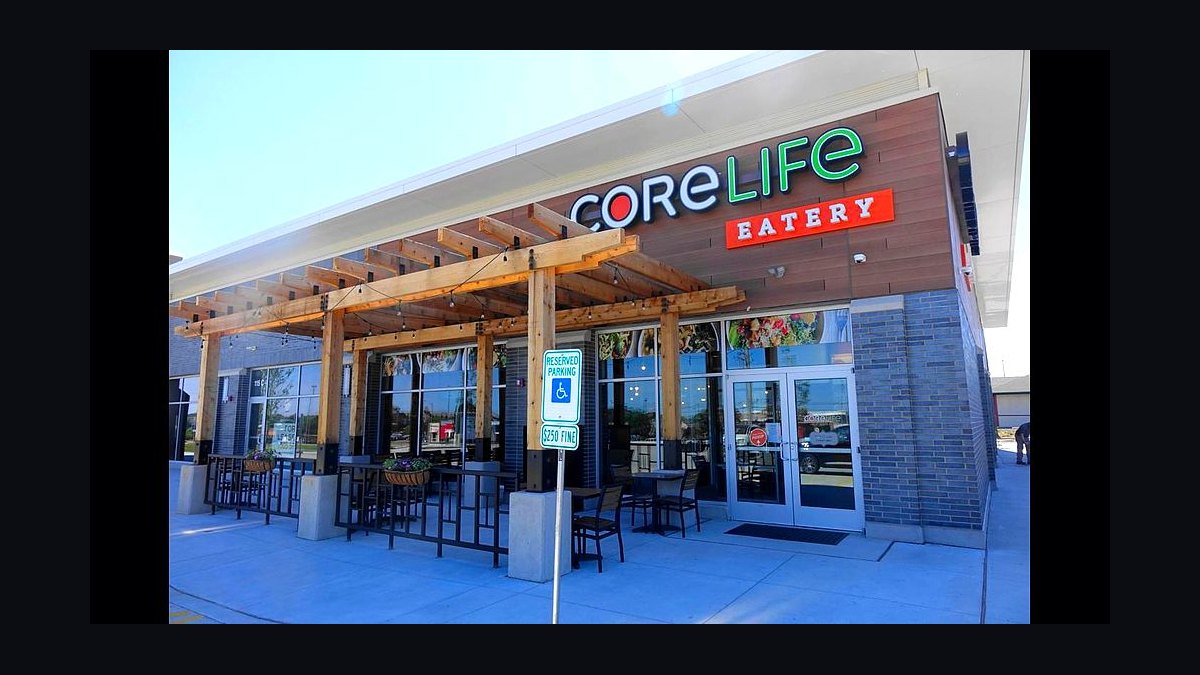
Yes for an operator who wants a health-forward fast-casual concept riding the "food as wellness" trend — CoreLife Eatery serves customizable green/grain/broth bowls and competes in the better-for-you fast-casual space. CoreLife Eatery, founded in 2015, franchises healthy fast-casual restaurants built around made-to-order bowls (greens, grains, bone broth, proteins) with clean-ingredient positioning. The 2026 FDD lists a franchise fee around $30,000, total Item 7 investment of roughly $700,000 to $1,500,000, a royalty near 5%, and a marketing fee. Mature restaurants gross $900,000-$1,800,000, with owners clearing $90,000-$250,000. The opportunity is the durable health-eating trend and a differentiated menu; the challenge is higher fresh-ingredient costs and competition from Cava, Sweetgreen, and Chipotle-style bowls.
The Real Numbers
A CoreLife restaurant leases 2,500-4,000 sq ft and builds out a made-to-order bowl line with fresh-prep kitchen. The clean-ingredient model raises COGS but supports premium fast-casual pricing and strong dinner/lunch dayparts.
| Line Item | Low | High | Notes |
|---|---|---|---|
| Franchise fee | $30,000 | $30,000 | Per 2026 FDD |
| Buildout / leasehold | $350,000 | $850,000 | Fast-casual fit-out |
| Equipment & POS | $180,000 | $400,000 | Line, prep, POS |
| Signage & decor | $30,000 | $90,000 | Brand-prescribed |
| Initial inventory | $15,000 | $35,000 | Fresh + dry stock |
| Initial marketing | $25,000 | $60,000 | Grand opening |
| Training & travel | $8,000 | $25,000 | Operator + staff |
| Working capital | $60,000 | $150,000 | First 3 months |
| Total Item 7 | ~$700,000 | ~$1,500,000 | Per 2026 FDD |
| Royalty | ~5% of gross | ||
| Marketing fee | ~2% of gross |
Revenue reality: mature restaurants gross $900K-$1.8M, with premium bowl pricing supporting solid tickets. After food cost (29%-33%, higher for fresh/clean ingredients), labor (26%-30%), occupancy, the 5% royalty, and marketing, restaurant-level margins land 11%-17%, producing $90K-$250K owner profit. The health-eating tailwind supports demand, but fresh-ingredient cost discipline is essential.
Who Wins With This Business
- Capital required: $700K-$1.5M, with $200,000-$400,000 liquid.
- Time commitment: full-time owner-operator during ramp.
- Skills: fast-casual operations, fresh-prep management, and health-community marketing.
- Geographic fit: health-conscious, higher-income suburbs and lifestyle centers.
- Lifestyle fit: hands-on restaurant operation.
The winners are fast-casual operators in health-oriented markets who manage fresh COGS well.
Who Loses With This Business

- Operators in non-health-focused or low-income markets.
- Owners who can't control fresh-ingredient costs and waste.
- Under-capitalized buyers facing the buildout.
- Weak local marketing against well-funded competitors (Cava, Sweetgreen).
- Poor locations away from lifestyle/health-oriented traffic.
2027 Market Conditions
- Demand: better-for-you fast-casual is a strong, durable 2027 category as consumers prioritize health.
- Competition: Cava, Sweetgreen, Chipotle, and Mediterranean/bowl concepts are well-funded rivals.
- Differentiation: bone broth, grains, and clean ingredients distinguish CoreLife.
- Cost pressure: fresh/clean ingredients raise COGS versus conventional QSR.
- GLP-1 era: health-eating demand may benefit as consumers focus on nutrition.
The 90-Day Decision Tree
- Day 1-20: Read the 2026 FDD and confirm AUVs and fresh-COGS structure.
- Day 21-45: Interview 8+ owners; ask about AUV, food cost, and margins.
- Day 46-65: Validate a health-conscious, higher-income market.
- Day 66-90: Secure a strong lifestyle-center or suburban site.
- Day 91-130: Build out the fresh-prep kitchen and bowl line.
- Open with disciplined fresh-inventory management.
- Ongoing: control COGS and market to the health community.
Alternative Plays
- Cava — Mediterranean bowl leader (largely corporate, limited franchising).
- Tropical Smoothie Cafe — health-forward smoothie/food (in the Pulse library).
- Salata / Saladworks — salad fast-casual (in the Pulse library).
- Modern Market Eatery — health-forward fast-casual.
- Crisp & Green — healthy fast-casual competitor.
- Independent healthy fast-casual — full control, but no brand or system.
Market Positioning vs. Direct Competitors

CoreLife Eatery operates in a crowded but expanding segment. To evaluate the 2027 opportunity, you must understand how it stacks up against the three dominant players: Sweetgreen, Cava, and Chipotle. Each has a different unit economics profile that affects your potential return.
Sweetgreen (public, ~220 units) focuses on salad bowls with a heavy digital/tech investment. Average unit volume (AUV) runs $2.5–$3.2 million in dense urban markets, but build-out costs exceed $1.2–$1.8 million and royalties are 5–7%. CoreLife’s lower AUV ($900k–$1.8M) is offset by a 30–40% lower initial investment and more flexible real estate requirements (end-cap strip centers vs. premium urban corners).
Cava (public, ~340 units) is the closest direct rival—Mediterranean bowls with a similar “build-your-own” model. Cava’s AUV is $2.0–$2.8 million, but franchise opportunities are extremely limited (mostly company-owned). If you want a bowl concept with franchise availability, CoreLife is one of the few options. Cava’s franchise fee historically ran $50,000–$75,000—higher than CoreLife’s ~$30,000.
Chipotle (public, ~3,400 units) is the 800-pound gorilla. Its AUV exceeds $2.5 million, but franchise costs are not available—Chipotle is 100% corporate-owned. CoreLife’s advantage is menu differentiation: bone broth bases, ancient grains (quinoa, farro), and a “clean 15” ingredient sourcing promise. Chipotle has no broth bowl category.
The 2027 competitive risk: Sweetgreen and Cava are opening 15–25% more units annually, saturating suburban trade areas. CoreLife’s smaller footprint (1,800–2,200 sq. ft. vs. 2,500+ for competitors) lets it fit into B-tier shopping centers with lower rent—typically $28–$42/sq. ft. vs. $45–$65 for competitors. This rent advantage can add $30,000–$60,000/year to your bottom line.
Franchisee density: CoreLife has roughly 40–50 open units as of 2026, concentrated in the Midwest and Mid-Atlantic. This means less cannibalization risk than a saturated brand, but also less brand awareness in new markets. You will need to invest more in local marketing (expect $15,000–$25,000/year above the national fund contribution) to build trial.
Operational Realities: Labor, Supply Chain, and Food Cost
The “healthy bowl” model has specific operational quirks that differ from a burger or pizza franchise. Understanding these before signing is critical.
Labor model: CoreLife requires 8–12 crew members per shift (peak hours) because bowls are fully customized—greens, grains, protein, toppings, dressings. This is similar to Chipotle (10–14 per shift) but higher than a QSR burger brand (5–8). In 2027, with minimum wages in many states at $15–$18/hour, labor costs will run 30–35% of sales (industry average for fast-casual is 28–32%). You will need a general manager at $55,000–$70,000 salary plus an assistant manager at $40,000–$50,000. A two-manager store adds ~$95,000–$120,000 in annual management cost before crew wages.
Food cost: Fresh greens, vegetables, and proteins have higher spoilage rates than frozen or shelf-stable ingredients. CoreLife’s food cost runs 32–36% of sales (vs. 28–32% for a typical burger chain). Bone broth (a signature item) requires slow-simmering 12–24 hours—labor-intensive and energy-heavy. You will need a commissary or daily delivery for fresh produce; many franchisees use Sysco or US Foods with a dedicated health-foods distributor. Expect $8,000–$12,000/month in food cost for a store doing $1.2M AUV.
Supply chain risk: CoreLife’s “clean” ingredient promise means no artificial preservatives, no high-fructose corn syrup, and no antibiotics in chicken/beef. This limits your supplier pool. In 2027, avian flu or produce shortages (e.g., romaine lettuce recalls) can spike costs by 15–25% for weeks. A franchisee contingency: maintain a $20,000–$30,000 emergency food cost reserve to absorb shocks without raising menu prices (which customers in this segment are price-sensitive to).
Equipment and maintenance: The broth station requires commercial steam kettles or soup wells ($4,000–$6,000 each). The greens washer and prep cooler are specialized. Annual equipment maintenance runs $12,000–$18,000—higher than a standard fast-casual because of the fresh-prep volume.
Exit Strategy and Resale Value in 2027
Franchisees often overlook the endgame. CoreLife is still a relatively young brand (founded 2015, franchising since ~2018). As of 2026, there are fewer than 5–10 franchise resales on record—too few to build a reliable valuation model. However, you can project based on comparable fast-casual bowl concepts.
Resale multiples: Mature fast-casual franchises (5+ years in operation) typically sell for 2.0–3.5x annual EBITDA (earnings before interest, taxes, depreciation, amortization). For a CoreLife store doing $1.3M AUV with 12% EBITDA ($156,000), a resale price would be $312,000–$546,000. That’s roughly 30–50% of your initial investment—meaning you may not recoup full build-out costs unless you operate for 7–10 years and grow AUV to $1.6M+.
Corporate buyback risk: CoreLife is privately held (by its founders and private equity). Unlike some brands (e.g., McDonald’s), there is no guaranteed corporate buyback program. If the brand decides to refranchise or consolidate, you could be left holding a unit with limited buyer interest. Check the 2027 FDD Item 20 for the number of franchisee transfers in the prior three years—if it’s zero, resale liquidity is low.
Lease transferability: Your lease is your biggest resale obstacle. CoreLife requires 10-year initial leases with two 5-year options. If your landlord prohibits assignment or demands a rent increase upon sale (common in strip centers), you may struggle to sell. Negotiate a lease assignment clause upfront that limits landlord approval to “reasonable” terms.
Exit timeline: Plan for a 7–10 year hold. In year 5, you can begin marketing the store, but expect a 6–12 month sales process. The buyer pool is limited to existing franchisees (who know the system) or new investors who pass CoreLife’s approval process. If you want a faster exit, consider a multi-unit strategy (2–3 stores) so you can sell a territory rather than a single location—multi-unit resales command higher multiples (3.0–4.5x EBITDA).
FAQ

How much does it cost to open a CoreLife Eatery franchise? The total investment ranges from roughly $700,000 to $1,500,000, including a franchise fee around $30,000. Costs vary by location, build-out, and equipment needs.
What are the ongoing fees? You pay a royalty of about 5% of gross sales and a marketing fee. These are standard for the fast-casual segment and support brand growth.
How much revenue can a CoreLife Eatery franchise expect? Mature restaurants typically gross between $900,000 and $1,800,000 annually. Owner profit can range from $90,000 to $250,000, depending on location and efficiency.
What makes CoreLife Eatery different from competitors like Cava or Sweetgreen? CoreLife focuses on bone broth-based bowls and a clean-ingredient menu, positioning itself as a "food as wellness" brand. It competes on customizable greens, grains, and proteins, but faces higher fresh-ingredient costs.
Is the health-eating trend durable enough for a 2027 opening? Yes, the demand for better-for-you fast food continues to grow, but competition is intense. CoreLife’s niche in broth bowls offers differentiation, though you must manage ingredient costs carefully.
What are the biggest challenges for a CoreLife franchisee? Higher fresh-ingredient costs and stiff competition from Cava, Sweetgreen, and Chipotle-style bowls are key hurdles. Success requires strong local marketing and operational discipline to maintain margins.
Bottom Line
Open a CoreLife Eatery if you want a health-forward fast-casual concept in the durable better-for-you segment, can fund a $700K-$1.5M build, and you'll operate in a health-conscious, higher-income market with tight fresh-COGS control. Its clean-ingredient bowls differentiate in a growing category. Skip it if you're in a non-health-focused or low-income market, can't manage fresh-ingredient costs, or can't compete with well-funded rivals. For fast-casual operators in the right market, CoreLife rides a powerful long-term trend.
Related on PULSE
- Should I open or buy a Beyond Juicery + Eatery franchise in 2027?
- Should I open or buy a Modern Market Eatery franchise in 2027?
- Should I open or buy a Zoup Eatery franchise in 2027?
- Should I open or buy a Newk's Eatery franchise in 2027?
- Should I open or buy an Oxi Fresh Carpet Cleaning franchise in 2027?
- Should I open or buy an Oil Can Henry’s franchise in 2027?
Sources
- CoreLife Eatery Franchise Disclosure Document (2026 filing) — Items 5, 6, 7, 19, 20
- CoreLife Eatery official franchise site — investment range and menu model
- Entrepreneur Franchise listings — CoreLife Eatery
- Franchise Business Review — restaurant-franchise satisfaction data
- IBISWorld — Healthy Fast-Casual Restaurants in the US, 2026 industry report
- Technomic — better-for-you fast-casual market data 2026
- Statista — US fast-casual and health-eating trends, 2025-2026
- International Franchise Association (IFA) — 2027 Franchise Economic Outlook
- Restaurant Business / Nation's Restaurant News — bowl-concept trends 2026
- Nutrition Business Journal — health-eating and GLP-1 impact data 2026
This page will be disappearing soon. Save it to your device for $1 — or read it free while it is here.
@Kory-White- · if Venmo asks, the last 4 of my number are 2012
This page is gone.
This one is off the shelf now. $1 keeps it on your phone for good — the whole page, pictures and diagrams included.
 pulse-qAre Triple Net (NNN) Leases Negotiable in 2026?
 pulse-qShould I open or buy a LearningRx franchise in 2027?
 pulse-qHow Many Employees Should I Schedule Each Shift at My Language School in 2026?
 pulse-qHow Do I Get Out of a Commercial Lease Early Without Paying a Fortune in 2026?
 pulse-qShould I open or buy a La Petite Academy franchise in 2027?
 pulse-qWhat question can you ask after a lost deal to extract actionable lessons without making the rep feel blamed in 2026?
 pulse-qHow Do Change Orders Blow Up a Buildout Budget, and How Do I Cap Them in 2026?
 pulse-qHow Do I Protect Myself If My Landlord Goes Bankrupt in 2026?
 pulse-qShould I open or buy a Pei Wei franchise in 2027?
 pulse-qHow Do I Budget a Med Spa Buildout in 2026?