


Should I open or buy a Zoup Eatery franchise in 2027?
Quality
Certified

Open a Zoup Eatery only if you can fund $300,000–$600,000, hold a lunch-dense site in a cold-weather market, and actively build catering and packaged-soup revenue to offset summer softness. Mature units gross roughly $500,000–$1,000,000 with owner income near $60,000–$160,000. Seasonality management, not the soup recipes, decides your outcome.
The outcome you should expect
Set your expectations against the actual shape of this business rather than the glossy franchise-portal version. A single Zoup Eatery unit, opened in a decent lunch corridor with a competent owner-operator on the floor, converges toward an annual gross somewhere in the $500,000 to $1,000,000 band. That is a wide range because the variance is driven almost entirely by daypart density — how many white-collar workers, hospital staff, university students, or courthouse employees walk past your door between 11:15 a.m. and 1:30 p.m. on a Tuesday. A unit doing $500,000 and a unit doing $950,000 can have identical menus, identical training, and identical franchisor support. The difference is the site, and the site decision is made months before you serve a single bowl.
Underneath that gross, expect restaurant-level margins in the 10% to 16% range once food cost (roughly 28%–32%), labor (roughly 26%–33%), occupancy, the approximately 6% royalty, and the marketing fee are all subtracted. On a $750,000 unit, that produces owner income roughly in the $70,000 to $140,000 zone — and critically, a meaningful slice of that is your own labor being paid back to you. If you hire a full-time general manager instead of working the line yourself, you are handing back $45,000 to $65,000 of that number. Franchise buyers routinely conflate "owner profit" with "passive return," and in fast-casual at this unit volume, that conflation is where the disappointment starts.

Timeline expectations matter as much as dollar expectations. Plan for 12 to 18 months to reach a stable monthly breakeven on a single unit, with well-sited cold-market stores occasionally hitting it in 9 to 12 months. Plan for a full 24 months before your operating rhythm — labor scheduling, prep par levels, waste control on unsold soup — is genuinely tuned. The first summer is the real test. A store that opened in October rides a warm honeymoon straight into peak soup season and then hits a July wall it has never seen before, with no historical data to plan against. That single unmodeled trough is the most common cause of a first-year cash crisis in this concept, and it is entirely predictable.
One more framing point that experienced multi-unit operators internalize early: a franchise is not a business you buy, it is an operating system you rent. You are paying roughly 8%–9% of every dollar of revenue for a brand, a supply chain, a recipe library, and a playbook. That trade is worth it when the system saves you more than 9% in avoided mistakes, purchasing leverage, and customer trust. In a niche category with modest national awareness, that math is tighter than it would be with a top-tier national brand — which is exactly why your own operating discipline carries more weight here than it would under a bigger logo.
What drives that outcome
Four levers explain most of the spread between a strong Zoup Eatery and a struggling one, and only one of them is about food.

Site and daypart density. The concept lives and dies on weekday lunch. A 1,400–2,400 square foot space in a strip center adjacent to an office park, a hospital campus, a university, or a dense medical-office cluster is the target. Rent should land at 8%–10% of projected sales, which at a $650,000 projection means roughly $52,000–$65,000 annually all-in. A landlord offering you a cheap space at $30,000 that sits in a residential-heavy retail node is not saving you money; it is capping your ceiling. Run a physical count: stand at the proposed door at noon on a Wednesday and count foot traffic for thirty minutes, three separate weeks. That data costs you ninety minutes and is more predictive than any demographic report you will buy.
Climate and the seasonal curve. In northern markets, November through March can run 30%–50% above summer months. In Sun Belt markets, July and August can run 15%–25% below the annual mean. Neither is disqualifying, but they demand different capital plans. A Minneapolis operator needs to bank winter cash to survive summer; a Phoenix operator needs a fundamentally different revenue mix from day one, with salads, sandwiches, chilled soups, and catering carrying a larger share of the load.
Revenue mix beyond the dining room. Packaged soup for retail and wholesale, plus office catering, is the structural answer to seasonality. Operators who pursue this channel deliberately — assigning someone to call on offices, schools, and independent grocers weekly — commonly add 10%–15% to annual revenue at healthier margins than dine-in, because the labor is already sunk in the prep you are doing anyway. Operators who treat catering as inbound-only get almost none of it.
Labor model and owner presence. Soup prep is comparatively simple: bases arrive, fresh components go in daily, the line is short. That is why labor sits in the high-20s to low-30s as a percentage rather than the 35%+ of full-service. But simple is not the same as unattended. A store typically needs four to six full-time equivalents in peak season and three to four in the trough, and the owner working the lunch rush personally for the first year is both a cost saving and the fastest possible education in your own unit economics.
mermaid flowchart LR

S1[Days 1-15: Read 2026 FDD twice with counsel] --> S2[Days 16-30: Interview 8 plus franchisees] S2 --> S3[Days 31-45: Lunch counts and 12 month cash model] S3 --> S4{Model survives 25 pct summer dip?} S4 -->|No| S5[Change market or add capital] S4 -->|Yes| S6[Days 46-65: Negotiate lease and TI] S6 --> S7[Days 66-95: Build out, hire, train] S7 --> S8[Open with full salad and sandwich lineup] S8 --> S9[Month 1: Launch catering outreach list] S9 --> S10[Month 6: Add packaged retail and wholesale] S10 --> S11[Month 12-18: Stable breakeven, evaluate unit two] </parameter>
Past opening, the operating cadence matters more than the launch. Weekly, review sell-through by soup and reset par levels. Monthly, compare actual food and labor percentages against your pro forma and investigate any two-point drift immediately rather than at quarter end. Quarterly, review your revenue mix — if catering and packaged are not climbing toward that 10%–15% contribution, that is your assignment for the next quarter. And before you consider a second unit, insist the first one has run twelve consecutive months at target margin with a general manager you trust running lunch without you. Multi-unit economics are genuinely better — you amortize a bookkeeper, a commissary-style prep advantage, and one marketing effort across two stores — but only if unit one is a machine rather than a project.
Related questions
Is a soup-focused franchise a bad idea in a warm-climate market?
Not automatically, but it changes the plan. Warm markets require salads, sandwiches, chilled options, and catering to carry a larger revenue share from day one, plus higher working capital to absorb summer dips. Validate with a twelve-month model, not an annual average.
Should I buy an existing unit instead of opening new?
Often yes, if one is available. A resale carries proven revenue history and skips the twelve-to-eighteen-month ramp, in exchange for a purchase multiple on seller's discretionary earnings. Model both side by side and weight the resale's real numbers over the new build's projections.
How much liquid cash do I need beyond the investment?
Plan on $100,000 to $180,000 liquid behind a $300,000–$600,000 investment. That reserve funds equipment failures, a second marketing wave if trial is slow, and the first summer trough. Under-capitalization, not weak concepts, closes most first-year restaurants.
What single factor most predicts success here?
Weekday lunch daypart density at your specific address. Site quality outranks operator skill, brand strength, and menu execution in fast-casual at this volume. Count foot traffic yourself at noon, three separate weeks, before signing anything.
Does packaged soup wholesale actually move the needle?
For operators who work it deliberately, yes — commonly 10%–15% of annual revenue at favorable margins, since prep labor is already sunk. For operators who wait for inbound interest, it contributes almost nothing. It is a sales function, not a passive channel.
FAQ
What is the total investment to open a Zoup Eatery franchise?
The 2026 FDD puts total Item 7 investment in the range of roughly $300,000 to $600,000, including a franchise fee near $30,000. Buildout is the most variable line — a second-generation restaurant space can save $100,000 or more against a raw retail conversion. Add $15,000 to $25,000 in soft costs the table under-weights: legal review, permits, entity formation, and pre-opening payroll.
What do the ongoing fees actually cost me?
Royalty runs approximately 6% of gross sales, with a marketing fee of roughly 2%–3% on top, for a combined 8%–9% off the top line. On a $750,000 unit that is roughly $60,000 to $67,500 annually before you pay rent, food, or labor. These are typical for fast-casual, but model them as fixed percentages in every projection rather than an afterthought.
How long until the store breaks even?
Budget 12 to 18 months to reach stable monthly breakeven for a single unit, with well-sited cold-market locations sometimes reaching it in 9 to 12. The variable that moves this most is opening season — open in autumn and you ride peak demand into your ramp; open in spring and your first summer arrives before you have a habituated customer base.
How do I evaluate whether my market can support the concept?
Count weekday lunch foot traffic at your candidate addresses yourself, at noon, on three separate weeks. Map the office, hospital, and university clusters within a five-minute drive. Then build a twelve-month cash model with real rent quotes and stress it with a 25% summer decline. If the model breaks under that stress, the answer is a different site or more capital.
Is the RevOps discipline of tracking data relevant to running a restaurant?
Very much so. The same RevOps instinct that drives pipeline forecasting applies directly to prep par levels: track sell-through by soup, by day of week, against weather, and let last week's actuals set next week's production. Operators who run on intuition carry two to three extra points of food cost in waste — real money at these margins.
Should I open a second unit, and when?
Only after unit one has run twelve consecutive months at target margin with a general manager handling lunch without you. Multi-unit economics genuinely improve — you spread bookkeeping, prep leverage, and marketing across stores — but a second unit multiplies an unsolved problem just as efficiently as it multiplies a solved one.
Sources
- https://www.ftc.gov/business-guidance/resources/franchise-rule-compliance-guide
- https://www.franchise.org/
- https://www.entrepreneur.com/franchises
- https://www.sba.gov/business-guide/plan-your-business/calculate-your-startup-costs
- https://www.restaurant.org/research-and-media/research/
- https://www.bls.gov/iag/tgs/iag722.htm
- https://www.restaurantbusinessonline.com/
- https://www.nrn.com/
- https://www.ibisworld.com/united-states/market-research-reports/
- https://www.census.gov/programs-surveys/cbp.html
Related on PULSE
- Should I open or buy a Beyond Juicery + Eatery franchise in 2027?
- Should I open or buy a Modern Market Eatery franchise in 2027?
- Should I open or buy a CoreLife Eatery franchise in 2027?
- Should I open or buy a Newk's Eatery franchise in 2027?
- Should I open or buy a Saladworks franchise in 2027?
- Should I open or buy a McAlister's Deli franchise in 2027?
This page will be disappearing soon. Save it to your device for $1 — or read it free while it is here.
@Kory-White- · if Venmo asks, the last 4 of my number are 2012
This page is gone.
This one is off the shelf now. $1 keeps it on your phone for good — the whole page, pictures and diagrams included.
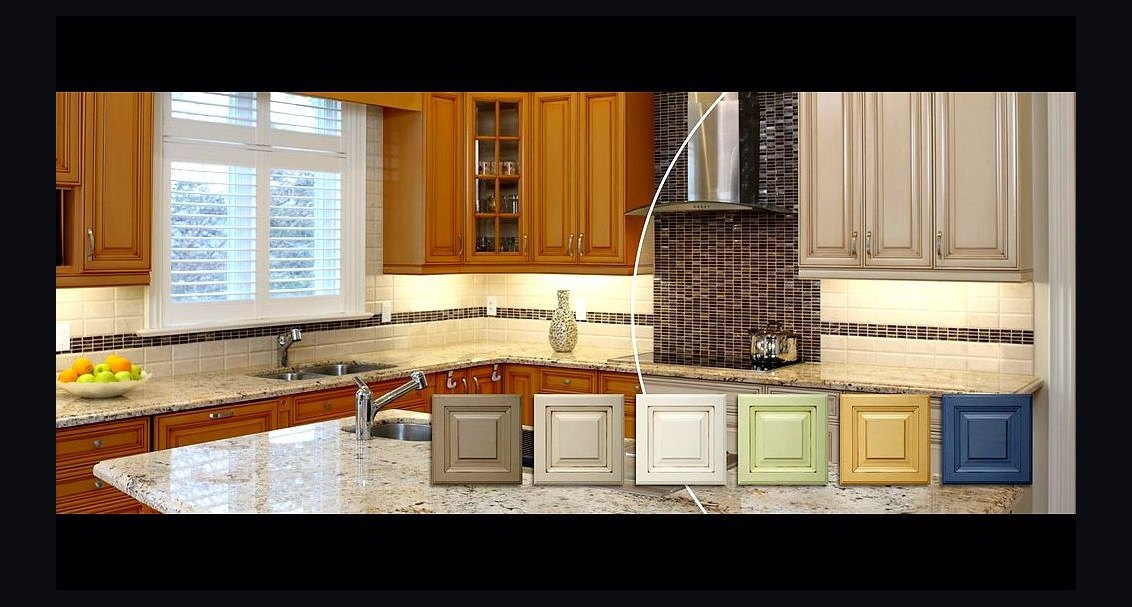 pulse-qShould I open or buy an N-Hance Wood Refinishing franchise in 2027?
 pulse-qWhat question reveals whether a salesperson has properly qualified a lead before entering the pipeline in 2026?
 pulse-qHow Many Sales Reps Do I Need to Hire for My Welding Supply Company in 2026?
 pulse-qHow do you coach a veteran rep who's coasting in 2026?
 pulse-qShould I open or buy a Meineke Car Care franchise in 2027?
 pulse-qWhat is the most effective question to ask after a discovery call to evaluate qualification quality in 2026?
 pulse-qHow do you onboard and coach a fully remote new hire in 2026?
 pulse-qHow do you use enablement and coaching together in 2026?
 pulse-qHow Many Tellers Should I Schedule Each Day at My Bank Branch in 2026?
 pulse-qHow Do I Get Utilities Delivered Before My Rent Clock Starts in 2026?