
Should I open or buy a Russo’s New York Pizzeria franchise in 2027?
 Curated byKory White · Fractional CRO · Maryland
 PULSEKNOWLEDGE LIBRARY
Buy or open a Russo's New York Pizzeria franchise only if you can fund $400,000–$1.2M, staff a scratch kitchen with a real pizzaiolo, and pick the format your trade area supports. Match footprint to capital and demand and returns are workable; guess wrong on format and the economics collapse fast.
The outcome you should expect
Strip away the brand romance and a Russo's unit is a scratch-cooking Italian restaurant with a franchise agreement stapled to it. That combination sets a very specific expectation curve, and it is not the one most first-time franchise buyers carry into a discovery day.
In year one, expect to lose money or barely break even. Restaurant openings front-load every cost — build-out overruns, opening labor at 1.5x steady-state, waste while a new kitchen crew learns dough hydration and portioning, and a grand-opening marketing spend of $15,000 to $45,000 that buys trial but not loyalty. The honeymoon bump is real and it is temporary: most independent and franchised restaurants see a 20% to 40% sales spike in the first eight to twelve weeks, then settle 25% below that peak. Owners who read the opening spike as the new baseline hire ahead of it and get caught.
By month eighteen to twenty-four, a unit that found its trade area should be running at a mature gross of roughly $700,000 on the express and fast-casual end and up to $1.6 million for a well-placed full-service location. Restaurant-level margin in the 10% to 16% band is realistic for this segment. Do the arithmetic honestly: a $1.1 million fast-casual unit at a 13% margin throws off about $143,000 before debt service. If you financed $600,000 of the build at commercial rates over ten years, debt service eats a meaningful slice of that. Owner take-home in the $80,000 to $220,000 range assumes you are working in the business, not paying a general manager $70,000 to run it for you.
The second expectation to reset is timeline. From signed franchise agreement to open doors is typically six to twelve months. Site approval alone runs 30 to 60 days after you identify a location, lease negotiation another three to six months, permitting and construction three to five. Express formats compress this; full-service with a liquor license can blow past twelve months in a slow municipality. Every month of pre-opening is a month of rent-paying or option-holding with zero revenue.
The third: this is not a semi-absentee franchise. Scratch dough, fresh mozzarella, and a menu spanning pizza, pasta, calzones, salads, and desserts means daily prep discipline and an owner who can taste-check product. Plan on 50 to 60 hours a week on-site for the first six months, minimum. Operators who buy a Russo's expecting a manager-run asset from day one are buying the wrong franchise.
What drives that outcome
Four variables move a Russo's P&L more than everything else combined, and only two of them are inside your control after signing.
Format selection is the largest lever and the one you pull exactly once. Express (roughly 600 to 1,200 square feet) targets captive traffic — food courts, airports, university unions, office lobbies — and needs 15,000 to 25,000 daily pedestrians to work. Fast-casual (1,200 to 2,000 square feet) belongs in suburban strip centers with grocery or big-box anchors pulling 30,000+ vehicles a day. Full-service (2,500 to 4,000 square feet) demands arterial visibility, easy ingress and egress, and a trade area with median household income above roughly $75,000 and 50,000+ residents inside three miles. Pick the express model in a car-dependent suburb with no captive daytime population and you have built a $400,000 box that nobody walks past.
Prime cost — food plus labor — is where the scratch-kitchen positioning cuts both ways. Food and beverage runs around 30% because imported ingredients and fresh mozzarella cost more than commodity cheese on par-baked crust. Labor runs 28% to 35%, higher than the quick-service pizza chains, because someone has to make dough every day. A pizzaiolo commands $20 to $28 an hour in most 2027 markets; general kitchen staff $15 to $22; front-of-house at full-service $12 to $18 plus tips. Prime cost above 65% is a structural problem, not a bad week.
Royalty and fund drag is fixed and non-negotiable: roughly 5% to 6% royalty plus about 2% marketing, off gross, from your first dollar. On a $1.1 million unit that is $77,000 to $88,000 a year leaving before you count a single operating expense. This is the honest cost of the brand, the supply chain, and the playbook — but it means a franchised unit needs meaningfully higher volume than an independent to net the same owner income.
Third-party delivery mix is the modern wildcard. Uber Eats and DoorDash can add 15% to 25% to top-line revenue while cutting margin on those orders by 8% to 12%. A unit doing 30% of volume through the apps at a 25% commission is effectively running two businesses with different unit economics. The practical counter-move: push in-house delivery or pickup on tickets above $30 where the margin loss actually stings, and treat app orders as incremental capacity-filler during slow dayparts rather than core volume.
Benchmarks and realistic ranges
Use the 2026 FDD as the source of truth and treat every number below as a planning range to validate, not a promise. Item 7 is the investment table, Item 19 is the financial performance representation, Item 20 lists unit counts and — critically — closures and transfers.
Capital. Franchise fee around $35,000. Total Item 7 investment roughly $400,000 at the express end to $1.2 million for full-service. The line items break down predictably: build-out and leasehold $170,000 to $650,000; equipment and POS $120,000 to $320,000; signage and decor $20,000 to $80,000; opening inventory $10,000 to $30,000; grand-opening marketing $15,000 to $45,000; training and travel $8,000 to $25,000; working capital $40,000 to $160,000. Plan on $120,000 to $320,000 in genuine liquidity — not equity in your house, not a HELOC you have not drawn.
Two costs franchise buyers routinely underestimate. First, the hood system and grease trap required in every format: $15,000 to $30,000 in build-out plus $400 to $800 per quarterly professional cleaning, forever. Second, tenant improvement gaps. Landlords in prime 2027 centers may offer $50 to $100 per square foot in TI allowance, but a restaurant build-out with commercial kitchen infrastructure runs well above that, and the delta is your cash.
Occupancy. Expect base rent of $25 to $45 per square foot for express, $20 to $35 for fast-casual, and $18 to $30 for full-service in suburban markets. Urban locations command 20% to 40% premiums. Add CAM, taxes, and insurance on top. The discipline test: total occupancy above 10% of projected gross sales is a yellow flag; above 12% is a deal-killer no matter how much you love the site. Run that ratio against your *conservative* sales projection, not your optimistic one.
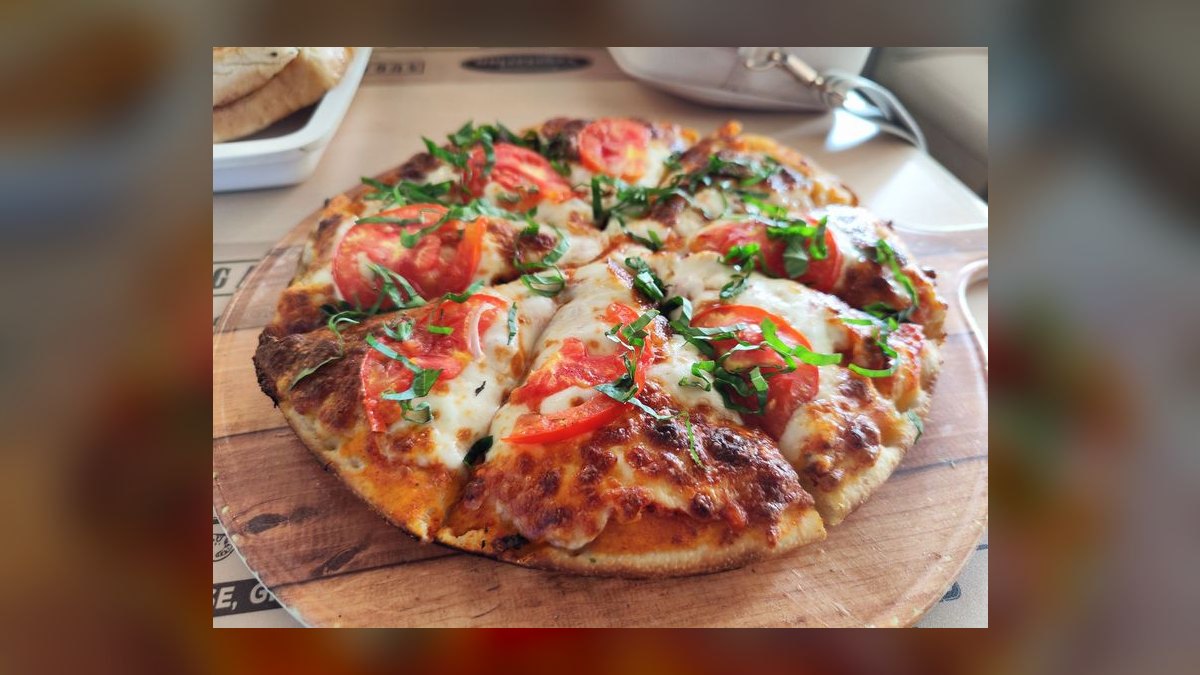
Revenue and margin. Mature units gross $700,000 to $1.6 million by format. Average ticket lands $14 to $22 per person fast-casual, $18 to $35 full-service, which puts Russo's in the "affordable indulgence" band rather than the $7.99-large-pizza fight. Full-service adds bar revenue, which carries strong margin but also liquor licensing, trained bartenders, and liability exposure. Restaurant-level margin 10% to 16%; owner profit $80,000 to $220,000.
Staffing model. A fast-casual unit typically needs one general manager at $55,000 to $75,000, one assistant manager at $40,000 to $55,000, two to three shift leads at $16 to $20 an hour, four to six cooks and prep staff, and three to five cashiers and runners. Full-service adds two to three servers, one to two bartenders, and a dishwasher. Corporate training runs two to four weeks at a company or existing franchise location plus on-site opening support.
Marketing. The 2% national fund buys brand-level presence. Your local store marketing needs another 3% to 5% of sales to move the needle in a trade area, and the tactics that actually convert for this concept are unglamorous: youth sports league fundraiser nights, family pizza-making classes at $25 to $40 a head, and corporate lunch catering at $200 to $500 per order on 48-hour lead time. An actively worked catering program can add 8% to 15% to revenue — that is the single highest-ROI line item most operators leave on the table.
Risks, edge cases, and failure modes
Format mismatch is the dominant failure mode and it is unrecoverable without a second capital raise. You cannot convert a 900-square-foot express unit into a full-service restaurant, and you cannot shrink a 3,500-square-foot lease when the dine-in demand never materializes. Every other mistake on this list is survivable; this one usually is not.
Under-capitalization kills units that were otherwise fine. The specific pattern: an owner budgets to the low end of Item 7, hits a $60,000 permitting delay and a $40,000 build-out overrun, opens with two months of working capital instead of six, and then cannot fund the marketing push that would have built the base. Restaurants do not die from one bad month; they die from having no reserve during the four bad months that follow a soft opening. Budget the high end of the range and treat the difference as found money.
Support-market distance. Russo's has depth in Texas and an expanding international footprint. That distribution matters for two practical reasons: supply chain economics on imported and specialty ingredients, and how quickly a field consultant can actually get to your store when something is wrong. If you are the first or second unit in a state, ask directly what the supply arrangement is, what freight costs you personally, and how field support is delivered. Then call the existing franchisees in comparable isolation and ask whether the answer matched reality.
Weak full-service execution. Full-service is a different business from fast-casual, not a bigger version of it. Server training, table turns, bar management, wait-time discipline, and a much longer service recovery tail. Operators who ran a counter-service concept and scaled up to full-service commonly find labor 5 to 8 points over plan and guest reviews sinking on service rather than food. If you have never run table service, either start with the fast-casual format or hire a general manager who has and pay properly for them.
The scratch-kitchen dependency. One experienced pizzaiolo who can train others is functionally a single point of failure in the first year. Cross-train a second person on dough from month one, document your prep specs beyond what the brand manual provides, and build the wage premium into the model rather than treating it as an overspend. A dough day gone wrong is a full day of product quality gone wrong.
Delivery-app dependence. Building 30%+ of volume on third-party apps means a commission increase or an algorithm change is a direct hit to your P&L with no negotiating position. Treat apps as customer acquisition, then work to convert those customers to direct ordering.
Buying an existing unit versus opening new. Resales look attractive — cash flow from day one, real historicals instead of projections, existing staff. The diligence discipline is different. Demand three years of P&Ls and tax returns, not a broker's summary. Read the remaining lease term and any renewal options; a resale with 18 months left on the lease is a hostage situation. Ask the franchisor whether a remodel or equipment refresh is due, because those obligations transfer to you and can run six figures. Check Item 20 in the FDD for the transfer and closure history in that region — a cluster of transfers is data. And find out honestly why the seller is selling; "retirement" is sometimes true.
A practical rollout plan
Days 1 to 15 — read and choose. Get the 2026 FDD and read Items 5, 6, 7, 19, and 20 with a pen. Build your own investment model in a spreadsheet using the high end of every Item 7 range. Choose a format based on the capital you actually have plus a 25% contingency, not the format you find most exciting.
Days 16 to 30 — validate with owners. Interview at least eight franchisees across formats, and deliberately include units in your target format and units at similar distance from support. Ask three questions that get past the pleasantries: what did you actually invest versus Item 7, what is your current AUV and prime cost, and what do you personally take home after paying yourself a market wage for the hours you work. Ask a former franchisee too — Item 20 gives you names.
Days 31 to 45 — validate the market. Pull trade-area data yourself: daytime population, household income, three-mile residential counts, traffic counts. Eat at three competing Italian and pizza operators in the trade area on a Friday night and count covers. If a competent independent Italian restaurant is already half-empty at 7pm on a Friday, your authenticity positioning is not going to fix that trade area.
Days 46 to 70 — secure a site. Run every candidate through the occupancy-ratio test before you fall in love with it. Negotiate TI allowance hard; the chef-driven positioning is a legitimate lever with landlords who want a differentiated food tenant. Get franchisor site approval before signing anything.
Days 71 to 110+ — build and hire. Permitting is the schedule risk; file early and assume delays. Hire your GM eight to ten weeks before opening so they attend corporate training and are present through build-out. Hire the kitchen four to six weeks out.
Open, then market for the second wave. Grand opening buys trial. What buys the base is the four-week window after the spike fades: catering outreach to every office park within two miles, a fundraiser night booked with a local league, and a family class on a slow weeknight.
Related questions
Is it cheaper to buy an existing Russo's than to open a new one?
Often, yes — a resale can cost less than a new build and comes with cash flow immediately. But price in any required remodel, equipment refresh, and the remaining lease term. Verify three years of tax returns rather than accepting a broker's summary.
Can I run a Russo's semi-absentee with a general manager?
Not realistically in year one. The scratch-kitchen model needs an owner tasting product and holding prep standards. After eighteen months with a proven GM, some owners step back — but the salary, $55,000 to $75,000, has to be in your model from the start.
Which format has the best return on invested capital?
Express and fast-casual generally return capital faster because the denominator is smaller. Full-service can produce higher absolute owner profit and adds bar margin, but it carries more labor complexity and a longer runway. The right answer depends entirely on your trade area, not on the format itself.
How much liquidity do I need beyond the investment total?
Plan on $120,000 to $320,000 liquid for the investment itself, then hold a separate operating reserve covering roughly six months of fixed costs. Undercapitalized openings fail during the soft months after the grand-opening spike, not during construction.
Does a multi-unit deal make sense at signing?
Only if you have already operated a restaurant profitably. Multi-unit development agreements lock you into a build schedule with penalties. Prove the model in one unit, learn your real prime cost, then negotiate development rights from a position of demonstrated performance.
FAQ
What is the total investment range to open a Russo's New York Pizzeria franchise?
Per the 2026 FDD, total Item 7 investment runs roughly $400,000 for the express format to about $1.2 million for full-service, including a franchise fee near $35,000. Your actual figure depends on local construction costs, landlord TI allowance, and whether the space was previously a restaurant.
How much can a Russo's franchise owner realistically earn?
Mature units are described in the $700,000 to $1.6 million gross range, with restaurant-level margins of 10% to 16% producing roughly $80,000 to $220,000 in owner income. That upper figure generally assumes an owner-operator working in the business rather than paying a full management layer.
What are the ongoing fees?
Approximately 5% to 6% of gross sales in royalty plus about 2% for the marketing fund — roughly 7% to 8% off the top before any operating expense. Budget an additional 3% to 5% for local store marketing, which is where trade-area results are actually made.
Is this a good first franchise for someone without restaurant experience?
The express and fast-casual formats are the more forgiving entry points, but no format here is passive. Scratch dough, fresh mozzarella, and a broad Italian menu demand kitchen discipline. First-timers should start small, hire an experienced pizzaiolo and GM, and avoid full-service until they have run a unit.
How long from signing to opening?
Six to twelve months is typical. Site approval takes 30 to 60 days, lease negotiation three to six months, and permitting plus construction another three to five. Express opens faster; full-service with a liquor license can exceed twelve months in slower municipalities.
How should I evaluate a market far from Russo's core footprint?
Ask the franchisor directly about supply chain arrangements, freight cost to your location, and how field support reaches an isolated unit. Then call franchisees in comparably distant markets and check whether their experience matches the answer you were given.
Sources
- https://www.ftc.gov/business-guidance/resources/consumers-guide-buying-franchise
- https://www.sba.gov/business-guide/plan-your-business/buy-existing-business-or-franchise
- https://www.franchise.org/
- https://www.entrepreneur.com/franchises
- https://www.ibisworld.com/united-states/market-research-reports/pizza-restaurants-industry/
- https://www.restaurant.org/research-and-media/research/
- https://www.bls.gov/oes/current/oes351011.htm
- https://www.nerdwallet.com/article/small-business/how-to-buy-a-franchise
- https://www.restaurantbusinessonline.com/
- https://www.pmq.com/
Related on PULSE
- [Should I open or buy a Grimaldi's Pizzeria franchise in 2027?](/knowledge/fr0686)
- [Should I open or buy a Marco's Pizza franchise in 2027?](/knowledge/fr0392)
- [Should I open or buy a Fazoli's franchise in 2027?](/knowledge/fr0512)
- [Should I open or buy a Jet's Pizza franchise in 2027?](/knowledge/fr0455)
- [Should I open or buy a PJ's Coffee of New Orleans franchise in 2027?](/knowledge/fr0391)
 pulse-toolsHow Many Staff Should I Schedule Each Shift Across My Food Truck Fleet?
 pulse-toolsHow Many Sales Reps Do I Need to Hire for My Office Furniture Dealership?
 tlHow Many Sales Reps Do I Need to Hire for My Merchant Services Company?
 tlHow Many Sales Reps Do I Need to Hire for My Landscaping Company This Year?
 pulse-toolsHow Many Employees Should I Schedule Each Shift at My Movie Theater?
 pulse-toolsHow Many Budtenders Should I Schedule Each Shift at My Cannabis Dispensary?
 pulse-toolsHow Many Cashiers Should I Schedule Each Shift at My Convenience Store Chain?
 pulse-toolsHow Many Sales Reps Do I Need to Hire for My Window Replacement Company?
 tlHow Many Baristas Should I Schedule Each Shift at My Coffee Shop?
 pulse-toolsHow Many Employees Should I Schedule Each Day at My Wine Shop?