


Should I open or buy a Romano’s Macaroni Grill franchise in 2027?
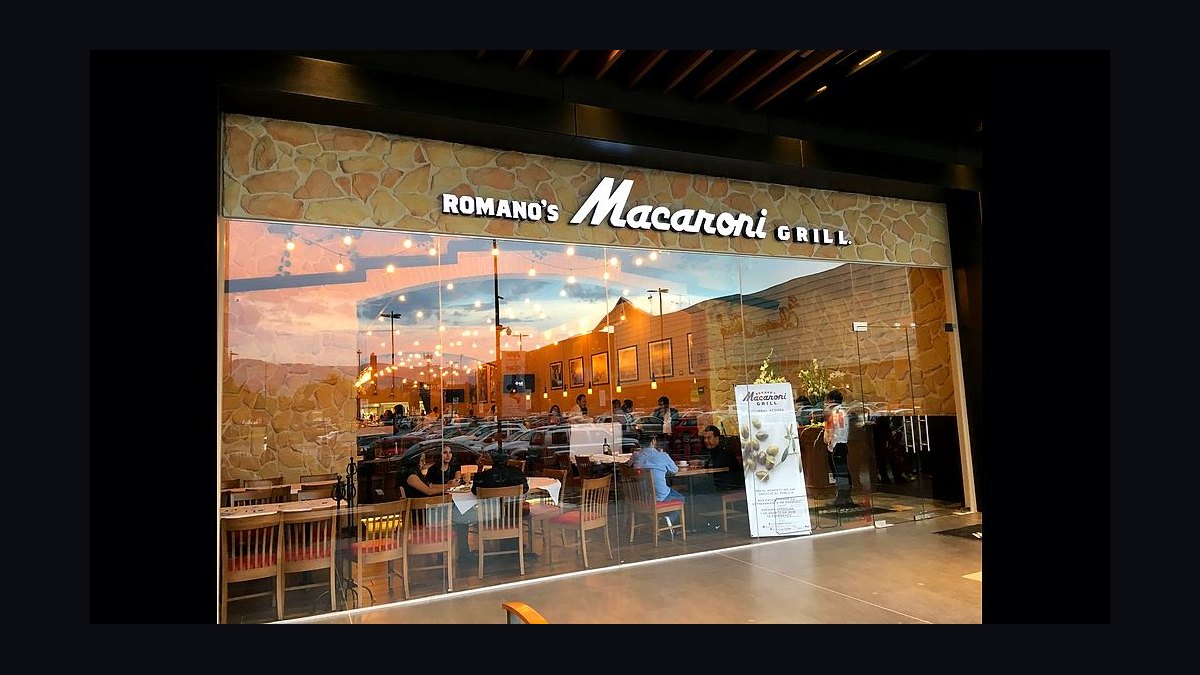
Caution: Romano's Macaroni Grill has been through multiple bankruptcies and heavy downsizing, is now a small chain, and franchising is limited — treat any opportunity with heavy skepticism and exhaustive validation. Romano's Macaroni Grill is a full-service Italian casual-dining brand that filed Chapter 11 in 2008 and again in 2017 and has since shrunk dramatically through closures and ownership changes. Domestic franchising is limited, with most growth (where it exists) international or non-traditional. So for an entrepreneur, the realistic paths are: (1) heavily scrutinize any current Macaroni Grill franchise terms and unit health, (2) open an independent full-service Italian restaurant, or (3) avoid distressed casual-dining brands. A comparable full-service Italian restaurant runs $1,500,000-$3,000,000, grossing $2,000,000-$4,000,000 — but the segment's structural pressure and Macaroni Grill's distress history make this a high-risk consideration.
The Real Numbers
Because Macaroni Grill is distressed and minimally franchised domestically, the relevant economics are those of a comparable full-service Italian restaurant — with Macaroni Grill's bankruptcies as a cautionary backdrop.
| Line Item (comparable full-service Italian) | Low | High | Notes |
|---|---|---|---|
| Concept/brand fee (if franchising) | $40,000 | $60,000 | Scrutinize if Macaroni Grill |
| Buildout / leasehold | $700,000 | $1,800,000 | Full-service + bar |
| Equipment & POS | $300,000 | $650,000 | Kitchen, bar, POS |
| Signage & decor | $40,000 | $130,000 | Casual-dining decor |
| Initial inventory | $25,000 | $60,000 | Food + beverage |
| Initial marketing | $30,000 | $80,000 | Grand opening |
| Working capital | $120,000 | $320,000 | First 3 months |
| Total investment | ~$1,500,000 | ~$3,000,000 | Full-service Italian |
| Target net margin | 8%-15% | If managed well |

Revenue reality: a strong full-service Italian restaurant grosses $2M-$4M at 8%-15% margins, but Macaroni Grill's repeated bankruptcies illustrate the segment's structural difficulty. Large-format casual-dining Italian faces pressure from fast-casual and value formats, thin margins, and high capital intensity. Any Macaroni Grill franchise opportunity must be validated against current unit economics and the brand's distressed trajectory — the risk is materially higher than a healthy brand.
Who Wins With This Path
- Capital required: $1.5M-$3M for a comparable restaurant.
- Time commitment: full-time, full-service operation with a management team.
- Skills: full-service Italian operations, hospitality, and turnaround/cost discipline.
- Geographic fit: strong group-dining markets (or international, where Macaroni Grill franchises).
- Lifestyle fit: hospitality-intensive enterprise.
The winners are experienced operators who either build a differentiated independent concept or rigorously validate any Macaroni Grill opportunity — and many will conclude the segment isn't worth the risk.
Who Loses With This Path

- Buyers who pursue a distressed brand without validation.
- Under-capitalized operators in a thin-margin segment.
- Operators without full-service experience.
- Those who ignore Macaroni Grill's bankruptcy history.
- Weak-location, undifferentiated casual-dining restaurants.
2027 Market Conditions
- Structural pressure: large-format casual-dining Italian faces ongoing decline from fast-casual and value competition.
- Distress: Macaroni Grill's two bankruptcies are a clear warning about the segment and the brand.
- Limited franchising: domestic opportunities are scarce; most activity is international/non-traditional.
- Healthier peers: stronger casual-dining brands fare better — compare carefully.
- Cost pressure: full-service labor and food cost keep margins thin.
The 90-Day Decision Tree

- Recognize Macaroni Grill is distressed (two bankruptcies) with limited domestic franchising — extreme caution warranted.
- If a franchise is offered, validate exhaustively — current unit economics, closures, support, and Item 3/20 disclosures.
- Strongly consider an independent full-service Italian concept instead — or avoiding the segment.
- Validate a strong group-dining market.
- Secure a site and $1.5M-$3M capital with realistic thin-margin expectations.
- Build out a differentiated concept.
- Differentiate aggressively against the structural decline that drove Macaroni Grill's distress.
Alternative Plays
- Carrabba's (international) / Olive Garden-style — stronger full-service Italian (mostly corporate).
- Independent full-service Italian — full control, but all the segment risk.
- Fazoli's / Russo's — fast-casual/QSR Italian, lower capital and risk.
- Texas Roadhouse / steakhouse franchises — healthier casual-dining (in the Pulse library).
- Avoid distressed casual-dining brands — a valid conclusion.
- Different segment entirely — brewhouse, fast-casual, etc.
Franchise Fee Structure and Royalty Costs – What to Expect

If you manage to find an active Romano's Macaroni Grill franchise opportunity, you'll need to understand the financial commitments. Based on historical franchise disclosure documents and industry norms for similar casual-dining brands, here's what a typical agreement might look like:
- Initial franchise fee: $35,000–$50,000 (though distressed brands may negotiate lower or waive fees for multi-unit commitments)
- Royalty fee: 5%–6% of gross sales (standard for full-service Italian concepts)
- Marketing fee: 2%–3% of gross sales (often with a local store marketing requirement of 1%–2% additional)
- Total ongoing fees: 7%–9% of gross sales
Given the brand's limited footprint, you should also expect:
- No territory protection – most surviving locations are isolated, so you may be expected to develop a specific trade area with no guarantee of exclusivity
- Renewal terms – typically 10–20 years, but with a brand that's changed hands multiple times, renewal language may favor the franchisor
- Transfer restrictions – if the brand is sold again (which has happened repeatedly), your franchise agreement could be assigned to new owners
Key question to ask: Request the current Franchise Disclosure Document (FDD) and compare Item 19 (financial performance representations) against the brand's historical performance. If the franchisor refuses to provide financial projections or only offers "average unit volume" without profit data, that's a red flag. Most distressed casual-dining brands show declining same-store sales of 2%–5% annually, and you should model your projections accordingly.

Competitive Landscape – Why This Matters for Your Decision
Opening a Romano's Macaroni Grill in 2027 means competing in one of the most saturated and price-sensitive segments in American dining. Here's what you're up against:
Direct competitors with stronger brand equity:
- Olive Garden – 900+ U.S. locations, estimated average unit volume of $4.5–$5.5 million, with aggressive $7.99–$12.99 lunch/dinner combos
- Carrabba's Italian Grill – ~230 locations, average unit volume of $3.5–$4.5 million, known for higher-quality ingredients
- Buca di Beppo – ~90 locations, but has also faced bankruptcy (2024 filing) – a cautionary parallel
- Magiano's Little Italy – ~50 locations, upscale positioning with $25–$40 per-person checks
Indirect threats:

- Fast-casual Italian (e.g., Noodles & Company, Fazoli's) with lower price points ($8–$14) and faster service
- Ghost kitchens and delivery-only Italian concepts – no real estate overhead, lower menu prices
- Independent Italian restaurants – often offer higher-quality food at comparable prices with local loyalty
The structural problem: Full-service Italian casual dining has seen traffic declines of 3%–6% annually since 2019, according to industry benchmarks. Consumer preferences are shifting toward:
- Faster service (fast-casual)
- Higher-quality ingredients (elevated casual)
- Lower price points (value-driven dining)
Romano's Macaroni Grill's brand recognition has faded significantly since its peak of ~230 locations. Today, with fewer than 30 domestic units, you'd be rebuilding brand awareness from a low base – essentially opening an independent restaurant with a legacy name that carries some nostalgia but also bankruptcy stigma.
Practical takeaway: Before signing anything, conduct a competitive density analysis within a 5-mile radius of your proposed location. If there are already 3+ Italian concepts within that area, or if the local population skews toward younger demographics (who have lower brand recall for Macaroni Grill), the odds of success drop significantly.
Alternative Paths – Better Options for Entering the Italian Dining Space

If you're drawn to the Italian casual-dining model but are rightly skeptical of the Romano's Macaroni Grill opportunity, consider these alternatives with better risk profiles:
Option 1: Independent Italian restaurant with a modern twist
- Investment range: $800,000–$2,000,000 (lower than a franchise build-out)
- Advantages: Full menu and pricing control, ability to adapt to local tastes, no royalty fees
- Strategy: Focus on "fast-casual with table service" – order at counter, food brought to table, check averages of $18–$25
- Risk: Higher operational complexity, no brand recognition to lean on
Option 2: Purchase an existing successful Italian restaurant
- Cost: Typically 2–3x annual EBITDA (earnings before interest, taxes, depreciation, amortization)
- Example: A well-run independent Italian place grossing $1.2 million with 15% EBITDA might sell for $360,000–$540,000
- Advantages: Established customer base, proven systems, existing staff
- Due diligence: Review 3+ years of financials, lease terms, and health department records
Option 3: Convert a failed casual-dining location
- Opportunity: Many former Macaroni Grill, Buca di Beppo, or similar Italian chain locations sit vacant
- Cost savings: Landlords may offer tenant improvement allowances of $50–$150 per square foot or rent abatement for 6–12 months
- Strategy: Reopen as a "revived" concept – keep the Italian theme but rebrand with a fresh name and updated menu
Option 4: Explore healthier franchise brands in the Italian space
- Fazoli's – fast-casual Italian, ~220 locations, franchise fee ~$30,000, total investment $500,000–$1.2 million, with average unit volumes of $800,000–$1.2 million
- Pizza-focused concepts (e.g., Marco's Pizza, Jet's Pizza) – lower investment and simpler operations than full-service Italian
Final recommendation for 2027: Unless you receive an exceptionally favorable deal (waived franchise fees, reduced royalties, significant territory protection, and a proven profitable location), the independent route or a healthier franchise brand will likely offer a better risk-adjusted return. The Italian casual-dining segment is not growing, and Macaroni Grill's brand equity has been eroded by multiple bankruptcies – you'd essentially be paying franchise fees for a name that may not drive meaningful customer traffic.
FAQ

Is Romano’s Macaroni Grill still actively franchising in the US? Franchising is extremely limited in the domestic market. Most current locations are corporate-owned or part of international agreements, and the brand has not aggressively recruited new US franchisees since its downsizing. You should directly contact the franchisor for any current opportunities, but expect very few options.
What are the typical startup costs for a Romano’s Macaroni Grill franchise? Exact figures are not publicly standardized due to the brand’s reduced scale, but comparable full-service Italian restaurant franchises generally range from $1.5 million to $3 million in initial investment. This includes build-out, equipment, and fees, but Macaroni Grill’s specific costs would need verification from the franchisor.
How much revenue can a Romano’s Macaroni Grill franchise expect? No official franchise disclosure documents are widely available for the current iteration, but similar full-service Italian restaurants typically gross between $2 million and $4 million annually. Actual performance depends heavily on location, local competition, and operational execution.
What are the biggest risks of opening a Romano’s Macaroni Grill franchise in 2027? The brand’s history of multiple bankruptcies and significant store closures is a major red flag. Additionally, the casual-dining segment faces structural pressures from rising labor costs and changing consumer habits. Any investment would require exhaustive due diligence on unit-level economics and the franchisor’s financial stability.
Are there any territorial protections for franchisees? Territorial rights are typically negotiated per agreement, but given the brand’s limited footprint, you should expect narrow or non-exclusive territories. Confirm all terms in the franchise disclosure document, as protections may be weaker than with larger, healthier chains.
What alternatives should I consider instead of a Romano’s Macaroni Grill franchise? Opening an independent full-service Italian restaurant or a franchise from a stronger, growing brand in the same segment are common alternatives. Both paths avoid the distress history of Macaroni Grill while still allowing you to compete in the Italian casual-dining market.
Bottom Line
Approach Romano's Macaroni Grill with heavy skepticism — it's a twice-bankrupt, dramatically downsized brand with limited domestic franchising in a structurally pressured segment. Any opportunity demands exhaustive validation of current unit health, closures, and support. For full-service Italian, a differentiated independent concept or a healthier brand is safer, and lower-capital fast-casual Italian (Fazoli's, Russo's) lowers the risk. For many operators, the prudent conclusion is to avoid distressed casual-dining brands entirely.
Related on PULSE
- Should I open or buy a Bibibop Asian Grill franchise in 2027?
- Should I open or buy a Lenny's Grill & Subs franchise in 2027?
- Should I open or buy an Eggs Up Grill franchise in 2027?
- Should I open or buy a Luna Grill franchise in 2027?
- Should I open or buy a Pancheros Mexican Grill franchise in 2027?
- Should I open or buy a Carrabba’s Italian Grill franchise in 2027?
Sources
- Public reporting on Romano's Macaroni Grill's 2008 and 2017 bankruptcies and closures
- Romano's Macaroni Grill ownership and franchising disclosures, 2024-2026
- Carrabba's / full-service Italian alternatives, 2025-2026
- IBISWorld — Italian & Full-Service Casual-Dining Restaurants in the US, 2026 industry report
- Technomic — casual-dining-segment and distress data 2026
- Statista — US casual-dining and Italian-restaurant market, 2025-2026
- Restaurant Business / Nation's Restaurant News — casual-dining decline coverage 2026
- International Franchise Association (IFA) — 2027 Franchise Economic Outlook
- Franchise Business Review — restaurant-franchise satisfaction data
- Commercial real-estate full-service restaurant cost benchmarks, 2026
This page will be disappearing soon. Save it to your device for $1 — or read it free while it is here.
@Kory-White- · if Venmo asks, the last 4 of my number are 2012
This page is gone.
This one is off the shelf now. $1 keeps it on your phone for good — the whole page, pictures and diagrams included.
 pulse-qWhat is the most effective question to ask after a discovery call to evaluate qualification quality in 2026?
 pulse-qHow do you coach a veteran rep who's coasting in 2026?
 pulse-qHow do you run a call-review session that reps don't dread in 2026?
 pulse-qHow do you coach the coaches — developing your sales managers in 2026?
 pulse-qWhat is the single best question to ask after a lost deal to prompt reflection without blame in 2026?
 pulse-qShould I open or buy a Pei Wei franchise in 2027?
 pulse-qShould I open or buy a Meineke Car Care franchise in 2027?
 pulse-qShould I open a real estate photography business in 2027?
 pulse-qHow Many Tellers Should I Schedule Each Day at My Bank Branch in 2026?
 pulse-qShould I open or buy a LearningRx franchise in 2027?