


Should I open or buy a Hwy 55 Burgers franchise in 2027?
Quality
Certified
Only if you're a hands-on operator inside the Southeast footprint. Hwy 55 Burgers, Shakes & Fries asks roughly $280,000 to $600,000 all-in for a made-to-order retro diner grossing $600,000 to $1,200,000, clearing $70,000 to $170,000 for a working owner. Outside that footprint, brand recognition collapses and the math stops working.
The operator who almost signed in Ohio
A restaurant general manager with fourteen years behind a line calls about a Hwy 55 franchise. He has $190,000 liquid, a good credit profile, and a lease broker showing him an end-cap in a Columbus suburb with 28,000 vehicles a day passing the door. On paper, he's the ideal candidate: he knows food cost, he knows how to hire cooks, he wants to own instead of manage. The unit economics in the FDD look reachable. He is ready to sign.
The problem is not him. The problem is Columbus. Hwy 55 was founded in 1991 in North Carolina and has grown as a Southeast concept — its density and its name recognition sit in North Carolina, South Carolina, Tennessee, Georgia, and the states that ring them. A customer in Raleigh who drives past a Hwy 55 has probably eaten there, or knows someone who has, or at minimum has seen the sign a hundred times on the way to work. A customer in Columbus has seen nothing. That person is not choosing between Hwy 55 and Five Guys — they are choosing between an unknown diner and every burger they already trust.
That gap shows up as a line item. In-footprint, a grand opening spend in the $12,000 to $35,000 range plus the ongoing marketing fee can move enough traffic to hit a survivable first-year run rate. Out-of-footprint, you are doing brand-building work that the franchisor's ad fund is not sized to do for you, and you are doing it with your own working capital, in the exact window when you have the least of it. The Columbus operator would have needed something closer to $250,000 liquid — not because construction costs more in Ohio, but because his ramp would run longer and his marketing burn would run higher, and nothing in the standard Item 7 range accounts for that difference.
He didn't sign. He took a multi-unit development conversation with a regional brand that already had six units in his metro instead. That is the right instinct, and it generalizes: for a mid-sized regional franchise, the single most predictive variable in your first three years is not your operating skill, it's whether the sign on your building means anything to the person driving past it. Operating skill determines whether you keep the customers. Recognition determines whether they walk in the first time.
The adjacent lesson matters for anyone shopping regional brands generally — Cook Out, Bojangles, Whataburger in Texas, Culver's in the upper Midwest, Portillo's around Chicago. Regional strength is a real asset and a real constraint at the same time. It gives you cheap trial inside the footprint and expensive trial outside it. Buyers routinely price the first half and ignore the second.
How the money actually moves through a Hwy 55 unit
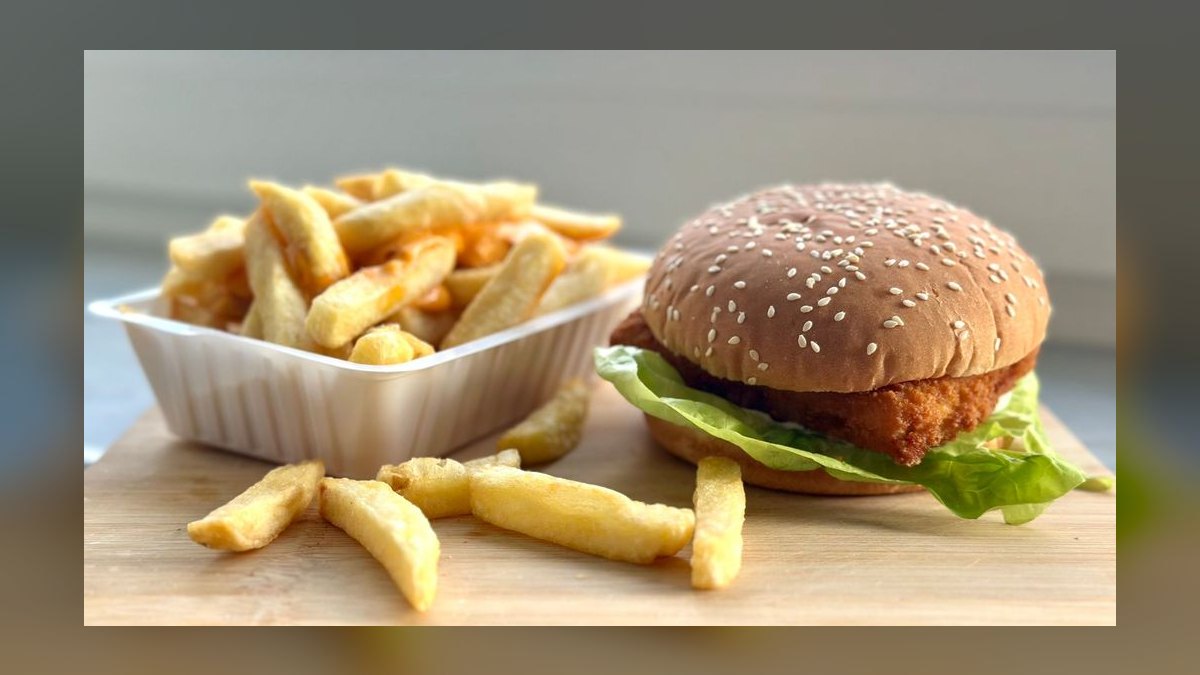
Start with the build. A Hwy 55 occupies roughly 1,800 to 3,000 square feet configured as a 1950s-style diner with dine-in seating, carryout, and delivery. Newer prototypes lean smaller and often include a drive-thru, which materially changes the revenue mix — where a drive-thru exists it commonly carries a meaningful share of daily volume, and its absence is one of the first things to check when comparing an existing resale against a new build.
The capital stack breaks roughly like this. Franchise fee near $25,000. Buildout and leasehold improvements from about $120,000 on a clean second-generation restaurant space up to $320,000 or more where you're taking raw shell or a non-restaurant conversion. Equipment and POS at $90,000 to $200,000 — grill line, shake equipment, refrigeration, hoods, point of sale. Signage and retro decor at $15,000 to $50,000, which is not a trivial line for a concept whose whole visual identity is the fit-out. Opening inventory at $8,000 to $22,000. Grand opening marketing at $12,000 to $35,000. Training and travel at $6,000 to $18,000. Working capital at $30,000 to $90,000, which is the number most first-time franchisees underfund.
Then the ongoing structure: royalty in the 4% to 5% range plus a marketing fee around 2%. That combined load is competitive against the fast-casual burger segment. But — and this is the part buyers skip — a royalty percentage is only as friendly as the volume it sits on. Six-and-a-half percent of $1.1 million is a different animal from six-and-a-half percent of $650,000, because the fixed costs underneath it don't scale down proportionally. Your rent doesn't drop because your sales did.
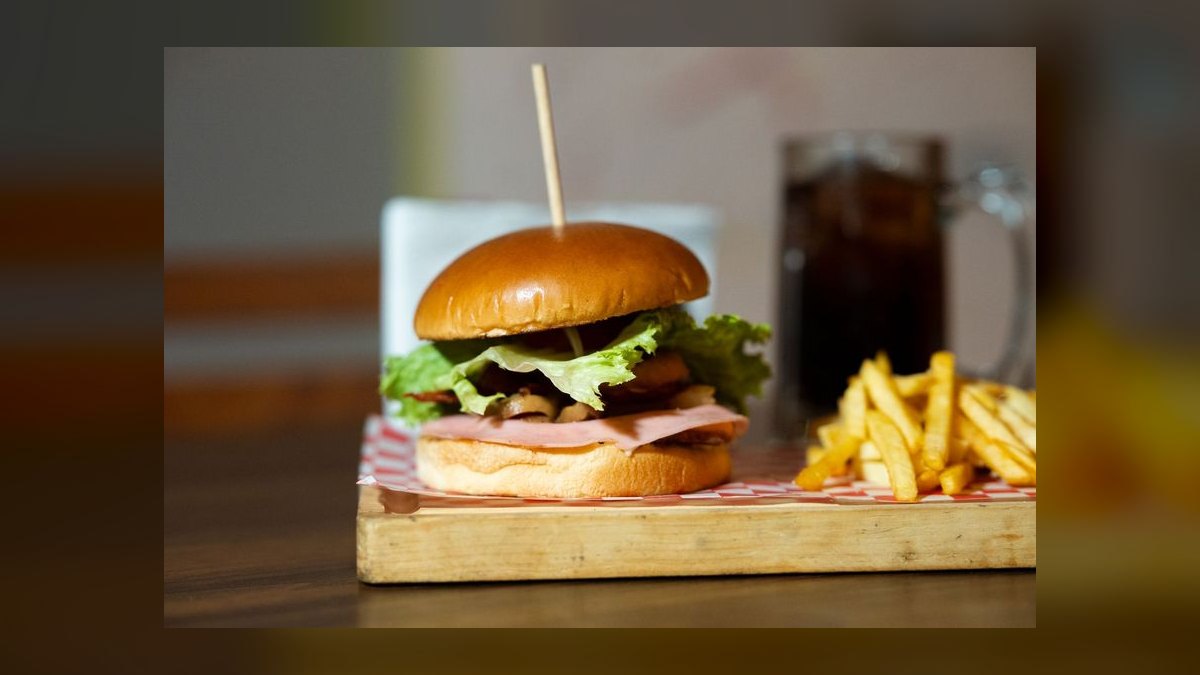
Two structural facts drive that chart. First, made-to-order costs more to produce than frozen-patty QSR. Fresh beef and real ice cream push food cost into the low thirties rather than the high twenties, and fresh product spoils, so waste discipline is a daily margin lever rather than a quarterly one. Second, the format needs more skilled labor per shift — someone has to actually cook the burger and hand-dip the shake. Labor lands in the high twenties to low thirties as a percent of sales rather than the low-to-mid twenties a heavily systematized fast-food unit can hit.
Those two costs are the price of the differentiation. You are paying five to eight points of margin, relative to a frozen-patty competitor, to sell a better product. That trade only pays if the market you're in will actually pay a premium for cooked-to-order — which is a demographic and competitive question, not a brand question. In a market where the dominant competition is a well-run Cook Out selling on price and portion, the premium is hard to hold.
Real numbers, and the ones that don't show up in Item 19
Mature units gross $600,000 to $1,200,000. Treat that spread as two different businesses rather than one range. At the bottom of it — call it $650,000 — after food, labor, occupancy, royalty, marketing, and other operating expense, you are looking at owner earnings in the $60,000 to $85,000 band, and you are working the line to get there. That's a job you bought for $400,000, not an investment. At the top — $1.1 million or better with a drive-thru and a strong lunch daypart — restaurant-level margins in the 12% to 18% band produce real money, and the asset becomes financeable and sellable.
The variables that decide which business you own:
Daypart concentration. Lunch does the heavy lifting in this format. A site with dense weekday daytime population — office parks, hospitals, schools, industrial employers, a courthouse square — carries a different revenue profile than a site whose traffic is purely residential drive-by. Before you sign a lease, count cars at 11:45am on a Tuesday yourself. Do not accept a traffic study as a substitute for standing on the corner.
Drive-thru or not. For a format with longer ticket times than fast food, a drive-thru is both an asset and an operational risk. It adds volume, but a made-to-order burger through a window can create queue times that frustrate customers conditioned by drive-thru speed. Units that run this well usually manage it with order-ahead, staged prep, and honest wait-time communication rather than by cutting corners on the cook.
Ramp length. First-year units frequently run at or near break-even. Getting to a stable mature run rate typically takes on the order of 18 to 24 months. Your working capital has to survive that window while you're also servicing debt. If you financed $400,000 through an SBA 7(a) at prevailing rates, your annual debt service is a serious number against $70,000 of first-year owner earnings — model it explicitly, at a rate 200 basis points above whatever you're quoted today.
Existing unit versus new build. A resale gives you a proven sales history, a trained crew, and an immediate cash flow — at the price of inheriting whatever the prior owner did to the equipment and the local reputation. A new build gives you a clean start and a modern prototype at the price of the ramp. As a rule of thumb, buy the resale if its trailing twelve months are already above break-even and the deferred maintenance is quantifiable; build if the only available territory is greenfield and you have the capital to fund 24 months of underperformance.
On resale pricing: small-format restaurant franchises generally trade at a low multiple of owner earnings — meaningfully below what a high-AUV national brand commands. Do not enter this expecting a big exit multiple. The return here is the annual cash flow, plus whatever you can build by operating multiple units, not a private-equity-style sale at the end. Any franchise pro forma that leans on terminal value to make the IRR work is telling you the operating economics are thin.
One item to validate directly rather than take from any summary, including this one: closure and turnover history. Item 20 of the FDD gives you the actual table — units opened, closed, transferred, terminated, and reacquired, by state, over three years. That table is the single most honest document in franchising. Read it before you read anything else. A brand with clustered closures in one non-core state is telling you exactly where the footprint edge is.
What you give up, and what you'd give up instead
Every franchise decision is a comparison, and the useful comparison set here is not "Hwy 55 versus nothing." It's Hwy 55 versus the three or four other things that $280,000 to $600,000 and a full-time commitment could buy.
Versus a national better-burger brand. Five Guys, Culver's, and similar carry higher AUVs and stronger national pull, but they also carry higher entry costs, tougher approval standards, and in several cases multi-unit development requirements that price out a single-unit buyer. Hwy 55's accessibility is a genuine feature. You can realistically get approved and open one store, which is not true everywhere.
Versus an independent diner. No royalty, no marketing fee, no territory restriction, total menu control — and no supply chain, no operating system, no training program, no brand. For an operator with fourteen years of experience and a strong local reputation, independent is often the better financial answer, and it's the option franchise buyers most systematically undervalue. You keep the 6.5% and you keep the upside. What you give up is the playbook and the resale story.
Versus a lower-labor service franchise. A meaningful share of people who shop restaurant franchises would be happier in a business without a cook line — home services, auto service, fitness, pet care. Restaurants have the hardest labor model in franchising. If your honest reason for wanting a burger franchise is "I like the concept," rather than "I have run a kitchen and want to own one," look at the adjacent categories before you commit.
Versus the manager-to-owner path. Hwy 55 has an internal pathway for existing general managers to become franchisees. If you are not already inside the system, this isn't directly available to you — but the existence of it tells you something useful about the brand's talent model, and if you're early in your career and drawn to this concept specifically, going to work in a unit first is a legitimate and underrated route to ownership. It also means a real share of your future peer franchisees will be operators who came up through the line, which tends to be good for system quality.
The honest framing: Hwy 55 is a good fit for a narrow, well-defined operator — Southeast, hands-on, kitchen-experienced, adequately capitalized, buying a job that becomes a business. It is a poor fit for almost everyone else, and the brand's moderate entry cost makes it dangerously easy for the wrong buyer to qualify.
The mistakes that actually kill these deals
Underfunding working capital. The single most common failure mode in first-unit franchising. Buyers budget to open and not to survive. If the range says $30,000 to $90,000 of working capital, plan on the top of it plus a personal reserve covering twelve months of household expenses. You cannot manage a restaurant well while worrying about your mortgage.
Validating with the wrong franchisees. Corporate will hand you a list. Call the ones not on it. Pull the full franchisee roster from Item 20 of the FDD, and specifically call operators who are in year one and year two — not the ten-year veterans with paid-off buildouts. Ask three questions in order: what were your actual first-twelve-month sales by month; what did you underestimate; and would you sign again knowing what you know. Talk to at least eight. Two or three is not a sample.
Treating the Item 19 financial performance representation as a forecast. It is a description of units that exist, filtered by whatever the franchisor chose to disclose, and often reported as an average across a set that includes mature high performers. Ask specifically: what is the median rather than the mean, what is the bottom-quartile performance, and how many units are excluded from the representation and why. Those exclusions are where the bodies are.
Signing the lease before the franchise agreement. Or vice versa without contingencies. Your lease term should match or exceed your franchise term, your lease should contain a franchisor cure right, and neither document should become binding without the other. A ten-year franchise agreement on a five-year lease is a renegotiation you will lose in year five.
Ignoring the labor market. Made-to-order needs cooks. Before signing, check the local wage floor for line cooks, the presence of competing employers, and whether the labor pool near your site can actually staff a full schedule. A site with perfect traffic and no available labor is a site that runs understaffed forever, and understaffing in a cooked-to-order format shows up directly as ticket times and reviews.
Assuming the territory protects you from the real competition. A radius restriction stops another Hwy 55 from opening next door. It does nothing about the Cook Out, the local burger place, the Chick-fil-A, or the grocery-anchored center that adds two fast-casual tenants next year. Map every burger and fast-casual seat within a three-mile radius before you commit, then ask what happens to your model if one more good operator opens.
Planning for absentee ownership. This format does not support it, and most agreements of this type require an active operating principal. If your plan is to hire a general manager and check in weekly, you are describing a business that will produce the bottom of the earnings range at best. Hands-on is not a preference here, it's a requirement of the economics.
Skipping franchise counsel. Spend the $3,000 to $7,000 on a franchise attorney who reviews FDDs for a living. Not your real estate lawyer. Not your cousin. Have them read the transfer provisions, the renewal terms, the personal guarantee, the post-term non-compete, and the dispute resolution clause specifically. Those five sections determine what happens to you if things go badly, which is exactly the scenario nobody reads for.
Related questions
How long until a Hwy 55 franchise breaks even?
Most single units run at or near break-even through year one and reach a stable mature run rate around 18 to 24 months. Budget working capital and debt service for that full window, not for six months.
Is a resale better than a new build?
Buy the resale if its trailing twelve months are already above break-even and deferred maintenance is quantifiable. Build only if the territory is greenfield and you can fund roughly 24 months of underperformance without stress.
Can I own one while keeping my day job?
No. The made-to-order format and the typical active-operator requirement make this a full-time, hands-on business, particularly in the first 12 to 18 months while systems and crew stabilize.
What's the biggest hidden cost?
Working capital and ramp length. Buildout overruns get attention; the quiet killer is twelve to twenty-four months of thin cash flow while fixed costs and debt service run at full rate.
Does the drive-thru matter that much?
Yes. It shifts the revenue mix substantially where present, which makes drive-thru presence one of the first comparison points between an existing unit and a new build.
FAQ
What actually differentiates Hwy 55 from other burger franchises? Made-to-order burgers, hand-dipped shakes, and fresh-cut fries in a 1950s-style diner format, versus the frozen-patty and pre-made model common in QSR. That buys product quality and a premium positioning; it costs you higher food cost, higher skilled-labor cost, and longer ticket times. The trade only pays in markets willing to wait and pay for the difference.
How much capital do I really need?
The disclosed total investment range runs roughly $280,000 to $600,000 including a franchise fee near $25,000. Plan on liquidity of $80,000 to $160,000 minimum, and materially more if you're building ground-up or opening outside the brand's core Southeast markets where the ramp runs longer.
What are the ongoing fees? A royalty in the 4% to 5% range plus a marketing fee around 2%, giving a combined load competitive within fast-casual burger. Budget additional local advertising on top of the required fee, especially in the first eighteen months and especially in any market where the name isn't already known.
What does a realistic owner take home? Mature units gross $600,000 to $1,200,000 with owner earnings commonly cited in the $70,000 to $170,000 band. Treat the low end as buying yourself a job and the high end as a real business — the difference is driven by site quality, daypart mix, drive-thru presence, and how tightly you run food cost on fresh product.
Should I open outside the Southeast? Approach it with a much higher capital reserve and a longer ramp assumption, or don't. Regional brand equity is the core asset here. Outside the footprint you're paying franchise fees for a name that carries no local trial advantage, which is the worst version of the trade.
How do I verify any of this before signing? Read the current FDD end to end, with particular attention to Item 7, Item 19, and Item 20's unit turnover table. Call at least eight franchisees you selected yourself, weighted toward year-one and year-two operators. Hire a franchise attorney. Every number in any summary, including this one, is a starting hypothesis you confirm in the actual disclosure document.
Sources
- https://www.ftc.gov/business-guidance/resources/franchise-rule-compliance-guide
- https://www.sba.gov/funding-programs/loans/7a-loans
- https://www.franchise.org/
- https://www.entrepreneur.com/franchises/franchise500
- https://www.ibisworld.com/united-states/market-research-reports/fast-food-restaurants-industry/
- https://restaurant.org/research-and-media/research/
- https://www.nrn.com/
- https://www.restaurantbusinessonline.com/
- https://www.bls.gov/oes/current/oes351012.htm
- https://www.census.gov/quickfacts/
Related on PULSE
- Should I open or buy a Wayback Burgers franchise in 2027?
- How long does it take to open a franchise and break even in 2027?
- Should I open or buy a Tommy Gun's Original Barbershop franchise in 2027?
- Should I buy a franchise resale or open a new location in 2027?
- What should I look for in Item 19 of a Franchise Disclosure Document?
This page will be disappearing soon. Save it to your device for $1 — or read it free while it is here.
@Kory-White- · if Venmo asks, the last 4 of my number are 2012
This page is gone.
This one is off the shelf now. $1 keeps it on your phone for good — the whole page, pictures and diagrams included.
 franchiseShould I open or buy a Massage Envy franchise in 2027?
 franchiseShould I open or buy an Auntie Anne's franchise in 2027?
 franchiseShould I open or buy a Mathnasium franchise in 2027?
 franchiseShould I open or buy a Dunkin' franchise in 2027?
 franchiseShould I open or buy an Anytime Fitness franchise in 2027?
 franchiseShould I open or buy a Papa John's franchise in 2027?
 franchiseShould I open or buy a KinderCare franchise in 2027?
 franchiseShould I open or buy a McAlister's Deli franchise in 2027?
 franchiseShould I open or buy a Dairy Queen franchise in 2027?
 franchiseShould I open or buy a Rita's Italian Ice franchise in 2027?