


Should I open or buy an Island Fin Poke franchise in 2027?
Quality
Certified
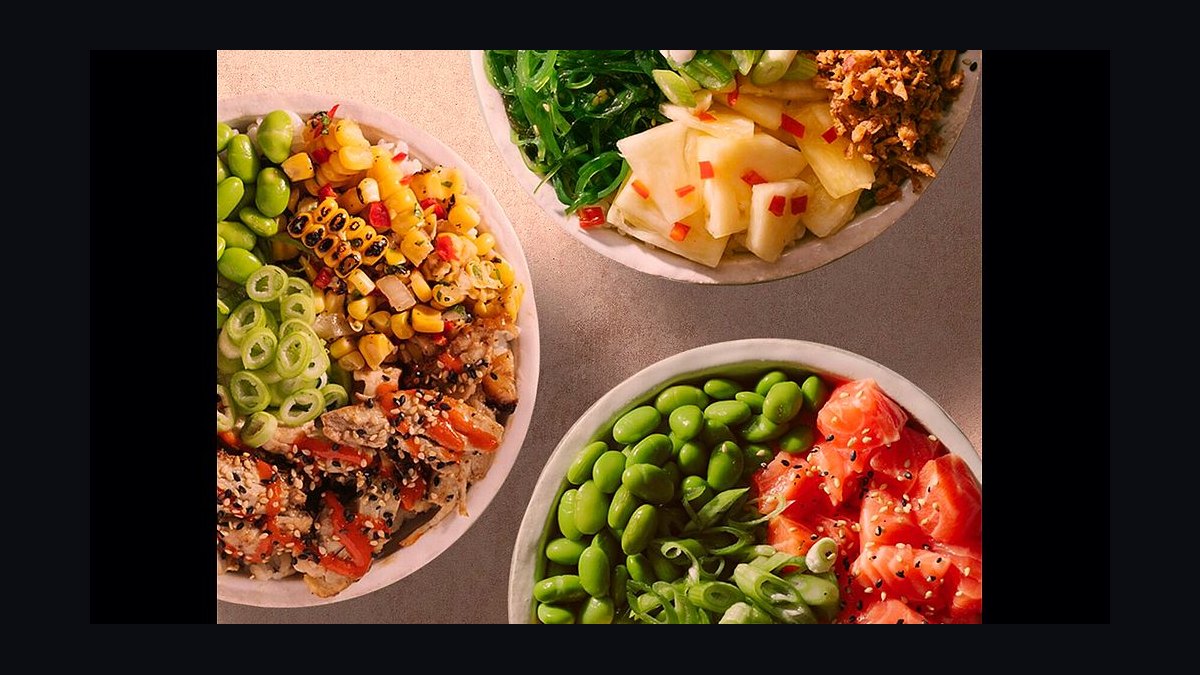
Open an Island Fin Poke franchise in 2027 if you're targeting a health-conscious, higher-income market with strong lunch and dinner traffic, have $300,000-$600,000 in capital ($100,000-$180,000 liquid), and can manage fresh-fish inventory discipline. The build-your-own poke-bowl format still taps a durable healthy-eating trend, but the category matured after its 2017-2019 boom, so location strength and real differentiation — not the brand name alone — determine whether you land in the $70,000-$180,000 owner-profit band or struggle against poke-saturated competition.
A Tuesday at a 1,800-Square-Foot Bowl Line
Picture two prospective franchisees walking the same Island Fin Poke prototype on a Tuesday afternoon. One is scouting a strip center near a university with three competing poke concepts within a mile; the other is looking at a suburban lifestyle center with no poke competitor and a large base of health-conscious professionals. Both will pay the same roughly $45,000 franchise fee, sign the same 10-year agreement, and build out a similar 1,200-2,200 square foot space with refrigeration, a build-your-own bowl line, and island-themed decor. But their outcomes will diverge sharply. The first operator is entering a market where poke is already commoditized — customers have three or four places to get a similar bowl, so differentiation has to come from service speed, protein quality, or a stronger loyalty program. The second is entering underserved territory where the brand's community vibe and health positioning can do more of the selling on their own. This is the central tension of opening an Island Fin Poke in 2027: the franchise system gives every owner the same playbook — proprietary POS, training, a roughly 20-combination menu, an island-themed community atmosphere — but the local market determines whether that playbook produces a $500,000 shop or a $1,000,000 one. A franchisee who treats site selection as a formality, rather than the single biggest lever they control, is the one most likely to end up in the lower half of the revenue range regardless of how well they run daily operations.
How the Franchise Economics Actually Work
Understanding why Island Fin Poke's numbers land where they do requires tracing the money from gross sales down to owner pocket. Every dollar of revenue first absorbs food cost — typically 30-34% of sales, elevated because fresh fish (ahi tuna, salmon) carries a higher unit cost and shorter shelf life than dry or frozen proteins, and fish alone can represent 40-50% of total food cost. Labor takes another 26-30%, driven by the need for 2-3 staff per shift during lunch and dinner peaks and a total roster of 8-12 part-time and full-time employees to cover a fast-casual schedule. Occupancy — rent, common-area maintenance, utilities — typically runs 8-10% of sales in a market where lease rates for lunch/dinner-traffic sites sit between $5,000 and $12,000 per month. Then the franchise system takes its cut: a royalty near 6% of gross sales plus a marketing fee around 2%, both flowing back to Island Fin corporate regardless of how the individual store performs. What remains after those line items — plus insurance, repairs, credit card processing, and general operating expenses — is restaurant-level margin, which for a well-run Island Fin Poke lands in the 11-18% range. On a $750,000-a-year shop, that translates to roughly $80,000-$150,000 in owner profit before any debt service on the original buildout loan. The mechanism only produces a healthy outcome when every stage stays disciplined: if food cost drifts above 35% because of spoilage or poor portioning, or if a slow location can't clear $500,000 in annual sales, the same royalty and occupancy percentages eat a much larger share of a smaller pie, and owner profit can evaporate entirely.

The Real Numbers: Investment, Revenue, and Margin
The 2026 Franchise Disclosure Document lays out an Item 7 total investment of roughly $300,000 to $600,000. The franchise fee itself is fixed at about $45,000, but everything downstream varies with real estate and local construction costs. Buildout and leasehold improvements for a fast-casual fit-out typically run $150,000-$350,000, the single largest swing factor in total investment. Equipment and POS — commercial refrigeration for fresh fish, the assembly line, point-of-sale hardware — falls between $90,000 and $200,000. Signage and island-themed decor add another $18,000-$55,000, since maintaining the brand's surfboard-and-reggae atmosphere authentically requires ongoing investment, not a one-time purchase. Initial inventory (both fresh and dry stock) runs $10,000-$25,000, initial marketing for a grand opening $15,000-$45,000, and training and travel for the operator and early staff $8,000-$22,000. Working capital for the first three months — payroll, inventory replenishment, unexpected repairs — should be budgeted at $40,000-$110,000, though many franchisees find they actually need closer to $75,000-$150,000 once the first two years of real operating history play out. On the revenue side, mature Island Fin Poke locations gross $500,000 to $1,000,000 annually, with the strongest performers in health-conscious, community-oriented markets clustering toward the top of that range. Break-even for a new store commonly lands around month 12-18 if the location can hit roughly $500,000 in annualized sales during its first year, and the first six to twelve months typically run negative cash flow while the customer base builds. By years three through five, a well-located store generating $800,000-plus can produce owner earnings of $120,000-$180,000 after the 6% royalty and 2% marketing fee — but that outcome assumes a prime site, disciplined fresh-fish management, and a market that isn't already saturated with poke competitors.
Trade-offs and Alternatives to Opening an Island Fin Poke
Island Fin Poke is not the only path into healthy fast-casual, and weighing it against direct and adjacent competitors clarifies what you're actually buying with the brand. Pokéworks and Poke Bros compete directly on the same build-your-own poke format, with Pokéworks reportedly running a higher AUV band ($600,000-$1,200,000) but also a steeper investment ($400,000-$800,000) — meaning Island Fin trades some upside ceiling for a lower barrier to entry, which matters most to a first-time franchisee with limited liquid capital. Broader healthy fast-casual concepts — CoreLife, Crisp & Green, Modern Market, Cava-style Mediterranean bowl shops — compete for the same health-conscious customer without being poke-specific, so they're a reasonable alternative if you like the unit economics of build-your-own bowls but are unconvinced the poke category specifically has room to grow in your target market. On the beverage side, Tropical Smoothie and Clean Juice sit adjacent in the health-forward space with different operational demands (less fresh-fish risk, different labor profile). An independent, non-franchised poke shop is the highest-control, highest-risk alternative: no franchise fee or royalty, but also no proprietary POS, no training system, and no brand recognition to shortcut customer trust in a market where diners are wary of unfamiliar raw-fish concepts. The honest comparison point is Chipotle and Sweetgreen, which have both added poke-inspired bowls to already-massive menus — they aren't franchise opportunities for you, but they represent the ceiling Island Fin is competing against in AUV terms (Chipotle's $2.5 million-plus average unit volume dwarfs any poke-focused chain), and their tech-forward digital ordering is an area Island Fin still lags. The trade-off in plain terms: pick Island Fin for its lower entry cost, build-your-own protein variety (6-8 proteins versus 3-4 at many competitors), and genuine community-brand differentiation; pick a broader healthy fast-casual concept if you doubt poke specifically will keep growing in your market; pick independence only if you're prepared to build brand trust from zero.

Common Pitfalls in Poke Franchising and How to Avoid Them
The single most common mistake franchisees make with Island Fin Poke is underestimating fresh-fish spoilage risk. Ahi tuna and salmon hold only 2-3 days refrigerated, and demand forecasting errors turn directly into written-off inventory — the fix is a disciplined daily prep schedule and using limited-time specials to move slower proteins before they age out, rather than over-ordering to avoid stockouts. A second pitfall is treating the site-selection process as secondary to the brand itself; a location without genuine lunch-and-dinner walk-in traffic in a health-conscious demographic will struggle regardless of how well the store is run, because the franchise system can't manufacture local demand. Third, many first-time franchisees under-budget working capital, trusting the FDD's $50,000-$100,000 reserve figure when real-world experience during the first two years more often demands $75,000-$150,000 to absorb payroll swings, equipment repairs, and slower-than-expected ramp. Fourth is staffing churn: fast-casual turnover runs 75-100% annually industry-wide, and owners who don't budget 10-15 hours a week for hiring and training in year one — and who don't pay competitively (aim for $15-$18 an hour plus tips) — end up with an inexperienced line that slows bowl assembly (each bowl should take 2-4 minutes) and hurts the customer experience. Fifth, don't ignore health-inspection exposure: raw-seafood service draws frequent inspections, and budgeting $2,000-$5,000 annually for third-party food-safety audits beyond what the franchisor provides protects both compliance and reputation. Finally, plan your exit before you need it — a well-performing unit typically sells after 5-7 years at a 2-3x net-profit multiple, but the franchise agreement's right-of-first-refusal and transfer-fee provisions (often $10,000-$25,000) should be negotiated at signing, not discovered when you're ready to sell.
Related questions
Is poke a declining category or just a maturing one? It's maturing, not declining — rapid 2017-2019 growth has leveled off into steady, durable demand tied to broader healthy-eating trends, which favors well-differentiated operators over undifferentiated new entrants.
How does Island Fin Poke compare to opening a Poke Bros or Pokéworks franchise? Pokéworks generally shows a higher AUV band but a steeper investment; Island Fin's lower entry cost and wider protein selection make it more accessible, particularly for first-time franchisees with tighter liquid capital.
What's the biggest variable cost in running a poke franchise? Fresh fish, which can represent 40-50% of total food cost due to its short 2-3 day shelf life and price volatility — fish prices have risen roughly 15-25% since 2022.
How long until an Island Fin Poke franchise breaks even? Typically month 12-18, assuming the location reaches approximately $500,000 in annualized sales during its first year of operation.
FAQ
Is Island Fin Poke still growing, or has the poke trend peaked? The category grew fastest from 2017 to 2019 and has since matured, but Island Fin continues expanding steadily. Its health-forward positioning and build-your-own model keep it relevant even as the initial boom has settled into steadier, more selective growth.
What are the typical profit margins for an Island Fin Poke franchise? Owner earnings generally range from $70,000 to $180,000 annually, depending heavily on location strength and sales volume. Food and labor costs are the largest variable expenses, so margins vary significantly between high-traffic and lower-volume stores.
How much capital do I need to open an Island Fin Poke franchise? Total investment typically falls between $300,000 and $600,000, including the roughly $45,000 franchise fee. That range covers buildout, equipment, inventory, and working capital, though actual costs depend heavily on local real estate and construction conditions.
What ongoing fees does Island Fin Poke charge franchisees? Franchisees pay a royalty of about 6% of gross sales plus a marketing fee near 2%. Both are standard for the fast-casual segment and fund brand advertising, operational support, and system-wide marketing initiatives.
How long does it take to open a franchise after signing the agreement? The typical timeline from signing to opening spans 6 to 12 months, covering site selection, lease negotiation, buildout, training, and final health and safety inspections — though permitting and contractor delays can extend this window.
Does Island Fin Poke provide financing help for new franchisees? The franchisor doesn't typically offer direct financing but may guide new owners toward third-party lenders and SBA loan options. It does provide structured initial training and ongoing operational support once a franchise opens.
Sources
- https://www.entrepreneur.com/franchises/directory
- https://www.franchisebusinessreview.com
- https://www.ibisworld.com
- https://www.technomic.com
- https://www.statista.com
- https://www.franchise.org
- https://www.restaurantbusinessonline.com
- https://www.nrn.com
- https://www.census.gov
- https://www.sba.gov/business-guide/plan-your-business/franchises
Related on PULSE
This page will be disappearing soon. Save it to your device for $1 — or read it free while it is here.
@Kory-White- · if Venmo asks, the last 4 of my number are 2012
This page is gone.
This one is off the shelf now. $1 keeps it on your phone for good — the whole page, pictures and diagrams included.
 franchiseShould I open or buy a Rita's Italian Ice franchise in 2027?
 franchiseShould I open or buy a Whataburger franchise in 2027?
 franchiseShould I open or buy an Orangetheory Fitness franchise in 2027?
 franchiseShould I open or buy a Big O Tires franchise in 2027?
 franchiseShould I open or buy a Hand and Stone Massage franchise in 2027?
 franchiseShould I open or buy a Crumbl Cookies franchise in 2027?
 franchiseShould I open or buy a Mathnasium franchise in 2027?
 franchiseShould I open or buy a Merry Maids franchise in 2027?
 franchiseShould I open or buy a Valvoline Instant Oil Change franchise in 2027?
 franchiseShould I open or buy a Jimmy John's franchise in 2027?