


Should I open or buy a Signarama franchise in 2027?
Quality
Certified
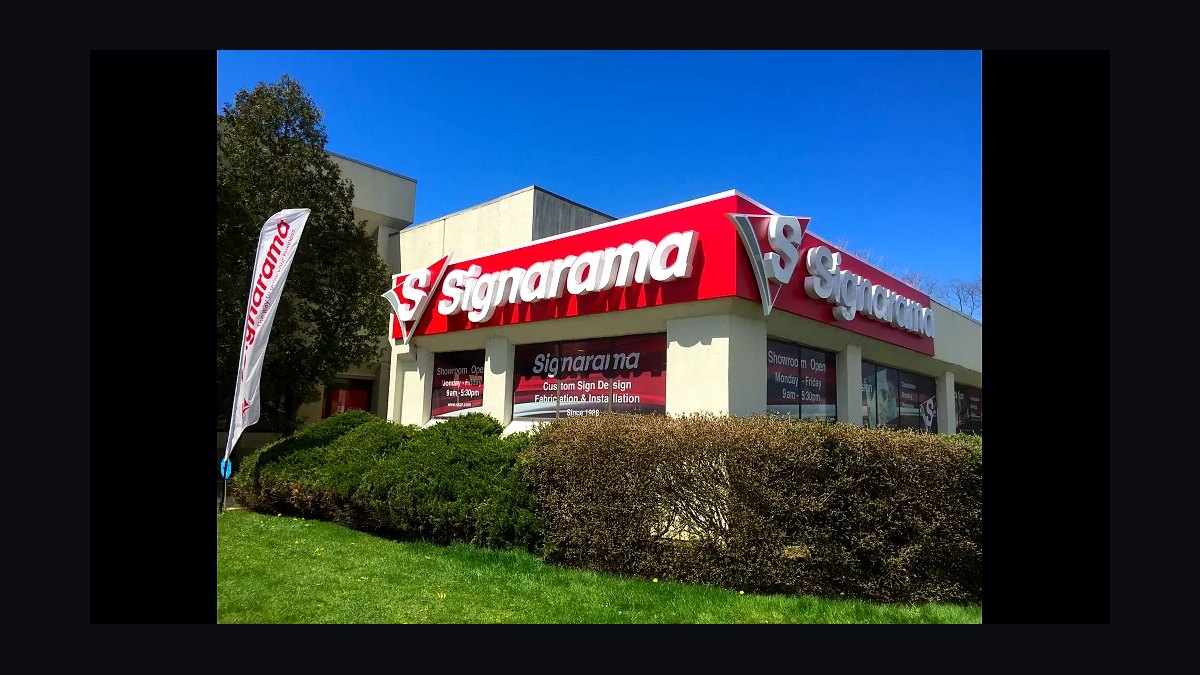
Yes, opening a Signarama is a sound move in 2027 for an operator who wants a B2B, Monday-through-Friday sign and graphics franchise with global scale and United Franchise Group support. The 2026 FDD shows a franchise fee near $50,000 and total investment of roughly $200,000 to $350,000, with mature centers grossing $600,000 to $1,300,000 and owners clearing $90,000 to $270,000. Skip it if you dislike consultative selling.
The outcome you should expect
An operator who opens a Signarama franchise in 2027 should expect a slow first year, a steady second year, and a genuinely profitable third year — this is not a business that throws off cash in month four. Year one gross revenue typically lands between $200,000 and $400,000 while you build a local client base from zero, train or hire production staff, and establish referral relationships with real estate agents, dealerships, contractors, and property managers. Most new owners operate at breakeven or a modest loss in year one once royalty, marketing fee, debt service, and payroll are accounted for.
Year two is where the trajectory becomes visible: revenue commonly rises to $400,000–$700,000 as repeat clients return for additional signage, vehicle wraps, and seasonal promotional work, and as your sales pipeline matures from cold outreach to warm referrals. By year three, a well-run center reaches the $600,000–$1,300,000 range the franchisor's Item 19 disclosures describe for mature locations, with owner income of $90,000–$270,000 depending on territory density, production efficiency, and how much of the selling the owner personally still does.
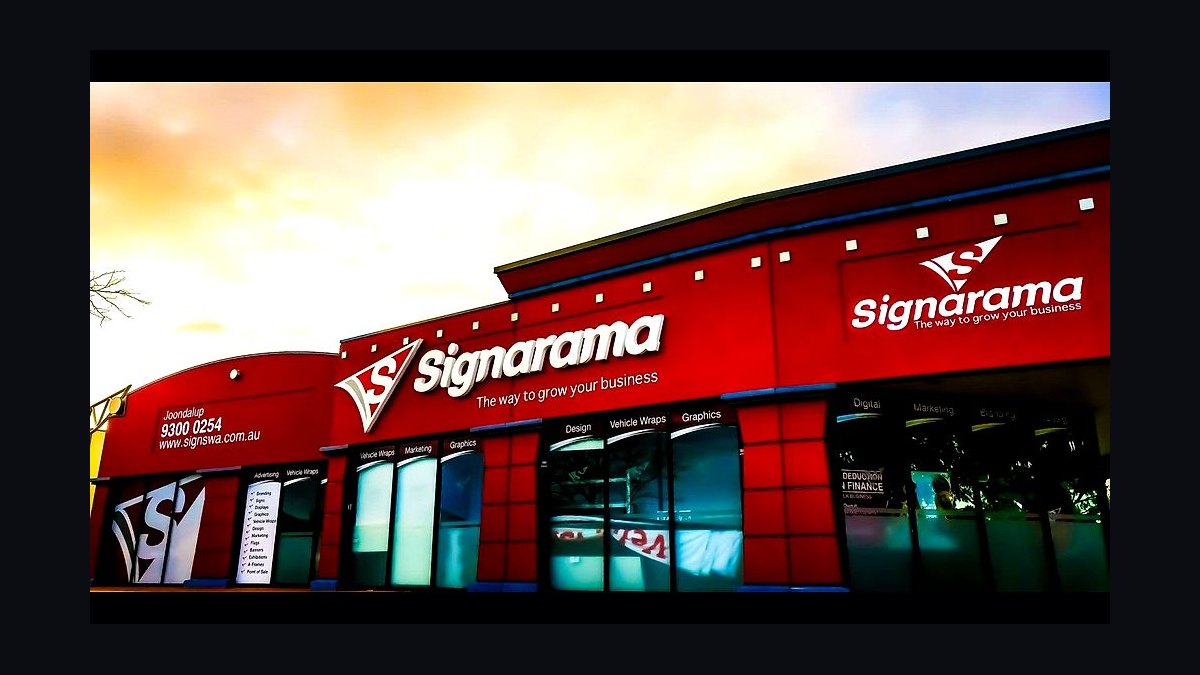
The outcome hinges less on the brand and more on whether the owner is willing to be the primary salesperson for the first 18 to 24 months. Signarama does not generate meaningful walk-in retail traffic; nearly every dollar of revenue originates from an owner or sales rep identifying a business need and closing a quote. Operators who treat the first two years as a sales-building phase — rather than expecting the franchise brand alone to generate leads — consistently outperform those who open the doors and wait for the phone to ring. The realistic expectation, then, is a gradual build from a working professional's salary-equivalent income in year one to a genuinely attractive six-figure return by year three, assuming the territory has sufficient commercial density and the owner commits to active business development throughout.
What drives that outcome
Several interlocking factors determine whether a Signarama franchise reaches that year-three outcome or stalls out below it. The first and most important is sales activity volume — specifically, how many quoted opportunities the owner or sales team generates per week. Signage is a considered B2B purchase; a typical commercial client doesn't impulse-buy a $5,000 dimensional sign or a $12,000 fleet wrap wrap job. It takes discovery calls, site visits, design mockups, and follow-up before a deal closes, so centers that build a disciplined weekly prospecting cadence (target: 15–25 new business conversations per week in year one) convert that activity into the recurring-client base that eventually drives passive repeat revenue.
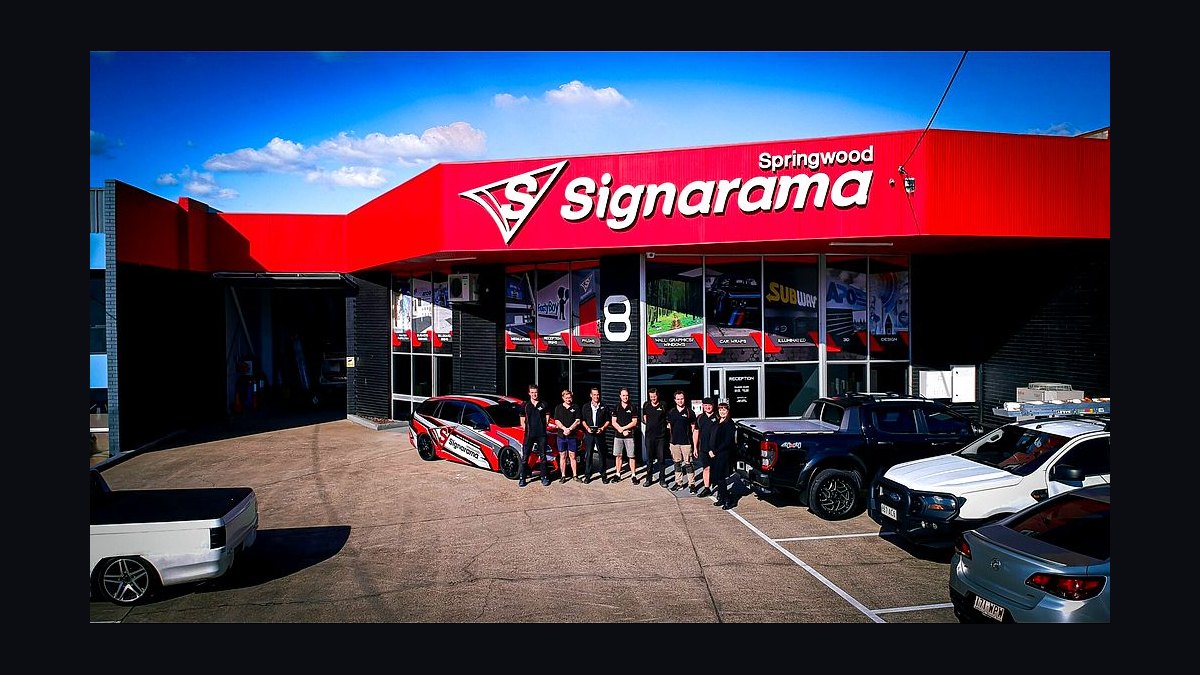
The second driver is production capacity and turnaround time. A center with a wide-format printer, laminator, plotter, and a trained 2–4 person installation crew can turn a standard order around in 3–5 business days; centers that underinvest in equipment or understaff installation see turnaround stretch to two or three weeks, which damages referral-worthiness and loses rush-order premium pricing. Labor availability for skilled installers and print operators is a real constraint in most 2027 markets, and franchisees who pay competitively ($18–$28/hour depending on region) retain the staff that keep turnaround tight.
The third driver is territory commercial density — the raw count of businesses within a realistic service radius that could plausibly need signage, vehicle graphics, or trade show materials. A market with 5,000–10,000 qualifying businesses within ten miles gives a sales-focused owner enough addressable demand to hit the revenue ranges above; a market with under 3,000 forces the owner to either travel further for jobs or compete more aggressively on price for a smaller pool of prospects.

The fourth driver, often underweighted by first-time franchise buyers, is how much of the selling the owner personally does versus delegates. Centers where the owner remains the primary closer for the first two years build a stronger foundation because the owner directly learns which pitch, pricing structure, and follow-up cadence works in that specific territory — knowledge that's difficult to transfer to a hired sales rep early on. Owners who try to hire a salesperson in month three, before they've validated what works locally, frequently see that hire underperform because there's no proven local playbook to hand them yet.
Benchmarks and realistic ranges
The 2026 FDD lists a franchise fee of approximately $50,000 and a total Item 7 investment range of $200,000 to $350,000, but real-world spending in 2027 commonly runs higher once working capital and technology setup are fully accounted for — most new franchisees report landing between $280,000 and $400,000 all-in. Equipment alone (wide-format printer, laminator, plotter, and installation tools) typically costs $80,000 to $150,000, and leasehold improvements for a 1,500 to 2,500 square foot light-industrial space run $30,000 to $60,000. Qualification generally requires at least $100,000 in liquid capital and a net worth above $500,000.
Ongoing fees include a royalty near 6% of gross sales and a marketing fee around 2%, both standard for the brand and funding national advertising plus franchisee resources. On revenue, gross margins on sign products typically run 40% to 55%, but net profit after royalty, cost of goods, labor, and overhead usually settles at 12% to 20% of revenue — meaning a $900,000-grossing center might net $110,000 to $180,000 in owner salary and profit combined. The top-performing 20% of franchisees, who lean into high-margin dimensional and illuminated signage plus vehicle wraps, and who sometimes operate two to three units within a 50-mile radius, can clear $250,000 to $400,000.
Commercial rent for the production facility runs $2,500 to $5,000 per month for 1,500–2,500 square feet in most secondary and suburban markets, and digital marketing spend of $1,500 to $3,000 per month is common among the faster-growing centers, covering local SEO, Google Business Profile optimization, and trade show participation. Material cost inflation (aluminum, acrylic, vinyl substrates) has run 3% to 6% annually, which is why franchisees who build 5% to 10% price escalation clauses into longer contracts protect their margins better than those on fixed annual pricing.
On the exit side, Signarama franchises typically sell for 2.5 to 4 times annual net profit, with a 6-to-12-month marketing period for the sale. A center netting $150,000 annually might list in the $375,000 to $600,000 range, with multi-unit operations commanding a premium multiple. Most advisors recommend planning for a 5-to-7-year hold before selling, which gives the business time to mature past the slower first two years and build the clean, defensible financial records that buyers scrutinize closely during due diligence.
Risks, edge cases, and failure modes
The most common failure mode is an owner who buys into the franchise expecting a retail walk-in model similar to a print shop or a quick-service business, then discovers that nearly all revenue requires proactive, consultative outbound selling. An owner who is uncomfortable cold-calling a manufacturing plant or walking into a car dealership to pitch a vehicle wrap program will likely underperform regardless of territory quality, because the franchisor's training covers production and systems, not an individual's sales temperament.
A second significant risk is opening in a territory already saturated with sign competition — particularly where FASTSIGNS, Signs Now, Image360, or an entrenched independent shop already controls the commercial relationships. In these markets, a new Signarama franchisee is forced into price competition on commodity items like banners and yard signs, which compresses margins well below the 40%–55% benchmark and makes it harder to reach breakeven in year one. A related red flag is a franchisor-offered territory with fewer than 3,000 qualifying businesses, or one where the average business age skews above 20 years — older, stable businesses replace signage far less often than newer or turning-over businesses do.
Labor risk is a specific 2027 concern: the sign industry faces a real shortage of skilled installers and digital print operators, and franchisees who try to run lean on labor to protect margins instead damage turnaround time, which directly undercuts the referral flywheel the business depends on. Underinvesting in competitive wages ($18–$28/hour depending on region) is a false economy that shows up later as lost repeat business.

Zoning and regulatory risk also deserves attention before signing a lease — some municipalities restrict sign size, illumination, or digital display types, which can materially limit the product mix a given location can legally sell, particularly for the higher-margin illuminated and digital signage categories. Finally, undercapitalization is a recurring failure pattern: owners who finance only the FDD-stated $200,000–$350,000 without reserving additional working capital for a slower-than-expected ramp frequently run short of cash exactly when they need it most, in months four through nine, before the client base has matured enough to generate predictable monthly revenue.
A practical rollout plan
A disciplined 90-day pre-opening and first-year rollout meaningfully improves the odds of hitting the benchmark ranges above. In the first 15 days, read the full 2026 FDD closely, focusing on Items 7, 19, and 20, and confirm the B2B sales model matches your own skills and risk tolerance before going further. Days 16 through 30 should be spent interviewing at least eight existing Signarama owners, asking pointed questions about real sales cycle length, recurring-client percentage, and actual net profit rather than relying solely on FDD averages.
Days 31 through 45 focus on validating territory commercial density — confirming the 5,000-to-10,000 qualifying-business threshold within a realistic service radius, checking for new commercial development or municipal infrastructure projects that signal future signage demand, and assessing existing competitive saturation. Days 46 through 65 cover securing a light-industrial site in the $2,500–$5,000/month rent range and ordering production equipment, which often has a multi-week lead time that can delay opening if not ordered early.
Days 66 through 90 are for completing franchisor training, hiring or training the initial 2-to-4-person production team, and beginning B2B outreach before the doors formally open — ideally generating a backlog of quoted opportunities so the first week of operation already has revenue in motion rather than starting from zero. Once open, the owner should personally lead B2B sales for at least the first 18 to 24 months rather than immediately delegating to a hired rep, using that period to build and document a local sales playbook — pricing approach, objection handling, referral sources — that can later be transferred to a sales hire once the center is consistently clearing $800,000 or more in annual revenue, which is also the rough threshold advisors cite before considering a second unit.
Related questions
How much does it cost to open a Signarama franchise?
The 2026 FDD lists a franchise fee around $50,000 with total Item 7 investment of roughly $200,000 to $350,000, though most 2027 franchisees report spending $280,000 to $400,000 once working capital and technology setup are included.
How long until a Signarama franchise is profitable?
Most centers operate near breakeven in year one, reach $400,000–$700,000 in revenue by year two, and hit mature $600,000–$1,300,000 revenue with meaningful owner profit by year three.
Is Signarama better than FASTSIGNS?
Both are large, established sign franchises; Signarama generally offers a lower initial investment and emphasizes United Franchise Group's global scale, while FASTSIGNS may show higher revenue potential in some markets — compare territory and support directly.
What skills does a Signarama owner need?
Strong consultative B2B sales ability is the top requirement, followed by basic production and project management skills to run a small installation and print team.
What is the biggest risk in opening a Signarama franchise?
The leading risk is an owner expecting a passive, walk-in retail model when the business actually requires the owner to be the primary B2B salesperson, especially in the first 18–24 months.
FAQ
What is the typical investment range for a Signarama franchise in 2027? The total initial investment (Item 7) is roughly $200,000 to $350,000, including a franchise fee around $50,000. These figures come from the 2026 FDD and can shift slightly with inflation or local market conditions.
How much can I expect to earn as a Signarama franchise owner?
Mature centers typically gross $600,000 to $1,300,000 annually, with owner income in the $90,000 to $270,000 range. Actual earnings depend heavily on location, sales effort, and local commercial density.
What are the ongoing fees for a Signarama franchise? Owners pay a royalty of about 6% of gross sales plus a marketing fee near 2%. These fund brand-level advertising and shared franchisee resources, and are standard across the system.
Is Signarama a good fit for someone new to business ownership? It can work for a motivated newcomer, but the B2B sales model demands strong consultative selling skills from day one. The franchisor provides training and systems, but the owner must be comfortable prospecting business clients during standard weekday hours.
How does Signarama compare to competitors like FASTSIGNS? Both are large, well-established sign franchises. Signarama tends to offer a lower entry investment and leans on United Franchise Group's global scale, while FASTSIGNS may show stronger revenue potential in certain markets — compare support and territory terms side by side.
What kind of support does United Franchise Group provide? Franchisees receive initial training, ongoing marketing support, and operational systems from a large multi-brand network, along with shared best practices that can help new owners avoid common early mistakes.
Sources
- https://www.entrepreneur.com/franchises/signarama/282567
- https://www.franchisedirect.com/signfranchises/signaramafranchise
- https://www.ibisworld.com/united-states/industry/sign-manufacturing/1234/
- https://www.signs.org
- https://www.statista.com/topics/signage-market
- https://www.franchisebusinessreview.com
- https://www.franchise.org
- https://www.ufgfranchise.com
- https://www.census.gov/econ/census
Related on PULSE
This page will be disappearing soon. Save it to your device for $1 — or read it free while it is here.
@Kory-White- · if Venmo asks, the last 4 of my number are 2012
This page is gone.
This one is off the shelf now. $1 keeps it on your phone for good — the whole page, pictures and diagrams included.
 franchiseShould I open or buy a Subway franchise in 2027?
 franchiseShould I open or buy a Kumon franchise in 2027?
 franchiseShould I open or buy a Dairy Queen franchise in 2027?
 franchiseShould I open or buy a Rita's Italian Ice franchise in 2027?
 franchiseShould I open or buy a Little Caesars franchise in 2027?
 franchiseShould I open or buy a Planet Fitness franchise in 2027?
 franchiseShould I open or buy a Take 5 Oil Change franchise in 2027?
 franchiseShould I open or buy a Culver's franchise in 2027?
 franchiseShould I open or buy a Mac Tools franchise in 2027?
 franchiseShould I open or buy a Cold Stone Creamery franchise in 2027?