


Should I open or buy an Image360 franchise in 2027?
Quality
Certified
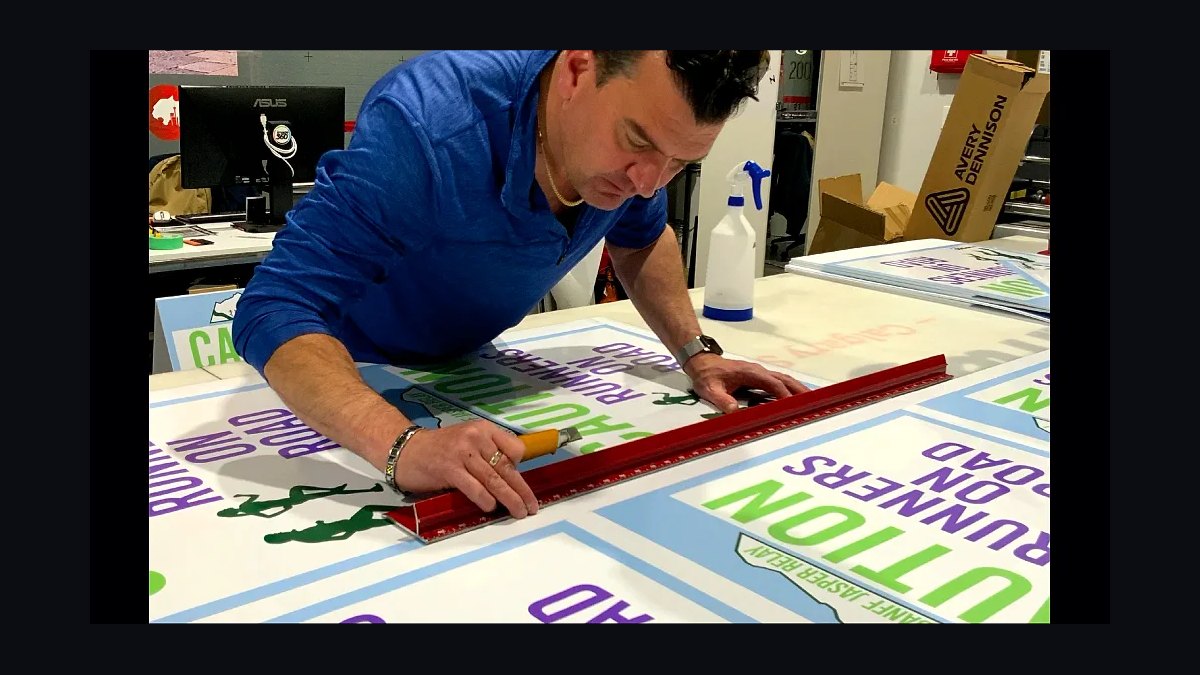
Yes, opening an Image360 franchise in 2027 makes sense for a buyer with strong B2B sales instincts, $250,000-$450,000 in available capital, and patience for a consultative sales cycle rather than walk-in retail. The model rewards owners who actively prospect signage, graphics, wraps, and print accounts. It is a poor fit for anyone expecting a passive, order-taking storefront.
A concrete scenario that frames the problem
Consider a former regional sales director with roughly $150,000 in liquid savings and pre-approval for a $300,000 SBA 7(a) loan, shopping for a franchise in a mid-sized metro of around 220,000 residents. She has narrowed her search to three visual-communications concepts — an open Image360 territory, a FASTSIGNS resale, and a Signarama startup — and she keeps running into the same wall: every brand's marketing deck makes the unit economics sound similar, but the businesses behave very differently once you look past the storefront.
That's the real decision buried inside "should I open or buy an Image360 franchise." It isn't primarily a question about signs, banners, or wide-format printers. It's a question about which brand lets an owner extract the most lifetime revenue from a single acquired B2B relationship, because acquiring that first relationship — the cold call, the site visit, the RFP response — costs roughly the same no matter which brand's logo sits on the invoice. A property management company that orders one lobby directory sign from a narrow sign shop still needs a separate vendor for vehicle wraps, another for trade-show booths, and a third for branded print collateral. An Image360 center is architected to be all three vendors at once, closing a broader menu under one account manager and one production floor.

This scenario is not academic. It's the exact comparison a serious 2027 buyer runs before signing a franchise agreement or an area development agreement, weighing a wider service menu and higher capital requirement against a narrower, faster-to-ramp competitor. The rest of this page works through that comparison in the kind of numeric and operational detail a buyer actually needs before writing a deposit check.
How the mechanism actually works
Image360 is not a retail concept wearing a sign shop's clothes — it's a relationship-sales engine sitting on top of a production facility, and understanding that distinction is the single most important thing a prospective franchisee can internalize before deciding whether to open one. Four linked systems drive the model: territory-based B2B prospecting, consultative project scoping, in-house production, and account expansion through cross-selling.
Revenue starts with an owner or account manager actively prospecting local businesses — property managers, healthcare systems, retail chains, manufacturers, general contractors, event planners, and franchise operators of other brands who need consistent multi-location signage. This is outbound work: cold calls, chamber-of-commerce networking, referral requests, and direct outreach, not a storefront waiting for foot traffic. A relationship typically opens small — a single interior sign, a banner for a grand opening, a set of directional wayfinding graphics — and the center's real job begins after that first invoice clears. The same client who ordered a lobby sign in January gets pitched on fleet vehicle wraps in the spring and trade-show graphics before the next industry conference. Because Alliance Franchise Brands, Image360's parent, also owns Signs Now and EmbroidMe, some territories see cross-referral traffic between sister brands, though this varies market to market and should never be assumed without confirming it directly with corporate development during due diligence.
Production happens in-house — wide-format printers, laminators, cutting tables, and vehicle-wrap installation bays — which is the structural feature that separates Image360's margin profile from a pure reseller or referral-only model. The center captures both the sales margin and the production margin on every job, which is also exactly why the model is more capital-intensive than a service-only franchise: equipment amortization, consumables, and skilled production labor are fixed costs the owner carries every month regardless of that month's closed revenue.
The failure mode is visible the moment you look at that flow: every box downstream of the first one depends on active, sustained B2B prospecting. An owner who opens an Image360 center and waits for walk-ins is running a retail playbook inside a B2B chassis, and the unit economics simply will not close. This is precisely why Image360's own franchisee interviews and disclosure materials consistently flag sales aptitude — not production or design skill — as the strongest predictor of which centers hit their revenue benchmarks and which stall out in year two.

It's worth widening the lens here to an adjacent category: B2B managed print and document-services franchises face a nearly identical adoption curve, where the first small order (a print run, a mailing) is the wedge into a much larger recurring contract. Buyers evaluating Image360 alongside a business-services franchise more broadly should recognize that the sales-first, production-second sequencing is common across the category, not unique to signage.
Real numbers, ranges, and benchmarks
The most recent Item 7 investment table breaks the initial capital outlay into these components, and buyers should budget toward the high end in expensive metros or dense downtown submarkets where commercial rent runs well above the national average:
| Line Item | Low | High |
|---|---|---|
| Franchise fee | $40,000 | $50,000 |
| Buildout / leasehold improvements | $50,000 | $140,000 |
| Equipment & technology | $100,000 | $190,000 |
| Signage & decor | $10,000 | $30,000 |
| Initial inventory | $10,000 | $28,000 |
| Initial marketing | $15,000 | $40,000 |
| Training & travel | $8,000 | $25,000 |
| Working capital (3-6 months) | $45,000 | $120,000 |
| Total Item 7 | ~$250,000 | ~$450,000 |
Ongoing fees run approximately 6% royalty on gross sales, plus a marketing fund contribution typically in the low single digits. On a mature center grossing $1,000,000 annually, that's roughly $60,000 flowing to the franchisor in royalties alone — a number every buyer should stress-test against their own break-even model rather than accepting the system-wide average at face value.

Revenue benchmarks for mature, well-run centers land between $650,000 and $1,400,000 in annual gross sales, translating to owner earnings of roughly $95,000-$280,000 once materials (about 25-30% of revenue), labor (about 22-27%), occupancy (about 6-9%), royalty (6%), and marketing/overhead (about 12-15%) are subtracted. Set against adjacent brands, FASTSIGNS centers average $500,000-$900,000 in revenue on a narrower $180,000-$350,000 investment focused mainly on signs and wraps; Signarama enters lower still at $100,000-$200,000 but also books lower average volume of $300,000-$700,000; and Minuteman Press, a print-first competitor rather than a signage-first one, runs $150,000-$250,000 in investment against $400,000-$800,000 in revenue. Image360 sits at the top of both the investment and revenue range among this peer set — a broader service menu purchased at a materially higher capital cost, which is the trade-off a buyer is really underwriting when comparing brands.
Staffing is a recurring line item that's easy to underweight in a five-year model. A typical center runs 3-6 employees; graphic designers command $45,000-$70,000 in most 2027 metro labor markets, and vehicle-wrap-capable production staff — a genuinely scarce skill set — run $50,000-$80,000. Equipment replacement is another recurring capital outlay rather than a one-time cost: wide-format printers ($30,000-$80,000 new) are typically swapped every 4-6 years at $25,000-$50,000 per upgrade, and a buyer projecting cash flow five years out should build that replacement cycle into the model from day one rather than treating initial equipment as a permanent asset.
Trade-offs and alternatives
The central trade-off in deciding to open an Image360 franchise rather than a narrower competitor is breadth of service against cost of entry and speed of ramp. A wider menu — signs, vehicle wraps, trade-show graphics, large-format print, branded environments — means more potential revenue per client relationship, but it also means more equipment to finance, more specialized labor to hire and retain, and a longer sales cycle per account, because consultative selling simply takes longer than transactional order-taking. A sign-only competitor like FASTSIGNS or Signarama costs less to open and can ramp faster on walk-in and referral business, but it structurally caps the revenue ceiling per client below what Image360's one-stop positioning can reach in a mature account.
Independent ownership is the other legitimate alternative worth naming: no franchise fee, no ongoing royalty, complete pricing control — but also no FDD-disclosed benchmarks to plan a budget against, no corporate site-selection support, no negotiated equipment or substrate pricing from national suppliers, and no brand recognition to lean on when cold-calling an unfamiliar account. For a first-time owner without an existing book of B2B relationships already built from a prior career, that absence of a proven starting playbook is frequently a bigger practical risk than the 6% royalty line item that independent-ownership advocates like to emphasize.

Multi-brand adjacency deserves its own line of scrutiny. Because Alliance Franchise Brands also franchises Signs Now, a more sign-focused sibling concept, and EmbroidMe, an embroidered-apparel concept, a buyer evaluating Image360 should ask corporate development directly how referral traffic actually gets routed within the specific target territory, rather than assuming synergy from the org chart. Where it functions, cross-brand referral is a genuine structural advantage; where it doesn't, it's marketing language, and the FDD's territory-level disclosures — not the sales presentation — are the place to verify which is true locally.
It's also worth situating this decision against the broader business-services franchise category for buyers still comparing verticals altogether: home-services franchises (restoration, HVAC, cleaning) typically offer faster payback on lower average tickets but rely on residential lead-gen spend rather than relationship sales; staffing and marketing-services franchises share Image360's B2B relationship-sales DNA but carry lighter equipment burdens. A buyer whose core strength is enterprise or mid-market sales, rather than local consumer marketing, will generally find the Image360 model — and B2B visual-communications franchising broadly — a better fit for that skill set than a consumer-facing alternative.
Common pitfalls and how to avoid them

Treating it as a retail concept. The single most common failure pattern among underperforming visual-communications franchisees, across brands and not just Image360, is opening a storefront and waiting for walk-in traffic instead of running active B2B outbound from day one. Avoid it by budgeting the first 90 days almost entirely around outbound calls, chamber-of-commerce networking, and direct outreach to property managers, contractors, and mid-sized local employers — not around merchandising a showroom.
Underbudgeting working capital. Because the sales cycle on larger B2B contracts, such as fleet wraps or trade-show packages, can run 30-60 days from first contact to signed order, franchisees who capitalize only for buildout and equipment — and skip the $45,000-$120,000 working-capital cushion — routinely hit cash crunches in months four through six, right when payroll and rent are due but early accounts haven't yet converted. Budget toward the higher end of that range, especially in a territory expected to ramp slowly.
Undersizing the production team. A center that wins B2B accounts faster than it can staff production ends up missing deadlines on exactly the kind of business-critical trade-show or product-launch work that was supposed to build the center's reputation in the market. Hire and cross-train a second designer or installer before the order backlog forces the decision, not after a missed deadline costs the account.
Skipping the owner-interview step. Buyers who sign a franchise agreement without calling at least eight to ten existing franchisees — asking specifically about net profit after royalty, actual cross-sell conversion rates, and local competitive density — consistently overestimate the revenue benchmarks published in the FDD's Item 19, which are system averages, not individual guarantees. Treat that interview round as non-negotiable due diligence, never a formality to check off before signing.
Picking a low-density territory. Because the model depends on a sufficiently large pool of B2B accounts within a reasonable drive-time radius, a rural or low-commercial-density territory structurally caps achievable revenue no matter how hard the owner works the phones. Validate population density and business-establishment counts — publicly available through U.S. Census Bureau data — before signing a territory agreement, not after discovering the addressable market was too thin.
Underestimating the learning curve on consultative selling. Owners who come from a technical or production background rather than a sales background sometimes underestimate how much of the first year is spent learning to run a discovery-and-scoping sales conversation rather than a transactional quote. Corporate training covers production systems well; budgeting extra time — and possibly an experienced sales hire — for the consultative side closes that gap faster than learning it purely through trial and error in front of real prospects.
Related questions
How long does it take to break even on an Image360 franchise?
Most B2B service franchises in this investment tier target 18-30 months to break-even, driven primarily by how quickly the owner builds a durable B2B account base rather than by how fast the build-out is completed.
Does Image360 require prior sign or print industry experience?

No — corporate training covers production equipment and software, but the franchise still depends on strong consultative B2B sales skills, which matter more to long-term outcomes than any prior signage or print background.
What's the difference between Image360 and Signs Now?
Both are Alliance Franchise Brands sister concepts; Signs Now skews more sign-focused, while Image360 markets a broader one-stop signs-graphics-print positioning, though territory-level referral overlap between the two should always be confirmed directly with corporate.
Can I run an Image360 center with a smaller or hybrid showroom?
Some franchisees reduce retail-facing square footage and lean on a larger production area in lower-rent industrial space, but a physical production facility is required — this is not a home-based or fully remote franchise model.
How does Image360 compare to opening an independent print and signage shop?
Independent ownership skips the franchise fee and royalty but forfeits FDD-disclosed benchmarks, corporate site-selection support, and negotiated supplier pricing — a bigger risk for a first-time owner without an existing B2B network to draw on.
FAQ
What is the typical revenue range for an Image360 franchise? Mature centers generally report annual gross revenue between $650,000 and $1,400,000, though results vary significantly by territory density, owner sales activity, and how long the center has been established.

How much capital do I need to open an Image360 franchise in 2027? Total initial investment runs roughly $250,000 to $450,000, including a $40,000-$50,000 franchise fee, equipment, buildout, initial inventory, marketing, and working capital reserves.
What ongoing fees does Image360 charge franchisees? A royalty of approximately 6% of gross sales plus a marketing fund contribution, both disclosed in the franchise agreement's fee and marketing sections and verified through the franchisor's current disclosure document.
Is prior signage or print experience required to open a center? No. Corporate training covers production and operating systems, but success depends far more on consultative B2B sales ability than on any prior print or sign industry background.
How is Image360 different from a sign-only franchise like FASTSIGNS? Image360 markets a broader one-stop visual-communications menu — signs, graphics, vehicle wraps, and large-format print — versus FASTSIGNS' narrower signs-and-wraps focus, at a somewhat higher average investment and revenue ceiling.
What is a realistic owner income from a mature Image360 center? Owner earnings for established, well-run locations generally fall between $95,000 and $280,000 annually, depending on total revenue, staffing costs, and how hands-on the owner remains in sales and operations.
Sources
- Entrepreneur.com Franchise Directory — Image360 listing
- Franchise Business Review — B2B service-franchise satisfaction data
- IBISWorld — Sign, Graphics & Print Services industry reports
- International Sign Association (ISA) — sign-industry market data
- Statista — U.S. signage, graphics, and print market data
- International Franchise Association (IFA) — Franchise Economic Outlook
- U.S. Census Bureau — County Business Patterns / establishment density data
- U.S. Small Business Administration — franchise financing guidance
- FASTSIGNS International — franchise investment disclosures
- Signarama / United Franchise Group — franchise investment disclosures
Related on PULSE
- How long does it take to open a franchise and break even in 2027?
- Should I open or buy a Tommy Gun's Original Barbershop franchise in 2027?
- Should I open or buy a Painting with a Twist franchise in 2027?
- FASTSIGNS vs. Signarama: which sign franchise fits a first-time owner?
- What's the real break-even timeline for a B2B service franchise?
This page will be disappearing soon. Save it to your device for $1 — or read it free while it is here.
@Kory-White- · if Venmo asks, the last 4 of my number are 2012
This page is gone.
This one is off the shelf now. $1 keeps it on your phone for good — the whole page, pictures and diagrams included.
 franchiseShould I open or buy an Orangetheory Fitness franchise in 2027?
 franchiseShould I open or buy a UPS Store franchise in 2027?
 franchiseShould I open or buy a Panera Bread franchise in 2027?
 franchiseShould I open or buy an Auntie Anne's franchise in 2027?
 franchiseShould I open or buy a Wingstop franchise in 2027?
 franchiseShould I open or buy a Hand and Stone Massage franchise in 2027?
 franchiseShould I open or buy a Merry Maids franchise in 2027?
 franchiseShould I open or buy a Bahama Breeze franchise in 2027?
 franchiseShould I open or buy a Pizza Hut franchise in 2027?
 franchiseShould I open or buy a Planet Fitness franchise in 2027?