
Should I open or buy a PostNet franchise in 2027?
 Curated byKory White · Fractional CRO · Maryland
 PULSEKNOWLEDGE LIBRARY
Open a PostNet in 2027 only if you will actively sell B2B print, design, and signage rather than lean on low-margin shipping. Expect roughly $200,000–$400,000 total investment, a ~$35,000 franchise fee, 4%–5% royalty, mature revenue near $450,000–$1,000,000, and owner earnings around $70,000–$190,000.
What a PostNet center actually is, and why the mix decides everything
PostNet, founded in 1993, franchises neighborhood business centers that sell four related things under one roof: printing, graphic design, signs and marketing materials, and pack-and-ship service. That combination is the whole thesis, and it is also the single thing most prospective buyers misread. From the sidewalk, a PostNet looks like a shipping store with a copier in the back. On the P&L, the profitable version is a small commercial print and design shop that happens to have a shipping counter generating foot traffic and impulse revenue.
The distinction matters because the four service lines carry wildly different gross margins. Pack-and-ship typically runs in the 15%–25% gross margin band, because you are reselling someone else's carrier service and absorbing the labor of packing, weighing, and handling claims. Black-and-white production printing lands closer to 30%–40%. Color printing and large-format signage moves into the 40%–55% range because the equipment is amortized and the ink-to-invoice ratio improves sharply at higher run values. Graphic design and marketing services sit highest at roughly 50%–70%, since you are mostly selling labor and judgment, not consumables.
Run those numbers against a $600,000 center and the consequences are stark. A store where shipping is 50% of revenue and design is 5% produces a blended gross margin in the low thirties, which after labor, rent, royalty, and marketing leaves an owner scraping single-digit net. Flip the mix so shipping is 28%, print is 45%, and design and signage make up the rest, and the blended margin climbs into the low forties. That same $600,000 of top line now supports a genuinely comfortable owner income. Nothing about the storefront changed. The sales motion did.

This is why PostNet's system has spent years pushing franchisees to reduce shipping as a share of total revenue, typically from the 40%–50% common in early years down toward 25%–35% in mature centers. Shipping is not the enemy. It is the traffic generator and the reason a small-business owner walks in the first time. But if it stays the majority of revenue in year four, you have built a job with a lease attached rather than a business with equity.
There is a second structural reason the mix matters: revenue durability. Shipping volume is loosely correlated with e-commerce returns and consumer parcel behavior, both of which carriers keep trying to pull in-house through their own drop-off networks and locker programs. Print and design revenue is anchored to relationships. When a law firm, a dental practice, and three real estate brokerages all route their collateral through you, that revenue reorders itself every quarter without a marketing spend. Recurring B2B accounts are the closest thing this model has to contracted revenue, and they are also what a buyer pays a premium for if you ever sell the center.
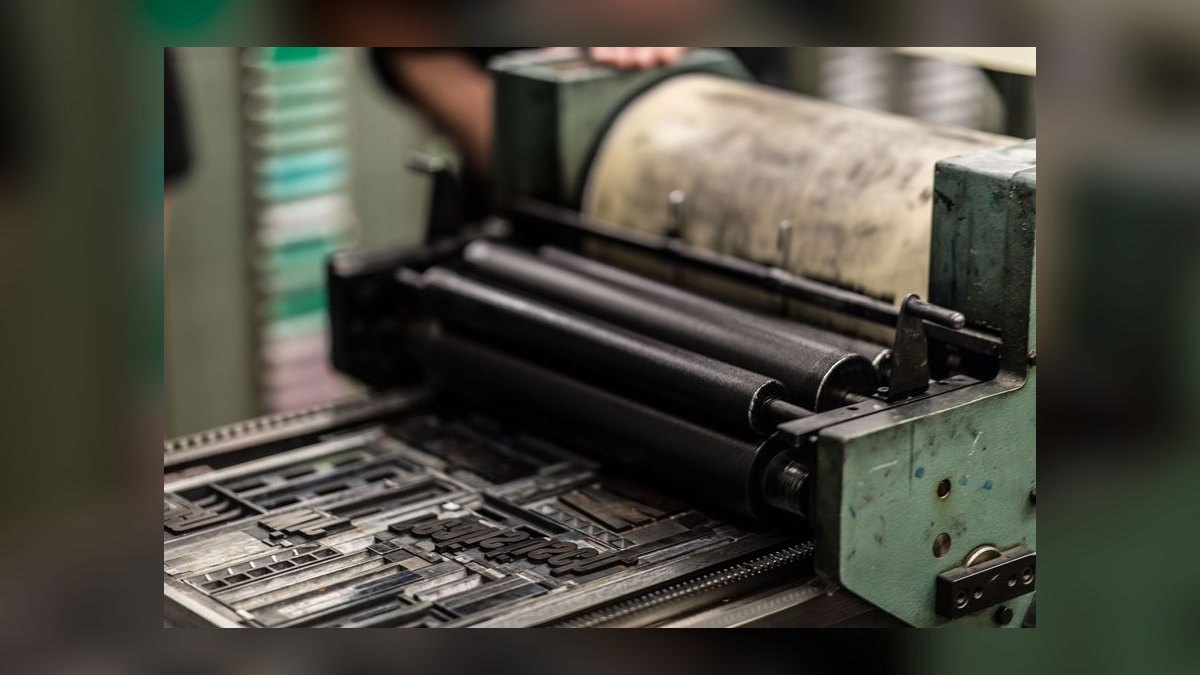
The adjacent comparison worth holding in your head: the same logic drives the economics of FASTSIGNS, Signarama, Minuteman Press, AlphaGraphics, and Sir Speedy. Every one of those systems lives or dies on whether the owner builds a book of commercial accounts. PostNet's differentiator against the pure-print franchises is the shipping counter's walk-in traffic; its differentiator against The UPS Store is design capability and a heavier B2B tilt. You are choosing where on that spectrum you want to sit, and you should choose deliberately rather than discovering it in month fourteen.
The step-by-step process from first inquiry to first B2B account
The path from curiosity to open door runs roughly 90 days of decision work plus another 90–150 days of site build, and the sequencing matters more than the speed. Rushing site selection to hit an arbitrary opening date is the most expensive mistake available in this model, because a bad territory cannot be fixed by better operations.
Start with the Franchise Disclosure Document. You want Item 5 for the initial fee, Item 6 for ongoing royalty and marketing fees, Item 7 for the full investment range, Item 19 for any financial performance representation, and Item 20 for the outlet table. Item 20 is the one people skim and shouldn't: it shows openings, closures, transfers, and terminations over the trailing three years. A system with steady openings and low terminations tells a different story than one where transfers spike. Read the actual document, not a broker's summary of it.

Then talk to owners — eight minimum, and pick them yourself from the Item 20 list rather than only calling the names franchise development hands you. Ask specific questions: What percentage of your revenue is shipping versus print versus design? What did you actually pay to build out, all-in, versus the FDD range? How long until you took a paycheck? What does your best month versus worst month look like? Who is your largest commercial account and how did you win it? Vague answers to those questions are themselves an answer.
Site validation comes third, and it is quantitative work. You are looking for roughly 50,000 people within three miles or 10,000 businesses within five, a commercial share of at least 30% of the surrounding mix, median household income comfortably above $60,000, and daily-traffic anchors nearby — grocery, gym, coffee, postal. Then map the competition: existing UPS Store, FedEx Office, or independent print shops within a mile, and critically, whether those competitors offer design. A UPS Store two blocks away that only ships is a very different threat than an established independent printer with twenty years of relationships in the same office park.

Note what happens in days 66–90. Pre-opening B2B outreach is not optional and it is not marketing collateral. It is the owner walking into office parks, joining the chamber, and booking meetings before the doors open. Centers that open with a dozen commercial accounts already committed reach break-even materially faster than centers that open and then start prospecting, because the first ninety days of operation are consumed by production learning curves and staffing chaos. If you are not willing to do that cold outreach, that is worth knowing before you sign a ten-year lease.
Costs, financing, and the timeline to actual money
The initial investment breaks down along fairly predictable lines. The franchise fee sits near $35,000. Buildout and leasehold improvements run roughly $60,000–$150,000 depending on whether you inherit a shell or a second-generation retail space. Equipment and technology — production printers, wide-format capability, finishing gear, design workstations, POS — is the largest variable line at roughly $70,000–$150,000. Signage and brand-prescribed decor adds $10,000–$30,000. Opening inventory of print stock and shipping supplies runs $8,000–$25,000. Launch marketing is $12,000–$35,000. Training and travel, $7,000–$22,000. Working capital, $30,000–$90,000. Total lands in the $200,000–$400,000 band.
Liquidity requirements typically land around $70,000–$140,000, with the balance financed. That financing is where 2027 planning gets uncomfortable. SBA 7(a) loans price off the prime rate plus a spread, and in the current environment franchise borrowers have generally been looking at rates in the high single digits to low double digits. Model a $250,000 loan at 9.5% over ten years and you are carrying roughly $3,200 a month in debt service before you have sold a single business card. That is $38,000 a year of fixed obligation, and it is the number that pushes break-even out by six to twelve months relative to a cheap-money environment. Do not build your model on a rate you hope to get.

The realistic cash-flow arc looks like this. Months one through six are negative, often $10,000–$25,000 a month, as you cover rent, payroll, and loan payments against a revenue base still climbing from zero. Months seven through twelve approach break-even if — and only if — you have built 30–50 active commercial accounts alongside steady walk-in traffic. Year two typically shows positive cash flow in the $30,000–$60,000 range on $450,000–$600,000 of revenue. Year three, owner's discretionary earnings including your own salary reach roughly $70,000–$120,000. Years four and five, a mature center doing $600,000–$1,000,000 supports owner earnings of roughly $120,000–$190,000.
Work the unit economics on a representative $700,000 center. Materials and cost of goods around 32% takes $224,000. Labor at 25% takes $175,000. Occupancy at 9% takes $63,000. A 5% royalty is $35,000, and the marketing fee near 2% is another $14,000. Remaining operating expenses — insurance, utilities, equipment service contracts, software, supplies, professional fees — commonly land near 11%–13%, call it $80,000. What's left is roughly $109,000 before debt service, and that is why the debt payment matters so much: the same store with a $38,000 annual note nets about $71,000, and the same store owned outright nets close to $110,000.

Two ongoing costs get systematically underestimated. First, equipment service and consumables: budget $5,000–$15,000 annually for maintenance contracts, toner, and repair on production printers, copiers, and laminators. Second, the cost of the design function. You either hire a designer part-time or full-time, or you learn the software yourself — Adobe Creative Suite fundamentals and template tools — and absorb the hours. Neither is free. Owners who plan to skip design entirely are planning to run the low-margin version of the business.
On the buy-versus-open question specifically: an existing center trades on cash flow, and the arithmetic often favors buying when the seller has real B2B accounts and current equipment. You skip the negative-cash-flow ramp entirely and inherit relationships. But diligence a resale hard. Declining revenue over the trailing three years, equipment past its service life, and a shipping-dominant mix are all reasons the seller is selling. A center that needs $50,000–$100,000 of equipment refresh within two years is not a discount, it is a deferred capital call. Ask for tax returns, not just P&Ls, and ask specifically what percentage of revenue comes from the top ten accounts. Heavy concentration in one or two clients is a risk that transfers to you the day you sign.
Where owners get this wrong
The first and largest error is the semi-absentee fantasy. PostNet is a full-time operator model for most owners, particularly in years one through three. Expect 40–50 hours a week initially, dropping to perhaps 30–35 once a capable assistant manager is trained. Hours are business hours — roughly 8:30 to 6:00 weekdays plus a Saturday morning — and you cannot run it from home. If the pitch you sold yourself involves hiring a manager on day one and checking in weekly, the numbers do not work; a manager's salary comes out of the same pool as your income, and in the early years that pool is thin.

The second error is misreading who the customer is. A meaningful share of failing centers are run by owners who are excellent behind the counter and unwilling to walk into a stranger's office and ask for their printing business. Retail service skill and B2B sales skill are different muscles. The revenue that determines whether this business works — the recurring commercial accounts — is won by prospecting, chamber networking, and follow-up, not by waiting for the door to open. If direct B2B selling is genuinely unappealing to you, the honest read is that this is the wrong franchise, and a more transactional or more territory-protected model would suit you better.
Third: underestimating carrier complexity. You will manage relationships and software with FedEx, UPS, and USPS simultaneously, each with its own pickup schedule, rate structure, and claims process. Lost and damaged package claims are a real, recurring, emotionally unpleasant part of the job, and the customer standing at your counter does not distinguish between you and the carrier. Staffing for that means hiring people who stay calm under complaint pressure, which is a narrower hiring pool than "can operate a copier."

Fourth: territory optimism. The red flags are consistent and knowable in advance. Two or more existing PostNet centers within five miles creates cannibalization risk. A strip mall with a vacancy rate above 15% signals a declining traffic base that will not recover on your timeline. A market where local businesses already route everything through a dominant independent printer or a university print shop means you are fighting for the scraps of relationships built over decades. None of these are unsolvable, but all of them should show up in your pro forma as slower ramp and lower ceiling, and most buyers just... don't adjust the model.
Fifth: pricing print like a commodity. New owners routinely quote against Vistaprint or a big-box office supply store and win the job at a margin that doesn't cover the labor. You are not competing with those channels on price and cannot win that fight. You compete on same-day turnaround, on a human who looks at the file and catches the bleed error before it prints wrong, on rush jobs, and on the fact that the customer can walk in with a vague idea and leave with finished signage. Price to that value. Owners who discount to match an online quote train their entire local market to treat them as a commodity, and that positioning is extremely hard to reverse.
Sixth: staffing math. A center grossing $500,000–$800,000 typically needs two to three full-time employees — a production specialist and a customer-service/sales person at minimum — plus one or two part-timers for the counter and simple print work. Total payroll including the owner's own salary generally consumes 25%–35% of gross revenue. In a tight labor market, the production specialist is the hard hire, because someone who can run wide-format equipment and troubleshoot a file has options. Budget above your instinct for that role, and build in cross-training so a single resignation doesn't take out your production capacity.

Decision framework: when PostNet fits and when something else does
The decision is not really "PostNet, yes or no." It is a fork between several adjacent models that all serve small-business owners with physical marketing and logistics needs, and picking the one that matches your capital, your temperament, and your local market.
If you have $200,000–$400,000, want business hours, and are willing to do B2B sales, PostNet's diversified mix is a genuine advantage — the shipping counter subsidizes customer acquisition for the higher-margin work. If you want a pure B2B graphics business with no consumer counter and no carrier claims, FASTSIGNS, Signarama, or Image360 are the closer fit, generally with higher average ticket and fewer walk-in interruptions. If you want production printing depth with an established commercial book, Minuteman Press, AlphaGraphics, or Sir Speedy sit in that lane. If you specifically want the shipping-forward, consumer-heavy version, The UPS Store is the category leader and you should evaluate it on its own terms rather than treating PostNet as a cheaper substitute.

Within PostNet itself, the buy-versus-open fork deserves its own discipline. Buying works when the resale has documented commercial accounts, equipment with useful life remaining, flat-or-growing revenue, and a mix where shipping is already under 40%. Opening new works when no such resale exists in a territory you actually want, and when you have the capital and patience to fund 12–18 months of ramp. The failure case is buying a distressed center because it's cheap: you inherit the previous owner's reputation, their commodity pricing, their tired equipment, and the local market's existing opinion of the store.
One more angle worth weighing, because it changes the ceiling: online ordering. Centers that stand up a real web-to-print front end — customers upload files, order online, pick up in-store or have it shipped — can pull a meaningful share of revenue outside walk-in hours and reduce dependence on foot traffic entirely. The same operational asset also supports the "marketing hub for local businesses" positioning: business card design, flyers, social graphics, signage, and event materials sold as a bundle to accounts you already serve. That bundling is how a $500,000 center becomes an $800,000 center without a second location, and it is entirely within an owner's control regardless of what the brand does nationally.
Finally, think about exit before you enter. A print-and-design center with diversified commercial accounts, current equipment, a trained team, and documented systems sells on a multiple of cash flow. A shipping-dependent center with owner-held relationships and aging printers sells on the value of the equipment, if it sells at all. Every decision above — mix, accounts, staffing, pricing, equipment refresh — is simultaneously an operating decision and an exit-value decision. Owners who understand that from month one build a different business than owners who figure it out in year six.
Related questions
How long until a new PostNet reaches positive cash flow?
Typically 12–18 months. Months one through six run $10,000–$25,000 monthly losses; months seven through twelve approach break-even with 30–50 active commercial accounts. SBA debt service at high-single-digit rates pushes that timeline toward the longer end.
Is buying an existing PostNet better than opening a new one?
Often yes, if the resale has real B2B accounts, current equipment, and stable revenue — you skip the ramp entirely. But a declining center with outdated equipment can need $50,000–$100,000 in upgrades within two years, erasing the discount.
What percentage of revenue should come from shipping?
Mature, profitable centers generally push shipping down to 25%–35% of revenue, from the 40%–50% common in early years. Shipping drives traffic but carries only 15%–25% gross margin, versus 50%–70% on design work.
Can I run a PostNet semi-absentee?
Not realistically in years one through three. Expect 40–50 owner hours weekly, dropping to 30–35 once you have a trained assistant manager. A manager's salary comes from the same pool as your income, which is thin during ramp.
What is the biggest predictor of failure?
Territory quality, followed closely by unwillingness to sell B2B. A weak location cannot be fixed by better operations, and a shipping-dependent revenue mix produces single-digit net margins regardless of how well the store is run.
FAQ
What is the typical revenue range for a mature PostNet franchise?
A mature center generally grosses between $450,000 and $1,000,000 annually. The spread is driven almost entirely by territory quality and how aggressively the owner has built commercial print and design accounts. Two centers with identical buildouts can sit at opposite ends of that range based on sales effort alone. Verify actual figures against Item 19 of the current FDD and against direct conversations with existing owners.
How much can an owner expect to earn?
Owner earnings for a mature center typically fall between $70,000 and $190,000 per year, including the owner's own salary. That figure depends on revenue mix, whether the owner works in the business or manages it, and how much debt service the center carries. A center with a $250,000 SBA loan gives up roughly $38,000 annually to debt payments before the owner sees anything.
What is the total investment required to open?
Item 7 of the FDD puts the total initial investment at roughly $200,000 to $400,000, including a franchise fee near $35,000. The range reflects real variance in buildout cost, equipment configuration, and local market conditions. Liquidity requirements typically run $70,000–$140,000, with the balance commonly financed through SBA lending.
Does PostNet serve business customers or consumers?
Both, deliberately. Consumers drive pack-and-ship walk-in traffic, which is low margin but generates awareness and impulse print sales. Small businesses drive the print, design, and signage revenue that actually produces profit. The strategic work of ownership is converting consumer foot traffic and local outreach into recurring commercial accounts.
What are the ongoing fees?
Royalty runs approximately 4%–5% of gross revenue, with a marketing or brand fund fee of roughly 2% on top. On a $700,000 center that is around $35,000 in royalty and $14,000 in marketing fees annually. Those percentages are broadly in line with service-franchise norms; confirm exact figures in Item 6 of the current FDD.
How does PostNet compare to other print-and-ship franchises?
Its distinguishing feature is the combination of design capability with a shipping counter, at a capital requirement lower than some competing systems. Against The UPS Store it tilts more B2B and more design; against pure sign or print franchises it adds consumer traffic but with a lower average ticket. The right comparison depends on whether you want walk-in traffic in your mix.
Sources
- https://www.postnet.com/
- https://www.franchise.org/
- https://www.entrepreneur.com/franchises
- https://www.sba.gov/funding-programs/loans/7a-loans
- https://www.ftc.gov/business-guidance/resources/franchise-rule-compliance-guide
- https://www.ibisworld.com/united-states/market-research-reports/
- https://www.census.gov/programs-surveys/cbp.html
- https://www.franchisebusinessreview.com/
- https://www.bls.gov/ooh/
Related on PULSE
- [How long does it take to open a franchise and break even in 2027?](/knowledge/fr1104)
- [Should I open or buy a Tommy Gun's Original Barbershop franchise in 2027?](/knowledge/fr1095)
- [Should I open or buy a Painting with a Twist franchise in 2027?](/knowledge/fr1058)
 pulse-toolsHow Many Cashiers Should I Schedule Each Shift at My Convenience Store Chain?
 pulse-toolsHow Many Sales Reps Do I Need to Hire for My Window Replacement Company?
 tlHow Many Baristas Should I Schedule Each Shift at My Coffee Shop?
 pulse-toolsHow Many Employees Should I Schedule Each Day at My Wine Shop?
 pulse-toolsHow Many Salespeople Should I Schedule Each Day at My Shoe Store?
 pulse-toolsHow Many Staff Should I Schedule Each Day at My Veterinary Clinic?
 pulse-toolsHow Many Sales Reps Do I Need to Hire for My Pest Control Company?
 pulse-toolsHow Many Sales Reps Do I Need to Hire for My Industrial Distribution Business?
 pulse-skillsSkill Drill: Setting Expectations for B2B Distribution
 pulse-toolsHow Many Staff Should I Schedule Each Shift at My Urgent Care Clinic?