


Should I open or buy a Fish Window Cleaning franchise in 2027?
Quality
Certified
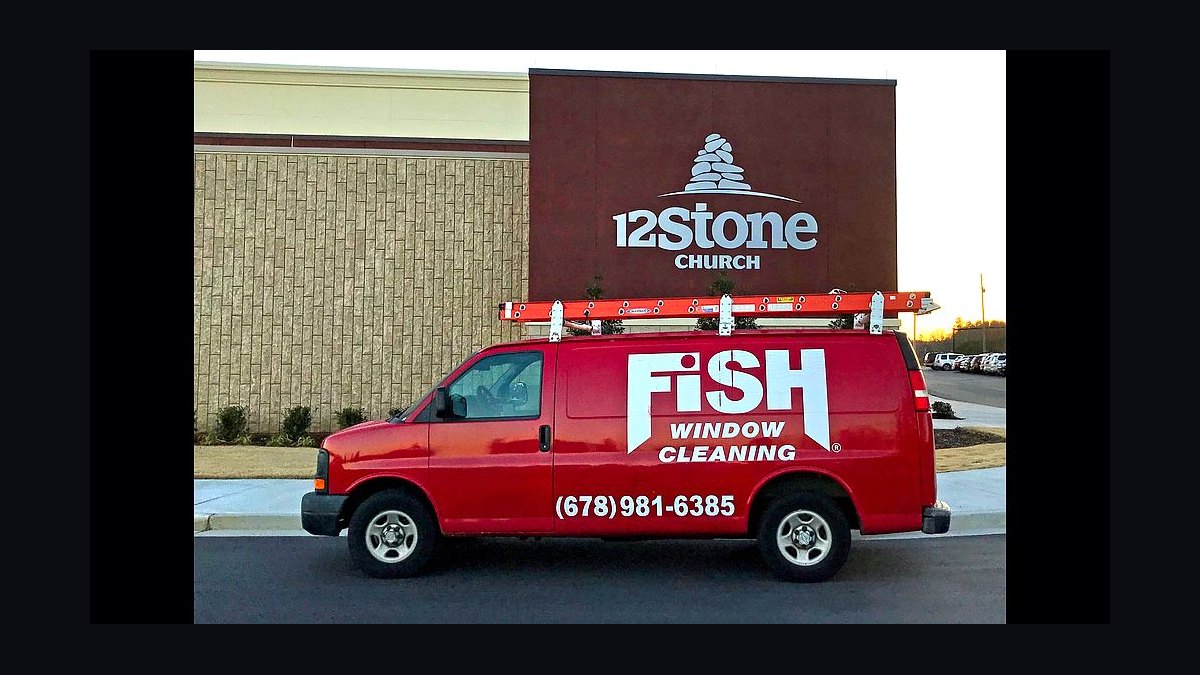
Fish Window Cleaning suits owners who want a low-capital, home-based B2B service with recurring commercial routes. Expect roughly $110,000–$170,000 total investment, a ~$50,000 franchise fee, and 6–8% royalties. Mature territories can gross $400,000–$1.2M with owner earnings near $80,000–$220,000. Skip it if you won't sell routes or manage crews.
A Tuesday in month seven, and what it tells you about the model
Picture a franchisee eighteen months into a mid-size metro territory. It's 6:40 a.m. and she's not holding a squeegee. She's at a kitchen table with a laptop, checking that two crews have their route sheets, that the second-story job at the dental plaza has the right ladder on the van, and that the strip-mall account that complained about streaking last Friday got re-cleaned at no charge. By 8:00 the crews are rolling. By 9:30 she's walking into a six-tenant office park with business cards, asking the property manager who currently does their glass and when that contract renews.
That is the actual job. It is worth sitting with, because most people who look at a window cleaning franchise imagine the wrong business. They picture labor — buckets, poles, wet forearms. The economics of a route-based commercial cleaning franchise are not labor economics at the owner level; they're sales-and-retention economics. The revenue is a stack of small recurring contracts, each individually unremarkable and collectively very durable. One restaurant on a biweekly schedule might be $120 a visit — roughly $3,100 a year. A retail row of eight storefronts on monthly service might be $400 a month. None of it is exciting on its own. Two hundred of those accounts is a real business.
The scenario that decides your outcome is this one: it's month seven, you have maybe 60 recurring accounts, revenue is somewhere around $12,000–$18,000 a month, and you're paying two crews plus yourself nothing. You are not yet profitable in any meaningful sense. The question is whether you spend the next 90 days doing two to four hours a day of unglamorous B2B prospecting — walking into places, following up, quoting, losing, re-quoting — or whether you retreat into the truck and start cleaning windows yourself because it feels productive. Owners who choose prospecting get to the 150–200 account base where the model finally works. Owners who choose the truck buy themselves a job at roughly $60,000 a year with a $50,000 franchise fee attached.

That fork also explains why the same brand produces wildly different franchisee outcomes in the same year. It isn't market luck. Two territories with comparable commercial density can be a $300,000 business and an $800,000 business, and the difference is almost entirely how many hours per week the owner spent in front of a decision-maker during the first two years. Nothing in the FDD tells you that directly. Every validation call with an existing owner will, if you ask the right question — which is not "are you happy," it's "how many accounts did you personally sign in your first year, and how did you get them."
The adjacent lesson generalizes. Any route-density service — commercial janitorial, pest control, landscaping maintenance, mosquito treatment, gutter service — runs on the same physics: low ticket, high frequency, geographic clustering, and a retention rate that quietly determines whether you're building an asset or a treadmill. If you find route-selling repellent, that whole category is wrong for you, and you should be looking at higher-ticket, lower-frequency work instead of another version of the same thing.
How the route economics actually compound
The mechanism worth understanding is density, not volume. Two territories can book the same annual revenue and produce very different owner earnings because of how tightly the accounts sit together.

Think about the crew-day as the unit of production. A two-person crew works roughly seven to eight productive hours. If accounts are clustered — a downtown block, a shopping center, an office park — that crew might complete 10 or 12 storefront jobs in a day because drive time between stops is five minutes. If the same crew is chasing scattered accounts across a 20-mile spread, the drive time eats two hours and they complete six or seven. Same wages, same fuel, same insurance, roughly 40% less revenue produced. Density is the whole game.
This is why *where* you sell matters as much as *how much* you sell. A disciplined owner deliberately over-sells a small geographic core before expanding outward — turning down or deprioritizing a distant account even when it's profitable in isolation, because it drags the route. The undisciplined owner takes every yes, ends up with a map of scattered pins, and wonders why gross revenue is fine but margins are thin.
The second compounding mechanism is retention. A recurring commercial cleaning account that stays for four years is worth four times a one-time job at the same ticket, with zero incremental acquisition cost. That's the entire argument for the B2B route model over one-off residential work. Residential window cleaning is a real revenue line and it pays better per hour of on-site work — a whole-house exterior-and-interior clean might be $350–$600 — but it's transactional. You resell it every spring. Commercial accounts, once established and served competently, renew by inertia. The property manager has no reason to shop it as long as the glass looks right and the invoices are clean.
The practical implication: measure churn, not just sales. If you sign 8 accounts a month and lose 5, you're running very hard to grow slowly. Most churn in this business isn't price — it's inconsistency. A crew misses a scheduled visit, nobody calls the customer, and two months later they've hired someone else. The fix is boring operational discipline: confirmed schedules, a callback within 24 hours on any complaint, and a re-clean policy you actually honor.
The third mechanism is crew leverage. One crew is a job. Three crews is a business. The transition point is usually somewhere between $250,000 and $400,000 in annual revenue, where you can justify a working lead or field supervisor who handles dispatch and quality checks so you can stay on sales. Owners who never make that hire cap out, because their selling time gets consumed by operations. Owners who make it too early carry overhead the route base can't support yet. Getting that timing right — roughly when you have enough recurring work to keep two crews genuinely full five days a week — is one of the highest-leverage judgment calls in the first three years.
Real numbers, ranges, and what they actually mean
Work from the FDD, not from a broker's spreadsheet. The figures below reflect the disclosed investment structure and the ranges franchisees commonly describe; treat every number as a range to verify in your own Item 7 and Item 19 for the current filing year.
Startup capital. Total initial investment lands roughly in the $110,000–$170,000 band, with a franchise fee near $50,000. The rest breaks down predictably: equipment and supplies in the $6,000–$20,000 range (ladders, poles, water-fed systems, squeegees, safety gear), a vehicle at $3,000–$15,000 if you lease and wrap rather than buy outright, technology and scheduling software at $3,000–$10,000, initial marketing at $15,000–$40,000, insurance and licensing at $4,000–$15,000, training and travel at $5,000–$15,000, and working capital of $20,000–$50,000. Liquidity requirements typically sit around $50,000–$90,000. There is no buildout, no lease, no kitchen equipment, no signage package. That absence is the single biggest structural advantage over food or retail franchising, where $400,000 of leasehold improvements can vanish into a location that turns out to have the wrong traffic pattern.
Ongoing fees. Royalty runs approximately 6–8% of gross, plus a marketing fee in the neighborhood of 2%. At $700,000 in revenue that's roughly $49,000 in royalty and $14,000 in ad fund — real money, and it comes off the top regardless of whether your crews were efficient that month. Model it as a fixed 8–10% haircut on gross when you build projections.
The cost stack. Labor is the dominant line at roughly 35–50% of revenue. Crew wages generally fall in the $15–$25 per hour range depending on market, often with performance or quality bonuses attached. Supplies and vehicle costs together run something like 8–12% — fuel, maintenance, replacement squeegee rubber and poles, and depreciation on a van. Insurance for a ladder-based service business is not trivial: general liability, workers' comp, and commercial auto together commonly run $3,000–$8,000 a year at small scale and climb with headcount and payroll. Administrative overhead — software, phone, bookkeeping, a part-time office person eventually — absorbs another slice.
Revenue by phase. Year one is a ramp, and the honest range is wide: somewhere around $80,000–$180,000 gross, with the owner taking little or nothing in salary. Years two and three are the stabilization window — call it $250,000–$450,000 gross with owner compensation of $60,000–$120,000 as the recurring base thickens. A mature territory at year four or five spans $400,000 to $1.2 million, and the top end of that band is genuinely reachable only in dense commercial markets with an owner who kept selling. Owner earnings at maturity commonly land between $80,000 and $220,000.
Payback. Most franchisees describe breaking even on cash out of pocket somewhere around month 18 to 24. That's the number to plan around, and it's why working capital matters more than people expect. Underfunding the first year is the most common self-inflicted wound: you run out of runway right at the point where the account base is about to start carrying itself, and you're forced into truck-driving mode to make payroll.
On acquisitions. Buying an existing territory from a retiring owner changes the math substantially. You skip the ramp, inherit a route base and often the crews, and can be cash-flow positive from day one. You pay for that — typically a multiple of seller's discretionary earnings that lands well above the greenfield startup cost. The diligence shifts too: you're now underwriting account concentration (does one property management company represent 30% of revenue?), contract transferability, crew loyalty to the departing owner, and how much of the "recurring" base has actually been serviced in the last 90 days versus sitting stale on a list. Ask for 24 months of invoicing detail by account, not a summary P&L.
A benchmark worth carrying. A two-person crew producing $600–$1,200 in a day on clustered commercial work is a healthy day. If your crews are consistently under $500, either your pricing is soft, your route is scattered, or you have a productivity problem — and those three causes call for completely different fixes.
Trade-offs, and what else you could do with the same money
Every franchise decision is really a comparison, so hold Fish against its actual alternatives rather than against an abstraction.
Versus going independent. You could start a window cleaning business with a van, a ladder set, insurance, and about $15,000 — a tenth of the franchise investment, with no royalty forever. What you give up is a proven route-selling playbook, brand recognition with property managers who prefer a name they've heard of, national account relationships, established pricing structures, and a peer network of owners who've solved the crew-retention problem before you hit it. The honest framing: the franchise fee and royalty buy you compressed learning time and a credibility shortcut in B2B sales. If you already have commercial sales experience and local relationships, that shortcut is worth less to you and independence gets more attractive. If you're career-changing out of a corporate job with no book of business, the playbook is worth real money.
Versus other exterior-services brands. Shine Window Care, Window Genie, Window Hero and similar concepts occupy overlapping ground, often bundling window cleaning with pressure washing, gutter cleaning, and holiday lighting. The bundled model smooths seasonality — holiday light installation is a Q4 revenue spike that pure window work doesn't have — but it also means more equipment, more training, and more service lines to manage well. Fish's relative narrowness is a feature if you value operational simplicity and a business-hours schedule, and a limitation if you want multiple revenue streams from the same customer.
Versus adjacent recurring-service categories. Commercial janitorial has similar route economics with higher revenue per account but night-shift labor. Lawn care and mosquito treatment share the density math but are seasonal and weather-exposed. Pest control has the best retention characteristics of the bunch and correspondingly higher entry costs and licensing requirements. Junk removal is higher-ticket and more transactional. If what attracts you is "recurring B2B route with daytime hours and low capital," Fish sits in a defensible spot in that comparison — few models combine all four.
Versus a higher-capital, higher-ceiling franchise. For the same $150,000 you could put a down payment on something with more absolute earnings potential and more risk — a food concept, a fitness studio, a multi-unit development agreement. The trade is variance. A home-based route business has a modest ceiling and a very high floor: your downside if it goes badly is losing the fee and some working capital, not personally guaranteeing a fifteen-year lease.
Territory as the real variable. The franchise fee is flat, but territories are not equal. A grant covering dense suburban retail — think heavily built-out metro suburbs with continuous commercial corridors — can support $600,000 to $1 million in annual revenue. A rural or low-density territory may cap out at $250,000–$400,000 no matter how hard you work. You pay the same $50,000 either way. That asymmetry makes territory selection the highest-stakes decision in the whole process, and it deserves more of your diligence time than the FDD itself. Count commercial addresses. Drive the corridors. Ask what the franchisor's territory definition actually is — households, commercial addresses, ZIP codes — and get the boundary in writing.
Note also what territories generally exclude: high-rise work above two or three stories, which requires different equipment, different insurance, and different competencies entirely. If your market's commercial glass is concentrated in downtown towers rather than ground-level retail, the addressable base is smaller than the population number suggests.
Pitfalls that show up in year one, and how to defuse them
Underestimating crew turnover. This is the operational reality every franchisee names first. The work is physical, outdoor, and year-round, and the labor pool that will do it reliably is smaller than you'd like. The mistakes that make it worse: hiring one person at a time under deadline pressure, paying at the bottom of the local range, and having no clear path from cleaner to crew lead. The defusers are unglamorous — recruit continuously even when you're fully staffed, pay in the middle-to-upper part of your market's range rather than the bottom, tie a quality bonus to callback-free weeks, and build a two-week overlap into every departure you can see coming. Budget for turnover the way a restaurant budgets for food waste: as a known cost, not a surprise.
Confusing activity with prospecting. New owners fill their calendars with things that feel like work — reorganizing the van, redesigning a flyer, rebuilding a spreadsheet — while the number of decision-maker conversations per week stays near zero. Set a hard weekly floor on qualified conversations and protect it. Ten to fifteen real conversations a week with someone who can sign is the difference between the $300,000 territory and the $800,000 one.
Pricing from fear. The instinct in month three is to underbid to fill the schedule. It's a trap, because low-priced accounts are the ones you can never fire, they consume the crew hours you need for better work, and repricing an existing customer is far harder than pricing correctly on day one. Know your fully loaded cost per crew-hour — wages plus payroll taxes plus insurance plus vehicle plus a share of overhead — and refuse work below it. Losing a bid to a cheaper competitor is usually a good outcome.
Ignoring safety until the near-miss. Ladder work and second-story access carry real injury risk, and a workers' comp claim in a small business is not just a cost, it's a premium reset that follows you for years. Document a safety protocol, train it, and enforce it visibly. This is also a sales asset: property managers care that you're insured, bonded, and can produce a certificate on request.

Treating seasonality as a surprise. Cold-climate markets see a real Q1 dip — commonly a 10–20% softening versus peak quarters. That's manageable if you plan for it: shift toward interior glass, sell holiday light removal, book spring contracts in January, and hold enough cash to cover a slow eight weeks without touching payroll. It's only a crisis if you spent Q4's cash as if it were the run rate.
Skipping real validation. Reading the FDD is table stakes. The differentiated work is calling eight to ten existing franchisees, including at least two who are struggling or who have exited, and asking specific questions: how many accounts did you sign yourself in year one, what's your current crew count and turnover, what did you actually take home last year, what would you do differently, and what does the franchisor do well versus poorly in support. Vague satisfaction data is not diligence.
Buying an existing location without account-level detail. If you're acquiring rather than opening, insist on invoice-level history. Summary revenue hides concentration risk, stale accounts, and one-time jobs dressed up as recurring. Also ask whether the crews are staying, because in a labor-constrained service business, buying a route base without the people who service it is buying half the asset.
Expecting passive income. Nobody should enter this expecting to be absent. The model rewards an owner who sells and manages for two to three years and can then step back partially once a field supervisor and a stable route base exist. Anyone selling you an absentee version of a labor-based route business is selling you a story.
Related questions
How long until a Fish Window Cleaning franchise is profitable?
Most owners break even on cash out of pocket around month 18 to 24. Early profitability depends almost entirely on how fast the recurring commercial account base builds — typically 150 to 200 accounts before the economics feel comfortable.
Is buying an existing territory better than opening a new one?

Often yes, if the numbers check out. You inherit revenue and crews and skip the ramp, but pay a multiple of earnings. Diligence account concentration, contract transferability, and whether crews will stay post-sale.
How much does territory density matter?
Enormously. A dense suburban retail territory can support $600,000 to $1 million annually; a low-density rural one may cap near $250,000 to $400,000. The franchise fee is identical, so territory choice drives your ceiling.
Do I need window cleaning experience to open one?
No. Route-based B2B sales ability and crew management matter far more. The cleaning craft is trainable in weeks; building 150 recurring commercial contracts and keeping technicians is the actual skill set.
What percentage of revenue goes to labor?
Roughly 35% to 50%, making it the dominant cost line. Efficiency swings that number more than wage rate does — clustered routes let the same payroll produce substantially more revenue per crew day.
FAQ
What is the total investment needed to open a Fish Window Cleaning franchise?
Total initial investment generally falls in the $110,000–$170,000 range, including a franchise fee near $50,000. Because the model is home-based, there is no buildout or lease — the money goes to equipment, a vehicle, initial marketing, insurance, training, and working capital. Liquidity requirements commonly sit around $50,000–$90,000. Confirm exact figures in Item 7 of the current Franchise Disclosure Document, which is the only authoritative source.
How much can a Fish Window Cleaning franchise owner realistically earn?
Mature territories commonly gross $400,000 to $1.2 million annually, with owner earnings in the $80,000–$220,000 range. Year one is far leaner — often $80,000–$180,000 gross with minimal owner salary. Anyone promising six-figure first-year income is misrepresenting the model; the realistic path runs through two to three years of consistent selling and crew building.
Is the business primarily commercial or residential?
It's B2B-heavy. The core is recurring commercial routes — storefronts, offices, restaurants, medical and dental practices, banks — on regular schedules. Residential work supplements revenue and can pay well per job, but it's transactional and must be resold each season. The recurring commercial base is what makes revenue predictable and what gives the business enterprise value at exit.
What are the ongoing fees?
Royalty runs approximately 6–8% of gross sales, plus a marketing or ad-fund fee around 2%. Model roughly a 8–10% haircut on top-line revenue when you build projections. Exact percentages, any minimum royalty provisions, and technology fees are all disclosed in Item 6 of the FDD — read that section carefully rather than relying on summary figures.
What is the hardest part of running this business?
Two things, in order: recruiting and retaining reliable crews, and doing enough B2B prospecting to build the route base. The work is physically demanding and turnover is persistent, so recruiting has to be continuous rather than reactive. And because the model depends on volume of small recurring accounts, an owner who won't do daily outreach will plateau well below the territory's potential.
Does seasonality hurt cold-weather markets?
It softens revenue rather than stopping it. Expect something like a 10–20% dip in the slowest quarter in cold climates. Interior glass, holiday lighting removal, and early booking of spring contracts fill much of the gap, and a healthy recurring contract base smooths the trough considerably. The risk isn't the dip itself — it's not holding enough cash to cover payroll through it.
Sources
- https://www.fishwindowcleaning.com/franchise/
- https://www.entrepreneur.com/franchises/directory
- https://www.franchisebusinessreview.com/
- https://www.franchise.org/
- https://www.ftc.gov/business-guidance/industry/franchises
- https://www.sba.gov/business-guide/plan-your-business/buy-existing-business-or-franchise
- https://www.bls.gov/oes/current/oes372019.htm
- https://www.ibisworld.com/united-states/market-research-reports/janitorial-services-industry/
- https://www.osha.gov/laws-regs/regulations/standardnumber/1910/1910.23
- https://www.census.gov/programs-surveys/cbp.html
Related on PULSE
- Should I open a window cleaning business in 2027?
- Best window and gutter-cleaning franchises to buy in 2027
- Should I open or buy a Shine Window Care franchise in 2027?
- Should I open or buy a Window Hero franchise in 2027?
- Should I open a window tinting business in 2027?
- Should I open or buy a Wahoo's Fish Taco franchise in 2027?
This page will be disappearing soon. Save it to your device for $1 — or read it free while it is here.
@Kory-White- · if Venmo asks, the last 4 of my number are 2012
This page is gone.
This one is off the shelf now. $1 keeps it on your phone for good — the whole page, pictures and diagrams included.
 franchiseShould I open or buy a Bruster's Real Ice Cream franchise in 2027?
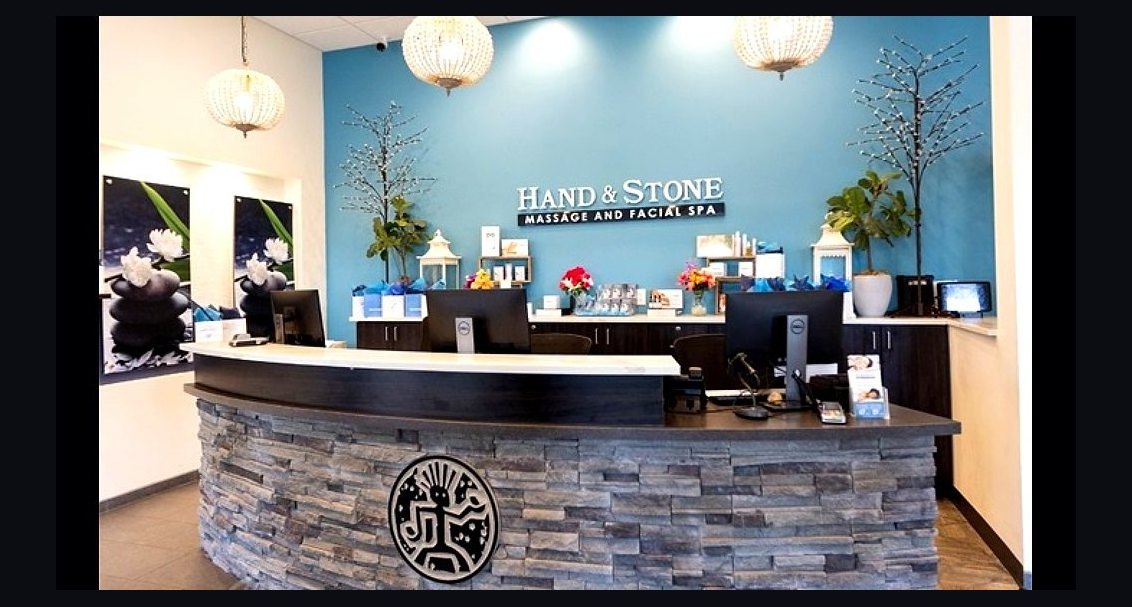 franchiseShould I open or buy a Hand and Stone Massage franchise in 2027?
 franchiseShould I open or buy a Sonic Drive-In franchise in 2027?
 franchiseShould I open or buy a Bahama Breeze franchise in 2027?
 franchiseShould I open or buy a Merry Maids franchise in 2027?
 franchiseShould I open or buy a Panera Bread franchise in 2027?
 franchiseShould I open or buy a Jamba franchise in 2027?
 franchiseShould I open or buy a Jiffy Lube franchise in 2027?
 franchiseShould I open or buy a Cold Stone Creamery franchise in 2027?
 franchiseShould I open or buy a Supercuts franchise in 2027?