


Should I open or buy a Handyman Connection franchise in 2027?
Quality
Certified
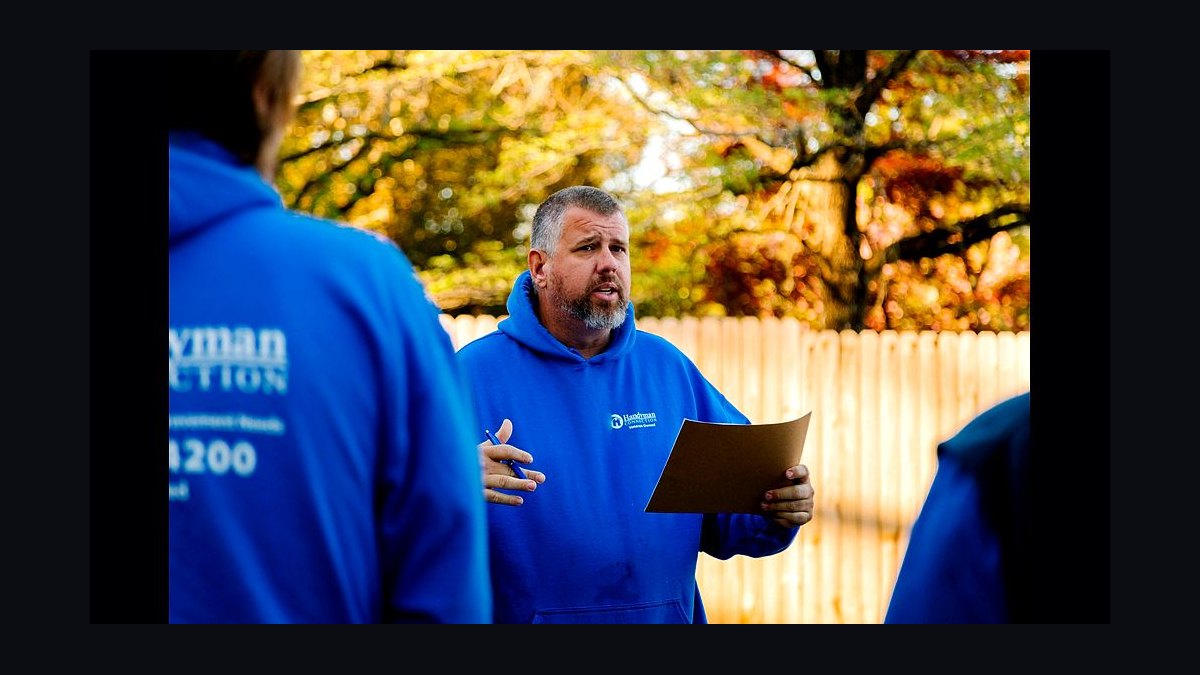
Opening a Handyman Connection franchise in 2027 is a sound move if you can reliably recruit and retain independent craftsmen and market hard in a homeowner-dense suburb. Expect $110,000-$200,000 in total investment against a $50,000 franchise fee; mature territories gross $600,000-$1,600,000, with owners netting $90,000-$260,000 annually once the craftsman bench is stable.
What it is and why it matters
Handyman Connection, founded in 1991, sits in an unusual middle ground within the home-services franchise category. Most competitors pick a lane: pure repair-and-maintenance shops chase $150-$400 service calls all day, while remodeling-only concepts avoid small tickets entirely because the overhead of scheduling a crew for a $200 job doesn't pencil out. Handyman Connection franchises do both under one brand — small repairs, seasonal maintenance, and light remodeling such as kitchen refreshes, bathroom updates, and deck builds in the $1,500-$5,000 range. That blend matters financially: repair calls keep craftsmen booked and cash flowing through slow winter months, while remodel jobs lift average revenue per customer well above what a repair-only operator can post.
The franchise's structural draw for a first-time owner is its low-capital, home-based chassis. There's no retail lease, no showroom, no inventory sitting on shelves depreciating. You run the business out of a home office or small commercial suite, and your actual "product" is the coordination of a bench of independent, licensed craftsmen who show up and do the work. In practice this makes Handyman Connection closer to a logistics-and-project-management business than a trades business — which is exactly why it appeals to franchise buyers coming out of sales, operations, or corporate management roles rather than the trades themselves. You don't need to know how to hang drywall; you need to know how to hire people who do, price jobs correctly, and keep a marketing funnel full.
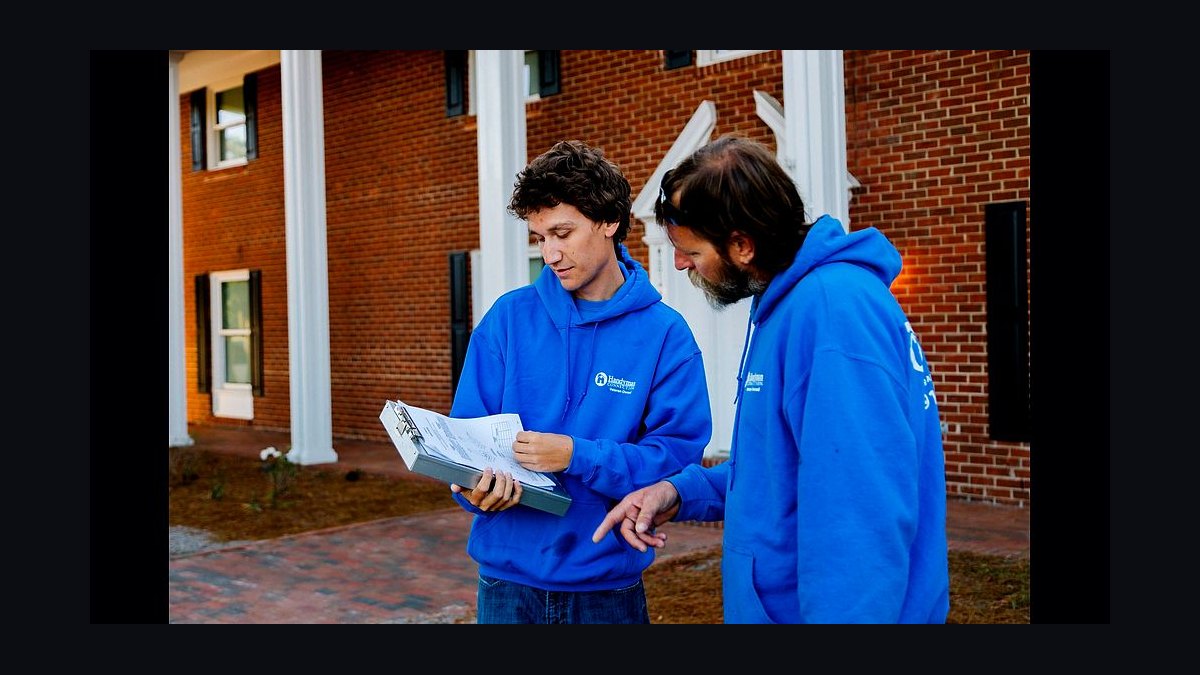
That same contracted-labor structure is the model's central vulnerability, and it's worth sitting with before you sign anything. Because craftsmen are independent contractors rather than W-2 employees, the business can only grow as fast as the owner can find, vet, and retain skilled tradespeople — in a labor market for skilled trades that has been tight for roughly a decade with no meaningful loosening projected into 2027. Franchisees who treat the grand opening as the finish line, rather than the start of a permanent recruiting function, tend to underperform the brand's published averages, sometimes significantly, because an open job slot with no craftsman to fill it is lost revenue with zero offsetting savings — the lead still cost money to generate.
It's also worth weighing Handyman Connection against its closest neighbors before committing capital. Ace Handyman Services employs its craftsmen directly rather than contracting them, trading some of Handyman Connection's cost flexibility for more predictable labor supply and arguably tighter quality control. Mr. Handyman runs a contractor model similar to Handyman Connection's but leans harder into small repairs and less into full remodels. House Doctors sits closer to Handyman Connection on the repair-plus-light-remodel spectrum. None of these comparisons make Handyman Connection categorically better or worse — they simply mean the "broad scope, blended revenue" advantage only pays off if the local market actually generates both repair and remodel demand simultaneously. A territory heavy on renters, newer-construction subdivisions, or transient population won't produce the same remodel pipeline as an aging, owner-occupied suburban corridor with homes built in the 1970s-1990s that are due for updates.
The step-by-step process
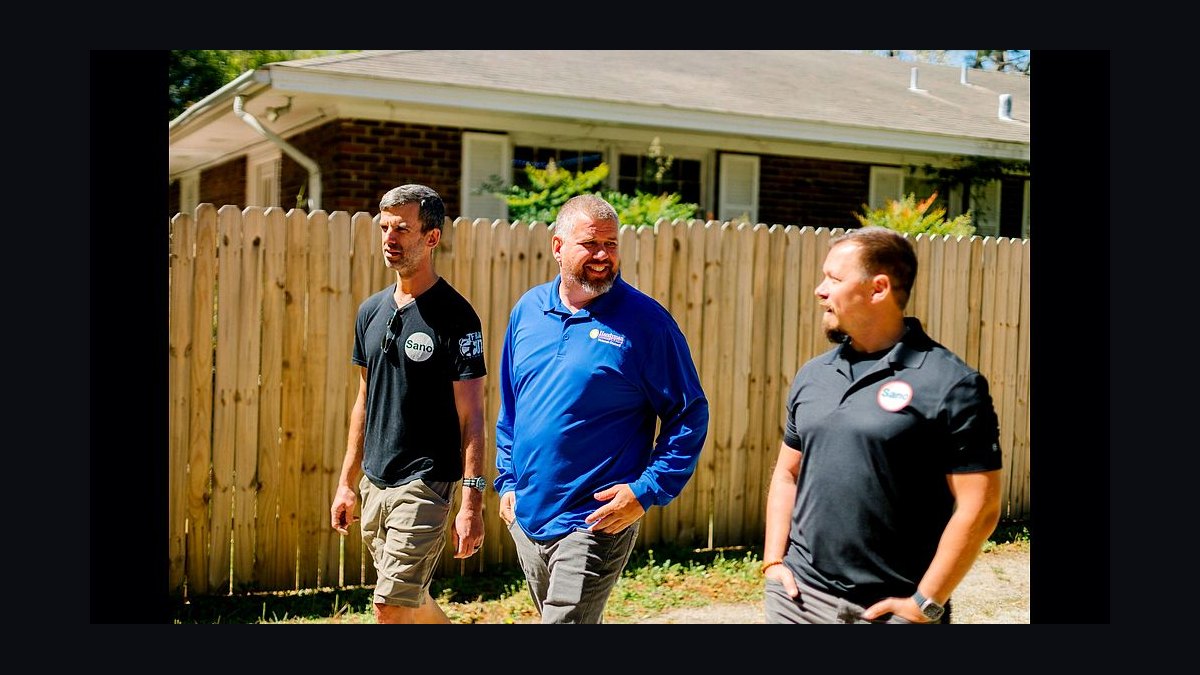
Getting from "signed the franchise agreement" to "generating steady revenue" follows a fairly predictable sequence, and the single most common reason new territories underperform in year one is skipping or under-resourcing the craftsman recruiting step relative to marketing.
The first two to three weeks belong entirely to due diligence. That means reading the Franchise Disclosure Document line by line — not skimming it — with particular attention to Item 19 (financial performance representations, where the revenue ranges actually come from) and Item 20 (outlet counts, openings, closings, and transfers, which tell you how much churn exists in the system). The next stretch is validation calls: franchisees willing to talk candidly about craftsman turnover, real net margins after royalty and marketing fees, and how long it actually took them to hit break-even are worth far more than anything presented at a polished discovery day. Only after that validation should territory selection and local market analysis happen, because the franchise fee is non-refundable once paid, and a poorly chosen territory can't be rescued by better marketing copy.

Once the agreement is signed, the operational build-out — home office setup, field-service management (FSM) software, general liability insurance, vehicle branding — typically takes two to four weeks. Critically, this should run in parallel with craftsman recruiting, not after it. Franchisees who wait until the office is "ready" to start recruiting lose a month they can't get back. Marketing and client acquisition should begin before the doors are technically open, because a franchise with signed craftsmen and zero incoming leads burns payroll-adjacent cash just as fast as one with plenty of leads and no one to send. The healthiest launches run recruiting and marketing as one simultaneous track, checking weekly whether craftsman capacity is keeping pace with lead volume, and shifting resources toward whichever side is lagging.
This same sequencing logic applies to adjacent home-services franchise categories — lawn care, cleaning, and pest control franchises all face a version of the same "labor supply versus lead supply" balancing act, though most of those categories use employed rather than contracted labor, which changes the risk profile. Handyman Connection's contractor model means the recruiting function never really ends; it's a permanent line item on the owner's calendar, not a pre-opening task that gets checked off.
Costs, timelines, and typical ranges
The 2026 FDD lists a franchise fee of roughly $50,000, with total Item 7 investment landing between $110,000 and $200,000 depending on office setup, vehicle fleet size, and initial working capital cushion.

| Line Item | Low | High | Notes |
|---|---|---|---|
| Franchise fee | $50,000 | $50,000 | Fixed per 2026 FDD |
| Office setup (home/small) | $5,000 | $22,000 | Home office is acceptable |
| Equipment & vehicles | $8,000 | $40,000 | Tools, branded vehicle wraps |
| Technology & software | $5,000 | $15,000 | FSM platform, scheduling, CRM |
| Initial marketing | $15,000 | $45,000 | Launch-phase client acquisition |
| Insurance & licensing | $5,000 | $18,000 | General liability + bonding |
| Training & travel | $6,000 | $18,000 | Owner onboarding |
| Working capital | $22,000 | $60,000 | Payroll float, materials float |
| Total Item 7 | ~$110,000 | ~$200,000 | Home-based model |
Ongoing fees run about 5% royalty on gross revenue plus a roughly 2% marketing fee that feeds the national brand fund and shared advertising resources. Craftsmen are typically paid 50-65% of job revenue, which is the single largest recurring cost line and the reason gross margin looks generous on paper while owner take-home is more modest in practice. A monthly software fee of roughly $250-$500 covers the field-service platform handling dispatch, invoicing, and integration with accounting tools like QuickBooks and payment processors like Stripe — a cost that scales poorly if you try to substitute spreadsheets and text messages instead, since dispatch errors directly cost you completed jobs.

On a realistic timeline, Year 1 revenue typically runs $150,000-$300,000 while the owner is still building both a customer base and a craftsman bench, with net profit often only $20,000-$60,000 — or a loss once the owner draws any salary at all. Break-even commonly lands between month 8 and month 14. Year 2 revenue often climbs to $300,000-$600,000 as referrals compound and review volume builds, with net profit in the $60,000-$120,000 range. By Year 3, a stabilizing territory can see $500,000-$1,000,000 in revenue and $100,000-$200,000 in net profit, at which point a strong office manager or field supervisor can support a semi-absentee ownership model. Mature, five-plus-year territories are the ones generating the headline $600,000-$1,600,000 revenue and $90,000-$260,000 owner-earnings figures — but that maturity curve assumes consistent craftsman retention the entire way, which is never guaranteed and should be modeled as a risk, not an assumption.
Average ticket size matters more than most first-time owners expect: repairs run $300-$600 while remodel jobs run $1,500-$5,000. Reaching $1 million in annual revenue generally requires 2,000-3,000 completed jobs a year — 40-60 per week — a volume that simply cannot happen without a stable craftsman roster and an estimate-to-close rate above roughly 70%. For comparison, a pure-repair competitor chasing only $300-$600 tickets needs almost double the job count to hit the same revenue line, which is the practical argument for Handyman Connection's blended-scope model — assuming, again, that the local market can actually support both lanes.
Where teams get it wrong
The most common failure mode is treating craftsman recruiting as a one-time launch task instead of a permanent operating function. Franchisees who staff five craftsmen at opening and never build an ongoing recruiting pipeline hit a hard capacity ceiling the moment one or two contractors leave for a better split elsewhere — and in a tight skilled-trades labor market, they will eventually leave. Many successful franchisees report spending 10-15 hours a week on recruiting alone, sourcing from Indeed, Craigslist, trade-school placement boards, and word-of-mouth referrals from existing craftsmen — that's a standing weekly commitment for the life of the business, not a pre-opening checklist item you complete and forget.

A second recurring mistake is underestimating the dispatcher-craftsman workflow as something that can be handled part-time. Matching inbound leads to the right craftsman by skill and availability, confirming arrival windows, and fielding after-hours emergency calls is a daily operational grind that never fully stops. Owners who try to run dispatch themselves while also handling sales and marketing tend to burn out or let response times slip; owners who budget for a dedicated office manager/dispatcher ($35,000-$50,000 annually) and a field supervisor ($45,000-$65,000) too late often discover the staffing gap only after they've already lost customers to slow response times and the reviews that follow.
Third, franchisees frequently misjudge territory quality before signing. Buying into a zip code with fewer than 25,000 households, or one where two or more national competitors — Ace Handyman Services, Mr. Handyman, House Doctors — already operate within a ten-mile radius, sets up a price and labor bidding war before day one, since all three brands are recruiting from the same limited craftsman pool. A healthier signal is at least 40,000 single-family homes with median values above $250,000, since that combination supports both routine repair spend and discretionary remodel spend without oversaturating the available craftsman supply.

Fourth, some owners chase remodel work almost exclusively because ticket sizes are larger and the margin per job looks better on a spreadsheet, neglecting the steady repair-call volume that keeps craftsmen paid and busy between bigger projects. The franchise's real advantage is the blend, not either lane alone; over-indexing on remodel leaves craftsmen idle during slower bidding cycles between projects, while over-indexing on repairs caps the revenue ceiling well below what a blended model can reach.
Finally, owners sometimes underbudget local marketing after the initial launch push, assuming referrals alone will sustain lead flow once the business has a reputation. In practice, $10,000-$20,000 a year in ongoing local marketing — Google Ads, direct mail, vehicle wraps, community sponsorships, home-show presence — is what keeps the craftsman bench fully booked once the honeymoon referral period from the launch campaign fades. This mirrors a pattern seen across nearly every local-service franchise category, from lawn care to residential cleaning: initial marketing spend gets budgeted generously, ongoing spend gets treated as optional, and revenue plateaus as a direct result within 18-24 months of opening.
Decision framework: when to choose what
Not every prospective owner is a fit for this model, and the framework below reflects the two variables that matter most in practice: your ability to recruit and manage craftsmen, and the underlying strength of your target market.

If craftsman recruiting is a genuine personal weakness — you dislike sales conversations, you have no trades network, you're uncomfortable managing independent contractors — Ace Handyman Services' employed-craftsmen model may be a structurally better fit, even though it trades away some of Handyman Connection's cost flexibility and lower fixed labor overhead for more predictable labor supply. If the target market is homeowner-dense but already saturated with two or more national competitors, it's worth requesting a Territory Availability Report from the franchisor and looking at underserved adjacent zip codes in the Southeast, Midwest, or Southwest before signing anything, since much of the Northeast and West Coast is already claimed by existing franchisees. If both the market and your recruiting capability check out, the remaining variable is marketing discipline: owners unwilling to fund ongoing local advertising after the launch period consistently underperform the brand's mature-territory averages, regardless of how strong the territory looked on paper during due diligence. The decision, in short, isn't really "is Handyman Connection a good franchise" in the abstract — it's "am I the specific owner who can solve labor supply and demand generation simultaneously, in this specific market, for as long as it takes to reach maturity."
Related questions
How does Handyman Connection differ from Mr. Handyman or Ace Handyman Services?
The core difference is labor structure: Handyman Connection and Mr. Handyman both contract independent craftsmen, while Ace Handyman Services employs its tradespeople directly, trading some margin flexibility for labor stability and more consistent quality control.
What franchise fee and royalty should I expect in 2027?
Per the 2026 FDD, expect a $50,000 franchise fee, a royalty near 5% of gross revenue, and a marketing fee of roughly 2% — consistent with typical home-services franchise fee structures industry-wide.
Can I run a Handyman Connection franchise part-time?
Not in year one. Early recruiting, dispatching, and marketing all demand near-full-time attention; a semi-absentee model only becomes realistic once a manager and stable craftsman bench are in place, typically by Year 3.
What happens if I can't find enough craftsmen?
Unfilled craftsman capacity directly caps revenue since jobs can't be completed without labor; franchisees in this situation typically see growth stall well below the $600,000-$1,600,000 mature-territory range regardless of lead volume generated.
Is a remodeling-only franchise a better alternative?
Only if your market lacks steady repair-call volume; remodeling-only concepts skip small tickets entirely, which raises average job size but removes the between-project cash flow that keeps a craftsman bench consistently booked.
FAQ
What is the total investment range to open a Handyman Connection franchise? The 2026 FDD lists total investment between roughly $110,000 and $200,000, including a $50,000 franchise fee, home-based office setup, initial marketing, and working capital — no storefront lease required.

How much can a Handyman Connection owner expect to earn? Mature territories typically gross $600,000-$1,600,000 annually, with owner earnings between $90,000 and $260,000, though results vary heavily by local market density and how well the owner has retained craftsmen over time.
What are the ongoing royalty and marketing fees? Royalty runs approximately 5% of gross revenue, plus a roughly 2% marketing fee that funds the national brand fund and shared advertising resources across the franchise system.
What types of services does a Handyman Connection franchise offer? The franchise covers residential and commercial handyman repairs and maintenance plus light remodeling — kitchens, baths, decks — giving owners a broader revenue mix than single-lane repair competitors can offer.
What is the biggest challenge for Handyman Connection franchise owners? Recruiting and retaining skilled, independent craftsmen is the central and ongoing challenge, since the entire business model depends on contracted labor rather than employed staff who are contractually obligated to stay.
Is Handyman Connection a good fit for a first-time franchise owner? It can be, particularly for someone comfortable managing people and marketing rather than performing trade work themselves — but success depends heavily on local labor-market conditions and consistent ongoing advertising spend after launch.
Sources
- Franchise Disclosure Document filings database — U.S. Federal Trade Commission (ftc.gov)
- Entrepreneur Franchise 500 listings (entrepreneur.com/franchises)
- International Franchise Association (franchise.org)
- IBISWorld industry reports (ibisworld.com)
- Statista home-improvement market data (statista.com)
- Joint Center for Housing Studies, Harvard University (jchs.harvard.edu)
- U.S. Bureau of Labor Statistics, construction and skilled trades data (bls.gov)
- U.S. Census Bureau housing data (census.gov)
- BizBuySell franchise resale listings (bizbuysell.com)
- Franchise Business Review (franchisebusinessreview.com)
Related on PULSE
This page will be disappearing soon. Save it to your device for $1 — or read it free while it is here.
@Kory-White- · if Venmo asks, the last 4 of my number are 2012
This page is gone.
This one is off the shelf now. $1 keeps it on your phone for good — the whole page, pictures and diagrams included.
 franchiseShould I open or buy a Cook Out franchise in 2027?
 franchiseShould I open or buy an Orangetheory Fitness franchise in 2027?
 franchiseShould I open or buy a Take 5 Oil Change franchise in 2027?
 franchiseShould I open or buy an Auntie Anne's franchise in 2027?
 franchiseShould I open or buy a Merry Maids franchise in 2027?
 franchiseShould I open or buy a Mac Tools franchise in 2027?
 franchiseShould I open or buy a Marco's Pizza franchise in 2027?
 franchiseShould I open or buy a Hand and Stone Massage franchise in 2027?
 franchiseShould I open or buy a Dunkin' franchise in 2027?
 franchiseShould I open or buy a Mathnasium franchise in 2027?