


Should I open or buy an N-Hance Wood Refinishing franchise in 2027?
Quality
Certified
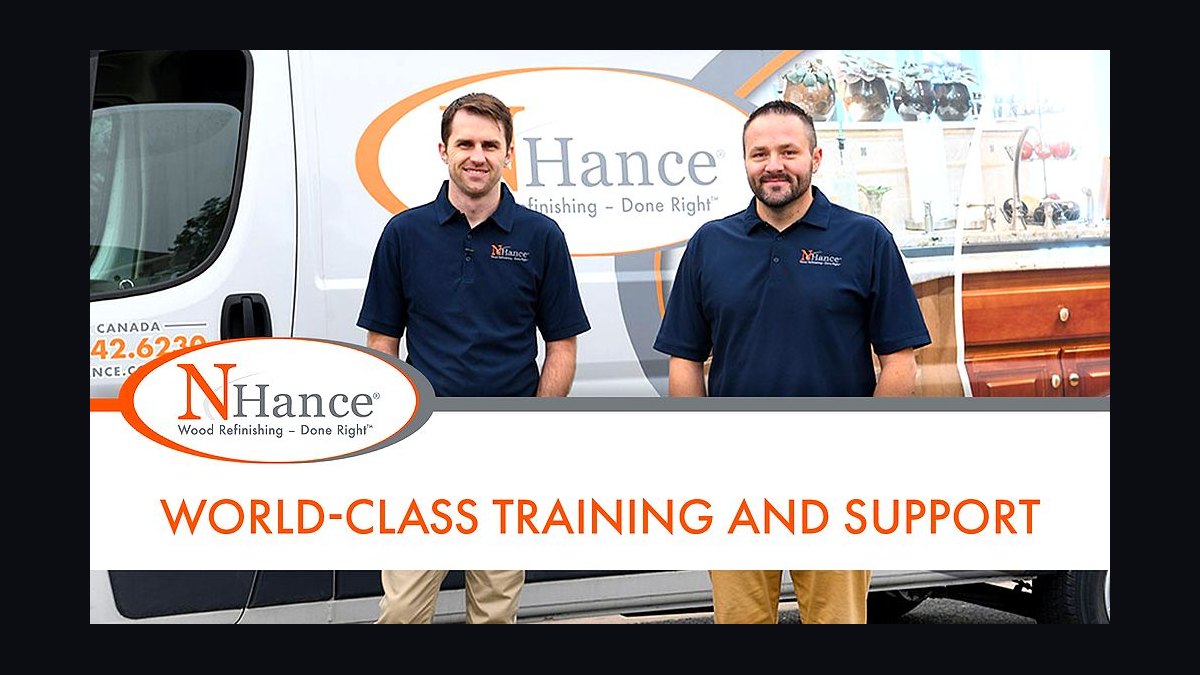
Open an N-Hance Wood Refinishing franchise in 2027 if you want a low-capital ($60,000-$200,000), home-based wood floor and cabinet refinishing business built on a proprietary low-mess, fast-cure process, and you're comfortable selling in-home and managing application crews. Mature territories gross $400,000-$1,200,000, with owners clearing $80,000-$220,000.
Buying In vs. Starting Independent: The Two Real Options
Anyone weighing N-Hance faces a binary choice: franchise in under the Buckeye/HomeFront banner, or build an independent wood-refinishing operation from scratch. The franchise route costs a $45,000 fee plus roughly $15,000-$155,000 more in Item 7 costs (equipment, vehicle, marketing, working capital), bringing total investment to $60,000-$200,000. In exchange, you get the Radiance and Lightspeed UV-cured refinishing systems — proprietary chemistry that cures a floor topcoat in under two hours versus the 3-5 days traditional sand-and-refinish crews need. You also inherit a protected territory (roughly 250,000-500,000 households), national marketing, lead-generation support, and a brand homeowners already associate with "no-sanding" refinishing.
Going independent means skipping the $45,000 fee and the 6%-7% royalty plus 2% marketing fee entirely, but you lose the UV-cure technology (it's licensed exclusively to N-Hance franchisees), the exclusive supplier agreements for consumables, and the brand recognition that drives inbound leads. Independent refinishers compete purely on sanding-based methods and price, typically undercutting franchise pricing by 15%-25% — but they also cap out lower, because they can't offer the same-day-walkable floors or 90-minute cabinet cure times that let N-Hance crews turn more jobs per month. The franchise bet is paying for speed, brand pull, and a supply chain in exchange for royalties and exclusivity; the independent bet is paying nothing upfront in exchange for slower jobs and no brand lift.
A third, smaller option exists: buying into an adjacent proprietary-process franchise (Miracle Method for surface refinishing, Mr. Sandless or Dustless Refinishing as newer UV-cure entrants) rather than N-Hance specifically. These carry similar capital structures but lack N-Hance's unit count (250-300 franchises) and national marketing scale, which matters because brand recognition is a meaningful share of how N-Hance franchisees generate inbound leads versus cold-calling for estimates.
How to Decide Between Franchise and Independent
The decision hinges on three questions: Can you tolerate the royalty structure in exchange for faster cure times and brand leads? Is your target market saturated with budget sand-and-refinish competitors who'll undercut you on price? And do you have the $40,000-$90,000 in liquid capital the franchise requires, or only enough for a bare-bones independent start? If your answer favors speed-to-market, in-home sales support, and a supply chain already negotiated, the franchise wins. If you have refinishing experience already, an existing customer base, and want to avoid the 6%-7% royalty drag on every job, independent can work — but you're rebuilding brand trust and lead flow from zero.
Territory also drives the decision. N-Hance's 2026 FDD territory map shows dense clusters in the Midwest, Southeast, and Texas, with 1-3 open territories still available in Seattle, Denver, and Phoenix. Smaller markets (100,000-300,000 population) favor the franchise model because real estate costs are lower and homeowner-occupancy rates are higher — renters rarely authorize refinishing work, so avoid any territory with more than 40% rental occupancy regardless of which path you choose.
Concrete Numbers Behind Each Option
Franchise (N-Hance): Franchise fee $45,000 flat. Total Item 7 investment $60,000-$200,000, with a realistic midpoint of $95,000-$130,000 for a one-van home-based operation plus $15,000-$25,000 working capital. Equipment (UV lamps, sprayers, curing units) runs $15,000-$35,000 upfront; consumables average $800-$1,200 per 1,500 sq ft floor job at 55%-65% gross margin on materials. Monthly fixed costs run $3,500-$5,500 (royalty, marketing fee, insurance, vehicle, phone/internet). Revenue per job: $2,800-$4,500 per 1,000 sq ft for floors, $4,000-$7,500 per kitchen for cabinets in current pricing, trending to $3,200-$5,000 and $4,500-$8,500 respectively by 2027 on labor and material inflation. A single two-to-three-person crew completes 8-12 floor jobs or 6-9 cabinet jobs monthly, producing $25,000-$50,000 in monthly revenue. Owner take-home after crew labor (30%-35% of revenue), materials (20%-25%), royalties, and overhead nets 15%-22% of revenue — $60,000-$88,000 on $400,000 annual revenue, $120,000-$176,000 on $800,000. Hitting the FDD's full $80,000-$220,000 range typically requires 2+ crews and 10-12 jobs monthly.
Independent: No franchise fee, no 6%-7% royalty, no 2% marketing fee — but also no UV-cure licensing, so you're sanding, which means 3-5 day job turnarounds instead of 1-2 days for floors. Pricing runs 15%-25% below franchise rates because you're competing on cost, not speed or brand, which compresses the revenue-per-crew-hour math even though your overhead is lower. Consumables are cheaper (standard stain/polyurethane vs. licensed proprietary chemistry) but annual price increases on N-Hance's supply chain have run 2%-4% since 2022, a cost independents avoid but also a volume-pricing advantage they don't get.
Break-even for the franchise typically lands month 6-9 for cash flow and month 18-24 for full investment recoupment, assuming consistent 8-12 jobs monthly; slow ramp-up (3-4 jobs/month in the first six months) burns working capital fast and often forces a $20,000-$40,000 line of credit. Independent break-even is harder to generalize since it depends entirely on existing reputation and lead flow, but the absence of a franchise fee and royalty means a lower revenue floor is needed to turn a profit, even though total addressable revenue per job is smaller.
Implementation Sequencing for Either Path
Whichever path you choose, the first 90 days determine whether the business survives its ramp-up period. For the franchise route: days 1-15 are for reading the 2026 FDD in full and validating the proprietary process's real-world results with current franchisees, not just marketing claims. Days 16-30 go to interviewing 8+ existing owners about in-home sales conversion rates, cabinet-vs-floor job mix, and actual take-home pay — FDD averages smooth over wide variance between high- and low-performing territories. Days 31-45 validate that your target territory has sufficient suburban homeowner renovation demand and acceptable rental-occupancy rates. Days 46-60 cover crew hiring and training on the UV-cure application process, since quality control on applied finish is the single biggest reputation risk. Days 61-80 are lead generation and in-home sales execution — this is where sales-averse operators discover the business isn't a trades business, it's a sales-and-operations business wearing a trades costume. Days 81-90 are launch, with ongoing scaling toward cabinet work specifically, since cabinets carry higher per-job revenue than floors.
For the independent route, the sequencing compresses because there's no FDD to review or franchisor training to attend, but it front-loads risk: you need existing equipment, a sanding-based process you already trust, and — critically — an existing lead source, because without brand recognition your first 90 days are entirely about proving you can generate estimates without a national marketing apparatus behind you. Independents who skip this step and assume "word of mouth will work" are the ones who stall at month four with no job pipeline.

Exit planning matters for the franchise path specifically: N-Hance franchises carry a right of first refusal and a thin resale market (5-10 units change hands annually nationally), so most owners exit by selling to a key employee over 3-5 years or winding down after 7-10 years rather than flipping the unit. If a 3-5 year exit is the goal, this isn't the right vehicle — it's a steady lifestyle business (40-50 owner-operator hours weekly), not a quick-flip asset.
Related questions
Is N-Hance a good franchise for a first-time owner with no trades background?
Yes — no woodworking experience is required, and training covers the proprietary process. Success depends on sales and crew-management ability, not hands-on refinishing skill, so a sales-minded first-timer often outperforms a trades veteran who dislikes in-home selling.
How many N-Hance territories are still available in 2027?
Per the 2026 FDD territory map, metros like Seattle, Denver, and Phoenix show 1-3 open territories each, with the brand actively expanding into the Pacific Northwest and Mountain West since 2024.
Can I run N-Hance part-time alongside another job?
Not realistically at the owner level — in-home sales appointments and crew oversight require business-hours availability, and the franchise model assumes an owner-operator managing both sales and quality control.
What happens if I can't generate enough leads in my territory?
Low lead flow is the single biggest driver of failure; franchisees relying solely on corporate marketing without local lead generation effort typically fall into the 3-4 jobs/month range that burns working capital inside six months.
FAQ
What is the total investment needed to start an N-Hance franchise?

The total investment ranges from roughly $60,000 to $200,000, including a franchise fee of about $45,000. This covers equipment, initial marketing, and working capital, making it a relatively low-capital entry compared to many home-service franchises.
How much can I expect to earn as an N-Hance franchise owner? Mature territories typically gross between $400,000 and $1,200,000 annually, with owner income ranging from $80,000 to $220,000. Actual earnings depend on territory size, sales effort, and how efficiently you manage crews and scheduling.
Do I need experience in wood refinishing or construction to open or buy a franchise? No prior woodworking experience is required, but a sales-and-operations mindset is essential. The franchise provides training on the proprietary refinishing process, but success relies on your ability to sell in-home estimates and manage application crews for consistent quality.
How does N-Hance's process differ from traditional sanding and refinishing? N-Hance uses a low-mess, fast-cure UV process that avoids heavy sanding and dust, curing floors in under two hours versus 3-5 days for traditional methods. This lets customers stay in occupied homes during the job, often at a lower cost than full replacement.
What are the biggest challenges of running an N-Hance franchise? The main challenges are in-home sales appointments, which require strong closing skills, and managing application crews to maintain quality and schedule adherence. Crew turnover and inconsistent workmanship can damage reputation quickly in a referral-driven business.
How long does it take to break even on an N-Hance franchise? Many owners see positive cash flow within 6-9 months and recoup their initial investment by month 18-24, assuming consistent 8-12 jobs monthly. Slow ramp-up in the first six months is the most common cause of working-capital strain.
Sources
- https://www.nhance.com
- https://www.entrepreneur.com/franchises/directory
- https://www.franchisebusinessreview.com
- https://www.ibisworld.com
- https://www.statista.com
- https://www.franchise.org
- https://www.jchs.harvard.edu
- https://www.grandviewresearch.com
- https://www.census.gov
Related on PULSE
This page will be disappearing soon. Save it to your device for $1 — or read it free while it is here.
@Kory-White- · if Venmo asks, the last 4 of my number are 2012
This page is gone.
This one is off the shelf now. $1 keeps it on your phone for good — the whole page, pictures and diagrams included.
 franchiseShould I open or buy a Planet Fitness franchise in 2027?
 franchiseShould I open or buy a Mathnasium franchise in 2027?
 franchiseShould I open or buy an Ace Hardware franchise in 2027?
 franchiseShould I open or buy a Big O Tires franchise in 2027?
 franchiseShould I open or buy a Rita's Italian Ice franchise in 2027?
 franchiseShould I open or buy a Primrose Schools franchise in 2027?
 frShould I open or buy a McDonald's franchise in 2027?
 franchiseShould I open or buy a Culver's franchise in 2027?
 franchiseShould I open or buy a Whataburger franchise in 2027?
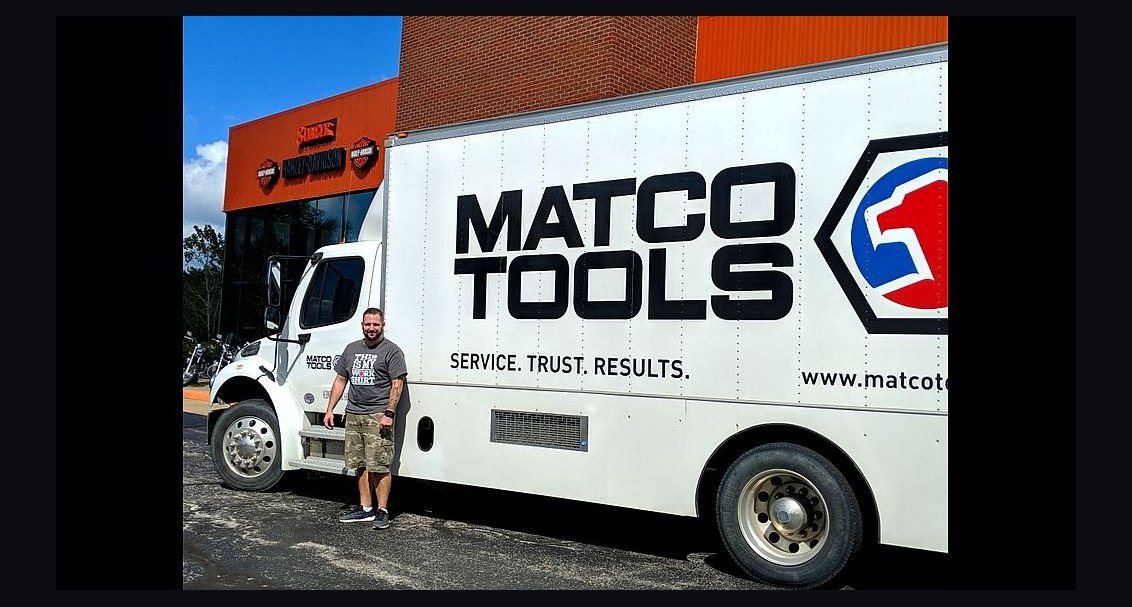 franchiseShould I open or buy a Matco Tools franchise in 2027?