


Should I open or buy a Cabinet IQ franchise in 2027?
Quality
Certified
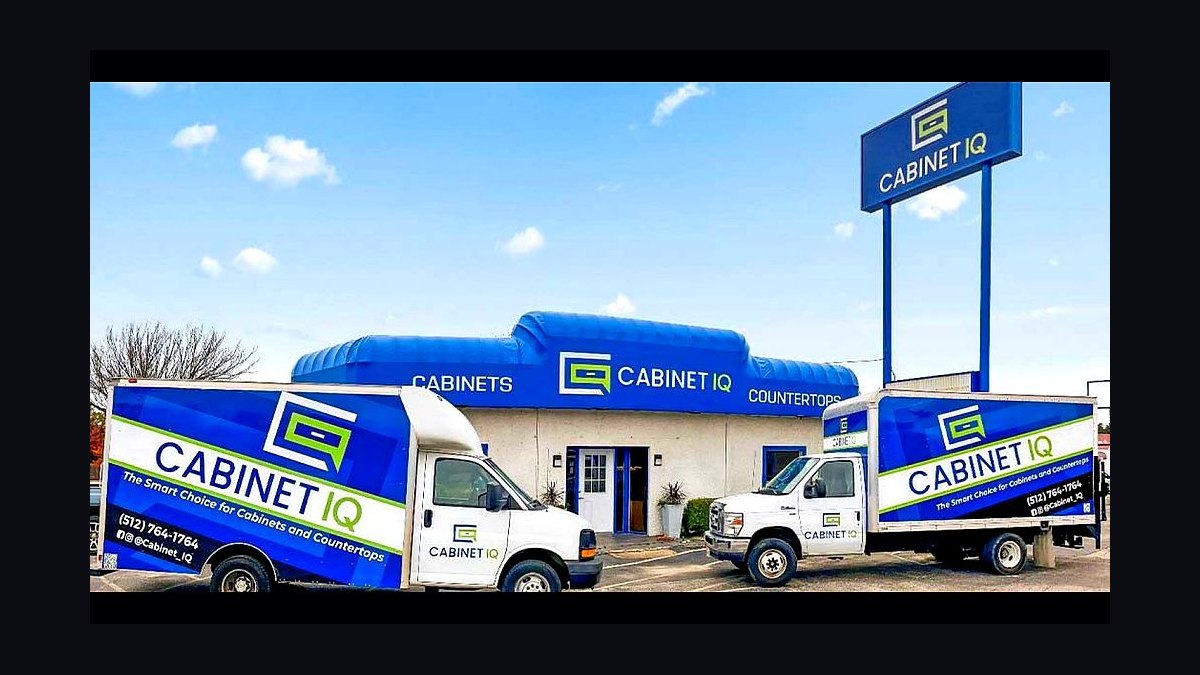
Open Cabinet IQ in 2027 if you're a sales-and-design-minded operator who can fund a $200,000–$400,000 investment and validate a fast-scaling young franchise. The showroom-and-design model drives $15,000–$45,000 average tickets and $800,000–$2.2 million in mature-location revenue, with owner earnings of $120,000–$320,000 — but installation management and brand-scaling risk are real.
A Concrete Scenario That Frames The Problem
Picture a prospective franchisee, Maria, a 42-year-old former retail district manager with $150,000 in liquid savings and $300,000 available through a home-equity line and a 401(k) rollover. She's drawn to Cabinet IQ because she likes design, has run multi-location P&Ls before, and wants out of a corporate job with a boss. She signs a Discovery Day invite, pays her $50,000 franchise fee, and leases 1,800 square feet in a suburban strip center near a growing subdivision corridor. Her total build-out, equipment, signage, inventory samples, and working capital lands at $265,000 — comfortably inside the Item 7 range.
For the first four months, Maria has a showroom but almost no trained installers and only a trickle of leads from the national marketing fund. She hires one designer and contracts with two installation crews she finds through local trade associations, paying them 45% of labor revenue per project. Her first ten jobs close at an average ticket of $22,000, but her cycle time from signed contract to finished kitchen runs nine weeks — longer than she budgeted — because a cabinet order got delayed six weeks at the manufacturer. This is the realistic on-ramp: a franchisee with capital and sales acumen, but no track record yet in construction scheduling, learning the operational side in real time while leads trickle in. By month fourteen, with a referral pipeline built from builders and real estate agents, her location crosses $70,000 in monthly revenue and she's approaching break-even. This scenario is the central tension of the Cabinet IQ decision: the sales and design side can be learned quickly, but the installation and scheduling discipline takes a full year to mature, and a franchisee who underestimates that timeline burns through working capital faster than planned.
How The Mechanism Actually Works
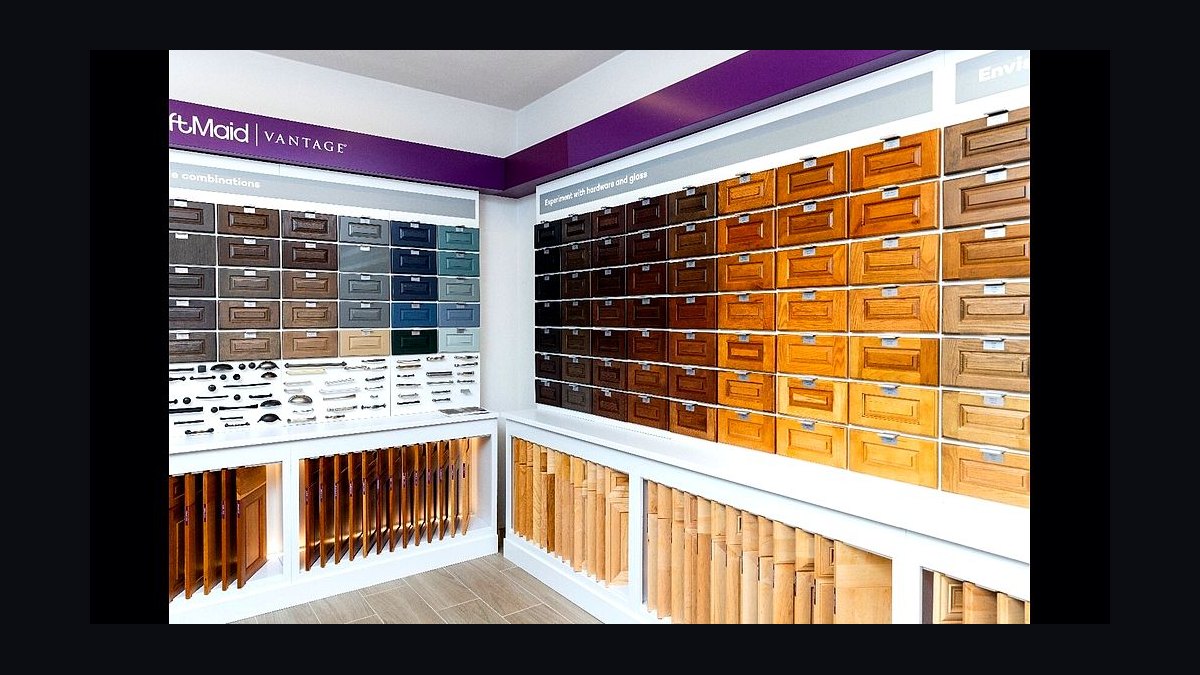
The Cabinet IQ business model converts showroom and in-home consultations into design contracts, then routes those contracts through manufacturing, delivery, and installation before the franchisee collects final payment. Understanding this flow matters because every stage has a different failure point: a slow close rate kills top-of-funnel volume, a cabinet-line choice with long lead times kills your calendar, and a thin installer bench kills your Net Promoter Score and referral volume. A franchisee who maps this mechanism before opening — rather than discovering it project-by-project — avoids the costliest mistake in the category: overselling capacity you don't yet have crews to fulfill.
The critical bottleneck in this flow is the handoff between design close and cabinet ordering. Because cabinet manufacturing (whether through Fabuwood, Wolf, or another semi-custom line) runs on its own production calendar, a franchisee has limited ability to compress that middle stage — the only real lever is choosing cabinet lines with faster lead times for rush jobs, or stocking a limited in-stock assortment for customers who need faster turnaround. The installation stage is the second lever: franchisees who maintain 3-8 dedicated installers (either employed or exclusively subcontracted) can schedule with more certainty than those who share a labor pool with other contractors, where a competing job can bump your installation date with little notice.
Real Numbers, Ranges, And Benchmarks
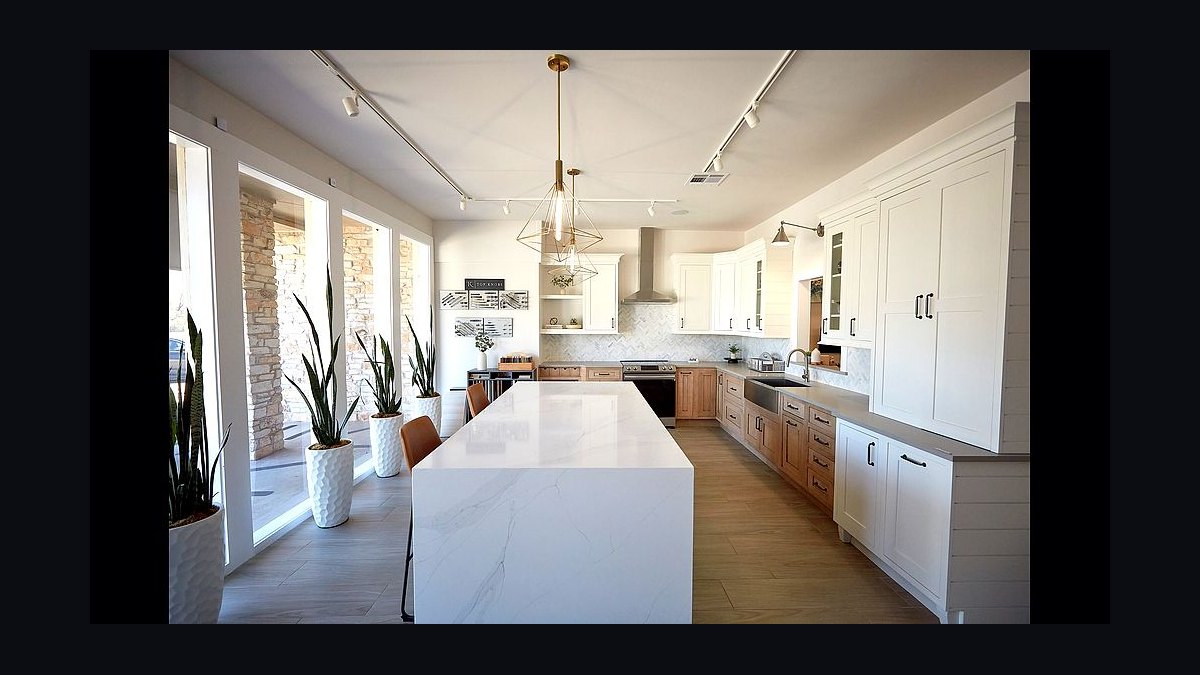
The 2026 FDD lists a $50,000 franchise fee and total Item 7 investment of roughly $200,000 to $400,000, covering showroom buildout ($50,000–$170,000), equipment and displays ($25,000–$80,000), technology and design software ($8,000–$25,000), initial inventory and samples ($15,000–$50,000), initial marketing ($20,000–$60,000), insurance and licensing ($5,000–$18,000), and working capital ($30,000–$90,000). Royalty runs near 6% of gross revenue, with an additional marketing fee near 2%.
On the revenue side, mature locations gross $800,000 to $2.2 million annually, with gross profit margins on individual projects running 30% to 45% before overhead. After materials, subcontracted labor (40-55% of labor revenue paid out to installation crews), showroom rent, and marketing spend, owner margins land at 13% to 23% of gross revenue, translating to $120,000 to $320,000 in owner earnings for an active owner-operator working 45-55 hours weekly. A semi-absentee model — hiring a general manager at $70,000-$90,000 plus bonus — cuts that net profit by 40% to 60%, which makes Cabinet IQ a weak fit for anyone hoping for a passive investment from day one.
Most locations need 12 to 18 months to reach break-even monthly revenue of $60,000 to $100,000, so working capital of $50,000 to $100,000 beyond the initial Item 7 figure is the realistic cushion, not an optional extra. Local marketing spend to drive showroom traffic runs $10,000 to $25,000 annually, with cost-per-lead in suburban markets of $80 to $150. Installed skilled labor costs $35 to $55 per hour in most metro areas as of 2027, reflecting the persistent construction trades shortage, and franchisees relying on subcontractors should expect to negotiate hard on that 40-55% labor-revenue split to protect their own margin.
Trade-Offs And Alternatives
The core trade-off in a Cabinet IQ franchise is capital intensity and operational complexity in exchange for a higher ticket size and stronger per-project margin than lighter-footprint competitors. A showroom-based, full-installation model earns more per closed sale than a mobile-only or refacing-only concept, but it also exposes the franchisee to construction-trade risk — labor shortages, delivery delays, and warranty/rework costs — that a service-only business avoids entirely.
Kitchen Solvers trades the showroom requirement and full custom-cabinet scope for a home-based, refacing-centric model with materially lower upfront capital — a reasonable alternative for someone who wants the kitchen-remodeling category without the installation-crew management burden. Kitchen Tune-Up sits in a similar middle tier, offering kitchen updates and refacing with a larger existing footprint (250+ units versus Cabinet IQ's 80-120 projected by 2027), which gives a franchisee more validated unit-economics data to study before signing. N-Hance narrows the scope further to cabinet refinishing only, which minimizes installation risk but also caps the average ticket well below Cabinet IQ's $15,000-$45,000 range. An independent, non-franchised kitchen showroom avoids royalty and marketing fees entirely and gives full pricing control, but forfeits brand recognition, negotiated vendor pricing (Cabinet IQ franchisees reportedly see 20-35% savings off retail on cabinet lines), and the national lead-generation fund, which owners report supplies 30% to 50% of their leads. The right choice depends on whether a candidate's comparative advantage is in sales and design (favoring Cabinet IQ's higher ticket) or in operational simplicity (favoring a refacing-only concept).
Common Pitfalls And How To Avoid Them
The most common and costly mistake is under-validating a fast-scaling young brand. Because Cabinet IQ is projected to grow from roughly 40-60 units in 2025 to 80-120 by 2027, a prospective franchisee is buying into a system that is still building out its support infrastructure, supply-chain relationships, and multi-unit operator playbook in real time. The fix is to interview at least eight to ten existing owners — not just the two or three the franchisor refers you to — and specifically ask about showroom conversion rates, corporate support responsiveness during install delays, and actual net profit after labor costs, not just gross revenue.
A second pitfall is undercapitalizing working capital. Franchisees who fund only the Item 7 minimum and skip the additional $50,000-$100,000 cushion run out of cash during the 12-18 month ramp-up window, right when showroom traffic is still building and the location is least able to absorb a slow month. Build the cushion into your financing plan before signing, not after you've already spent the showroom buildout budget.
A third pitfall is mismanaging the installer relationship — either understaffing crews and missing delivery windows, or overpaying subcontractors without negotiating the labor-revenue split, which erodes the 8-12% net margin on the labor portion of each project. Vet installation crews as carefully as you'd vet a business partner, check references with other contractors, and put scheduling penalties into subcontractor agreements before the first job, not after the first missed deadline.
A fourth pitfall is opening in a market with weak kitchen-renovation demand or heavy big-box/online competition without a clear differentiation plan. Before signing a lease, study local renovation permit volume and drive-time demographics, and confirm your target market actually values the white-glove design-and-install experience that 60-70% of homeowners reportedly still prefer over DIY options — a market skewing heavily toward price-sensitive DIY buyers is a poor fit for this model regardless of how strong the brand's national numbers look.
Related questions
How much does it cost to open a Cabinet IQ franchise?
Total Item 7 investment runs roughly $200,000 to $400,000 per the 2026 FDD, including a $50,000 franchise fee, showroom buildout, equipment, initial inventory, marketing, and working capital.
How long does it take to open a Cabinet IQ location?
Most franchisees report four to eight months from signing the franchise agreement to opening the showroom, covering site selection, lease negotiation, buildout, training, and hiring.
Do I need construction experience to open Cabinet IQ?
No — Cabinet IQ does not require industry experience and prefers candidates with sales, design, or management backgrounds, providing training on product knowledge, design software, and installation oversight.
What's the biggest operational risk in owning a Cabinet IQ franchise?
Installation crew management and project scheduling are the biggest risks, since delays in cabinet manufacturing or installer availability cascade into missed completion dates and customer dissatisfaction.
How does Cabinet IQ compare to Kitchen Solvers?
Cabinet IQ requires more capital and a dedicated showroom but earns a higher average ticket through full custom design and installation, while Kitchen Solvers is home-based and refacing-focused with lower capital needs.
FAQ
What is the typical timeline from signing to opening a Cabinet IQ franchise? From signing the franchise agreement to opening your showroom, most franchisees report a timeline of four to eight months. This includes site selection, lease negotiation, build-out, training, and hiring. The actual duration depends on real estate availability and contractor schedules.
Do I need prior experience in cabinets, countertops, or construction?

No, Cabinet IQ does not require industry experience, but they prefer candidates with sales, design, or management backgrounds. The franchise provides training on product knowledge, design software, and installation oversight. Many successful owners come from unrelated fields like real estate or retail.
What is the typical profit margin for a Cabinet IQ franchise? Owner earnings, meaning net profit after all expenses including your own salary, typically range from $120,000 to $320,000 annually for mature locations. Gross profit margins on projects usually fall between 30% and 45%, but the final net depends on local overhead, labor costs, and project mix.
How much working capital should I have beyond the initial investment? Franchisees recommend having at least $50,000 to $100,000 in additional working capital to cover the first six to twelve months of operations. This cushions slow initial sales, payroll, and unexpected expenses before your showroom builds a steady client pipeline.
Can I operate a Cabinet IQ franchise from a home office, or do I need a showroom? A physical showroom is required since the model relies on customers visiting to see cabinet displays and countertop samples. Most showrooms run 1,500 to 3,000 square feet in a retail or mixed-use area. In-home consultations supplement showroom visits but do not replace the fixed location.
What support does Cabinet IQ provide for marketing and lead generation? The franchise provides a national marketing fund, financed by the marketing fee, that handles brand advertising, a website, and digital campaigns. Local franchisees are expected to invest in local SEO, community events, and builder or real estate agent relationships, and many owners report that 30% to 50% of leads come from the national effort.
Sources
- https://www.entrepreneur.com/franchises/directory
- https://www.franchisebusinessreview.com
- https://www.ibisworld.com
- https://www.statista.com
- https://www.franchise.org
- https://www.jchs.harvard.edu
- https://www.nkba.org
- https://www.census.gov
- https://www.ftc.gov/business-guidance/industry/franchises-business-opportunities
Related on PULSE
This page will be disappearing soon. Save it to your device for $1 — or read it free while it is here.
@Kory-White- · if Venmo asks, the last 4 of my number are 2012
This page is gone.
This one is off the shelf now. $1 keeps it on your phone for good — the whole page, pictures and diagrams included.
 franchiseShould I open or buy an Ace Hardware franchise in 2027?
 franchiseShould I open or buy a Jiffy Lube franchise in 2027?
 franchiseShould I open or buy a Supercuts franchise in 2027?
 franchiseShould I open or buy a Domino's franchise in 2027?
 franchiseShould I open or buy a Bruster's Real Ice Cream franchise in 2027?
 franchiseShould I open or buy a Servpro franchise in 2027?
 franchiseShould I open or buy a Hand and Stone Massage franchise in 2027?
 franchiseShould I open or buy a Matco Tools franchise in 2027?
 franchiseShould I open or buy a Goddard School franchise in 2027?
 franchiseShould I open or buy a Pizza Hut franchise in 2027?