


Should I open or buy a Blingle franchise in 2027?
Quality
Certified
Yes, for a sales-and-operations-minded operator with $150K+ in liquid capital: opening a Blingle franchise in 2027 makes sense because the year-round, multi-occasion lighting model (permanent holiday, yard, patio, event) smooths the seasonality that sinks pure holiday-lighting businesses, and mature territories clear $110K-$300K on $600K-$1.8M revenue. Skip it if you can't commit full-time for 2-3 years or dislike in-home sales and crew management.
The outcome you should expect
Franchisees who open a Blingle in 2027 should plan on a multi-year ramp, not an immediate payday. The realistic first-year gross revenue for a single-territory operator runs $200,000 to $450,000 — well below the $600K-$1.8M figures quoted for mature territories. That gap exists because new installation crews average 30-50% longer job times for their first six months, local brand awareness starts at zero against competitors with 5-15 year head starts, and commercial clients (hotels, HOAs, apartment complexes) often impose 30-60 day payment terms that create a cash lag between paying your crew and collecting the invoice.
The first-year owner's draw typically lands between $45,000 and $85,000 after royalties, loan payments, and operating expenses are covered. Most successful operators report reaching breakeven between month 8 and month 14, with the first meaningful profit distribution arriving in the second holiday season — October through December of year two. By year three or four, a well-run single territory with a strong household base can produce a $150,000-$250,000 annual owner benefit, which is where the mature-territory averages start to apply.
The practical takeaway: evaluate this franchise on a 3-4 year horizon, not a 12-month one. If your personal finances require profit in year one, Blingle is the wrong vehicle regardless of how strong the territory is. If you can fund an 18-24 month runway and work the business hands-on, the outcome curve bends sharply upward after the second holiday season because repeat customers, referrals, and permanent-lighting maintenance contracts begin compounding.
What drives that outcome
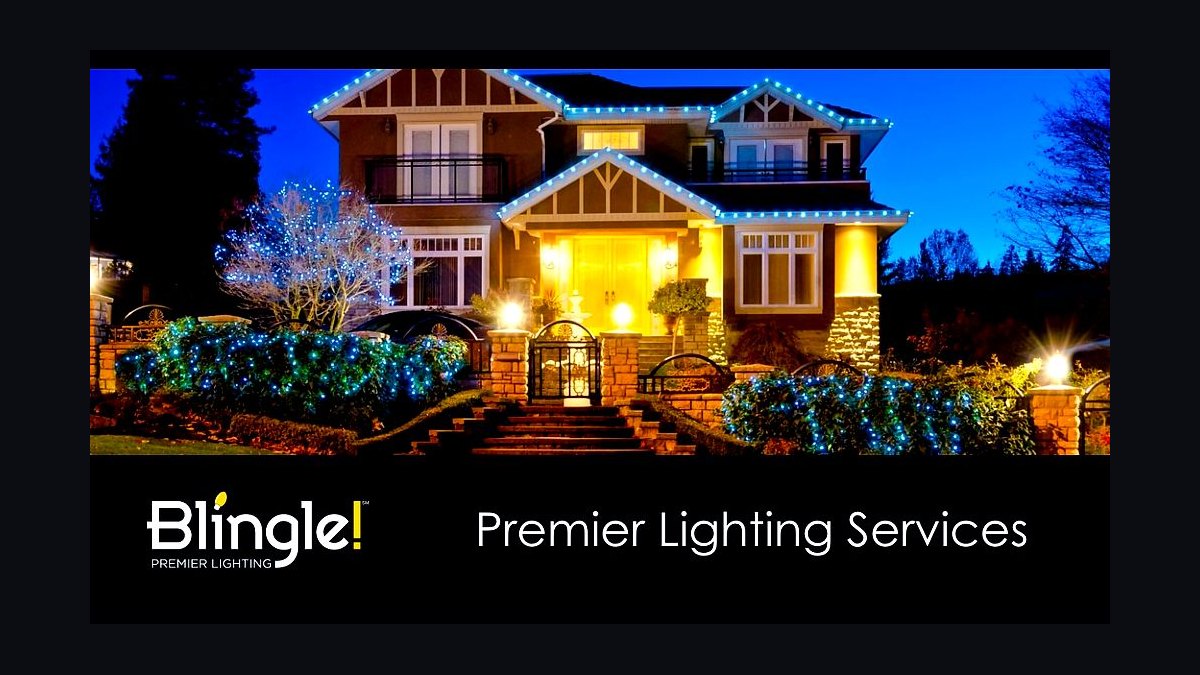
Three forces interact to produce that ramp-then-compound curve: the mix of lighting occasions you sell, how fast your crew capacity scales, and how quickly local brand trust builds relative to entrenched competitors. Permanent holiday lighting is the highest-growth, highest-margin segment — it is installed once and generates recurring on/off service and maintenance revenue every season after. Yard, patio/string, and event lighting fill in the off-peak months and lower-skill labor slots but carry thinner margins. A franchise owner who leans too heavily on seasonal holiday-only work reproduces the exact seasonality problem Blingle's model is designed to avoid; one who balances the four categories smooths cash flow across the calendar.
Crew capacity is the second driver. Most single-territory operators start with 2-3 full-time installers and scale to 5-8 by year three. Work splits roughly 40% permanent architectural lighting, 30% seasonal holiday installs, 20% patio/string, and 10% event lighting. Each category requires different skills and different ladder/safety training, and the franchisor's materials only get you partway — you are functionally the HR department, spending 15-20 hours per week on recruiting, training, and scheduling during peak season, against industry-wide residential lighting crew turnover of 40-60% annually.
Brand trust is the third driver and the one new entrants underestimate most. Local electricians and established holiday-light companies with years of local reputation win price-insensitive customers by default; a new Blingle franchise has to earn trust fast through referrals, online reviews, and visible permanent installs in a neighborhood before it can command premium pricing. All three forces reinforce each other: better crew capacity lets you sell more permanent lighting (higher margin), which builds faster local trust, which improves lead quality and shortens your sales cycle.
Benchmarks and realistic ranges
Use these ranges to stress-test any specific territory pitch before you sign.
Investment (2026 FDD, Item 7, home-based model):
- Franchise fee: $50,000 flat
- Office setup (home-based): $3,000-$15,000
- Equipment & inventory (lighting products, install gear): $25,000-$80,000
- Vehicle (lease or wrap, 1-2 trucks to start): $5,000-$25,000
- Technology & software (CRM, estimating tools): $5,000-$15,000
- Initial marketing / lead generation: $15,000-$45,000
- Insurance & licensing (general liability + contractor): $5,000-$16,000
- Working capital: $18,000-$50,000
- Total Item 7: roughly $130,000 to $260,000
- Royalty: approximately 7% of gross revenue
- Marketing fee: approximately 2% of gross revenue
Working capital beyond Item 7: Budget an additional $40,000-$80,000 in operating cash separate from the initial investment. This covers pre-season inventory purchases (lights, transformers, wire) that are typically due 60-90 days before installation revenue arrives, crew payroll during slow spring/early-summer stretches, vehicle maintenance and fuel for a 2-4 truck fleet, and pre-brand-recognition marketing spend. Franchisees who succeed in 2027 generally have either $100K+ in personal savings beyond the investment or an SBA loan that includes a working-capital line of credit.
Revenue and margin: Mature territories gross $600,000-$1,800,000 across the four lighting categories. With crew labor and lighting products as the main cost centers against relatively low fixed overhead, owner margins typically run 14%-25%, translating to $110,000-$300,000 in owner income at maturity. First-year revenue realistically lands at $200,000-$450,000, with the first-year owner's draw at $45,000-$85,000.
Installation economics: Permanent lighting installations typically cost homeowners $3,000-$8,000. Permitting varies by municipality — some require electrical permits for permanent installs, adding $200-$800 per job and 2-4 weeks of delay. By year two, most operators need 1,000-2,000 square feet of warehouse space for seasonal inventory, ladders, and vehicles.
Territory sizing: The sweet spot for a territory is 25,000+ households with median income above $120,000; stronger territories run 30,000+ affluent households. By 2027, Blingle is expected to have 150-250 franchise units open, up from roughly 80 in 2024, meaning territory competition for prime areas is tighter than it was for 2022-2024 entrants.
Risks, edge cases, and failure modes

Validating a fast-scaling young brand. Blingle was founded in the early 2020s under HorsePower Brands (which also runs Mosquito Joe and Aptive, among others). A brand growing from roughly 80 to 150-250 units in a few years can outrun its own support infrastructure — some franchisees report excellent training, others note that support becomes more standardized and less personalized as the system scales. Before you open, call 5-10 existing Blingle franchisees (the franchisor is required to provide a contact list under FDD Item 20) and ask specifically about response time for operational questions, the quality of leads from national marketing, and whether they would re-sign today.
Weak in-home sales execution. This is a high-ticket, in-home consultative sale, not a walk-in retail transaction. Owners who cannot close $3,000-$8,000 permanent-lighting jobs in the homeowner's living room will underperform regardless of territory quality. In a high-rate environment, 2024-2025 franchisees already reported 20-30% longer sales cycles than 2021-2022, which means a weak sales script compounds into a cash-flow problem fast. Financing partnerships (Affirm, Synchrony-style point-of-sale credit) help close price-sensitive buyers but require setup before you need them.
Crew mismanagement and installation liability. Permanent lighting work means drilling into soffits, fascia, and masonry on homes that can be worth $500,000 or more — one bad installation can trigger a costly liability claim and destroy the referral pipeline that drives repeat business. Crew members work on ladders 30-40 feet high in all weather, and turnover in residential lighting runs 40-60% annually industry-wide. An owner who tries to run this as a semi-absentee business will see installation quality slip, because technical quality directly drives referrals in this model. Plan to spend 60-70% of your time in the field for the first two years.
Over-reliance on holiday-only revenue. The entire strategic rationale for Blingle over a pure Christmas-lighting franchise is the multi-occasion mix. An owner who markets and sells almost exclusively holiday installs reproduces the seasonality risk the model was built to solve and will see cash gaps in spring and summer when there is no offsetting yard, patio, or event revenue.
Mistiming market entry. A 2027 opener faces a tighter territory market than a 2022-2024 opener — the best, largest territories are already claimed. Verify the specific household count and median income of the exact territory being offered rather than trusting system-wide averages, and factor in that interest-rate sensitivity on discretionary $3,000-$8,000 projects is a real headwind if rates stay elevated.
A practical rollout plan
Treat the first 90 days as a structured validation and setup window before you expect revenue at scale, then let the first two holiday seasons carry the business to its real run rate.
Days 1-20 — Diligence. Read the full 2026 FDD line by line, focusing on Items 5 (fees), 6 (ongoing fees), 7 (total investment), 19 (financial performance representations), and 20 (franchisee list). Request the contact list and call at least 5-10 existing owners. Assess HorsePower Brands' support quality directly from those calls rather than from marketing materials.
Days 21-45 — Market and territory validation. Interview owners specifically about their occasion mix (holiday vs. yard vs. event), their seasonality curve, and their actual net profit — not just gross revenue. Independently verify the household count and median income of the territory you're being offered against the 25,000+ households / $120,000+ median income benchmark.
Days 46-65 — Capital and crew setup. Finalize financing, ideally an SBA loan that bundles a working-capital line of credit on top of the $130K-$260K Item 7 investment, since you'll need another $40K-$80K in operating cash. Begin recruiting your first 2-3 installers and secure a vehicle and initial equipment and inventory order.
Days 66-85 — Systems and lead generation. Install your CRM and estimating software, set up insurance and any required local electrical permitting relationships, and launch initial marketing (budgeting $15,000-$45,000) to start building a lead pipeline before you formally open for sales.
Days 86-105 — Open and sell. Open the franchise and begin in-home sales appointments and installations in earnest, prioritizing a mix across permanent, yard, patio, and event categories rather than chasing holiday-only volume. Expect first-year revenue in the $200,000-$450,000 range, not mature-territory figures.
Ongoing — Years one through four. Scale the crew from 2-3 installers toward 5-8 by year three, reinvest early profit into warehouse space (1,000-2,000 sq ft by year two) and additional trucks, and expect breakeven between month 8 and month 14, with the first real profit distribution in the second holiday season. By year four, a well-run single territory should be tracking toward the $150,000-$250,000 owner-benefit range that defines a mature Blingle franchise.
Related questions
How long does it take to open a franchise and break even in 2027?
Across most home-service franchise models, expect 60-105 days from signing to opening, then 8-14 months to breakeven. Blingle fits this pattern, with its first real profit distribution typically arriving in the second holiday season rather than year one.
What's the difference between Blingle and a pure Christmas-lighting franchise?
A pure holiday-lighting franchise earns almost all its revenue in a 60-90 day window each fall. Blingle adds permanent architectural, yard, patio/string, and event lighting so revenue and crew utilization spread across the full year.
How much liquid capital do I actually need to open a Blingle?
Beyond the $130K-$260K Item 7 investment, plan on an additional $40,000-$80,000 in working capital, plus 6-12 months of personal living expenses set aside separately, since first-year owner draw is only $45,000-$85,000.
Is a Blingle franchise semi-absentee friendly?
No. Installation quality directly drives referrals and repeat business, so successful owners spend 60-70% of their time in the field during the first two years rather than operating hands-off.
FAQ
What is the typical initial investment for a Blingle franchise? The total investment range is roughly $130,000 to $260,000, including a franchise fee around $50,000. This covers equipment, inventory, vehicle, and startup costs, though actual amounts vary by territory size and market.
How much can a Blingle franchise owner expect to earn? Mature territories typically gross between $600,000 and $1,800,000 annually, with owner net income ranging from about $110,000 to $300,000. First-year figures are far lower — typically $200,000-$450,000 gross with a $45,000-$85,000 owner draw.
Is Blingle a seasonal business, or is it year-round? Blingle operates year-round by combining permanent holiday lighting, architectural lighting, yard lighting, patio/string lighting, and event lighting. This multi-occasion model is specifically designed to reduce the seasonality risk common in holiday-only lighting franchises.
What are the ongoing fees for a Blingle franchise? The royalty fee runs approximately 7% of gross revenue, plus a marketing fee of around 2%. These fund franchisor training, national marketing, and operational support, though exact percentages can vary by agreement.
How long has Blingle been in business, and is it a stable brand? Blingle was founded in the early 2020s and is part of HorsePower Brands, a larger multi-brand franchise group. As a relatively young, fast-scaling brand, prospective owners should independently validate its support quality and local market track record by calling existing franchisees.
What are the main challenges of owning a Blingle franchise? The primary challenges are managing in-home sales appointments and consultative closes, recruiting and retaining installation crew in an industry with 40-60% annual turnover, and adapting to a fast-scaling brand whose systems and support are still maturing.
Sources
- https://www.franchisedirect.com
- https://www.entrepreneur.com/franchises
- https://www.franchisebusinessreview.com
- https://www.ibisworld.com
- https://www.statista.com
- https://www.franchise.org
- https://www.jchs.harvard.edu
- https://www.grandviewresearch.com
- https://www.census.gov
- https://www.sba.gov
Related on PULSE
This page will be disappearing soon. Save it to your device for $1 — or read it free while it is here.
@Kory-White- · if Venmo asks, the last 4 of my number are 2012
This page is gone.
This one is off the shelf now. $1 keeps it on your phone for good — the whole page, pictures and diagrams included.
 franchiseShould I open or buy a Stanley Steemer franchise in 2027?
 franchiseShould I open or buy a Culver's franchise in 2027?
 franchiseShould I open or buy a Meineke franchise in 2027?
 franchiseShould I open or buy a Jimmy John's franchise in 2027?
 franchiseShould I open or buy a Papa John's franchise in 2027?
 franchiseShould I open or buy a Kona Ice franchise in 2027?
 franchiseShould I open or buy a Drybar franchise in 2027?
 franchiseShould I open or buy a Goddard School franchise in 2027?
 franchiseShould I open or buy a Jiffy Lube franchise in 2027?
 franchiseShould I open or buy a KinderCare franchise in 2027?