


Should I open or buy a Woodhouse Spa franchise in 2027?
Quality
Certified
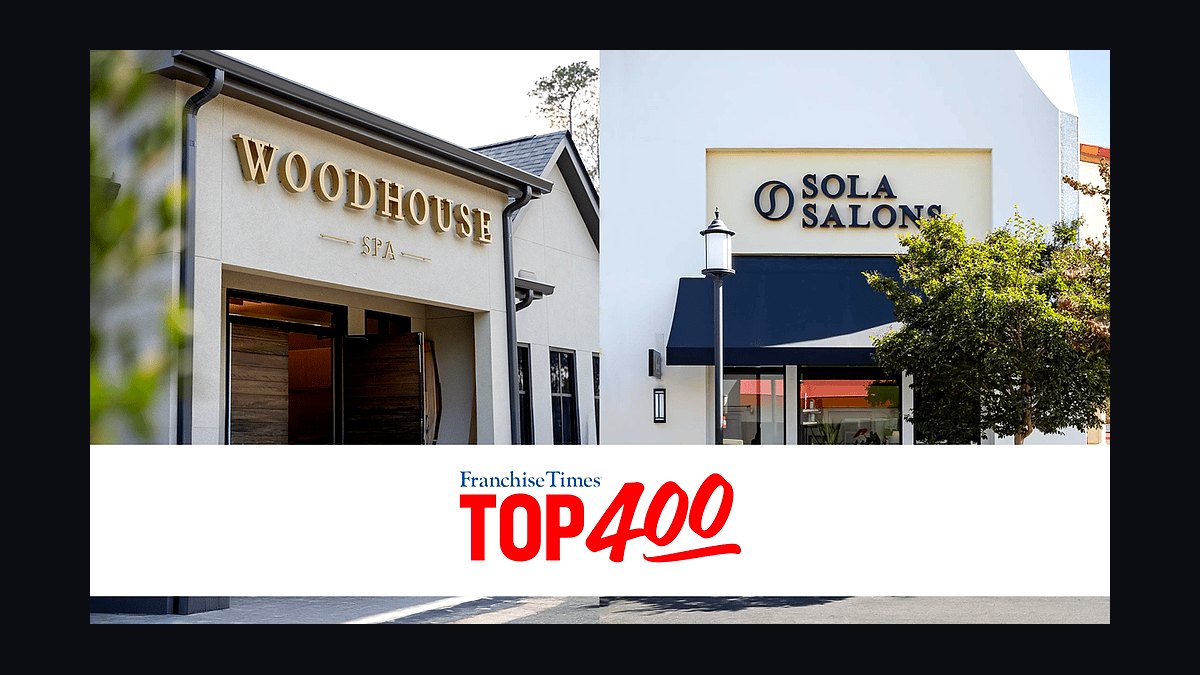
Yes, if you're well-capitalized and targeting an affluent market: a Woodhouse Spa franchise is a strong play for operators who can fund a $1M-$2.5M buildout, recruit licensed therapists, and build a membership base. Skip it if you're under-capitalized, in a modest-income market, or unwilling to manage the staffing grind that defines this category — those gaps sink otherwise promising locations before the second year.
What it is and why it matters
Woodhouse Spa (operating as The Woodhouse Day Spa) is a premium day-spa franchise founded in 2001, built around massage, facials, body treatments, and skincare delivered in a high-end, resort-style environment. What separates it from the mass-market massage chains is the combination of a luxury positioning and a membership-driven recurring-revenue engine, which together produce some of the highest average unit volumes (AUVs) in the spa category — mature locations commonly gross $1.5M to $3.5M annually, well above a typical independent day spa or a budget massage-membership competitor.
The decision to open a Woodhouse Spa franchise is really a decision about two things at once: whether you can absorb a seven-figure capital commitment, and whether you can operate a labor-intensive service business where the product is the skill and availability of licensed humans, not inventory on a shelf. The brand's economics reward operators who treat memberships as the core asset of the business rather than a side perk, and who treat staffing as a long-term pipeline problem rather than a hiring-ad problem. For a buyer evaluating this in 2027, the fundamentals matter more than the brand name: wellness and self-care spending has proven durable through multiple economic cycles, and the recurring-membership model gives a Woodhouse location a revenue floor that most single-visit service businesses don't have. That said, "franchise" does not mean "turnkey" here — the franchisor provides the systems, the training, and the brand recognition, but the owner still has to execute site selection, staff recruiting, and membership sales with real discipline for the unit economics to work.
Why this matters for a 2027 decision specifically: competition from Massage Envy, Hand & Stone, Massage Heights, Elements Massage, and a growing wave of med-spa franchises means the premium positioning only holds if your location, staff quality, and membership execution are genuinely differentiated. A Woodhouse Spa that competes on price or convenience loses to a cheaper chain; a Woodhouse Spa that competes on experience and recurring relationships can command the premium pricing the model depends on.
The step-by-step process
Opening a Woodhouse Spa franchise follows a fairly linear sequence from signing to steady-state operation, and most franchisees underestimate how long the middle stages take.
First, you request and review the Franchise Disclosure Document (FDD) — the 2026 filing lists Items 5, 6, 7, 19, and 20, covering the franchise fee (around $60,000), ongoing fees, total investment range, and any available financial performance representations. This is also when you start validation calls with existing franchisees, ideally eight or more, asking specifically about AUVs, staffing turnover, membership counts, and net profit rather than top-line revenue alone.
Second comes site selection and lease negotiation, which the franchisor's real estate team supports but does not own — you need to independently confirm the demographic fit (daytime population, household income, target female demographic) because a bad lease signed on optimistic assumptions is the single most common cause of underperformance. This stage typically takes two to four months given commercial real estate timelines.
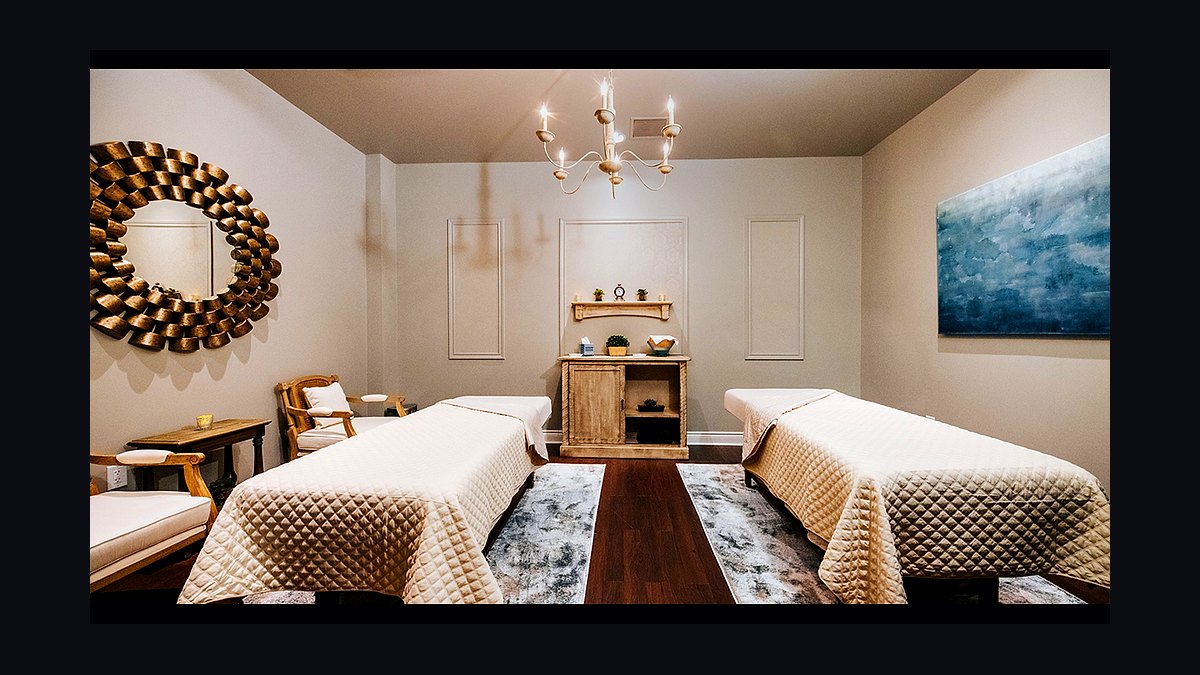
Third is design and buildout: a Woodhouse Spa requires a substantial interior build — treatment rooms, a locker/relaxation area, retail space — that takes four to eight months depending on permitting and contractor availability in your market. Fourth, staffing and training run in parallel with the tail end of construction: recruiting licensed massage therapists and estheticians, negotiating compensation, and running them through brand-standard training before opening. Fifth is the pre-sale period, typically 30-60 days before doors open, where successful franchisees pre-sell founding memberships to build an initial recurring-revenue base rather than opening with zero members and hoping walk-ins show up. From signing the franchise agreement to grand opening, the full timeline typically runs 12 to 18 months.
A franchisee who skips the validation step or rushes the pre-sale window typically opens with an understaffed treatment schedule and an empty membership base, which compounds into a slow first 12-18 months that many locations never fully recover from.
Costs, timelines, and typical ranges

The 2026 FDD puts the total Item 7 investment at roughly $1,000,000 to $2,500,000, which breaks down approximately as follows: buildout and leasehold improvements run $500,000 to $1,300,000 given the upscale fit-out standard the brand requires; equipment and treatment-room fixtures add $200,000 to $500,000; signage and decor run $30,000 to $90,000; initial inventory (skincare and retail product) runs $25,000 to $70,000; initial marketing (critical for the membership pre-sale) runs $30,000 to $80,000; training and travel costs run $10,000 to $30,000; and working capital to cover the first three to six months runs $80,000 to $200,000. On top of the $60,000 franchise fee, ongoing costs are a royalty of approximately 5%-6% of gross revenue plus a marketing fee near 2%.
Rent varies dramatically by market and is worth isolating separately because it's the largest fixed cost after labor. In a secondary suburban market, expect $25-$35 per square foot triple net on a 2,800-4,200 square foot space, putting annual rent around $84,000-$126,000. In a high-demand metro like Dallas or Denver, rent can run $40-$55 per square foot, pushing annual rent to $140,000-$231,000. The rule of thumb successful franchisees use: rent should not exceed 12%-14% of projected gross revenue — a location projecting $1.8M in revenue can safely carry $180,000-$220,000 in rent, but the same rent against a slower $1.2M first-year actual becomes 15%+, which starts squeezing margins hard.

Woodhouse recommends a 10-year initial lease term with two 5-year renewal options, and franchisees should push for a tenant-improvement allowance of $80-$120 per square foot from the landlord — without it, total investment climbs toward the top of the range and extends the payback period.
On the revenue side, mature spas gross $1.5M-$3.5M, with owners clearing $180,000-$450,000 after labor (35%-45% of gross, concentrated in licensed-therapist pay) and rent, the two dominant cost lines. Membership revenue is the largest single driver of that range: monthly membership fees typically run $89-$199 depending on tier and market, and at mature locations memberships commonly account for 40%-60% of total gross revenue. A spa with 400 active members at an average $120/month generates roughly $576,000 in recurring annual revenue before any walk-in or one-off booking — the top-quartile franchisees in the 2026 FDD reach 550-700 members within 24 months of opening. Therapist compensation runs $55,000-$85,000 per year including tips and commission in most metro markets, with signing bonuses of $1,000-$3,000 increasingly common where labor is tight.
Where teams get it wrong
The single most common failure mode is under-capitalizing the opening and the first six months of operation. Franchisees who finance the buildout to the bone and skip adequate working capital find themselves unable to fund the marketing push needed for the membership pre-sale, which means opening with a half-empty schedule and no recurring-revenue cushion — a problem that compounds because low membership counts mean low cash flow, which means less marketing budget, which means membership growth stays slow.

The second major failure mode is treating staffing as transactional rather than as a retention system. The spa industry's baseline turnover of 30%-50% annually is punishing on its own, and Woodhouse's premium positioning narrows the usable talent pool further — you need therapists who are technically skilled and comfortable in a luxury-service environment, not just licensed. Franchisees who compete purely on hourly pay against Massage Envy and Hand & Stone lose this fight; the ones who win invest in schedule flexibility, benefits, and continuing-education stipends, and several top-quartile operators run a "grow your own" pipeline — partnering with local massage schools to intern and pre-hire graduates, covering $3,000-$5,000 in advanced-certification costs per therapist in exchange for a 12-month commitment. That pipeline costs real money upfront but produces 70%+ two-year retention versus the open-market alternative of constant Indeed and LinkedIn recruiting, which costs more in the long run through recruitment fees and chronic understaffing.
The third failure mode is underestimating site requirements. A Woodhouse location needs real demographic density — a daytime population of at least 150,000 within a 15-minute drive and median household income above $100,000, with the core customer segment being roughly 25,000 women aged 30-65 in households earning $150,000 or more within the trade area. Franchisees who accept a cheaper lease in a borderline-demographic location save money upfront and then can never generate the client volume or price tolerance the model needs. Co-tenancy risk compounds this: a Woodhouse spa anchored in a lifestyle center that loses its high-end gym or luxury grocer anchor tenant can see new-client acquisition drop 20%-30% within six months, so lease co-tenancy clauses deserve as much scrutiny as the base rent figure.

Finally, franchisees chronically underestimate membership churn. Monthly churn of 3%-6% means a location needs to add 15-30 new members every month just to hold flat — treating membership sales as a one-time opening push rather than a continuous front-desk discipline is a recurring and avoidable mistake. The data on new-member onboarding is stark: a member who books their first three visits within 60 days retains at 70%+ at 12 months, versus roughly 40% for those who don't get that early engagement, which means the front-desk team's follow-up behavior in the first two months of a membership is doing more work than any ad campaign.
Decision framework: when to choose what
The decision to open or buy a Woodhouse Spa franchise comes down to three gating questions, and failing any one of them should redirect you to a different model rather than forcing this one.

First: do you have $1M-$2.5M in total investment capacity with at least $300,000-$550,000 of that liquid? If not, the brand is out of reach regardless of market fit — consider a lower-capital beauty franchise (Amazing Lash, The Lash Lounge) or a massage-membership model with a smaller footprint instead. Second: is your target market genuinely affluent, with the population density and income thresholds described above? A Woodhouse Spa in a non-affluent market cannot support the premium pricing the unit economics assume, no matter how well it's operated — in that case, a mid-market massage-membership franchise like Massage Envy or Elements Massage fits better. Third: are you prepared to run staffing as an ongoing retention program rather than a one-time hiring push? If recruiting and retaining licensed therapists isn't something you or a strong operating partner can own full-time, the labor-intensive luxury-spa model will underperform regardless of capital or location.
If you clear all three gates, the brand's premium AUVs, recurring-membership engine, and durable wellness-market tailwind make this one of the stronger plays in the spa category for 2027. If you clear only one or two, the honest move is to look at an adjacent franchise with a lower capital bar or a less demanding staffing model rather than forcing a Woodhouse Spa into a market or balance sheet that can't support it.
Related questions
How much does it cost to open a Woodhouse Spa franchise?
Total investment runs roughly $1,000,000 to $2,500,000 per the 2026 FDD, including a $60,000 franchise fee, buildout, equipment, inventory, and working capital — actual cost depends heavily on local construction and rent conditions.
How profitable is a Woodhouse Spa franchise?
Mature locations gross $1.5M-$3.5M annually, with owners typically clearing $180,000-$450,000 after labor (35%-45% of gross) and rent, the two largest cost lines in the model.
What's the biggest risk in owning a Woodhouse Spa?

Staffing — recruiting and retaining licensed massage therapists and estheticians against 30%-50% industry turnover is the most persistent operational challenge, more so than demand or competition.
How does Woodhouse Spa compare to Massage Envy or Hand & Stone?
Woodhouse is a premium, full-service day spa with a higher price point and investment level; Massage Envy and Hand & Stone are lower-capital, higher-volume massage-membership models targeting a broader customer base.
Do I need spa industry experience to open a Woodhouse Spa franchise?
It's not strictly required, but the brand favors experienced operators or multi-unit franchisees given the complexity of managing licensed staff and membership-driven revenue — prior hospitality or spa management experience materially reduces the learning curve.
FAQ
What is the total investment needed to open a Woodhouse Spa franchise? The total investment typically ranges from $1,000,000 to $2,500,000, including the franchise fee of around $60,000. This covers build-out, equipment, inventory, and working capital, though actual costs vary by location and market conditions.
How much can I expect to earn as a Woodhouse Spa franchise owner?

Mature spas report annual gross revenues between $1,500,000 and $3,500,000, with owner earnings generally in the $180,000 to $450,000 range. These figures depend on factors like location, management, and local demand.
What ongoing fees does Woodhouse Spa charge? The royalty fee is approximately 5% to 6% of gross sales, plus a marketing fee near 2%. These are standard for the franchise industry and help support brand development and operational resources.
How long does it take to open a Woodhouse Spa franchise? The timeline from signing the franchise agreement to opening typically spans 12 to 18 months. This includes site selection, lease negotiation, construction, and staff training.
What are the biggest challenges of owning a Woodhouse Spa franchise? The main challenges are the high initial capital requirement, recruiting and retaining licensed massage therapists and estheticians, and competing with other luxury spas and independent studios. Staffing is often cited as the most persistent hurdle.
Is Woodhouse Spa a good fit for first-time franchise owners? It can work for first-time owners who are well-capitalized and have strong business management skills, but the brand often prefers experienced multi-unit operators. The complexity of staffing and operations makes prior spa or hospitality experience helpful.
Sources
- Woodhouse Spa Franchise Disclosure Document (2026 filing) — Items 5, 6, 7, 19, 20
- https://www.woodhousespas.com
- https://www.entrepreneur.com/franchises
- https://franchisebusinessreview.com
- https://www.ibisworld.com
- https://globalwellnessinstitute.org
- https://www.statista.com
- https://www.franchise.org
- https://www.bls.gov
- https://www.census.gov
Related on PULSE
This page will be disappearing soon. Save it to your device for $1 — or read it free while it is here.
@Kory-White- · if Venmo asks, the last 4 of my number are 2012
This page is gone.
This one is off the shelf now. $1 keeps it on your phone for good — the whole page, pictures and diagrams included.
 franchiseShould I open or buy a Taco Bell franchise in 2027?
 franchiseShould I open or buy a Valvoline Instant Oil Change franchise in 2027?
 franchiseShould I open or buy a Drybar franchise in 2027?
 franchiseShould I open or buy a Cinnabon franchise in 2027?
 franchiseShould I open or buy a Merry Maids franchise in 2027?
 franchiseShould I open or buy a Wingstop franchise in 2027?
 franchiseShould I open or buy a Cook Out franchise in 2027?
 franchiseShould I open or buy a Meineke franchise in 2027?
 franchiseShould I open or buy a Sonic Drive-In franchise in 2027?
 franchiseShould I open or buy a Smoothie King franchise in 2027?