


Should I open or buy a CPR Cell Phone Repair franchise in 2027?
Quality
Certified
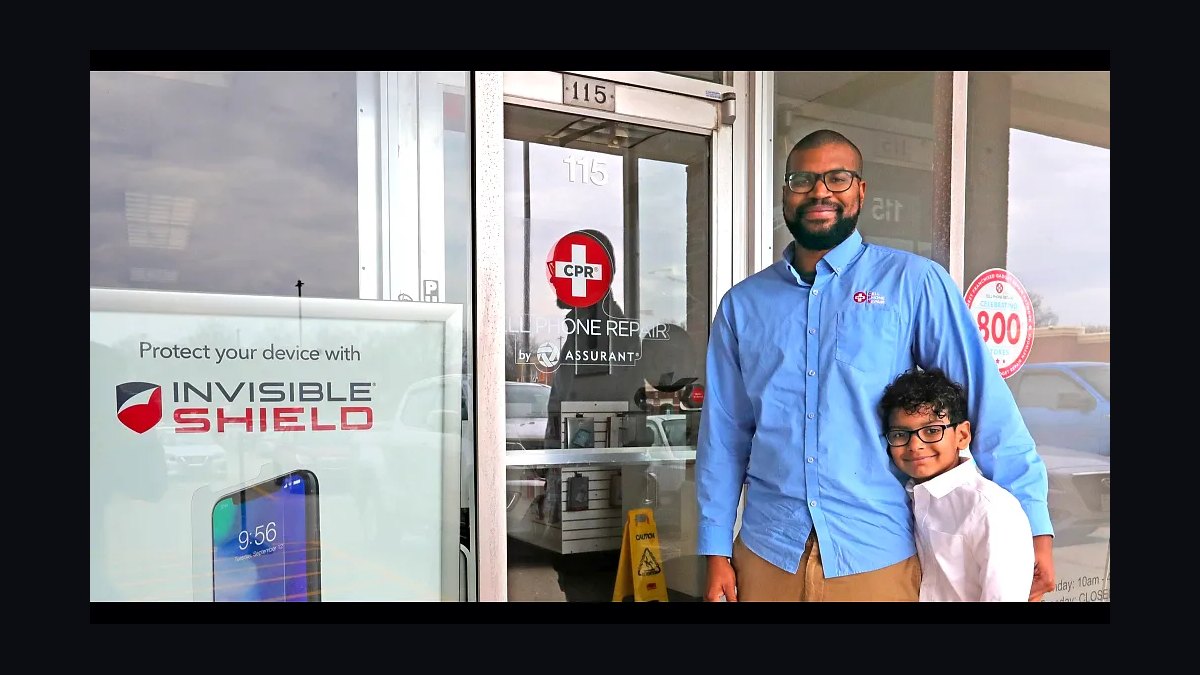
Yes, if you want a low-capital device-repair franchise with Assurant's insurance-claim volume behind it — buying a CPR Cell Phone Repair franchise beats opening an unbranded independent shop for most first-time operators. The 2026 FDD lists a $25,000 franchise fee, $60,000-$200,000 total investment, and ~6% royalty; mature stores gross $300,000-$900,000 with owners clearing $60,000-$180,000, provided you can recruit and retain skilled technicians in a dense enough market.
Buying the Franchise vs. Opening Independent
Anyone asking "should I open a CPR Cell Phone Repair franchise in 2027" is really choosing between three paths: buy the CPR franchise, open an unbranded independent repair shop, or buy into a competing brand like uBreakiFix. Each option trades away something different, and the right answer depends heavily on what you already have — capital, repair skill, and access to a dense customer base.
CPR's core advantage is structural, not cosmetic. Because Assurant owns the brand, CPR franchisees sit inside an existing insurance-claim pipeline: when a customer files a device-protection claim through a carrier or retailer, Assurant can route that repair to the nearest CPR store instead of shipping a replacement phone. That volume doesn't require marketing spend, and it tends to carry a higher average ticket — insurance-covered repairs commonly run $120 to $250 per job, versus $60 to $120 for a walk-in screen replacement. An independent shop gets none of that. Every dollar of revenue at an unbranded repair counter has to be earned through local SEO, signage, and word of mouth, with no insurer feeding it claims.

The tradeoff is control and cost. An independent operator keeps 100% of gross revenue — no ~6% royalty, no ~2% marketing fee, no brand-standard buildout requirements dictating signage, POS systems, or approved parts vendors. If you already have a loyal local following, a lower-rent location, and the technical chops to run diagnostics yourself, the independent route can outperform CPR on margin, especially once a store matures past its first two years. But you're also fully exposed on marketing costs, vendor relationships, and training — none of which CPR corporate will underwrite or negotiate on your behalf.
uBreakiFix, owned by Asurion, is CPR's closest direct comparison because it runs the same playbook: a device-insurer parent feeding claim volume to franchised repair counters. The practical differences buyers report are a higher royalty structure and a more established national footprint at uBreakiFix, against CPR's lower total investment and accessible entry point. If your capital is tight — say under $150,000 liquid — CPR's $60,000-$200,000 Item 7 range is easier to clear than most uBreakiFix territories, which is why CPR tends to attract first-time franchisees and uBreakiFix tends to attract operators expanding from an existing repair or retail business.
There's also a middle path worth naming: multi-unit CPR ownership. Because the entry cost per store is low relative to food or fitness franchises, several current owners use their first location to prove out technician recruiting and insurance-claim throughput, then add a second or third store in adjacent territories within two to three years. That compounds the Assurant advantage — more stores in a metro area means more claim volume captured before a competitor's location intercepts it — but it also multiplies the technician-management burden that is CPR's single biggest operational risk.
How to Decide Between Franchise and Independent

The decision mostly comes down to three questions: how much liquid capital do you have, can you recruit skilled repair technicians, and is your market dense enough to support meaningful walk-in and insurance-claim volume? Answer those honestly before comparing fee structures.
If your liquid capital is under roughly $90,000, an unbranded independent shop is often the only immediately affordable option — but it also means no Assurant claim volume, no proven training curriculum, and no negotiated parts pricing, so revenue ramps slower. If you clear $90,000-$200,000 liquid and want insurer-backed repair volume without the higher royalty of uBreakiFix, CPR is the fit named directly in this question. If you're already running a profitable independent repair operation and have capital to spare, converting to or adding a uBreakiFix location can make sense specifically to access Asurion's larger claim network, accepting the steeper royalty in exchange.

Market density is the second filter. A CPR store near a major carrier retail location — a corporate Verizon, AT&T, or T-Mobile store — captures meaningfully more insurance walk-in traffic than one in a low-density suburb with no nearby carrier presence. Franchisees in weak locations report insurance volume falling below 15% of total repairs, which erases much of the reason to pay a royalty in the first place. Run the 15-minute drive-time population density before signing, not just the protected-territory radius in the franchise agreement.
Technician availability is the tiebreaker that most buyers underweight. Every path in the diagram above eventually funnels through the same question, because none of these business models work without repair labor. If you can't answer "yes, I know where I'll find two to four qualified technicians in this market" before you sign anything, the franchise fee and territory rights are irrelevant — you'll be paying a royalty on revenue you can't generate.
Concrete Numbers Behind Each Option
CPR's 2026 FDD breaks the total Item 7 investment into recognizable buckets: a $25,000 franchise fee, $25,000-$80,000 for buildout and leasehold improvements in an 800-1,500 sq ft retail/repair space, $15,000-$45,000 for repair tools and diagnostic equipment, $8,000-$25,000 for brand-prescribed signage and decor, $10,000-$35,000 for initial parts inventory, $8,000-$25,000 for grand-opening marketing, $5,000-$18,000 for owner and technician training and travel, and $15,000-$45,000 in working capital for the first three months. That totals to the stated $60,000-$200,000 range, against a royalty near 6% of gross and a marketing fee near 2%.

An independent shop of comparable size typically lands in a similar buildout and equipment range — repair tools, diagnostic gear, and signage cost roughly the same whether or not you're paying a franchise fee — but skips the $25,000 franchise fee and the ongoing 6%/2% fee stack entirely. Over a $500,000-revenue year, that's roughly $40,000 in fees an independent owner keeps that a CPR franchisee sends to corporate. The question is whether Assurant's claim volume and CPR's training/vendor infrastructure generate more than $40,000 of incremental value annually — for most first-time operators in a dense enough market, franchisees report that it does, because the insurance channel alone can represent 20% to 40% of total repair tickets at higher average pricing than walk-in work.
Ongoing labor is where both paths converge on the same risk. Skilled repair technicians in 2027 increasingly expect $18 to $28 per hour plus benefits depending on market, and third-party advanced-repair training (micro-soldering, board-level diagnostics, foldable-device servicing) runs $1,500 to $4,000 per technician per year beyond what either CPR's or an independent shop's basic onboarding covers. In high-cost labor markets, technician wages alone can consume 35% to 45% of gross revenue — well above the thinner labor assumptions baked into most franchise revenue projections — which means the FDD's $60,000-$180,000 owner-earnings range should be treated as an outcome for well-run stores in reasonable-cost markets, not a guaranteed floor.
Revenue comparisons follow the same logic. CPR's mature-store range of $300,000-$900,000 gross assumes a functioning mix of walk-in and insurance-claim repairs; an independent shop with strong local SEO and a loyal customer base can land in a similar gross range without the fee stack, but it takes longer to reach that maturity curve because there's no insurer directing claims to the door on day one. If speed-to-revenue matters more than long-run margin, the franchise's built-in demand channel is the deciding factor.
Implementation Details and Sequencing

Whichever path you choose, the sequencing matters more than most first-time buyers expect, because technician hiring and site selection both have long lead times that a compressed opening schedule will punish. For a CPR franchise specifically, the process runs through FDD review, discovery interviews with existing owners, territory and site validation, technician recruiting, buildout, and a staged opening that leans on insurance volume from day one.
Start by reading the full 2026 FDD, not just Items 5, 6, and 7 — Items 19 and 20 (financial performance representations and outlet/closure data) tell you how many existing stores are actually hitting the $300,000-$900,000 range versus how many have closed or transferred, which is a better predictor of your odds than the averages alone. Spend the next two weeks calling at least eight current owners, specifically asking about insurance-claim volume as a percentage of tickets, technician turnover, and net profit after labor — not just gross revenue, which the FDD emphasizes more than take-home pay.

Once you've validated the model, territory and site selection should focus on 15-minute drive-time density and proximity to a corporate carrier store, not just the protected radius in the franchise agreement (typically 1.5 to 3 miles). That protected radius stops another CPR franchisee from opening nearby, but it does not stop Assurant from routing claims to a different CPR location that's closer to a customer's workplace, and it does not stop uBreakiFix or an independent shop from opening across the street. Recruiting and beginning to train technicians should start in parallel with site selection, not after a lease is signed — the corporate training program covers the top 20 most-common device repairs, but cross-training at least two technicians per store before opening is what protects you against the 30%-50% annual technician turnover the industry commonly sees.
Grand opening should be built around capturing both channels immediately: local marketing dollars drive walk-in awareness while Assurant's system integration and same-day repair readiness capture insurance claims from the first week. Franchisees who delay technician cross-training until after opening are the ones most exposed when a single skilled hire leaves in year one — repair capacity drops, turnaround times slip, and Assurant's claim-routing system can shift volume to a competing CPR location nearby, since claim allocation is performance-based rather than guaranteed by territory.
Related questions
How long does it take to break even on a CPR franchise?
Most franchisees report reaching profitability in 12 to 24 months, driven largely by how quickly insurance-claim volume ramps and how fast technicians reach full repair speed on common devices.
Can I convert an existing independent repair shop into a CPR franchise?

Some franchisors allow conversions, but you'd need to confirm directly with CPR/Assurant whether an existing location can convert, since the FDD process and territory rights are typically structured around new signings.
Is CPR Cell Phone Repair a good fit for a first-time business owner?
Yes, relative to many franchise categories — the $60,000-$200,000 entry and structured training make it more accessible than restaurant or fitness franchises, provided you're prepared to actively manage a repair-technician team.
What happens to my territory if Assurant routes claims to another CPR store?
Your protected radius stops another CPR franchise from opening in it, but claim routing is market-wide and performance-based, so a nearby CPR location can still receive claims from customers who live in your territory.
Should I open multiple CPR locations instead of just one?
Multi-unit ownership can compound the Assurant advantage across a metro area, but only makes sense once you've proven you can recruit and retain technicians reliably at a single store first.
FAQ
How much does it cost to open a CPR Cell Phone Repair franchise? Total investment runs roughly $60,000 to $200,000, including a $25,000 franchise fee. That's considered low capital relative to most franchise categories, which is a major reason it attracts first-time operators.
Do I need technical repair experience to run this franchise?

Not necessarily as the owner, but the business lives or dies on technician quality. CPR provides initial training on common repairs, but you'll need to hire, train, and retain skilled staff capable of servicing smartphones, tablets, and computers.
How does Assurant ownership actually benefit a franchisee's revenue? Assurant directs a share of its insurance and warranty claim volume to nearby CPR locations, which franchisees report can account for 20% to 40% of total repair tickets at a higher average price than walk-in work — smoothing out revenue that would otherwise depend entirely on foot traffic.
How does CPR compare financially to opening independently? Independent ownership avoids the $25,000 franchise fee and the ~6%/2% ongoing fees, but forgoes Assurant's claim-routing pipeline and CPR's training infrastructure, typically taking longer to reach a comparable revenue level.
What's the biggest operational risk in 2027? Technician recruiting and retention. Repair labor requires specialized, frequently updated skills, industry turnover runs 30% to 50% annually, and losing a technician can shift Assurant's claim allocation to a competing location nearby.
Is CPR or uBreakiFix the better choice if I already have repair experience? uBreakiFix's larger Asurion-backed network and manufacturer-authorized status can appeal to experienced operators willing to accept a higher royalty; CPR's lower entry cost and accessible model favor first-time buyers prioritizing capital efficiency.
Sources
- https://www.entrepreneur.com/franchises/cprcellphonerepair/334912
- https://www.franchisedirect.com/electronicsandcomputerfranchises/cprcellphonerepairfranchiseinformation
- https://www.franchisebusinessreview.com
- https://www.ibisworld.com/united-states/industry/electronics-and-computer-repair-services/
- https://www.statista.com/topics/2711/mobile-phone-market/
- https://www.franchise.org
- https://www.assurant.com
- https://www.ubreakifix.com/franchise
- https://www.ftc.gov/business-guidance/resources/franchise-rule-compliance-guide
- https://www.census.gov/topics/population.html
Related on PULSE
This page will be disappearing soon. Save it to your device for $1 — or read it free while it is here.
@Kory-White- · if Venmo asks, the last 4 of my number are 2012
This page is gone.
This one is off the shelf now. $1 keeps it on your phone for good — the whole page, pictures and diagrams included.
 franchiseShould I open or buy a Mac Tools franchise in 2027?
 franchiseShould I open or buy a McAlister's Deli franchise in 2027?
 franchiseShould I open or buy a Cold Stone Creamery franchise in 2027?
 franchiseShould I open or buy a Cook Out franchise in 2027?
 franchiseShould I open or buy a Domino's franchise in 2027?
 franchiseShould I open or buy a Dairy Queen franchise in 2027?
 franchiseShould I open or buy an Anytime Fitness franchise in 2027?
 franchiseShould I open or buy a Stanley Steemer franchise in 2027?
 franchiseShould I open or buy a Jamba franchise in 2027?
 franchiseShould I open or buy a Massage Envy franchise in 2027?