


Should I open or buy a Brightway Insurance franchise in 2027?
Quality
Certified
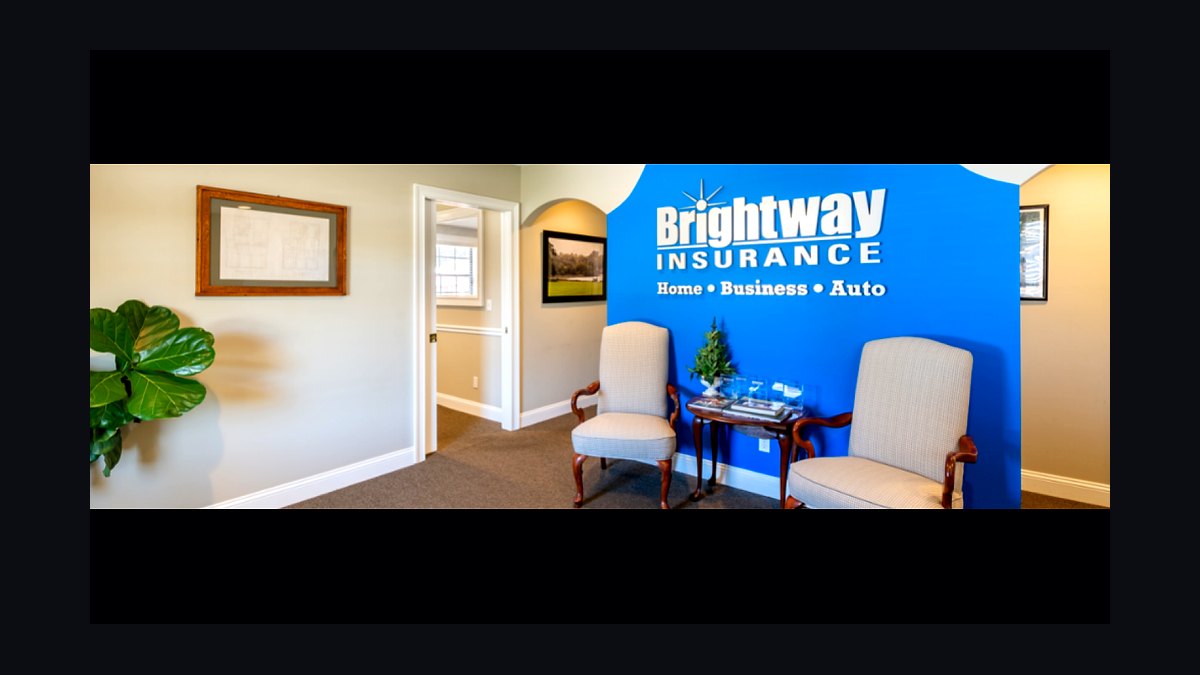
Open a Brightway Insurance franchise in 2027 if you're a sales-driven operator who wants a low-capital, recurring-commission insurance agency with real back-office support — Brightway's service team handles policy administration so you can focus on prospecting and closing. Total investment runs roughly $30,000–$200,000, mature agencies clear $80,000–$300,000+, but the model only pays off if you can consistently build a book.
What it is and why it matters
Brightway Insurance, founded in 2008 and headquartered in Jacksonville, franchises independent insurance agencies that sell personal and commercial lines — auto, home, umbrella, renters, small-commercial liability — across a panel of 50-plus carriers rather than one captive brand. That multi-carrier access is the structural reason this franchise exists: a captive agent at Allstate or State Farm can only quote that one company's product, so a client who doesn't fit the underwriting box gets turned away. A Brightway agent shops the same client across dozens of carriers and usually finds a home for the policy, which is a meaningfully different sales motion — you're matching risk to carrier, not defending one company's rate sheet.
The second structural piece, and the one that actually differentiates Brightway from a plain independent agency, is the back-office split. When you open your own independent agency from zero, you are the licensed producer, the claims liaison, the billing department, and the carrier-relationship manager, all at once. Brightway centralizes most of that non-sales work into a dedicated service team — the same team that handles endorsements, billing disputes, and renewal processing for every franchisee in the system — so an owner's calendar stays weighted toward quoting and closing instead of paperwork. That matters because insurance is fundamentally a volume-of-conversations business in the first 18 months; anything that keeps a new owner on the phone with prospects instead of on hold with a carrier's billing department compounds directly into revenue.

This is also why the decision in 2027 specifically carries weight: personal and commercial insurance is a non-discretionary purchase — every financed car, every mortgage, every business with employees needs a policy — so the demand side of this franchise doesn't cycle with the economy the way a restaurant or a retail concept does. What does move year to year is the competitive landscape: direct-to-consumer carriers (Progressive, GEICO) and comparison-shopping apps have gotten better at commoditizing simple auto policies, while climate-driven homeowners' repricing in catastrophe-prone states has made the commercial and bundled-home side of the book more valuable to an agent who can actually place hard-to-insure risk. Brightway's multi-carrier model is better positioned for that second trend than a single-carrier captive agency is, which is a real factor in whether this franchise or a comparable one is the better 2027 entry point.
The step-by-step process
Opening a Brightway franchise follows a fairly linear sequence, and skipping steps — especially the licensing step — is the single most common reason a new agency's first six months underperform.
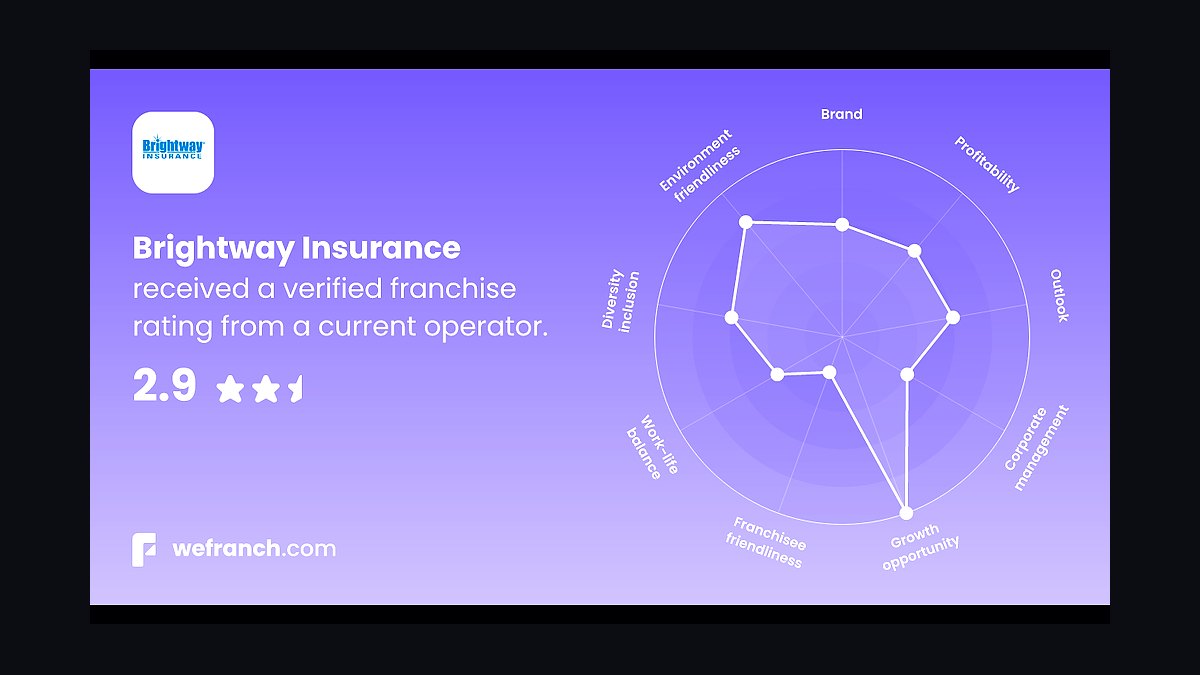
The process starts with the Franchise Disclosure Document. Reading the 2026 FDD closely — Items 5, 6, 7, 19, and 20 specifically — tells you the actual franchise fee, the Item 7 total investment range, the commission-split schedule, any available financial-performance representations, and the churn/transfer history of existing franchisees. Most prospective owners skim this; the ones who do well read it twice and bring specific numbers to their discovery day conversation rather than general questions.
Format selection comes next, and it's a real fork, not a formality. Brightway sells three structurally different franchises — a lower-cost Associate Agency, a full Owner Agency, and a Multi-Unit/Regional Developer track — and the right one depends on whether you're testing the model part-time, going full-time solo, or building a multi-location operation with staff underneath you. Picking the wrong format is the single costliest early mistake, because the commission-split terms and the capital commitment differ meaningfully between them, and switching formats later is slow and expensive.
After signing, state licensing is the gating step everyone underestimates. You need a resident property-and-casualty producer license in your home state, plus non-resident licenses in any additional state you'll write business in, and an Errors & Omissions policy before you can bind a single quote. Licensing exam prep and state processing typically take four to eight weeks depending on the state, and running this in parallel with office setup — rather than waiting for the office to be ready before starting the licensing process — is the easiest way to shave a month off time-to-first-policy.

Office and systems setup is comparatively light: Brightway is explicitly structured to run from a home office or a modest retail storefront, with no inventory and minimal buildout, and the franchisor provisions the CRM (typically Salesforce-based), carrier management software, and marketing templates as part of onboarding. Carrier appointments — the actual contracts that let you quote and bind with each insurance company — are negotiated and held at the corporate level, so a new franchisee inherits carrier access rather than having to build individual carrier relationships from scratch, which is a multi-year process for a true independent agency.
The launch phase is where the model actually gets tested: prospecting, quoting, and closing the first wave of policies with zero renewal income yet banked. This is the leanest financial period of ownership, and it's also when the back-office support earns its commission split — because every hour you're not spending on a billing call is an hour spent prospecting instead. Once the first cohort of policies renews, the compounding begins, and for Owner-format franchisees ready to scale, hiring producers under the agency becomes the lever for growth beyond what one person can personally close.
Costs, timelines, and typical ranges
The 2026 FDD puts total Item 7 investment at roughly $30,000 to $200,000, and the width of that range is almost entirely explained by which of the three formats you choose and whether you take a home-office or retail-office setup.

| Line item | Low | High | Notes |
|---|---|---|---|
| Franchise fee | $20,000 | $40,000 | Varies by format and territory |
| Office setup | $3,000 | $40,000 | Home office vs. retail buildout |
| Technology & licensing | $3,000 | $15,000 | CRM, licensing exam/application fees |
| Initial marketing | $5,000 | $30,000 | Local lead generation, launch campaigns |
| E&O insurance | $2,000 | $10,000 | Required before binding any policy |
| Training & travel | $2,000 | $10,000 | Owner plus any initial staff |
| Working capital | $10,000 | $40,000 | Covers the pre-renewal ramp period |
| Total Item 7 | ~$30,000 | ~$200,000 | Per 2026 FDD |
Within that range, the Associate Agency format is the budget entry point: a $20,000–$25,000 franchise fee and $30,000–$60,000 total investment, running solo from a home office or shared space with a less favorable commission split (commonly around 50/50 on new business for the first several years) in exchange for the lowest overhead. The Owner Agency format — the most common path for someone going full-time — runs a $35,000–$40,000 franchise fee and $80,000–$200,000 total investment, with a better commission split that escalates faster and room to hire two to four producers. The Multi-Unit/Regional Developer track requires $100,000–$200,000 in liquid capital and a $50,000–$75,000 fee per territory, committing to open three to five agencies over three to five years; this tier is realistically only appropriate for someone with prior people-management experience and $250,000-plus in investable capital, since it's a management-and-recruiting business more than a sales business.
Commission economics are the part that determines whether any of those entry costs pay off. New-business commissions typically split close to 50/50 between owner and franchisor in the early years, shifting toward 70/30 or 80/20 on renewal business as the agency matures — that split funds the back-office service team, carrier relationships, licensing infrastructure, and brand. Layered on top is a vesting schedule, usually five to seven years, on renewal commissions: leave or sell the agency before full vesting and you forfeit a portion of the future renewal stream, which is a deliberate retention mechanism and the single most consequential clause to understand before signing.

Timeline-wise, year one is the grind: a full-time, actively-selling owner typically nets $40,000–$70,000 in commission income, almost entirely from new business, because the renewal base hasn't built yet. Most franchisees reach initial profitability somewhere between twelve and twenty-four months as the renewal book starts covering a growing share of revenue. By year five, a successful agency can carry 1,200–2,000 policies in force, with renewals supplying 70–80% of annual commission revenue — at which point weekly time commitment for a steady-state owner can drop from the 45–55 hours typical of years one and two down to 20–40 hours, with income holding flat or still growing. Mature agencies in the $150,000–$700,000-plus commission-revenue range translate to owner take-home of roughly $80,000–$300,000-plus after the split, before personal taxes and any staff payroll.
Where teams get it wrong
The most common failure mode isn't a bad market — it's mismatched expectations about who does the selling. Some franchisees come in assuming the back-office support means Brightway handles lead generation too; it doesn't. The service team handles post-sale administration — billing, endorsements, claims liaison — but prospecting, quoting, and closing are entirely the owner's job. An owner who treats the franchise fee as a substitute for a sales pipeline, rather than an accelerant for one they're actively building, underperforms regardless of the carrier access or back-office quality available to them.

The second recurring mistake is underestimating the vesting schedule when evaluating an exit or a sale. Because renewal commissions vest over five to seven years, an owner who wants to sell the agency's book at year three discovers a meaningful chunk of the renewal income they assumed was theirs hasn't actually vested yet, which changes both the sale price and the timing. This is a problem specific to franchised agency models and doesn't exist in a fully independent agency, where you own 100% of the book from day one with no franchisor claim on it — worth weighing explicitly against the trade-off of giving up back-office support and brand access.
Third, teams routinely pick the wrong format for their actual capital and ambition level. Someone who wants to test insurance sales part-time before quitting a W-2 job, but signs up for the Owner Agency format's higher investment and staffing expectations, ends up over-leveraged against a book that isn't generating Owner-level renewal volume yet. The Associate format exists precisely for that lower-commitment entry point, and starting there, then upgrading once production proves out, is a lower-risk sequencing than starting at the top tier on a hope.
Fourth, some owners treat the loss of day-to-day customer-experience control as a minor trade-off and are blindsided by how much it bothers them in practice. When a client has a billing dispute or a frustrating claims experience, the owner can't personally fix it — they escalate to Brightway's centralized operations team and wait. Agents who came from a traditional independent agency, where they personally owned every client touchpoint, sometimes find this loss of control more frustrating than they anticipated, and it's worth talking candidly to several existing franchisees about before signing rather than discovering it after.

Finally, teams underweight carrier-mix dependency. Because carrier appointments and underwriting relationships are negotiated at the corporate level, an individual franchisee has no say in which carriers are on the panel or what their underwriting appetite looks like in a given state. If Brightway's carrier mix is weak for a specific niche — certain high-risk commercial classes, for instance — an individual agent can't negotiate around that the way a fully independent agent with their own direct carrier contracts could.
Decision framework: when to choose what
The choice isn't simply "open a Brightway franchise or don't" — it's which model, among several adjacent ones, fits a specific operator's capital, risk tolerance, and sales comfort.
If the honest answer is that you're not yet comfortable prospecting without a steady paycheck, a captive W-2 producer role at Allstate or State Farm is a lower-risk way to build sales reps and licensing experience before taking on franchise capital at all — that's not a failure path, it's sequencing. If you're confident in your ability to sell but want zero commission split and total control over the customer relationship, a fully independent agency is the right comparison point; you keep 100% of commissions and build direct carrier relationships, but you also personally handle every piece of service and administration Brightway would otherwise take off your plate, and you build carrier appointments from scratch, which can take years.

For someone who wants carrier breadth and back-office leverage and is willing to trade a commission split for it, the format choice within Brightway comes down to capital and ambition. A modest testing budget and a desire to keep a day job part-time points to the Associate Agency. Full-time commitment with $80,000-plus in available capital points to the Owner Agency, which also has the clearest path to meaningful personal income by years three through five. A genuine appetite for building and managing a team of agency owners, backed by $250,000-plus in capital, points toward the Multi-Unit track — though that's a people-management business wearing an insurance-sales costume, and it should be evaluated as such.
It's also worth benchmarking Brightway directly against its nearest competitor, Goosehead Insurance, which runs a comparable recurring-commission, multi-carrier agency model with its own split structure and support stack; and against single-format competitors like Estrella Insurance. The right comparison isn't "which franchise is best" in the abstract — it's which one's specific split, vesting terms, and carrier panel fit the book you're trying to build in your market in 2027.
Related questions
How does Brightway compare to a Goosehead Insurance franchise?
Both are multi-carrier, recurring-commission agency franchises with back-office support, so the real comparison is commission-split terms, vesting schedules, and each brand's carrier panel strength in your specific state and target lines of business.
Can I run a Brightway franchise alongside a full-time job?
The Associate Agency format is built for lower time commitment and lower overhead, but meaningful commission income still requires consistent prospecting hours, so true part-time ownership caps your realistic early income.
What happens to my book of business if I sell the agency early?

Because renewal commissions typically vest over five to seven years, selling or leaving before full vesting means forfeiting a portion of future renewal income — factor this directly into any exit-timeline planning.
Is prior insurance experience required to open a Brightway franchise?
No — many franchisees enter from outside insurance and rely on Brightway's training and licensing support, but the business still depends on your ability to prospect and close, not on prior industry background.
How does an independent agency differ from a Brightway franchise?
An independent agency keeps 100% of commissions and full control but requires building carrier relationships and back-office capacity from scratch; Brightway trades a commission split for immediate multi-carrier access and centralized service support.
FAQ
What is the total investment range for a Brightway franchise in 2027? Per the 2026 FDD, total investment runs roughly $30,000 to $200,000 depending on format, including a $20,000–$40,000 franchise fee plus office, technology, and marketing costs. No distinct 2027 figures are published yet, but historical ranges have been stable year over year.
How much can I expect to earn as a Brightway franchise owner?

Mature agencies typically generate $150,000 to $700,000-plus in annual commission revenue, with owners clearing $80,000 to $300,000-plus after the commission split as renewals compound. Actual results vary widely by market, format, and individual sales production.
What does Brightway's back-office support actually cover? The centralized service team handles policy administration, billing issues, endorsements, and claims liaison work, letting the owner focus on prospecting and closing. It does not include lead generation — new business development remains entirely the owner's responsibility.
How does the commission-split and vesting structure work? New business commissions typically split close to 50/50 between owner and franchisor, shifting to 70/30 or 80/20 on renewals as the book matures. Renewal commissions vest over five to seven years, so leaving or selling early forfeits unvested future income.
Do I need an insurance license before I can open a Brightway franchise? Yes — a resident property-and-casualty producer license plus Errors & Omissions coverage are required before binding any policy. Licensing typically takes four to eight weeks per state and should run in parallel with other setup steps.
How long does it take to become profitable with a Brightway franchise? Most owners reach initial profitability within twelve to twenty-four months as renewal commissions begin accumulating. Year one is typically the leanest period, with net commission income commonly in the $40,000–$70,000 range for a full-time, actively-selling owner.
Sources
- https://www.brightway.com
- https://www.entrepreneur.com/franchises/brightwayinsurance/334907
- https://www.franchisebusinessreview.com
- https://www.ibisworld.com
- https://www.iii.org
- https://www.franchise.org
- https://www.naic.org
- https://www.census.gov
Related on PULSE
This page will be disappearing soon. Save it to your device for $1 — or read it free while it is here.
@Kory-White- · if Venmo asks, the last 4 of my number are 2012
This page is gone.
This one is off the shelf now. $1 keeps it on your phone for good — the whole page, pictures and diagrams included.
 franchiseShould I open or buy a Firehouse Subs franchise in 2027?
 franchiseShould I open or buy a Drybar franchise in 2027?
 franchiseShould I open or buy a Crumbl Cookies franchise in 2027?
 franchiseShould I open or buy a Valvoline Instant Oil Change franchise in 2027?
 franchiseShould I open or buy a Kona Ice franchise in 2027?
 franchiseShould I open or buy a Panera Bread franchise in 2027?
 franchiseShould I open or buy a Matco Tools franchise in 2027?
 franchiseShould I open or buy a Kumon franchise in 2027?
 franchiseShould I open or buy a Little Caesars franchise in 2027?
 franchiseShould I open or buy a Planet Fitness franchise in 2027?