
Should I open or buy a Choice Hotels franchise in 2027?
 Curated byKory White · Fractional CRO · Maryland
 PULSEKNOWLEDGE LIBRARY
Quality
Certified

Open or buy a Choice Hotels franchise if you want one of the most conversion-friendly, capital-efficient paths into branded lodging — Choice is the franchisor built around independent-hotel conversions and mid-scale/economy economics, not luxury new-builds. Choice Hotels International franchises a broad ladder of brands — Comfort Inn, Comfort Suites, Quality Inn, Sleep Inn, Clarion, MainStay Suites, Cambria, Econo Lodge, Rodeway Inn, and the Ascend Collection — plus the Radisson Americas brands it acquired in 2022. A typical mid-scale flag carries an initial franchise fee around $40,000–$60,000 (often $500 per room with minimums), a royalty of roughly 5%–5.5% of gross rooms revenue, and a marketing/reservation fee of about 2.5%–3.5% of gross rooms revenue.
If you own or are buying a solid independent or mid-scale hotel and want a recognized flag, the ChoicePrivileges (Choice Privileges) loyalty base, and lower capital thresholds than Hilton or Marriott, Choice is one of the easiest major franchisors to enter. As always, this is a real-estate play first — your basis and management discipline drive the returns.
The Real Numbers
Choice economics vary by brand tier, but the franchisor's center of gravity is mid-scale and economy conversions. Below is an FDD-style breakdown for a representative Comfort Inn / Quality Inn conversion or modest new build of ~90 rooms.
| Line Item | Low | High | Notes |
|---|---|---|---|
| Initial franchise fee | $40,000 | $60,000 | $500/room, with minimums |
| Property acquisition (conversion) | $1,000,000 | $8,000,000 | Existing-hotel basis |
| Property Improvement Plan (PIP) | $500,000 | $3,000,000 | Brand-standard renovation |
| FF&E refresh | $300,000 | $1,500,000 | Soft + case goods |
| Technology & systems | $100,000 | $400,000 | choiceADVANTAGE PMS |
| Pre-opening & training | $50,000 | $200,000 | Staff + ramp |
| Working capital | $150,000 | $500,000 | First 3 months |
| Total project (conversion) | $2,140,000 | $14,060,000 | Mid-scale Choice flag |
| Ongoing royalty | 5%–5.5% of gross rooms revenue | Brand-tier dependent | |
| Marketing/reservation fee | ~2.5%–3.5% of gross rooms revenue | Funds loyalty + reservations | |
| Term | 15–20 years (new build); shorter for conversions | Mid-term PIP cycle |
Revenue reality: Choice operates roughly 7,500+ hotels across ~46 countries, with over 60 million Choice Privileges members feeding direct bookings. Mid-scale Choice flags commonly run $70–$120 RevPAR depending on market, with the franchisor's strength being franchisee profitability per dollar invested rather than top-line rate. Net effective fees across royalty, marketing, and loyalty land in the 9%–12% of rooms revenue range — underwrite to that.
Who Wins With This Business
The winning Choice operator profile is broad because the ladder is broad:

- Capital required: $500K–$2M liquid equity for a typical mid-scale conversion — far below Hilton/Marriott thresholds.
- Experience: hands-on mid-scale operators who manage labor and local marketing tightly; many Choice owners are owner-operators of one to a handful of properties.
- Skills: cost discipline and conversion execution — squeezing margin from a mid-scale asset is a different game than running full-service.
- Geographic fit: interstate corridors, secondary markets, and roadside/leisure demand where mid-scale and economy products thrive.
- Strategy: convert and reposition an independent or a tired competitor flag to gain instant reservations and loyalty.
Choice fits first-into-lodging owners and value-add conversion investors better than almost any other major franchisor.
Who Loses With This Business
Owners who expect upscale rate or passive income from a mid-scale flag lose. Common failure modes:
- PIP underestimation. Conversions require mandatory renovations to brand standard; under-budgeting the PIP wrecks the pro forma.
- Wrong tier for the market. Flagging an economy product in an upscale market (or vice versa) leaves rate and occupancy on the table.
- Thin management. Mid-scale margins are tight; a weak GM or poor labor control erases profit fast.
- Brand-standard drift. Choice enforces standards; chronic quality misses risk fees or loss of the flag.
- Over-leverage. Even cheaper Choice deals hit the 2027 refinancing environment — debt rolling at elevated rates pressures cash flow.
2027 Market Conditions
- Demand: mid-scale and economy lodging remains resilient, benefiting from value-seeking leisure and budget-conscious business travel entering 2027.
- Conversions dominate growth. With new-build financing constrained, Choice's conversion-friendly model is a tailwind — independents seek the flag's reservations and loyalty.
- Radisson integration. Choice's Radisson Americas brands broaden the upper-mid-scale ladder and add upscale conversion targets.
- Loyalty: Choice Privileges continues to grow past 60 million members, improving direct-booking share.
- Technology: choiceADVANTAGE and revenue-management tools give small operators enterprise-grade distribution they could not build alone.
The 90-Day Decision Tree
- Days 1–15: Read the Choice FDD — Items 5, 6, 7, 17, 19 — and pick the brand tier that matches your asset and market.
- Days 16–30: Validate the market with STR/CoStar comps; confirm the mid-scale or economy demand supports your pro forma.
- Days 31–45: Get a realistic PIP estimate — walk the property with a brand-standards consultant and budget the renovation precisely.
- Days 46–60: Secure financing; SBA 504/7(a) is common for mid-scale conversions given the lower capital requirement.
- Days 61–75: Engage a hospitality attorney to review the franchise agreement and PIP schedule.
- Days 76–90: Submit the Choice application and complete the property inspection and approval.
Alternative Plays
If a Choice flag is not the fit, these adjacent mid-scale and economy options compete directly:
- Wyndham (Days Inn, Super 8, La Quinta, Baymont) — the widest economy-to-mid-scale ladder with Wyndham Rewards.
- IHG Holiday Inn Express — mid-scale workhorse with IHG One Rewards and strong corporate demand.
- Hampton by Hilton — a step up in rate and brand power with Hilton Honors, at higher capital cost.
- Best Western — cooperative-membership model, ideal for independents wanting a flag without a percentage royalty.
- Independent operation — no royalty, but no national reservations or loyalty engine.
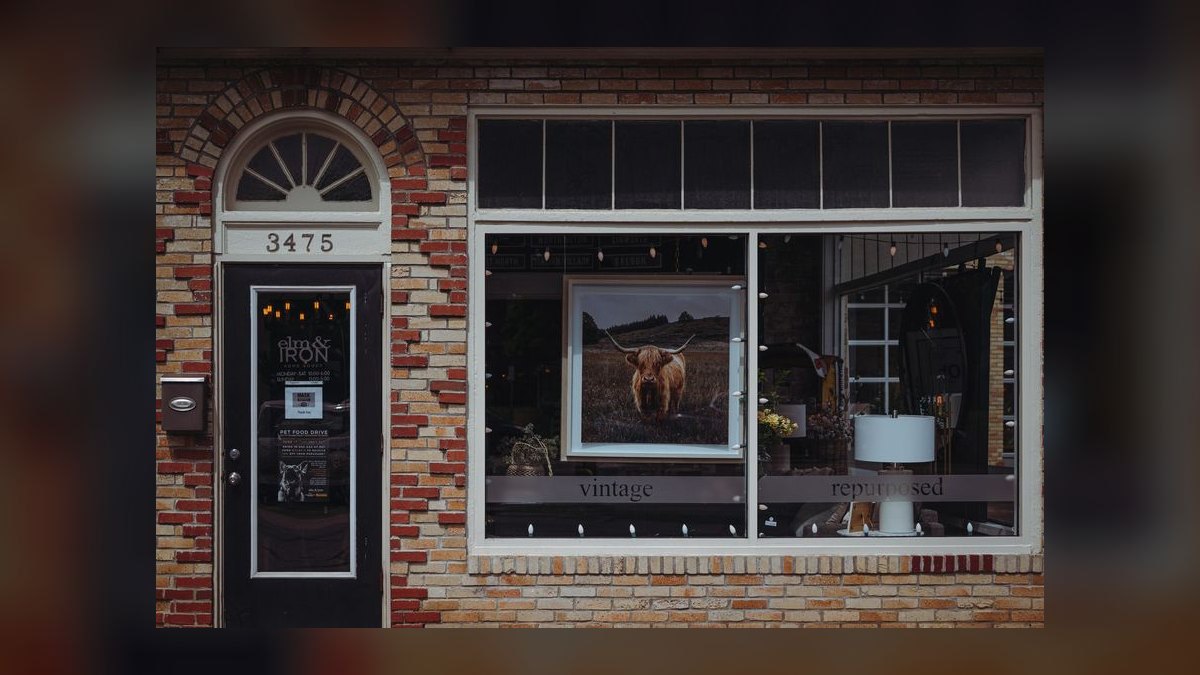
Conversion versus. Ground-Up: Which Path Fits Your Risk Profile?
If you already own or can acquire an underperforming independent hotel at a discount, conversion is almost always the smarter financial move in 2027. Choice Hotels has built its franchise model around conversions — roughly 70–80% of new franchise agreements come from existing properties, not new construction. A typical conversion to a Comfort Inn or Quality Inn requires $15,000–$35,000 per room in physical upgrades (lobby refresh, soft goods, signage, brand-standard bathroom fixtures), versus $120,000–$200,000+ per room for a ground-up mid-scale build. The timeline also favors conversion: 90–120 days from contract to opening versus 12–24 months for new construction, meaning you start generating revenue (and paying down debt) much faster.
However, ground-up builds offer advantages that conversions cannot match: purpose-built floor plans that maximize room count on your lot, modern HVAC/plumbing with lower maintenance costs, and the ability to target Cambria Hotels (upper-midscale/upscale) or Radisson Blu flags that rarely accept conversions. A new-build Cambria in a strong secondary market (e.g., Boise, Greenville, or Knoxville) can achieve $140–$180 ADR and 65–72% occupancy within 18 months, yielding a 9–12% cap rate on stabilized NOI. The catch? You need $2M–$5M in equity (30–40% of total project cost) and a development partner with hospitality construction experience — most first-time franchisees lack this.

Bottom line: If your net worth is under $5M and you want to minimize risk, buy a conversion-ready property. If you have deeper pockets and want maximum control over design and long-term asset value, consider ground-up — but only in markets with proven demand growth (population +3% annually, 3+ corporate headquarters or distribution centers within 20 miles).
The Radisson Americas Integration: A Hidden Opportunity (and Risk)
Choice Hotels acquired the Radisson Americas portfolio in 2022 for roughly $675M, adding Radisson, Radisson Blu, Radisson RED, Country Inn & Suites, and Park Inn to its franchise system. By 2027, this integration will be largely complete — but the pricing arbitrage still exists. Many Radisson-branded properties are currently underperforming their market’s RevPAR index by 10–20% due to the transition period (loyalty program migration, brand standard updates, and management turnover). This creates a buying opportunity: you can acquire a Radisson or Country Inn & Suites at a 6.5–7.5% cap rate (versus 5–6% for comparable Marriott or Hilton flags), convert it to Choice’s reservation system, and potentially improve RevPAR by 8–15% within 18 months through better distribution and the 50-million-member Choice Privileges program.

The catch: Radisson properties often require $500,000–$2M in PIP (Property Improvement Plan) costs to meet Choice’s current standards — especially for lobby renovations, meeting space upgrades, and technology infrastructure. If the seller has already deferred maintenance, those costs can eat into your first 2–3 years of cash flow. Only pursue a Radisson conversion if you can negotiate a seller credit or price reduction equal to at least 50% of the estimated PIP. Also note: the Radisson brand still carries lower brand awareness in the U.S. compared to Comfort or Quality — you’ll need a strong local marketing budget ($30,000–$60,000/year) to drive direct bookings.
Financing and Incentives in 2027: What’s Available
Choice Hotels offers several financial incentives that can materially improve your deal economics. The Choice Hotels Development Incentive Program typically provides $500–$1,000 per room in reduced initial fees for new-build properties in underserved markets (rural areas, interstate corridors with limited lodging). For conversions, the Conversion Incentive can waive the initial franchise fee entirely (saving $40,000–$60,000) if you sign a 10-year agreement. Additionally, Choice’s Property Improvement Loan Program (through third-party lenders) offers $100,000–$500,000 at rates 1–2% below market for PIP work — but requires a 1.25x debt service coverage ratio and a personal guarantee.

Outside financing: SBA 504 loans remain a strong option for owner-operator franchisees, offering 10% down, 10–25-year terms at 6–7% fixed rates (as of early 2025). For larger projects ($5M+), CMBS or regional bank debt at 60–70% LTV with 5–6% interest-only periods is typical — but you’ll need a 1.35x DSCR and proven hospitality experience. Don’t expect any special 2027 government programs — hotel franchise financing is cyclical, and terms will likely be tighter than 2021–2023 due to higher base rates.
Pro tip: If you’re buying an existing Choice franchise, ask the seller for 12–24 months of P&L and STR reports. Choice provides franchisees with monthly STAR reports comparing your property to the competitive set — if the current owner’s RevPAR index is below 80, you’re buying a turnaround, not a cash cow. Factor in $50,000–$100,000 for a 6–12 month ramp-up period before you stabilize operations.

Bottom Line
Choice Hotels is the conversion-friendly, capital-efficient flag for mid-scale and economy operators. Its broad brand ladder, lower entry cost, and a growing Choice Privileges loyalty base make it one of the easiest major franchisors to enter — especially for first-into-lodging owners and value-add conversion investors. If you own or are buying a sound mid-scale or economy hotel and want branded distribution without Hilton/Marriott capital requirements, Choice belongs on your shortlist. If you want upscale rate and group demand, look to a premium flag instead.
FAQ
What is the typical total investment for a new Choice Hotels franchise in 2027? For a ground-up mid-scale property like a Comfort Inn, expect a range of $6 million to $15 million depending on location, size, and local construction costs. Conversion investments are lower, typically $1 million to $8 million, since you’re retrofitting an existing building.
How much ongoing revenue do I pay to Choice Hotels? You’ll pay a royalty fee of roughly 5% to 5.5% of gross rooms revenue, plus a marketing and reservation fee of about 2.5% to 3.5%. Combined, these total around 7.5% to 9% of room revenue, which is competitive in the mid-scale segment.
Can I convert my existing independent hotel to a Choice brand? Yes, conversions are a core part of Choice’s model. Many of their brands—like Quality Inn, Comfort Inn, and the Ascend Collection—are designed for independent hotels. You’ll need to meet property standards, which can vary by brand, but the process is generally more flexible than with luxury chains.
What are the main advantages of a Choice franchise over a Marriott or Hilton? Choice offers lower entry costs, simpler conversion requirements, and a strong loyalty program (Choice Privileges) with over 60 million members. It’s a capital-efficient path for mid-scale and economy properties, whereas Marriott or Hilton often demand higher construction standards and larger fees.
How long does it take to open a new Choice franchise? For a conversion, expect 6 to 12 months from signing to opening, depending on renovations and local permitting. A ground-up new build typically takes 18 to 24 months, factoring in design, construction, and inspections.
Is the Choice Hotels franchise model profitable for small operators? Profitability depends heavily on your real estate basis, local market demand, and operational efficiency. Many owners report healthy margins in mid-scale segments, but you should plan for a 3- to 5-year ramp-up to stabilize occupancy and revenue. Always run your own financial projections with realistic local data.
Sources
- Choice Hotels — Development & Franchising
- Choice Privileges — Loyalty Program
- U.S. Small Business Administration — 504 Loan Program
- American Hotel & Lodging Association — Industry Data
- STR / CoStar — Hotel Performance Benchmarks
- FTC — Franchise Rule & FDD Guidance
Related on PULSE
This page will be disappearing soon. Save it to your device for $1 — or read it free while it is here.
@Kory-White- · if Venmo asks, the last 4 of my number are 2012
This page is gone.
This one is off the shelf now. $1 keeps it on your phone for good — the whole page, pictures and diagrams included.
 pulse-franchisesShould I open or buy a Wyndham franchise in 2027?
 pulse-franchisesShould I open or buy a BluSky Restoration franchise in 2027?
 pulse-franchisesShould I open or buy a Tires Plus franchise in 2027?
 pulse-franchisesWhat are the most common mistakes in Franchises in 2027?
 pulse-franchisesTop 10 Most Profitable Franchises in 2027
 pulse-franchisesShould I open or buy a Super 8 franchise in 2027?
 pulse-franchisesBest Asian-cuisine franchises to buy in 2027
 pulse-franchisesShould I open or buy a Milan Laser franchise in 2027?
 pulse-franchisesShould I open or buy a Coverall franchise in 2027?
 pulse-franchisesShould I open or buy a Caliber Collision franchise in 2027?