

Should I open or buy a Caliber Collision franchise in 2027?
 Curated byKory White · Fractional CRO · Maryland
Quality
Certified

You cannot open or buy a Caliber Collision franchise in 2027 — Caliber is a private-equity-owned corporate chain that acquires independent body shops rather than selling franchises. Your real options are selling your existing shop to Caliber, joining a genuine collision franchise like CARSTAR, Maaco, or Fix Auto USA, or building an independent center.
The outcome you should expect
Set your expectations correctly before you spend a dollar on legal or site work, because the outcome here is not the one most people arrive looking for. There is no Caliber Franchise Disclosure Document, no Caliber franchise fee, no Caliber territory map you can buy into. Caliber grew to more than 1,800 company-owned collision centers by purchasing profitable independent shops and rebranding them, funded by private equity sponsors rather than by franchisee capital. Every location you drive past carries a corporate sign because corporate bought it. That structural fact reframes the entire question.
So what should you actually expect after working through this decision honestly? One of three concrete outcomes.
The first outcome: you own a body shop and Caliber becomes your exit, not your entry. A healthy independent collision center doing $1.5M to $3M in annual revenue at 15% to 20% EBITDA generally trades in the range of four to six times EBITDA, which puts a realistic enterprise value somewhere between roughly $900,000 and $3.6M depending on your insurance relationships, your certifications, and whether you own the real estate. That is the only Caliber "transaction" available to an operator. If your shop is clean, your direct repair program relationships are strong, and your books survive a quality-of-earnings review, you are a target — not a franchise prospect.
The second outcome: you enter collision through a real franchisor. CARSTAR, Maaco, and Fix Auto USA all sell franchises, all file FDDs, and all exist substantially because independent operators cannot negotiate insurer network access alone. Total investment across these brands typically lands between $200,000 and $700,000, royalties run roughly 4% to 9% of gross sales depending on brand, and mature shop revenues cluster between $1.0M and $2.5M. Expect a two-year ramp before the economics look like the brochure.
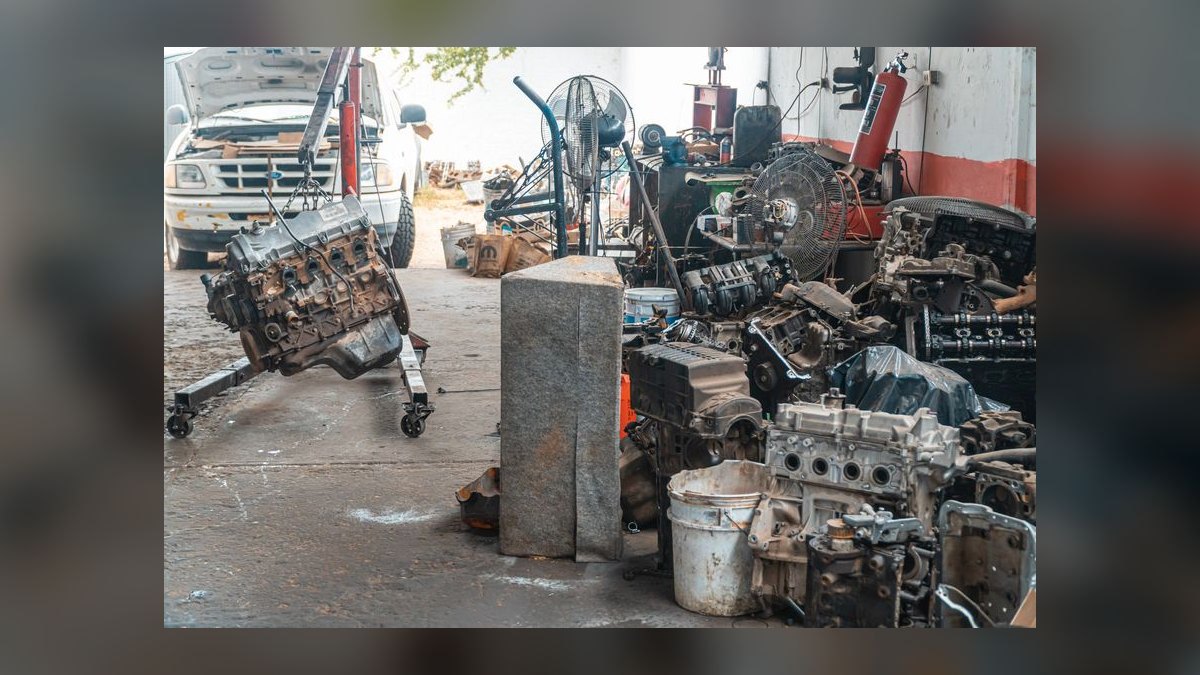
The third outcome: you build independent and keep every point of margin. A ground-up collision center with frame equipment, a paint booth, and ADAS calibration capability runs $500,000 to $1.5M to build out. You pay no royalty, you keep full equity, and you preserve the four-to-six-times exit that makes selling to a consolidator attractive in the first place. What you give up is the network — and in collision, the network is where the work comes from.
The honest expected outcome for a well-capitalized, hands-on operator who secures insurer referral volume is owner cash flow of roughly $120,000 to $300,000 per year on a single shop, with the wide spread driven almost entirely by whether that shop sits inside a direct repair program network or outside it. That single variable moves owner earnings more than brand, more than location, and more than build quality.
What drives that outcome
Collision repair is not a retail business dressed up in coveralls. It is a claims-processing business that happens to involve paint. Understanding what actually drives the profit and loss statement is what separates operators who clear $250,000 from operators who clear $80,000 in the same market with similar equipment.
Insurance direct repair program access is the dominant variable. A direct repair program, or DRP, is an agreement under which an insurer routes claim volume to your shop in exchange for negotiated labor rates, cycle-time commitments, and audit compliance. State Farm, GEICO, Progressive, and Allstate collectively steer an enormous share of repairable claims. A shop inside those networks fills its bays without advertising. A shop outside them lives on walk-ins, dealership referrals, and word of mouth, and typically runs materially below its networked competitors on revenue per bay. This is precisely why the franchised brands sell what they sell: they are selling network access, not paint booths.
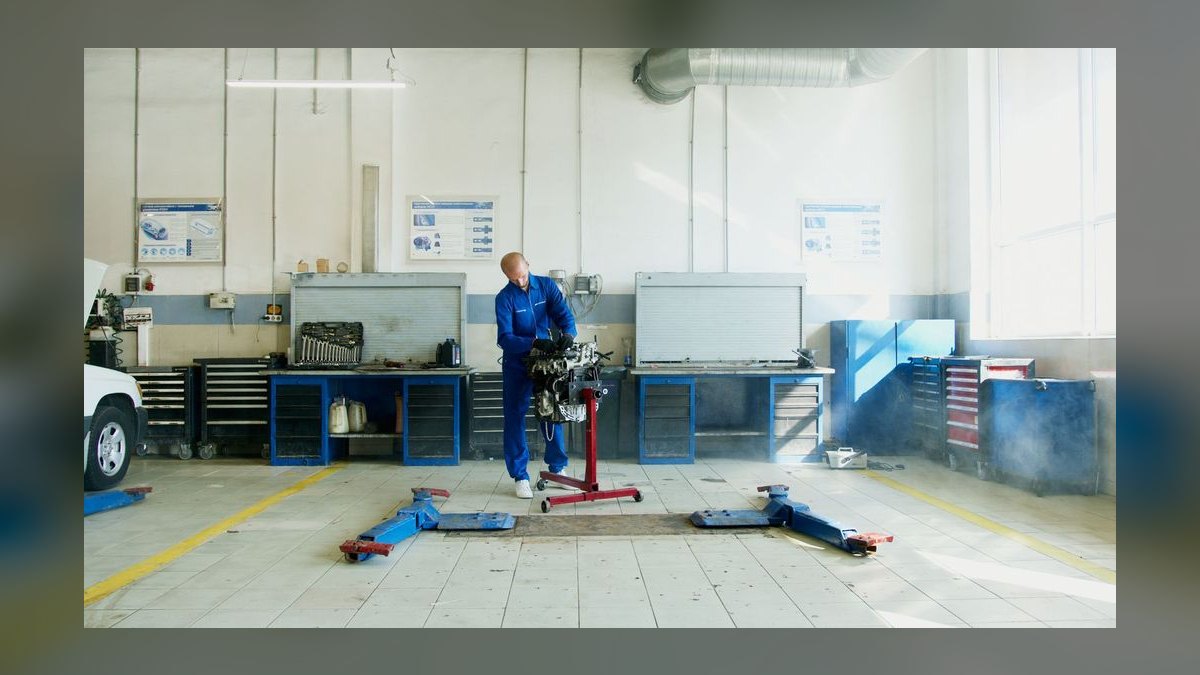
Technician capacity is the second constraint. The United States has a well-documented structural shortage of qualified collision technicians, and I-CAR and ASE certification requirements have tightened as vehicles have grown more complex. Technician wages have climbed meaningfully in recent years. A shop with three certified body techs and a certified painter can process a certain volume; hiring a fourth tech is often harder than financing the equipment that tech would use. Throughput caps revenue, and technicians cap throughput.
Cycle time drives both insurer standing and cash conversion. Insurers measure keys-to-keys days, rental days billed, and comeback rates. A shop that returns vehicles in seven days holds its DRP standing; a shop that takes fourteen loses it. Cycle time is a function of parts procurement discipline, blueprinting quality at intake, and whether sublet work — glass, calibration, mechanical — is planned or improvised.
Severity mix and calibration revenue matter more every year. ADAS calibration has moved from optional to effectively mandatory on many modern repairs, and it carries meaningful per-claim revenue for shops equipped to perform it in-house rather than sublet it. Shops that sublet calibration hand that margin away and add days to cycle time.
The loop matters: performance feeds back into future claim volume. Good cycle time and customer satisfaction scores earn more steered work, which fills bays, which funds another technician, which improves cycle time. Run it backward and the same loop drains a shop.
Benchmarks and realistic ranges
Here are the numbers a practitioner should hold in their head when comparing the Caliber-adjacent paths. Treat every figure as a planning range to be verified against a current Franchise Disclosure Document and your own market — not a guarantee.
Caliber Collision (not a franchise). Total investment: not applicable, no franchise offering exists. The only relevant number is the acquisition multiple — roughly four to six times EBITDA for a healthy independent, with the high end reserved for shops with strong insurer relationships, OEM certifications, and desirable real estate. Typical acquired shop revenue: $1.5M to $3M and up.
CARSTAR. Total investment in the neighborhood of $300,000 to $700,000. Initial franchise fee around $40,000. Royalty roughly 5.5% of gross sales with a small additional advertising contribution. Typical mature shop revenue $1.5M to $2.5M. CARSTAR's pitch is network scale in insurer relationships — it is the largest franchised collision network, and its value to a franchisee is disproportionately about DRP participation.
Maaco. Total investment roughly $370,000 to $700,000. Initial fee around $40,000. Combined fees near 9% of sales when royalty and brand contributions are counted together. Typical shop revenue $1.0M to $1.6M. Maaco's mix skews more toward retail paint and light collision than heavy insurance work, which changes the business meaningfully — more consumer marketing, less insurer dependence, lower average ticket, higher volume.
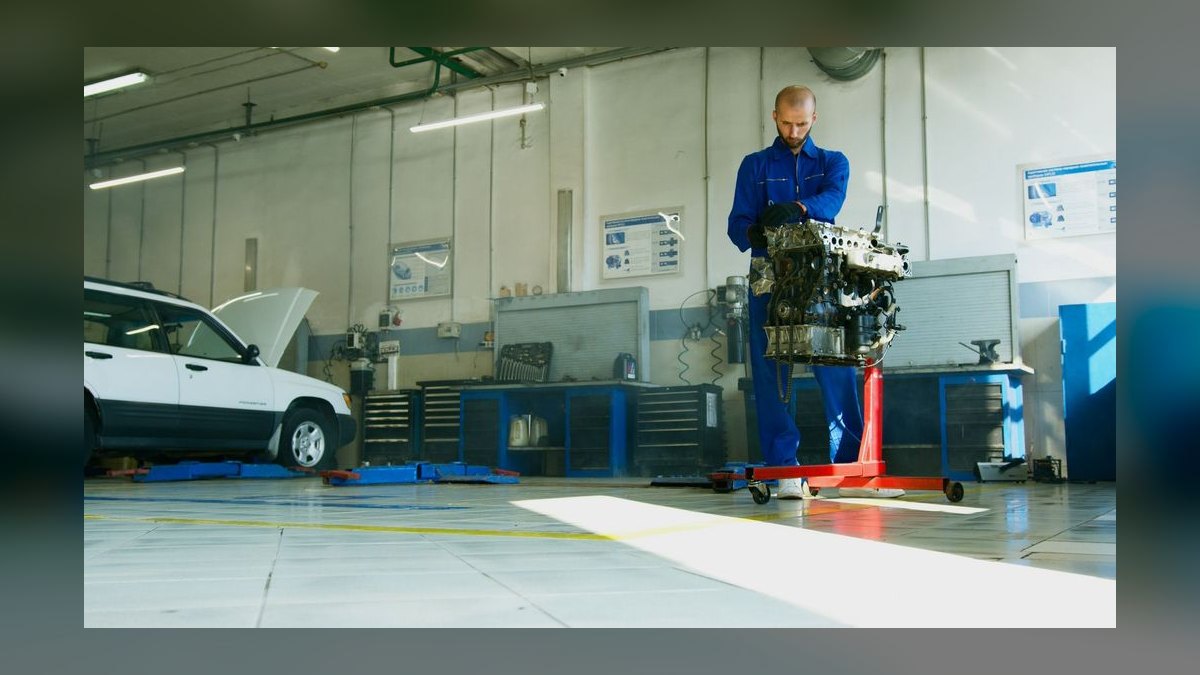
Fix Auto USA. Total investment roughly $200,000 to $500,000 in a conversion scenario. Initial fee in the $25,000 to $40,000 band. Royalty in the neighborhood of 4% to 5% plus an advertising contribution. Typical shop revenue $1.5M to $2.5M. Fix Auto is built specifically to convert existing independents into a branded network, which makes it the cheapest entry for someone who already owns a shop and wants network access without a ground-up build.
Mechanical alternatives. Tuffy Tire & Auto sits around $215,000 to $525,000 total investment with a $25,000 fee and roughly 5% royalty; typical shop revenue $700,000 to $1.2M. Midas and Christian Brothers Automotive extend the range upward, with Christian Brothers landing well into seven figures on a ground-up build. The strategic difference is insurance dependence: mechanical repair is a consumer-paid, recurring-service business, while collision is an insurer-paid, event-driven business. Mechanical trades lower ceiling for lower volatility.
Independent collision center. Buildout $500,000 to $1.5M depending on whether you lease an existing shop or build to suit. Frame machines, a downdraft paint booth, and calibration equipment are the big-ticket items and the ones people are most tempted to defer. EBITDA in the 15% to 20% range at maturity. No royalty. Full equity. Full exposure.
Unit economics to model. A franchised collision center running $1.8M in revenue with solid DRP volume typically shows gross margins in the 45% to 50% band and owner cash flow around 10% to 15% of revenue, which is roughly $180,000 to $270,000 before debt service. Strip out the DRP volume and that same shop drops toward $80,000 to $140,000. That delta — roughly a hundred thousand dollars of annual owner earnings on an identical asset — is the entire thesis of why franchised networks exist in this category and why Caliber's scale is so hard to compete with.
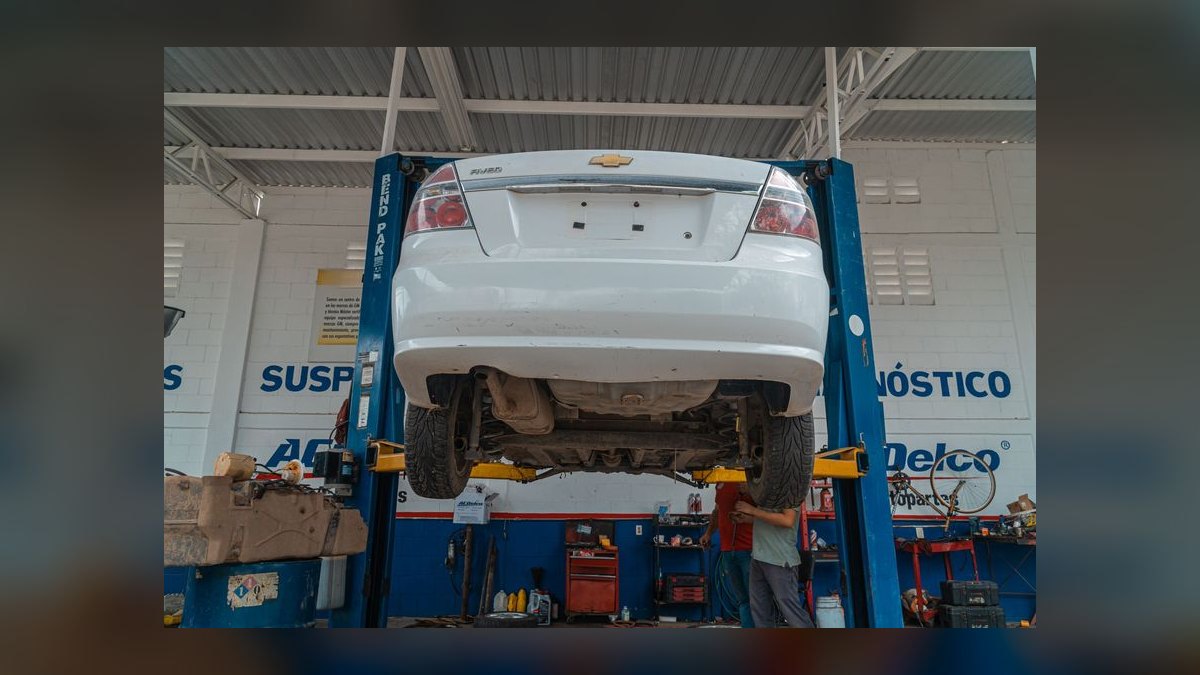
Financing benchmarks. Expect lenders to want 20% to 25% equity injection, a debt service coverage ratio near 1.3x, and an SBA 7(a) structure for the real property and buildout, with separate equipment leasing for paint booths and frame equipment. Budget $100,000 to $250,000 of genuine liquidity beyond the injection, because working capital in collision is unforgiving: you buy parts and pay labor weeks before the insurer pays you.
Demand backdrop. The US collision repair market is a multi-billion-dollar category growing in the low single digits annually, supported by an aging vehicle fleet — average vehicle age in the US has been climbing past twelve years — and by rising repair complexity per claim. Volume is roughly flat to slightly down in accident frequency terms; revenue growth comes from severity, not from more crashes.
Risks, edge cases, and failure modes
The Caliber-franchise seeker. The most expensive failure is the cheapest to avoid: spending months chasing a franchise that does not exist. If a broker, consultant, or "franchise matching" service tells you they can get you into Caliber, that is a signal to disengage entirely. Verify franchise availability at the source — an FDD, filed and dated — before any conversation goes further.
The no-DRP operator. Signing a franchise agreement before confirming that insurer network slots are actually open in your market is the single most common structural mistake. Networks are geographically capped. An insurer that already has three shops it likes within eight miles of your site is not going to add a fourth because you painted a new sign. Confirm openings before you sign, not after.
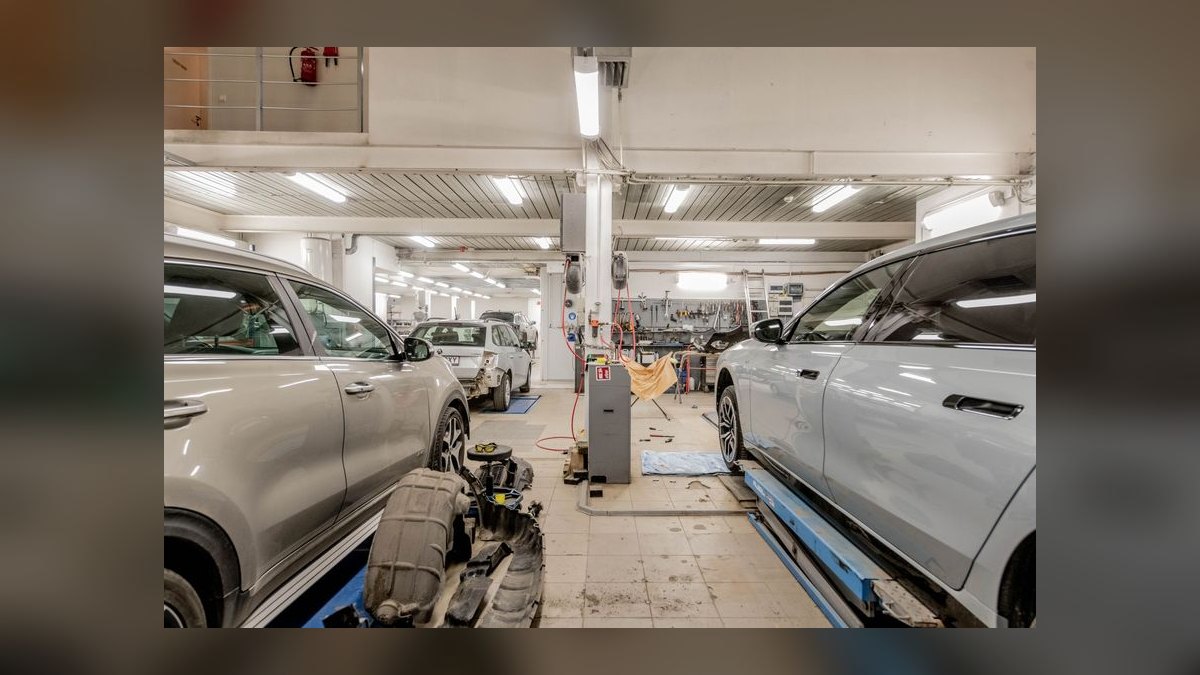
The technician-short operator. You can finance equipment. You cannot finance a certified body technician who does not exist in your labor market. Before signing a lease, map the certified technician population within a reasonable commute, identify which shops employ them, and be honest about what it will take to recruit. A beautiful shop with two empty bays is a slow-motion failure.
The EV and ADAS-unprepared shop. High-voltage vehicle repair requires specific training, tooling, and often OEM certification. Shops that skip it forfeit a growing and generally higher-severity segment. The same logic applies to calibration equipment: skipping it to save capital on day one permanently caps what you can bill and forces you to sublet work at someone else's margin.
The undercapitalized buildout. Cutting the paint booth spec, deferring the frame machine, or postponing calibration tooling all feel like prudent early savings. Each one caps certification eligibility, which caps insurer network eligibility, which caps revenue. In collision, deferred capital expenditure is not a timing decision; it is a ceiling decision.
Consolidation pressure. Caliber is not the only consolidator. Gerber/Boyd Group, Crash Champions, and other multi-site operators are actively acquiring, which means your local competitive set can change overnight when the independent across town becomes a well-capitalized branded location. Model your plan against a world where the three best independents in your market are corporate-owned within five years.
The seller's edge case. If you own a shop and Caliber approaches you, understand what you are actually being valued on. Multiples are applied to normalized EBITDA, which means add-backs get scrutinized, owner compensation gets restated to market, and one-time items get argued. A shop that "makes $400,000" on the owner's math may present as $250,000 of normalized EBITDA to a buyer. Get a quality-of-earnings view before you negotiate, and understand whether the offer includes or excludes real estate — a lease-back on your own building can be worth more than a bump in the multiple.
The conversion edge case. If you already own an independent and are weighing a Fix Auto or CARSTAR conversion, the math is a straight trade: you pay a royalty of roughly 4% to 5.5% of gross sales in exchange for network access. On $1.8M of revenue that is roughly $72,000 to $99,000 a year. It is worth it only if network access adds materially more than that in incremental gross profit. Model it as a specific incremental-volume question, not as a branding decision.
A practical rollout plan
Work this in sequence. Each stage is designed to kill a bad deal cheaply before the next stage costs real money.
Days 1–15 — Establish the ground truth. Confirm directly that Caliber does not franchise and operates as an acquisition-driven corporate chain. If you own a shop, request a valuation conversation with their acquisitions team purely as a benchmark; you are gathering a data point, not committing to anything. If you do not own a shop, this stage ends the Caliber thread entirely and redirects you to the real franchisors.
Days 16–30 — Pull real FDDs. Request disclosure documents from CARSTAR, Maaco, and Fix Auto USA. Read Item 5 (initial fees), Item 6 (other fees), Item 7 (estimated initial investment), Item 19 (financial performance representations), and Item 20 (outlet and franchisee information, including transfers, terminations, and non-renewals). Item 20 is the one people skip and the one that tells you the most — a brand with heavy churn in your region is telling you something.
Days 31–45 — Validate insurer access. Contact the major carriers about network openings in your specific trade area. Ask the franchisor to be explicit about what network participation they can and cannot deliver, and get it in writing. If nobody will commit to anything, treat that as your answer.
Days 46–60 — Site and staffing. Select a site with adequate bay count, ceiling height, power for a booth, and room for calibration. Simultaneously map technician availability. A site that is perfect on traffic count and impossible on labor is a bad site.
Days 61–75 — Finance it. Line up SBA 7(a) debt and separate equipment leasing. Build a model with a genuinely conservative ramp — assume you hit break-even in month ten, not month four — and stress it against a scenario where DRP volume arrives six months late.
Days 76–85 — Legal review. Have a franchise attorney read the agreement. Budget several thousand dollars. Focus on territory definition, network-participation obligations, certification and equipment mandates, transfer rights, and post-term non-competes.
Days 86–90 — Decide. If you own a shop: compare Caliber's acquisition number against the projected value of converting to a franchise and operating three more years. If starting fresh: pick the brand with the strongest verifiable insurer access in your market, or walk away and reconsider a mechanical franchise with less insurance dependence.
Where the adjacent opportunities sit
If the collision path does not clear your hurdle, the neighboring categories are worth a serious look, because they share the same operator profile and much of the same real estate logic.
Mechanical repair franchises trade insurer dependence for consumer dependence. You market to drivers instead of adjusters, you collect at the counter instead of waiting on claim payment, and your working capital cycle is dramatically friendlier. Ceiling is lower per unit, but so is volatility, and multi-unit scaling is more straightforward because the operational complexity per shop is lower.

Calibration and glass specialty is the interesting adjacent play created by the same trends that make collision hard. As ADAS-equipped vehicles proliferate, a dedicated calibration operation can serve multiple collision shops and glass installers in a market that lacks in-house capability. It is asset-light relative to a full body shop, requires far less square footage, and sells into exactly the shops that are struggling to keep cycle time down.
Fleet and commercial repair avoids the DRP problem entirely. Municipal fleets, delivery operators, and regional trucking customers pay directly, contract annually, and value uptime over price. Margins are steadier, seasonality is milder, and you are not competing with a consolidator for insurer favor.
Buying rather than building deserves more weight than most first-time buyers give it. An existing independent with established insurer relationships, a trained crew, and a proven revenue history is frequently a better risk-adjusted purchase than a ground-up franchise build — and it is exactly the logic the consolidators apply. If four-to-six-times EBITDA is what Caliber pays for a good shop, the arbitrage for an individual buyer is finding the shop that trades below that because it is too small to interest a corporate acquirer.
The strategic read for 2027: the collision category rewards network scale and certification depth, and it punishes single-unit operators who lack both. Choose accordingly — either commit fully to network access and certification, or choose a neighboring category where scale matters less.
Related questions
Does Caliber Collision have a Franchise Disclosure Document?
No. An FDD is required only of companies that sell franchises. Caliber operates company-owned locations and expands by acquiring existing shops, so no FDD exists. If someone offers you one, treat it as a red flag and verify independently.
What happened to Abra Auto Body?
Abra combined with Caliber Collision, and those locations now operate under corporate ownership rather than as a separately franchised brand. If you were researching Abra as a franchise entry point, that path leads back to the same corporate structure.
Is converting my independent shop to a franchise worth the royalty?
Only if network access adds more incremental gross profit than the royalty costs. On $1.8M of revenue, a 5% royalty is about $90,000 annually. Model the specific incremental claim volume the network would deliver, then compare directly.
How long until a new collision center breaks even?
Plan for eight to fourteen months, driven mostly by how quickly insurer referral volume ramps. Shops that open with network access already secured break even fastest; shops waiting on network approval after opening burn working capital while bays sit partly idle.
Should I buy an existing body shop instead?
Often yes. An established shop brings insurer relationships, trained technicians, and revenue history — the three hardest things to build from zero. Price it on normalized EBITDA, verify the relationships transfer, and confirm key technicians will stay post-close.
FAQ
Can I buy a Caliber Collision franchise in 2027?
No. Caliber Collision does not offer franchises. It is a private-equity-backed corporate chain that grows by acquiring independent body shops and rebranding them. There is no franchise fee, no disclosure document, and no territory to purchase. The only way to transact with Caliber as an operator is to sell them your existing shop.
What are the best franchise alternatives to Caliber?
CARSTAR, Maaco, and Fix Auto USA are the primary franchised collision options in the US. Total investments generally run from roughly $200,000 to $700,000, with royalties in the 4% to 9% range depending on brand and how advertising contributions are counted. Mature shop revenues typically fall between $1.0M and $2.5M.
How much can a franchised collision center actually earn its owner?
Realistically $120,000 to $300,000 in annual owner cash flow for a single well-run shop, before debt service. The spread is driven almost entirely by insurance direct repair program participation. A networked shop can roughly double the owner earnings of an otherwise identical shop operating outside the networks.
Is an independent shop cheaper than a franchise?
Upfront, sometimes — you avoid the franchise fee and the ongoing royalty. But you also give up the network access, training infrastructure, and insurer relationships that a franchisor provides. Independents typically ramp more slowly and carry more revenue volatility, though they retain full equity and the full exit multiple.
How does Caliber decide which shops to acquire?
Consolidators generally target shops with strong insurer relationships, solid normalized earnings, good certifications, and locations that fill gaps in their market coverage. Valuation is applied to normalized EBITDA, so owner compensation and add-backs get restated. Real estate is often handled separately from the operating business.
What is the biggest mistake first-time collision owners make?
Signing a lease or franchise agreement before confirming that insurer network slots are actually available in that specific trade area. Everything else — equipment, brand, buildout — is solvable with capital. Network access is not, because it is geographically capped and controlled by parties who owe you nothing.
Sources
- https://www.calibercollision.com/
- https://www.ftc.gov/business-guidance/resources/franchise-rule-compliance-guide
- https://www.sba.gov/funding-programs/loans/7a-loans
- https://www.i-car.com/
- https://www.ase.com/
- https://www.carstar.com/
- https://www.maaco.com/
- https://www.fixauto.com/us
- https://www.ibisworld.com/united-states/market-research-reports/auto-mechanics-industry/
- https://www.franchise.org/
Related on PULSE
- Should I open or buy a CARSTAR collision franchise in 2027?
- How long does it take to open a franchise and break even in 2027?
- Should I open or buy a Midas auto service franchise in 2027?
- What is an SBA 7(a) loan and how do I qualify for one?
- How do I evaluate a Franchise Disclosure Document before signing?
This page will be disappearing soon. Save it to your device for $1 — or read it free while it is here.
@Kory-White- · if Venmo asks, the last 4 of my number are 2012
This page is gone.
This one is off the shelf now. $1 keeps it on your phone for good — the whole page, pictures and diagrams included.
 pulse-franchisesBest car-wash franchises to buy in 2027
 pulse-franchisesBest landscaping and lawn-care franchises to buy in 2027
 pulse-franchisesShould I open or buy a Griswold Home Care franchise in 2027?
 pulse-franchisesShould I open or buy a Motel 6 franchise in 2027?
 pulse-franchisesBest ice cream and frozen dessert franchises to buy in 2027
 pulse-franchisesShould I open or buy an EXIT Realty franchise in 2027?
 pulse-franchisesTop 10 Most Profitable Franchises in 2027
 pulse-franchisesWhat are the most common mistakes in Franchises in 2027?
 pulse-franchisesShould I open or buy a Wyndham franchise in 2027?
 pulse-franchisesShould I open or buy a Pinot's Palette franchise in 2027?