
Should I open or buy an AFC Urgent Care franchise in 2027?
 Curated byKory White · Fractional CRO · Maryland
 PULSEKNOWLEDGE LIBRARY
Quality
Certified

Buy or open an AFC Urgent Care franchise only if you can bring roughly $250,000 in liquid capital, a credentialed medical director, and the patience to sit through 18–36 months of payer contracting. It is a regulated medical business with real unit economics — not a turnkey retail concept — and undercapitalization on reimbursement float is the most common way owners fail.
The outcome you should expect
Set your expectations against the actual shape of the cash curve, because urgent care does not behave like a food or fitness franchise where revenue arrives the day the doors open. In a retail concept, a customer pays at the counter and the money is in your account before the shift ends. In urgent care, you deliver the visit, code it, submit the claim, and then wait — 30 to 90 days is the normal range for commercial payers, longer if the claim is denied and has to be reworked. That lag is not a temporary startup phenomenon. It is permanent. Every dollar of growth you generate is a dollar you finance for a quarter before you see it.
The realistic arc looks like this. Months one through six, you are running a clinic that has capacity for 40 patients a day and is seeing eight to fifteen, because nobody in the trade area knows you exist yet and half your payer contracts are still in credentialing limbo. You are paying full provider salaries, full rent, full staff, and collecting a fraction of the revenue those costs were sized for. This is the burn phase and it is structural, not a sign you did something wrong. Months six through eighteen, volume climbs as word of mouth compounds, your Google presence matures, and the payer contracts that were pending at open start actually paying. Somewhere in that window most clinics cross operational breakeven. Months eighteen through thirty-six, the clinic reaches what franchise materials describe as maturity: consistent daily volume, a stable payer mix, and an occupational-medicine book that produces predictable monthly revenue independent of flu season.
A mature clinic in a decent market seeing 35 to 50 patients a day at a blended reimbursement in the $130 to $180 range, plus employer occ-med work, lands somewhere in the $1.5 million to $3 million annual revenue band. After provider compensation — which is the single largest line and the one that scales least favorably — plus staff, occupancy, supplies, malpractice, royalty and brand fund, clinic-level EBITDA typically settles in the 12% to 20% range. That is $200,000 to $500,000 or more in owner cash flow at maturity, before debt service. If you financed $700,000 through an SBA 7(a) or a medical-practice lender, subtract roughly $8,000 to $10,000 a month for principal and interest, and the picture gets honest fast: a clinic at the low end of that EBITDA band is servicing debt and paying the owner a modest salary, not producing a windfall.
The variance between clinics is enormous and it is not random. Two AFC clinics with identical build-outs, twenty miles apart, can differ by a factor of two in profitability, driven almost entirely by three things: what rates you negotiated with the dominant commercial payer in your market, how much of your volume is occupational medicine versus walk-in acute care, and whether your site actually has the visibility and traffic to convert impulse demand. None of those are franchise-brand variables. They are operator variables, which is the whole point — the brand gets you a playbook and a name, and then the outcome is yours to earn.
What drives that outcome
Four levers move an urgent-care P&L more than everything else combined, and understanding their interaction is what separates operators who scale from operators who plateau at one clinic.
Payer contracting is lever one and it is decisive. Reimbursement for the same CPT code, for the same visit, delivered by the same provider, can vary by 40% or more depending on which insurer is paying and what rate you negotiated. A new single-clinic operator has essentially no leverage in that negotiation — you are asking a payer with millions of covered lives to add one small site to a network they may already consider adequate. The practical consequences: budget six to nine months for credentialing and contracting, start the process before your build-out is complete rather than after, and understand that "in-network" status with the dominant regional payer is closer to a survival requirement than a nice-to-have. Out-of-network urgent care in a market where 60% of patients carry one insurer is a business model that does not work. Some operators bridge the gap with a transparent self-pay price — a flat $150 to $200 visit — which captures the uninsured and high-deductible segment and generates immediate cash rather than a 60-day receivable.
Provider staffing is lever two and it is the cost side of the same coin. You cannot open the doors without clinical coverage for every operating hour, and urgent care advertises long hours — that is the entire consumer value proposition against a primary-care office that closes at five. Covering 12 hours a day, seven days a week, is roughly 84 provider-hours weekly before you account for vacation, illness, or the mid-shift overlap you need when volume spikes. The industry answer is an NP/PA-led model with physician oversight, which materially lowers the compensation line while staying compliant in most states. But provider wage inflation has been real and persistent, and a clinic whose pro forma assumed 2022 compensation will find its margin quietly relocated to payroll. Watch this line more closely than any other.
Occupational medicine is lever three and it is the most underrated. Employer contracts — pre-employment physicals, DOT exams, drug screens, workers' compensation injury care — are scheduled, predictable, often cash or direct-bill rather than insurance-billed, and they land during weekday daytime hours when your walk-in volume is at its weakest. A clinic that builds a genuine occ-med book smooths the brutal seasonality of acute care, where flu season packs the waiting room in January and July feels like a different business entirely. Occ-med also collects faster, which directly relieves the working-capital pressure that kills undercapitalized clinics. Winning that business is B2B sales: you call on HR managers at the manufacturing plants, staffing agencies, construction firms, and trucking companies in your trade area, and you compete on turnaround time and reliability rather than price. Most franchisees underinvest here because it feels like a different job than running a clinic. It is a different job, and it is worth doing.
Site selection is lever four and it is the one you cannot fix later. Urgent care converts impulse demand. A parent whose child spikes a fever at 7pm drives to the clinic they can picture, on the road they already travel, with parking they do not have to think about. A clinic tucked into the back of a plaza with no road visibility is fighting a permanent headwind that no amount of marketing spend fully corrects. The target profile is a 3,000 to 4,000 square foot retail-medical space on a high-traffic corridor, ideally with co-tenants that generate their own footfall, near residential density and within reasonable reach of the employer clusters you intend to sell occ-med into.
Benchmarks and realistic ranges
Pull the current Franchise Disclosure Document before you trust any number, including the ones here — FDD terms are revised annually and a figure from a prior filing is a starting point for questions, not a fact you can underwrite against. With that caveat firmly in place, the shape of the investment looks like this.
The initial franchise fee sits in the neighborhood of $60,000 for a first unit, commonly discounted to something closer to $42,000 for additional units — a structure designed to make multi-unit development attractive, which tells you something about how the brand expects strong operators to behave. Total Item 7 investment lands roughly between $695,000 and $1.2 million or more, and the upper end of that range is not exotic. It is what happens in a high-cost metro with an expensive lease and a landlord unwilling to fund tenant improvements.
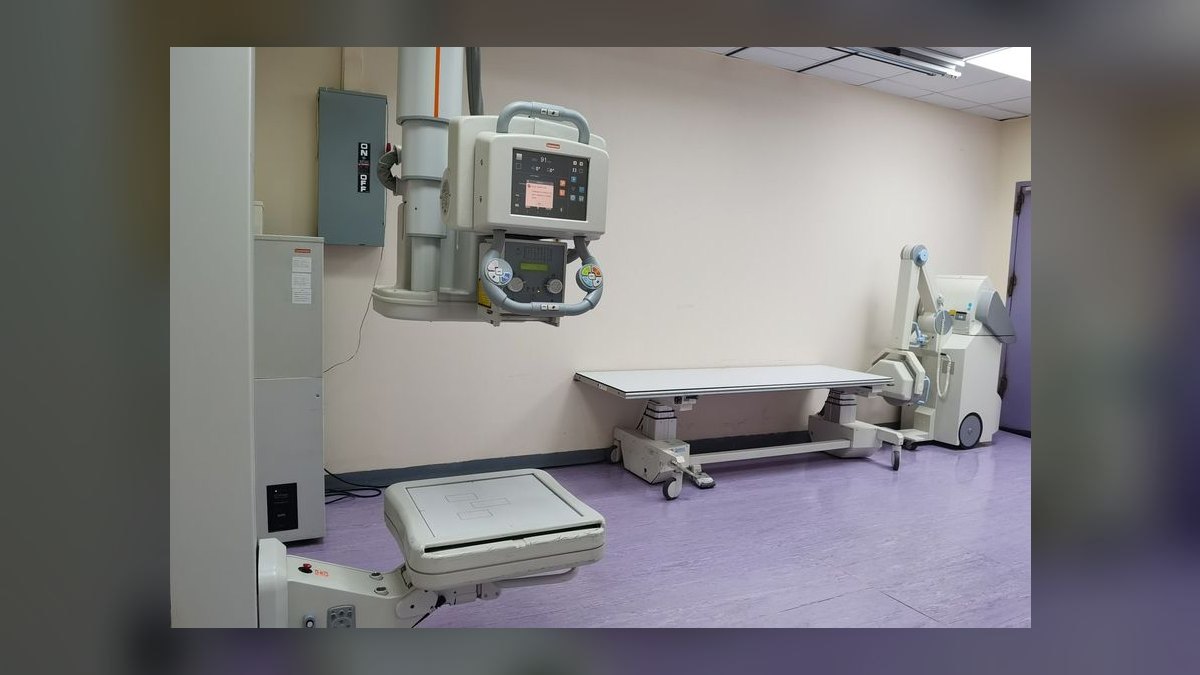
Inside that total, build-out and leasehold improvements are the largest block, typically $250,000 to $500,000 for a 3,000 to 4,000 square foot clinic. Medical space is expensive to construct: you need lead shielding for the X-ray suite, plumbing for a lab, exam rooms sized to code, ADA-compliant circulation, and a waiting area that does not feel like a DMV. Medical equipment runs another $150,000 to $300,000 — digital radiography, lab analyzers, exam room fixtures, the autoclave, point-of-care testing. IT and EMR come in at $30,000 to $70,000, signage and furnishings at $25,000 to $60,000, and licensing, credentialing, malpractice and insurance at $20,000 to $60,000. Pre-opening training runs $10,000 to $25,000.
Then the line that matters more than any single capital item: working capital for reimbursement lag, $150,000 to $300,000. Treat that as a floor rather than a target. It is the money that pays your providers in month four when your claims from month two are still in adjudication. Operators who trim this line to make the total look more financeable are the operators who end up taking emergency capital at bad terms eighteen months later.
Ongoing, expect a royalty in the range of 5.5% to 6% of gross revenue plus roughly 2% to a national brand fund and marketing. On $2 million of revenue that is roughly $150,000 a year flowing to the franchisor — money you should evaluate against what you actually receive: payer-contracting support, a national brand consumers recognize, occ-med relationships at the enterprise level, and an operating playbook you would otherwise have to invent. That is a genuine value proposition in a category where an independent operator has to build all four from zero. Whether it is worth eight points of gross is a judgment call, and it is the central question in the franchise-versus-independent comparison.
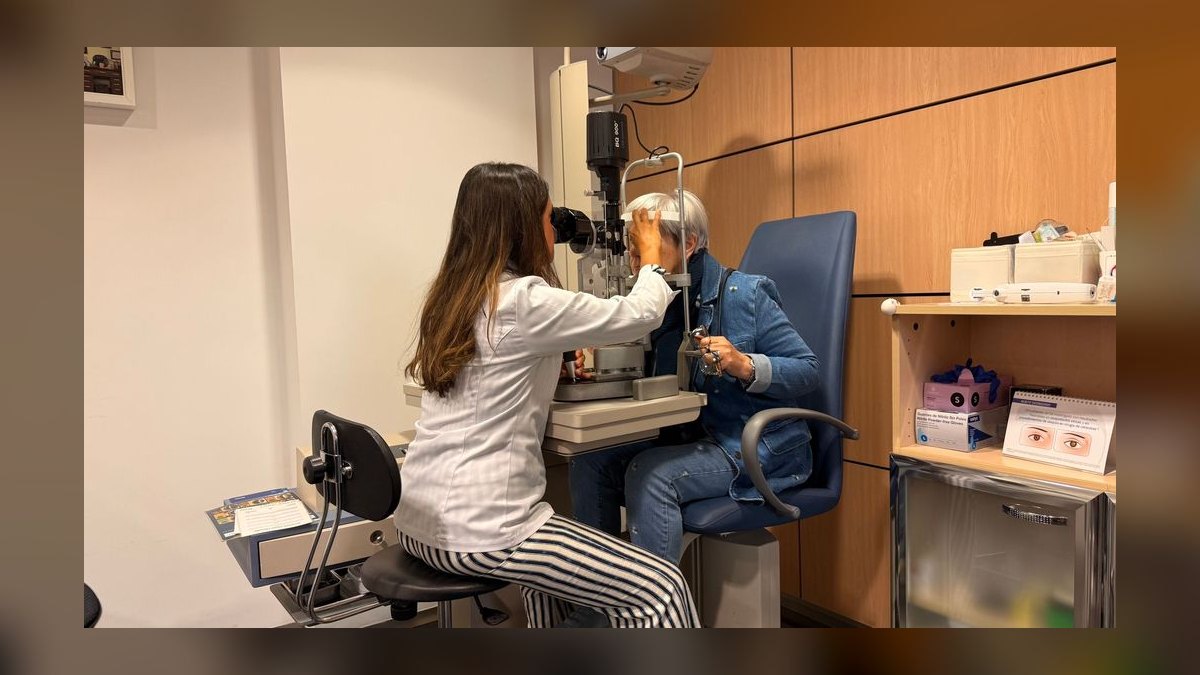
On the demand side, the U.S. urgent-care category is large — well over $50 billion — with more than 12,000 clinics nationally and mid-single-digit to high-single-digit annual growth. The structural driver is simple arithmetic that both patients and insurers can do: an emergency room visit for a condition that does not require an emergency room costs an order of magnitude more than the equivalent urgent-care visit, and insurers actively steer members accordingly. That tailwind is real and it is not a fad. It is also, notably, why hospital systems have been building and buying urgent-care capacity themselves — the competition you face in 2027 is as likely to be a health-system-branded clinic as another franchise.
One more benchmark worth internalizing: when you call existing franchisees during validation, the questions that actually predict your outcome are not "are you happy with the brand." They are "what is your blended reimbursement per visit, what percentage of revenue is occ-med, how many months from open to operational breakeven, and what did you actually take home in years one, two and three." Ask five or more franchisees, ask the same questions, and pay closest attention to the ones whose markets most resemble yours.
Risks, edge cases, and failure modes
Undercapitalization on the float is the number one killer. It does not present as a dramatic failure. It presents as a clinic doing fine on paper — growing visits, expanding occ-med, positive contribution margin — that cannot make payroll because $280,000 of collectible revenue is sitting in accounts receivable. Then the owner takes a merchant cash advance or a second lien at punishing terms and the clinic spends the next three years servicing a bad decision made during one cash-tight month. Solve this with capital before you open, not with financing after.
The clinical-governance problem is a hard gate, not a formality. Many states restrict the corporate practice of medicine, which means the clinical entity must be owned or controlled by a licensed physician while the business entity handles operations under a management services agreement. This is a routine, well-established structure that healthcare counsel builds all the time — but it must be built correctly, it must be documented before you sign anything, and it means you need a real physician relationship, not a name on a wall who cashes a monthly check and never visits. Get a healthcare-regulatory attorney, not a general business attorney, and budget $6,000 to $10,000 for the FDD and structure review. A general commercial attorney reading a franchise agreement will not flag the medical-director arrangement risk.
Compliance surface is wider than a retail owner expects. HIPAA governs everything you touch. CLIA certification governs your lab. Radiology licensure governs your X-ray. Malpractice coverage has to be right for both the entity and every provider. OSHA applies to a clinical environment in ways it does not to a coffee shop. Controlled-substance handling, if any, adds DEA obligations. Each of these is manageable individually; collectively they are a compliance function that somebody has to actually own. In a single-clinic operation, that somebody is usually you.
Seasonality is sharper than most pro formas assume. Respiratory season can double your daily volume; late spring and summer can halve it. Your costs — rent, provider coverage, staff — are substantially fixed across that swing. A pro forma built on an annual average conceals the fact that you may be losing money for four consecutive months every year and making it back in another four. Occ-med is the primary hedge. Sports physicals in late summer are a secondary one. Plan the cash calendar around the trough, not the average.

Payer-mix drift is a slow, quiet risk. A clinic in a market whose employer base shifts, or whose commercial payer loses a large local contract, can find its blended reimbursement declining year over year while visit volume looks flat or even improves. This is invisible unless you track revenue per visit by payer as a standing monthly metric. Many owners track visits and revenue and never look at the ratio, which is where the story actually lives.
Buying an existing clinic carries a different risk profile than opening one. A resale skips the burn phase, comes with contracts already in place and a patient base already formed — genuinely valuable, and often worth a premium. But you inherit whatever is wrong: below-market payer rates that will be hard to renegotiate, a lease with unfavorable renewal terms, deferred equipment maintenance, a reputation problem visible in online reviews, or a seller whose personal relationships drove the occ-med book and who will take those relationships with them. Diligence a resale on payer contract copies, three years of visit and collection data by payer, the lease, the equipment service records, and provider retention. If the seller will not produce contract-level reimbursement data, that refusal is itself the finding.
Multi-unit economics are meaningfully better than single-unit, which cuts both ways. A cluster of three or four clinics shares a medical director, a billing and credentialing function, a marketing budget, and — importantly — negotiating posture with payers. Per-clinic overhead falls and rate leverage rises. This is how the strongest franchisees in the system build real wealth, and it is why the additional-unit fee is discounted. The flip side: if your plan requires multi-unit scale to produce the returns you want, you should know that before you sign a single-unit agreement, because your capital plan, your site strategy, and your territory negotiation all look different when the target is four clinics instead of one.

A practical rollout plan
Work the decision in sequence and refuse to skip forward, because every stage produces information the next stage needs.
Days 1–15 — read the document. Get the current FDD and read Items 5, 6, 7, 19 and 20 in full. Item 7 gives you the investment range. Item 19, if the brand provides a financial performance representation, is the only franchisor-published revenue data you can rely on — and its footnotes, particularly which clinics are included and excluded, matter more than the headline figures. Item 20 shows unit counts, openings, closures, and transfers over recent years; a rising transfer count in a mature system is a signal worth understanding. In parallel, look honestly at your trade area: how many urgent-care clinics already operate within a fifteen-minute drive, who owns them, and is the dominant player a health system that can afford to lose money on the site.

Days 16–30 — resolve the clinical structure. Find out precisely what your state requires for physician ownership and medical direction, then identify a specific credentialed physician willing to serve. This is the stage where the deal most often quietly dies, and it is far better for it to die here than after you have signed a lease. Do not proceed on a hypothetical physician.
Days 31–45 — validate with franchisees. Call at least five current owners, ideally including one who has been open under two years and one who has been open over five. Ask the reimbursement, occ-med mix, breakeven-timeline and owner-take-home questions. Ask what surprised them. Ask what they would do differently.
Days 46–60 — map payers and employers. Identify the dominant commercial insurers in your market and get realistic contracting timelines from someone who has done it locally. Simultaneously build a target list of employers within your trade area for occ-med: manufacturers, logistics and trucking, construction, staffing agencies, municipalities. If that list is thin, your revenue mix is going to be more seasonal and more insurance-dependent than you want.

Days 61–75 — site selection. Tour real space against the visibility, parking, traffic-count and demographic criteria. Have a construction estimate done on your leading candidate rather than relying on the FDD midpoint; medical build-out costs vary widely by market and by how much of the shell the landlord delivers finished. Negotiate tenant improvement allowance hard — it is the single largest swing factor in your total capital requirement.
Days 76–85 — lock the capital. Confirm liquid funds plus committed financing, and stress-test the plan against a scenario where you reach 60% of projected volume and collections run 20 days slower than modeled. If that scenario breaks you, the plan is too thin. SBA 7(a) and medical-practice lenders both serve this category and their terms differ; get more than one term sheet.
Days 86–90 — legal review and decide. Healthcare-regulatory counsel reviews the FDD, the franchise agreement, the lease, and the medical-director arrangement together, because they interact. Then make an actual decision. The four gates are capital including float, a real physician partner, credible payer contracting, and a site that can move volume. All four green, this is a strong business with a durable category tailwind. Any one red, walk — and note that walking away at day 90 having spent $10,000 on counsel is the cheapest outcome available to anyone who was going to fail at month twenty.
Related questions
Is buying an existing AFC clinic better than opening a new one?
A resale skips the 12–18 month burn phase and comes with payer contracts and patient volume in place, which is worth a real premium. But you inherit below-market reimbursement rates, lease terms, and any reputation damage. Diligence payer contracts and three years of collections by payer before agreeing a price.
How much of urgent-care revenue should come from occupational medicine?
There is no universal target, but operators who build a meaningful employer book get faster collections, weekday daytime volume, and insulation from flu-season swings. Ask franchisees in similar markets what percentage of their revenue it represents — the spread between strong and weak operators is large.
Can I own an AFC franchise without being a physician?
In most cases yes, but you need a credentialed medical director, and in states restricting corporate practice of medicine you need a management-services structure separating the clinical entity from the business entity. Have healthcare-regulatory counsel build it before signing anything.
What happens to an urgent-care clinic during a slow summer?
Acute-visit volume can fall sharply outside respiratory season while rent, provider coverage, and staff costs stay fixed. Clinics with occ-med contracts and sports-physical volume ride it out; clinics dependent purely on walk-in acute care can run negative for months.
How does a franchise compare to opening an independent urgent care?
Independent means no fee and no royalty, but you build the payer-contracting playbook, brand recognition, occ-med relationships, and operating systems yourself. The franchise trades roughly 8% of gross for those. That trade favors first-time healthcare operators and disfavors experienced medical-practice owners.
FAQ
What is the total investment to open an AFC Urgent Care franchise?
Recent disclosure documents have put the total investment roughly between $695,000 and $1.2 million or more, including an initial franchise fee near $60,000 for a first unit and commonly around $42,000 for additional units. The biggest components are leasehold build-out, medical equipment, and working capital. Always verify against the current FDD, since terms are revised annually.
How long until an AFC clinic is profitable?
Most clinics reach operational breakeven somewhere in the 12–18 month range and what franchise materials describe as maturity — stable volume and a settled payer mix — in 18 to 36 months. The pacing depends heavily on how quickly payer contracts are executed and whether the site drives walk-in traffic. Plan cash for the longer end of that range, not the shorter.
What are the ongoing fees?
Expect a royalty in the range of 5.5% to 6% of gross revenue plus roughly 2% toward national brand fund and marketing. On $2 million of revenue that is roughly $150,000 annually. Evaluate it against what you receive: brand recognition, payer-contracting support, enterprise occ-med relationships, and an operating playbook.
Do I need to be a doctor to open one?
Generally no, but you must secure a credentialed medical director, and states that restrict the corporate practice of medicine require a structure where a physician-owned clinical entity contracts with your business entity. This is routine for healthcare counsel to build, but it is not optional and it is not something to improvise after signing.
What does a mature clinic actually earn?
A mature clinic seeing 35 to 50 patients daily at blended reimbursement in the $130 to $180 range, plus occ-med revenue, commonly lands in the $1.5 million to $3 million annual revenue band with clinic-level EBITDA around 12% to 20%. That is $200,000 to $500,000-plus in owner cash flow before debt service. Subtract loan payments for a realistic take-home.
What is the single most common reason franchisees fail?
Running out of cash during the reimbursement lag. Clinics deliver care today and collect from insurers 30 to 90 days later, and that gap never closes — it grows as the clinic grows. Owners who fund $150,000 to $300,000 of working capital survive the ramp; owners who trim that line to make the loan smaller are the ones who take emergency capital at bad terms.
Sources
- https://www.afcfranchise.com/
- https://www.urgentcareassociation.org/
- https://www.ibisworld.com/united-states/market-research-reports/urgent-care-centers-industry/
- https://www.sba.gov/funding-programs/loans/7a-loans
- https://www.ftc.gov/business-guidance/resources/consumers-guide-buying-franchise
- https://www.cms.gov/medicare/quality/clinical-laboratory-improvement-amendments
- https://www.hhs.gov/hipaa/for-professionals/index.html
- https://www.beckershospitalreview.com/
- https://www.franchise.org/
- https://www.osha.gov/healthcare
Related on PULSE
- Best senior care franchises to buy in 2027
- Best pet care franchises to start in 2027
- Should I open or buy a Griswold Home Care franchise in 2027?
- Should I open or buy a Sploot Veterinary Care franchise in 2027?
- Should I open or buy a HomeWell Care Services franchise in 2027?
- Should I open or buy a Home Helpers Home Care franchise in 2027?
This page will be disappearing soon. Save it to your device for $1 — or read it free while it is here.
@Kory-White- · if Venmo asks, the last 4 of my number are 2012
This page is gone.
This one is off the shelf now. $1 keeps it on your phone for good — the whole page, pictures and diagrams included.
 pulse-franchisesBest low-cost franchises to start under $50,000 in 2027
 pulse-franchisesBest multi-unit franchise opportunities for empire builders in 2027
 pulse-franchisesBest ice cream and frozen dessert franchises to buy in 2027
 pulse-franchisesBest health and wellness franchises to buy in 2027
 pulse-franchisesWhat is the best way to approach Franchises in 2027?
 pulse-franchisesShould I open or buy a Pinot's Palette franchise in 2027?
 pulse-franchisesFranchise vs. independent business: which should I start in 2027?
 pulse-franchisesBest franchises for veterans in 2027
 pulse-franchisesBest children's STEM and enrichment franchises to buy in 2027
 pulse-franchisesShould I open or buy a Restoration 1 franchise in 2027?