


Should I open or buy a Plato's Closet franchise in 2027?
Quality
Certified
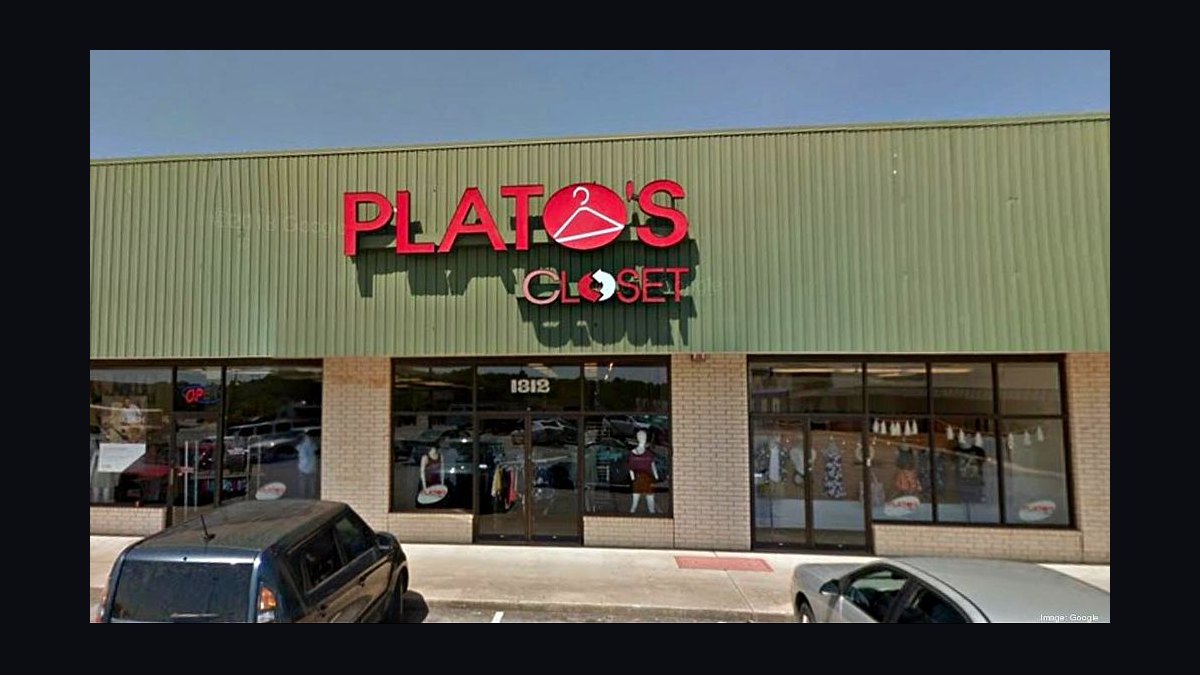
Open a Plato's Closet in 2027 if you can fund $290,000–$450,000+, want a hands-on retail business, and are willing to personally run the buy counter — the resale model's low 5% royalty and strong secondhand-clothing demand make it a resilient franchise bet. Skip it if you want a passive, absentee-owner investment; this format punishes distance.
The outcome you should expect
A Plato's Closet franchise you open in 2027 and operate diligently should reach $800,000 to $1.5 million or more in annual revenue by its second or third year, provided the trade area has genuine density of teens and young adults. The economics work because the store buys used clothing directly from local sellers at a small fraction of resale value, then turns it same-day at several multiples of the buy price — gross margins on that resold inventory routinely land above 50-60%, a spread that a traditional wholesale-stocked apparel retailer simply cannot match. There's no manufacturing lead time, no import tariffs to absorb, and no dead season of clearing last year's line, because the inventory itself renews continuously from the neighborhood.
Owner earnings on a mature, well-run single unit commonly fall between $90,000 and $250,000 a year once labor, rent, the royalty, and overhead are subtracted, though that range swings hard on how tightly the owner manages the buy counter's rejection rate and staffing costs. The first year is almost always softer than the second or third. It takes time to become known locally as "the place that pays cash for your old clothes," and until that reputation compounds, the floor doesn't have enough fresh, on-trend stock to pull in steady buyer traffic. Franchisees who under-capitalize the opening often hit a rough patch in months two through six: the original inventory has been picked over, buy-counter cash reserves are thinning, and new seller traffic hasn't yet caught up to replace it. Anyone comparing this to opening a fast-casual restaurant or a service franchise should recalibrate expectations — the ramp is slower and more dependent on local word of mouth, but the ceiling on a genuinely well-run store is higher relative to the investment than most quick-service concepts achieve in the same window.

It's also worth sizing the outcome against nearby alternatives a prospective owner might be weighing. A franchisee choosing between Plato's Closet and a value-priced clothing retailer that carries new inventory will find the resale format requires more owner judgment day to day but far less capital tied up in dead stock, since nothing sits on the floor because a buyer overordered it six months ago — every item arrived because a local seller walked it in and an employee decided it would move.
What drives that outcome
The single biggest driver of how a Plato's Closet performs isn't the storefront's location or its grand-opening advertising spend — it's the owner's skill and discipline at the buy counter. Every dollar of eventual gross margin traces back to what gets accepted, what gets rejected, and what price tag it's assigned in that first ninety seconds of evaluation. Reject too little, and the floor fills with stale, off-trend styles that clog shelf space and quietly signal to shoppers that the selection isn't current; reject too aggressively, and local sellers stop bothering to walk through the door, which starves the entire inventory pipeline at its source. Healthy Plato's Closet locations tend to reject somewhere in the 40-60% range of what's brought to the counter — a number that sounds harsh to a new owner until they internalize that most people bringing in a bag of clothes are mixing genuinely current pieces with things that have been sitting in a closet for three seasons.

The second driver is trade-area density. Because the entire supply side of this business runs through walk-in sellers instead of a wholesale distributor, a location needs a real concentration of teens and young adults nearby — near high schools, a college campus, or dense young-adult rental housing — to keep both halves of the buy-sell loop full. A site that looks affordable specifically because it sits just outside that demographic core will underperform no matter how sharp the owner's trend judgment is, because there simply aren't enough sellers arriving to stock the shelves.
The third driver is working capital, and specifically the cash sitting behind the buy counter. Sellers get paid on the spot, in cash or store credit, the moment their items are accepted — there's no thirty-day vendor terms the way a conventional retailer negotiates with a wholesale supplier. A store that runs short on buy-counter cash effectively shuts off its own inventory intake until more capital or sales revenue arrives, which is a uniquely self-inflicted way for an otherwise well-located, well-run franchise to stall.
A useful adjacent comparison: a consignment shop that doesn't pay cash upfront avoids this working-capital pressure entirely, since it only pays the original owner a percentage after an item sells. Plato's Closet deliberately trades that lower-capital-intensity model for speed and seller convenience — instant cash is the entire competitive pitch, and it's also the entire reason the format needs real working capital behind the counter rather than a thinner startup budget.
Benchmarks and realistic ranges

The total initial investment to open a Plato's Closet generally runs $290,000 to $450,000 or more, per the range in Winmark's Franchise Disclosure Document. Roughly broken down: an initial franchise fee near $25,000; leasehold improvements and buildout of $80,000 to $190,000 for a typical 1,800- to 4,000-square-foot retail space; fixtures, signage, and the proprietary Winmark point-of-sale system at $40,000 to $90,000; opening inventory of $50,000 to $90,000; grand-opening marketing of $10,000 to $30,000; and working capital plus buy-counter cash reserves of $40,000 to $80,000. SBA financing is common at this investment level, and any lender worth working with will want to see the same Item 19 financial performance representations a serious buyer should already be studying before signing anything.
On real estate, expect to need 1,800 to 2,400 square feet in a high-traffic strip center or power center, with monthly rent commonly between $4,000 and $8,000 depending on market, plus common-area-maintenance charges adding another 15-25% on top of base rent. Winmark typically grants a protected territory of roughly 2 to 3 miles for a Plato's Closet — tighter in dense urban markets — which is not the exclusive zip-code protection some food franchises offer, so a saturated metro can still put a competing location within five miles.

Staffing is a frequently underestimated line item. Most franchisees run three to five part-time employees plus a full-time manager, with annual payroll in the $80,000 to $130,000 range, and hourly retail wages in many 2027 markets sitting between $13 and $18. Owners should plan to personally spend 15-20 hours a week at the buy counter, at least in the early going, since evaluating incoming merchandise well is the single most direct lever on the store's margins — it's not a task most owners can hand entirely to a new part-time hire in month one.
On the exit side, resale values for established Plato's Closet locations typically fall between $150,000 and $350,000, Winmark charges a transfer fee of roughly $10,000 on a sale, and the five-year survival rate across locations is estimated in the 70-80% range — meaningfully better than the broader independent-retail survival rate over the same window, which is one reason the franchise fee buys more than just the brand name.
Franchisees weighing Plato's Closet against Winmark's other resale concepts should note the cost structure is broadly similar across the family — Once Upon A Child, Play It Again Sports, and Style Encore all share the same low, roughly 5% royalty and comparable buildout ranges — so the investment decision usually comes down less to which brand is "cheaper" and more to which customer base actually exists in the trade area under consideration. A market with a strong college and young-professional population but few kids may favor Plato's Closet or Style Encore over Once Upon A Child, for instance, regardless of the near-identical capital requirements.
Risks, edge cases, and failure modes

The most common failure mode is a franchisee who treats Plato's Closet as a passive investment. This is fundamentally an operator-driven retail business, and the buy counter in particular cannot be delegated wholesale to inexperienced staff without a real, visible slide in inventory quality. A second major risk is weak trend judgment: an owner who accepts too much outdated stock ends up with a floor that looks tired, which erodes appeal to both sellers and buyers at once, since resale shoppers are unusually sensitive to whether a store's selection feels current. Because trends among the teen and young-adult demographic move quickly, this isn't a skill that's learned once during initial training and then coasted on indefinitely — it demands ongoing attention, ideally reinforced by staff who are themselves close to the target customer's age and taste.
Underfunding is another frequent edge case, and it compounds quickly. Franchisees who open at the low end of the investment range, or who trim opening inventory and buy-counter cash reserves to preserve personal capital, often find they can't pay sellers competitively during the critical first few months — which starves the inventory pipeline exactly when the store most needs a strong first impression to build local reputation. Location risk compounds this further: a site that looks like a bargain because it sits outside the core teen/young-adult trade area will structurally underperform no matter how well the owner runs the counter, simply because there aren't enough sellers or buyers circulating nearby.

Competitive pressure from online resale platforms — Poshmark, Depop, ThredUp, and Mercari among them — is real and growing, since these platforms let a seller cash out from their bedroom without driving anywhere. Plato's Closet's competitive answer is instant cash with zero listing, photographing, or shipping hassle, but a franchisee who ignores this pressure and doesn't lean into local marketing and social media to reinforce that in-person advantage will watch it erode gradually. Staffing turnover is a chronic operational risk on top of all this: teen-retail labor turnover runs high, and most owners need to recruit and train four to six new hires per year just to hold a stable team, which is a real, recurring cost in management time even when the payroll dollars themselves are budgeted correctly.
There's also a scaling edge case worth naming for anyone thinking beyond a single unit: multi-unit Plato's Closet owners report that the buy-counter judgment problem doesn't get easier to solve with a second or third location — it gets harder, because the owner's personal trend sense no longer scales to every counter simultaneously, and a multi-unit operator has to either train store managers to an unusually high standard or accept measurably thinner margins at locations they can't personally staff. Finally, franchisees planning an eventual exit should recognize resale values are moderate compared to food or service franchises, so this is not a model built around a fast, high-multiple flip — it rewards someone who plans to operate for years and compound the local reputation the buy counter builds.
A practical rollout plan

Anyone seriously evaluating whether to open a Plato's Closet in 2027 should work through a structured diligence sequence before signing anything. Start by requesting and reading the full Winmark/Plato's Closet Franchise Disclosure Document in its entirety, paying particular attention to Items 5, 6, 7, 19, and 20, which cover initial fees, ongoing costs, total initial investment, financial performance representations, and unit counts including closures — a rising closure count in Item 20 relative to prior years' disclosures is worth a direct question to the franchisor before proceeding further.
From there, validate what's on paper by calling at least eight current and, ideally, a handful of former franchisees directly. Ask specifically about real buy-counter rejection rates, actual first-year cash flow versus what was projected, and how long it genuinely took each of them to reach the revenue ranges disclosed in Item 19. Former franchisees in particular are worth the extra effort to track down, since they're often more candid about where the model underdelivered for their specific market.
Next, scout actual trade areas rather than assuming any available retail space will work. The target is genuine density of teens and young adults, strong visibility from the road, and 1,800 to 4,000 square feet at a rent that pencils against the benchmarks above — not simply the cheapest available lease in town. Once a site is identified, model the specific inventory and buy-counter cash needs against that location's expected foot traffic, and build in a cash cushion beyond Winmark's stated minimums if the market skews toward a slower-than-average ramp.

With those numbers in hand, line up SBA or conventional financing sized to the full $290,000-$450,000+ range — not just the franchise fee, which is a common and costly underestimate among first-time buyers. Only sign the franchise agreement once there's genuine confidence, either personally or through a specific named hire, in the trend sense required to run the buy counter well, because that single skill is the one piece of the operation that can't be outsourced to a generic retail hire on day one.
Related questions
How much cash reserve should I keep beyond the minimum investment range?
Beyond Winmark's disclosed $290,000-$450,000 range, most experienced operators recommend an extra $20,000-$40,000 buffer specifically for buy-counter cash, since early seller traffic is unpredictable and thin margins can strain a tightly budgeted opening.
What happens if my trade area has fewer teens than I expected?
Weak teen or young-adult density structurally limits both sides of the buy-sell equation and usually can't be fixed with marketing alone; owners should weigh this before signing, not after opening.
Can I run a Plato's Closet without prior fashion experience?
No specific fashion background is required, and Winmark provides training, but the owner still needs to develop strong trend judgment quickly, since the buy counter is the store's core margin engine.
How does Plato's Closet compare to opening a different Winmark resale brand?

Once Upon A Child, Play It Again Sports, and Style Encore share the same low-royalty, buy-counter model but serve different demographics — the right choice depends on which customer base fits the local trade area best.
Is it better to open one Plato's Closet or plan for multiple units from the start?
A single unit lets an owner personally anchor the buy counter, which is usually the stronger first move; multi-unit expansion works best only after that trend judgment has been proven and can be trained into a manager.
FAQ
What is the typical total investment for a Plato's Closet franchise? The total initial investment generally falls between $290,000 and $450,000. This includes the roughly $25,000 franchise fee, buildout, fixtures and POS equipment, and initial inventory. Actual costs vary with location size, lease terms, and local construction pricing.
How much can I expect to earn from a Plato's Closet franchise? Mature, well-run stores commonly report owner earnings in the $90,000 to $250,000+ range annually, though results vary widely by market, management skill, and how disciplined the buy-counter operation is. Review the franchisor's Item 19 and talk to current owners rather than relying on averages.

What ongoing fees does Winmark charge for Plato's Closet? Winmark charges a 5% royalty on gross sales with no large national advertising-fund percentage, which is lower than many retail franchise royalty structures. Local marketing costs and technology fees are typically the owner's responsibility on top of that.
Do I need prior retail or fashion experience to open a Plato's Closet? No specific background is mandatory, but hands-on retail comfort helps significantly. The daily work involves buying and pricing used inventory, merchandising for current trends, and managing part-time staff, and Winmark's training is a starting point rather than a substitute for practical trend judgment.
How long does it take to open a Plato's Closet franchise? From signing the franchise agreement to opening day typically takes 6 to 12 months, covering site selection, lease negotiation, buildout, staff training, and initial inventory sourcing. Permitting or construction delays can push this timeline out further in some markets.
Is Plato's Closet a recession-resistant business? The resale model tends to hold up well in downturns because value-driven shoppers turn to secondhand clothing and sellers look to cash in unused items. That said, no retail business is fully recession-proof, and demand still depends on local economic conditions and how well the store keeps its inventory on-trend.
Sources
- winmarkcorporation.com
- platosclosetfranchise.com
- entrepreneur.com/franchises
- franchisedirect.com
- franchise.org
- ibisworld.com
- sba.gov
- ftc.gov/business-guidance/resources/franchise-rule
Related on PULSE
- Should I open or buy a Closet Factory franchise in 2027?
- How long does it take to open a franchise and break even in 2027?
- Should I open or buy a Tommy Gun's Original Barbershop franchise in 2027?
- What franchises have the lowest ongoing royalty fees in 2027?
- Is a resale or thrift franchise a good investment in 2027?
This page will be disappearing soon. Save it to your device for $1 — or read it free while it is here.
@Kory-White- · if Venmo asks, the last 4 of my number are 2012
This page is gone.
This one is off the shelf now. $1 keeps it on your phone for good — the whole page, pictures and diagrams included.
 pulse-franchisesBest painting franchises to buy in 2027
 pulse-franchisesWhat should you know before investing in Franchises in 2027?
 pulse-franchisesBest coffee and beverage franchises to buy in 2027
 pulse-franchisesWhat are the best sushi franchise opportunities to buy in 2027?
 pulse-franchisesShould I open or buy a Best Western franchise in 2027?
 pulse-franchisesBest home-based franchises to start in 2027
 pulse-franchisesShould I open or buy a Choice Hotels franchise in 2027?
 pulse-franchisesBest franchises to buy under $100,000 in 2027
 pulse-franchisesHow do franchise royalty and marketing fees work in 2027?
 pulse-franchisesHow do I franchise my own business in 2027?