


Should I open or buy an Extra Space Storage franchise in 2027?
Quality
Certified
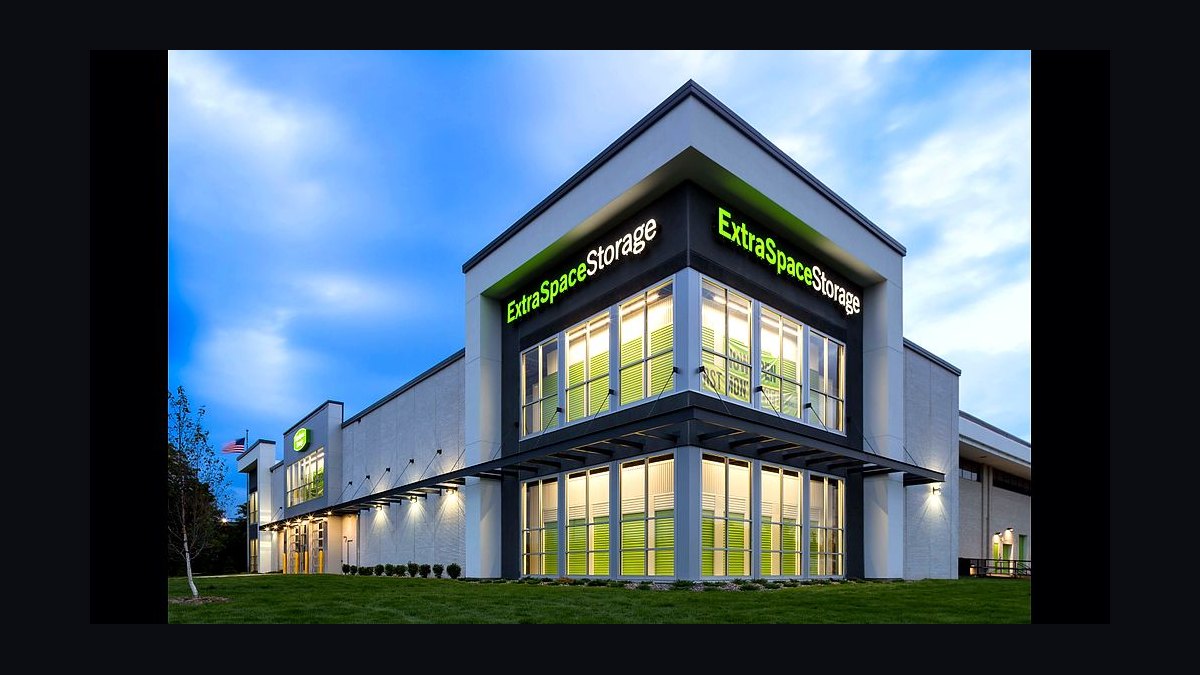
No — Extra Space Storage does not sell franchises, so there is nothing to buy in 2027. It is a publicly traded REIT that grows by owning, acquiring, and third-party managing stores. Your real options are its management program, an independent facility, an actual storage franchise, or EXR shares.
The search that dead-ends at a management form
Picture the version of this that plays out a few hundred times a year. Someone sells a business, drives past a full self-storage facility with a lit sign and no visible staff, and decides that is the asset they want. They search "Extra Space Storage franchise cost," find a scatter of low-quality blog posts quoting six-figure "franchise fees," and start budgeting. Then they go to the company's own site, click through the owner-facing pages, and the language changes shape entirely. There is no franchise fee, no territory map, no discovery day, no Franchise Disclosure Document. What they find instead is a form that asks how many units their existing facility has and what its current occupancy is.
That is the whole answer in miniature. The company is not selling a business-in-a-box to operators; it is recruiting property owners who already control real estate. The FTC's Franchise Rule requires any genuine franchisor to hand a prospect an FDD at least 14 days before money changes hands or a contract is signed — that document is the tell. If a brand franchises, an FDD exists, and Item 7 lists estimated initial investment while Item 19 may disclose financial performance. Extra Space Storage does not produce one, because it does not license its brand and system to independent franchisees in exchange for royalties. It is structured as a real estate investment trust listed on the NYSE under EXR, headquartered in Salt Lake City, and it got to be the largest operator in the country by store count largely through acquisition — Storage Express in 2022, then the Life Storage merger that closed in July 2023, which folded roughly a thousand more stores into the platform.
So the practical question is not "should I buy this franchise" but "which of the four real doors do I want, and does 2027 look like a good year to walk through any of them." Those doors are: build or buy a facility and run it independently; build or buy a facility and hand operations to Extra Space or a competing manager under their brand; buy into one of the small number of genuine self-storage franchise systems that do exist; or skip the operating business entirely and buy shares of the REIT. Each one has a different capital requirement, a different risk profile, and a different answer to the question of what you are actually being paid for. Getting the taxonomy right first saves people from budgeting a franchise fee that will never be invoiced.

How third-party management actually works, and why it isn't a franchise
The mechanic that people mistake for franchising is third-party management, and Extra Space runs one of the largest programs of its kind. The structure is simple to describe and materially different from a franchise in who holds the risk. You own the dirt and the building. You keep title, you carry the mortgage, you take the depreciation, and you eat the vacancy. The manager puts its brand on your sign, plugs your units into its national website and call center, sets your street rates and your rate-increase schedule with its revenue-management system, handles collections and auctions, hires and supervises the on-site staff, and hands you a monthly statement net of expenses.
In a franchise, the flow of money and control runs the other way. The franchisee pays an initial fee for the right to use the system, pays ongoing royalties on gross sales, pays into a marketing fund, and operates the business themselves inside the franchisor's rules. The franchisor's revenue is a percentage of your top line whether you are profitable or not, and your operational autonomy is bounded by the operations manual. Under third-party management, the manager takes a management fee — in self-storage this is commonly quoted in the mid-single digits as a percentage of gross revenue, and platform, onboarding, and technology fees are typical additions — but the manager is doing the operating, not supervising you doing it. You are closer to a limited partner in your own building than to an owner-operator.

That distinction matters most when things go wrong. A franchisee whose store underperforms can change staffing, change hours, change local marketing, and grind their way out. An owner in a management program whose store underperforms has one meaningful lever: the termination clause. Read it before you sign. Management agreements in this space frequently carry initial terms of several years with notice requirements, and some include fee floors, non-solicitation language covering your own staff, and provisions governing what happens to the customer list and the tenant insurance program if you leave. The customer-relationship question is the sharp one — the tenants signed up through the manager's website and call center, and the tenant-insurance revenue often flows to the manager.
The upside of the management route is genuinely large for a first-time owner, and it should not be dismissed as a consolation prize. National-brand search visibility, a professional revenue-management engine that raises rates on existing tenants systematically, and a call center that converts inbound leads at scale are things an independent single-store owner cannot replicate. The gap between an amateur-run store and a professionally managed one in the same trade area routinely shows up as several percentage points of occupancy and a double-digit gap in revenue per occupied square foot.
What the money actually looks like at project scale
Since no franchise fee exists, the real budget line is real estate, and the numbers are an order of magnitude larger than the franchise numbers people arrive with. Ground-up development of a modern climate-controlled facility is a commercial construction project, not a storefront build-out.
Land is the first variable and the most local. A viable urban or first-ring suburban parcel — typically two to four acres for a single-story configuration, less for multi-story — can range from a few hundred thousand dollars in secondary markets to several million in dense metros. Zoning is often the harder gate than price: many municipalities have restricted or outright banned new self-storage in commercial corridors over the past decade because the use generates little sales tax and few jobs, and entitlement fights routinely add 9 to 18 months before a shovel moves.

Vertical construction costs are commonly discussed in the industry as roughly $30 to $70 per square foot for single-story non-climate metal buildings and meaningfully higher — often $85 to $130 per square foot or more — for multi-story climate-controlled product, before soft costs. Layer in site work, stormwater, paving, security systems, elevators, HVAC, fire suppression, architecture, engineering, impact fees, and construction-period interest, and a 60,000-to-80,000 net rentable square foot climate-controlled facility in a decent metro frequently lands somewhere in the mid-single-digit to low-double-digit millions all-in. Treat every one of those ranges as a starting point for local bids, not a quote.
Buying an existing facility replaces construction risk with price risk. Acquisition pricing is driven by capitalization rate — net operating income divided by price. Institutional-quality self-storage has traded at relatively low cap rates by commercial real estate standards, generally in the mid-single digits during the strong years, with secondary and tertiary markets and older non-climate product trading meaningfully wider. Small mom-and-pop facilities often trade at higher cap rates precisely because their financials are messy, their rates are below market, and their occupancy is padded with delinquent tenants who were never auctioned. That is also where the value-add opportunity lives: buying an under-managed store at an above-market cap rate, cleaning up delinquency, implementing systematic existing-customer rate increases, and adding tenant insurance can move NOI materially inside 24 months.

Financing generally runs through one of three channels. SBA 7(a) loans, capped at $5 million, and SBA 504 loans, which pair a bank first mortgage with a CDC debenture, are both usable for owner-operated self-storage and are the most common path for first-time buyers because of the low down payment — often 10 to 20 percent versus the 25 to 35 percent a conventional commercial lender wants. Conventional bank and credit union debt is the second channel, usually with a five-to-ten-year term, a 20-to-25-year amortization, and a personal guarantee. The third is bridge debt, including programs run by the large operators themselves; Extra Space runs a bridge lending business that finances storage assets, which is another way it participates in your deal without franchising to you.
Then there is the lease-up gap, which is where undercapitalized projects die. A new facility does not open full. Typical stabilization — reaching roughly 85 to 90 percent physical occupancy — takes 24 to 36 months, and in an oversupplied submarket it can take longer while you discount your way to occupancy. During that window you are paying debt service, property tax, insurance, utilities, staffing, and marketing out of pocket. Build an operating reserve sized to carry the property through a lease-up that runs a year longer than your pro forma assumes, because in 2027 you will be leasing up into a demand environment tied closely to housing turnover, and existing-home sales have been running well below their long-run pace.
Weighing the four doors against each other
There is no universally right answer here, only a right answer for a specific amount of capital, a specific tolerance for illiquidity, and a specific appetite for being on the hook for a building.
Buying EXR shares is the honest baseline against which the other three should be measured. It gives you exposure to the exact business you admired from the road — professionally run, nationally scaled, dividend-paying, sellable in a single click — with no entitlement fight, no personal guarantee, no lease-up, and no 3 a.m. call about a broken gate. If your thesis is simply "self-storage is a good business," the security exists and it is liquid. The reason to reject it is if you want the things equity ownership of real property gives you that a share does not: leverage on your own terms, depreciation and cost-segregation benefits against your own tax position, direct control of a capital event, and the ability to force value through operations.

Owning and self-operating maximizes control and margin and demands the most competence. Mature, well-run self-storage properties often run operating expense ratios in the mid-30s as a percentage of revenue — a genuinely attractive figure relative to most commercial real estate — but hitting it requires disciplined revenue management, aggressive delinquency handling under your state's lien statute, and real local marketing. Owning with third-party management trades several points of that margin for a system that most first-time owners cannot build, and it is often what a lender wants to see on a ground-up deal from an inexperienced sponsor.
The genuine franchise route is the smallest of the four and the least discussed. A handful of self-storage franchise systems do exist — Storage Authority is the best-known — and they sell exactly what people were looking for when they typed "Extra Space Storage franchise": a system, a playbook, site-selection help, and hand-holding through development, in exchange for an initial fee and ongoing royalties. Whether that is worth it depends entirely on the FDD. Read Item 7 for the investment range, Item 19 for any financial performance representation, Item 20 for the outlet table showing how many franchisees opened, transferred, terminated, or walked away, and Item 3 for litigation. A franchise system with a shrinking outlet count and no Item 19 is telling you something.
One more comparison worth pricing: adjacent operating businesses that ride the same demand curve with far less capital. Portable-container storage, truck-rental dealerships attached to an existing retail site, and RV and boat storage on cheaper unimproved land all touch the same customer without a multimillion-dollar climate-controlled build. They are lower-ceiling businesses, but they are also reachable with a fraction of the equity.
Pitfalls that quietly ruin otherwise sound deals

The failures in this asset class are rarely dramatic. They are slow, and they are usually visible in advance to anyone who looked.
Buying the story instead of the submarket. Self-storage demand is intensely local — most tenants come from within a three-to-five-mile radius. National occupancy statistics tell you nothing about whether your specific trade area is already carrying more square feet per capita than it can absorb. Before anything else, map every competing facility inside a five-mile ring, call each one as a mystery shopper for current street rates on a 10x10 climate unit, and check the municipal planning docket for permitted-but-unbuilt projects. A competitor delivering 700 units six months after you open will reset the rate structure for the entire ring.
Underwriting to street rates that are actively falling. Move-in rates in this industry are tightly coupled to household moves, and with home sales depressed, operators across the sector have been discounting to fill units. Do not build a pro forma on the highest advertised rate you can find; build it on the rate you would need to accept in a soft quarter, and then check whether the deal still clears debt service.
Ignoring the existing-customer rate increase engine. Most of the profitability of a mature store comes from raising rates on tenants who are already in place, not from move-in rates. If you self-operate and you are squeamish about sending rate-increase letters, you will underperform a professionally managed store in the same market by a wide margin. If you use a manager, understand their ECRI cadence, because it is simultaneously your main revenue lever and your main source of tenant churn and one-star reviews.
Treating diligence on an existing facility as a formality. Pull the rent roll and age the delinquencies — an 88 percent "occupied" store where six percent of units hold non-paying tenants who were never auctioned is really an 82 percent store with a cleanup problem. Verify that the seller followed the state lien statute on past auctions, because improper lien sales create real liability. Get a Phase I environmental report; storage sites are frequently former industrial or automotive parcels. Confirm the ALTA survey, the zoning letter, and whether the use is permitted by right or by a special-use permit that may not survive a change of ownership.

Skipping the insurance and legal stack. You need commercial property coverage sized to replacement cost, general liability, and a rental agreement drafted for your state that limits your liability for stored goods and preserves your lien rights. Tenant insurance or a protection plan is also one of the highest-margin ancillary revenue lines in the business, and if a manager runs it, ask who keeps the commission.
Assuming "no employees" means "no operations." The unmanned facility model is real and growing, but remote operation is not the absence of operation. Somebody still handles lockouts, snow, security incidents, unit cleanouts, and the customer who cut a lock. Budget for a district-level presence or a contracted local vendor even in a "no-staff" design.
Adjacent moves worth considering before you commit capital
If the pull toward self-storage is really a pull toward durable, low-labor cash flow, several neighboring plays deserve a look on the same spreadsheet.
Partnering into a syndicated deal is the most direct hedge. Storage sponsors regularly raise equity from limited partners for individual facilities or small portfolios, which gives you fractional ownership of an institutionally operated asset, the pass-through depreciation benefits a share of a REIT does not deliver, and none of the operating burden. The trade is illiquidity and total dependence on sponsor quality, so diligence the sponsor's track record across a full cycle rather than the deal's projected IRR.
Converting an underused property you already control is the cheapest entry that exists. Owners of vacant retail boxes, older flex-industrial buildings, or surplus land at the edge of a growing town have repeatedly turned those into storage at a fraction of ground-up cost, because the shell, the site work, and the entitlements are already there. Conversions have their own traps — floor loading, column spacing, fire suppression, and ADA compliance — but they skip the two most expensive line items.

Buying into the ancillary layer is another angle. Truck-rental dealership agreements, records-storage for local law and medical practices, business-to-business inventory storage for e-commerce sellers, and vehicle and RV storage on cheap acreage all attach revenue to a site without the full cost of a climate-controlled build.
And if 2027 specifically is the question, the honest framing is this: consolidation has already happened at the top, the largest operators now run store counts in the thousands, new supply has been constrained in many metros by both zoning and financing costs, and the demand side is waiting on housing turnover to normalize. That is a decent setup for a disciplined buyer of an under-managed existing facility at a fair cap rate, a harder setup for a first-time ground-up developer leasing into a soft rate environment, and an irrelevant question for anyone still looking for a franchise agreement that does not exist.
Related questions
Does Public Storage or CubeSmart franchise instead?
No. The large public self-storage REITs — Public Storage, CubeSmart, and Extra Space Storage among them — grow through ownership, acquisition, and third-party management programs. None of them sell franchises. If you want brand affiliation, the management agreement is the mechanism, not a franchise license.
What is the minimum realistic capital to own a storage facility?
For an existing small facility with SBA financing, roughly 10 to 20 percent down plus closing costs and working capital — often a few hundred thousand dollars on a $2 to $4 million asset. Ground-up development typically requires 25 to 35 percent equity plus a lease-up reserve.
Can I put the Extra Space brand on a facility I build myself?

Potentially, through their third-party management program rather than a franchise. You would own the property and sign a management agreement; the brand, website, call center, and revenue management come with it, and a fee on gross revenue goes out. Acceptance depends on the asset and the market.
Is buying EXR stock a substitute for owning a facility?
Partly. You get sector exposure, professional operations, dividends, and liquidity — but no leverage on your own terms, no depreciation against your personal tax position, no operational control, and no ability to force value through better management. They are different investments that happen to share a business model.
How long until a new storage facility breaks even?
Cash-flow breakeven commonly arrives somewhere between 12 and 24 months after opening, with stabilization at 85 to 90 percent occupancy typically taking 24 to 36 months. In an oversupplied submarket both timelines stretch, which is why lease-up reserves are non-negotiable.
FAQ
Is there any Extra Space Storage franchise opportunity in 2027?
No. Extra Space Storage is a publicly traded real estate investment trust, not a franchisor. It has no Franchise Disclosure Document, no franchise fee, no territory grants, and no royalty structure. Any website quoting an "Extra Space Storage franchise cost" is generating content rather than reporting a real program, and any person offering to sell you one should be treated as a fraud risk.
What is the difference between third-party management and franchising?
Under a franchise, you pay a fee and royalties for the right to operate the brand's system yourself, and you run the business. Under third-party management, you own the real estate and the brand operates it for you, taking a fee on gross revenue. Franchising sells a system to an operator; third-party management sells operations to a property owner. The risk sits with you in both cases, but the control does not.

Are there any legitimate self-storage franchises?
Yes, a small number of self-storage franchise systems exist — Storage Authority is the most frequently cited. They are far smaller than the REIT platforms and sell development guidance and an operating system rather than an existing customer base. Evaluate any of them by reading the full Franchise Disclosure Document, especially the outlet table and any financial performance representation.
What does a third-party management agreement typically cost?
Management fees in self-storage are commonly quoted as a mid-single-digit percentage of gross revenue, frequently with a monthly minimum, plus onboarding, platform, or technology fees and reimbursed payroll. Tenant-insurance commissions and late-fee treatment vary and are worth negotiating explicitly. Ask for a sample statement from a comparable store before signing anything.
Is 2027 a good year to get into self-storage at all?
It depends on which side of the trade you are on. Soft street rates and depressed housing turnover make ground-up development into a competitive submarket risky, while the same conditions create decent buying opportunities in under-managed existing facilities where rates are below market and delinquency has never been cleaned up. Underwrite the submarket, not the sector.
Do I need prior real estate experience to get approved for financing?
Not strictly, but it changes the terms. Lenders on ground-up storage deals routinely require either sponsor experience or a signed third-party management agreement with an established operator as a condition of the loan. SBA lenders are more forgiving on experience for acquisitions of operating facilities but will still want a personal guarantee and a credible business plan.
Sources
- https://www.extraspace.com/
- https://ir.extraspace.com/
- https://www.sec.gov/edgar/searchedgar/companysearch
- https://www.ftc.gov/business-guidance/resources/franchise-rule-compliance-guide
- https://www.sba.gov/funding-programs/loans/7a-loans
- https://www.sba.gov/funding-programs/loans/504-loans
- https://www.ssa.org/
- https://www.reit.com/
- https://www.franchise.org/
- https://www.nar.realtor/research-and-statistics/housing-statistics/existing-home-sales
Related on PULSE
- How do you evaluate a Franchise Disclosure Document before signing?
- What does an SBA 504 loan actually cover for a commercial property purchase?
- How do you underwrite an existing business acquisition on seller-provided financials?
- What is the difference between a REIT, a syndication, and direct property ownership?
- How do you run competitive pricing research in a local service market?
This page will be disappearing soon. Save it to your device for $1 — or read it free while it is here.
@Kory-White- · if Venmo asks, the last 4 of my number are 2012
This page is gone.
This one is off the shelf now. $1 keeps it on your phone for good — the whole page, pictures and diagrams included.
 franchiseShould I open or buy an East Side Mario's franchise in 2027?
 franchiseShould I open or buy a Shine Window Care franchise in 2027?
 franchiseShould I open or buy a Kelseys Original Roadhouse franchise in 2027?
 franchiseShould I open or buy an Ideal Image franchise in 2027?
 franchiseShould I open or buy a Papa John's franchise in 2027?
 franchiseShould I open or buy a Le Macaron French Pastries franchise in 2027?
 franchiseShould I open a real estate brokerage in 2027?
 franchiseShould I open or buy a Nutrishop franchise in 2027?
 franchiseShould I open or buy a Quaker Steak & Lube franchise in 2027?
 franchiseShould I open or buy an Old Spaghetti Factory franchise in 2027?