


Should I open or buy a Little Caesars franchise or open an independent sandwich shop in 2027?
Quality
Certified

Buying a Little Caesars franchise in 2027 means roughly $400,000–$700,000 all-in for a proven pizza model with strong brand pull but thin margins. Opening an independent sandwich shop costs $150,000–$400,000 with full control and no royalties. Choose franchise for systems and financing; choose independent for flexibility and lower break-even.
A tale of two operators in 2027
Picture two would-be owners in the same mid-size U.S. metro in early 2027, each with about $250,000 of liquid capital and a willingness to work 55 hours a week.
Operator A signs a Little Caesars franchise agreement. She is drawn by the brand's "Hot-N-Ready" carryout model, its low labor needs, and the fact that a national chain can often get her approved for an SBA-backed loan more easily than a first-time independent owner. Her build-out is a converted former fast-casual shell of about 1,400 square feet. She pays a franchise fee, buys proprietary equipment and signage, and commits to ongoing royalty and advertising contributions deducted from weekly sales. Her opening day is roughly eight months after signing.
Operator B leases a 1,100-square-foot endcap in a strip center and opens an independent sandwich shop. He writes his own menu, sources bread from a local bakery and cold cuts from a regional distributor, and keeps 100% of his revenue minus rent, food, labor, and utilities. He has no royalty line on his P&L. He also has no national ad fund, no playbook, and no corporate real-estate team telling him whether his site is viable.
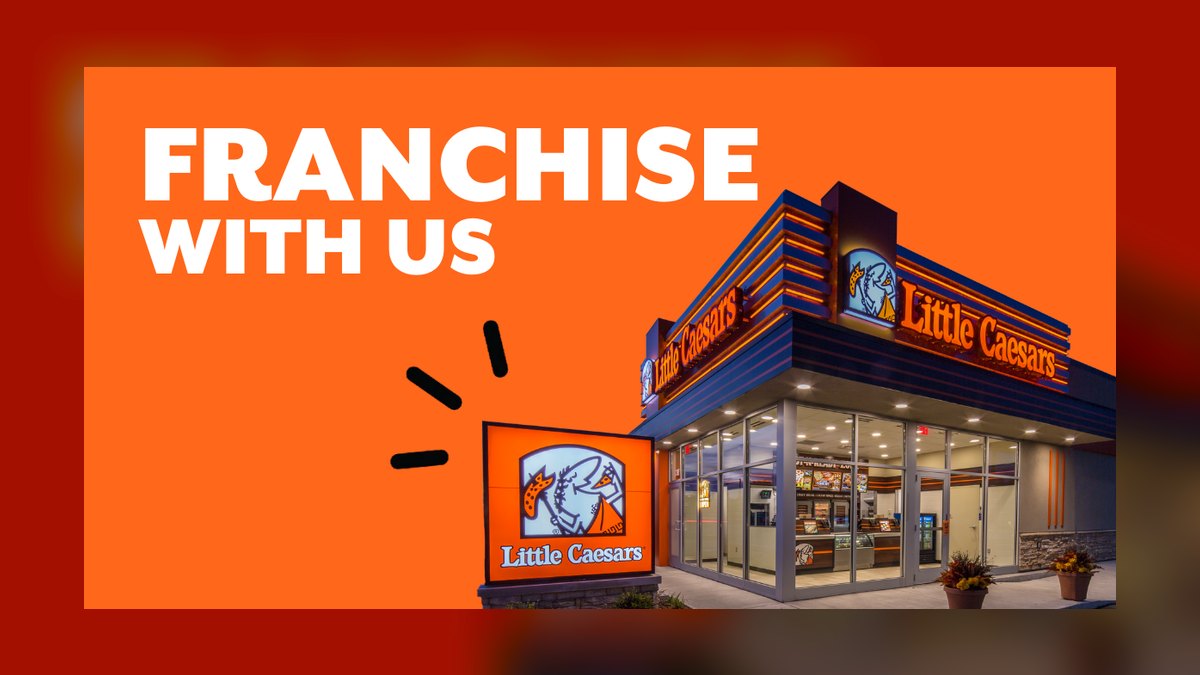
Both are making a bet on 2027 conditions: food-away-from-home demand that has cooled from its post-pandemic peak, wage floors that have ratcheted up in many states, and consumers who are more deal-sensitive than they were in 2021–2022. The franchise path trades autonomy and margin for systems, brand recognition, and lender confidence. The independent path trades safety nets for control and a lower break-even. The right answer depends less on which brand is "better" and more on which operator's temperament, capital stack, and local market match the model.
The rest of this page works through the mechanics, the real numbers, and the failure modes so you can decide which operator you actually are.
How each model actually makes money
The two paths generate profit through structurally different machines, and understanding that difference is the whole decision.

The Little Caesars franchise machine. Little Caesars is built around carryout pizza, not dine-in. The core promise is speed and price: a customer walks in, grabs a ready pizza from a heated holding station, and leaves. That model has three financial consequences. First, labor cost is unusually low for a restaurant because you are not staffing servers, bussers, or a full dining room. Second, throughput depends on a small menu executed fast, which simplifies training and inventory. Third, the price point is low by design, so unit volume must be high. You make money on transactions per hour, not on ticket size.
As a franchisee you pay an initial franchise fee, then ongoing royalties (typically a percentage of gross sales) plus a contribution to the national advertising fund (another percentage). Those come off the top before you see profit. You also buy equipment, signage, and often ingredients through approved suppliers, which limits your ability to shop for cheaper inputs. In exchange you get brand recognition, a tested operating system, site-selection help, training, and a corporate team that has already made most of the big mistakes.
The independent sandwich shop machine. An independent sandwich shop lives or dies on its own brand, its location, and its cost discipline. There is no royalty and no ad-fund contribution, so every dollar of sales is yours to allocate. You control the menu, which means you can chase local tastes, run your own promotions, and pivot fast when a product flops. You can also negotiate directly with suppliers and switch distributors when pricing sours.
The trade-off is that you own every risk. You must build your own demand, design your own operations, hire and train without a corporate playbook, and convince a lender that your untested concept is worth financing. Many first-time independent owners underestimate how much of the first year is marketing, not cooking.
The key insight: the franchise model converts some of your upside into a fee in exchange for reducing demand risk. The independent model keeps all the upside but keeps all the demand risk too. Neither is free.
Real numbers, ranges, and benchmarks for 2027
The figures below are planning ranges, not quotes. Actual costs vary enormously by metro, real estate, and build-out condition. Treat them as a starting frame and verify everything with your own diligence and a CPA.
Little Caesars franchise — typical all-in ranges.
- Initial franchise fee: commonly in the tens of thousands of dollars per unit. Confirm the current figure directly with the brand's franchise development team, since it changes.
- Build-out and equipment: for a converted or second-generation space, often $150,000–$400,000; a ground-up build can exceed that substantially.
- Total project cost including fees, equipment, signage, inventory, and working capital: frequently lands in the $400,000–$700,000 range, and higher in expensive metros.
- Ongoing royalty: a percentage of gross sales, commonly in the mid-single digits.
- National advertising fund contribution: an additional percentage of gross sales, commonly in the low single digits.
- Royalty plus ad fund combined: often roughly 6%–10% of gross sales, deducted before profit.
- Target food and paper cost: roughly 28%–33% of sales.
- Target labor cost: roughly 20%–28% of sales, lower than full-service because of the carryout model.
- Occupancy (rent plus CAM plus insurance): roughly 6%–10% of sales.
- Typical restaurant-level margin after all operating costs: often in the mid-single to low-double digits as a percentage of sales, which means a $1.2M store might net $60,000–$150,000 before debt service and owner draw.
Independent sandwich shop — typical all-in ranges.
- No franchise fee and no royalty, which is the single biggest structural cost advantage.
- Build-out: often $100,000–$300,000 for a modest 900–1,400 square foot space, depending on how much kitchen infrastructure already exists.
- Equipment (sandwich prep, refrigeration, hood if hot food, POS): often $40,000–$120,000.
- Total project cost including lease deposits, permits, inventory, and working capital: frequently $150,000–$400,000.
- Target food cost: roughly 28%–35% of sales, often higher than pizza because of protein-heavy menus.
- Target labor cost: roughly 25%–32% of sales, higher if you offer made-to-order hot sandwiches.
- Occupancy: roughly 8%–12% of sales, higher as a percentage because independent shops often have lower revenue than a high-volume pizza unit.
Benchmarks that matter for both.
- Break-even sales: a useful rule of thumb is that fixed costs divided by your contribution margin percentage gives you the monthly sales you must hit to break even. A shop with $25,000/month in fixed costs and a 65% contribution margin needs about $38,500/month, or roughly $1,280/day.
- Prime cost (food plus labor): keep it under about 60% of sales or you will struggle to cover everything else.
- Rent as a percentage of sales: under 10% is healthy; over 12% is a warning sign.
- Payback period: most lenders and investors want to see the initial investment returned within three to five years on a restaurant.
- Ramp time: assume 6–12 months to reach a stable sales level, and budget working capital to cover the shortfall during that window.
The franchise's advantage here is that its benchmarks are known and its revenue is often higher per unit because of brand pull. The independent's advantage is that its cost structure has no royalty line, so its break-even is lower and its margin per dollar of sales can be higher.
Trade-offs, alternatives, and how to choose
The decision is not binary. There are several structures between "buy a Little Caesars franchise" and "open a fully independent sandwich shop," and the right one depends on your capital, your risk tolerance, and your skill set.
Choose the Little Caesars franchise if:
- You want a proven operating system and are willing to follow it closely.
- You value brand recognition and the customer traffic it brings.
- You can access financing more easily because of the brand's track record.
- You are comfortable with thin margins and high volume.
- You are willing to pay royalties and ad-fund contributions in exchange for reduced demand risk.
- You want corporate support on site selection, training, and supply chain.
Choose an independent sandwich shop if:
- You want full control over menu, pricing, branding, and suppliers.
- You want to keep 100% of revenue minus operating costs, with no royalty.
- You have a differentiated concept or a location with built-in foot traffic.
- You can tolerate a slower, less certain ramp and you have working capital to survive it.
- You are willing to do your own marketing and operations design.
- You want a lower total project cost and a lower break-even.
Middle paths worth considering.
- Buy an existing independent sandwich shop rather than building from scratch. You inherit a customer base and a trained team, which reduces ramp risk, though you also inherit its lease and its reputation.
- Buy an existing franchise resale. You skip the build-out and often get a trained staff, but you pay for goodwill and you still owe royalties.
- Start as a franchisee of a smaller, lower-fee sandwich brand. You get some systems support at a lower royalty than a major pizza brand.
- Open an independent sandwich shop inside a shared kitchen or food hall to cut occupancy cost while you build a brand.
A practical way to decide: write down your liquid capital, your monthly personal expenses, and the number of months you can survive with zero owner draw. If that runway is under 12 months, the franchise's faster, more predictable ramp is usually safer. If you have a strong local concept, a great location, and 18 months of runway, the independent path's higher margin and lower break-even often win.
Common pitfalls and how to avoid them
Pitfall 1: Underestimating total project cost. The franchise fee is the visible number, but build-out, equipment, permits, signage, and working capital usually dwarf it. Owners routinely run out of cash three months before opening. Fix: build a line-item budget with a 15%–20% contingency and confirm every number in writing.
Pitfall 2: Confusing revenue with profit. A franchise unit can post impressive top-line sales and still net very little after royalties, ad fund, food, labor, and rent. Fix: model the P&L at realistic volume, not best-case volume, and include debt service.
Pitfall 3: Signing a lease that outlives the concept. Independent owners in particular sign five- or ten-year leases on a concept that may not work. Fix: negotiate a shorter initial term with renewal options, or a co-tenancy or kick-out clause tied to traffic thresholds.
Pitfall 4: Ignoring the royalty and ad-fund drag. Over a year, a mid-single-digit royalty plus a low-single-digit ad contribution can consume a meaningful share of gross sales. Fix: calculate your break-even with and without those lines so you understand exactly what the brand costs you.
Pitfall 5: Skipping local demand validation. Both paths fail when the site is wrong. A franchise's site-selection help is valuable but not infallible. Fix: count actual foot and car traffic at the site at the hours you will operate, and talk to neighboring tenants.
Pitfall 6: Understaffing the ramp. New restaurants rarely hit stable sales in month one. Fix: budget 6–12 months of working capital and keep a cash cushion for the slow months.
Pitfall 7: Choosing the brand over the operator fit. A franchise is only as good as your willingness to follow its system. If you are a tinkerer who wants to change the menu weekly, a franchise will frustrate you. Fix: be honest about whether you want to run a system or build one.
Pitfall 8: Forgetting personal liquidity. Lenders and franchisors look at your personal balance sheet. If you drain every dollar into the build-out, you have no cushion for a slow quarter. Fix: keep at least three to six months of personal expenses outside the business.
Related questions
Is a Little Caesars franchise or an independent sandwich shop cheaper to start in 2027?
The independent sandwich shop is usually cheaper. A modest independent build-out often lands at $150,000–$400,000 all-in, while a Little Caesars franchise frequently runs $400,000–$700,000 once fees, equipment, and working capital are included. Lower total cost also means a lower break-even.
Which has better margins, a franchise or an independent sandwich shop?
Independent sandwich shops often keep a higher percentage of each sale because they pay no royalty or ad-fund contribution. Franchises can still be very profitable through higher volume and brand-driven traffic. Compare net profit dollars, not just margin percentage, at realistic sales levels.
Can I get an SBA loan for a Little Caesars franchise or an independent sandwich shop?

Both can qualify for SBA-backed lending, but franchise units are often easier because the brand's track record and systems reduce lender risk. Independent concepts usually need a stronger business plan, more collateral, and sometimes a longer personal guarantee.
What is the biggest risk in each path?
The franchise's biggest risk is thin margin on high volume: if sales slip, royalties and fixed costs still apply. The independent's biggest risk is demand: with no brand pull, you must build your own customer base, and a slow ramp can exhaust working capital.
Should I buy an existing shop instead of opening new?
Buying an existing independent sandwich shop or a franchise resale can reduce ramp risk because you inherit a customer base and a trained team. You also inherit the lease, the equipment condition, and the reputation, so diligence matters as much as it does for a new build.
FAQ
How much working capital should I budget for a new Little Caesars franchise? Plan for at least three to six months of operating expenses plus debt service on top of your build-out budget. New units rarely hit stable sales immediately, and royalties and ad-fund contributions are deducted from sales from day one, so a cash cushion is essential.
Do independent sandwich shops really avoid all franchise fees?

Yes. An independent shop pays no initial franchise fee, no ongoing royalty, and no national ad-fund contribution. You still pay for permits, licenses, insurance, and your own marketing, but those are typically far smaller than franchise fees over time.
How long does it take to open each type of shop? A franchise build-out often takes six to twelve months from signing, depending on permitting and construction. An independent sandwich shop can sometimes open faster because there is no franchisor approval process, but permitting and build-out timelines still dominate.
What sales volume do I need to break even? Divide your monthly fixed costs by your contribution margin percentage. A shop with $25,000 in monthly fixed costs and a 65% contribution margin needs roughly $38,500 in monthly sales, or about $1,280 per day, to break even.
Is a franchise safer than going independent? Not automatically. A franchise reduces demand risk through brand recognition and systems, but it adds royalty costs and limits your flexibility. An independent shop has more control and lower fixed costs but must build its own demand. Safety depends on your capital, location, and execution.
What should I verify before signing anything? Confirm the current franchise fee, royalty, and ad-fund percentages in writing; validate site traffic yourself; get a CPA to model the P&L at conservative volume; and read the franchise disclosure document and lease carefully with a lawyer.
Sources
- https://www.sba.gov/
- https://www.ftc.gov/business-guidance/resources/franchise-rule-compliance-guide
- https://www.bls.gov/
- https://www.restaurant.org/
- https://www.littlecaesars.com/
- https://www.irs.gov/
- https://www.consumerfinance.gov/
- https://www.census.gov/
Related on PULSE
- How to compare franchise versus independent restaurant economics
- What a franchise disclosure document actually tells you
- Restaurant break-even math for first-time owners
- Site selection signals that predict restaurant traffic
- Building a restaurant P&L you can defend to a lender
This page will be disappearing soon. Save it to your device for $1 — or read it free while it is here.
@Kory-White- · if Venmo asks, the last 4 of my number are 2012
This page is gone.
This one is off the shelf now. $1 keeps it on your phone for good — the whole page, pictures and diagrams included.
 franchiseShould I open or buy a Papa John's franchise in 2027?
 franchiseShould I open or buy an Ace Hardware franchise in 2027?
 franchiseShould I open or buy a Big O Tires franchise in 2027?
 franchiseShould I open or buy a Kona Ice franchise in 2027?
 franchiseShould I open or buy a Planet Fitness franchise in 2027?
 franchiseShould I open or buy a Mathnasium franchise in 2027?
 franchiseShould I open or buy a Bahama Breeze franchise in 2027?
 franchiseShould I open or buy a Crumbl Cookies franchise in 2027?
 franchiseShould I open or buy a Firehouse Subs franchise in 2027?
 franchiseShould I open or buy a Roto-Rooter franchise in 2027?