


Should I open a Dave's Hot Chicken franchise in 2027?
Quality
Certified
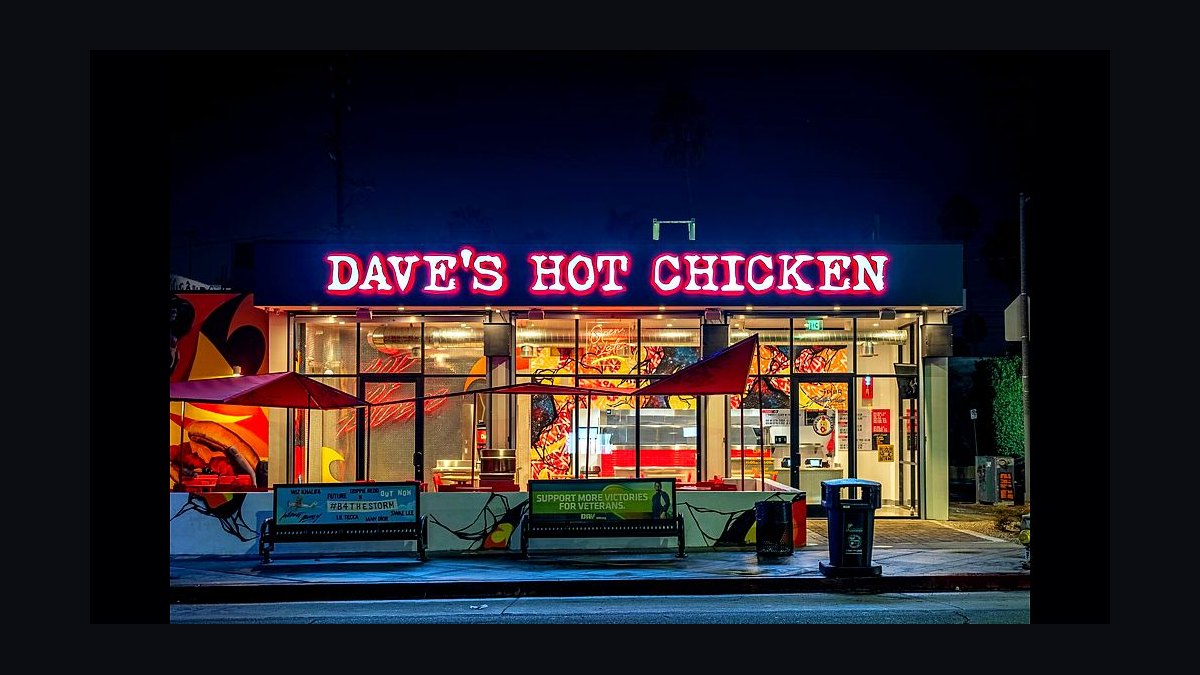
Only if you can fund a multi-unit area-development deal with restaurant operating experience behind you. Dave's Hot Chicken posts fast-casual-leading unit volumes, but the brand sells territories, not single stores. Total investment runs roughly $615,000 to $2 million per unit. Under-capitalized first-timers should not open one.
Two doors into hot chicken: develop a territory or buy your way in
Almost everyone framing this question thinks the choice is "Dave's or not Dave's." That's the wrong axis. The real choice in 2027 is between building new units under a development agreement and acquiring existing cash-flowing units — either from Dave's franchisees who want out, or from a different brand entirely.
Door one: the area-development agreement. This is the standard path Dave's Hot Chicken offers and effectively the only path for a new franchisee. You sign for a defined territory and a defined schedule — commonly several units over a multi-year window — and you pay a franchise fee per unit as each one comes online. You control site selection within your territory, subject to franchisor approval. You capture all the upside if the concept keeps compounding. You also carry every dollar of build risk, every month of ramp, and personal guarantees on the leases and the construction debt.
What "development agreement" means in practice is that you are not buying one restaurant; you are buying an obligation. The agreement has dates in it. If you miss a development milestone because a landlord dragged out a lease or a municipality sat on your permit for five months, you're in technical default on the schedule, and your remedy is a conversation with a franchisor who has other operators lined up for that territory. Experienced multi-unit developers price this in. First-timers read the schedule as an aspiration rather than a covenant.
Door two: acquisition. Instead of building, you buy units that already have sales history. In fast casual generally, resale of an existing store means you're paying a multiple of trailing EBITDA rather than paying construction costs and then waiting twelve to eighteen months to find out what the store does. You skip site-selection risk entirely — the sales are visible in the P&L. You inherit the staff, which is a mixed blessing, and you inherit the lease, including whatever rent escalators the previous owner accepted.
The problem with door two for Dave's specifically: the resale market barely exists. The brand grew fast and recently enough that most units are still held by their original developers. There is no thick market of comparable transactions to price against. When you can't observe comps, you're negotiating in the dark, and the franchisor holds transfer-approval rights that let them steer a sale toward an existing area developer rather than an outside buyer. So door two, applied to Dave's, is mostly theoretical in 2027.
Door three, which people forget: buy a different brand's units. If your actual goal is "own high-volume fast-casual restaurants," Dave's is one instrument, not the category. Established QSR brands with decades of resale history — the burger, sandwich, and coffee systems that have survived multiple category cycles — have thick resale markets, published transfer processes, and lenders who understand the collateral. You give up the momentum premium. You gain price discovery, financing depth, and an exit path that demonstrably works.
The honest framing: door one is a growth bet with concentrated execution risk. Door two, at Dave's, is largely unavailable. Door three is the boring alternative that many operators should take seriously before they sign a territory agreement they can't unwind.
How to decide which door you're walking through
The decision isn't a gut call about whether hot chicken is here to stay. It's a sequence of gates, and you fail out at the first one you can't clear.
Gate one: capital depth. Not "can I afford one store" but "can I afford the schedule plus a bad year." Development deals typically require substantial liquidity and multi-million-dollar net worth to qualify, and the qualification threshold is the franchisor's floor, not your safety margin. Your real number is the full build cost of every committed unit, plus working capital through ramp on each, plus enough reserve to eat a slow opening without missing the next milestone.
Gate two: operating experience. Do you personally, or does someone on your payroll who isn't leaving, know how to run a high-volume fast-casual kitchen? Not "I've owned a business." Specifically: have you scheduled hourly labor against a forecast, managed food cost variance week over week, and hired and retained general managers? Multi-unit franchising is a general-manager business. If you can't recruit and keep GMs, adding units multiplies a weakness.
Gate three: real estate. You need A-grade sites in your territory, not sites that are available. This is where development agreements quietly break: the first one or two locations are great because you cherry-picked them, and units four and five land in secondary corridors because that's what was left inside the territory boundary when the milestone date arrived.
Gate four: the conservative model. Underwrite at a meaningful discount to reported system averages. If the deal only works at peak volumes, it isn't a deal, it's a bet.
Run the gates in that order deliberately. Capital first because it's the cheapest to check and the most common disqualifier. Real estate before financial modeling because a model built on hypothetical rent is fiction. And the downside-survival question last, because it's the one that most often reverses an otherwise-attractive spreadsheet.
What the numbers actually say — and where they bend
Here's the disclosed and reported picture, followed by the parts of it that move.
Entry costs. The franchise fee runs around $40,000 per unit. Total initial investment lands roughly between $615,000 and $2 million depending on format, market, and how much of the build the landlord contributes. That spread is not noise — it's the difference between an inline endcap in a second-tier metro with a generous tenant-improvement allowance and a ground-up build in a high-cost coastal market. Underwrite toward the top of the range unless you have a signed letter of intent that says otherwise.
Ongoing fees. Royalty sits near 5 percent of gross sales, with an additional marketing fee on top. Call the combined franchisor take roughly 6 to 7 percent of revenue and check the current Franchise Disclosure Document for the exact figures — Item 6 lists them.
Unit volumes. Dave's reports average unit volumes well above $2 million, which is genuinely strong for fast casual. The critical caveat: an average across a system weighted toward early, hand-picked, first-mover sites is not a forecast for your unit five in a territory's leftover corridor. Item 19 of the FDD will disclose the financial performance representation the brand chooses to make; read what's actually in it, including which subset of stores it covers and whether it separates mature units from openers.
The cost stack. Food cost in this menu typically runs in the high twenties to mid thirties as a percentage of sales — a narrow menu helps, but chicken is a commodity and wholesale poultry pricing has swung dramatically in recent years. Labor is the pressure point: a high-volume location runs a substantial hourly crew, and statutory minimum wages have climbed sharply in several large states, with California's fast-food sector wage floor now well above the federal minimum. In high-wage markets, labor that a pro forma modeled in the mid twenties can land in the low thirties. Occupancy typically runs high single digits to low teens as a percentage of sales.
Stack it: food in the low thirties, labor in the high twenties to low thirties, occupancy around ten, franchisor fees around seven, plus utilities, insurance, repairs, and third-party delivery commissions — which are punishing, often taking a double-digit percentage of every delivery order. Store-level margins in the low double digits are a reasonable planning assumption, and single digits is a real outcome in a high-cost market. That's *before* debt service on a build that cost you a million dollars.
What the numbers don't include. Pre-opening labor and training. Your own salary or the cost of the operator you hire to replace yourself. The general-and-administrative overhead of a multi-unit organization — an area manager, bookkeeping, HR compliance — which single-unit pro formas simply omit and which becomes real at three units and unavoidable at five.
Financing. Multi-unit restaurant deals typically assemble a mix of SBA 7(a) borrowing, conventional restaurant lending, and equipment financing, and lenders will want personal guarantees. SBA loan limits mean the program covers early units well and later ones poorly; by unit four or five you're in conventional credit, priced on your track record with the brand. That's an argument for making units one and two exceptional.
The comparison that matters. Set the Dave's model against the same capital deployed into acquiring existing cash-flowing units in a mature brand, or into a lower-build-intensity service franchise. Home services, fitness, and education franchises generally carry a fraction of the build-out cost and none of the food-cost volatility. They also carry lower ceilings. The question isn't which is better in the abstract — it's which risk-adjusted return you actually want to own for the next decade.
Saturation, competition, and the trend-risk question
The category barely existed a decade ago. Dave's Hot Chicken went from a Los Angeles parking-lot pop-up to a national system in a few years, and that success pulled in everyone.
National QSR chains added Nashville-hot items to existing menus — an enormously cheap way to compete, since they're leveraging locations and fryers they already own. Regional hot-chicken specialists command intense loyalty in their home markets. And a long tail of small operators and ghost kitchens copied the spice-tier gimmick with minimal capital.
For a 2027 franchisee the practical risk isn't that hot chicken disappears. It's corridor-level saturation. In markets where Dave's has developed aggressively, incremental units increasingly draw from existing stores rather than new demand. Development agreements make this worse structurally: your territory obligation forces openings on a schedule, and if the strong sites are gone, you open weaker ones anyway.
Do the map work before you sign. Plot every existing and announced location — the brand's own site and franchisee disclosures cover much of this — within a wide radius of every trade area in your proposed territory. Then plot the competitive set: national chains with hot-chicken menu items, regional specialists, and independents. If your territory has four Dave's inside a fifteen-mile radius and you're obligated to add three more, the pro forma's AUV assumption is already wrong.
The structural counter-move is under-penetrated geography. Smaller metros, college towns, and suburban corridors with strong demographics and no hot-chicken presence carry lower rent, lower wage floors, and less cannibalization. The trade is smaller absolute volume per store. In a saturating category, that trade is usually worth making.
On trend risk specifically, resist both easy answers. Hot chicken is not a fad in the frozen-yogurt sense — fried chicken is a permanently large category, and the "hot" framing is a flavor position within it, not a standalone product novelty. But the *unit-growth rate* of any hot concept eventually normalizes, and normalization means your unit is competing on execution rather than on being the new thing. Underwrite for the execution phase, not the novelty phase.
Sequencing the first year, and what you own afterward

If you clear the gates, the order of operations matters as much as the decision itself.
Days 1–30: documents and self-qualification. Pull the current FDD. Read Item 7 (estimated initial investment), Item 19 (financial performance representation), Item 6 (fees), Item 12 (territory and any exclusivity), Item 17 (renewal, termination, and transfer), and Item 20 (outlet counts and the franchisee contact list). Item 20 is the one people skip and shouldn't — the year-over-year table of openings, closures, transfers, and terminations tells you more about system health than any marketing deck. Have a franchise attorney read the development agreement, not just the franchise agreement; they are separate documents and the development agreement is where the milestone obligations and personal guarantees live.
Days 31–60: validation calls and real estate. Call at least eight to ten existing franchisees from the Item 20 list, weighted toward multi-unit operators and toward anyone who recently exited. Ask for specifics: actual food cost percentage last quarter, actual labor percentage, what the build really cost versus the Item 7 estimate, how long permitting took, whether the franchisor's site-approval process slowed them down, and what a mature store nets after debt service. Ask what they'd do differently. In parallel, visit three to five locations during a Friday dinner rush — line flow, staffing, ticket times, and whether the spice levels are consistent tell you what the operating model demands.
Then get real about sites. Letters of intent, not maps. Model each site with its actual proposed rent and its actual market wage rate.
Days 61–90: financing and the go/no-go. Assemble the capital stack, confirm the development schedule is one your construction and permitting timelines can actually meet, and rerun the model at a conservative AUV with build costs at the high end of Item 7. Sign only if that version clears your return threshold.
What you own afterward. Model a seven-to-ten-year hold and a conservative exit multiple, because the resale market for this concept is untested. Transfer requires franchisor approval. Personal guarantees on leases and loans generally survive a sale unless the landlord and lender formally release you — and they often won't. Assume you're in it for the full term.
The franchisees who sleep well are the ones whose units cash-flow through a meaningful volume decline and who recover their capital from operations within four to five years rather than from a hypothetical premium sale. If your plan requires selling into a hot market to make the math work, you are underwriting the market, not the business.
Related questions
Can I open a single Dave's Hot Chicken location?
Almost certainly not. The brand awards territories through multi-unit area-development agreements aimed at experienced operators. If a single unit is your ceiling, look at fast-casual brands that explicitly sell single-unit franchises, or acquire an existing store in a mature system.
How does this compare to buying an existing restaurant?
Buying trades build risk for price risk. You pay a multiple of proven cash flow instead of construction costs plus a twelve-to-eighteen-month ramp. For Dave's specifically the resale market is thin, so this comparison usually points you toward a different, older brand.
What kills multi-unit franchisees most often?

Missing development milestones and thin general-manager benches. Operators open on schedule into weak sites, or scale faster than they can staff leadership. Capital shortfalls usually surface as a consequence of one of those two, not as the root cause.
Does celebrity backing change the underwriting?
Not materially. It lowers customer-acquisition cost and helps openings, which is real but front-loaded. It does nothing for your food cost, your wage floor, your rent, or your general manager's retention. Underwrite the P&L, not the press.
Are lower-build-cost franchises a better use of the capital?
Often, for the same dollars. Home-services, fitness, and education franchises typically require far less build-out and carry no food-cost volatility. They also cap out lower. It depends on whether you want the higher ceiling or the shallower hole.
FAQ
What is the total investment range for a Dave's Hot Chicken franchise?
Roughly $615,000 to $2 million per unit, driven by format, market, real estate, and build-out. That includes the franchise fee of about $40,000 plus equipment and initial working capital. Verify the current figures in Item 7 of the Franchise Disclosure Document, and underwrite toward the high end unless a signed letter of intent with a tenant-improvement allowance justifies otherwise.
What are the ongoing fees?
Royalty of approximately 5 percent of gross sales plus a separate marketing or advertising fee. Combined, plan on roughly 6 to 7 percent of revenue going to the franchisor before you cover food, labor, or rent. Item 6 of the current FDD lists every recurring fee, including any technology and local-marketing minimums.

How long from signing to opening?
Typically twelve to eighteen months for a first unit: site selection, lease negotiation, franchisor site approval, permitting, construction, equipment, hiring, and training. Permitting is the least predictable variable and can add months in restrictive municipalities. Build that variance into your development schedule before you agree to milestone dates.
Is hot chicken going to last?
Fried chicken is a permanently large category and "hot" is a flavor position within it, not a standalone novelty — so total collapse is unlikely. What does normalize is the unit-growth rate and the novelty premium. Underwrite assuming you compete on execution and location rather than on being the newest thing in town.
What qualifications does the brand look for?
Substantial liquid capital, meaningful net worth, prior restaurant or multi-unit operating experience, and demonstrated ability to manage real estate and construction. The published thresholds are minimums for consideration, not a safety margin. Groups without in-house restaurant operations experience typically partner with or hire a proven multi-unit operator before applying.
Can I sell the franchise later?
Transfers require franchisor approval and the brand may prefer existing area developers over outside buyers. The resale market for this concept is largely untested, so comparable pricing data is scarce. Personal guarantees on leases and loans generally survive a sale unless formally released. Plan a seven-to-ten-year hold at a conservative exit multiple.
Sources
- https://www.ftc.gov/business-guidance/resources/consumers-guide-buying-franchise
- https://www.sba.gov/funding-programs/loans/7a-loans
- https://www.franchise.org/
- https://www.daveshotchicken.com/franchising
- https://www.qsrmagazine.com/
- https://www.restaurantbusinessonline.com/
- https://www.nrn.com/
- https://www.bls.gov/oes/current/oes352021.htm
- https://www.ers.usda.gov/topics/animal-products/poultry-eggs/
- https://www.dir.ca.gov/dlse/Minimum-Wage-FAQ.htm
Related on PULSE
- Should I open or buy a Hot Chicken Takeover franchise in 2027?
- Should I open or buy a Hot Head Burritos franchise in 2027?
- Should I open or buy a Famous Dave's franchise in 2027?
- Should I open or buy a Famous Dave's BBQ franchise in 2027?
- Should I open or buy a Dave & Buster's franchise in 2027?
This page will be disappearing soon. Save it to your device for $1 — or read it free while it is here.
@Kory-White- · if Venmo asks, the last 4 of my number are 2012
This page is gone.
This one is off the shelf now. $1 keeps it on your phone for good — the whole page, pictures and diagrams included.
 franchiseShould I open or buy a Papa John's franchise in 2027?
 franchiseShould I open or buy a Big O Tires franchise in 2027?
 franchiseShould I open or buy a Bruster's Real Ice Cream franchise in 2027?
 franchiseShould I open or buy a Massage Envy franchise in 2027?
 frShould I open or buy a McDonald's franchise in 2027?
 franchiseShould I open or buy a UPS Store franchise in 2027?
 franchiseShould I open or buy an F45 Training franchise in 2027?
 franchiseShould I open or buy a Cook Out franchise in 2027?
 franchiseShould I open or buy a Pizza Hut franchise in 2027?
 franchiseShould I open or buy a Jamba franchise in 2027?