


How many hours does it take to beat the longest open-world games in 2027?
Quality
Certified
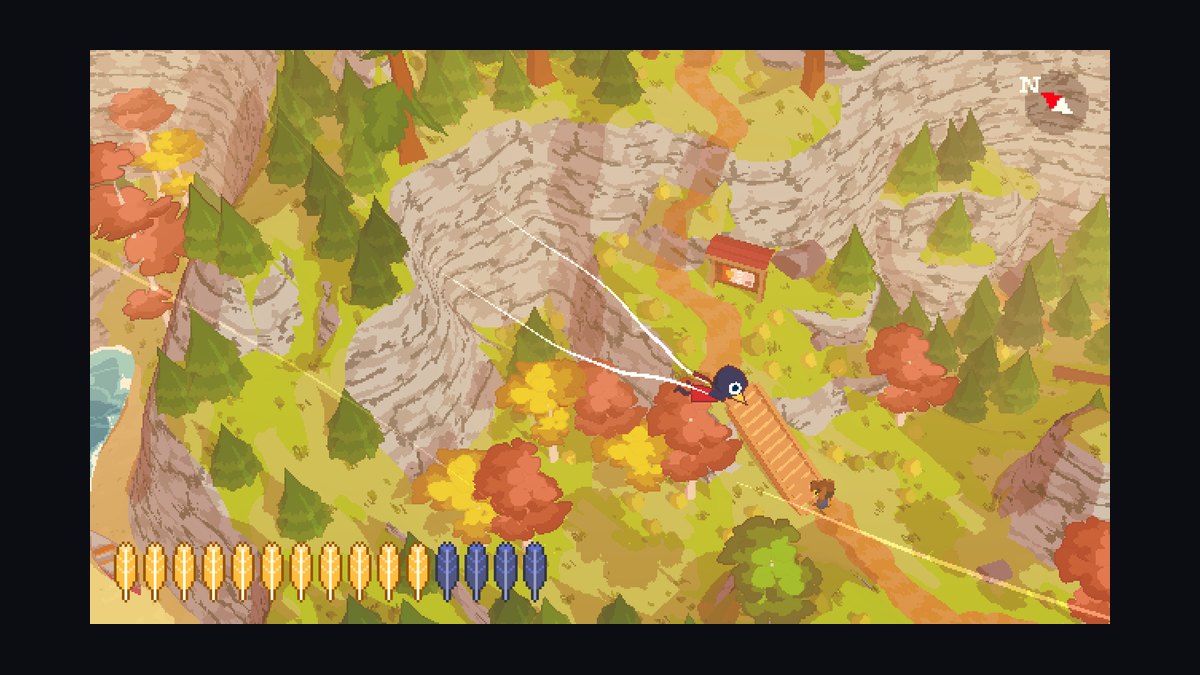
Beating the longest open-world games in 2027 takes roughly 40 to 60 hours for a focused main story, 90 to 150 hours for a normal main-plus-extras run, and 200 to 400-plus hours for genuine 100% completion. Titles with procedural or seasonal content have no true finish line, so only their campaigns are bounded.
The two clocks: main story versus completionist
Every runtime estimate for open-world games splits into two fundamentally different measurements, and confusing them is the most common reason players feel misled about how many hours a title takes. The first clock is the main story clock: you follow the critical path, accept only the side content the game forces on you, and skip everything optional. The second clock is the completionist clock: every side quest, every collectible, every region cleared, every achievement or trophy unlocked. Between them sits a third informal measure, usually called "main plus extras," where you do the story plus whatever side content you happen to enjoy.
For large modern open-world titles, the gap between those two clocks is not 20 or 30 percent. It is typically 3x to 6x. A game whose main story runs 45 hours will routinely demand 180 to 250 hours for full completion, because the completion checklist scales with map area and system count rather than with narrative length. Narrative content is expensive to produce, so studios keep it roughly bounded; systemic content — outposts, shrines, towers, hunting targets, crafting trees, dungeon variants — is comparatively cheap to multiply, so it expands to fill the map.
This asymmetry has been growing. Open-world games from the early 2010s often had main stories in the 15 to 25 hour range with completionist runs around 60 to 80 hours. By the mid-2020s, flagship entries in the genre pushed main stories to 40 to 70 hours and completionist runs past 200. The direction of travel into 2027 is more of the same: bigger maps, more systems, more optional layers, and main paths that grow more slowly than the totals.
There is also a fourth clock nobody advertises: the speedrun clock. Games whose honest main story is 50 hours are frequently completed by expert runners in two to six hours using sequence breaks, movement exploits, and skipped cutscenes. That number is real but useless for planning your own playthrough. It tells you about the game's exploitable geometry, not about how long the designed experience lasts. When you see a runtime figure quoted without a category attached, assume it is main-story and treat it as a floor.
A practical consequence: when you budget your time, decide which clock you are on before you start, not 30 hours in. Players who drift between the two — doing most side content but not tracking completion — end up in the worst of both worlds, spending completionist hours without reaching completionist payoff, and often abandoning the game somewhere past the 70-hour mark with the story unfinished.
How to decide which clock you are on
Choosing your target before you start is the single highest-leverage decision for how many hours you will spend, and whether those hours feel well spent. The decision is not "how much free time do I have" — it is "what payoff am I actually chasing."
If you want the story and the ending, run the main-path clock. Do side content only when the game explicitly signals a power or narrative dependency. Expect 40 to 60 hours for a flagship 2027 open-world title, with variance driven mostly by combat difficulty and how much you explore incidentally.
If you want the world, run main-plus-extras. Do side quests that look narratively substantial, ignore collectible categories entirely, and clear regions only where you are already going. Expect 90 to 150 hours. This is where most players land and where satisfaction per hour tends to peak, because you get the designed variety without the diminishing-returns tail.
If you want the completion, commit to it consciously and use a tracker from hour one. Retroactive completionism is brutally inefficient — sweeping a map for missed collectibles after finishing the story can add 30 to 60 hours of pure backtracking that would have cost 10 to 15 hours if done in-region as you passed through. Expect 200 to 400-plus hours, and check before starting whether any content is missable, time-limited, or seasonal, because a single missable achievement can force an entire second playthrough.
One more decision input: how the game handles the post-credits state. Some open-world games return you to the world after the ending with everything still available; others lock you out of regions, end the run, or force a new-game-plus cycle. If the game locks out post-credits content, the completionist clock and the main-story clock cannot be run sequentially — you must decide up front. Check this before your final mission, not after.
What drives the hour count in a 2027 open-world game

Runtime in this genre is not authored directly. It emerges from a handful of design decisions, and if you learn to read those decisions you can estimate a game's length from a single trailer or a two-hour demo with surprising accuracy.
Traversal speed relative to map size. This is the dominant factor and the most misunderstood. Map area in square kilometers is a terrible predictor of hours on its own, because a 60 km² map with a fast mount, gliders, and generous fast travel can be crossed in less real time than a 20 km² map that forces you to walk. What matters is *traversal time between meaningful nodes*. If the average trip between two points of interest is 90 seconds instead of 30 seconds, and your playthrough involves 400 such trips, you have just added five hours of pure movement. Games that gate fast travel behind discovery — you must physically reach a location once before you can warp to it — front-load enormous amounts of traversal into the first third of the run.
Quest density and quest length. A map with 120 side quests averaging 25 minutes is 50 hours of side content. A map with 300 activities averaging 6 minutes is 30 hours. Density feels different to play, too: high-count-short-duration content reads as busywork; low-count-long-duration content reads as substantial but makes the map feel emptier between beats. Most 2020s open-world design has been drifting toward the second model after years of criticism of checklist maps, which raises average quest quality while sometimes *lowering* total hours.
Failure and retry loops. Combat difficulty compounds runtime nonlinearly. A boss that takes you eight attempts at 12 minutes per attempt is 96 minutes for one encounter that a skilled player clears in 12. Games built on high-challenge combat can therefore have main-story ranges that span 3x between the fastest and slowest quartile of players — far wider spread than a narrative-forward game where the difficulty floor is low.

Grind gates and progression pacing. Level requirements, gear thresholds, crafting material sinks, and reputation tiers all insert mandatory time between narrative beats. If the story's act three requires level 40 and normal play through act two reaches level 32, the game has silently added a grind segment of several hours whether or not it is signposted. Live-service-adjacent progression curves, energy systems, and daily-reset content push this further, and any game with a seasonal structure effectively has an unbounded completionist number.
Menu, load, and inventory overhead. Underrated. Ten seconds of load time per fast travel, 200 fast travels, plus inventory management, map-marker checking, and crafting menus can easily total four to eight hours in a long run. This is why the same game on a fast NVMe drive genuinely takes fewer wall-clock hours to complete than on older storage — a real difference of several hours on a 100-hour run.
Procedural or generated content. A game with hand-authored content has a finite completionist number. A game with procedural regions, generated dungeons, or an infinite mission generator has a completionist number that is defined by the checklist, not by the content. If the achievement list stops at "visit 100 systems" but there are thousands, the completion number is small and arbitrary; if it says "visit every system," the number is effectively infinite and the game cannot be beaten in the completionist sense at all.
Player behavior itself. Two people playing the identical game can differ by 2x on the same clock. Someone who reads every codex entry, listens to every dialogue line, photographs vistas, and explores off-path will spend far longer than someone following waypoint markers efficiently. Runtime databases average this out, which is why any single number should be read as the middle of a wide band rather than a promise.
Concrete numbers behind each tier

Here is what the tiers actually look like in practice, expressed as bands rather than points, because any single figure hides a spread of at least plus or minus 30 percent.
Main story, 40 to 60 hours. The fast quartile — experienced genre players on normal difficulty, following markers, skipping optional dialogue — lands near 35 to 42 hours. The median lands 45 to 52. The slow quartile, meaning players who wander, die often, or play on higher difficulty, runs 60 to 80. At three hours per session that is roughly 15 to 20 sessions; at one hour a night, seven to nine weeks. The most common failure mode here is starting the game, doing 20 hours of side content by accident, then losing the narrative thread and stopping.
Main plus extras, 90 to 150 hours. This band is wide because "extras" is undefined. A useful decomposition for a 120-hour run: about 50 hours of main story including retries, 40 hours of substantial side quests, 15 hours of traversal and fast-travel overhead, 10 hours of crafting, gearing, and inventory management, and 5 hours of menus and loads. Notice that a full sixth of the run is spent not playing content at all. At two hours a night, five nights a week, a 120-hour run takes about 12 weeks.
Completionist, 200 to 400-plus hours. The lower end of this band applies to games with a hand-authored checklist and generous fast travel. The upper end applies to games with hundreds of collectibles, multiple ending branches requiring separate runs, difficulty-locked achievements, or grind-gated progression. Above 400 hours you are almost always in one of three situations: a game with procedurally generated content and a poorly bounded checklist, a game requiring multiple full playthroughs for mutually exclusive choices, or a live-service structure where "completion" is a moving target that resets each season.
Speedrun, 2 to 8 hours. Any-percent categories for large open-world games commonly compress a 50-hour designed run into a few hours through skips. Glitchless categories usually land three to five times longer than any-percent. Neither number should influence your own planning.
Some concrete arithmetic worth internalizing. If a game has 180 collectibles and each takes an average of four minutes to reach and grab once you know its location, that is 12 hours *with a guide*. Without a guide, at an average of 11 minutes of searching per item, it is 33 hours. Guide use is therefore worth roughly 20 hours on a single collectible category — which is why completionists overwhelmingly use them and why "how long does 100% take" answers vary so wildly depending on whether the respondent looked things up.
Similarly: if a game's fast-travel loading takes 14 seconds and you fast travel 350 times in a completionist run, that is 82 minutes of loading screens. Cut it to 4 seconds on faster hardware and you save nearly an hour of your life on that one mechanic alone. On a 300-hour run, hardware and settings choices realistically swing total wall-clock time by 5 to 15 hours.
One caution on published averages: crowd-sourced runtime databases skew toward engaged players who bother to submit times, and toward people who finished. Players who bounced off at hour 12 are invisible in the data. Read published medians as "how long it takes people who complete it," not "how long it takes a typical buyer."
Implementation: how to actually sequence a long run

Knowing the number is not the same as finishing. Long open-world games have a well-documented abandonment cliff somewhere between hours 25 and 45, right where the novelty of the systems has worn off and the map has revealed how much remains. Sequencing your run deliberately is what gets you past it.
Front-load the traversal unlocks. In almost every open-world game, the single highest-value early investment is whatever reduces movement time — the mount, the glider, the fast-travel network, the movement skill. Spending three hours in the first ten unlocking mobility routinely saves 15 to 25 hours across a full run. Do this before you touch collectibles.
Clear by region, not by category. The instinct to "do all the towers, then all the outposts" is the single most expensive mistake in completionist play, because it makes you cross the map once per category. Clearing one region fully before moving on cuts total traversal by a large multiple. The cost is variety fatigue; the fix is to alternate a region-clear session with a story session.
Interleave the main story on a fixed ratio. A workable pattern is two side sessions for every one story session in the first half, inverting to one-to-two in the second half. This keeps narrative momentum alive through the abandonment window while still front-loading exploration for when the world is fresh.
Audit missables before every act transition. Most open-world games have at least a few pieces of content that become unavailable after a story beat. Ten minutes checking a missables list before each major mission prevents the single worst completionist outcome: a full second playthrough for one item.

Set a session floor, not a session ceiling. These games punish short sessions, because 20 minutes barely covers loading, re-orienting, and traveling to your objective. A 75 to 90 minute minimum session makes the same total hours feel dramatically more productive.
Decide the difficulty on hour one and do not change it mid-run. Difficulty affects the total by 30 percent or more through retry loops. Changing it midway invalidates your own pacing estimates and, in some games, locks achievements.
Track as you go, in the game's own systems if possible. Modern open-world games increasingly expose per-region completion percentages. Using them costs nothing and turns the endgame sweep from a search problem into a routing problem, which is roughly a 3x time difference.
Know when to stop. If you are 60 hours in, the story is done, and the remaining checklist is 90 hours of one repeated activity, the honest answer is that you have beaten the game. Completion is a self-imposed goal, and open-world design will happily absorb unlimited hours from anyone who does not set a limit.
Related questions
Does map size predict how many hours a game takes?
Poorly. Traversal speed and point-of-interest density matter far more than raw square kilometers. A large map with fast mounts and dense fast travel can take fewer hours than a smaller map that forces walking and gates warp points behind physical discovery.
Why do published runtime estimates vary so much?
Because they aggregate self-reported times from players on different difficulties, with and without guides, on different hardware, with wildly different exploration habits. The submitting population also skews toward people who finished, which biases medians downward relative to typical buyers.
Is 100% completion worth the extra hours?
_%C2%B7_Lowth_%C2%B7_058.jpg)
Usually only if the remaining content is varied. When the tail is one repeated activity multiplied by 150 collectibles, the hours-to-enjoyment ratio collapses hard. Check what the last 30 percent of the checklist actually contains before committing to it.
Do faster load times really change the total?
Yes, measurably. On a run with 300-plus fast travels and frequent deaths, cutting load times from roughly 15 seconds to 4 seconds saves an hour or more of pure waiting, and considerably more on high-retry combat sections.
Can you beat a live-service open-world game at all?
Not in the completionist sense. Seasonal resets and rotating content mean the checklist never closes. You can finish the main campaign, which behaves like any other main-story clock, but "100%" is not a defined state.
FAQ
How many hours does it take to beat the longest open-world games in 2027?
Plan on 40 to 60 hours for the main story of a flagship title, 90 to 150 for a comfortable main-plus-extras run, and 200 to 400-plus for true completion. Games with procedural generation or seasonal content have no bounded completion number at all, so the only meaningful figure there is the campaign.
What is the difference between "beating" and "completing" a game?

Beating means finishing the main narrative and reaching the credits. Completing means clearing the game's full checklist — every side quest, collectible, achievement, and region. In large open-world titles those two numbers differ by a factor of three to six, which is why unqualified runtime claims are so often misleading.
How do I estimate a game's length before I buy it?
Look at three things: how the game handles traversal and fast travel, how many distinct activity types the map contains, and whether progression is gated by level or material grinding. Generous traversal plus few activity types plus ungated progression means a shorter run. The inverse means a much longer one.
Does difficulty setting meaningfully change total hours?
Substantially, in combat-heavy games. Retry loops compound: an encounter cleared in one attempt on normal might take six or eight on the hardest setting, and that pattern repeats across dozens of encounters. A 30 percent or larger swing on total runtime is common between the easiest and hardest settings.
Should I use a guide for collectibles?
If you are chasing completion, yes. The difference between knowing where an item is and searching for it is roughly four minutes versus eleven minutes per item. Across a 180-item category that is about 20 hours. If you are playing for discovery rather than completion, skip the guide entirely — the hours are the point.
What is the best way to avoid abandoning a long game partway through?
Pick your clock before you start, unlock mobility in the first ten hours, clear content region by region rather than category by category, and keep story sessions in the rotation through the 25-to-45-hour window where most abandonment happens. Set a session floor of about 75 minutes.
Sources
- https://howlongtobeat.com/
- https://www.gamedeveloper.com/
- https://www.gdcvault.com/
- https://en.wikipedia.org/wiki/Open_world
- https://www.pcgamer.com/
- https://www.eurogamer.net/
- https://www.speedrun.com/
- https://www.digitalfoundry.net/
- https://www.ign.com/
Related on PULSE
- How long does it take to 100% a modern RPG?
- Why do open-world maps keep getting bigger?
- What makes players abandon a game partway through?
- How do studios estimate content hours during production?
- Does game length correlate with review scores?
This page will be disappearing soon. Save it to your device for $1 — or read it free while it is here.
@Kory-White- · if Venmo asks, the last 4 of my number are 2012
This page is gone.
This one is off the shelf now. $1 keeps it on your phone for good — the whole page, pictures and diagrams included.
 pulse-recentThe 10 Best Gaming Subscriptions for Their Price in 2027
 pulse-recentThe 10 Most Expensive Gaming Collector's Editions to Buy in 2027
 pulse-recentTop 10 Most Expensive Collector's Edition Retro Handhelds in 2027
 gamingThe 10 Best Gaming Mouse Pads in 2027
 pulse-recentTop 10 Best-Selling Nintendo Switch Games of All Time in 2027
 pulse-recentTop 10 Gaming Controllers with the Longest Battery Life in 2027
 pulse-recentWhat are the most common mistakes new players make in competitive shooters in 2027?
 pulse-recentThe 10 Best Budget Gaming Mouse Pads Under $20 in 2027
 pulse-recentThe 10 Best Budget Gaming Monitors Under $250 in 2027
 pulse-recentWhat is the average lifespan of a gaming laptop before it needs replacing in 2027?