


What is the hidden cost of free-to-play games in 2027?
Quality
Certified

The hidden cost of free-to-play games in 2027 is everything the download price hides: time engineered into obligation, behavioral data sold onward, spending drip-fed in fractions of a currency you bought in bulk, and progress that evaporates when servers close. You pay in attention, money, and permanence — just never at checkout.
The player who did the math
Picture a player who installs a free strategy title in January 2027. The store page shows no price. Thirty days later they open their phone's screen-time report and find 41 hours logged against that one app — roughly 82 minutes a day, most of it in five-to-fifteen-minute sessions triggered by push notifications telling them a timer finished, an ally attacked, or a limited event ends in four hours. Their bank statement shows six charges: $4.99, $9.99, $9.99, $19.99, $4.99, $19.99 — $70.94 across the month, none of them feeling like a purchase decision at the time, because each one bought a *currency*, and the currency bought the thing.
That is the shape of the hidden cost, and it has three separable components that people usually blur together.
The first is time-as-price. The free game did not charge money for the strategy title; it charged 41 hours. Some of those hours were fun and would be counted as entertainment value in any honest ledger. But a meaningful share were not gameplay at all — they were maintenance: logging in to collect a daily reward so a 60-day streak would not reset, tapping through an energy refill, watching a 30-second rewarded ad to double a payout. The industry term for the design that produces this is a *retention loop*, and it is optimized against a metric (day-1/day-7/day-30 retention) that rewards habit formation independent of whether the player is enjoying themselves on any given login.
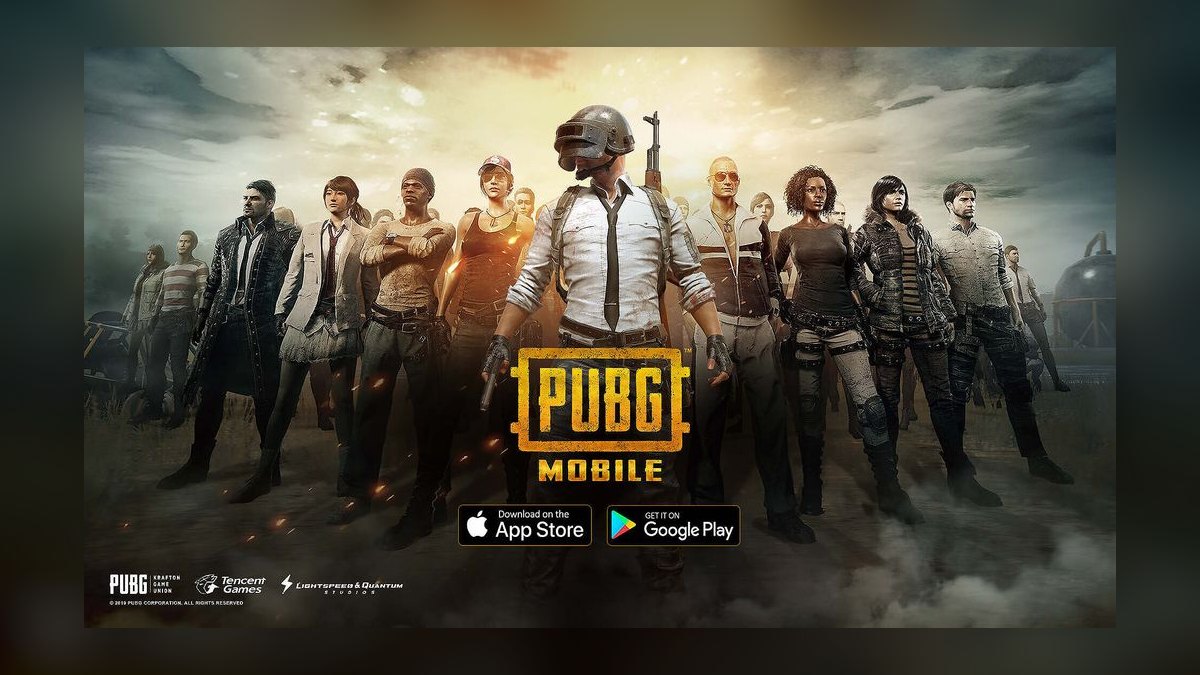
The second is money-as-fog. The six charges were not six decisions. They were one decision — "I want the thing" — repeatedly obscured by a two-step conversion. You buy 1,200 gems for $9.99; the item costs 1,500 gems; you now hold a 300-gem hole that only another purchase closes. This is *currency laddering*, and the bundle sizes are chosen so that almost no purchase resolves cleanly to zero. The player's mental accounting registers "I bought gems once" while the ledger registers seventy dollars.
The third is permanence-as-illusion. Everything bought was a license to use digital items inside a live service the publisher operates at will. When the service ends — and live-service titles do end, often within two to four years of launch if they miss revenue targets — the items end with them. There is no resale, no export, and in most jurisdictions no refund obligation for a service that was disclosed as a service.
A fourth cost sits underneath all three: data. A free-to-play mobile game with an ad-monetized tier is, structurally, an advertising business that ships a game as its inventory. The SDKs embedded for attribution, mediation, and analytics observe session times, purchase behavior, device identifiers, coarse location, and installed-app signals, and feed them into the same identity graphs that price ads elsewhere. The game is free because you are legible.
How the mechanism actually works
The money side of free-to-play runs on a small number of interlocking mechanisms. Understanding them individually is what lets a player — or a parent, or a regulator, or a designer trying to build something less predatory — see the cost while it is being charged rather than a month later.
Acquisition and the whale math. A typical free-to-play title converts a low single-digit percentage of installs into paying users. The commonly cited industry shape is that roughly 2–5% of players ever spend, and that a small fraction of those — often described as the top 1–2% of the paying cohort — supplies the majority of revenue. This is not a curiosity; it is the design constraint. If most of your revenue comes from a handful of very high spenders, the economy must have a top end deep enough for someone to spend thousands into, which means the ceiling is built for the outlier and the middle of the game is tuned as the funnel that finds them.
The soft-currency / hard-currency split. Soft currency (gold, coins) drops from play and paces progression. Hard currency (gems, crystals) is bought and skips pacing. The friction between them is deliberate: soft currency accumulates slowly enough that hard currency always has an obvious use, and hard currency is sold in denominations that never quite line up with prices.
Energy, timers, and the paywall that looks like a clock. Energy systems cap how long you can play in one sitting; build timers cap how fast you progress between sittings. Neither says "pay." Both create a moment where paying is the only lever that moves. A 4-hour build timer with a "finish now" button priced at a few gems converts impatience into revenue without ever presenting a price for the game itself.
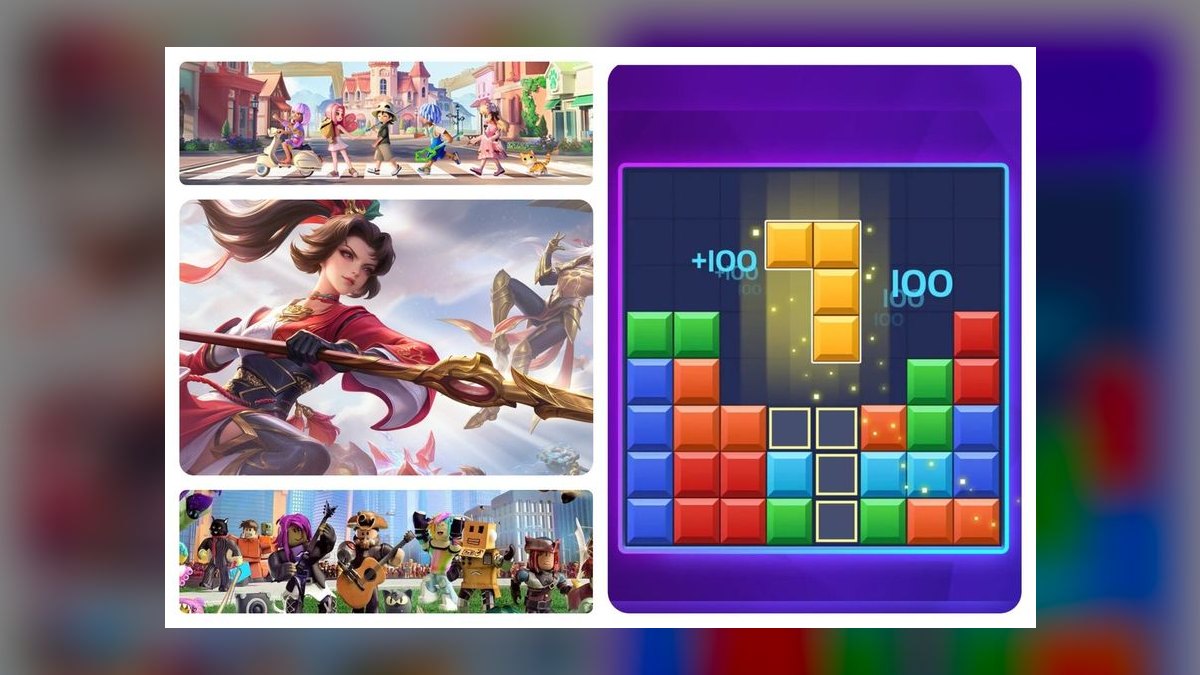
Loot boxes and probabilistic reward. Where they remain legal and undisclosed, randomized reward mechanics extend spend by making the outcome uncertain — a variable-ratio schedule, which is the most persistent reinforcement pattern known in behavioral psychology. Several jurisdictions have moved on this: Belgium took the hardest line in 2018 by treating paid loot boxes as gambling under its Gaming and Betting Act; China has required drop-rate disclosure since 2017; and Apple and Google both require odds disclosure in app store policy. The design response has largely been *pity timers* and *battle passes* — mechanisms that keep the variable schedule but bound the worst case.
Battle passes. A season pass with a fixed price and a tiered reward track converts random spend into a subscription-shaped commitment plus a completion obligation. The pass is usually cheap relative to a box of loot; the cost lands as time, because an unfinished pass you paid for is a debt the player feels.
Ads as a second revenue rail. Rewarded video, interstitials, and offerwalls monetize the ~95% who never spend cash. The eCPM the developer earns depends on how well the ad network can target the viewer, which is what makes the data pipe load-bearing rather than incidental.
Real numbers, ranges, and benchmarks
Precision matters here, so treat these as widely-reported industry shapes rather than any single audited figure — the exact values move by genre, region, and year.
Conversion. Free-to-play mobile titles commonly report payer conversion in the low single digits — frequently quoted around 2%, with well-monetized titles reaching the mid single digits. Flip that: 95%+ of the audience pays entirely in time and attention.

Revenue concentration. The standard shape is heavily skewed. When a small slice of payers drives most revenue, the arithmetic implies individual annual spends in the hundreds to low thousands of dollars for the deepest cohort — which is why consumer-protection attention has focused there.
Price points. The near-universal mobile ladder is $0.99 / $4.99 / $9.99 / $19.99 / $49.99 / $99.99, with "value" scaling upward so the largest bundle always shows the best per-unit rate. The $99.99 tier exists because a payer who will spend $99.99 exists; its presence also anchors $19.99 as reasonable.
Bundle mismatch. Check any economy you play: count how often a purchasable bundle exactly equals a purchasable item's price. In laddered economies it is close to never. That gap is the mechanism, not an accident.
Time. Live-service games with daily reset structures typically ask for 15–45 minutes a day of "maintenance" play to stay on-pace, separate from whatever play you actually wanted. Over a year, 20 minutes a day is roughly 120 hours — three full work weeks. Priced at even a modest hourly value of your own time, that dwarfs the $70 in the example above.
Ad load. Rewarded-video-driven titles commonly surface multiple ad opportunities per session, and hybrid-monetized games layer interstitials at natural break points. Each 30-second unit is a real 30 seconds; ten a day is five hours a year of watching advertisements you sought out voluntarily.
Sunset risk. Live-service closures are routine. Publicly announced shutdowns of mobile and PC live titles happen continuously across the industry, and the standard closure notice runs 30–90 days, during which in-app purchases are usually disabled and existing balances are typically not refunded beyond what local consumer law or platform policy requires. Assume any balance you hold has a nonzero chance of becoming worthless on 60 days' notice.

Regulatory floor. The relevant 2027 backdrop is that disclosure, not prohibition, is the dominant regime in most markets: app store rules require odds disclosure for randomized items; the EU has pushed on dark patterns and in-game currency transparency through consumer-protection channels; and the FTC's 2023 settlement with Epic Games over dark patterns and unauthorized children's charges — reported at $245 million in refunds on the dark-patterns count plus a $275 million civil penalty on the COPPA count — set the reference price for getting this wrong in the United States.
Trade-offs, and what the alternatives actually cost
The honest comparison is not "free-to-play is bad, premium is good." Each model moves the cost somewhere; the question is whether you can see it.
Premium (buy once). A $30–$70 up-front price is legible, refundable within platform windows, and usually leaves you with something that runs offline for as long as the binary runs. The trade-off: no free trial of the real thing, a higher barrier that shrinks the player base for multiplayer titles, and — increasingly — premium games that also ship a cash shop, which recreates the free-to-play cost structure on top of a purchase price.
Subscription. A fixed monthly fee across a catalog turns the cost into a line item you can see and cancel. The trade-off is that access ends with payment, and library churn means the specific game you were 60 hours into can leave the service.
Cosmetic-only free-to-play. Selling appearance rather than power keeps competitive integrity and removes the pay-to-win pressure that drives the worst spending spirals. The trade-off is that it monetizes far less efficiently, so these games need enormous scale to survive — and the pressure to add "cosmetics that are also convenience" is constant.
Ad-supported free-to-play. Zero money cost, high attention and data cost. Best-case honest version: a game with a one-time "remove ads" purchase, which is arguably the cleanest deal in the category because it converts the hidden cost into a visible one at the player's choosing.
Battle-pass hybrid. Around $10 per season for a defined reward track is closer to a subscription than to a loot box, and it is a genuine improvement over randomized spend. Its cost is the completion obligation — the pass converts your money into a time commitment.
What a player can actually do about it, concretely:
- Set a hard annual budget per game before installing — a number, written down. The mechanism defeats in-the-moment judgment, so the decision has to precede the moment.
- Turn off all push notifications for the game. Nearly every re-engagement loop routes through them. This single toggle removes most of the manufactured urgency.
- Buy the item, never the currency, when possible. Where direct purchase exists, it prices the thing honestly. Where only currency exists, compute the true dollar cost of the item before buying the bundle.
- Audit screen time monthly, per app, not in aggregate. The 41-hour number is the one that changes behavior.
- Treat any balance as expiring. Spend hard currency when you get it rather than saving toward a future the service may not have.
- Use platform spending controls. iOS Screen Time and Google Play both support purchase authentication and spend limits; family accounts should have them on by default.
- For parents specifically: disable in-app purchases entirely rather than relying on password prompts. The FTC action above exists precisely because prompt-based friction failed at scale.
Common pitfalls, and how to avoid them
Pitfall: counting only the charges you remember. Most players underestimate annual spend by a wide margin because currency purchases do not feel like buying the item they enabled. *Fix:* pull the actual receipts. Apple's Report a Problem history and Google Play's order history both list every in-app purchase with date and amount. Sum a full year once; the number is the intervention.
Pitfall: treating "free" as the whole price. The store label describes checkout, not the transaction. *Fix:* before installing, look for three tells on the store page — an in-app purchases disclosure with a $99.99 top tier, "contains ads," and a live-service description ("seasons," "events," "daily rewards"). Any two of those describe a game whose cost you will pay in installments.
Pitfall: assuming your purchases are property. They are licenses, and the EULA says so. *Fix:* read the shutdown clause once, in one game, so you know what the standard language actually says. Then price every future purchase as consumption, not investment.
Pitfall: fighting the loop with willpower. Retention systems are tuned by continuous experimentation against millions of sessions. An individual's resolve is not the right instrument. *Fix:* change the environment instead — notifications off, payment method removed from the store account, a session timer set outside the game.
Pitfall: sunk-cost escalation after a bad pull. Randomized rewards produce near-misses, and near-misses reliably increase the urge to continue. *Fix:* decide the stop condition before opening anything — "I will spend the pass price and no more this season" — and treat pity-timer math as information, not as an obligation to reach the pity.
Pitfall (for developers): assuming the regulatory floor holds. Disclosure-based rules have been tightening, not loosening, and children's-privacy and dark-patterns enforcement carries nine-figure exposure. *Fix:* design the economy so the disclosure is boring — direct-purchase options, clean bundle math that can zero out, no confusable currencies, no purchase flow inside a pressure timer, and hard spend caps for minor accounts by default.
Pitfall: the "I'm free-to-play so it costs me nothing" belief. The non-paying player's cost is the largest one in aggregate: the time and the data. *Fix:* price it. Multiply your daily maintenance minutes by 365, then ask whether you would pay that many hours for the game at a store.
Related questions
Why do free-to-play games use two currencies instead of one?
Two currencies separate pacing from payment. Soft currency drops from play and controls progression speed; hard currency is purchased and skips it. The split also enables bundle mismatch — you buy hard currency in sizes that rarely equal item prices, leaving a residual balance that pulls the next purchase.
Are loot boxes still legal in 2027?
It varies by jurisdiction. Belgium has treated paid loot boxes as gambling since 2018; China has required drop-rate disclosure since 2017; most other markets rely on disclosure rules, including Apple's and Google's app store requirements that odds be published. Design has largely shifted toward pity timers and battle passes.
What happens to my purchases when a live-service game shuts down?
Typically nothing survives. Purchases are licenses to use items inside an operating service, not transferable property. Closures usually run a 30–90 day notice during which in-app purchases are disabled; refunds beyond local consumer law or platform policy are uncommon. Treat balances as consumable.
Is a battle pass cheaper than loot boxes?
Usually yes in money, often not in time. A fixed seasonal price with a defined reward track removes randomized spend and caps the worst case. The trade-off is a completion obligation — the pass you paid for converts into a per-day play requirement to finish before the season resets.
How much does the average free-to-play player actually spend?
Most spend nothing: payer conversion commonly sits in the low single-digit percentages. The average across all installs is therefore small, while the average across payers is much larger and heavily skewed by a small top cohort. Any "average" quoted without saying which denominator it uses is misleading.
FAQ
What exactly is "hidden" about the cost of a free-to-play game?
Four things that never appear at checkout: the hours the retention loop extracts, the behavioral data the ad and attribution SDKs collect, the real dollar total obscured by buying currency instead of items, and the fact that everything purchased disappears if the service closes. The download is free; the transaction is continuous.
Do free games make more money than paid ones?
At the top of the market, yes — free-to-play dominates mobile revenue and is the standard model for the largest live-service titles on PC and console. That is a consequence of reach plus revenue concentration: a small paying cohort spending deeply outperforms a broad audience paying once.
Is watching a rewarded ad really a cost if I chose it?
Yes, in two currencies. The 30 seconds is real time, and the impression is what makes your session monetizable — it is the mechanism by which non-paying players fund the game. Choosing it makes it a fair trade, not a free one. Ten a day is roughly five hours a year.
What is currency laddering and why does it matter?
It is the practice of selling in-game currency in denominations that rarely match item prices, so almost every purchase leaves a residual balance too small to use and too annoying to abandon. It converts a single buying decision into a repeating one, and it is the main reason players underestimate their annual spend.
How do I find out what I have actually spent?
Pull the platform receipts rather than trusting memory. Apple lists in-app purchases under purchase history and Report a Problem; Google Play has an order history; Steam has a purchase history under account details. Sum one full year per game. Nearly everyone who does this is surprised.
What should a developer do to build a free-to-play game that is not predatory?
Offer direct purchase of items alongside currency, size bundles so balances can zero out, disclose odds prominently rather than minimally, keep purchase flows out of countdown timers, sell cosmetics over power, cap minor accounts by default, and publish a clear policy on what happens to purchases at sunset.
Sources
- https://www.ftc.gov/news-events/news/press-releases/2022/12/fortnite-video-game-maker-epic-games-pay-more-520-million-relief-consumers-privacy-violations-unlawful
- https://www.ftc.gov/business-guidance/blog/2022/09/ftc-report-shows-rise-sophisticated-dark-patterns-designed-trick-and-trap-consumers
- https://developer.apple.com/app-store/review/guidelines/
- https://support.google.com/googleplay/android-developer/answer/9858738
- https://www.gamblingcommission.gov.uk/news/article/loot-boxes-in-video-games
- https://commission.europa.eu/live-work-travel-eu/consumer-rights-and-complaints_en
- https://www.bbc.com/news/technology-43906306
- https://newzoo.com/resources/trend-reports
- https://www.pewresearch.org/internet/2024/05/09/teens-and-video-games-today/
- https://www.who.int/standards/classifications/frequently-asked-questions/gaming-disorder
Related on PULSE
This page will be disappearing soon. Save it to your device for $1 — or read it free while it is here.
@Kory-White- · if Venmo asks, the last 4 of my number are 2012
This page is gone.
This one is off the shelf now. $1 keeps it on your phone for good — the whole page, pictures and diagrams included.
 pulse-recentTop 10 Best-Selling Nintendo Switch Games of All Time in 2027
 pulse-recentWhat do professional esports players do differently in their daily practice routines in 2027?
 pulse-recentWhat's the fastest way to become a professional esports commentator in 2027?
 pulse-recentTop 10 Most Expensive Yu-Gi-Oh! Trading Card Game Booster Boxes to Buy in 2027
 pulse-recentTop 10 Most Expensive Collector's Edition Retro Handhelds in 2027
 pulse-recentThe 10 Best Budget Gaming Monitors Under $250 in 2027
 pulse-recentTop 10 Most Expensive Big Box PC Games to Buy in 2027
 pulse-recentTop 10 Gaming Controllers with the Most Hall Effect Joysticks in 2027
 pulse-recentWhat is the average lifespan of a gaming laptop before it needs replacing in 2027?
 pulse-recentThe 10 Best Gaming Chairs Under $200 in 2027