


What is the average cost of a complete gaming room setup in 2027?
Quality
Certified
A complete gaming room setup in 2027 averages roughly $4,000 to $9,000 for a solid mid-range build, covering a gaming PC or current console, monitor, desk, chair, audio, lighting, and treatment. Budget rooms land near $1,500–$2,500; enthusiast builds with premium displays and acoustic work commonly reach $15,000 or more.
The room you actually walk into on move-in day
Picture the spare bedroom most people convert: about 11 by 12 feet, one window on the short wall, a closet, carpet over plywood subfloor, a single duplex outlet on each wall, and an overhead light that flickers when the HVAC kicks on. That room is the real starting point for almost every "complete gaming room setup" budget, and it explains why the cost estimates people find online rarely survive contact with reality.
The gap comes from scope. When someone asks what a gaming setup costs, the answer they usually get is the cost of the hardware pile: PC, monitor, keyboard, mouse, headset. That pile is genuinely the largest single line item, but it's rarely more than 55 to 65 percent of what actually gets spent before the room feels finished. The remainder disappears into things nobody budgets on day one — a second circuit because the 15-amp bedroom line trips when a space heater and a 1000-watt power supply share it, blackout curtains because the window washes out the display every afternoon, a rug because the carpet is stained, a small dehumidifier because the room is over an unconditioned crawlspace, and a $180 delivery-and-assembly charge on the desk that shipped in four boxes.
A useful way to frame the whole project is in five buckets that every room needs regardless of budget tier: compute (PC or console), display, furniture (desk and chair), peripherals and audio, and room work (power, light, sound, storage, network). A complete setup means all five are addressed. A "gaming PC build" only addresses one and a half of them. That distinction is the single biggest reason people who budgeted $2,000 end up at $4,500, and it is not because they overspent on any one item — it is because four buckets were invisible at planning time.
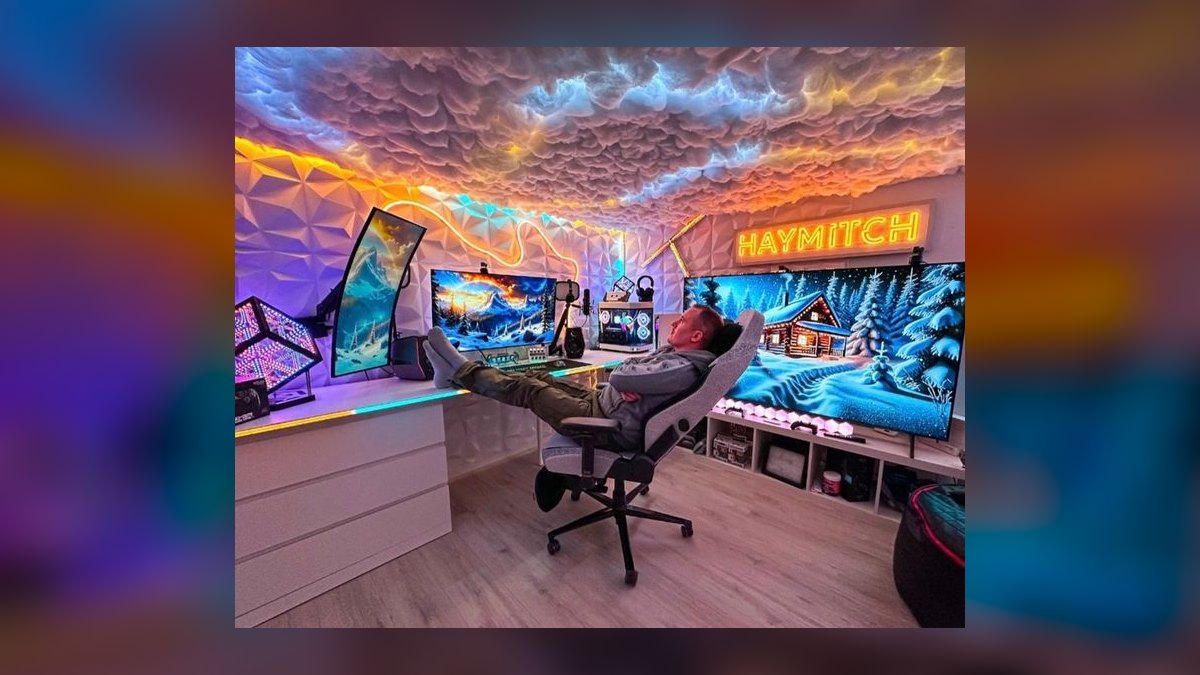
The second framing that helps: decide up front whether the room is single-seat or multi-seat. A one-person battlestation and a room that hosts three friends on a couch with a TV are different projects with different cost curves. The multi-seat version adds a large display, seating, and often a second audio path, but it skips the high-refresh monitor and the premium chair. Rooms that try to be both — desk setup plus couch-and-TV zone — reliably run 40 to 70 percent above a single-purpose room of the same quality tier, because you are buying two display systems and two seating systems in one 130-square-foot space.
Finally, timing matters more in 2027 than it did five years ago. Console generations, GPU launches, and panel-technology transitions all move prices in step changes rather than smooth curves, and the same room built six months apart can differ by 20 percent on identical specs. That volatility is why every number in this page is a range and why the sanity-check section matters as much as the benchmark section.
How the money actually flows through a build
The mechanism behind gaming room cost is not a single price — it is a sequence of decisions where each one constrains the next. Understanding the order is what separates a build that lands on budget from one that drifts.
It starts with a resolution and refresh-rate target, because that one choice cascades. Targeting 1080p at high refresh keeps the GPU requirement modest and the monitor cheap. Targeting 1440p at 144–240 Hz roughly doubles both. Targeting 4K at high refresh with strong ray tracing pushes the GPU into the top tier and the monitor into OLED territory, and those two items alone can exceed the entire budget of a competent 1080p room. Every downstream item — power supply wattage, case airflow, cooling, even desk depth for a larger monitor — is a consequence of that first decision.
Next comes the platform fork: PC or console. A current-generation console plus a controller is a fixed, known, comparatively small number, and it removes the GPU line entirely. A PC is open-ended and carries the upgrade path. Neither is wrong; they simply produce different cost shapes. The console room front-loads spending into the display and seating because the compute is capped. The PC room front-loads into compute and often defers the room work by a year.
Then furniture, which people consistently underestimate because desks and chairs have enormous price dispersion for similar-looking products. A desk is a surface, a frame, and a mechanism. The surface material and the frame's load rating drive most of the cost, and motorized height adjustment roughly doubles the price of an equivalent fixed desk. Chairs price on the same logic: foam density, adjustment count, and warranty term. A chair with a 12-year warranty is not marketing — it reflects a build that survives eight hours a day for a decade, and it costs accordingly.
Room work comes last chronologically but should be scoped first, because it is the bucket that can force rework. Adding a dedicated 20-amp circuit is a one-hour job when a wall is open and a half-day job when it isn't. Running Ethernet is trivial before the desk is assembled and painful after. Acoustic treatment is cheap in absolute terms but requires knowing where the desk and speakers sit, which requires the furniture decision to be locked.
The diagram makes the dependency visible: room work is downstream of furniture, which is downstream of display, which is downstream of the very first resolution decision. Budgets break when people buy in the reverse order — chair first because it was on sale, then discover the desk that fits the monitor doesn't fit the chair's armrests under it.
One more mechanism worth naming: the replacement clock. Different buckets have wildly different useful lives. Peripherals turn over every two to three years. GPUs get replaced every three to five. Monitors last five to eight. A good desk and chair last ten or more. Room work — the circuit, the Ethernet drop, the panels — is effectively permanent. This means the *average annualized* cost of a setup looks very different from its sticker price, and it argues for spending disproportionately on the long-lived items. A $900 chair amortized over ten years costs $90 a year; a $900 GPU amortized over four costs $225 a year and will feel dated at the end of it.
What the numbers actually look like
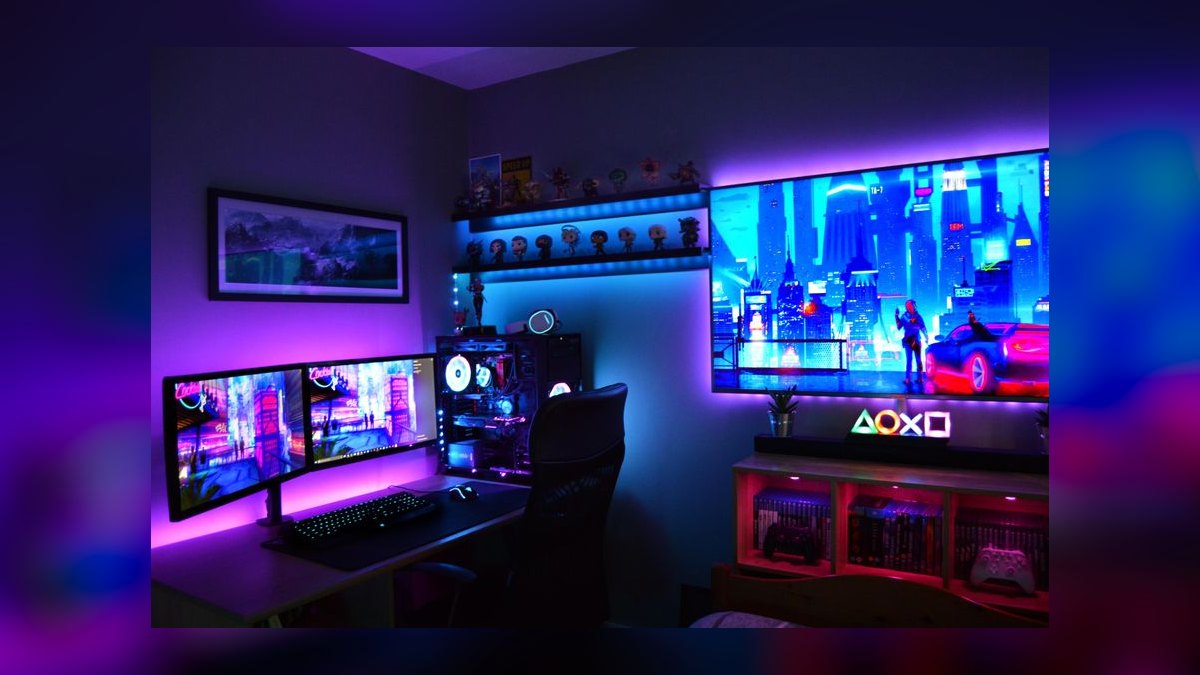
Here are working ranges for a complete room in 2027. These are ranges, not quotes — regional pricing, sales cycles, and used-market availability move every one of them.
Budget tier — roughly $1,500 to $2,500 complete. Compute: an entry gaming PC or a current-gen console, $500–$900. Display: a single 1080p or entry 1440p high-refresh monitor, $150–$300. Furniture: a straightforward fixed-height desk, $120–$250, and a mid-tier task chair, $200–$400 — and here the used office-furniture market is the single best value in the entire project, where a refurbished premium ergonomic chair often lands at a third of retail. Peripherals: keyboard, mouse, and a headset, $120–$250. Room work: surge protector, bias light, blackout curtain, a rug, $150–$300. This tier is genuinely complete; it just makes every trade-off toward the compute side being adequate rather than generous.
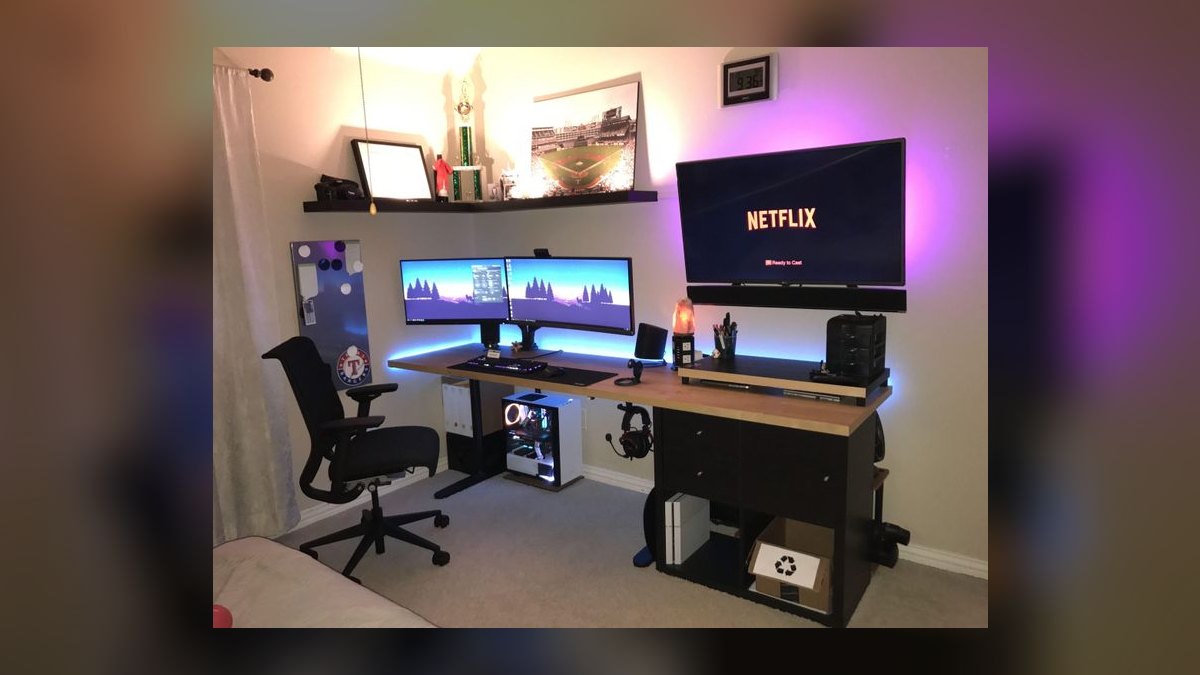
Mid tier — roughly $4,000 to $9,000, the honest average for a "complete" room. Compute: $1,400–$2,800 for a PC that holds 1440p high-refresh comfortably. Display: $400–$1,000, often a single high-refresh 1440p or an entry ultrawide, plus a secondary panel for chat and browsers at $120–$250. Furniture: $400–$900 for a sit-stand or a solid-surface fixed desk, $600–$1,300 for a chair with real adjustment and a long warranty. Peripherals and audio: $400–$900 covering a mechanical keyboard, a good mouse, a mic on an arm, and either a quality headset or a pair of powered monitors. Room work: $500–$1,500 covering a dedicated circuit if needed, a UPS sized for the PC and monitor, an Ethernet run, blackout treatment, a handful of acoustic panels, cable management, and storage. Add $200–$600 for the things that always appear — an HDMI cable that turned out to need a higher bandwidth rating, a monitor arm, a power strip with the right plug spacing, a second fan.
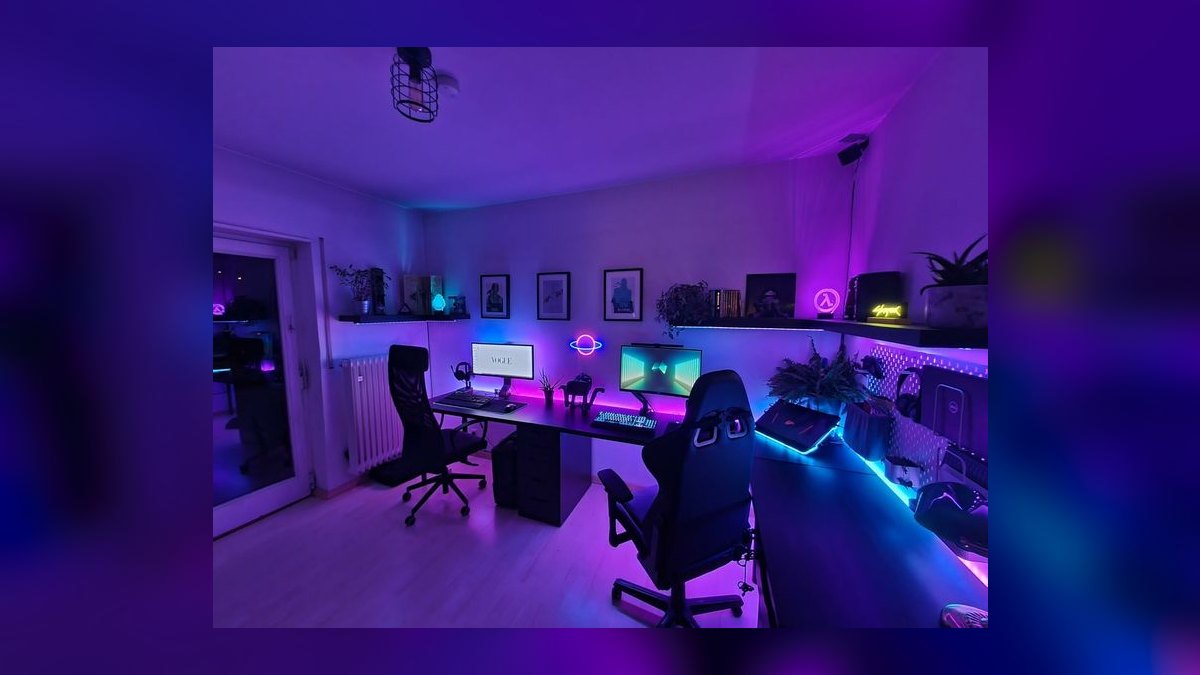
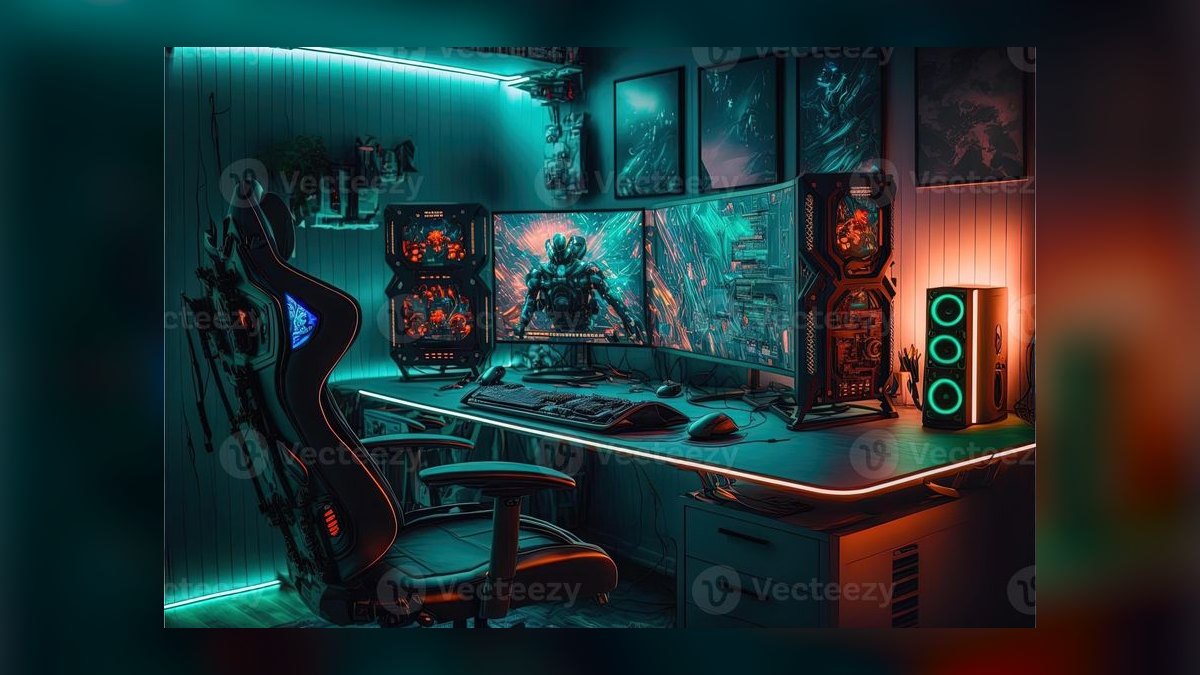
Enthusiast tier — $12,000 to $25,000 and up. Compute: $3,500–$7,000 for a top-tier build, often with custom cooling. Display: $1,200–$3,500 for a large high-refresh OLED, sometimes two. Furniture: $1,500–$4,000 for a custom or premium sit-stand plus a flagship chair. Audio: $1,000–$4,000 for treated near-field monitoring or a full surround install. Room work: $2,000–$8,000, and this is where the tier separates — real acoustic treatment, a solid-core door with seals, dedicated circuits, controlled lighting on scenes, built-in storage, sometimes a mini-split for thermal load. At this tier the room itself becomes a meaningful fraction of spend rather than an afterthought.
A few cross-cutting numbers worth holding onto. Electrical load: a mid-tier PC plus two monitors and peripherals draws roughly 400–700 watts under gaming load, which a standard 15-amp circuit handles alone but not alongside a space heater or window AC. Thermal load: that same draw dumps meaningful heat into a small closed room, and a 120-square-foot room with the door closed measurably warms over a long session — budget for either a fan, a door undercut, or an HVAC adjustment. Bandwidth: a wired connection removes an entire class of intermittent problems for the cost of a cable and an afternoon. Depth: a desk under 27 inches deep puts a large monitor too close for comfortable viewing, and a monitor arm recovers 4 to 6 inches of that depth for well under $100 — one of the highest-value small purchases in the whole build.
What you give up at each fork
Every meaningful decision in this project trades one kind of value for another, and the trades are worth naming explicitly.
PC versus console. The console is cheaper, fixed-cost, and requires no configuration. It also caps you at what the platform offers and has no upgrade path. The PC costs more up front, but the compute can be upgraded incrementally, which converts a large one-time cost into a series of smaller ones. If the room needs to serve for six-plus years, the PC's incremental path usually wins on total cost; if it needs to be done and playable this weekend, the console does.
One great monitor versus two decent ones. A single high-quality display beats two mediocre ones for the actual gaming experience. Two displays beat one for everything around the gaming — chat, guides, streaming tools, work. The common resolution is one primary display bought at the quality tier you care about, plus a cheap vertical secondary. That combination usually costs less than two matched mid-tier panels and serves both needs better.
Headset versus speakers. A headset is cheaper, needs no room treatment, doesn't disturb anyone, and gives better positional audio for competitive play. Speakers are more pleasant for long sessions, better for anything shared, and require the room to be at least minimally treated to sound right — which means the speaker path carries a hidden room-work cost that the headset path does not.
New versus used. The used market is dramatically better value on chairs, desks, and monitors, and considerably riskier on GPUs and power supplies. A used premium chair is the highest-return purchase available. A used GPU of unknown history is where the savings stop being worth it.
Buy complete now versus stage it. Staging works well when the stages are chosen along the dependency chain in the earlier diagram — room work and furniture first, compute second, display upgrades third. Staging works badly when it's driven by sales, because you end up with a chair that doesn't fit the desk you haven't bought.
The framing that resolves most of these forks: ask which mistake is cheaper to fix later. A GPU that's a tier low is a swap. A room with one outlet, no Ethernet, and a west-facing window is a project. Spend where the correction is expensive.
Where these budgets go wrong
Ignoring the tax, shipping, and assembly wedge. Sales tax alone adds 6 to 10 percent in most of the US. Large-item freight on a desk or a big display frequently adds $80 to $250, and white-glove assembly more. On a $6,000 room, that wedge is real money that never appears in a parts list.
Treating the chair as the flexible line. It's the item you touch for every hour of use and the one with the longest life, and it's routinely the first thing cut. Cut the GPU tier before the chair.
Underestimating cables and adapters. A build with a PC, two monitors, a mic, an audio interface, and a capture path can easily need $150 to $300 of cabling, and high-refresh displays are specifically sensitive to cable quality and length. This is the most common source of "the setup works but flickers sometimes."
Skipping the power audit. Find out what else is on the bedroom circuit before you commit to a high-wattage build. It's a five-minute test with a breaker and a lamp, and finding out afterward means either a new circuit or permanently derating the room.
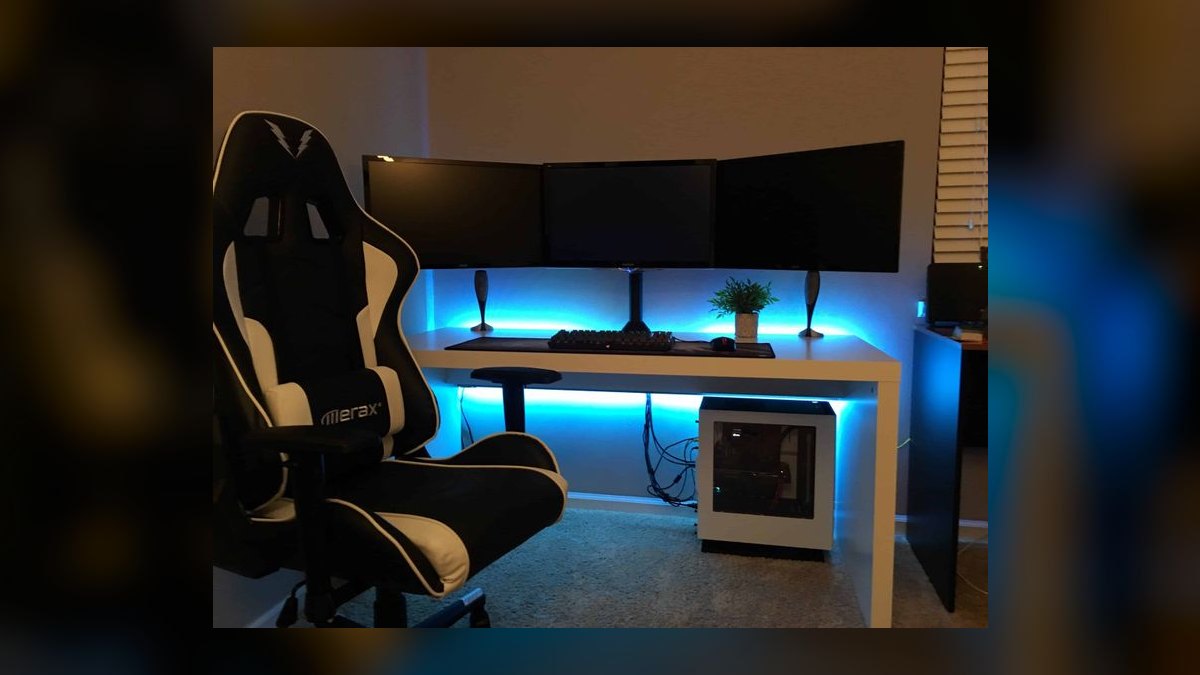
Building around the window instead of managing it. Direct sun on a display is unfixable by settings. A blackout curtain or a repositioned desk costs almost nothing and prevents a problem that no amount of monitor spend solves.
Buying the display before measuring the desk. Viewing distance for a large panel has a floor. A 32-inch or larger display on a 24-inch-deep desk sits too close, and the fix is a monitor arm or a different desk — both cheaper to plan than to correct.
Forgetting recurring cost. A complete setup carries ongoing spend: online service subscriptions, game purchases, and electricity. A room running several hours a day at a few hundred watts is a noticeable but not dramatic line on a power bill, and it should be in the plan rather than a surprise.
Assuming an average applies to you. The average cost of a complete gaming setup is a planning anchor, not a target. Rooms with an existing desk, existing chair, or a display already on hand start from a completely different baseline, and the honest number for any specific person is the sum of what they still need — not a published average.
Related questions
Does a console room really cost less than a PC room?
Up front, usually yes — the fixed console price removes the largest variable line. Over six-plus years the gap narrows, because PC compute upgrades incrementally while a console generation replacement is another full purchase.
How much should room work be as a share of the budget?

Plan on 10 to 20 percent for power, light, sound, network, and storage. Below 10 percent something is being deferred; above 20 percent usually means real construction, which belongs in a separate line.
What's the single highest-value purchase under $200?
A monitor arm, for most desks. It recovers viewing distance, frees surface area, and fixes ergonomics that no other item addresses — for well under the cost of the desk it sits on.
Is buying everything at once cheaper than staging it?
Buying at once is simpler and avoids compatibility surprises; staging is cheaper if the stages follow the dependency order — room and furniture first, compute second, display last.
How long should a complete setup last before a major refresh?
Furniture and room work: ten years or more. Display: five to eight. Compute: three to five, with a mid-life GPU or storage upgrade. Peripherals: two to three.
FAQ
What is the average cost of a complete gaming room setup in 2027?
For a mid-range room that covers compute, display, desk, chair, peripherals, audio, and basic room work, plan on roughly $4,000 to $9,000. Budget-tier complete rooms are achievable near $1,500 to $2,500, and enthusiast rooms with premium displays and real acoustic treatment routinely pass $15,000.
What percentage of the budget goes to the PC or console?

Typically 40 to 60 percent in a mid-tier build, higher in a budget build where the other buckets are minimized, and lower in an enthusiast build where furniture, audio, and room work scale up faster than compute does.
Can I build a genuinely complete setup for under $2,000?
Yes, if you accept 1080p or entry 1440p, buy the chair used, choose a fixed-height desk, and keep room work to a surge protector, a bias light, a blackout curtain, and a rug. Complete does not require expensive — it requires all five buckets addressed.
Does the room itself need construction work?
Usually not. Most bedroom conversions need only a dedicated circuit if the existing one is loaded, window treatment, and a handful of soft surfaces. Construction — solid-core doors, added HVAC, built-ins — belongs to the enthusiast tier and should be priced separately from the setup.
Where is the used market genuinely worth it?
Chairs, desks, and monitors — especially refurbished premium office chairs, which are the best value available in the entire project. Treat used GPUs and power supplies with much more caution, since history is unverifiable and failure takes other components with it.
How should I sanity-check a quoted total?
Break it into the five buckets and check that none is missing or implausibly small. Then add 10 to 15 percent for tax, shipping, cables, and the small items that always appear. A total with no room-work line is not a complete setup budget.
Sources
- https://www.energy.gov/energysaver/energy-saver — appliance and electronics energy use, useful for estimating a room's operating cost
- https://www.nist.gov/ — measurement and standards references, including guidance relevant to electrical and acoustic testing
- https://www.cdc.gov/niosh/topics/noise/default.html — NIOSH occupational noise exposure guidance, relevant to headphone and speaker listening levels
- https://www.osha.gov/etools/computer-workstations — OSHA computer workstation ergonomics eTool: monitor height, viewing distance, chair and desk setup
- https://www.bls.gov/cpi/ — Consumer Price Index data for tracking electronics and furniture price movement over time
- https://www.consumerreports.org/ — independent product testing and pricing coverage for displays, furniture, and electronics
- https://www.epa.gov/indoor-air-quality-iaq — indoor air quality guidance relevant to small closed rooms with high thermal load
- https://www.nfpa.org/ — National Fire Protection Association, source for electrical code context on circuits and outlets
- https://www.acs.org/ — general reference on materials, relevant to desk surface and foam composition claims
- https://www.census.gov/construction/ — US Census construction and housing data, useful context for typical spare-room dimensions
Related on PULSE
- How much does a high-refresh gaming monitor actually cost?
- Sit-stand versus fixed desks: what changes at each price tier
- What a dedicated 20-amp circuit costs to add to an existing room
- Acoustic treatment for small rooms: the minimum that actually works
- Used office chairs: how to buy a premium ergonomic chair for a third of retail
- Wired versus mesh networking for a gaming room
This page will be disappearing soon. Save it to your device for $1 — or read it free while it is here.
@Kory-White- · if Venmo asks, the last 4 of my number are 2012
This page is gone.
This one is off the shelf now. $1 keeps it on your phone for good — the whole page, pictures and diagrams included.
 pulse-recentThe 10 Best Gaming Subscriptions for Their Price in 2027
 pulse-recentHow much does a PlayStation 5 Pro cost in 2027?
 pulse-recentWhat is the total cost of owning a gaming PC for five years in 2027?
 pulse-recentThe 10 Best Budget Gaming Consoles Under $300 in 2027
 pulse-recentTop 10 Best-Selling Atari 2600 Games of All Time in 2027
 pulse-recentTop 10 Most Valuable Sealed Game Boy Games to Buy in 2027
 pulse-recentHow many gaming subscriptions does the average gamer have in 2027?
 pulse-recentTop 10 Most Expensive Video Games to Develop of All Time in 2027
 pulse-recentTop 10 Best Gaming Webcams for Streaming in 2027
 pulse-recentTop 10 Most Valuable Pokémon Trading Card Game Booster Boxes in 2027