


What is the average budget for an open-world game in 2027?
Quality
Certified
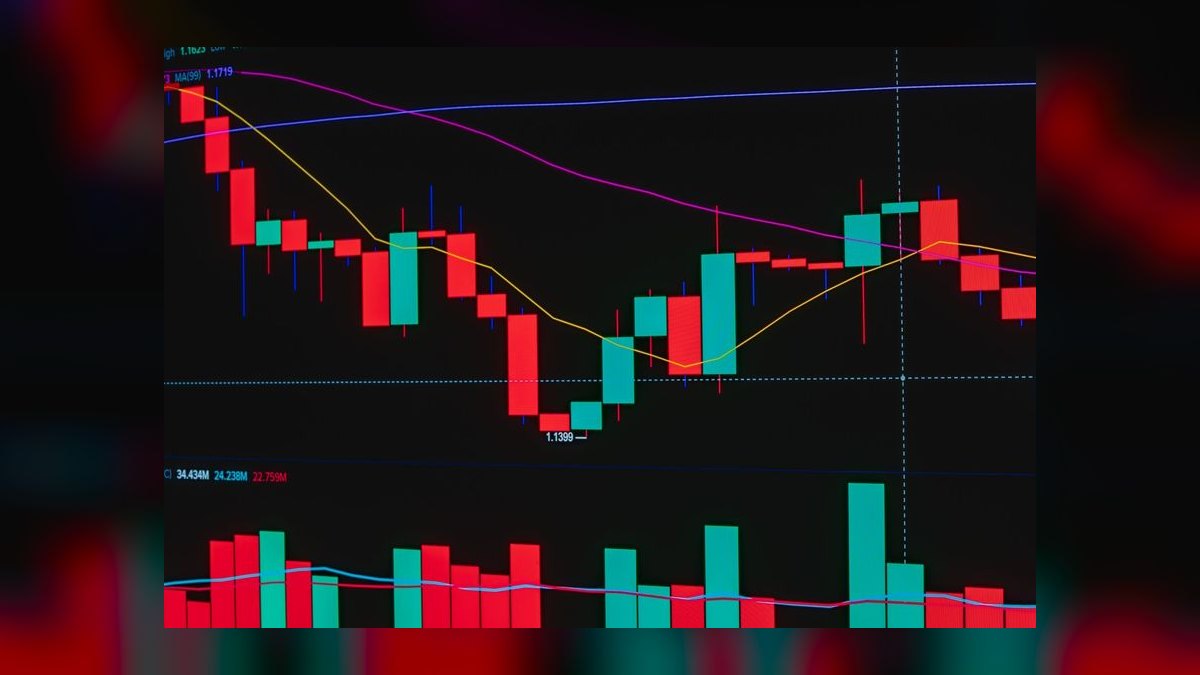
There is no published average, but industry disclosures put a modern AAA open-world budget somewhere in the $100–300 million range for development alone, with marketing often matching it. Mid-tier open-world games land nearer $10–50 million, and small studios ship open-world titles for under $5 million.
What an open-world budget actually contains
The phrase "average budget for an open-world game" hides a definitional problem that makes most quoted numbers useless. Before you can compare two figures, you have to know which of at least four different quantities someone is reporting.
The first is development cost — salaries, contractors, engine licensing, middleware, hardware, studio overhead, and outsourced art. This is the number studios usually mean internally and the one that shows up in court filings and leaked spreadsheets. It is also the number that most obviously scales with open-world design, because a large traversable map multiplies environment art, navigation mesh work, streaming engineering, and QA surface area.
The second is marketing and user acquisition. Historically, for major console releases, marketing has frequently run at or above the development figure. Publishers rarely break this out, which is why "the game cost $X" claims in the press are often two very different things stitched together.
The third is capitalized versus expensed cost. Publicly traded publishers capitalize much of internal development and then amortize it against revenue after launch. A budget quoted from a financial statement is not the same as the amount of cash that left the building during production, and the timing differences are large — often years.

The fourth is live-service and post-launch cost. Modern open-world games increasingly ship as platforms rather than products. Seasonal content, server operations, anti-cheat, community management, and ongoing patching can add a recurring annual cost that rivals a mid-size game's entire budget. A studio that quotes a $150 million "budget" and then spends $40 million a year keeping the world alive has, over a five-year tail, spent more than twice the headline number.
Why this matters practically: if you are modeling a business case, mixing these four buckets produces a plan that is wrong in both directions at once. You will under-reserve for the marketing spike at launch and over-state the profitability of the first fiscal year, because amortization pulls costs forward or pushes them back depending on your accounting policy.
There is a further wrinkle specific to the genre. "Open world" is not a budget category — it is a design constraint that multiplies certain line items and leaves others untouched. Audio recording for a linear narrative game and an open-world game may cost roughly the same if the script length is similar. Environment art almost never does. The single most reliable predictor of open-world cost is not the size of the map in square kilometers; it is the density of authored content per square kilometer. A large but procedurally generated world with sparse hand-placed content can be cheaper than a compact, densely authored city.
Adjacent to this, note that the same cost drivers appear in non-game simulation work: architectural visualization, driving simulators, and defense training environments all face the same "large traversable space, authored detail, streaming" problem, and their budgets scale on the same axis. If you are estimating an open-world project and you have no comparable game data, comparable simulation projects are a legitimate second-best reference class.
How studios actually build the number
Budgets are not guessed. They are assembled bottom-up from headcount and duration, then stress-tested top-down against comparable titles and expected revenue. The process below is roughly what a production director does, and it is worth walking through because it explains why the "average" is so dispersed.
Step one: fix the pillars before the numbers. Three or four non-negotiable design pillars — say, seamless traversal, no loading screens, systemic AI — determine which expensive engineering problems you have signed up for. Streaming with no loading screens is an engine-level commitment that shapes two years of programmer time.
Step two: scope the world in content units, not kilometers. Count the things a player interacts with: points of interest, quest chains, unique interiors, vehicle types, enemy archetypes, cutscene minutes. Each has an approximate cost per unit derived from your studio's own history. A team that has shipped before knows what one unique interior costs them; a team that hasn't should assume it costs more than they think.
Step three: convert to headcount-months. This is the core of the estimate. A 120-person team for 48 months at a fully loaded cost of $120,000–200,000 per person-year — which includes salary, benefits, hardware, software, and facilities — produces a development cost roughly in the $58–96 million range before outsourcing. Change any of those three variables and the number moves dramatically. That fully loaded multiplier is the number most first-time estimators get wrong; salary alone understates true cost by a wide margin.

Step four: layer in outsourcing and third-party costs. Environment art, character art, cinematics, localization, and QA are commonly outsourced in whole or part. Middleware for audio, physics, animation, and analytics carries licensing fees. Commercial engines carry either a royalty or a seat-based fee structure. For a large open-world title, external spend of 20–40% of total development cost is unremarkable.
Step five: add a risk buffer, then defend it. Open-world projects overrun more than linear ones because integration risk is higher — every system touches every other system in a shared space. A buffer in the 15–25% range is defensible. It will still be spent.
Step six: run the top-down check. Take expected units sold, multiply by expected net revenue per unit after the platform cut (commonly around 30% on major storefronts) and after retailer and returns effects, and see whether the bottom-up number survives. If break-even requires selling more units than any comparable title in the genre has ever sold, the scope is wrong, not the market.
Step seven: separate the launch budget from the live budget. Decide explicitly, at greenlight, whether year-one post-launch content is inside the number or outside it. Teams that leave this ambiguous discover mid-production that nobody funded the thing they promised players.
The same skeleton works for adjacent formats. A large multiplayer shooter with persistent maps, a survival-crafting game, or an MMO expansion all run through these seven steps; only the content-unit taxonomy in step two changes.
Costs, timelines, and typical ranges

Here is where the actual spread lives. Treat these as reference-class bands, not precise averages, because the underlying disclosures are sparse and inconsistent.
Flagship AAA open world. Development commonly disclosed or credibly reported in the $100–300 million range, occasionally higher for the largest franchises. Team sizes run 300–1,000+ when co-development studios are counted. Production timelines of 5–7 years from concept to ship have become normal at the top of the market, and several high-profile titles have run longer. Marketing frequently adds a sum comparable to development. Break-even for a $200 million development budget at a $70 price point, after a 30% platform cut and with marketing on top, plausibly requires several million units — which is why only a handful of franchises are financed at this level.
Upper mid-tier / "AA+" open world. Roughly $20–60 million in development cost, teams of 60–200, three to four years. This band has grown because engine and middleware improvements let smaller teams ship large spaces. The trade-off is density: these games typically have a big world with fewer bespoke interiors, more reused assets, and systemic rather than hand-authored content.
Indie and small-team open world. Under $5 million, sometimes far under, with teams in the single digits to low tens. These almost always lean on procedural generation, stylized art that hides asset reuse, or a tight scope that keeps the world small but dense. The economics work because break-even might be tens of thousands of units rather than millions.
Cost drivers, ranked by how much they move the number:

- *Team size × duration* — dominant, and roughly linear. Everything else is a rounding error next to person-months.
- *Content density* — number of unique authored assets and quest hours. This is what makes open worlds expensive relative to linear games of the same length.
- *Fidelity target* — photorealism costs multiples of stylized. It raises art time per asset, engineering time for rendering, and QA time for performance across hardware.
- *Platform count* — each additional platform adds porting, certification, and QA. Simultaneous multi-platform launch is more expensive than staggered.
- *Systemic complexity* — simulation, physics, dynamic weather, NPC schedules. These are cheap to describe and expensive to debug, because failure modes are emergent.
- *Multiplayer* — adding networking to an open world is not a feature, it is a second project. Netcode, servers, cheat prevention, and matchmaking all carry ongoing cost.
- *Voice, mocap, and localization* — scales with script length and language count, largely independent of world size.
- *Engine choice* — building proprietary technology is a large capital cost amortized across a franchise; licensing trades that for royalties.
Timeline structure for a large open-world project typically runs: 6–12 months concept and pre-production, 12–18 months building a vertical slice and proving the pipeline, 24–36 months full production, 6–12 months alpha through certification. Burn rate is not flat — it peaks during full production when headcount is highest and drops during pre-production and post-certification. Modeling a flat monthly burn will misstate your cash needs by a wide margin in both directions.
One adjacent comparison worth holding in mind: a live-service open world that succeeds inverts the whole calculation. The launch budget stops being the main number and becomes an acquisition cost for a player base that is then monetized over years. Teams that plan a live-service tail should budget an annual operating figure — often 20–40% of the original development cost per year — and judge the project on lifetime economics rather than launch payback.
Where teams get it wrong
Quoting a single "average" as though the distribution were normal. Budgets in this genre are heavily skewed. A handful of enormous projects pull the mean far above the median, so an "average" computed from press reports describes almost no real project. If someone hands you an average open-world budget figure, ask for the median and the sample.
Confusing disclosed budgets with typical budgets. The budgets we know about are disclosed precisely because something unusual happened — a lawsuit, a leak, a public post-mortem, a regulatory filing. That is a biased sample skewed toward very large or very troubled projects. Ordinary projects that shipped on time rarely publish their numbers.
Estimating from map area. A world twice as large is not twice as expensive, and it is not half as expensive either. It depends entirely on whether the added space is authored or generated. Teams that promise a huge map early and figure out the content later end up paying for both the space and the emergency content push to fill it.
Under-costing QA on a systemic world. In a linear game, testing coverage is roughly proportional to level count. In an open world, the player can approach any system in any order, in any state, from any direction. Test matrices explode combinatorially. Studios that budget QA as a fixed percentage of development learn this late, when it is most expensive to fix.
Ignoring the integration cliff. Individual systems can be on schedule while the game is not, because the cost of making systems work together in a shared space is unbudgeted. This is the single most common source of open-world overruns. Build integration time into the plan as its own line item, not as slack at the end.

Treating marketing as optional. A large open world with no marketing budget is a large open world nobody plays. If the business case only closes when you zero out marketing, the business case does not close.
Forgetting the platform cut and the tail. Net revenue per unit is meaningfully below sticker price after storefront fees, and average realized price falls over a title's life as discounts stack. A break-even model at full price is a fantasy model.
Assuming tools and pipeline are free. Large worlds need custom tooling: world editors, streaming debuggers, automated build validation, content-authoring pipelines. On big projects, internal tools work can consume a meaningful share of engineering time. Budget it explicitly or it will be stolen from feature work.
Planning crunch as a cost-saving measure. It is not one. Overtime raises defect rates, drives attrition, and forces re-hiring and re-onboarding mid-project — the most expensive way to lose institutional knowledge. Attrition in the last year of a long project is a real budget line.
Choosing a budget tier for your own project
The useful question is rarely "what is the average" — it is "which tier can I actually finance and what does that tier let me build?" This decision tree is how to get there.
If you are under $5 million, the design must do the budget's work. Choose procedural generation or a deliberately small map with high density. Pick a stylized art direction that makes asset reuse read as intentional. Cut multiplayer. Ship on one or two platforms first. The advantage of this tier is that the break-even is reachable and the studio survives a soft launch.

If you are between $5 and $50 million, you can afford a genuinely large world, but you cannot afford to author all of it by hand. Invest disproportionately in systems that generate variety — dynamic events, faction simulation, emergent encounters — and reserve bespoke authoring for a handful of memorable locations. The failure mode in this tier is attempting a AAA-shaped game at half the budget and shipping something that reads as a worse version of an expensive game rather than a good version of an affordable one.
Above $50 million, you are in a market with few competitors and unforgiving economics. Financing at this level generally requires a publisher, a proven franchise, or platform funding. The strategic question becomes portfolio-level: is this the one large bet the studio can afford, and what happens to the studio if it misses?
A cross-cutting rule for all tiers: decide early whether your world is a *destination* or a *setting*. A destination world — one players return to for years — justifies live-service investment and a larger up-front spend amortized over a long tail. A setting world serves a story and ends when the story does; it should be budgeted to pay back at launch. Teams that build a setting and then bolt on live-service ambitions late tend to pay for both and get neither.
Finally, apply the reference-class discipline that any large project benefits from: find five comparable shipped titles, gather whatever cost, team-size, and duration data is public, and check your own estimate against that distribution before you defend it internally. If your plan says you will build something comparable for a third of what everyone else spent, the burden of proof is on the plan.
Related questions
Why do open-world games cost more than linear games of the same length?
Because content is authored across a traversable space that the player can enter in any order. That multiplies environment art, navigation and streaming engineering, and QA combinations, while linear games can reuse a tightly controlled corridor of assets and test a fixed path.
Does map size determine cost?

No. Density of authored content per unit area does. A compact, densely detailed city can cost more than a vast procedurally generated wilderness, because every hand-placed asset, interior, and scripted encounter carries real production hours.
How much of a game budget is marketing?
It is rarely broken out publicly, but for major console releases marketing has frequently been reported as comparable to development spend. Smaller titles spend far less proportionally, relying on storefront visibility, creators, and community rather than paid media.
Can a small team ship an open-world game?
Yes, and several have. The pattern is procedural or compact worlds, stylized art that tolerates reuse, no multiplayer, and a break-even measured in tens of thousands of units rather than millions.
What is the single biggest cause of open-world budget overruns?
Integration. Individual systems finish on schedule while the combined world does not, because making systems interact correctly in a shared space is rarely budgeted as its own workstream.
FAQ
Is there an official published average budget for open-world games in 2027?
No. There is no authoritative dataset. Publishers do not routinely disclose per-title budgets, and the figures that reach the public come from lawsuits, leaks, interviews, and occasional financial filings. Any single "average" you see quoted is an estimate built on a small, biased sample. Reference-class ranges by tier are more honest and more useful than a point estimate.
Why do reported budget figures vary so much for the same game?

Because different sources report different quantities: development only, development plus marketing, capitalized cost, or total lifetime spend including post-launch support. Currency conversion, inflation adjustment, and whether co-development partners are counted add further spread. Always ask which of those four buckets a number represents before comparing it to another.
How do I estimate a budget if I have never shipped an open-world game?
Build bottom-up from headcount and duration using a fully loaded cost per person-year, add outsourcing and middleware, apply a 15–25% risk buffer, then check the result against five comparable shipped titles. If you have no game comparables, large simulation and visualization projects face similar streaming and authoring problems and make a reasonable second reference class.
What does "fully loaded cost per person-year" include?
Salary plus employer taxes, benefits, hardware, software licenses, facilities, recruiting, and a share of studio overhead. It is substantially higher than salary alone, and using salary alone is the most common reason first-time budgets come in far below actual spend.
Should post-launch content be inside the budget?
Decide explicitly at greenlight and write it down. Both answers are defensible; ambiguity is not. Teams that leave it undecided routinely find mid-production that promised seasonal content has no funding and no team, which forces either a broken promise or an unplanned cost.
How does the platform cut affect break-even?
Major storefronts commonly take around 30% of gross revenue, and realized price falls over a title's life through discounting. A break-even model built on sticker price and unit count without those two adjustments will understate the units required, often substantially.
Sources
- https://www.gamesindustry.biz/
- https://www.gdcvault.com/
- https://www.matthewball.co/
- https://www.newzoo.com/
- https://investor.ea.com/
- https://investor.take2games.com/
- https://www.ukie.org.uk/
- https://www.theesa.com/
- https://partner.steamgames.com/doc/gettingstarted
Related on PULSE
- How to build a bottom-up production budget for a software project
- Why fully loaded headcount cost beats salary in any project estimate
- Live-service economics: launch payback versus lifetime value
- Reference-class forecasting for creative projects
- How platform revenue splits change a break-even model
- Scoping large projects: density versus surface area
This page will be disappearing soon. Save it to your device for $1 — or read it free while it is here.
@Kory-White- · if Venmo asks, the last 4 of my number are 2012
This page is gone.
This one is off the shelf now. $1 keeps it on your phone for good — the whole page, pictures and diagrams included.
 pulse-recentTop 10 Most Expensive Limited Edition PlayStation 5 Consoles in 2027
 pulse-recentWhat do professional esports players do differently in their daily practice routines in 2027?
 pulse-recentTop 10 Most Valuable Vintage Arcade Cabinets to Buy in 2027
 pulse-recentTop 10 Most Expensive Factory-Sealed Pokémon Games in 2027
 pulse-recentTop 10 Most Expensive Collector's Edition PC Games to Buy in 2027
 pulse-recentHow much does a gaming PC cost per month in 2027?
 pulse-recentTop 10 Most Expensive Factory-Sealed Nintendo 64 Games to Buy in 2027
 pulse-recentTop 10 Best-Selling Atari 2600 Games of All Time in 2027
 pulse-recentWhat is the typical budget breakdown for an open-world game in 2027?
 pulse-recentTop 10 Most Expensive Nintendo Amiibo Figures to Buy in 2027