
How do walk-on athletes earn NIL income in 2027?
 Curated byKory White · Fractional CRO · Maryland
 PULSEKNOWLEDGE LIBRARY
Quality
Certified
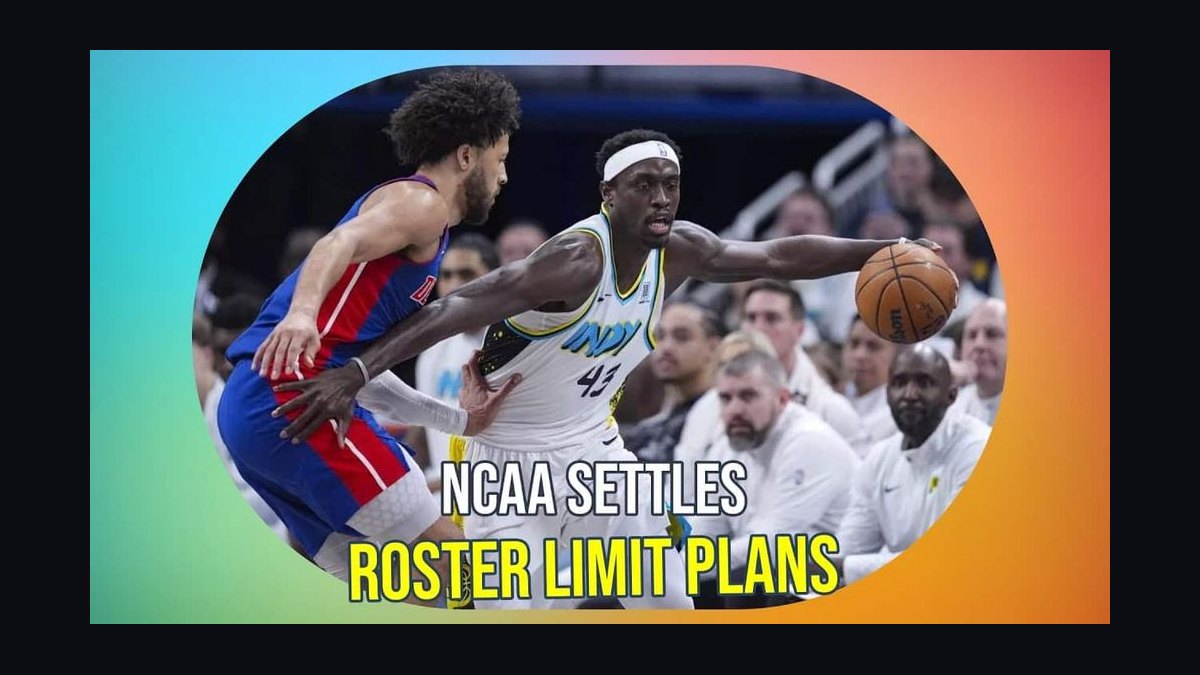
Walk-on athletes earn NIL income in 2027 mostly through third-party channels, since House-settlement revenue-sharing dollars go to scholarship starters. The four lanes are personal-brand social deals ($50–$500 per local post), collective roster-floor stipends ($500–$5,000), group-licensing royalties from jerseys, cards, and EA College Football, and marketplace bookings via Opendorse, MOGL, and INFLCR.
The preferred walk-on who out-earns a scholarship teammate
Picture two football players on the same Power Four roster in the fall of 2027. One is a scholarship safety pulling a modest revenue-share allocation of roughly $18,000 for the year, buried on the depth chart, invisible online. The other walked on — no scholarship, no direct revenue-share dollars, but 140,000 TikTok followers built around a "walk-on diaries" series showing 5 a.m. lifts, dorm meal-prep, and the grind of trying to earn a spot on the two-deep. By December, the walk-on has banked more NIL money than the scholarship player, because his income is decoupled from playing time and depth-chart position entirely.
This is the paradox that defines the walk-on lane in 2027. The House v. NCAA settlement, in full force across the 2025-26 and 2026-27 seasons, replaced scholarship limits with hard roster caps — 105 for football, 15 for men's basketball, 34 for baseball, 45 for track. Every spot inside the cap can now be funded, which narrowed the walk-on pool sharply. The athletes who remain non-scholarship are typically *preferred walk-ons* invited to fill the back end of the 105-player roster, or *opt-out walk-ons* whose programs chose not to fund every slot to protect revenue-share budget for skill-position starters.

The strategic consequence is what makes the scenario above possible. Because walk-ons are shut out of most direct revenue-share dollars — which front-load quarterbacks, edge rushers, and lead guards — every meaningful dollar they earn flows through the *same* NIL channels their scholarship teammates use: collectives, marketplaces, group licensing, and personal-brand monetization. On the NIL side specifically, the field is genuinely flat. A phone, a niche, and a work ethic decide who wins, not the recruiting-star rating that got a rival his scholarship. The walk-on who understands he is running a small business the moment he makes the roster is the one who cashes checks.
How the four income lanes actually connect
The mechanism is best understood as a stack of four independent lanes that feed one total. No single lane is guaranteed, but the more a walk-on activates, the more resilient the income becomes.
Personal-brand social deals are the single largest lever because they are decoupled from playing time. Local businesses in a college town — restaurants, gyms, car dealers, dentists, med-spas — commonly pay $50–$500 per post to athletes with 5,000–25,000 followers, scaling to $1,500–$5,000 per post above 100,000 followers and $10,000+ per post above 500,000. Sam Hurley, a Texas track athlete who initially walked on, parlayed a 2.3-million-follower TikTok into deals with Celsius, Crocs, and Bose approaching $1 million total. Jon Seaton at Elon earns "into the six figures" from sponsored TikTok posts as a non-scholarship FCS football player.
Collective carve-outs are the most reliable check for a preferred walk-on. Most Power Four collectives now run a "roster floor" — every player on the roster, walk-on included, receives a base NIL appearance fee of $500–$5,000 per year in exchange for autograph signings, youth camps, and community appearances. Programs like Texas A&M's 12th Man+ Fund, Ohio State's THE Foundation, Tennessee's Spyre Sports, Oregon's Division Street, and the Texas One Fund publicly run roster-wide versions of this.
Group licensing royalties flow through the OneTeam Partners group-licensing deal and EA Sports College Football, which returned to annual release cycles with a roughly $1,500 base opt-in plus performance escalators. Jersey sales, trading cards from Panini and Topps, and bobbleheads distribute royalties through the same NCAA group license. A back-of-roster walk-on's annual take here typically lands at $1,500–$3,500.
.jpg)
Marketplace bookings come from platforms like Opendorse, MOGL, INFLCR Local Exchange, MarketPryce, NOCAP Sports, and Embassy Social, which push direct offers to athlete inboxes. MOGL's AI matching explicitly targets athletes with smaller followings — a built-in advantage for walk-ons. Typical tasks (product reviews, video shoutouts, retail appearances) pay $100–$1,000 each.
The diagram shows why the median and the ceiling diverge so wildly. Three of the four lanes — collective floor, group license, and marketplace — are relatively fixed and cap out in the low five figures. Only the personal-brand lane has an uncapped top end, which is why viral walk-ons outrun their entire roster while the median walk-on earns a modest but real supplemental income.

Real 2027 earnings benchmarks by sport and profile
Concrete ranges matter more than averages here because the distribution is so skewed. Below are realistic 2027 figures for the three walk-on profiles that actually exist.
Football, Power Four walk-on, median (2,000–10,000 followers). Roster-floor collective bonus of $2,500–$5,000; group licensing (EA plus jerseys plus cards) of $1,500–$3,500; local-business deals of roughly 8–15 posts per year at a $150 average, or $1,200–$3,000; marketplace bookings of $500–$2,000. Realistic total: $5,700–$13,500 per year. This is the outcome most walk-ons should plan around — a meaningful supplement, not a salary.

Football, walk-on with a real following (the Jon Seaton profile). Sponsored TikTok and Instagram at 1–3 posts per week priced $1,500–$8,000 apiece produces $80,000–$400,000; the collective, group license, and marketplace lanes add the same $5,000–$10,000. Realistic total: $85,000–$410,000 per year, squarely six figures. The difference between this and the median profile is not talent on the field — it is audience.
Olympic-sport walk-on (track, swim, gymnastics). The collective floor is smaller, often $500–$2,000 at most Power Four schools; group licensing is minimal because no EA game covers these sports yet. But if content goes viral, brand deals run $50,000 to $1 million-plus. Sam Hurley is the ceiling case, and Olivia Dunne is the precedent for arriving with an audience already built (she walked into LSU with 3 million-plus TikTok followers).
For grounding, Opendorse's 2025 report found two-thirds of Power Four football players earn less than $10,000 per year from NIL. Walk-ons sit in or just below that bottom two-thirds — but the ceiling is uncapped, and the gap between the median walk-on and the viral walk-on is the largest in all of college sports. Cooper DeJean's Iowa walk-on offensive-line backups are the realistic template: after Iowa's group-licensing rollout, three walk-on linemen each cleared $8,000–$12,000 their first season from jersey royalties, the roster-floor collective, and local Hy-Vee deals. Michael Taaffe at Texas is the aspirational one — he walked on, earned a scholarship as a defensive back, became a starter, and landed a partnership with Lamborghini Austin plus Athletic Brewing and Reliant Energy, proving on-field production still unlocks national brands from a walk-on start.

Trade-offs, alternatives, and the 90-day launch
Every lane carries a trade-off, and choosing where to spend limited time is the real decision. The 90-day launch sequence below is how disciplined walk-ons convert a roster spot into banked income without wasting the first season on trial and error.
Days 1–30, foundation. Lock down handles on TikTok, Instagram, X, and YouTube Shorts using first.last plus sport plus school. Post 4–5 times per week — behind-the-scenes practice clips, dorm life, training routines, and the proven "walk-on diaries" format. Open Opendorse, MOGL, and INFLCR accounts the day you make the roster, and get compliance approval. Sign the group-licensing opt-in through your athletic department's OneTeam Partners form; that single signature is free money you would otherwise leave on the table.
Days 31–60, local outreach. DM 10 local businesses per week with a one-page rate card ($150/post at 5,000 followers, $300/post at 15,000). Take the collective's roster-floor deal even if it feels small — it is guaranteed revenue and it builds your compliance paper trail. Attend every team community event, because collectives reward athletes who show up.
Days 61–90, scale content. Identify a niche — walk-on grind story, position-specific training, faith and family, or comedy. Niche beats raw reach at the micro-influencer tier. Cross-post to YouTube Shorts, which carried the highest CPM payouts in 2027, and collect AdSense revenue on top of brand deals. Build an email list through Linktree, the one asset that survives graduation.
The core trade-off is time versus certainty. The collective, group-license, and marketplace lanes are low-effort and near-certain but capped low. The personal-brand lane demands hours of daily content work with no guaranteed payoff, but it is the only lane that can turn a walk-on into a six-figure earner. The alternative to grinding content — simply collecting the fixed lanes — is a perfectly rational choice for an athlete whose priority is the sport or the degree, and it still nets several thousand dollars a year.
Common pitfalls that cost walk-ons money and eligibility
The mistakes are predictable, and each one is avoidable with a little foresight.
Treating NIL money as tax-free. Every NIL dollar is 1099 income, subject to 15.3% self-employment tax plus federal (10–37%) and state income tax. A walk-on earning $15,000 owes roughly $3,800–$5,200 combined. Missing quarterly estimated payments (April, June, September, January) triggers IRS underpayment penalties. Apps like Keeper Tax and Found are widely used by athletes to automate this — the pitfall is discovering the bill in April with the money already spent.
Waiting too long to form an LLC. Once annual NIL income clears roughly $25,000, a single-member LLC taxed as an S-corp can save $3,000–$8,000 per year in self-employment tax. Wealth managers profiled by Andscape — the financial arms of AWM Capital, ICM Stellar Sports, and Roc Nation Sports — onboard college athletes at the $50,000-plus tier. Below that, a good CPA is enough, but ignoring structure entirely leaves money on the table every quarter.
Wrecking need-based aid. NIL income counts as untaxed income on the FAFSA and can reduce need-based financial aid. A walk-on paying out-of-pocket tuition should run the math with the financial-aid office *before* signing a five-figure deal mid-year, or a $12,000 brand deal can quietly cost $9,000 in lost aid.

Violating a team sponsor or disclosure rule. A walk-on can lose NIL eligibility by breaking NCAA rules, the school's NIL policy, or state law — for example, accepting a deal that conflicts with a team apparel sponsor, or failing to disclose a contract to compliance. Route every deal through the compliance office first; the paper trail that feels bureaucratic in September is the thing that protects the check in November.
Chasing reach instead of a niche. The final pitfall is strategic. Walk-ons who post generic highlight reels compete against millions and earn nothing. The ones who pick a specific, ownable niche — the grind story, a training specialty, a personality — build the small, loyal audience that local and mid-tier brands actually pay for. Reach flatters the ego; niche pays the bills.
Related questions
Do walk-ons get any revenue-share money directly from the school?
Rarely. The House cap (about $22.05 million per school in 2027) is reserved almost entirely for scholarship roster spots and skill-position starters. Some programs offer reduced-share walk-ons a partial allocation of $2,500–$15,000, but most preferred walk-ons receive zero direct revenue-share dollars and rely fully on third-party NIL channels.
Which platform should a walk-on sign up for first?
Open Opendorse, MOGL, and INFLCR the day you make the roster. MOGL's AI matching specifically targets smaller followings, giving walk-ons an edge, while INFLCR Local Exchange surfaces college-town deals. Signing all three costs nothing and maximizes inbound offers before you have built any audience.
How much can a walk-on realistically earn in year one?
A Power Four football walk-on with 2,000–10,000 followers should plan for $5,700–$13,500, combining a roster-floor collective check, group-licensing royalties, a handful of local posts, and a few marketplace bookings. The number climbs into six figures only if social following crosses roughly 100,000.
Does making a video game like EA College Football pay walk-ons?
Yes. Any player who opts into the OneTeam Partners group license receives a share of EA College Football, jersey, and trading-card royalties — typically $1,500–$3,500 a year for a back-of-roster walk-on. It is modest and consistent, and the opt-in form takes minutes, so there is no reason to skip it.
Can a walk-on out-earn scholarship teammates?
Absolutely. Because NIL income is decoupled from playing time, a walk-on with a large, engaged social following can earn far more than a buried scholarship starter. Jon Seaton and Sam Hurley both cleared six figures as non-scholarship or initially walk-on athletes — the audience, not the depth chart, sets the ceiling.
FAQ
Can walk-on athletes really make significant money from NIL? Yes, but it is not guaranteed. Most walk-ons earn modest amounts — typically $50 to $500 per sponsored post — but those who grow a following beyond 100,000 can land five- or six-figure deals, as Elon's Jon Seaton did primarily through sponsored TikTok content.
Do walk-ons get any NIL money from their school or athletic department? Not directly from scholarships or revenue sharing, which is capped near $22 million per school and goes almost entirely to scholarship players. However, school-affiliated NIL collectives commonly offer walk-ons roster-floor stipends ranging from $500 to $5,000 per year for appearances and community work.
What types of brands typically sponsor walk-on athletes? Local businesses — restaurants, car dealerships, and fitness studios — are the most common, paying $50 to $500 per post. National brands occasionally work with walk-ons who have strong personal brands, as Michael Taaffe did with Lamborghini Austin, but those deals are far less frequent and usually follow on-field production.
How do walk-ons get started with NIL deals? They join marketplaces like Opendorse, MOGL, INFLCR Local Exchange, and Embassy Social, which connect athletes with brands, and they build a following on TikTok or Instagram. Most walk-on income arrives through micro-influencer partnerships, so consistent content plus early compliance setup is the fastest on-ramp.
Do walk-ons earn money from group licensing like jersey sales or video games? Yes. Walk-ons are included in group-licensing agreements for jerseys, trading cards, and EA Sports College Football through OneTeam Partners. For a back-of-roster player these payouts are modest — often $1,500 to $3,500 per year — but they provide a small, consistent income stream that requires only a single opt-in.
Can a walk-on athlete lose their NIL eligibility? Yes, by violating NCAA rules, their school's NIL policy, or state law. Accepting a deal that conflicts with a team sponsor, or failing to disclose a contract to compliance, can lead to suspension or loss of eligibility. Routing every agreement through the compliance office first prevents nearly all of these problems.
Sources
- Opendorse — NIL At 3: The Annual Opendorse Report
- On3 — INFLCR Marketplace Partnerships (MarketPryce, NOCAP, MOGL, Embassy)
- TIME — How NIL and TikTok Got Sam Hurley Nearly $1 Million in Deals
- Deseret News — How much money college football players could make this season
- Sports Illustrated — College Football's NIL Revolution Surges Toward $2 Billion
- Andscape — College football players are earning millions; wealth managers help them keep it
- 2aDays — Roster Caps & Revenue Sharing: Why Walk-Ons May Disappear in 2026
- University of Colorado Athletics — Revenue Sharing & NIL Info
- Influencer Marketing Factory — Athletes as Influencers: NIL Deals & Top-Performing Partnerships
- Barrett Media — How Much Do College Football Players Make in 2025?
Related on PULSE
- [How does NIL work in high school sports in 2027?](/knowledge/hf0062)
- [How does NIL impact high school recruiting commitments in 2027?](/knowledge/hf0061)
- [What is the average NIL deal size for a top-100 football recruit in 2027?](/knowledge/hf0059)
- [Final verdict on paid HS football recruiting services in 2027 — when (rarely) they're worth it](/knowledge/hf0058)
- [Why a single well-crafted X DM to a college coach beats 1000 mass emails in 2027?](/knowledge/hf0057)
Recently Added — Related
- [How much does Home & Family cost in 2027?](/knowledge/hf68)
This page will be disappearing soon. Save it to your device for $1 — or read it free while it is here.
@Kory-White- · if Venmo asks, the last 4 of my number are 2012
This page is gone.
This one is off the shelf now. $1 keeps it on your phone for good — the whole page, pictures and diagrams included.
 pulse-football-recruitingWhat is LRN's NIL Consultation service and how does it help HS football prospects build a brand in 2027?
 pulse-football-recruitingFinal verdict on paid HS football recruiting services — when (rarely) they're worth it in 2027
 hfAre college football recruiting services like Lance O's Recruiting Network worth it — the industry-wide reality in 2027
 pulse-football-recruitingWhat does Lance O's Recruiting Network actually do, and where does it fit in the 2027 college football recruiting landscape?
 hfHS football NIL — the hype, the reality, and why most recruiting services oversell it in 2027
 pulse-football-recruitingLance O's Recruiting Network vs NCSA vs Hudl vs FieldLevel — which one serves HS football prospects best in 2027?
 pulse-football-recruitingTop 10 best Home & Family options in 2027
 pulse-football-recruitingHow does NIL work in high school sports in 2027?
 pulse-football-recruitingHow much does Home & Family cost in 2027?
 pulse-football-recruitingWhy your HS football coach's phone call beats any paid recruiting service in 2027?