


Top 10 Sales KPIs for Commercial Demolition and Site Preparation in 2027
Quality
Certified
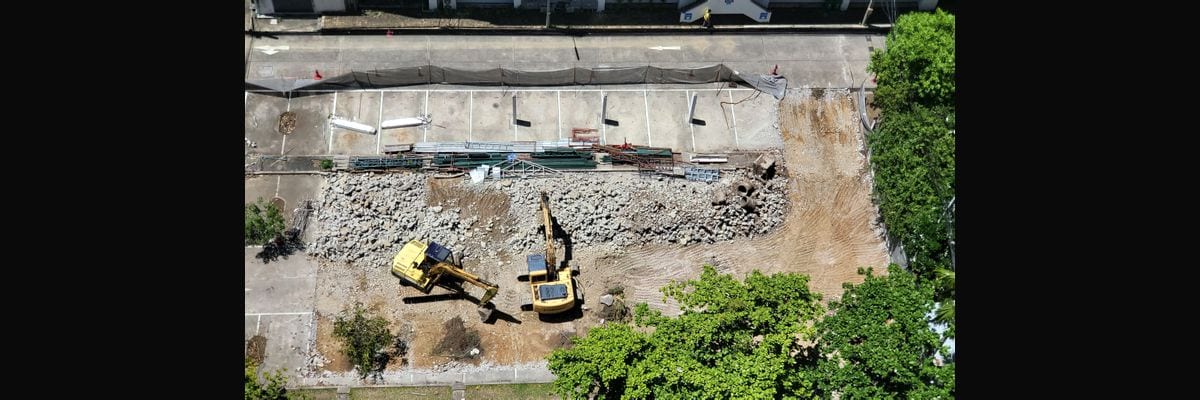
> TL;DR: Commercial demolition and site prep is a project-based, capital-heavy business where deals are won 6-18 months before the wrecking ball swings. Track nine KPIs: bid-hit rate by project type (target 18-28% on selective demo, 8-15% on full structural), weighted pipeline coverage (3.0-4.0x against quarterly revenue), average project ACV ($350k-$2.4M depending on mix), gross margin per project (18-26% blended, 32%+ on abatement), equipment utilization on revenue-bearing hours (62-72%), pre-construction conversion (RFI to signed contract at 40-55%), days-to-mobilization (28-45 days post-award), backlog months (4-7 healthy, 9+ overbooked), and change-order capture rate (8-14% of base contract). The teams that win in 2027 sell into the GC's pre-construction manager during schematic design, price abatement and demolition as a bundled scope, and run weekly bid-board reviews tied to a CRM (Salesforce or HubSpot) integrated with B2W Estimate or HCSS HeavyBid.
Q1: What is the single most important sales KPI in commercial demolition? A: Weighted pipeline coverage by award date. A demo contractor needs 3.0-4.0x coverage against the next two quarters because the gap between bid submission and notice-to-proceed routinely runs 60-180 days. If coverage drops below 2.5x, the crew calendar opens up and fixed equipment overhead eats margin within one quarter.
Q2: How does abatement scope change the KPI mix? A: Hazardous material abatement (asbestos, lead, mold, PCBs) carries 30-40% gross margin versus 18-22% for structural demo. Sales teams that track abatement attach rate as a separate KPI (target 55%+ of demo projects include a priced abatement scope) outperform peers on blended margin by 600-900 basis points.
Why Commercial Demolition Sells Differently
Demolition and site prep is sold inside the construction pre-construction window, which behaves nothing like a SaaS funnel or even a typical specialty trade. Four mechanics drive the KPI design.
Pre-construction sells the job, not the bid. By the time an RFP hits the street, the winning contractor has usually been in conversation with the GC's pre-construction manager and the developer for six to twelve months. The "deal" is the relationship plus the early scope shaping. KPIs that only measure bid-to-win miss the upstream work. Track engagement at design development (DD) and construction documents (CD) phases.
Equipment and labor are sunk cost. A high-reach excavator runs $1.8M-$3.5M, a wheel loader $400k-$900k, and an experienced operator costs $95-$140 fully loaded per hour. That iron has to bill. Utilization on revenue-bearing hours is a sales-adjacent KPI because the sales team's job is to keep the calendar full enough to push utilization above 65%.
Regulatory complexity gates the buyer. OSHA 1926 Subpart T, EPA NESHAP for asbestos, state environmental agency permitting, and local noise/dust ordinances mean the buyer is risk-averse. Sales reps who lead with compliance documentation (10-hour and 30-hour OSHA certification rates, EPA accreditation, EMR below 0.85, written health and safety plans) convert at materially higher rates than reps leading on price.

The buying committee is bigger than it looks. A typical commercial demo award involves the GC's pre-construction manager, project executive, estimator, the developer's owner's rep, the environmental consultant, the structural engineer, and increasingly the developer's sustainability lead asking about diversion rate and circular materials. Five to seven stakeholders. KPIs need to capture multi-threading.
The 9 KPIs, In Depth
1Bid-Hit Rate by Project Type
Measure separately for selective interior demo, full structural demo, abatement-only, site prep / earthwork, and emergency / disaster response. Selective demo benchmarks 18-28% hit rate because the pool of qualified bidders is smaller and relationships dominate. Full structural demolition runs 8-15% because every regional player chases the megaprojects. Abatement-only sits at 22-32% for licensed contractors. Site prep and mass excavation falls in the 12-20% band. If your blended bid-hit rate is below 12%, you are either bidding outside your sweet spot or underpricing pre-construction services. If it is above 30%, you are probably leaving margin on the table.
2Weighted Pipeline Coverage
Sum the dollar value of every active opportunity multiplied by its probability stage, divided by the revenue target for the next two quarters. Healthy demo contractors run 3.0-4.0x. The reason it is higher than SaaS (typically 3x) is the long award-to-mobilization gap and the project lumpiness. One $4M megaproject swing can move a quarterly forecast 30 points. Track this by award date, not bid date, because a bid submitted today on a project that mobilizes in Q3 2028 is not coverage for Q2 2027.
3Average Project ACV (Annual Contract Value Equivalent)
Demolition contracts are project-based, but tracking an annualized ACV helps benchmark growth and customer concentration. Regional commercial demo shops run $350k-$900k average project value. Mid-market firms (Cherry Companies, MCM Companies tier) sit at $900k-$2.4M. Top-tier national players (NorthStar Group Services, Brandenburg Industrial Service, Kiewit Demolition) average $2.4M-$8M with megaprojects (power plant decommissioning, refinery shutdowns) running $20M-$80M. Track median alongside mean because a single megaproject distorts the average.
4Gross Margin Per Project
Blended target is 18-26%. The breakdown that matters: structural demo at 16-22%, selective interior at 22-28%, abatement at 30-40%, mass excavation at 14-19%, site prep with utilities at 18-24%. Reps and estimators should see margin by scope, not just blended. The single biggest margin killer is undersizing the dumpster and recycling line; landfill tip fees have run $85-$140 per ton in major metros and the LEED diversion requirement (75%+) forces sortation costs that estimators routinely miss by 8-12%.
5Equipment Utilization on Revenue-Bearing Hours
This is operations-owned but sales-adjacent. Revenue-bearing utilization (excluding mob/demob, maintenance, and weather days) should run 62-72%. Below 60% and the fleet is overbuilt or the sales team is not keeping the calendar full. Above 75% and you are probably turning down work or running equipment past safe maintenance intervals. Track per asset class: high-reach excavators (the margin makers) should hit 70%+, support equipment 55-65%. Tenna and HCSS Telematics are the two tools most regional contractors use to instrument this.

6Pre-Construction Conversion (RFI to Signed Contract)
Of the projects where your team submitted a meaningful pre-construction input (budgetary number, constructability review, abatement scoping memo), what percent converts to signed contract? Target is 40-55%. This is the leading indicator that distinguishes shops that win on relationship versus shops that grind on bids. If pre-con conversion is below 30%, your team is doing free work for GCs who are using you as a price-check. If it is above 60%, you are probably not engaging enough projects upstream.
7Days-to-Mobilization
Award date to first crew on site. Industry benchmark is 28-45 days. Shorter than 28 days usually means you are mobilizing without finalized permits or pre-mob safety plans, which creates EHS exposure. Longer than 60 days and the GC starts charging back delay damages or pulling the award. This KPI is sales-adjacent because the rep owns the handoff to operations and the early permit submittal sequencing.
8Backlog Months
Signed contract value divided by trailing-three-month revenue, expressed in months of work. Healthy range is 4-7 months. Below 3 months means the sales team is behind and crews will furlough. Above 9 months means you are turning away work or quoting unrealistic start dates that will erode customer trust. Most regional demo contractors track this weekly on a single-page dashboard.
9Change-Order Capture Rate
Change orders as a percentage of base contract value. Industry average is 8-14%. Below 5% suggests your estimators are scoping too tightly (leaving margin) or your project managers are absorbing scope creep without billing for it. Above 18% and your GC customers will mark you as a "claim-happy" contractor and your bid invitation list will shrink within two bid cycles. The healthiest demo shops train PMs on the formal change-order process and use Procore or Bluebeam Revu for documented RFI-to-CO conversion.
Real Operators
NorthStar Group Services (Old Bethpage, NY) is the largest pure-play commercial and industrial demolition contractor in North America, with $400M+ in annual revenue and a heavy concentration in power plant decommissioning, federal nuclear (DOE work), and refinery dismantlement. Their sales motion is national account-driven with dedicated business development for utilities and federal.

Brandenburg Industrial Service Company (Chicago, IL) runs $350M+ in annual revenue with strength in heavy industrial, steel mill, and refinery work. Family-owned since 1933, they sell on safety record and execution certainty rather than lowest price.
MCM Companies (Bensenville, IL) is a mid-market commercial demolition and environmental services firm running $80M-$150M annually with a strong Chicago and Midwest commercial real estate book. Heavy on selective interior demo for office repositioning and hospital expansion projects.
Cherry Companies (Houston, TX) is the dominant Gulf Coast site prep and demolition contractor with concrete recycling integration. Annual revenue in the $200M-$300M range, with most work tied to commercial real estate and refinery-adjacent projects.
Penhall Company (Anaheim, CA) is the largest concrete cutting and selective demolition contractor in the US, with branches across the West, Mountain, and Southeast. Their sales motion is branch-level with strong GC relationships and a national accounts overlay for retail rollouts (CVS, Walgreens, Target remodels).
Kiewit Demolition / Kiewit Infrastructure runs demolition as an integrated capability inside the larger Kiewit organization, with strength in bridge demolition, power plant decommissioning, and large-scale industrial.

Total Wrecking and Environmental (Buffalo, NY) is a strong regional player with environmental services integration, running $40M-$70M annually in the Northeast and Mid-Atlantic.
ARM Group / ARM Group Holdings brings environmental consulting and abatement contracting together, which matters because the cross-sell motion (consultant identifies the hazard, contractor abates it) is one of the highest-margin plays in the industry.
Schultz Industries and other regional contractors (Costello Dismantling, Adamo Group, JR Vinagro, NASDI) round out the competitive set in most metros. Most regional demo shops sit in the $15M-$80M annual revenue band and compete on relationship and execution rather than scale.
Failure Modes
1Bidding Outside the Sweet Spot
The most common failure: a regional contractor with strong selective interior demo capability starts chasing structural megaprojects to grow top line. Bid-hit rate collapses from 22% to 6%, pre-construction labor doubles, and the wins that do come are underpriced because the team did not have the scar tissue to estimate them correctly. Fix: define the sweet spot by project size, scope type, and geography. Refuse bids outside it for two full quarters. Watch margin recover.
2Treating Abatement as an Afterthought
Demo contractors who treat asbestos and lead abatement as a subcontracted line item rather than a priced and sold scope leave 600-900 basis points of margin on the table. Fix: hire or license a dedicated abatement estimator, build an abatement attach rate KPI, and train the sales team to ask environmental questions in the first pre-con meeting.

3Pre-Construction as Free Consulting
GCs and developers will happily use your team for budgetary numbers, constructability reviews, and value engineering with no commitment to bid the actual job. Track pre-con conversion rigorously. If a GC has pulled three budget numbers from you in 12 months and bid you on zero of the three, stop responding to their pre-con asks. The strongest demo contractors politely qualify pre-con requests with a question about likely bid invitation.
4Equipment Buying Ahead of Sales Pipeline
A new high-reach excavator is a $2.5M-$3.5M decision that needs 5,500-6,500 revenue hours per year to pay back. Buying ahead of a signed backlog (or worse, on the strength of a single megaproject that has not yet been awarded) is the single fastest way to put a demo contractor into a cash crunch. Fix: tie capex committee approval to weighted pipeline coverage and signed backlog months, not to bid pipeline.
Reporting Cadence
Daily (7am crew start): Safety topic, crew assignments, equipment status, permit/inspection blockers. Sales-adjacent only when a mobilization is pending.
Weekly Tuesday (Bid Board): Every open bid by project, GC, scope, bid date, award date, and current win probability. Estimator and BD lead walk through. Decisions: no-bid, full bid, partner-bid. Run in B2W Track or a shared Bluebeam set.
Weekly Thursday (Pipeline and Coverage): Weighted pipeline coverage by quarter, top 10 deals with last-touch date, multi-threading status, pre-con conversion trailing 90 days. Salesforce or HubSpot dashboard view.
Monthly First Friday (Margin): Gross margin by project type, change-order capture, top 5 margin wins, top 5 margin misses, root-cause review. Pulls from job-cost system (Viewpoint, Sage 300, or Foundation Software).

Monthly Mid-Month (Backlog and Capacity): Backlog months by region and crew, equipment utilization trailing 30 days, projected start dates for next 90 days. Operations and sales joint review.
Quarterly Business Review: Bid-hit rate by project type and region, customer concentration (no GC over 22% of revenue is the rule of thumb), capex pipeline tied to backlog, EHS performance (EMR, OSHA recordables, near-miss frequency), and a 12-month rolling sales plan.
30/60/90 Day Plan
Days 1-30 (Diagnose): Pull two years of bid history out of the estimating system (B2W Estimate, HCSS HeavyBid, or spreadsheet). Compute bid-hit rate by project type, scope, GC customer, and estimator. Interview the top three GC pre-construction managers you sell to and ask what would make you a preferred bidder. Audit current backlog, weighted pipeline, and average days-to-mobilization. Identify the bottom 20% of customers by margin and the top 20% by repeat business. Stand up a single weekly bid board meeting if one does not exist.
Days 31-60 (Instrument): Configure Salesforce or HubSpot with a demo-specific opportunity record that captures project type, scope mix, abatement attach, square footage, structural complexity, award date (not bid date), GC pre-con contact, developer contact, environmental consultant, and est. mobilization date. Integrate with B2W Estimate or HCSS HeavyBid for bid value sync. Build the weighted pipeline coverage dashboard, pre-con conversion dashboard, and abatement attach rate dashboard. Train estimators and BD on the new opportunity record. Set quarterly bid-hit and coverage targets by segment.
Days 61-90 (Execute): Run the first full quarterly business review with the new KPIs. Make at least one explicit no-bid decision in a segment where bid-hit rate is below 8%. Launch a named-account pre-construction motion against the top 10 GCs in your region with a quarterly cadence of breakfast or lunch meetings tied to specific upcoming projects (use the GC's project list, Dodge Data, or ConstructConnect). Stand up a monthly margin review tied to job-cost actuals. Confirm or replace any equipment capex decisions that are not supported by the new backlog and weighted pipeline numbers.
FAQ
Q1: How long does a typical commercial demolition sales cycle run? A: Six to eighteen months from first pre-construction conversation to notice-to-proceed. Megaprojects (refineries, power plants) routinely run two to four years. The bid period itself is only two to four weeks; the relationship and scope-shaping work happens long before the RFP drops.
Q2: What is the right ratio of estimators to BD reps? A: One BD rep can feed two to three senior estimators in a typical mid-market commercial demo shop. The ratio flips for industrial/heavy work where estimating is the bottleneck and one estimator might cover one BD rep. Track estimator utilization (billable bid hours / total hours) alongside sales KPIs.
Q3: How do I price abatement bundled with demolition without losing the abatement margin? A: Quote them as separate line items in the same proposal. Show the GC that abatement is a 30-40% margin scope priced at market and demolition is priced competitively. Bundling the two into a single lump sum invites the GC to value-engineer your abatement scope down to the cheapest licensed subcontractor and you lose the margin.
Q4: Which tools matter most for a sales-and-estimating stack in 2027? A: B2W Estimate or HCSS HeavyBid for estimating; Salesforce or HubSpot for CRM; Procore for project management and GC integration; Bluebeam Revu for takeoff and bid markup; Tenna or HCSS Telematics for equipment utilization; Foundation Software, Viewpoint Vista, or Sage 300 Construction for job cost; Dodge Data and ConstructConnect for project lead generation.
Q5: What is the right customer concentration limit? A: No single GC customer above 22-25% of trailing-twelve-month revenue. No single developer above 18%. Above those thresholds and the loss of a single relationship can break the business. Diversify by GC, by developer, and by project type (commercial real estate, healthcare, education, industrial, public infrastructure).
Q6: How do I differentiate when every bid comes down to price? A: Lead pre-construction with three specific deliverables: a written health and safety plan, a constructability and sequencing memo with a draft schedule, and an abatement and waste diversion plan with named subcontractors and recycling partners. GCs and developers pay 3-6% premiums for contractors who reduce their risk on the front end. Selling on EMR (below 0.85), OSHA 30-hour saturation, and named project executive accountability beats selling on dollars per square foot.
Related on PULSE
- What are the key sales KPIs for the Commercial Demolition & Site Clearing industry in 2027?
- What are the key sales KPIs for the Clinical Trial Site Network industry in 2027?
- Top 10 Commercial Real Estate Revenue KPIs
- Top 10 Commercial Cleaning Revenue KPIs
- What are the key sales KPIs for the Commercial Real Estate Brokerage industry in 2027?
- What are the key sales KPIs for the Commercial Window & Curtain Wall Manufacturing industry in 2027?
Sources
- Engineering News-Record (ENR) Top 600 Specialty Contractors and Top Demolition Contractors annual rankings — published each fall, primary source for revenue benchmarks and project mix data.
- Construction Financial Management Association (CFMA) Annual Financial Survey — gross margin, overhead, and backlog benchmarks by trade including demolition and site prep.
- National Demolition Association (NDA) annual industry survey and conference proceedings — abatement attach rates, fleet utilization data, safety benchmarks.
- OSHA 29 CFR 1926 Subpart T (Demolition) and Subpart D (Occupational Health and Environmental Controls) — regulatory baseline for compliance KPIs and EHS reporting.
- EPA NESHAP regulations 40 CFR Part 61 Subpart M (asbestos) — federal abatement compliance framework that shapes abatement KPI tracking.
- Dodge Data and Analytics Construction Outlook annual report and ConstructConnect quarterly forecasts — leading indicators for commercial construction starts and demolition demand.
- HCSS and B2W Software customer benchmark reports — equipment utilization, bid-hit rate, and estimating efficiency data across hundreds of heavy civil and demolition contractors.
- AGC of America Construction Inflation Alert and quarterly outlook — labor cost, materials, and tip fee benchmarks for margin modeling.
- Procore Construction Industry Report and Bluebeam StudioPrime usage data — adoption benchmarks for project management and pre-construction tooling in specialty trades.
- Tenna and HCSS Telematics equipment utilization white papers — revenue-bearing utilization benchmarks by asset class.
This page will be disappearing soon. Save it to your device for $1 — or read it free while it is here.
@Kory-White- · if Venmo asks, the last 4 of my number are 2012
This page is gone.
This one is off the shelf now. $1 keeps it on your phone for good — the whole page, pictures and diagrams included.
 pulse-industry-kpisTop 10 KPIs for Roofing Contractors in 2027
 pulse-industry-kpisTop 10 Sales KPIs for AI Sales Coaching / Conversation Intelligence in 2027
 pulse-industry-kpisTop 10 Sales KPIs for Industrial X-Ray & Non-Destructive Testing (NDT) Services in 2027
 pulse-industry-kpisTop 10 Sales KPIs for Specialty Lumber & Millwork Distribution in 2027
 pulse-industry-kpisTop 10 Sales KPIs for Commercial Heavy Truck Dealership in 2027
 pulse-industry-kpisTop 10 Sales KPIs for Commercial Marketing Agency in 2027
 pulse-industry-kpisTop 10 Sales KPIs for Commercial Insurance Brokerage in 2027
 pulse-industry-kpisTop 10 Sales KPIs for Commercial Building Materials Distribution in 2027
 pulse-industry-kpisTop 10 Sales KPIs for Commercial Sign Maintenance & Electrical Service in 2027
 pulse-industry-kpisTop 10 Sales KPIs for Industrial Cybersecurity (OT/ICS) Services in 2027