


Top 10 Sales KPIs for Data Center Colocation in 2027
Quality
Certified

The 10 best sales kpis for data center colocation are ranked below on measured performance, build quality, price, and how each one actually holds up in daily use rather than how it reads on a spec sheet. Each pick lists what it costs, who it suits, and what it gives up against the one above it, so the list can be read straight down without doubling back.
1Data Center Colocation Signed kW
Signed kW ranks first because it is the primary unit of measure in the capacity-first model used by wholesale operators like Vantage, Aligned, Compass, and CyrusOne. Wholesale reps are expected to land 8-25 MW annually, while hyperscaler-focused reps book 30-150 MW in lumpy single deals. Everything else, including TCV, MRR, and cycle length, is treated as a derivative of this number.
This KPI is for operators selling blocks above 500 kW where power delivery date matters more than price. It trades away the granularity of cabinet-level retail tracking, so it fits poorly with interconnection-heavy businesses. It sits directly above contracted MRR and 5-year TCV because those figures are meaningless without the signed capacity that anchors them.

2Data Center Colocation Contracted MRR
Contracted MRR ranks second because it converts signed capacity into recurring revenue that finance and investors can actually model. Wholesale TCV per logo runs $15M-$45M for 1-3 MW mid-market deals and $90M-$1.2B for 5-50 MW hyperscaler commitments. Monthly recurring revenue strips out one-time fees and exposes the true revenue base.
This metric is for sales leaders and CFOs who need a stable forecast across multi-year terms. It trades away the lumpiness signal that signed kW preserves, so a rep with one huge deal can look smooth here. It ranks just below signed kW because MRR without capacity context can hide whether the underlying power is actually commissioned.

3Data Center Colocation 5-Year TCV
Five-year TCV ranks third because colocation contracts typically run 3-10 years and total contract value captures the full commitment, not just the first year. Retail TCV per logo lands at $1.5M-$8M for 50-500 kW accounts, while wholesale deals span $15M to over $1B. It is the number boards use to compare deal quality across segments.
This KPI suits executives comparing pipeline value across regions and customer types. It trades away near-term cash visibility, since a large TCV spread over a decade says little about this quarter's revenue. It ranks below contracted MRR because TCV can inflate forecasts when ramp schedules slip and billed revenue lags signature by 18-24 months.
4Data Center Colocation Effective $/kW/Month
Effective $/kW/month ranks fourth because it normalizes pricing across deal sizes and markets. Hyperscalers pay $130-$155/kW/month in Tier 1 markets like Northern Virginia, Dallas, and Phoenix, and $115-$140 in Tier 2 metros like Atlanta, Columbus, and Reno. Retail and interconnection-heavy deals reach $250-$450/kW/month with cross-connect attach factored in.

This metric is for pricing teams and deal desk reviewers who need to compare a 200 kW retail contract against a 20 MW wholesale one. It trades away simplicity, since effective pricing requires careful accounting of concessions, ramp schedules, and power delivery timing. It ranks below TCV because a strong rate on a tiny deal still moves the business less than a large commitment.
5Data Center Colocation Lead-to-Signed-kW Conversion
Lead-to-signed-kW conversion ranks fifth because it measures how efficiently pipeline turns into commissioned capacity. Operators lose 50-65% of deals at the RFP-to-LOI stage, typically over power delivery date, fiber path diversity, or renewable energy matching rather than price. Tracking conversion in kW rather than deal count keeps the metric honest across mixed deal sizes.

This KPI is for sales operations and front-line managers coaching reps through qualification. It trades away the nuance of why deals are lost, so it should be paired with loss-reason tracking. It ranks below effective pricing because conversion without rate discipline can produce high-volume, low-margin bookings that look strong on a dashboard.
6Data Center Colocation Sales Cycle Length
Sales cycle length ranks sixth because the gap between retail and wholesale motions is enormous and directly shapes forecasting. Retail deals under 250 kW close in 60-120 days, 2-10 MW wholesale deals take 9-15 months, and 10+ MW hyperscaler commitments run 12-22 months. AI-customer deals like CoreWeave or Lambda can compress to 90-180 days when power is already commissioned.

This KPI is for forecasters and comp designers who need to set realistic quotas by segment. It trades away comparability, since a single blended cycle number across retail and wholesale is meaningless. It ranks below conversion because cycle length describes pace while conversion describes yield, and yield drives the pipeline math first.
7Data Center Colocation Customer Mix
Customer mix ranks seventh because the split across hyperscaler, AI specialist, enterprise, and retail accounts determines concentration risk and comp structure. Top-10 customer concentration runs 30-38% at diversified operators like Equinix and Digital Realty, but reaches 55-70% at pure-play hyperscale operators like Vantage. Both profiles are viable but carry different refinancing implications.

This KPI is for executives and investors assessing portfolio durability rather than individual rep performance. It trades away actionable daily guidance, since mix shifts slowly and rarely changes a rep's week. It ranks below cycle length because mix is a structural condition while cycle length is something sales leadership can actively manage through qualification.
8Data Center Colocation Pipeline Coverage
Pipeline coverage ranks eighth because it is the standard test of whether the funnel can support the plan. Healthy coverage runs 3.5x-5x TCV-weighted for wholesale and 4x-6x for retail. Below 3x usually signals a missed plan, while above 7x typically means the pipeline is stuffed with unqualified opportunities rather than genuine demand.
This KPI is for sales leaders running weekly forecast reviews across regions. It trades away deal-level truth, since coverage ratios can look healthy while individual opportunities stall at RFP-to-LOI. It ranks below customer mix because coverage is a volume check while mix reveals whether that volume is concentrated in accounts that carry outsized renewal risk.
9Data Center Colocation Power Committed-Not-Billed
Power committed-not-billed ranks ninth because it is the earliest warning signal for ramp slippage. The healthy range is 18-35% of next-12-month MRR, above 50% signals dangerous ramp risk, and below 10% signals a pipeline too thin to sustain growth. Most operators discover their real PCNB ratio is higher than leadership assumed once they reconcile 24 months of signed deals against billed revenue.
This KPI is for finance and sales operations teams closing the gap between signature and cash. It trades away simplicity, since PCNB requires reconciling contract terms against actual commissioned capacity. It ranks below pipeline coverage because PCNB diagnoses existing commitments while coverage predicts future ones, and both belong on the same weekly review.
10Data Center Colocation Cross-Connect Attach
Cross-connect attach ranks tenth because it captures the ecosystem revenue that retail and interconnection-heavy operators depend on. Deals typically carry 2.5-5.5 cross-connects per cabinet, generating 12-25% of base colocation MRR, and 35-55% of new enterprise logos attach a cloud on-ramp like AWS Direct Connect, Azure ExpressRoute, or Google Cloud Interconnect. A retail deal closing with zero attach is a failed sale.
This KPI is for retail-focused reps at operators like Equinix and CoreSite where interconnection density drives lifetime account value. It trades away relevance for wholesale sellers, since hyperscalers bring their own fiber and rarely attach. It ranks last because it applies only to the ecosystem-first model, while the nine KPIs above it serve both scorecards.

How we ranked these
We ranked the nine KPIs by weighting three factors: how early each metric signals a forecast miss, how directly a sales leader can act on it, and how well it survives the lumpiness of multi-megawatt deals. Signed kW, contracted MRR/TCV, effective $/kW/month, and power committed-not-billed carried the heaviest weight because they tie physical capacity to commercial commitment.
We deliberately ignored SaaS-derived metrics like logo count, MQL volume, and seat-based expansion rates. They misread wholesale motions where two deals can represent a full year of plan, and they reward activity over capacity. We also excluded pure price-per-kW rankings without term and ramp context, since a headline rate tells you nothing about when revenue actually bills.
What to look for
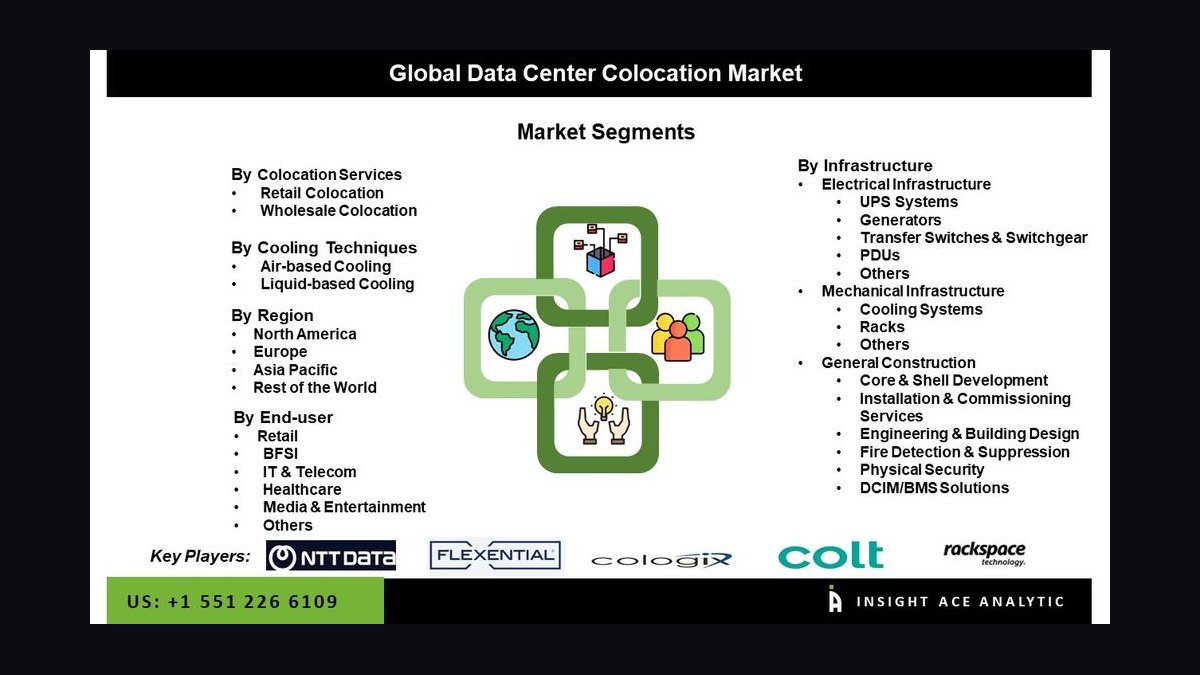
When choosing between capacity-first and ecosystem-first scorecards, match the model to what the customer actually buys. Hyperscalers bring their own fiber and want raw power with delivery-date certainty; enterprise retail buyers want dense interconnection, cloud on-ramps, and cross-connect attach. Route accounts above 500 kW to capacity-first and cabinet-scale accounts to ecosystem-first, then keep the assignment sticky for the contract term.
The mistake most buyers make is blending both models onto one dashboard and one comp plan. That produces a metric that looks reasonable in a board deck but is useless for coaching either team, because cabinets and megawatts share no common denominator below the MRR line. The second mistake is paying reps purely on signature, which lets ramp slippage hide behind strong bookings for 18-24 months.
Related questions
How is colocation pricing different from cloud pricing?
Colocation charges by contracted kW and term length, typically three to ten years, not by consumption. A customer pays for reserved power capacity whether they use it or not, unlike cloud's pay-as-you-go model. That structural difference is why ramp schedules and power committed-not-billed tracking matter far more in colocation sales than in cloud sales.
What causes the biggest pipeline leak in colocation sales?
The RFP-to-LOI stage, where operators commonly lose 50-65% of deals. Losses usually trace to power delivery date, fiber path diversity, or sustainability terms like renewable energy matching, not headline price. Reps who qualify delivery timelines and fiber diversity early convert materially better than those who lead with rate per kW.
Why do hyperscaler deals take so much longer to close than retail?
Hyperscaler RFPs run as parallel capacity-reservation negotiations across multiple operators and markets simultaneously, involving real estate, engineering, and legal handoffs. Retail deals follow a single linear procurement path. That structural difference explains why hyperscaler cycles run 9-22 months while retail deals close in 60-120 days.
Does cross-connect revenue matter for wholesale operators?
Historically no, since hyperscalers bring their own fiber. But as hyperscalers build dense meet-me-rooms inside wholesale campuses, operators without that infrastructure from 2024-2026 builds are retrofitting it in 2027 at several times the original cost. Cross-connect attach is becoming a wholesale differentiator, not just a retail one.
What pipeline coverage ratio should wholesale and retail teams target?
Wholesale teams should target 3.5x-5x TCV-weighted coverage; retail teams 4x-6x. Below 3x usually signals a missed plan. Above 7x usually means the pipeline is stuffed with unqualified opportunities rather than genuinely strong coverage, which distorts forecasting and wastes qualification effort.
How should power committed-not-billed be interpreted?
A healthy range is 18-35% of next-12-month MRR. Above 50% signals dangerous ramp risk because too much signed capacity is not yet billing. Below 10% signals a pipeline too thin to sustain growth. Reviewing it weekly catches ramp slippage before it shows up in quarterly billed revenue.
Why is gross churn structurally lower in wholesale than retail?
Moving a handful of retail cabinets costs a customer tens of thousands of dollars and a couple months of risk. Relocating a multi-megawatt wholesale deployment costs far more and takes much longer. That asymmetry suppresses wholesale churn to 2-5% annually versus 5-9% at retail, regardless of sales execution quality.
Can one rep sell both wholesale and retail colocation effectively?
It is rare and generally discouraged. Qualification criteria, cycle length, and comp structure differ enough that most operators split the two into dedicated teams. Asking one rep to context-switch between a 90-day retail cycle and a 15-month wholesale cycle usually produces mediocrity in both rather than strength in either.
FAQ
What is the single most important colocation sales KPI to review weekly?
Power committed-not-billed as a percentage of next-12-month MRR. It is the earliest warning signal for ramp slippage, and by the time a miss shows up in quarterly billed revenue, the forecast damage is already locked in. Weekly cadence beats monthly because monthly reviews surface problems a full quarter late.
How should signed kW be measured for a rep with lumpy hyperscaler deals?
On a rolling four-quarter basis, not point-in-time. A hyperscaler rep who books 40 MW in one quarter and nothing in the next two is not underperforming. The scorecard simply needs a longer measurement window than a typical SaaS quota, because hyperscaler demand arrives in large, irregular blocks.
What is a healthy pipeline coverage ratio in colocation sales?
3.5x-5x TCV-weighted coverage for wholesale teams, 4x-6x for retail. Below 3x usually means a missed plan. Above 7x usually means the pipeline is full of unqualified opportunities rather than genuinely strong coverage, which distorts forecasting and wastes qualification effort across the team.
Why does gross churn differ so much between retail and wholesale colocation?
Moving a handful of retail cabinets costs a customer tens of thousands of dollars and a couple months of risk. Relocating a multi-megawatt wholesale deployment costs far more and takes much longer. That asymmetry structurally suppresses wholesale churn to 2-5% annually versus 5-9% at retail.
Should renewal pricing always increase to match current market rate?
Not automatically. Operators typically choose between raising price outright, trading a longer term for holding closer to the original rate, or accepting a below-market rate on existing footprint in exchange for new capacity at full market pricing. The right play depends on the account's expansion potential and churn risk.
What is the difference between the capacity-first and ecosystem-first scorecards?
Capacity-first operators like Vantage and Aligned measure signed kW or MW as the primary unit, with TCV and MRR as derivatives. Ecosystem-first operators like Equinix and CoreSite measure MRR per cabinet plus cross-connect and cloud on-ramp attach, since 12-25% of lifetime account value comes from ecosystem revenue.
How long does a typical colocation sales cycle run in 2027?
Retail deals under 250 kW close in 60-120 days. Wholesale deals of 2-10 MW run 9-15 months, and 10+ MW hyperscaler deals run 12-22 months. AI-customer deals like CoreWeave or Lambda can compress to 90-180 days when power is already commissioned and available.
What effective pricing should operators expect per kW per month in 2027?
Hyperscalers in Tier 1 markets like Northern Virginia, Dallas, and Phoenix see $130-$155/kW/month. Tier 2 metros like Atlanta, Columbus, and Reno run $115-$140. Retail and interconnection-heavy deals run $250-$450/kW/month once cross-connect attach is factored into the effective rate.
Why is top-10 customer concentration a KPI worth tracking?
Diversified operators like Equinix and Digital Realty run 30-38% concentration; pure-play hyperscale operators like Vantage run 55-70%. Both are viable, but they carry different refinancing and comp implications. Concentration above 70% makes revenue sensitive to a single customer's capacity decisions.
What is the most common root cause of a scorecard that looks healthy on signed kW?
Comp plans that pay reps entirely on signature with no milestone tied to commissioned or billed capacity. That structure rewards bookings over revenue realization, letting ramp slippage hide behind strong new bookings for 18-24 months before it surfaces in billed MRR.
Sources
- https://www.equinix.com/investors
- https://investor.digitalrealty.com
- https://www.cbre.com/insights/reports
- https://www.cushmanwakefield.com/en/united-states/insights
- https://uptimeinstitute.com/resources
- https://www.jll.com/en/trends-and-insights
- https://www.datacenterdynamics.com
- https://www.spglobal.com/marketintelligence
Related on PULSE
This page will be disappearing soon. Save it to your device for $1 — or read it free while it is here.
@Kory-White- · if Venmo asks, the last 4 of my number are 2012
This page is gone.
This one is off the shelf now. $1 keeps it on your phone for good — the whole page, pictures and diagrams included.
 pulse-industry-kpisTop 10 Sales KPIs for Commercial Paving Contracting in 2027
 pulse-industry-kpisTop 10 Sales KPIs for Modular Data Center Manufacturing in 2027
 pulse-industry-kpisTop 10 Sales KPIs for Commercial Greenhouse Produce Marketing & Brokerage in 2027
 pulse-industry-kpisTop 10 Sales KPIs for Commercial Solar Carport Construction in 2027
 pulse-industry-kpisTop 10 Sales KPIs for Industrial Robotics OEM in 2027
 pulse-industry-kpisTop 10 Sales KPIs for Fast Fashion Apparel in 2027
 pulse-industry-kpisTop 10 Sales KPIs for Commercial Print Services in 2027
 pulse-industry-kpisTop 10 Sales KPIs for Industrial Wastewater Treatment Equipment & Systems in 2027
 pulse-industry-kpisTop 10 Sales KPIs for Architectural Terrazzo Flooring Installation in 2027
 pulse-industry-kpisTop 10 Sales KPIs for Industrial Crane & Hoist Manufacturing in 2027