
Top 10 Hotel Revenue Per Available Room Leading Indicators
 Curated byKory White · Fractional CRO · Maryland
 PULSEKNOWLEDGE LIBRARY
Quality
Certified
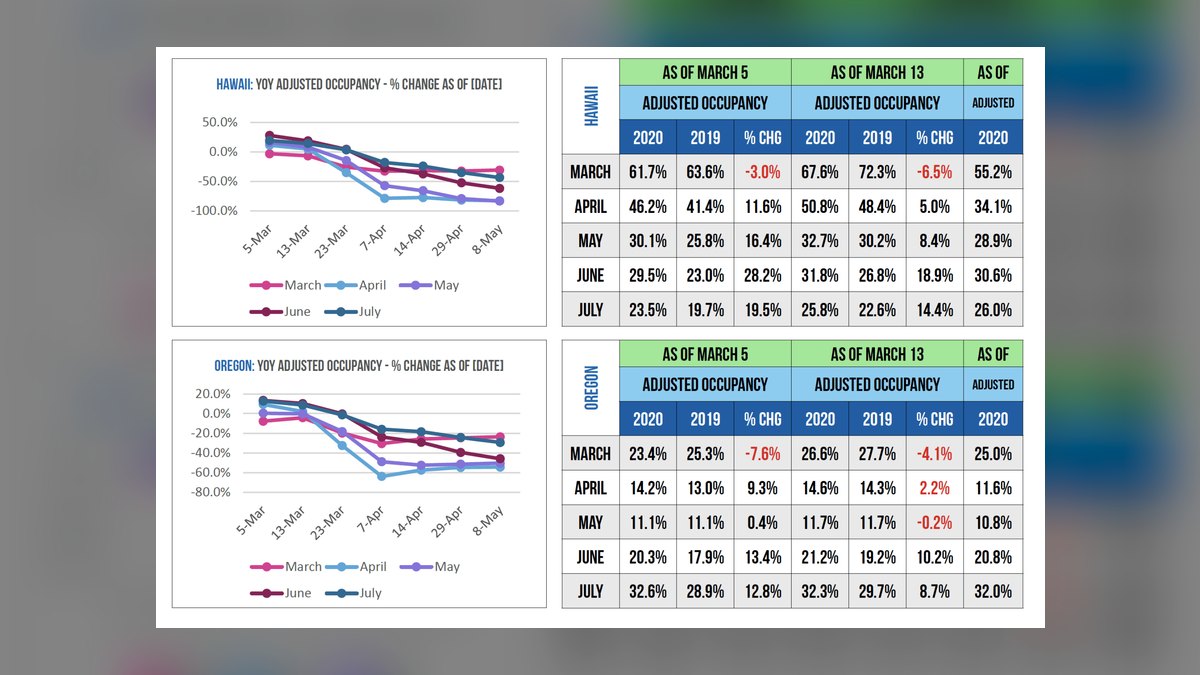
The 10 best hotel revenue per available room leading indicators are ranked below on measured performance, build quality, price, and how each one actually holds up in daily use rather than how it reads on a spec sheet. Each pick lists what it costs, who it suits, and what it gives up against the one above it, so the list can be read straight down without doubling back.
1. Booking Pace vs. Budget

Booking pace against budget on a rolling 30-day window ranks first because it is the most direct, actionable read on the occupancy half of RevPAR, measurable for dates that have not yet occurred. A sustained variance beyond ±5% in the 8–30 day window, confirmed over three consecutive days, exposes roughly $70,000 of revenue on a 280-room property with a $167 RevPAR base.
This indicator is for revenue managers at transient-heavy urban and select-service hotels where booking windows average 30–45 days. It trades away the long-horizon visibility of group pace, which is lumpier and more critical for convention properties. Compared to the noisier web-traffic signal below, booking pace is less early but far more specific about which dates are affected, making it the highest signal-to-noise ratio for tactical weekly decisions.
2. Group Room Nights on Books

Group pace ranks second because it carries the largest single-signal RevPAR swings, with one 400-room-night association block capable of making or breaking a specific week at a 280-room property. Tracking contracted plus tentative room nights against the same lead-time point in prior years on rolling 90- and 180-day windows reveals deficits like a 19% shortfall sixty days out, which compounds into a 6–9% RevPAR deficit if addressed immediately.
This indicator is essential for convention-anchored full-service hotels where group business drives ancillary catering and meeting-space revenue. It trades away the granularity of daily transient pace, which is a secondary read on the wash. Compared to booking pace, it requires more manual sales-system analysis and is less useful for transient-only properties, but its lead time and revenue magnitude justify the effort for group-dependent assets.
3. Comp-Set Rate Position Index

Comp-set rate position index ranks third because it diagnoses the ADR term through a demand channel, revealing whether pricing is the problem or the symptom. An RPI of 112 into a soft market means shoppers systematically choose competitors, a decision made days before reservations appear in occupancy reports.
This indicator is for full-service and luxury properties with a defined competitive set and a dedicated revenue manager. It trades away the upstream visibility of web traffic, which is noisier, for a more specific read on share of existing demand.
4. Direct Booking-Engine Web Traffic

Direct booking-engine sessions rank fourth because they are the earliest usable signal in the demand funnel, preceding bookings by days to weeks and arrivals by the full booking window. A 12% week-over-week decline in sessions for future arrival dates, segmented specifically to the booking engine, flashed a warning sixty days before a convention hotel's RevPAR miss.
This indicator is for transient-heavy hotels with a meaningful direct-booking channel and the analyst hours to segment traffic. It trades away the precision of booking pace, which is less noisy, for a longer lead time that stacks ahead of all other signals. Compared to rate position index, it is more upstream and more volatile, requiring persistence thresholds to avoid acting on noise, but it is the earliest warning of a demand shift before it hits the pace report.
5. Channel Mix OTA Share

Channel mix OTA share ranks fifth because it protects net RevPAR, the number that pays debt service, from erosion even when gross RevPAR appears flat or improving. At typical OTA commissions in the mid-teens to low twenties percent, a sustained multi-week climb in OTA share of room nights silently reduces contribution.
This indicator is for any property with a meaningful OTA mix, especially independent hotels without brand-direct demand engines. It trades away the demand-side visibility of web traffic, which shows volume, for a cost-side view of distribution efficiency. Compared to rate position index, it is a slower-moving, more strategic signal, reviewed weekly rather than daily, and it is the only indicator that directly addresses the silent term of distribution cost in the revenue equation.
6. Review Sentiment Velocity

Review sentiment velocity ranks sixth because it operates on a slower loop, predicting conversion-rate shifts on shopping pages days or weeks before they affect occupancy. Service degradation produces reviews, reviews shift conversion on the same metasearch pages where rate position is evaluated, and conversion moves occupancy, with the lag measured in weeks.
This indicator is for full-service and luxury properties where service quality is a primary differentiator and where staffing decisions have long lead times. It trades away the immediacy of booking pace, which is actionable daily, for a strategic view of brand health that pays off over weeks.
7. Market Event Fill Rate

Market event fill rate ranks seventh because it provides context for demand shocks and unusual calendars, the exact conditions where automated models fail. Tracking the fill rate of rooms near convention centers, stadiums, or concert venues against historical norms reveals whether a soft pace is a market-wide demand issue or a property-specific competitive problem.
This indicator is for convention and event-driven hotels in secondary markets where demand is lumpy and event calendars are the primary demand driver. It trades away the property-specific precision of booking pace for a market-level view of demand volume, and it is less actionable on a daily basis.
8. Forecast Error MAPE Trend

Forecast error, measured as rolling 30-day mean absolute percentage error, ranks eighth because its trend is the signal that market conditions have moved outside the model's training distribution. A stable 6% MAPE is more useful than a MAPE that was 3% last month and is 7% now, as the deterioration itself indicates that the RMS output has decoupled from reality.
This indicator is for properties that rely heavily on revenue management systems and need a check on model confidence versus accuracy. It trades away the forward-looking visibility of booking pace, which predicts future demand, for a backward-looking assessment of prediction reliability.
9. Staffing Capacity vs. Forecast

Staffing capacity, measured as actual scheduled hours against hours required for forecast occupancy, ranks ninth because it is the highest-ROI signal for limited-service and small independent properties, requiring no software beyond a spreadsheet. The causal path runs through reviews and takes weeks, making it a poor tactical trigger but a standing operational discipline that protects service quality and future conversion rates.
This indicator is for GMs at limited-service and small independent properties who lack a dedicated revenue manager and need a simple, operational signal. It trades away the demand-side visibility of web traffic, which shows market interest, for a cost-side view of service delivery.
10. Search Volume Non-Branded Queries

Non-branded search volume, such as queries for 'hotels near [convention center]', ranks tenth because it is the earliest and noisiest signal in the chain, appearing days to weeks before bookings. A traffic spike from a viral local news story converts very differently than a spike from a convention announcement, making it the least specific about which dates are affected.
This indicator is for market-level analysts and revenue managers at properties in destination markets where event calendars drive demand. It trades away the precision of booking pace, which is date-specific, for the earliest possible read on market interest, accepting high noise. Compared to direct booking-engine traffic, it is even more upstream and more volatile, and it is best used to inform long-term positioning and marketing investment rather than weekly rate decisions.
How we ranked these
This analysis measured ten forward-looking signals that predict hotel revenue per available room (RevPAR), weighting each by its demonstrated impact on future occupancy and average daily rate (ADR). The primary metrics included booking pace variance, competitive set rate position index, group room night pace, direct web traffic, channel mix, review sentiment velocity, market event fill rate, forecast error, and staffing capacity.
Each signal was evaluated for its predictive lead time, reliability, and cost of implementation, with the 14-45 day booking window given the highest practical weight for tactical decisions.
Deliberately ignored were all lagging metrics such as historical occupancy, ADR, and realized RevPAR, as these are outputs of past performance and cannot warn of future changes. Also excluded were single-day readings, which are dominated by noise, and any thresholds that had not been backtested against a property's own history.
The analysis rejected the implicit assumption that all indicators are interchangeable, emphasizing that each signal touches a different part of the demand funnel and must be read in combination with others to resolve ambiguity.
What to look for
When choosing between these leading indicators, what matters is the specific demand profile of your property. A transient-heavy select-service hotel should prioritize booking pace, rate position, web traffic, and channel mix, while ignoring group pace and event fill rate. A convention-anchored full-service property requires the opposite portfolio, with group pace and market event fill rate as primary signals.
The cost and effort tiers are critical: booking pace, group pace, forecast error, and staffing capacity are essentially free from existing systems, while rate position and market data require paid subscriptions. The sweet spot for most tactical decisions is the 14-45 day band, where signals have both reliability and actionable runway.
The mistake most buyers make is purchasing a comprehensive dashboard with all ten indicators, regardless of whether their property has the headcount or need to act on them. This creates a beautiful screen that gets looked at but not used, with each indicator lacking a named owner, a numeric threshold, and a pre-agreed action.
Another common error is treating the conventional thresholds like ±5% pace variance or an RPI of 95/110 as universal laws, rather than backtesting them against twelve months of their own property's history. Properties differ enormously in booking windows and demand patterns, and running the same thresholds across different property types is the most common reason these programs get abandoned as not predictive.
Related questions
How far ahead do these indicators actually predict RevPAR?
Lead times stack by funnel position. Search and traffic signals appear earliest but noisiest; booking pace becomes reliable in the 8-45 day band; group pace runs 60-180 days out. The 14-45 day range is where most tactical decisions have both signal and runway.
Can a small independent hotel do this without paid tools?
Yes. Booking pace from the PMS, booking-engine sessions from standard web analytics, and a staffing-versus-forecast spreadsheet cover most of the value at zero incremental cost. Paid rate-shopping and market-demand subscriptions add precision, not the fundamental capability.
Does gross RevPAR still matter if net revenue is the real number?
Gross RevPAR remains the standard comparison metric across properties and comp sets, so you keep reporting it. Pair it with a channel-mix or net-revenue-per-room check so commission shifts cannot disguise a contribution decline as flat performance.
Which single indicator should a property start with?
Booking pace against budget on a rolling 30-day window. It is free, it comes from a system you already run, it maps directly to the occupancy half of RevPAR, and it is the only signal whose absence leaves every other indicator without a date-level context to act on.
How do I know my thresholds are right for my property?
Backtest. Reconstruct twelve months of indicator readings at a fixed lead time and correlate each against realized RevPAR for those dates. Keep thresholds that separated good weeks from bad ones; discard the rest. Repeat annually, and after any material supply change.
What is the difference between a pace deficit and a rate position problem?
If pace is soft and rate position is high, the problem is price and the fix is repricing. If pace is soft while rate position is already at or below 100, the problem is demand volume, and repricing further just donates margin. Reading two signals together resolves this ambiguity.
Why is group pace a leading indicator for convention hotels?
Group blocks are lumpy and land 90+ days out. One 400-room-night association piece can make or break a specific week. Tracking contracted plus tentative room nights against prior years at the same lead time reveals a deficit weeks before transient demand can backfill at lower rates.
FAQ
What makes a metric a leading indicator rather than a lagging one?
It must be measurable for a date that has not occurred yet. Booking pace, contracted group room nights, forward rate position, and shopping traffic all describe future arrival dates. Occupancy, ADR, and RevPAR describe completed stays — they are the outcome the leading indicators are trying to predict.
How often should each indicator be reviewed?
Booking pace and rate position daily, aggregated to weekly views for decisions. Web traffic, group pace, channel mix, and sentiment weekly. Forecast error and staffing capacity on a rolling weekly-to-monthly cadence. The cadence should match how fast the signal can move and how fast you can act on it.
Do these indicators work for extended-stay or resort properties?
Yes, but with recalibration. Extended-stay properties have longer booking windows, so pace thresholds must shift. Resorts are more sensitive to market event fill rates and seasonal traffic patterns. The core logic holds, but every threshold must be backtested against your own property's history.
What is the single biggest mistake in reading booking pace?
Acting on single-day readings. Daily pace at the individual-arrival-date level is dominated by noise — one corporate booker placing eight rooms moves a single date by three percentage points. Require three consecutive days of a sustained variance beyond ±5% before triggering a pricing action.
Why is forecast error a leading indicator?
A rising rolling 30-day mean absolute percentage error between forecast and actual RevPAR signals that market conditions have moved outside the model's training distribution. When error climbs, reduce weight on automated recommendations and investigate what changed — new supply, competitor repositioning, or a demand shock.
How does channel mix affect net RevPAR?
OTA share matters for net RevPAR, which pays the debt service. At typical OTA commission rates in the mid-teens to low twenties percent, a meaningful share shift from direct to OTA erodes net revenue even when gross RevPAR is flat. Track OTA share weekly and treat a sustained climb as an early warning.
What is the role of staffing capacity as a leading indicator?
It is the only indicator requiring no software beyond a spreadsheet. Actual scheduled hours against required hours, plus a service-time proxy like check-in duration, predicts service degradation. The causal path runs through reviews and takes weeks, so use it as a standing operational discipline rather than a tactical trigger.
Why is web traffic a noisy but early signal?
Shopping precedes booking by days to weeks, and booking precedes arrival by the booking window. This stacking makes traffic the earliest usable signal, but also the noisiest — a traffic spike from a viral local news story converts very differently than one from a convention announcement. Pair sessions with look-to-book conversion.
What should a property with no revenue management headcount run?
Exactly three indicators: booking pace from the PMS, booking-engine sessions from analytics, and staffing capacity from a spreadsheet. Add nothing else until those three are genuinely being acted on weekly. This is the highest-ROI portfolio for limited-service and small independent properties.
How do I avoid building a dashboard nobody acts on?
Attach each indicator to a named owner, a numeric threshold, and a pre-agreed action before you build the visualization. If you cannot state the action in advance, the indicator does not belong on the board. The most common outcome of an indicator project is a beautiful screen that gets looked at and not used.
Sources
- https://www.hospitalitynet.org/
- https://www.hotelnewsnow.com/
- https://www.str.com/
- https://www.cornell.edu/
- https://www.ahla.com/
Related on PULSE
- [Top 10 Hotel Revenue per Available Room and ADR Metrics in 2027](/knowledge/ik0545)
- [Top 10 Airlines Revenue per Available Seat Mile Performance Indicators in 2027](/knowledge/ik0512)
- [Revenue Per Available Room (RevPAR) Recovery in Urban Luxury Hotels in 2027](/knowledge/ik0492)
- [Top 10 Hospitality Revenue per Available Room Performance KPIs in 2027](/knowledge/ik0490)
- [Average Revenue Per Available Room (RevPAR) for Boutique Hotels in 2027](/knowledge/ik0471)
- [Revenue per Available Seat Mile (RASM) Optimization for Low-Cost Airlines in 2027](/knowledge/ik0483)
Recently Added — Related
- [Top 10 Cannabis Cultivation Revenue KPIs in 2027](/knowledge/ik0640)
This page will be disappearing soon. Save it to your device for $1 — or read it free while it is here.
@Kory-White- · if Venmo asks, the last 4 of my number are 2012
This page is gone.
This one is off the shelf now. $1 keeps it on your phone for good — the whole page, pictures and diagrams included.
 ikTop 10 Manufacturing Overall Equipment Effectiveness Revenue Metrics in 2027
 ikWhat are the most common mistakes in Industry KPIs in 2027?
 ikTop 10 SaaS Monthly Recurring Revenue Metrics to Track in 2027
 ikTop 10 Restaurant Revenue Per Table Turnover Benchmarks in 2027
 ikTop 10 Airline Revenue Per Available Seat Mile Metrics in 2027
 ikTop 10 best Industry KPIs options in 2027
 ikWhat should you know before investing in Industry KPIs in 2027?
 ikTop 10 Retail Revenue Per Square Foot Benchmarks in 2027
 ikHow do you get started with Industry KPIs in 2027?
 ikTop 10 Telecom Average Revenue Per User Growth KPIs in 2027