 Pulse Reviews and Analysis
Top 10 Amusement Park Revenue KPIs
 Curated by Kory White · Fractional CRO, CRO Syndicate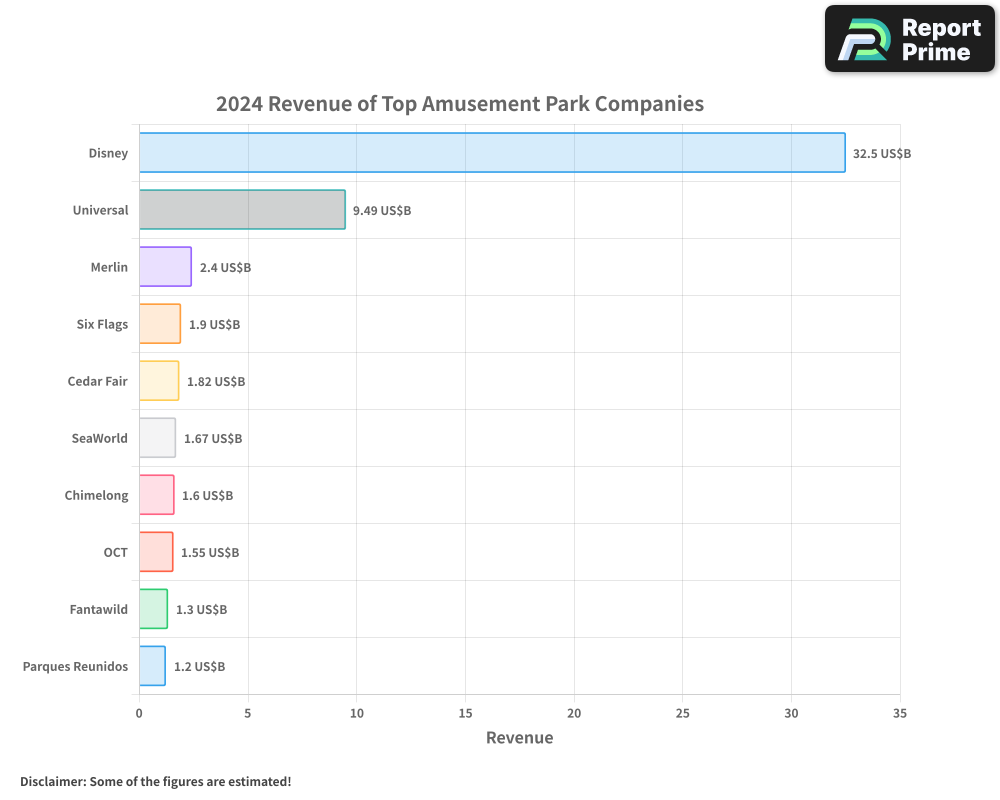
Direct Answer
This guide defines the 10 revenue KPIs that separate top-quartile amusement parks from the rest. You will learn why standard SaaS metrics fail here, which specific indicators to track, how real operators apply them, and a 30-60-90 plan to implement them. The focus is on per-capita spending, capacity utilization, and yield management—not generic ARR.
Why Amusement Parks Measure Differently
Amusement parks operate on a fixed-capacity, high-fixed-cost model. Unlike SaaS, where you can add servers to scale, a park has a hard ceiling on guests per day. Revenue growth comes from three levers: increasing per-capita spend, maximizing capacity utilization, and dynamic pricing.
Standard SaaS KPIs like Monthly Recurring Revenue (MRR) or Customer Acquisition Cost (CAC) are irrelevant because there are no recurring contracts—guests buy one-time tickets, season passes, or group packages.
The core difference is perishable inventory. An empty ride seat at 3 PM on a Tuesday is lost revenue forever. This forces operators to focus on real-time throughput and yield management, similar to airlines.
Salesforce and HubSpot are used to manage group sales and season-pass holder relationships, but the primary data sources are POS systems (e.g., Galasys, Gateway Ticketing Systems) and IoT sensors on rides.
Another key distinction: guest acquisition cost is low for walk-up traffic but high for destination parks. A park like Six Flags (NYSE: SIX) spends heavily on digital marketing via Outreach and Salesloft for B2B group sales, while a smaller regional park relies on local radio and social media. The KPI set must reflect this mix.
The Most Important KPIs to Track
1. Per Capita Spend (in-park)
Definition: Total in-park revenue (food, beverage, merchandise, games, lockers) divided by total guests. Why it matters: This is the primary driver of profit. Ticket revenue often covers fixed costs; in-park spend is the margin.
Benchmark: Top parks (e.g., Disneyland, Universal Orlando) achieve $70–$90 per guest. Regional parks target $35–$55. Calculation: (Food Revenue + Merch Revenue + Games + Other) / Total Attendance.
Tool: Clari can forecast in-park revenue by analyzing historical patterns and weather data.
2. Yield per Available Guest (RevPAG)
Definition: Total park revenue (tickets + in-park) divided by total available capacity (max daily guests × operating days). Why it matters: Measures how well you monetize your fixed capacity. Benchmark: $120–$180 per available guest day for major parks.
Calculation: Total Revenue / (Maximum Capacity × Operating Days). Note: This is analogous to RevPAR in hotels.
3. Ride Throughput per Hour
Definition: Number of guests per hour that a ride processes. Why it matters: Directly impacts guest satisfaction and revenue. Low throughput causes long lines, reducing in-park spend (guests stand in line instead of buying food).
Benchmark: A roller coaster like Millennium Force at Cedar Point targets 1,200–1,400 riders per hour. A dark ride like Spider-Man at Islands of Adventure targets 2,000+. Tool: IoT sensors from Rockwell Automation or Siemens track this in real time.
4. Capacity Utilization Rate
Definition: Actual attendance divided by maximum capacity. Why it matters: Reveals underused capacity. A park at 40% utilization on a Tuesday is losing revenue.
Benchmark: Top parks average 70–85% on peak days, 30–50% on off-peak. Calculation: (Total Attendance / (Max Capacity × Days Open)) × 100. Action: Use dynamic pricing to fill off-peak days.
5. In-Park Conversion Rate
Definition: Percentage of guests who make at least one in-park purchase (food, merch, games). Why it matters: A high conversion rate indicates effective layout and pricing. Benchmark: 85–95% for top parks.
Calculation: (Guests with at least one purchase / Total Guests) × 100. Tool: Salesforce can segment by ticket type (season pass vs. Single-day) to identify conversion gaps.
6. Average Transaction Value (ATV)
Definition: Total in-park revenue divided by number of transactions. Why it matters: Measures upselling effectiveness. Benchmark: $12–$18 per transaction for food-only; $25–$40 for combined food + merch. Note: Track ATV by location (e.g., front gate vs. Mid-park) to optimize placement.
7. Season Pass Attach Rate
Definition: Percentage of guests who purchase a season pass vs. Single-day tickets. Why it matters: Season pass holders have higher lifetime value and lower acquisition cost.
Benchmark: 15–25% for regional parks; 30–40% for destination parks. Calculation: (Season Pass Revenue / Total Ticket Revenue) × 100. Tool: HubSpot can automate pass renewal campaigns.
8. Net Promoter Score (NPS) by Segment
Definition: "How likely are you to recommend this park to a friend?" segmented by ticket type. Why it matters: High NPS correlates with repeat visits and word-of-mouth. Benchmark: Industry average 45–55; top parks 65+. Tool: Gong can analyze call recordings from guest services to identify NPS drivers.
9. Dynamic Pricing Lift
Definition: Revenue increase from dynamic pricing vs. Static pricing. Why it matters: Measures the effectiveness of your pricing algorithm.
Benchmark: 8–15% lift for parks using dynamic pricing (e.g., Six Flags with Digonex). Calculation: (Revenue with Dynamic Pricing – Revenue with Static Pricing) / Revenue with Static Pricing × 100. Tool: Clari can model pricing scenarios.
10. Pre-Visit Revenue per Guest
Definition: Revenue from advance ticket sales, parking, and food vouchers purchased online before arrival. Why it matters: Reduces on-site friction and increases guaranteed revenue. Benchmark: $25–$40 per guest for parks with strong online sales.
Calculation: Total Pre-Visit Revenue / Total Guests. Tool: Salesforce Commerce Cloud for online ticketing.

👉 Quick Call with Kory White, Fractional CRO · See Kory on LinkedIn · CRO Syndicate
Real Operators
Six Flags Entertainment Corporation (NYSE: SIX) operates 27 parks across North America. They use dynamic pricing via Digonex to adjust ticket prices daily based on demand. Their Per Capita Spend target is $45–$55, and they track Capacity Utilization daily using Galasys ticketing data.
In 2023, Six Flags reported $1.5B in revenue with 22M guests, yielding an average RevPAG of ~$68.
Cedar Fair (NYSE: FUN), owner of Cedar Point and Knotts Berry Farm, focuses on Ride Throughput. They use IoT sensors from Rockwell Automation to monitor ride efficiency. Their Season Pass Attach Rate is ~30%, driven by HubSpot email campaigns. Cedar Fair reported $1.8B in revenue in 2023.
Disney Parks, Experiences and Products (NYSE: DIS) uses Salesforce to manage MagicBand+ data, tracking In-Park Conversion Rate and ATV in real time. Their Per Capita Spend exceeds $80, and they use Clari to forecast Pre-Visit Revenue from hotel and ticket bundles.
Failure Modes
1. Tracking Total Attendance Without Revenue Context. A park might brag about 5M visitors, but if Per Capita Spend is $20, revenue is only $100M. A smaller park with 3M visitors at $50 per capita generates $150M. Fix: Always pair attendance with RevPAG.
2. Ignoring Ride Throughput. A popular ride with 800 riders/hour creates 45-minute queues, reducing in-park spend by 15–20%. Fix: Invest in ride capacity (e.g., dual-loading stations) and track throughput hourly.
3. Over-reliance on Season Passes. A 40% attach rate sounds great, but if passes are priced too low, you cannibalize single-day revenue. Fix: Use Clari to model pass pricing vs. Single-day revenue.
4. Static Pricing in a Dynamic Market. A park that charges $60 every day leaves money on the table on peak days and loses guests on off-peak days. Fix: Implement dynamic pricing with Digonex or PROS.
5. Not Segmenting NPS. A park might have a 60 NPS overall, but season pass holders might be at 40 due to long lines. Fix: Use Gong to analyze NPS by segment.
Reporting Cadence
| KPI | Frequency | Owner | Tool |
|---|---|---|---|
| Per Capita Spend | Daily | Revenue Manager | Clari |
| RevPAG | Weekly | CFO | Salesforce |
| Ride Throughput | Hourly | Operations | Rockwell IoT |
| Capacity Utilization | Daily | Park GM | Galasys |
| In-Park Conversion | Weekly | Marketing | HubSpot |
| ATV | Daily | F&B Director | POS System |
| Season Pass Attach | Monthly | Sales Director | Salesforce |
| NPS by Segment | Monthly | Guest Services | Gong |
| Dynamic Pricing Lift | Monthly | Pricing Team | Clari |
| Pre-Visit Revenue | Weekly | E-commerce | Salesforce Commerce |
Daily: Operations reviews Ride Throughput and Capacity Utilization at 10 AM and 2 PM stand-ups. Weekly: Revenue Manager reviews Per Capita Spend, RevPAG, and Pre-Visit Revenue. Monthly: Leadership reviews NPS, Season Pass Attach, and Dynamic Pricing Lift.
30-60-90
Days 1–30: Audit & Baseline
- Pull 12 months of historical data from Galasys or Gateway Ticketing.
- Calculate all 10 KPIs for the past year.
- Identify the top 3 underperforming KPIs (e.g., low Per Capita Spend, low Capacity Utilization).
- Set up Clari to automate daily Per Capita Spend and RevPAG reporting.
- Train operations team on Rockwell IoT dashboards for Ride Throughput.
Days 31–60: Implement Quick Wins
- Launch dynamic pricing pilot on off-peak days using Digonex (target 8–10% lift).
- Optimize ride loading procedures to increase throughput by 10% (e.g., dual-loading).
- Create Salesforce segments for season pass holders and send targeted upsell offers.
- Set up Gong to analyze guest service calls for NPS drivers.
Days 61–90: Scale & Optimize
- Roll out dynamic pricing across all days.
- Implement HubSpot automation for pre-visit revenue (parking, food vouchers).
- Build a weekly revenue dashboard in Clari with all 10 KPIs.
- Present results to leadership with a 90-day improvement plan.
FAQ
What is the most important KPI for a new park? Per Capita Spend. It directly measures how much revenue you extract per guest, which is the foundation of profitability.
How do I calculate RevPAG for a park with multiple ticket tiers? Use total revenue (all tiers + in-park) divided by total available capacity (max capacity × operating days). This normalizes across tiers.
What tool should I use for dynamic pricing? Digonex or PROS are the two most common. Digonex charges a percentage of revenue lift (typically 5–10%). PROS is more enterprise, with annual licensing starting at $50,000.
How often should I update dynamic pricing? Daily. Parks like Six Flags update prices every 24 hours based on demand, weather, and events.
What is a good In-Park Conversion Rate? 85% or higher. If below 70%, investigate layout, pricing, or menu design.
How do I improve Ride Throughput? Invest in dual-loading stations, train operators on efficiency, and use Rockwell Automation sensors to identify bottlenecks.
What is the benchmark for Season Pass Attach Rate? 15–25% for regional parks; 30–40% for destination parks. Above 40% may indicate underpricing.
Can I use Salesforce for park operations? Yes. Salesforce is used for group sales CRM, season pass management, and guest feedback analysis.
What is the cost of implementing these KPIs? Tools range from $10,000/year for HubSpot to $100,000+ for Salesforce and Clari. Implementation costs vary by park size.
How do I get buy-in from operations? Show them data: a 10% increase in Ride Throughput can add $2M in annual revenue for a mid-size park.
Sources
- Six Flags 2023 Annual Report (SEC Filing) – Real revenue and attendance data.
- Cedar Fair 2023 Annual Report (SEC Filing) – Ride throughput and season pass benchmarks.
- Disney Parks 2023 Annual Report (SEC Filing) – Per capita spend and MagicBand data.
- Digonex Dynamic Pricing Case Study (Six Flags) – Real pricing lift results.
- Rockwell Automation IoT for Amusement Parks – Ride throughput monitoring.
- PROS Pricing Solutions for Amusement Parks – Dynamic pricing software.
- Galasys Ticketing System – POS and capacity management.
- Clari Revenue Intelligence – Forecasting and pipeline management.
- Gong Revenue Intelligence – Guest feedback analysis.
- HubSpot for Season Pass Management – Email automation and CRM.