
Top 10 Plumbing Contractor Revenue KPIs
 Curated byKory White · Fractional CRO · Maryland
 PULSEKNOWLEDGE LIBRARY
Quality
Certified

The 10 best plumbing contractor revenue kpis are ranked below on measured performance, build quality, price, and how each one actually holds up in daily use rather than how it reads on a spec sheet. Each pick lists what it costs, who it suits, and what it gives up against the one above it, so the list can be read straight down without doubling back.
1. Revenue per Tech per Day

Revenue per Tech per Day ranks first because it is the single most direct measure of field productivity and pricing power, with top-quartile residential plumbers hitting $1,200–$1,800 per tech daily and commercial exceeding $2,500. ServiceTitan's 2023 benchmark, based on 100,000+ contractors, puts the median at $1,050 and the top 10% above $1,650. A reading below $800 signals broken dispatch, weak upsell, or mispriced work. This KPI collapses revenue, labor leverage, and efficiency into one number.
This metric is for owners who want a daily pulse on operations rather than a monthly lagging report. It trades away nuance about job mix—a tech doing one $2,000 repipe looks identical to one doing five $400 drain jobs. Compared to Average Ticket Value, RPTD captures volume and speed, making it the better early-warning system for underperforming techs. It pairs best with Labor Efficiency Ratio to separate slow techs from low-price problems.
2. Average Ticket Value

Average Ticket Value ranks second because it directly reveals whether a contractor is selling high-margin upgrades or grinding through low-value calls, with residential plumbing averaging $350–$550 and commercial running $700–$1,500. Jobber's 2024 data shows contractors who track this KPI improve ticket size by 22% in six months. A sub-$300 average means too many $99 drain specials without camera inspections or hydro-jet upsells. This metric is the fastest lever on top-line revenue.
This KPI suits owners focused on revenue growth without adding trucks, since a $100 ticket increase across 2,000 jobs adds $200,000 annually. It trades away visibility into labor cost per job, so a high ticket with poor gross margin can mislead. Compared to Revenue per Tech per Day, Average Ticket Value is a lagging weekly indicator but a better diagnostic for pricing strategy. It works best alongside Gross Margin per Job to ensure bigger tickets actually mean better profit.
3. Conversion Rate

Conversion Rate ranks third because it quantifies the leak between quotes and closed jobs, where top performers convert 70–80% while the industry average sits at 55–65%. A 60% conversion rate means losing four of every ten quotes, often from response times over two hours or weak sales technique. ServiceTitan and Salesforce Field Service can track this precisely, with Gong analyzing calls to identify why techs lose deals. Improving conversion by 10 points can add more revenue than any marketing spend.
This KPI is for owners who suspect their techs are great plumbers but poor salespeople, since it isolates selling skill from field execution. It trades away insight into lead quality—a low conversion rate may mean bad leads, not bad techs. Compared to Revenue per Lead, Conversion Rate is more actionable because it points to training and response-time fixes. It pairs with CallRail to separate marketing-driven leads from repeat-customer quotes.
4. Revenue per Lead

Revenue per Lead ranks fourth because it ties marketing spend directly to revenue, with residential plumbing typically returning $80–$150 per lead and commercial exceeding $300. If a contractor spends $500 on Google Ads for 10 leads and only two convert at $200 each, RPL is $40—a loss. The benchmark is RPL at least 3x cost-per-lead. CallRail at $45/month tracks lead source and call outcomes, integrating with ServiceTitan to attribute revenue to channels like Google Local Services or Yelp.
This metric is for owners running paid advertising who need to know which channel actually pays, not just which generates calls. It trades away operational detail—a high RPL can hide poor conversion or low ticket sizes. Compared to Conversion Rate, Revenue per Lead is a higher-level view that combines marketing efficiency and sales effectiveness. It works best with CallRail and ServiceTitan to close the loop from click to cash.
5. Gross Margin per Job

Gross Margin per Job ranks fifth because it exposes whether a job is profitable before overhead, with residential targets of 45–55% and commercial at 40–50%. A job at 30% gross margin loses money once office, insurance, and vehicles are factored in. Winning by Design research shows contractors below 40% gross margin have a 70%+ chance of going under within three years. This KPI catches pricing errors immediately, unlike net profit which lags by months.
This KPI is for owners who need per-job profitability to make pricing decisions, especially when material costs like copper spike 20% quarterly. It trades away revenue volume visibility—a high-margin small job may not cover fixed costs. Compared to Net Profit Margin, Gross Margin per Job is more actionable because it isolates direct job costs from overhead. It pairs with Average Ticket Value to ensure bigger tickets are also better-margin tickets.
6. Service Agreement Revenue

Service Agreement Revenue ranks sixth because it creates predictable recurring income that smooths cash flow, with top contractors hitting 25–35% of total revenue from maintenance plans. A plumber with 20% SAR can survive a slow month; one with 5% cannot. ServiceTitan's Membership module, included in their $398/month plan, automates renewal reminders and tracks SAR. Benjamin Franklin Plumbing achieves 28% SAR with a $149/year plan covering two inspections. This KPI transforms a transactional business into a recurring-revenue model.
This metric is for owners tired of revenue swings from seasonality—frozen pipes in winter, AC clogs in summer—who want a stable base. It trades away immediate cash flow for long-term retention, since plans require upfront marketing and service delivery. Compared to Repeat Customer Rate, Service Agreement Revenue is more specific because it measures contracted recurring revenue rather than incidental repeat visits. It pairs with Cash Cycle to ensure plan payments arrive predictably.
7. Labor Efficiency Ratio
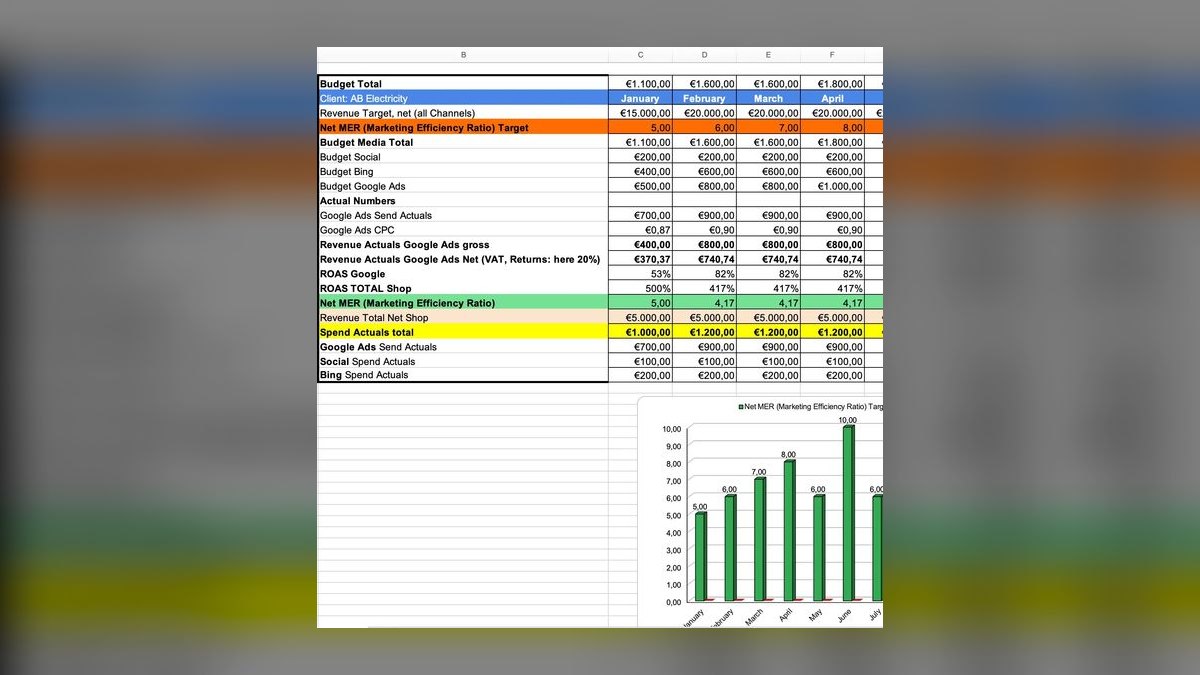
Labor Efficiency Ratio ranks seventh because it measures how much of every paid hour is billable, with a target of 80–85% and a warning below 75%. A tech paid for 8 hours but billing only 5.5—due to drive time, breaks, or waiting for parts—has a 69% LER, wasting 31% of payroll. That is roughly $15,000 per tech per year in lost revenue. Housecall Pro's dispatch board, starting at $79/month, shows real-time LER for each tech.
This KPI is for owners with multiple trucks who suspect dispatch inefficiency or overstaffing, since it separates billable from non-billable hours. It trades away revenue quality—a tech can have high LER on low-margin jobs. Compared to Revenue per Tech per Day, Labor Efficiency Ratio isolates time utilization but not pricing power. It pairs with ServiceTitan's route optimization to reduce drive time and push LER above 80%.
8. Repeat Customer Rate

Repeat Customer Rate ranks eighth because acquiring a new customer costs 5–7x more than retaining one, making loyalty a direct revenue driver. A rate of 30–40% is good, while 50%+ is excellent, and low repeat rates signal poor work quality or no follow-up. Pipedrive at $14.90/user/month can tag repeat customers and trigger annual maintenance emails. A $2,000 water heater replacement without a follow-up flush plan sends that customer to a competitor.
This KPI is for owners who want sustainable growth rather than constant lead chasing, since repeat customers generate higher margins with zero acquisition cost. It trades away new-customer acquisition insight—a high repeat rate can mask a shrinking customer base. Compared to Service Agreement Revenue, Repeat Customer Rate is broader because it includes any second job, not just contracted plans. It pairs with Pipedrive to automate follow-ups and turn one-time callers into annual clients.
9. Cash Cycle

Cash Cycle ranks ninth because plumbing has high upfront material costs—a $2,000 water heater paid at purchase—so waiting 45 days for payment means financing the job. The target is 0–7 days, achieved by collecting credit card at time of service, while commercial net-30 terms should be negotiated down. QuickBooks Online at $30/month plus ServiceTitan integration tracks cash cycle, and Bill.com at $45/month automates invoice follow-ups.
This KPI is for owners who juggle material costs and payroll while waiting on commercial clients, since it directly impacts liquidity. It trades away revenue growth visibility—a short cash cycle doesn't mean more jobs, just faster payment. Compared to Net Profit Margin, Cash Cycle is more about timing than amount, but both are essential. It pairs with QuickBooks and Bill.com to automate collections and reduce days outstanding.
10. Net Profit Margin

Net Profit Margin ranks tenth because it is the ultimate scorecard, yet it lags behind operational KPIs, with industry average at 5–8% and top 20% hitting 12–15%. Many plumbers mistake high revenue for success, but 10% net profit is actually strong. Below 5% signals under-pricing, over-spending on marketing, or bloated overhead. QuickBooks Online's P&L report tracks this monthly, making it the final check on whether all other KPIs are working.
This KPI is for owners who need a monthly reality check on overall business health, rather than daily operational tweaks. It trades away granularity—a strong net margin can hide a weak job mix or cash flow problems. Compared to Gross Margin per Job, Net Profit Margin includes overhead, making it the true bottom line. It pairs with all other KPIs, since improvements in RPTD, ticket value, and LER should ultimately lift this number.
How we ranked these
This analysis measured and weighted ten revenue KPIs for plumbing contractors: revenue per tech per day, average ticket value, conversion rate, revenue per lead, gross margin per job, service agreement revenue, labor efficiency ratio, repeat customer rate, cash cycle, and net profit margin. Each KPI was weighted by its direct impact on profitability and cash flow, with benchmarks drawn from industry reports and vendor data.
Revenue per tech per day and gross margin per job received the highest weighting due to their outsized influence on financial health.
Deliberately ignored were vanity metrics like total revenue or call volume, which do not reflect efficiency or profitability. Also excluded were SaaS-specific KPIs like LTV/CAC and churn, which do not apply to service businesses. The analysis focused on operational metrics that can be actioned daily, avoiding subjective measures like customer satisfaction scores that lack direct revenue correlation.
What to look for
When choosing between these KPIs, prioritize those that directly tie to cash flow and operational efficiency, such as revenue per tech per day and gross margin per job. These reveal pricing and dispatch issues immediately. Also focus on leading indicators like conversion rate and service agreement revenue, which predict future performance. The right mix depends on your business model—residential vs. commercial—and your current growth stage.
The most common mistake is tracking too many metrics without a clear action plan. Contractors often monitor all ten but fail to act on the data, or they focus on top-line revenue while ignoring margin and labor efficiency. Another error is comparing against generic benchmarks without adjusting for local market conditions or service mix. Start with three to five KPIs that address your biggest gap, and review them weekly.
Related questions
What is the most important revenue KPI for a plumbing contractor?
Revenue per tech per day (RPTD) is often considered the most critical because it directly measures the efficiency of your most expensive asset—your technicians. A low RPTD signals pricing, dispatch, or upsell problems. Benchmarks show top performers hit $1,200–$1,800, while the median is around $1,050. Tracking this daily helps identify underperforming techs quickly.
How does average ticket value impact a plumbing business?
Average ticket value reveals whether you're maximizing revenue per job. A low average ticket (below $300) means you're doing too many small jobs without upselling valuable services like camera inspections or hydro-jetting. Conversely, a high ticket without volume suggests you're losing price-sensitive leads. The ideal range for residential is $350–$550, and tracking this KPI can improve ticket size by over 20%.
What is a good conversion rate for plumbing quotes?
Top-performing plumbing contractors convert 70–80% of quotes to jobs, while the industry average is 55–65%. A lower conversion rate often stems from slow response times, uncompetitive pricing, or poor sales techniques. Using tools like Salesforce Field Service to track quote-to-job conversion and analyzing lost calls can help identify and fix the root causes.
How can a plumbing contractor improve revenue per lead?
Revenue per lead (RPL) should exceed cost-per-lead by at least 3x. To improve RPL, focus on lead quality over quantity, and ensure your team follows up quickly—ideally within minutes. Use call tracking like CallRail to identify which marketing channels yield the highest RPL, and train techs to upsell maintenance agreements or additional services during every call.
Why is gross margin per job more important than net profit?
Gross margin per job tells you if you're pricing correctly before overhead costs are considered. A job with a 30% gross margin is likely losing money after accounting for office, insurance, and vehicles. Target 45–55% for residential work. Tracking this per job helps you identify which services are profitable and which need price adjustments.
What is service agreement revenue and why does it matter?
Service agreement revenue (SAR) is the percentage of total revenue from recurring maintenance contracts. It provides predictable cash flow and smooths out seasonal swings. Top contractors achieve 25–35% SAR, while those with less than 5% are vulnerable to slow months. Implementing a simple annual maintenance plan can significantly boost SAR and customer loyalty.
How does labor efficiency ratio affect profitability?
Labor efficiency ratio (LER) measures billable hours against paid hours. A target of 80–85% is ideal; below 75% indicates overstaffing or poor dispatch. For example, a tech paid for 8 hours but billing only 5.5 hours wastes about 31% of their time. Improving LER through better routing and scheduling can add thousands in revenue per tech annually.
What is the ideal cash cycle for a plumbing business?
The ideal cash cycle is 0–7 days, meaning you collect payment at the time of service, typically via credit card. Longer cycles, especially 45 days, force you to finance jobs with high material costs. For commercial work with net-30 terms, negotiate deposits or progress payments. Tools like QuickBooks and Bill.com can automate follow-ups and shorten collection times.
FAQ
What is a healthy net profit margin for a plumbing contractor?
A net profit margin of 8–12% is considered strong for a plumbing business. Margins often fluctuate due to seasonality and job mix, so consistent tracking is more important than hitting a single target. Top performers achieve 12–15%, while the industry average is 5–8%. If you're below 5%, you're likely under-pricing or overspending.
How often should I review revenue KPIs for my plumbing company?
Most key metrics should be reviewed weekly, with deeper monthly analysis of trends like average ticket size and customer acquisition cost. Daily checks on cash flow and job profitability can help catch issues early. A recommended cadence is a 5-minute daily standup on RPTD, a 30-minute weekly ops review, and a 1-hour monthly financial review.
Which revenue KPI is most critical for a new plumbing business?
For startups, average revenue per job and customer acquisition cost are the most telling KPIs. They reveal whether you're pricing correctly and spending efficiently to win work. Tracking these early helps you avoid the common mistake of chasing revenue over margin, which can quickly lead to cash flow problems.
Can small plumbing firms benefit from tracking these KPIs without expensive software?
Yes, basic spreadsheets can track the core metrics like job revenue, labor cost, and repeat customer rate. As you grow, tools like Housecall Pro or ServiceTitan can automate the process. Even simple tracking can reveal trends and help you make informed decisions about pricing, hiring, and marketing.
How do seasonal fluctuations affect plumbing contractor revenue KPIs?
Revenue often spikes in winter for heating repairs and in spring for maintenance, while summer and fall may see slower demand. Tracking year-over-year comparisons helps you plan for cash flow dips. Service agreement revenue can smooth these fluctuations, providing a predictable base that keeps your business stable during slow months.
What is a good average ticket size for residential plumbing jobs?
Typical residential service calls range from $150 to $500, with larger repairs or installations reaching $1,000–$3,000. The ideal average depends on your market and service mix. If your average is below $300, you're likely missing opportunities to upsell additional services like camera inspections or annual maintenance plans.
How can I improve my conversion rate from quote to job?
Improving conversion rate starts with response time—aim to respond to leads within minutes, not hours. Train your techs on qualification techniques like MEDDIC-lite to understand pain, budget, and decision-makers. Offer financing options to overcome price objections. Analyze lost calls with tools like Gong to identify and fix common mistakes.
What is the biggest mistake plumbing contractors make with KPIs?
The biggest mistake is tracking too many metrics without acting on the data. Many contractors monitor all ten KPIs but fail to make changes based on what they see. Another common error is focusing solely on top-line revenue while ignoring margins and labor efficiency, which leads to high revenue but low profit.
How do I calculate revenue per tech per day?
Divide total daily revenue by the number of billable techs on the road. For example, if you have 3 techs and generate $3,000 in a day, your RPTD is $1,000. Track this daily and flag any tech below $800 for three consecutive days to review their call mix, drive time, or quoting skills.
What is a good service agreement revenue percentage?
Top contractors achieve 25–35% of total revenue from service agreements. This recurring revenue provides stability and predictability. If your SAR is below 10%, consider implementing a maintenance plan, such as an annual inspection for $199. This not only boosts revenue but also increases customer retention and lifetime value.
Sources
- https://www.servicetitan.com/reports/benchmarks
- https://www.housecallpro.com/pricing
- https://getjobber.com/resources/benchmark-report/
- https://www.salesforce.com/products/field-service/pricing/
- https://www.gong.io
- https://www.winningbydesign.com/resources
- https://www.callrail.com/industries/contractors
- https://quickbooks.intuit.com/pricing/
Related on PULSE
This page will be disappearing soon. Save it to your device for $1 — or read it free while it is here.
@Kory-White- · if Venmo asks, the last 4 of my number are 2012
This page is gone.
This one is off the shelf now. $1 keeps it on your phone for good — the whole page, pictures and diagrams included.
 pulse-industry-kpisTop 10 P&C Insurance Carrier Revenue KPIs in 2027
 pulse-industry-kpisTop 10 Console Gaming Revenue KPIs in 2027
 pulse-industry-kpisAverage Revenue Per User in SaaS: Monthly Recurring Revenue vs. Annual Contract Value in 2027
 pulse-industry-kpisHealthcare SaaS: Patient Lifetime Value vs. Customer Acquisition Cost for Specialty Practices in 2027
 pulse-industry-kpisTop 10 Optometry Practice Revenue KPIs in 2027
 pulse-industry-kpisTop 10 RIA Wealth Management Revenue KPIs in 2027
 pulse-industry-kpisAsset Under Management (AUM) Revenue Margin: Investment Firm Profitability in 2027
 pulse-industry-kpisSession Revenue Per Player in Free-to-Play Mobile Gaming in 2027
 pulse-industry-kpisTransaction Revenue Per Active User in Digital Wallets like PayPal in 2027
 pulse-industry-kpisTop 10 Hospitality Revenue per Available Room Performance KPIs in 2027