
Best small, low-maintenance fish for a 5-gallon desk tank?
 Curated byKory White · Fractional CRO · Maryland
 PULSEKNOWLEDGE LIBRARY
Quality
Certified
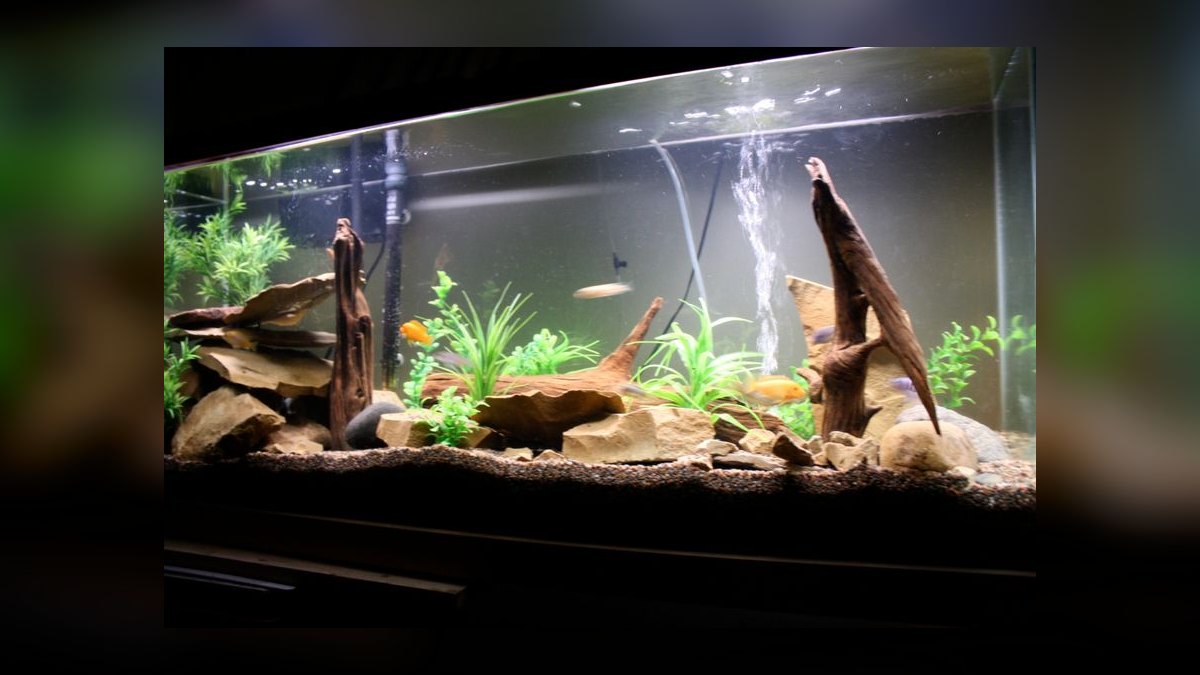
For a 5-gallon desk tank, the best low-maintenance choice is one male betta, a small group of chili rasboras or pygmy corydoras, or a cherry shrimp colony. Pair any of them with a sponge filter, a preset heater, and a weekly 25% water change. Skip schooling tetras — they need more swimming room.
The desk tank that dies in month three
The failure pattern is predictable enough to describe before it happens. Someone buys a 5-gallon kit at a big-box store on a Saturday, fills it with tap water that afternoon, adds a dechlorinator, and drops in a betta plus three "starter" fish the same evening because the store employee said the filter would handle it. For about ten days everything looks fine. Then the water goes slightly cloudy, the betta stops eating, one of the smaller fish develops a white fuzz on its fins, and by week four the tank is a green-tinged box with one survivor and a lid the owner has stopped opening.
Nothing in that story was caused by the fish being fragile. It was caused by a five-gallon volume having almost no chemical buffer against a biological load that arrived before the bacteria did. In a 55-gallon tank, a single overfeeding event dilutes into near-nothing. In five gallons — really closer to four once you subtract substrate, decor, and the gap below the rim — the same pinch of flake food can push ammonia into visibly harmful territory within a day. Small tanks are not beginner tanks. They are *forgiving-of-neglect* tanks only once they're stable, and *unforgiving-of-mistakes* tanks on the way there.
The desk context adds its own constraints that a living-room tank never faces. Office HVAC swings temperature five to eight degrees between a Friday afternoon and a Monday morning, because the building shuts down over the weekend. Overhead fluorescent or LED panel lighting runs ten to twelve hours a day whether you want it to or not, feeding algae. You travel. There are Fridays you leave at noon and Mondays you don't come in at all. Whatever livestock you pick has to survive a four-day unattended stretch on a routine basis, not as an emergency.
So the real question isn't "what fish is smallest." It's "what fish tolerates a narrow, slow-moving, occasionally-neglected five-gallon environment with an owner who checks in three to four times a week." That reframing eliminates most of what's sold as nano fish, and it points straight at a short list: one betta, a small shoal of true nano rasboras, a bottom-dwelling pygmy cory group in the right conditions, or an invertebrate colony that doesn't need feeding at all. Everything below builds out from that list — the biology behind it, the numbers that make it work, the alternatives worth considering, and the specific mistakes that kill these setups.
How a five-gallon actually stays alive
The mechanism that keeps a small tank stable is the nitrogen cycle, and understanding it in concrete terms is the difference between a tank you maintain in five minutes a week and one you fight constantly.
Fish excrete ammonia, primarily through their gills, continuously. Uneaten food and decaying plant matter add more. Ammonia is acutely toxic — at 0.25 ppm you're already damaging gill tissue, and at 1 ppm in a warm alkaline tank you're looking at fish that gasp at the surface and die within days. Two families of bacteria fix this. *Nitrosomonas*-type organisms oxidize ammonia into nitrite, which is also toxic but interferes with blood oxygen transport rather than burning tissue. *Nitrobacter* and *Nitrospira* organisms then oxidize nitrite into nitrate, which is comparatively harmless — freshwater fish tolerate 20 to 40 ppm without visible stress, and only above roughly 80 ppm does it start suppressing growth and immune function.
Those bacteria live on surfaces, not in the water. Roughly 90% of a tank's biological filtration capacity sits in the filter media, the substrate, and hardscape. This is why the single most damaging thing a new owner does is rinse the filter sponge under the tap — chlorinated tap water kills the colony in seconds, and the tank cycles from scratch with fish already in it.
Establishing that colony takes four to eight weeks at room temperature, or two to three weeks if you seed it with media from an established tank or use a bottled nitrifying bacteria product plus a daily ammonia source. Fishless cycling — dosing pure ammonia to 2 ppm and waiting until the tank processes it to zero nitrite within 24 hours — is the method that reliably produces a tank ready for livestock, and it costs nothing but patience.
Two things about that loop matter for a desk tank specifically. First, the bacteria population sizes itself to the food supply. If you feed heavily for a month and then leave for two weeks, the colony shrinks, and the first heavy feeding on your return can briefly outrun it. Consistency beats generosity. Second, live plants shortcut part of the cycle entirely — many aquatic plants preferentially take up ammonium directly, before the bacteria get to it. A five-gallon with a decent mass of low-light plants runs measurably cleaner than a bare one at the same stocking level, which is the single highest-leverage thing you can add to reduce maintenance.
Filtration in this volume should be a sponge filter driven by a small air pump, or a very gently-flowing internal filter with the outflow baffled. Sponge filters are the right answer for most desk tanks: they provide large biological surface area, they can't trap a betta's fins or suck up shrimplets, they cost under fifteen dollars, and maintenance is squeezing them out in a cup of removed tank water once a month. The tradeoff is the air pump hum, which on a quiet desk is audible — mounting the pump on a foam pad and keeping it above water line so no siphon-back occurs solves most of it.
Heating is not optional unless your office genuinely holds 74°F or above around the clock, which few do. A 25-watt preset heater rated for 2 to 10 gallons holds most small tanks at 76 to 78°F. Adjustable heaters in small tanks carry real risk — a stuck-on 50-watt heater can cook five gallons in a matter of hours — so preset or dual-thermostat models are worth the small premium.
Real numbers: what each candidate actually needs
Specificity matters more than general advice here, so here are the working parameters for each realistic option in a 5-gallon.
**Male betta (*Betta splendens*).** Adult size around 2.5 to 3 inches including finnage. Lifespan 3 to 5 years from a healthy young fish, though pet-store bettas are frequently already 6 to 12 months old at purchase. Temperature 76 to 82°F — they are genuinely tropical and become lethargic and immunosuppressed below 74°F. pH 6.5 to 7.5, though they tolerate a wide range if it's stable. Feed 2 to 4 small pellets once daily, or 4 to 6 pellets every other day; a betta's stomach is roughly the size of its eye, and overfeeding is the leading cause of bloat and swim bladder issues. They breathe atmospheric air via a labyrinth organ, which means low dissolved oxygen doesn't kill them, but it also means they need unobstructed surface access and a lid — they jump. Long-finned varieties (halfmoon, rosetail) swim poorly and rest more; plakat and other short-finned types are more active and generally hardier. Cost $8 to $30 depending on strain.
**Chili rasbora (*Boraras brigittae*).** Adult size 0.6 to 0.8 inches — genuinely tiny, one of the few true nano schooling fish appropriate for five gallons. Keep 6 to 8; below six they hide and lose color. Temperature 75 to 82°F. They want soft, slightly acidic water — pH 5.5 to 7.0 — and color up dramatically in a tannin-stained tank with almond leaves or driftwood. Feed crushed micro pellets, baby brine shrimp, or a quality micro-granule; their mouths are too small for standard flake unless it's ground. They're shy for the first week or two and need dense planting to settle. Cost $4 to $7 each. The honest caveat: they're sensitive to an uncycled or swinging tank, so they belong in a tank that's been running two months, not two weeks.
**Pygmy corydoras (*Corydoras pygmaeus*) or *C. habrosus*.** Adult size around 1 inch. Group of 6 minimum; they're social and stressed alone. Temperature 72 to 79°F — notably more tolerant of a cooler office than a betta. They need a sand or very smooth fine-gravel substrate, because their barbels erode on sharp gravel and infections follow. Feed sinking wafers or micro pellets that actually reach the bottom; they do not survive on "leftovers," a persistent myth that kills a lot of corys. *C. habrosus* spends more time on the bottom, *C. pygmaeus* mid-water. Cost $4 to $8 each.
**Cherry shrimp (*Neocaridina davidi*).** Adult size 1 to 1.5 inches. Start with 8 to 10; a healthy colony in five gallons self-sustains at 20 to 40 individuals depending on food and plant cover. Temperature 65 to 78°F — the widest tolerance on this list and the best fit for an unheated office that swings. They need stable general hardness (GH 6 to 8) and some calcium for molting; very soft RO water causes failed molts, which are fatal. They eat biofilm, algae, and decaying plant matter, meaning a planted five-gallon shrimp tank can genuinely go a week or more with no feeding at all. Extremely sensitive to copper — check any medication, plant fertilizer, or snail treatment before it goes in. Cost $3 to $6 each, less if you buy a starter group.
Stocking arithmetic for five gallons, in practice: one betta alone, plus optional snails. Or 6 to 8 chili rasboras. Or 6 pygmy corys. Or a shrimp colony. Or a betta with shrimp — a coin flip depending on individual temperament, and one you should only attempt with heavy plant cover and a willingness to rehome. The old "one inch of fish per gallon" rule fails badly at this size; it would suggest five one-inch fish, which in a volume this small produces a bioload the tank can't buffer.
Maintenance, quantified. Weekly: 25% water change, about 1.25 gallons, using a dechlorinator and temperature-matched water — five to eight minutes including gravel vacuuming. Monthly: squeeze the sponge filter in removed tank water, trim plants, wipe the glass — ten minutes. Quarterly: check heater accuracy against a separate thermometer, replace airline tubing if stiff, deep-vacuum the substrate — fifteen minutes. Testing: liquid test kits are more accurate than strips and run about $25 to $35 for hundreds of tests. Test every few days during cycling, weekly for the first two months, then monthly once the tank has proven stable. Total ongoing cost after setup is roughly $5 to $15 a month in food, dechlorinator, and electricity.
Trade-offs: fewer fish, no fish, or a bigger tank
There's an honest conversation to have before you commit, because the best answer for some people is not a fish at all.
A shrimp-and-snail tank instead of fish. If your office temperature is unreliable, if you travel more than a week at a time, or if you want the lowest-effort option that still looks alive, a Neocaridina colony with a nerite snail and a mass of java moss is the strongest choice on this page. No heater needed in most offices, no feeding required in a mature planted tank, and the colony breeds itself into stability. Nerite snails eat algae aggressively and lay eggs that can't hatch in freshwater, so they don't overrun the tank — the only downside is small white egg capsules on hardscape. The trade-off is presence: shrimp are 1-inch and semi-transparent, and from six feet away the tank reads as empty.
A betta instead of a shoal. The betta gives you a single, large, brightly colored, personality-forward animal that recognizes you and comes to the front of the glass. That's the entire appeal, and it's real. The trade-offs are that it needs a heater, it's a single point of failure — when it dies the tank is empty — and betta genetics from mass-market suppliers are frequently poor, so a fish can arrive with a two-month lifespan through no fault of yours. Buying from a specialist breeder or a local aquarium society roughly doubles typical lifespan expectations.
Going to 10 gallons instead. This is the option most experienced keepers push, and it deserves a fair hearing. A 10-gallon has double the buffer against mistakes, opens up a genuinely wider stocking list — endlers, celestial pearl danios, a proper shoal of ember tetras plus a bottom group — and costs maybe $20 more for the tank and $10 more for a slightly larger heater. Its footprint is about 20 × 10 inches versus roughly 16 × 8 for a 5-gallon, which for most desks is the deciding factor rather than money. If you have the surface area, take the ten.
Going smaller, or unheated. Below five gallons the buffer collapses further and the only reasonable inhabitants are shrimp or a single betta in a heated 3-gallon. Unheated at 5 gallons, your options narrow to Neocaridina shrimp and possibly white cloud mountain minnows — though white clouds want a longer tank for swimming and are better suited to a 10-gallon at 64 to 72°F.
One adjacent consideration worth folding in: the plants are not decoration, they're infrastructure. Java fern, anubias, cryptocoryne, and java moss all grow under low light with no CO2 injection and no fertilizer beyond an occasional liquid dose. Java fern and anubias must have their rhizomes left above the substrate — bury them and they rot. A floating plant like frogbit or red root floaters shades the tank, absorbs nitrate fast, and suppresses algae by outcompeting it, which is why heavily-floated tanks look cleaner with less work. Duckweed does the same job but is essentially impossible to remove once introduced, so most keepers avoid it deliberately.
Lighting is the other lever. A small LED on a timer running 6 to 8 hours a day is enough for every plant listed above. The instinct to leave the light on all day, or to place the tank on a windowsill for "natural light," is the most common cause of a green tank. Direct sun through office glass will turn a five-gallon into pea soup inside two weeks.
Pitfalls that actually kill desk tanks
Adding fish to an uncycled tank. This is the number one killer, and it's entirely avoidable. If fish are already in and ammonia is reading above zero, you're in a fish-in cycle: 50% water changes daily, feed a third as much, dose a dechlorinator that detoxifies ammonia, and ride it out for three to six weeks. Don't add more fish, don't add chemicals promising an instant cycle, and don't replace fish that die — that just repeats the exposure.
Rinsing the filter in tap water. Covered above, worth repeating because it undoes weeks of progress in thirty seconds. Squeeze the sponge in a cup of tank water you removed during a water change, then put it straight back. Never replace a sponge entirely — if it's falling apart, run the new one alongside the old for a month first.
Overfeeding. The pinch that looks like nothing to you is a large meal for a 2-inch animal, and everything uneaten becomes ammonia. Feed an amount consumed within 60 to 90 seconds, once a day, and take one day a week off entirely. Fish in this size range are built for scarcity and do noticeably better slightly underfed than slightly overfed.
The vacation gap, handled wrong. Vacation feeder blocks dissolve unpredictably and can foul a small tank badly. For trips up to seven days, healthy adult fish are genuinely fine unfed — that's the honest answer, and it's safer than the block. For longer, an automatic feeder pre-tested for a week before you leave, dispensing a small dose every other day, is the reliable approach. Do a water change the day you leave and again the day you get back.
Ignoring evaporation. A five-gallon can lose a noticeable fraction of its volume over two weeks in a dry office. Evaporation removes water but leaves minerals behind, so hardness and TDS creep upward and the heater can end up partly exposed. Top off with dechlorinated water — not with a water change, top-offs and changes serve different purposes.
Housing tank mates that don't fit. Goldfish need dozens of gallons and produce enormous waste. Common plecos reach a foot and a half. Guppies breed relentlessly and will overload five gallons within months. Neon tetras, dwarf gouramis, and platies are all sold as nano fish and all need at least ten. If a store recommends any of these for five gallons, that's a signal about the store, not about the fish.
Chasing pH. Stable slightly-wrong pH beats unstable correct pH every time. pH-adjusting chemicals swing hard and rebound, and the swing does more damage than the original number. Unless your tap is genuinely extreme, use it as-is and let the fish acclimate.
Copper exposure in a shrimp tank. Snail-killing treatments, many fish medications, and some plant fertilizers contain copper, which is lethal to invertebrates at trace levels. Read labels before anything enters a shrimp tank, and quarantine new plants — they frequently arrive with pest snails or residue from the supplier's treatment.
Related questions
Can a betta live in a 5-gallon without a heater?
Only if the room reliably stays above 74°F day and night. Below that, bettas become lethargic, stop eating, and are far more prone to fin rot and ich. A 25-watt preset heater costs under $20 and eliminates the risk entirely.
How long before I can add fish to a new tank?
Four to eight weeks for a fishless cycle at room temperature, or two to three weeks if you seed the filter with media from an established tank. The tank is ready when it converts 2 ppm of ammonia to zero ammonia and zero nitrite within 24 hours.
Do I need live plants?
Not strictly, but they meaningfully reduce maintenance. Java fern, anubias, and java moss absorb ammonia and nitrate directly, need no CO2 or special lighting, and suppress algae by competing for nutrients. A planted 5-gallon runs cleaner at the same stocking level than a bare one.
Are shrimp really easier than fish?
In a mature planted tank, yes. Neocaridina need no heater in most offices, forage on biofilm without supplemental feeding, and breed to a self-sustaining population. Their one hard requirement is stable water hardness for molting, and absolute zero copper exposure.
What's the best small fish if the office gets cold on weekends?
Cherry shrimp first, then pygmy corydoras, which handle 72°F comfortably. Bettas and chili rasboras both want consistent warmth and are poor choices for a space that drops into the 60s every Friday night.
FAQ
How much time does a 5-gallon desk tank actually take each week?
Once cycled and stable, about five to eight minutes weekly for a 25% water change and gravel vacuum, plus a minute a day for feeding and a visual check. Monthly filter maintenance adds ten minutes. The heavy time investment is entirely front-loaded into the cycling period.
Can I keep two bettas in a 5-gallon if I add a divider?
Technically possible with a solid divider, but it's not a low-maintenance setup. Two bettas double the bioload in an already small volume, they flare at each other through gaps and stress themselves, and each side ends up at roughly 2.5 gallons of usable space. One betta is the better answer.
Why is my tank green even though I change the water every week?
Almost always too much light, too much nutrient, or both. Cut the photoperiod to six hours on a timer, move the tank out of any direct sun, reduce feeding, and add fast-growing floating plants to outcompete the algae. Water changes alone don't fix an algae bloom driven by excess light.
Is a filter necessary at all in a heavily planted tank?
A dense walstad-style planted 5-gallon with shrimp only can run filterless, but it's an advanced setup with no margin for error. For any tank containing fish, a sponge filter is the right call — it provides bacterial surface area and surface agitation for gas exchange, and it costs almost nothing to run.
What size heater should I buy for 5 gallons?
25 watts is standard. Choose a preset model fixed at 78°F or a heater with a separate safety thermostat rather than a cheap adjustable one — a stuck adjustable heater can raise a 5-gallon tank into lethal temperatures within hours, and small volumes leave no time to catch it.
Can I use tap water straight from the faucet?
No. Municipal tap water contains chlorine or chloramine, both of which kill the nitrifying bacteria in your filter and damage fish gills. Use a standard dechlorinator at the dose on the bottle, and match the new water's temperature to the tank before it goes in.
Sources
- Seriously Fish — species profiles and water parameter data
- Practical Fishkeeping — nano tank and beginner guides
- FishBase — scientific species database
- The Spruce Pets — betta and freshwater aquarium care
- Cornell University College of Veterinary Medicine — aquatic animal health
- EPA — drinking water disinfection with chlorine and chloramine
- Tropica — aquarium plant care and low-tech planting guides
- Aquarium Co-Op — nano fish care articles
Related on PULSE
- [Top 10 Nano Tank Fish for 5-Gallon Aquariums](/knowledge/aq0854)
- [Top 10 Nano Fish for 5-Gallon Tanks](/knowledge/aq0857)
- [Top 10 Low-Maintenance Freshwater Plants That Need No CO2](/knowledge/aq0898)
- [Top 10 Low-Maintenance Aquarium Plants for Low-Light Tanks](/knowledge/aq0771)
- [Top 10 Low-Maintenance Freshwater Shrimp Species for Nano Tanks in 2027](/knowledge/aq0458)
- [Top 10 5-Gallon Aquariums 2027](/knowledge/aq0021)
This page will be disappearing soon. Save it to your device for $1 — or read it free while it is here.
@Kory-White- · if Venmo asks, the last 4 of my number are 2012
This page is gone.
This one is off the shelf now. $1 keeps it on your phone for good — the whole page, pictures and diagrams included.
 pulse-aquariumsTop 10 Planted Aquarium Substrates Compared 2027
 pulse-aquariumsHow do I remove brown diatom algae from aquarium glass without chemicals?
 pulse-aquariumsHow to set up a hospital tank for fin rot without medicating the main display?
 pulse-aquariumsTop 10 Sand Sifting Cleaner Kits for Bare-Bottom Aquarium Maintenance (2027)
 pulse-aquariumsHow often should I replace the filter media in a sponge filter for a fry tank?
 pulse-aquariumsWhat is the best quiet canister filter for a 40-gallon breeder tank in a bedroom?
 pulse-aquariumsTop 10 Mistakes to Avoid When Setting Up a Freshwater Aquarium in 2027
 pulse-aquariumsTop 10 Aquarium Backgrounds with 3D Rock Textures for Natural Tanks (2027)
 pulse-aquariumsTop 10 Planted Tank CO2 Regulators for Beginner Aquascapers in 2027
 pulse-aquariumsWhat type of gravel is safe for goldfish that might eat it?