
What is the ideal water temperature for a tropical community tank in 2027?
 Curated byKory White · Fractional CRO · Maryland
 PULSEKNOWLEDGE LIBRARY
Quality
Certified
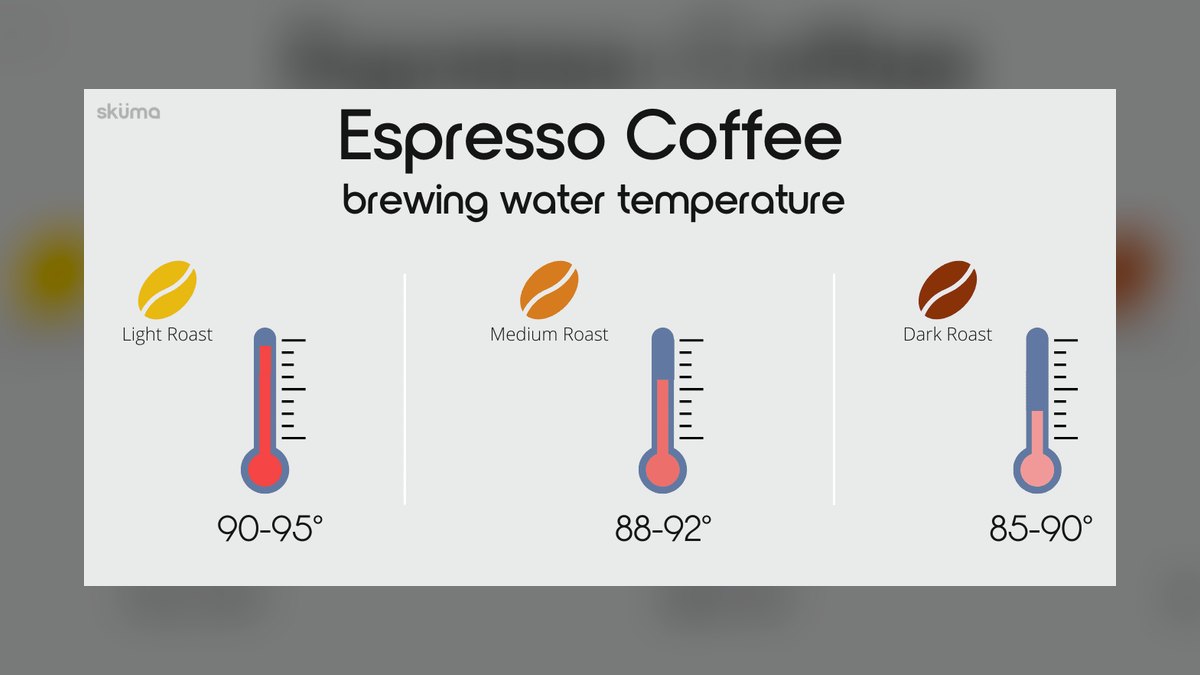
The ideal water temperature for a tropical community tank is 76 to 80°F (24 to 27°C), with 78°F (25.5°C) serving as the safest default for mixed species. Stability outranks the exact number: a rock-steady 77°F beats a tank swinging between 74 and 82°F. Target the overlap of every species you keep.
What the ideal range actually is and why it exists
The 76–80°F window is not an arbitrary hobbyist convention. It is the overlap zone of the natural habitats where the classic community fish evolved — the slow blackwater tributaries of the Amazon basin, the peat swamps and forest streams of Southeast Asia, and the warm coastal drainages of Central America. Water in those systems is shaded, thermally buffered by volume, and rarely moves more than a degree or two in a day. Fish that spent their evolutionary history in that kind of water never developed much tolerance for thermal chaos, and that single fact drives almost every practical rule that follows.
Tropical freshwater fish are ectothermic, which means they do not generate meaningful body heat of their own. Their internal temperature is the water's temperature, plus or minus a fraction of a degree. Every enzymatic process — digestion, immune response, gill function, gonad development, wound healing — runs at whatever rate the water dictates. When you set a heater dial, you are not adjusting a comfort setting the way you would a thermostat in a house. You are setting the clock speed of every biological process in the tank simultaneously, including the ones you cannot see, like the nitrifying bacteria in your filter media and the pathogens waiting for an opening.
The standard community roster clusters tightly inside that band. Neon and cardinal tetras, harlequin rasboras, guppies, platies, mollies, zebra danios, corydoras, cherry barbs, and dwarf gouramis all list published safe ranges that intersect somewhere around 76–79°F. That intersection is precisely why 78°F became the default recommendation in care guides across the industry: it is comfortably inside nearly every common species' range at once, with headroom on both sides so a two-degree drift in either direction does not push anything to its limit. When you keep six or eight species in one box of water, you are not optimizing for any one of them — you are finding the number where none of them are stressed.
A useful mental split of the community roster:
- Cooler-leaning (roughly 72–78°F): white cloud mountain minnows, zebra danios, and several barb species tolerate and often prefer the lower half of the tropical range. True coldwater fish like goldfish sit outside this entirely and belong in an unheated tank in the low 70s or cooler.
- Mid-range (roughly 74–80°F): neon and cardinal tetras, harlequin rasboras, guppies, platies, most corydoras species, cherry barbs. This is the bulk of the community trade and the reason 78°F works so widely.
- Warmer-leaning (roughly 78–84°F): angelfish, most gouramis, German blue rams, and discus, which sit furthest out at 82–86°F. These fish are perfectly happy at the top of the range and increasingly unhappy below 78°F.
The practical consequence is that "ideal" is a property of your specific stock list, not a universal number. A tank of danios and white clouds is genuinely better at 74–76°F. A ram-and-angelfish tank is genuinely better at 81–82°F. A standard mixed tetra-and-cory community lands on 78°F because that is where the ranges pile up. The number follows the fish; the fish should never be forced to follow a number you picked first.
Why it matters beyond fish comfort: temperature is also the throttle on your nitrogen cycle. Nitrifying bacteria — *Nitrosomonas* and *Nitrobacter* colonies living in your filter media and substrate — process ammonia and nitrite fastest in warm water and slow markedly as temperature falls. A tank running at 68°F cycles noticeably slower than the same tank at 78°F, which is why fishless cycling instructions routinely tell you to crank the heater up. Drop a mature tank's temperature sharply and you are not just chilling the fish, you are throttling the filter that keeps them alive. Raise it and the filter speeds up, but so does the fish's waste output, so the two changes partly cancel and partly compound depending on stocking.
The step-by-step process for dialing in and holding a target
Setting temperature correctly is a sequence, not a single act. Skipping steps is where most of the trouble originates.
Step one: build the stock list before you buy the heater. Write down every species you intend to keep, including the ones you plan to add in six months. Look up each one's published safe range from a species database rather than the shop tank label, which is frequently wrong or generic. Find where the ranges intersect. If the intersection is empty — say you want white cloud minnows and discus — the answer is not a compromise temperature at 79°F that stresses both. The answer is two tanks or a different stock list. This is the single most common upstream error, and no amount of equipment fixes it downstream.
Step two: size the heater to the room, not just the tank. The common rule of thumb is 3 to 5 watts per gallon. That range exists because the real variable is the gap between room temperature and target temperature. A 40-gallon tank in a room that sits at 72°F needs far less wattage to hold 78°F than the same tank in a drafty basement at 60°F. Lean toward 3 watts per gallon in a heated, stable living space and 5 watts per gallon where the room runs cold or swings. Undersizing produces a heater that runs constantly and still loses ground on cold nights; grossly oversizing produces short-cycling and a bigger overshoot if the thermostat ever sticks closed.
Step three: on tanks above roughly 40 gallons, split the wattage across two heaters. Two 100-watt units in a 55-gallon tank beat one 200-watt unit for two independent reasons. If one sticks in the on position, half the wattage means a far slower, more survivable temperature climb — you have hours to notice instead of a hard cook. If one fails off, the survivor keeps the tank from crashing to room temperature while you source a replacement. The secondary benefit is more even heat distribution when you place them at opposite ends.

Step four: position the heater in moving water. Mount it beside the filter intake or in the path of the return flow. A heater sitting in a dead corner heats a local pocket, the internal thermostat reads that hot pocket, shuts off early, and the rest of the tank never reaches target. Flow is what turns a heater into a whole-tank device.
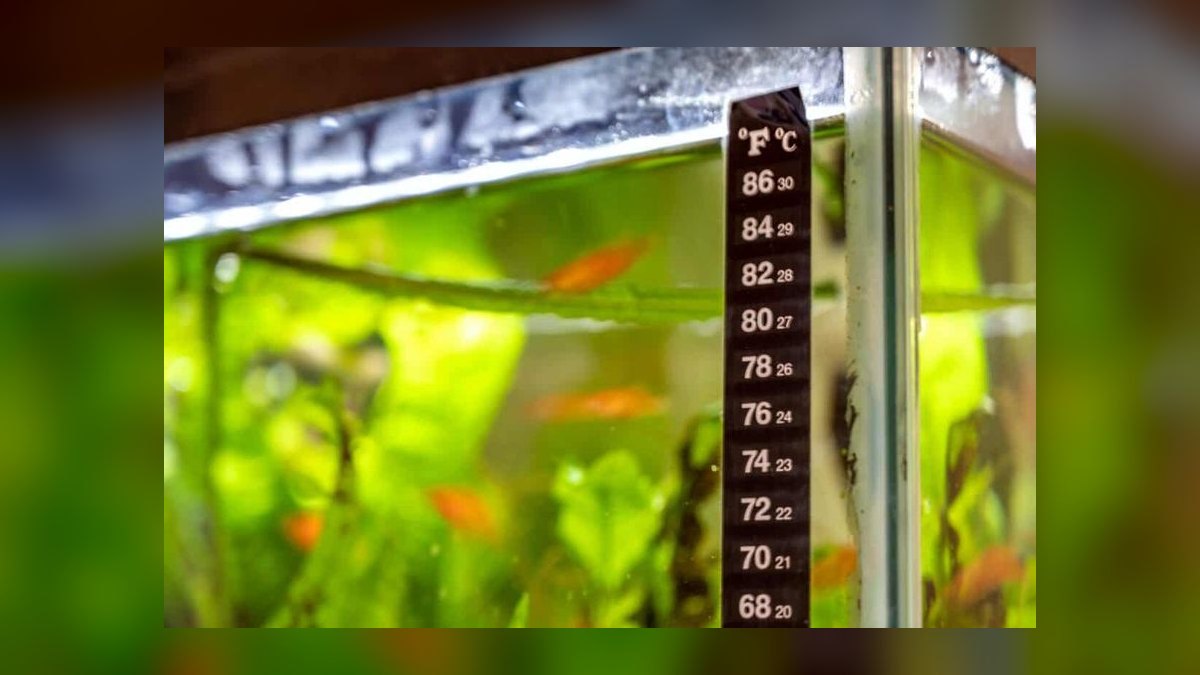
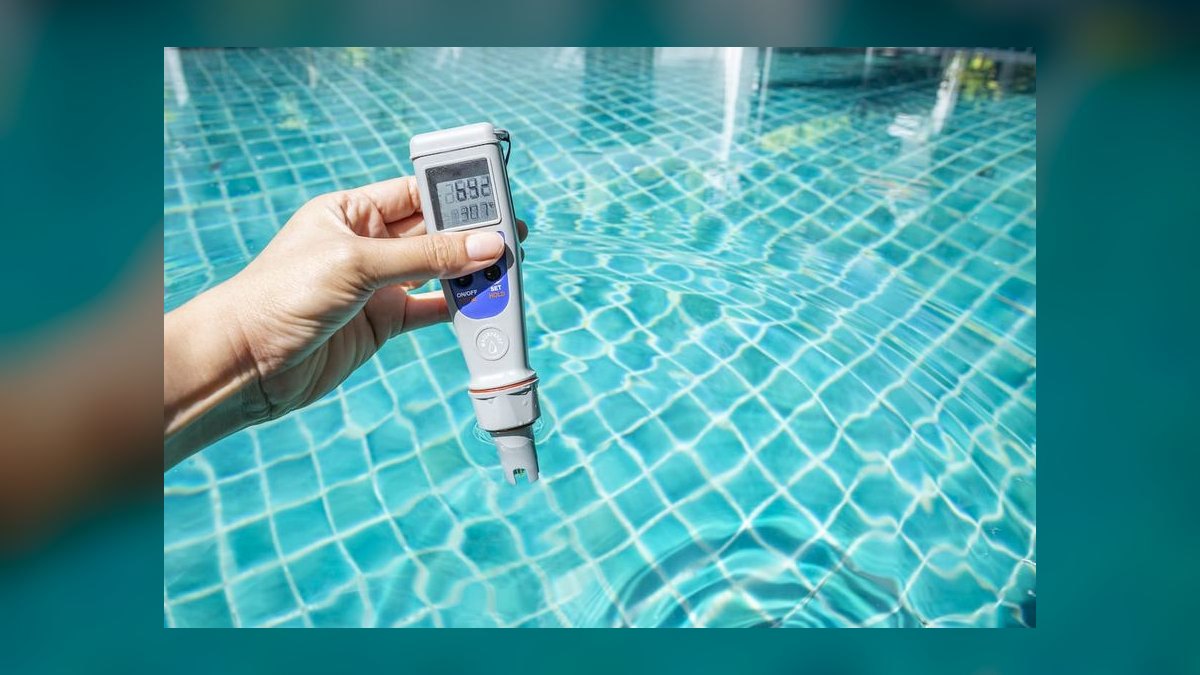
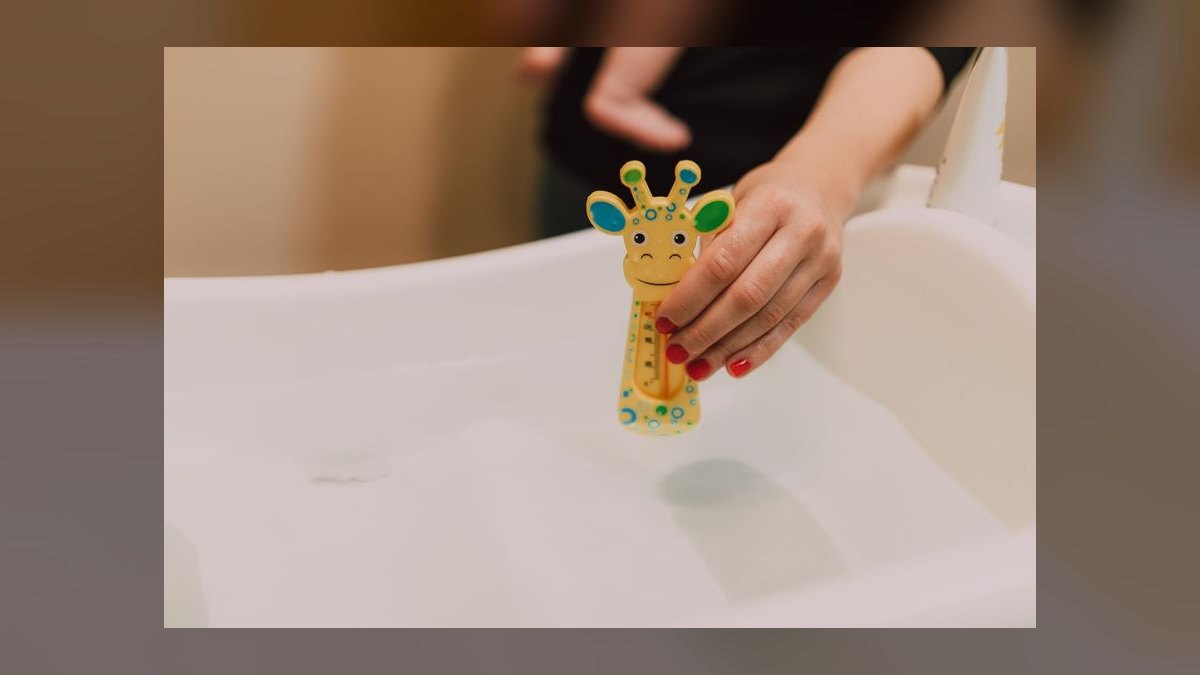
Step five: verify with an independent thermometer, always. A heater dial is a manufacturer's estimate, not a measurement, and dial calibration drifts over the life of the unit. Place a separate thermometer at the far end of the tank from the heater. Digital probe thermometers are the most accurate and readable, and many include high/low alarms that catch a failure while you are at work. Glass alcohol thermometers are cheap and reliable but harder to read to a precise degree. Stick-on LCD strips are the least trustworthy — they read the glass and the room as much as the water and can be off by several degrees.
Step six: sanity-check the thermometer itself. Drop it in a cup of ice water; it should read close to 32°F (0°C). This costs two minutes and catches the failure mode where you have been confidently holding "78°F" that was actually 74°F for a year.
Step seven: read both ends and compare. If the far-end thermometer tracks within about a degree of the heater end, your circulation is adequate. A gap of three or four degrees means you have a stratified tank — a warm zone by the heater and a cold zone where fish are actually living. Add a powerhead, reposition the filter return, or angle the outflow downward until the ends converge.

Step eight: log it for the first two weeks. Note the reading at the same time each morning and each night. What you are hunting for is the day-night delta caused by lights, room HVAC cycling, and heater duty cycle. A sub-2°F daily swing is fine. Anything larger tells you the room, not the tank, is in charge, and you need to address location or insulation before adding livestock.
Costs, wattage, timelines, and the numbers that actually matter
Temperature work has a small equipment budget and a long time horizon, and both get misjudged.
Wattage math in practice. The 3–5 watts per gallon guideline translates to concrete numbers: a 10-gallon nano wants 25–50 watts, a 20-gallon long wants 50–100 watts, a 29-gallon wants roughly 100 watts, a 55-gallon wants 150–200 watts (ideally two 100-watt units), and a 75-gallon wants 200–300 watts split across two. The heater's job is only to make up the difference between ambient and target, so the true driver is delta-T. Holding 78°F in a 72°F room is a six-degree lift and easy. Holding 78°F in a 62°F room is a sixteen-degree lift and needs meaningfully more wattage plus insulation on the back and sides.
Recovery timelines. A properly sized heater in a mid-size tank typically raises water temperature by roughly 1–2°F per hour under normal conditions, slower in a cold room, faster in a small tank. This matters for planning: you cannot "fix" a chilled tank in ten minutes, and you should not try. If a heater fails overnight and you find the tank at 70°F, the correct move is to restore heat and let it climb at its natural rate, not to add hot water and shock the fish a second time.

Adjustment pacing. When you deliberately change a target, move no faster than 1–2°F per day. Nudge the dial a small increment, wait several hours for the water to equilibrate and the reading to settle, then evaluate. Dial marks on inexpensive heaters are coarse and often inaccurate in absolute terms, so treat them as relative — "a bit warmer" — and let the independent thermometer be the authority.
Equipment lifespan. Aquarium heaters are consumables, not permanent fixtures. Thermostats degrade, seals fail, and calibration drifts. Plan on replacing heaters every few years as preventive maintenance rather than waiting for the failure that kills fish. A heater that has been submerged and cycling continuously for four years has done a lot of work. Replacing it proactively is cheap insurance against a stuck-on unit in July.
The lifespan trade-off. Because metabolism scales with temperature, so does aging. Fish held at the warm end of their range grow faster, breed more readily, and eat more — and generally do not live as long as the same species held at the cool end. Fish held cooler grow more slowly, need less food, and often live longer. Neither is wrong; they are different objectives. A breeder conditioning stock runs warm on purpose. A keeper who wants a school of tetras to last as many years as possible runs at the cooler end of their range on purpose. Pick the objective consciously instead of inheriting a number by accident.
The oxygen trade-off. Warm water holds less dissolved oxygen than cool water, and warm fish consume more of it. Those two curves move in opposite directions, which is why the top of the range is riskier than the bottom for a heavily stocked tank. A lightly stocked 78°F tank has enormous margin. A packed 82°F tank in a summer heatwave with a filter return running below the surface has almost none, and the first sign is fish hanging at the surface gasping. Surface agitation is the lever here: broken surface film and good gas exchange buy back a large share of what temperature takes away. If you intend to run at the warm end, run an air stone or aim the filter return to ripple the surface as standard practice, not as an emergency response.
Bioload timelines. Warmer water accelerates digestion, which means faster waste production and a heavier ammonia load per fish. A tank at the top of the range genuinely needs more filtration headroom or more frequent water changes than the same tank at the bottom. If you move a mature tank from 76°F to 80°F, expect the bioload to rise and give the biofilter a couple of weeks to catch up before adding stock.
Seasonal budget. In most climates the winter problem is wattage and the summer problem is cooling. Winter fixes are cheap: adequate heater capacity, redundancy, insulation, and moving the tank off an exterior wall. Summer fixes escalate in cost — a clip-on fan blowing across the surface uses evaporative cooling to drop water temperature by a couple of degrees for almost nothing, while a dedicated aquarium chiller is a serious purchase reserved for rooms that genuinely cannot be kept below the mid-80s. Try the fan, the lid removal, the shorter photoperiod, and the room-position change before you shop for a chiller.
Where keepers get it wrong
Trusting the heater dial. The most common error in the hobby is treating the number printed on the heater as a reading rather than a request. Dials are frequently off by several degrees out of the box and drift further with age. Every temperature claim should be backed by an independent thermometer, and that thermometer should itself be checked in ice water once in a while.
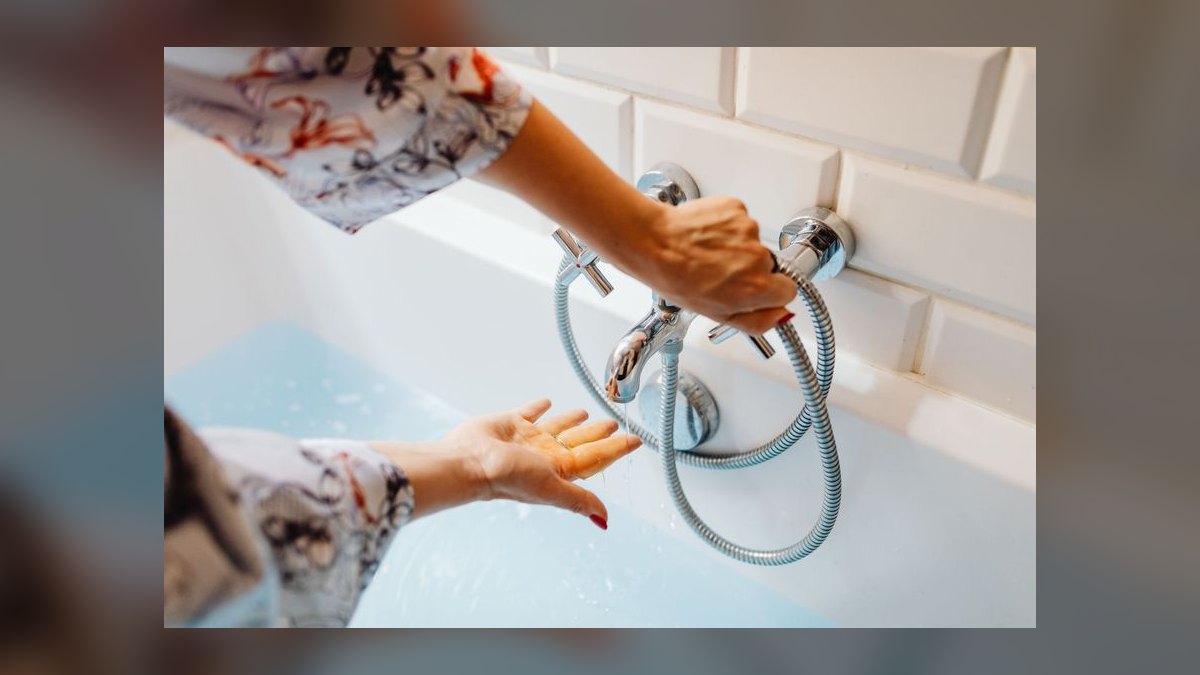
Believing stick-on strips. LCD strips read the glass, and the glass is influenced by room air on the outside face. They are convenient at-a-glance devices and poor measurement instruments. If a strip and a probe disagree, believe the probe.
Chasing the perfect number instead of holding a steady one. Fish handle a stable temperature near the edge of their range far better than a wandering one in the middle. Rapid drops in particular suppress immune function while the pathogen population carries on unbothered, which is the classic setup for an ich outbreak. The single most protective habit in temperature management is not precision, it is constancy.
Cold water changes. Pouring in a bucket several degrees cooler than the tank is a self-inflicted temperature crash, and it is astonishingly common because it is invisible — the tank recovers within an hour and nobody connects the white spots four days later to Saturday's water change. Match refill water to tank temperature by feel and thermometer before it goes in. Small percentage changes forgive a lot; large changes do not.
Ignoring the room. A tank next to a south-facing window, above a radiator, under an HVAC vent, or beside an exterior door in winter is fighting its environment continuously. No heater compensates for a room that swings ten degrees. Location is a temperature decision, and it is far easier to make correctly on setup day than to correct after the tank is full.
One giant heater in a big tank. A single 300-watt unit in a 75-gallon tank is a single point of failure with enough power to cook the entire stock if the thermostat welds shut. Splitting the load is a standard, cheap risk reduction that keepers skip because two heaters look redundant until the day one fails.
Dead-spot placement. A heater tucked behind decor in a low-flow corner satisfies its own thermostat with a warm pocket while the rest of the tank runs cold. This shows up as a large end-to-end temperature gap and is fixed with circulation, not with a bigger heater.
Mixing incompatible species and calling it a compromise. Setting 79°F for a tank containing white cloud minnows and German blue rams does not split the difference — it holds both species outside their preferred zone permanently. Chronic mild thermal stress does not kill fish dramatically; it shortens lifespans, dulls color, suppresses appetite, and quietly raises disease susceptibility. Every fish in the tank should be inside its comfortable range at the number you actually run.
Overcorrecting a summer spike with ice. Dropping ice directly into the water produces exactly the rapid swing you have spent all this effort avoiding. If cooling is needed, use evaporative methods that lower temperature gradually — a fan across the surface, a lifted lid, a shorter light cycle — rather than a thermal shock that trades a heat problem for an ich problem.
Forgetting the acclimation step. New fish arrive in bag water that has often drifted several degrees from your tank. Float the sealed bag for 15–20 minutes to equalize temperature. If the gap exceeds a few degrees, drip acclimate over 30–60 minutes instead. And do not pour bag water into the display tank — equalize temperature, then net the fish across.
Decision framework: choosing your number and adapting it
The right target is a function of your stock, your goals, and your room. Work through it in that order.
Start with the hard constraints. If any species in the tank has a narrow range, that species sets the boundaries and everyone else adapts. Discus at 82–86°F is the classic constraint — a discus tank is a discus tank, and the tankmate list shrinks to species that genuinely thrive in the low-to-mid 80s. Likewise, if you want white clouds, you are running cool and you have excluded the warm-water specialists. Constraints first, preferences second.
Then choose an objective within the overlap. Once you know the safe band for your stock, the cool end favors longevity, lower food demand, and higher oxygen margin. The warm end favors growth rate, breeding readiness, and faster disease treatment. The middle is the default when you have no strong preference — and for the overwhelming majority of community tanks, no strong preference is the honest answer, which is how 78°F earned its reputation.
Then adjust for adjacent scenarios. Different tank roles want different numbers:
- Fry and grow-out tanks run warm, often 80–82°F, to accelerate development and shorten the vulnerable early stages. The cost is faster bacterial growth and higher oxygen demand, so pair it with small daily water changes and a clean sponge filter.
- Breeding setups often use deliberate, gradual temperature movement as a trigger. A slow cooling of a few degrees mimics rainy-season conditions and prompts spawning in a number of tetras, rasboras, and corydoras — frequently paired with a large cool water change. Livebearers need no such trigger and simply breed continuously in the normal community range. Dwarf cichlids generally want the warm end to come into condition.
- Hospital and quarantine tanks commonly run warmer during ich treatment, because raising temperature speeds the parasite through its life cycle to the free-swimming stage where medications and salt can actually reach it. The mandatory companion move is extra aeration — you are simultaneously reducing available oxygen and stressing an already-sick fish, so an air stone is not optional. For bacterial infections there is no comparable benefit to running hot; hold a normal, steady temperature and reduce stress instead.
- Planted tanks sit slightly cooler on average, often 74–78°F, because many popular stem and rosette plants do better there and because cooler water holds more dissolved gas. It is also a reason plant-forward keepers gravitate toward cooler-leaning fish.
- Shrimp and snail tanks skew cooler still. Neocaridina in particular are commonly kept in the low-to-mid 70s and become short-lived at the top of the tropical range, so a shrimp-heavy community argues for the cool end of whatever your fish allow.
Then troubleshoot against symptoms. Tank too cold with the dial maxed means an undersized, failed, or unplugged heater — verify with the thermometer, then replace rather than nurse it. Tank too hot with the heater off means the room is the source; address ambient heat, light duration, and surface cooling. A day-night swing larger than a couple of degrees points at drafts, sunlight, or lighting heat. A large end-to-end gap points at circulation. Each symptom has a distinct cause, and matching them correctly saves you from replacing equipment that was never the problem.
Related questions
Can tropical fish survive without a heater?
Most cannot thrive long term. Typical room temperature of 68–72°F sits below the comfort range of common tropical species and produces sluggish metabolism, poor appetite, and weakened immunity. A few hardy species tolerate cooler water, but a reliable heater is standard equipment for a tropical tank.
How much daily temperature swing is safe?
Aim for under about 2°F of variation across a full day and night. Larger or faster swings stress fish and are a leading trigger for ich outbreaks. Stability protects fish more effectively than hitting any particular number precisely.
Does temperature affect the nitrogen cycle?
Yes. Nitrifying bacteria process ammonia and nitrite faster in warm water and slow considerably as temperature drops. This is why fishless cycling instructions recommend running the tank warm, and why a sudden chill throttles the biofilter alongside the fish.
Why does raising temperature help treat ich?
Warmer water accelerates the parasite's life cycle, moving it faster to the free-swimming stage where medications and salt can actually reach it. Increase aeration whenever you raise temperature during treatment, since warm water holds less oxygen while sick fish need more.
Should I keep goldfish in a tropical community tank?
No. Goldfish are coldwater fish that do best in the low 70s or cooler, well below the tropical community range. Long-term housing at 78°F shortens their lives, and their size and waste output make them poor community tankmates regardless of temperature.
FAQ
What is the single best temperature for a mixed community tank?
About 78°F (25.5°C). It sits inside the comfortable range of nearly every common community species — tetras, rasboras, livebearers, corydoras, danios, and most gouramis — which makes it the safest default when you keep a variety of fish together and do not have a species with unusual requirements setting the boundaries.
How do I know my thermometer is accurate?
Test it in ice water, where it should read close to 32°F (0°C). Digital probe thermometers are the most reliable, glass alcohol thermometers are dependable but harder to read precisely, and stick-on LCD strips are the least accurate because they respond to the glass and surrounding air as much as the water.
Should I run two heaters instead of one?
On tanks above roughly 40 gallons, yes. Splitting the wattage means a stuck-on unit heats the tank far more slowly, giving you time to notice, and a failed unit leaves the survivor holding the tank above room temperature. Two heaters at opposite ends also distribute heat more evenly.
How fast can I change my tank's temperature?
No faster than 1–2°F per day when adjusting deliberately. Move the dial in small increments and wait several hours between changes so the water equilibrates and the reading settles. Rapid changes, especially drops, suppress immune function and commonly trigger disease outbreaks.
Where should I place the heater and thermometer?
Put the heater in moving water — beside the filter intake or in the path of the return — so heat spreads through the whole tank instead of pooling. Place the thermometer at the opposite end. If both ends read within a degree of each other, your circulation is doing its job.
My tank gets too hot in summer. What should I do?
Use gradual cooling methods: a small fan blowing across the water surface for evaporative cooling, a lifted or removed lid, a shorter light photoperiod, and moving the tank out of direct sun. Increase aeration, since warm water holds less oxygen. Never drop ice directly into the tank — that creates the rapid swing you are trying to avoid.
Sources
- https://www.thesprucepets.com/aquarium-water-temperature-1381208
- https://www.seriouslyfish.com/
- https://www.aqueon.com/articles/aquarium-water-temperature
- https://www.practicalfishkeeping.co.uk/
- https://www.tetra-fish.com/learning-center
- https://www.fishkeepingworld.com/
- https://www.aquariumcoop.com/blogs/aquarium
- https://www.britannica.com/science/poikilotherm
Related on PULSE
- What is the best food for tropical aquarium fish?
- Top 10 Live Foods for Tropical Fish (Brine Shrimp, Daphnia, Bloodworms)
- Top 10 colorful tropical fish 2027
- Top 10 Aquarium Controllers for Monitoring Temperature and pH
- Top 10 Heater Brands for Consistent Temperature Control
- Top 10 Tropical Fish Foods 2027
This page will be disappearing soon. Save it to your device for $1 — or read it free while it is here.
@Kory-White- · if Venmo asks, the last 4 of my number are 2012
This page is gone.
This one is off the shelf now. $1 keeps it on your phone for good — the whole page, pictures and diagrams included.
 pulse-aquariumsTop 10 Reef-Safe Tangs for Saltwater Aquariums in 2027
 pulse-aquariumsTop 10 Anemone Species for Clownfish Tanks in 2027
 pulse-aquariumsWhat is old tank syndrome and how do you avoid it in 2027?
 pulse-aquariumsTop 10 Reef Salt Mixes in 2027
 pulse-aquariumsHow much light do planted aquariums need in 2027?
 pulse-aquariumsWhat are dinoflagellates and how do you get rid of them in a reef tank in 2027?
 pulse-aquariumsWhat is the nitrogen cycle in an aquarium in 2027?
 pulse-aquariumsHow do you get started with Aquariums in 2027?
 pulse-aquariumsHow do you do a fishless cycle with ammonia in 2027?
 pulse-aquariumsTop 10 Aquarium Surface Skimmers in 2027