
How Do I Negotiate a Tenant Improvement Allowance for a Warehouse?
 Curated byKory White · Fractional CRO · Maryland
 PULSEKNOWLEDGE LIBRARY
<svg xmlns="https://www.w3.org/2000/svg" viewBox="0 0 1200 340" role="img" aria-label="How Do I Negotiate a Tenant Improvement Allowance for a Warehous — PULSE Buildouts"><rect width="1200" height="340" fill="#EBE9DE"/><rect width="14" height="340" fill="#C0531F"/><text x="58" y="116" font-family="Arial,Helvetica,sans-serif" font-size="32" font-weight="800" letter-spacing="3" fill="#C0531F">PULSE BUILDOUTS · COMMERCIAL REAL ESTATE</text><text x="56" y="198" font-family="Arial,Helvetica,sans-serif" font-size="60" font-weight="800" fill="#2b2b2b">Save money. Don’t get screwed.</text><text x="58" y="258" font-family="Arial,Helvetica,sans-serif" font-size="30" font-weight="600" fill="#6b5b4d">Leases, TI, NNN & buildouts — negotiated in your favor</text><g transform="translate(1010,86)" fill="none" stroke="#C0531F" stroke-width="9" stroke-linejoin="round"><rect x="20" y="40" width="150" height="130"/><line x1="20" y1="40" x2="95" y2="6"/><line x1="170" y1="40" x2="95" y2="6"/><rect x="50" y="80" width="36" height="36"/><rect x="104" y="80" width="36" height="36"/><rect x="74" y="128" width="42" height="42"/></g></svg>
Ask for $5 to $25 per square foot in tenant improvement (TI) money and make the landlord pay for it, not you. For a 50,000 sq ft warehouse, that is $250,000 to $1.25M of build-out the landlord funds in exchange for your signature. The move that saves you the most money: never accept the first TI number, and never let the landlord control the construction. Push for a turnkey build (landlord delivers the finished space at their cost and risk) on a generic spec, and a cash allowance you control on anything specialized. Tie the dollar amount to lease term and rent — a longer term and a higher base rent both justify a fatter allowance, because the landlord amortizes the TI over the lease at roughly 6% to 9% and bakes it back into your rent. The single biggest screw-up tenants make is treating "free" TI as free. It is a loan you repay through rent. Negotiate the rate, the amortization period, and who keeps the unused balance.
A warehouse is mostly a box, so light-industrial TI runs low — $5 to $10/sq ft for paint, basic LED lighting, restroom touch-ups, and dock seals. The number climbs to $15 to $25/sq ft when you add office build-out, HVAC for a climate-controlled zone, extra power, racking-ready slab work, or new dock levelers at $4,000 to $8,000 each. Get the scope priced by your own contractor, not the landlord's, before you agree to a single figure.
Anchor the TI Number to Real Construction Costs
Walk the building with a general contractor and a tenant-rep broker from CBRE, JLL, or Cushman & Wakefield before you talk dollars. The landlord will quote a TI number that conveniently matches their cheapest possible scope. Your job is to make the allowance match your scope.
Price the line items that matter in a warehouse:
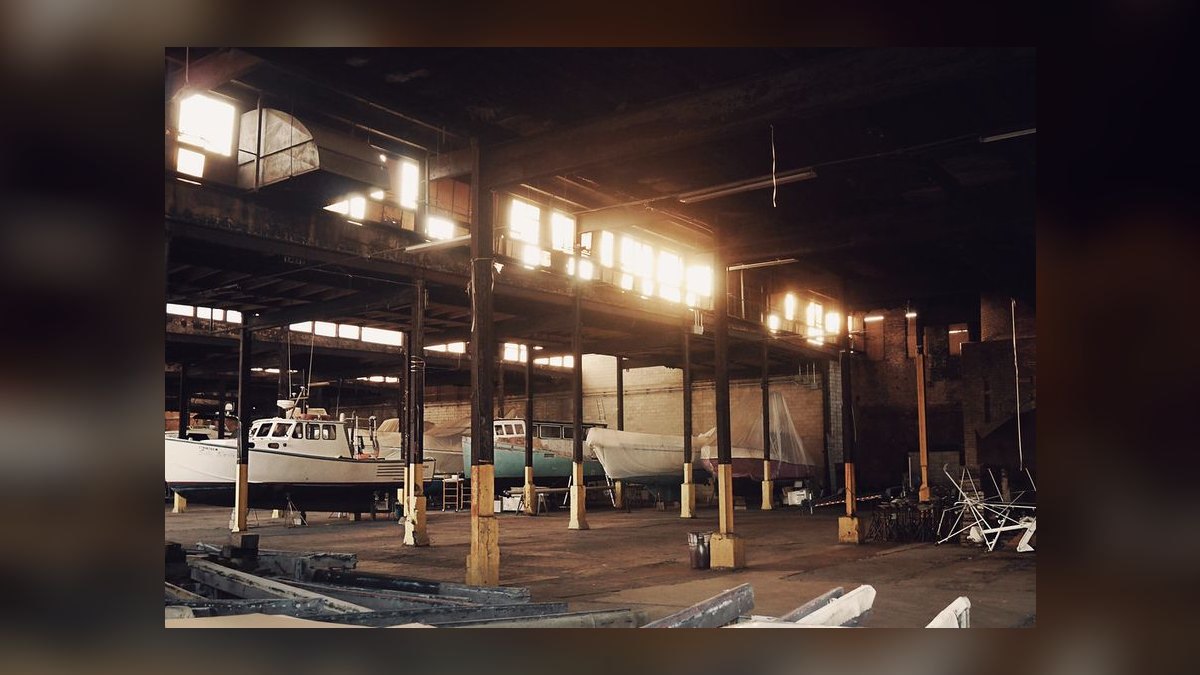
- Office build-out: $40 to $90/sq ft for the finished office portion, which is why a 5,000 sq ft office inside the box can eat $200,000 to $450,000 on its own.
- Dock equipment: levelers at $4,000 to $8,000 each, seals and shelters at $1,500 to $3,500 per door.
- Lighting: an LED retrofit runs $1.50 to $4/sq ft but cuts your electric bill, so push the landlord to fund it as a building-system upgrade.
- HVAC / climate zones: rooftop units at $8,000 to $20,000 installed per ton-block.
- Slab and power: heavy racking or machinery may need slab reinforcement and a service upgrade running $25,000 to $150,000.
When the landlord sees your itemized number, the negotiation moves off their lowball anchor. Always bring your own contractor's estimate to the table.
Turnkey vs. Cash Allowance: Pick the Right Structure
There are two ways to take TI, and they protect you differently.
Turnkey build: the landlord delivers the space finished to an agreed spec, at the landlord's cost, and eats any overrun. This is the safest structure for standard work because cost risk sits with the landlord. The trap: the landlord cheaps out on finishes to protect their margin, so attach a detailed spec sheet and a finish schedule to the lease.

Cash allowance: the landlord hands you a fixed pool — say $15/sq ft — and you manage the build with your own GC. This is best for specialized work because you control quality and vendor selection. The trap: overruns are yours. Pad your scope 10% to 15% for change orders.
Make the Money Actually Show Up: Disbursement Terms
A TI number is worthless if you never get the cash. Landlords delay reimbursement, dispute invoices, and let allowances expire. Lock these terms in writing:
- Disbursement schedule: progress payments tied to construction milestones, not a single lump at completion. Cash flow matters when you front contractor draws.
- Reimbursement window: the landlord pays within 30 days of receiving lien waivers and invoices. Add interest if they are late.
- No expiration trap: kill any clause that says unused TI reverts to the landlord on a short deadline. Negotiate rent credit for the unused balance instead, or at minimum a 12-month window to spend it.
- Soft costs allowed: insist the allowance covers architect fees, permits, and cabling — not just hard construction. Otherwise you pay those out of pocket.
Get lien waivers from every subcontractor before final payment, or you risk a mechanic's lien on a building you do not own.

Tie TI to Rent and Term — and Run the Math
The landlord amortizes your TI into rent at roughly 6% to 9%. On $500,000 of TI over a 7-year lease at 8%, that is about $96,000/year layered into your rent — roughly $1.92/sq ft/year on a 50,000 sq ft box. Knowing this flips the negotiation: you can trade a slightly higher base rent for a much larger upfront allowance, which helps if your business needs the build now and the cash later.
Three plays that save real money:
- Longer term, bigger allowance: a 10-year deal justifies far more TI than a 5-year deal because the landlord has more years to recover it.
- Free rent instead of TI: if your build is cheap, take 3 to 6 months of free rent rather than a small allowance — free rent is cleaner cash.
- Amortized TI as a loan line: for build-outs above the allowance, ask the landlord to fund the overage and amortize it at a stated rate, often cheaper than a bank construction loan.
Don't Get Screwed: The Clauses Landlords Hide
The TI section is where landlords bury cost shifts. Strike or rewrite these:
- Landlord's "construction management fee" of 3% to 5% skimmed off your allowance for oversight they barely do. Cap it at 2% or delete it on a cash-allowance deal.
- Restoration / surrender clause forcing you to remove your improvements and restore the box at lease-end — this can cost tens of thousands. Negotiate "no obligation to remove standard improvements."
- Landlord-controlled GC with marked-up pricing. Demand the right to competitively bid the work to at least three contractors.
- Allowance forfeiture if you are ever in default, even a cured one. Limit forfeiture to uncured material default only.

Bring in a CRE attorney to redline the work letter. The legal fee of $2,500 to $7,500 is trivial against a six-figure allowance and a restoration clause that can sting you on the way out.
Understanding the Difference Between a Turnkey Build and a Cash Allowance
When negotiating a tenant improvement allowance for a warehouse, you must understand the two primary ways the landlord can deliver the funds: a turnkey build or a cash allowance. A turnkey build means the landlord takes full responsibility for designing, permitting, and constructing the improvements. They hire the contractors, manage the timeline, and deliver a finished space ready for your operations. The advantage is that you avoid upfront out-of-pocket costs and the headache of project management. However, the risk is that you lose control over material choices, build quality, and cost efficiency — the landlord may cut corners to stay within their budget.

A cash allowance, on the other hand, is a lump sum of money the landlord gives you (or your general contractor) to complete the improvements yourself. This option gives you full control over design, materials, and subcontractor selection. For a warehouse, this is often preferable for specialized needs like high-density shelving, cold storage rooms, or custom dock levelers. The downside is that you must manage the construction process and may need to front the money before the landlord reimburses you. Most leases reimburse after the work is completed and inspected, which can strain your cash flow. A smart negotiation tactic is to ask for a hybrid approach: a turnkey build for basic shell improvements (floor slab, lighting, restrooms) and a cash allowance for tenant-specific fit-out. This balances risk and control effectively.
The Role of Lease Term and Rent Escalations in TI Negotiations
Landlords do not give away TI money out of generosity — they view it as an investment in securing a long-term tenant. The length of your lease term directly impacts how much TI allowance you can negotiate. Industry norms suggest that for a 5-year lease, you can expect $3 to $8 per square foot; for a 10-year lease, $8 to $15 per square foot; and for a 15-year lease, $15 to $25 per square foot. The logic is simple: the longer you commit to paying rent, the more time the landlord has to recoup their TI investment. If you are willing to sign a 10-year lease instead of a 5-year lease, you can often double the TI allowance.

Rent escalations also play a critical role. Landlords often use annual rent increases (typically 2% to 4% per year) to offset the cost of TI. If you accept a higher rent escalation schedule, you may be able to negotiate a larger upfront TI allowance. For example, a 3% annual escalation might allow for an extra $2 to $4 per square foot in TI compared to a 2% escalation. Conversely, if you want to minimize future rent increases, you may need to accept a lower TI allowance. A savvy negotiator will model the total cost of occupancy over the lease term — including rent, escalations, and TI value — to find the optimal balance. Use a simple spreadsheet to compare scenarios: a higher TI allowance with moderate rent escalations often yields a lower total cost than a lower TI allowance with flat rent.
Common Warehouse-Specific TI Items and Their Costs
To negotiate effectively, you need a realistic understanding of what warehouse improvements actually cost. This prevents you from asking for too little (leaving money on the table) or too much (appearing uninformed). Here are typical warehouse TI items and their cost ranges per square foot:
- Floor slab repair or coating: $1.50 to $4.00 per sq ft for epoxy or urethane coatings to handle heavy forklift traffic.
- LED lighting retrofit: $1.00 to $2.50 per sq ft for high-bay fixtures with motion sensors.
- Dock equipment (levelers, seals, shelters): $3,000 to $8,000 per dock door installed.
- Electrical upgrades for high-voltage equipment: $2.00 to $5.00 per sq ft for additional panels, conduits, and outlets.
- HVAC for office/break room areas: $8 to $15 per sq ft for the conditioned space (not the entire warehouse).
- Fire suppression system modifications: $1.00 to $3.00 per sq ft for sprinkler head relocation or added coverage.
- Security system (cameras, access control): $0.50 to $1.50 per sq ft.
When presenting your TI request to the landlord, itemize these costs with a total estimate. For a 50,000 sq ft warehouse with 6 dock doors, a realistic budget might be $150,000 for lighting and floor coating, $36,000 for dock equipment, $50,000 for electrical, and $20,000 for fire suppression — totaling about $256,000 or roughly $5.12 per sq ft. This concrete breakdown shows the landlord you have done your homework and strengthens your negotiating position. Always add a 10% to 15% contingency for unforeseen issues like hidden structural repairs or permit delays.
FAQ
What is a typical tenant improvement allowance for a warehouse? You can generally ask for $5 to $25 per square foot, depending on the market and the condition of the space. For a 50,000 sq ft warehouse, that works out to $250,000 to $1.25 million from the landlord.
How do I determine what my build-out will actually cost? Get quotes from at least two general contractors who specialize in warehouse work. Typical costs range from $10 to $40 per square foot, so your allowance may cover only part of the total.
Should I ask for a higher allowance or lower rent? It depends on your cash flow needs. A higher TI allowance reduces upfront costs but often leads to slightly higher base rent. Conversely, lower rent with less TI can save you monthly but requires more capital at the start.
What if the landlord offers a smaller allowance than I want? You can negotiate by offering a longer lease term (e.g., 7–10 years) or agreeing to a higher rent escalator. Landlords are more flexible when they see a stable, long-term tenant.
Can I use the TI allowance for things like racking or equipment? Typically, TI allowances cover only permanent improvements like electrical, lighting, flooring, and office build-outs. Racking and specialized equipment are usually your responsibility, but some landlords may allow a portion if you ask.
When do I get the TI money—upfront or as reimbursement? Most landlords reimburse you after you submit invoices for completed work. A few may front a portion (e.g., 50%) if you have a strong credit history, but this is less common. Always clarify the payment schedule in your lease.
Related on PULSE
- [How Much Should a Tenant Improvement (TI) Allowance Be Per Square Foot?](/knowledge/bo0011)
- [What Is a Tenant Improvement (TI) Allowance and How Do I Get the Landlord to Pay for It?](/knowledge/bo0002)
- [What Is a Tenant Improvement Loan and Should I Use One?](/knowledge/bo0091)
- [How Do I Get Tenant Improvement Money on a Lease Renewal?](/knowledge/bo0066)
- [How Do I Negotiate a Tenant Allowance Into Lower Rent Instead?](/knowledge/bo0134)
- [How Do I Negotiate a Tenant Allowance for Furniture and Fixtures (FF&E)?](/knowledge/bo0077)
Sources
- CBRE — U.S. Industrial & Logistics Figures and tenant-improvement benchmarking reports.
- JLL — Industrial Tenant Representation and occupier cost guidance.
- Cushman & Wakefield — Industrial market reports and lease-economics analysis.
- NAIOP — Commercial Real Estate Development Association, industrial build-out cost research.
- BOMA International — Office and industrial operating-cost and lease-clause standards.
- IREM — Institute of Real Estate Management, lease administration and TI disbursement practices.
- Tenant-rep broker and CRE counsel guidance on warehouse work letters and amortization terms.
This page will be disappearing soon. Save it to your device for $1 — or read it free while it is here.
@Kory-White- · if Venmo asks, the last 4 of my number are 2012
 pulse-recentHow do I insure landlord-installed HVAC and electrical systems separately from my own buildout equipment in 2027?
 pulse-recentWhat are the top 10 documents I need to require my landlord to fund buildout improvements in 2027?
 buildoutsWhat Hidden Fees Show Up in Commercial Leases?
 pulse-recentHow much should I budget in cash reserves in case my landlord pays out the TI allowance in installments instead of upfront in 2027?
 pulse-recentHow much does a 10,000 SF medical office buildout cost per square foot in 2027?
 pulse-recentWhat is the average landlord construction allowance per square foot for a retail buildout in 2027?
 pulse-recentHow Much Do Draw-Inspection and Disbursement Fees Cost on a Landlord-Funded Buildout in 2027?
 buildoutsMy Use Clause Is Too Narrow — How Do I Broaden It?
 pulse-recentHow do I sequence the concrete steps of a buildout to avoid out-of-pocket costs in 2027?
 pulse-recentHow much of my own cash should I budget on top of a landlord TI allowance for a typical retail buildout in 2027?