
How Do I Negotiate a Cannabis Dispensary Lease Without Getting Gouged?
 Curated byKory White · Fractional CRO · Maryland
 PULSEKNOWLEDGE LIBRARY
Cap the cannabis rent premium at 1.5x comparable retail rather than the 2x–3x landlords quote, and tie rent commencement to license issuance — not lease signing — to survive the 9–18 month approval runway. Negotiate 6–12 months of free rent, an escrowed deposit, no personal guarantee, and cap your indemnity to your leasehold only.
Why cannabis rent is priced like extortion
Cannabis landlords justify their premiums with real risks: federal illegality under the Controlled Substances Act, banking friction, lender skittishness, insurance complications, and odor and security complaints from neighboring tenants. Those risks are genuine. But most of the premium you'll be quoted is not risk pricing — it's scarcity arbitrage. Dispensaries can only operate in "green zones," the buffer-restricted parcels that sit far enough from schools, parks, daycares, and sometimes churches and other dispensaries to satisfy local zoning. In most cities, green-zoned retail is a tiny sliver of total inventory, and landlords who own it know you have almost nowhere else to go.
That scarcity gets weaponized into a rent number that has no relationship to the space's actual value. A landlord who leases plain retail at $28 per square foot NNN will quote a cannabis operator $65 or $75 for the identical box — a 2.5x to 2.7x premium — and frame it as an industry norm rather than an opening bid. The framing is the trick. Your first job is to refuse the premise that "cannabis rent" is a fixed market rate. It isn't. It's a negotiation dressed up as a fact, and the way you break it is by dragging the conversation back to what the space is actually worth.
Anchor every discussion to comparable non-cannabis retail in the same submarket, not to what other desperate dispensaries signed. A defensible cannabis premium — one that compensates the landlord for genuine incremental risk and hassle — is roughly 25% to 50% over conventional market rent, so open at market and settle somewhere between 1.3x and 1.5x. Anything north of 2x should require offsetting concessions or a walk. And remember your own leverage: you are a hard-to-replace, multi-year tenant in a code-restricted parcel, and you're about to sink $250,000 to $600,000 of improvements into their building that they keep if you ever leave. Make them earn the premium instead of assuming it.
Demand the comps and trade term for rate
The single most powerful move in a cannabis lease negotiation costs nothing: make the landlord or their broker produce non-cannabis retail comps from the same corridor. Ask what the Walgreens, the CVS, the liquor store, or the vape shop two doors down actually pays. If clean retail leases at $25 to $35 per square foot NNN and they want $65, force them to justify every dollar above roughly $35. Most of that gap evaporates under a simple, repeated question: "What specifically about my tenancy costs you this much more?" The odor mitigation, the security profile, and the lender risk are real answers worth some premium — but not 150%.
Then convert the landlord's own nervousness into rate relief. A landlord anxious about cannabis values certainty above almost everything: a long, stable, credit-worthy tenant who de-risks the asset and makes it financeable. Offer that certainty deliberately. A 10-year initial term with two five-year renewal options is worth real money to them, and you should extract a lower base rent in exchange for committing to it. Structure the renewal rent, too — lock escalations at a fixed 2% to 3% annually rather than a "fair market" reset, because at renewal you've already built out the space and have nowhere cheap to move, which is exactly when a landlord will try to re-lever the premium against you.
Where you can, write a cannabis-use premium cap directly into the lease: a clause stating that base rent cannot exceed 1.5x the average of three named nearby non-cannabis retail comparables, adjusted annually. That converts your negotiating win into a durable contractual protection instead of a one-time concession. Finally, use a tenant-rep broker who actually knows the cannabis submarket. The major firms — CBRE, JLL, Cushman & Wakefield — now run dedicated cannabis practices, and boutique green-zone specialists exist in most legal states. A good one knows which landlords genuinely fund tenant improvements versus which just collect the premium and disappear.

The regulatory contingency is your whole deal
You cannot legally operate without a state license and a local conditional-use permit, and those approvals routinely take 9 to 18 months — longer in merit-scoring states where applications compete for a capped number of licenses. That timeline is the deadliest trap in the entire lease. If your rent clock starts at lease signing or at "delivery of premises," you can burn well over $300,000 in rent on an empty box before you're legally allowed to sell a single gram. On a 5,000-square-foot space at $60 per foot, that's $25,000 a month bleeding out while you wait on a regulator.
Protect yourself with four linked provisions. First, tie rent commencement to license issuance, not lease execution and not possession — the clock starts when you're actually permitted to open. Second, add an outside-date kill switch: if your state and local approvals aren't in hand within, say, 12 to 15 months, you can terminate the lease and recover your full deposit. That caps your downside if the licensing process stalls or your application scores poorly. Third, refuse any personal guarantee tied to a license you don't yet control — you should not be personally on the hook for an outcome a government agency decides.

Fourth, and easy to overlook, insert a landlord cooperation clause. Many license and land-use applications require the fee owner's signature on property-owner affidavits, zoning forms, and consent letters, and a slow or reluctant landlord can quietly sink your scoring by missing a filing window. The lease should obligate the landlord to sign what your application requires, promptly, and treat unreasonable delay as a landlord default. Together these clauses shift the licensing risk to where it belongs — off the tenant who can't control the timeline — and they're the difference between a survivable delay and a company-ending one.
Free rent, tenant improvements, and who pays for the vault
Cannabis buildouts are brutal and expensive in ways ordinary retail never is: commercial-grade HVAC and carbon filtration for odor control, reinforced security vaults, limited-access rooms, DEA-grade camera systems with roughly 90-day retention, alarm and access-control infrastructure, and sometimes full cultivation systems. All of it pushes total buildout cost to $250 to $600 per square foot, against $100 to $200 for conventional retail. Because you're funding a specialized improvement that dramatically increases the value of the landlord's building — and that the next cannabis tenant will happily inherit — the landlord should share the cost.

Free rent is your highest-value concession, because it directly offsets the licensing-and-construction runway when you have zero revenue. Push for 6 to 12 months of abated rent; each month on that same 5,000 feet at $60 is $25,000 back in your pocket during the exact period you can least afford it. Then fight for a tenant-improvement allowance of $50 to $100 per square foot. Cannabis landlords resist funding TI, so if they won't write a check, get it amortized into rent at a capped rate no higher than their genuine cost of capital — roughly 7% to 9%, never a punitive 12%. Negotiate a fixturing period of free early access so you can build while rent is still abated, and negotiate the restoration clause hard: you want the right to leave the vault and HVAC in place, because ripping out value-adding improvements at your own expense is a gift to the landlord and a penalty to you.
Watch the fine print on the allowance itself. Landlords love to offer a modest TI number with "use it or lose it" strings — spend every dollar or forfeit the balance. Flip that into a rolling TI credit you can apply in years two and three toward HVAC replacement, security upgrades, or leasehold repairs. If they offer $50 per foot, take $35 upfront and $15 as a future credit. That protects you when an experienced contractor brings the buildout in under budget, and it forces the landlord to keep skin in the game on the building's long-term condition — a fair trade for the premium they're charging.

How not to get gouged twice on the fine print
Cannabis leases are where landlords bury their worst clauses, because operators are rushed, under-capitalized, and racing a licensing clock. Read every line, and hunt specifically for the following. The forfeiture indemnity grab is the most dangerous: a clause making you indemnify the landlord against federal asset forfeiture of the entire property can expose you to millions if the DEA ever acts. Cap your indemnity at your own leasehold interest and your own conduct only — never the landlord's fee interest. Right behind it sits the "illegal use" termination trap: boilerplate that lets the landlord terminate if your use violates "any federal law." That describes every cannabis tenant on Earth. Strike it and substitute "applicable state and local law."
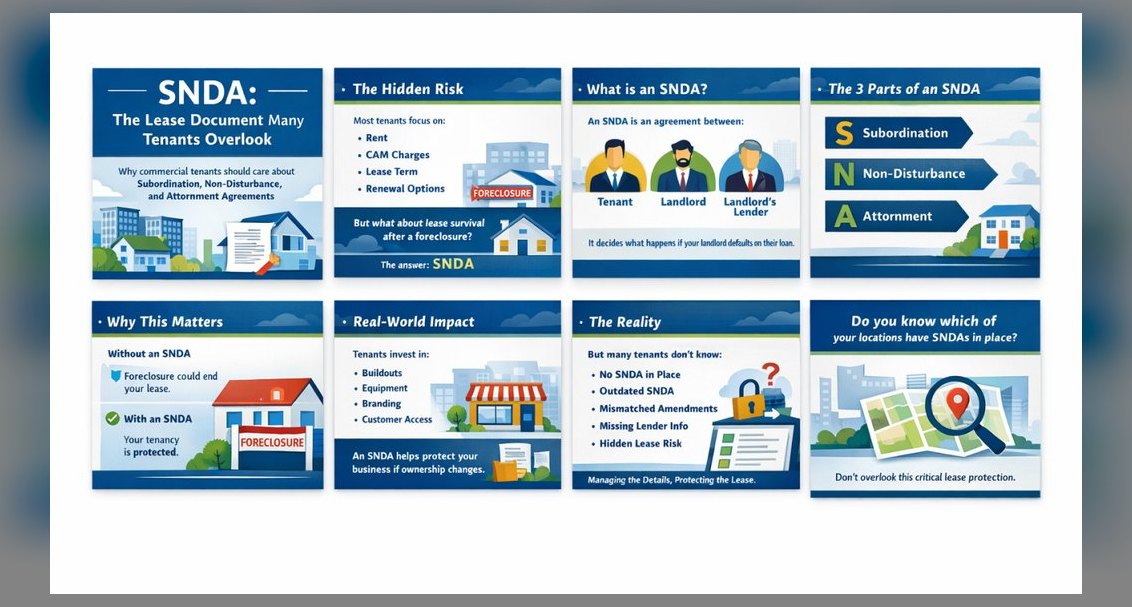
The lender-call eviction is subtler. If the landlord's mortgage prohibits cannabis use, the lender can force your eviction even when the landlord is happy — so demand a subordination, non-disturbance, and attornment agreement (SNDA) plus written confirmation that the landlord's loan actually permits cannabis. Then watch for the percentage-rent ambush, where a landlord stacks 5% to 10% of gross sales on top of an already-inflated base. If you accept any percentage rent, cap it at 3% to 5% above a high revenue breakpoint and kill the base premium in exchange — never pay both, and never let them audit your books without cause.

Two more. The deposit sitting in the landlord's operating account is a time bomb: a 6-to-12-month deposit in their checking account simply vanishes in a bankruptcy. Require it held in escrow or posted as a letter of credit that burns down over the term. And the vague odor or nuisance termination lets a landlord evict on a single neighbor complaint; tie any odor remedy to a defined engineering standard and a written cure period, not a subjective gripe. Finally, insist on a landlord default clause — most cannabis leases are one-sided, defaulting the tenant for losing a license while imposing no penalty if the landlord loses the property's zoning approval, fails to cure a code violation that shuts you down, or refuses to sign a required estoppel. The remedy should be rent abatement until cured plus the right to terminate without penalty after 30 days. Without it, a landlord can let the roof leak, claim you're in breach for not operating, evict you, and keep your $300,000 buildout.
The numbers that actually move the deal
Boil the whole negotiation down to a short scorecard you can hold in your head across a dozen counteroffers. On premium, target 1.3x to 1.5x comparable non-cannabis retail and walk from anything over 2x that isn't offset by serious concessions. On free rent, treat 6 to 12 months as the floor, because it maps directly onto the licensing runway when you have no revenue. On tenant improvements, aim for $50 to $100 per square foot in cash, or the same amount amortized at a capped 7% to 9%, with a rolling credit for unspent dollars.

On the deposit, expect the industry-standard 6-to-12-month ask, but only concede it held in escrow or as a burn-down letter of credit, and never behind a personal guarantee. On term, structure 10 years plus two five-year options with 2% to 3% fixed escalations — you're buying rate certainty and protecting a $250,000-to-$600,000 buildout that you'd forfeit in a short-term deal. Keep those five numbers on a single page during every meeting. When a landlord moves you off one, make them give ground on another, and treat any deal that fails three or more of them as a walk. Discipline on this scorecard, more than any single clever clause, is what keeps you from getting gouged.
Related questions
What is a fair cannabis rent premium over standard retail?
A defensible premium runs about 25% to 50% over comparable non-cannabis retail in the same submarket — roughly 1.3x to 1.5x. Landlords routinely quote 2x to 3x by exploiting green-zone scarcity. Demand local retail comps, justify every dollar above 1.5x, and walk from unjustified premiums without offsetting concessions.
When should cannabis rent legally start?
Rent should commence on license issuance, never at lease signing or delivery of premises. Licensing takes 9 to 18 months, and a rent clock that starts early can cost $300,000-plus on an empty box. Pair the commencement trigger with a 12-to-15-month outside-date kill switch that returns your deposit.
Should I ever sign a personal guarantee on a cannabis lease?
Generally no. A personal guarantee ties you to outcomes you don't control — chiefly a licensing decision made by a government agency. The industry-standard trade is a larger security deposit, ideally 6 to 12 months held in escrow or as a burn-down letter of credit rather than the landlord's operating account.
What's the most dangerous clause in a cannabis lease?
The federal-forfeiture indemnity, which can make you cover the landlord's entire property if the DEA ever acts — potential exposure in the millions. Cap your indemnity strictly to your own leasehold interest and your own conduct, and strike any "violates any federal law" termination trigger, replacing it with state and local law.
Do I need a cannabis-specialized attorney?
Yes. A general commercial real estate attorney can miss cannabis-specific pitfalls: forfeiture indemnities, "any federal law" termination clauses, lender-consent and SNDA requirements, odor standards, and licensing contingencies that protect your runway. Expect $300 to $600 per hour — far cheaper than a lease that forces you to close.
FAQ
What is a fair rent range for a cannabis dispensary lease?
Base rents vary widely by market but commonly run from $15 to $50 per square foot annually in most legal states, plus $5 to $15 in triple-net charges for taxes, insurance, and maintenance. The real test isn't the absolute number — it's the ratio to local non-cannabis retail. If your landlord wants more than about 2x comparable retail rent, you're likely being gouged and should push back with comps.
Should I accept a percentage rent clause?
Only if you have to, and only capped. Landlords often push for 6% to 8% of gross from the first dollar, which can crush margins. If you accept any percentage rent, cap it at 3% to 5% above a high breakpoint — for example, only on revenue past $2 million — and refuse any base-rent premium on top of it. Never grant unrestricted audit rights over your books.
How much tenant improvement allowance is reasonable?
A typical dispensary TI allowance runs $30 to $80 per square foot, with $50 to $100 being a strong ask in competitive markets. Because a compliant buildout costs $250 to $600 per foot, you'll fund much of it regardless — so prioritize getting the allowance toward security, HVAC, and vault reinforcement, and negotiate a rolling credit so unspent dollars aren't forfeited under "use it or lose it" terms.
Can I negotiate the lease term and renewal options?
Yes, and you should. Aim for a 5-to-10-year initial term with two or three five-year renewal options. Longer terms de-risk the landlord's asset, which you can trade for a lower base rate. Lock renewal escalations at a fixed 2% to 3% annually rather than a "fair market" reset, because at renewal you've already built out the space and have the least leverage to move.
What hidden costs should I watch for?
Common gouges include "management fees" of 2% to 5% of gross sales, mandatory use of the landlord's contractors, and CAM reconciliation clauses that quietly bill you for capital improvements like a new roof or parking lot. Insist on a clear, closed list of pass-through expenses, a cap on annual CAM increases of around 5%, and the right to audit the landlord's reconciliation.
How do I protect my deposit and buildout if the landlord defaults?
Require the security deposit in escrow or as a burn-down letter of credit, never in the landlord's operating account where a bankruptcy erases it. Add a landlord default clause that triggers if the property loses cannabis zoning, the landlord fails to cure a code violation that closes you, or they won't sign a required estoppel — with rent abatement and a right to terminate after a 30-day cure window.
Sources
- https://www.cbre.com/insights — CBRE market insights and retail leasing advisory, including cannabis-sector coverage.
- https://www.us.jll.com/en/industries/cannabis — JLL Cannabis Real Estate practice reports on green-zone scarcity and lease structuring.
- https://www.cushmanwakefield.com/en/united-states — Cushman & Wakefield advisory on retail leasing, tenant improvements, and specialized buildouts.
- https://www.naiop.org/research-and-publications — NAIOP commercial real estate development and lease-risk research.
- https://www.boma.org — BOMA International building-operations standards relevant to HVAC, security, and CAM.
- https://www.icsc.com — ICSC research on retail percentage-rent, use-clause, and lease norms.
- https://www.mpp.org/states — Marijuana Policy Project state-by-state licensing and regulatory timelines.
- https://www.dol.gov/agencies/whd — federal reference for lease-related compliance context.
- https://www.sba.gov/business-guide/manage-your-business/buy-lease-commercial-space — SBA guidance on leasing versus buying commercial space.
Related on PULSE
- [How Do I Negotiate a Lease and Buildout for Cannabis Cultivation?](/knowledge/bo0197)
- [How Do I Do a Sale-Leaseback Without Getting Burned?](/knowledge/bo0042)
- [How Do I Get Out of a Commercial Lease Early Without Paying a Fortune?](/knowledge/bo0010)
- [How Do I Budget a Restaurant Buildout Without Overspending?](/knowledge/bo0053)
- [How Do I Avoid Getting Overcharged on Utilities in a Lease?](/knowledge/bo0092)
- [How Do I Avoid Getting Screwed on a Ground-Up Build-to-Suit?](/knowledge/bo0082)
This page will be disappearing soon. Save it to your device for $1 — or read it free while it is here.
@Kory-White- · if Venmo asks, the last 4 of my number are 2012
 buildoutsWhat Hidden Fees Show Up in Commercial Leases?
 buildoutsWhat Is a Tenant Improvement Loan and Should I Use One?
 buildoutsHow Do I Avoid Getting Stuck Restoring the Space at Move-Out?
 buildoutsShould I Take My TI Allowance as Cash or Let the Landlord Amortize It Into Rent?
 buildoutsHow Do I Avoid Construction Delays That Cost Me Rent?
 buildoutsHow Do I Avoid Getting Screwed on a Ground-Up Build-to-Suit?
 buildoutsWhat Is an SNDA and Why Do I Need One?
 buildoutsHow Do I Structure Rent for a Seasonal Business?
 buildoutsHow Do I Phase a Buildout to Spend Less Cash Up Front?
 buildoutsHow Do I Structure a Lease With an Option to Purchase?