
How Do I Negotiate a Lease and Buildout for a Cigar or Hookah Lounge?
 Curated byKory White · Fractional CRO · Maryland
 PULSEKNOWLEDGE LIBRARY
Negotiate the lease and buildout for a cigar or hookah lounge as a ventilation project first: confirm in writing that zoning, building code, and the landlord all permit indoor smoking with rooftop exhaust. Then extract 6–10 months free rent and a $30–$70/sq ft tenant improvement allowance, since single-use smoking spaces are hard to re-let.
The end-to-end buildout process
The critical path for a cigar or hookah lounge is not design or decor — it is proving the space can legally hold smoke before you spend a dollar on finishes. Sequence the work so that every dependency clears before the next one incurs cost. Start with a zoning and smoking-exemption confirmation from the municipality: many jurisdictions ban indoor smoking but carve out a tobacco-retail or "cigar bar" exemption tied to a revenue threshold (often 10–15% of gross from on-site tobacco sales) and a licensing date. Get the specific exemption citation in writing before you sign a letter of intent, because if the exemption does not cover your business model, no lease clause can save the deal.
Once the exemption is confirmed, run parallel tracks: a landlord-consent track (roof rights, penetrations, use clause) and a technical-feasibility track (a mechanical engineer confirms the roof can carry exhaust fans and makeup-air units and that you can achieve the required air changes per hour). Only after both clear do you sign the lease and start permitted construction. A cigar or hookah lounge buildout typically runs 3–6 months, dominated by permitting and rooftop HVAC lead times, so negotiate rent abatement that spans the entire construction window plus a buffer to certificate of occupancy.
Do not let the general contractor mobilize before the permit set reflects the negotiated smoking use — a common failure is building to a generic "lounge" permit, then discovering at inspection that the exhaust design was never reviewed for a smoking occupancy. That triggers a redesign, a re-permit, and weeks of paid-but-idle rent.
Roles: landlord, tenant, general contractor, and architect
Each party in a commercial smoking-lounge deal has a distinct lever, and knowing who controls what keeps you from negotiating the wrong point with the wrong person. The landlord controls roof access, penetrations, the use clause, the tenant improvement allowance, and whether neighboring leases can veto your smoke. Push the landlord hard on the TI allowance and free rent, because a smoking lounge is a single-use space the landlord will struggle to re-let — that difficulty is your leverage. Insist the landlord bear or split roof-penetration costs (often $10,000–$30,000) and provide a representation that no other tenant's lease prohibits odor or smoke migration from your premises.
The tenant — you — controls the use case, the timeline, and the willingness to walk. Your strongest position is a clean, documented smoking exemption and a credible mechanical plan; that makes you the rare tenant who can actually occupy a difficult space, which justifies your demands for allowance and abatement. Keep the right to terminate if the landlord cannot deliver roof rights or if the smoking exemption changes.
The general contractor controls the buildout budget and change-order exposure. Because ventilation-heavy work with roof penetrations routinely generates 10–18% in change orders, negotiate a guaranteed maximum price (GMP) contract rather than cost-plus, cap the contractor's markup on changes at 12–15%, and require written approval on any change order over $2,500. Hold 10% retainage until a third-party test-and-balance report proves the air system performs.
The architect and mechanical engineer control whether the design is code-legal and comfortable. Retain a mechanical engineer who has done smoking occupancies specifically — the exhaust and makeup-air sizing, negative-pressure strategy, and filtration selection are specialized. Their stamped drawings are what the fire marshal and building department review. Structure their contract so they own the performance specification: the room must hold negative pressure relative to adjacent spaces and hit 20–30 air changes per hour for a cigar lounge or 30–40 for a hookah lounge. The architect coordinates finishes, egress, ADA restrooms, and assembly-occupancy fixture counts. Align the contracts so the engineer's performance spec flows directly into the GC's GMP — a misalignment here is where under-sized ductwork and failed inspections come from.
Real cost ranges and contingencies
For a typical 3,000-square-foot cigar or hookah lounge, plan a total buildout of $250,000 to $1.2 million, roughly $120–$300 per square foot. The single largest line item is the ventilation and air-handling package. Dedicated exhaust fans, makeup-air units, and electrostatic or HEPA-plus-carbon filtration run $40,000–$150,000; roof penetrations, curbs, and ductwork add another $15,000–$40,000; and the conditioning HVAC — separate from the smoke exhaust, because you are heating and cooling a large volume of makeup air — runs $30,000–$80,000. Treat these three as one system when you budget, because under-funding any of them causes the whole thing to fail its test and balance.
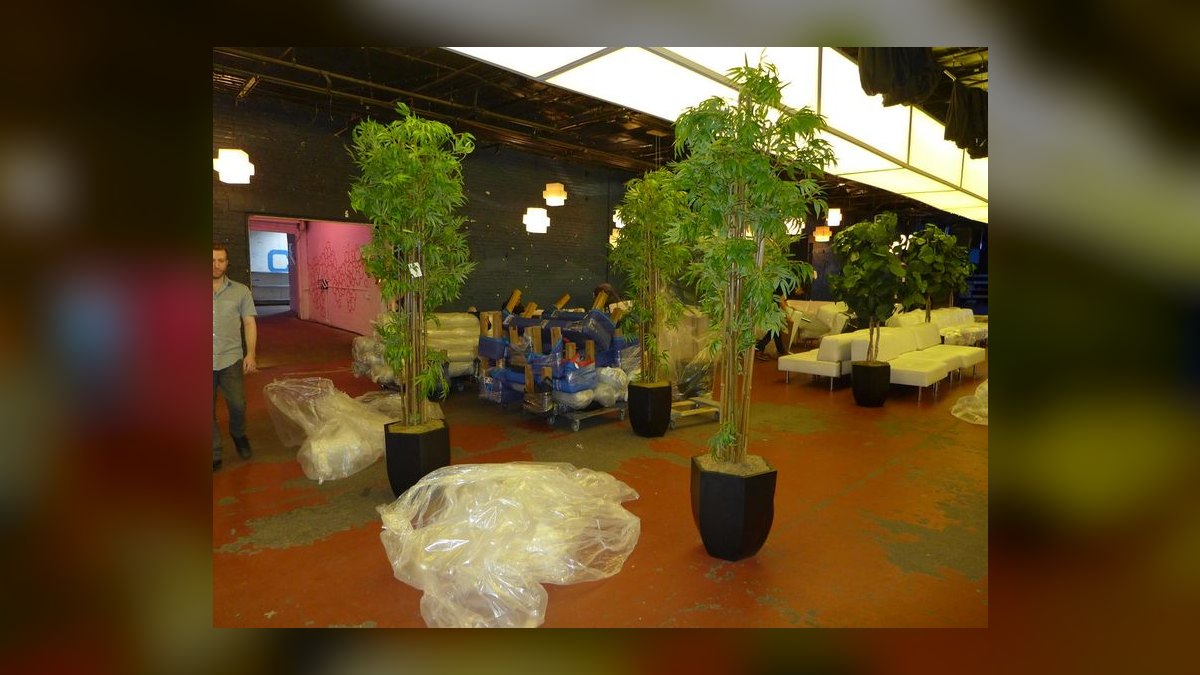
A walk-in humidor for a cigar concept costs $20,000–$80,000: climate control holding roughly 70°F and 70% relative humidity, Spanish cedar shelving, and a vapor barrier. It doubles as your highest-margin retail display. The bar and lounge service area runs $25,000–$120,000 depending on whether you carry beer and wine or a full bar; keep it a non-cooking servery to avoid triggering a commercial kitchen hood and grease trap, which sharply raises cost and lengthens permitting. Seating, smoke-resistant finishes, millwork, and member lockers or private humidors add $50,000–$180,000. Electrical, lighting, ADA restrooms, and assembly-occupancy work add $40,000–$120,000, including dedicated circuits for the large fans. Fire suppression, alarms, and fire-rated separation between your unit and neighbors run $15,000–$50,000.
On top of hard costs, carry a real contingency. Set aside 12–18% for change orders on the mechanical and roof scope specifically, and a separate soft-cost line for permit fees, the mechanical engineer, expediting, and impact fees. Fund the TI allowance intelligently: negotiate a TI amortization option where the landlord fronts the buildout and you repay it over the term at roughly 7–9% interest, which preserves your capital for inventory and the membership program. Do not front the entire buildout in cash if amortization is available — the ventilation system is a fixture that benefits the landlord's building, so it belongs partly on the landlord's balance sheet.
Common commercial pitfalls
The most expensive mistakes on a cigar or hookah lounge are legal and structural, not aesthetic. First, a generic use clause. A "retail/lounge" permitted-use line leaves you exposed the moment a neighbor complains about odor; you need language that explicitly states "Tenant may operate a cigar/hookah lounge with indoor smoking, including installation and operation of dedicated exhaust and air-filtration systems," plus a landlord representation that no other lease prohibits smoke or odor from your premises. Without it, the landlord can side with the complaining neighbor and effectively shut you down.
Second, silence on roof rights and surrender. If the lease says nothing about roof penetrations, the landlord can charge you for the privilege after you are committed. And if the surrender clause is standard, you can face a $50,000–$100,000 restoration bill to rip out ductwork, fans, and fire-rated construction at lease end — for infrastructure the next tenant may actually want. Negotiate that the landlord accepts the space as-is at expiration, with removal obligations capped or waived.
Third, smoke-law and insurance risk. Indoor-smoking regulation changes. Build in a smoke-law termination clause letting you exit without penalty if a new local, state, or federal rule bans indoor smoking or imposes compliance costs above a set threshold (for example $50,000), and extend it to insurance: if your liability premium jumps more than 25% in a year due to smoke-related claims, you can terminate on 60 days' notice.
Fourth, relocation exposure. A lounge's ventilation is custom-built for one specific footprint. If the landlord's standard relocation clause lets them move you within the complex, you are rebuilding the entire exhaust system on their timeline. Negotiate that any relocation is landlord-funded — all HVAC re-engineering, ductwork demolition and reinstallation, plus a business-interruption credit — or carries a $20,000–$50,000 relocation allowance or 6–12 months of replacement free rent.
Fifth, paying rent during a build you cannot open. Tie rent commencement to the certificate of occupancy, not to lease execution or a fixed date, so a permitting or rooftop-HVAC delay does not put you on the hook for a space you legally cannot use.
Negotiation checklist
Work the deal in a fixed order so no term gets signed before its predecessor is locked. The gating question is always the same: can smoke leave this building legally and can the landlord let it? Everything else is price. Use the flow below as your term-sheet sequence — confirm the exemption, secure roof and use rights, then trade on allowance, free rent, and protective clauses, and only then commit to a GMP construction contract with an enforceable air-performance spec.
Attach dollar figures and deadlines to every box before you initial the letter of intent. Vague intent — "landlord to reasonably cooperate on roof access" — is worthless once construction pricing comes in. Name the allowance per square foot, the number of abated months, the retainage percentage, the air changes per hour, and the negative-pressure requirement directly in the lease and work letter, so the general contractor and mechanical engineer are building to a contractual standard you can enforce.
Related questions
How long does a cigar or hookah lounge buildout take?
Most lounge buildouts run 3 to 6 months, driven mainly by permitting and rooftop HVAC lead times. Negotiate rent abatement across the entire construction window plus a buffer to certificate of occupancy, so you never pay for a space you cannot yet legally open.
Do I need a commercial kitchen in a hookah lounge?
Usually no. A small non-cooking servery for beverages and light snacks avoids triggering commercial kitchen hood and grease-trap requirements, which sharply lowers your buildout cost and simplifies permitting. Add a full kitchen only if food is central to your revenue model.
Can a landlord ban smoking after I sign the lease?
Not if your use clause explicitly permits indoor smoking and ventilation and includes a landlord representation that no other tenant's lease prohibits smoke or odor from your premises. Lock that language in before signing; a generic lounge clause leaves you exposed to a later shutdown.
Is a walk-in humidor required for a hookah-only lounge?
No. Humidors preserve premium cigar inventory. A hookah-focused lounge instead invests in per-session shisha service, coal management, and higher air changes per hour, redirecting that capital toward ventilation and seating rather than a climate-controlled cigar room.
FAQ
What is the single most important thing to negotiate in a cigar or hookah lounge lease? The ventilation and exhaust rights. Secure explicit written permission for rooftop exhaust fans, makeup-air units, and roof penetrations, plus a use clause naming indoor smoking. Without those, the buildout cannot pass inspection and the lounge cannot operate legally, so every other term is meaningless until this is locked.
How much tenant improvement allowance should I ask for? A realistic range is $30 to $80 per square foot, and you should push toward the high end given heavy HVAC, smoke-eater, and fire-suppression costs that can exceed $150,000. Pair the allowance with an amortization option so the landlord fronts the buildout and you repay it across the lease term.
What lease term should I target? Landlords typically want 5 to 10 years given the specialized buildout. Aim for a 5-year initial term with two 5-year renewal options; that protects your investment, amortizes the buildout, and gives you flexibility if smoke laws shift. Shorter 3-year terms exist but make TI funding harder to secure.
Should I worry about triple-net (NNN) expenses? Yes. Lounges carry higher utility and maintenance loads from continuous exhaust operation. Negotiate a cap on annual controllable NNN increases of 3% to 5%, clarify which expenses pass through, and consider a base-year structure where you pay only increases above the first year's operating costs.
How do I protect against a neighbor complaining about smoke? Get a landlord representation that no other lease in the building prohibits smoke or odor from your premises, request estoppels from adjacent tenants confirming no objection, and include an indemnity protecting you if a neighbor complaint forces a shutdown. Combine that with a filtration and negative-pressure design that prevents migration.
What is the best way to finance the buildout? Negotiate a TI amortization option where the landlord funds the buildout and you repay over the term at roughly 7–9% interest, preserving cash for inventory and the membership program. Alternatively, pursue an SBA 504 or 7(a) loan, which offer lower rates and longer terms suited to a specialized lounge fit-out.
Sources
- CBRE, *U.S. Construction Cost Trends*
- JLL, *Retail and Hospitality Fit-Out Cost Guide*
- Cushman & Wakefield, *Office and Retail Fit-Out Insights*
- RSMeans (Gordian), *Building Construction Cost Data*
- NAIOP, *Research and Publications*
- BOMA International, *Standards and Guidelines*
- ASHRAE, *Standard 62.1 — Ventilation for Acceptable Indoor Air Quality*
- U.S. Small Business Administration, *504 and 7(a) Loan Programs*
Related on PULSE
- [Can I negotiate a lease that converts my buildout allowance into equity in the building?](/knowledge/bo0315)
- [How do I negotiate a lease that allows me to recoup buildout value upon sublease](/knowledge/bo0288)
- [How Do I Negotiate a Lease and Buildout for a Daycare?](/knowledge/bo0115)
- [How Do I Negotiate a Lease and Buildout for a Tattoo Studio?](/knowledge/bo0139)
- [How Do I Negotiate a Lease and Buildout for a Vape or Smoke Shop?](/knowledge/bo0211)
- [How Do I Negotiate a Lease and Buildout for a Private or Charter School?](/knowledge/bo0190)
This page will be disappearing soon. Save it to your device for $1 — or read it free while it is here.
@Kory-White- · if Venmo asks, the last 4 of my number are 2012
 buildoutsHow Do I Budget an Imaging Center (MRI/CT) Buildout?
 buildoutsHow Do I Budget a Trampoline Park Buildout?
 buildoutsHow Do I Budget a Vertical Farm or Indoor Ag Buildout?
 buildoutsHow Do I Budget a Dialysis or Infusion Center Buildout?
 buildoutsHow Do I Budget a Comedy Club or Live-Music Venue Buildout?
 buildoutsHow Do I Negotiate a Lease and Buildout for a Private or Charter School?
 buildoutsHow Do I Budget a Nightclub Buildout?
 buildoutsHow Do I Budget an Industrial Laundry Buildout?
 buildoutsHow Do I Budget a Martial Arts Dojo Buildout?
 buildoutsHow Do I Budget a Data Center or Colocation Buildout?