
How Do I Budget an Optometry Office With an On-Site Lab?
 Curated byKory White · Fractional CRO · Maryland
 PULSEKNOWLEDGE LIBRARY
To budget an optometry office with an on-site lab, allocate between $300,000 and $550,000 for a 2,500-square-foot practice, with costs driven by fully equipped exam lanes ($35,000–$80,000 each) and the finishing lab ($40,000–$120,000 for edging equipment). The financial case for the in-house lab rests on capturing wholesale margins of $15,000–$70,000 annually while offering same-day glasses that close sales against online competitors. Negotiate tenant improvement allowances of $50–$100 per square foot and 6–9 months of free rent to offset the high upfront equipment costs and extended medical permitting timelines. A medical-equipment planner should verify electrical service, floor loading, and plumbing before any lease is signed, as retrofitting these for lab operations can add $20,000–$50,000 in unplanned expenses.
How Much Does Each Component of the Optometry Office Cost?
Breaking down the budget by functional area reveals where your capital will be concentrated and where cost-saving opportunities exist. For a typical 2,500-square-foot practice with two to three exam lanes and a full on-site finishing lab, the following estimates provide a realistic framework:
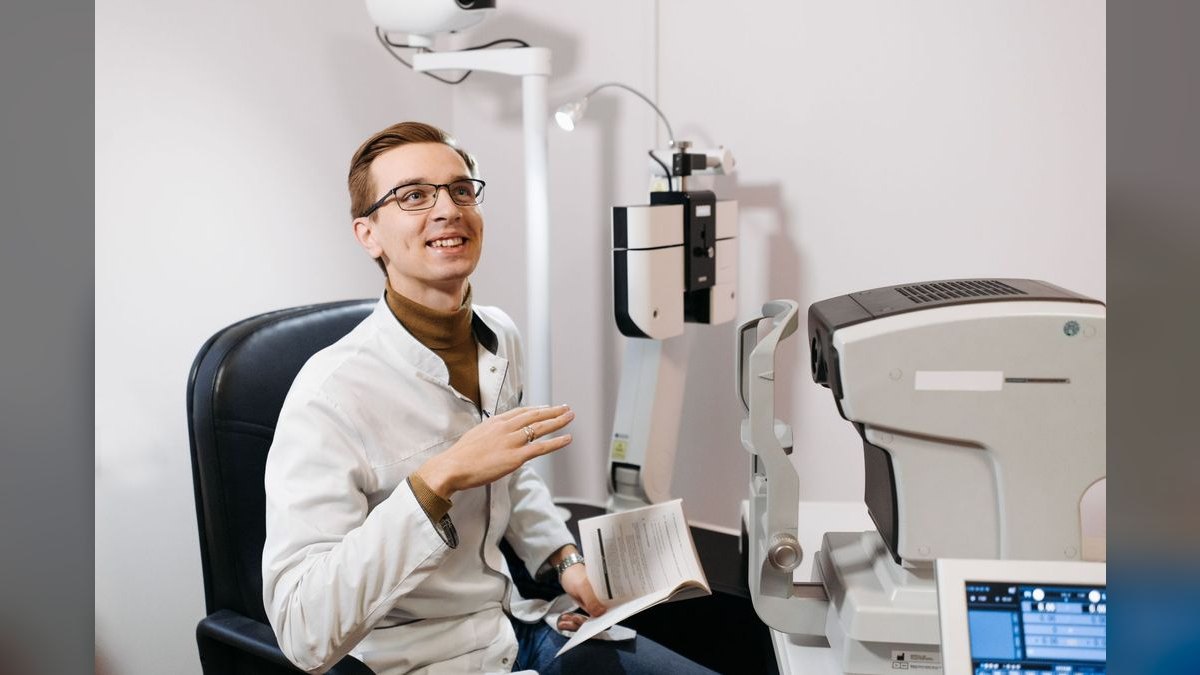
Exam lanes (2–3): $70,000–$240,000. Each fully equipped lane includes a chair-and-stand ($8,000–$20,000), phoropter ($3,000–$9,000), slit lamp ($6,000–$15,000), and a digital acuity system. The lane rooms themselves require controlled lighting that can dim to near-dark and proper sound separation to ensure patient privacy during examinations. Wiring for these rooms often needs dedicated circuits to handle the electrical load of multiple instruments simultaneously.
Pre-test and diagnostic room: $40,000–$150,000. This area houses an auto-refractor, non-contact tonometer, optical coherence tomography (OCT) unit ($30,000–$80,000 alone), and a visual field analyzer. These instruments are sensitive to power fluctuations, so a dedicated, surge-protected circuit is non-negotiable. The room should also have controlled lighting and enough floor space for patient movement around the equipment.
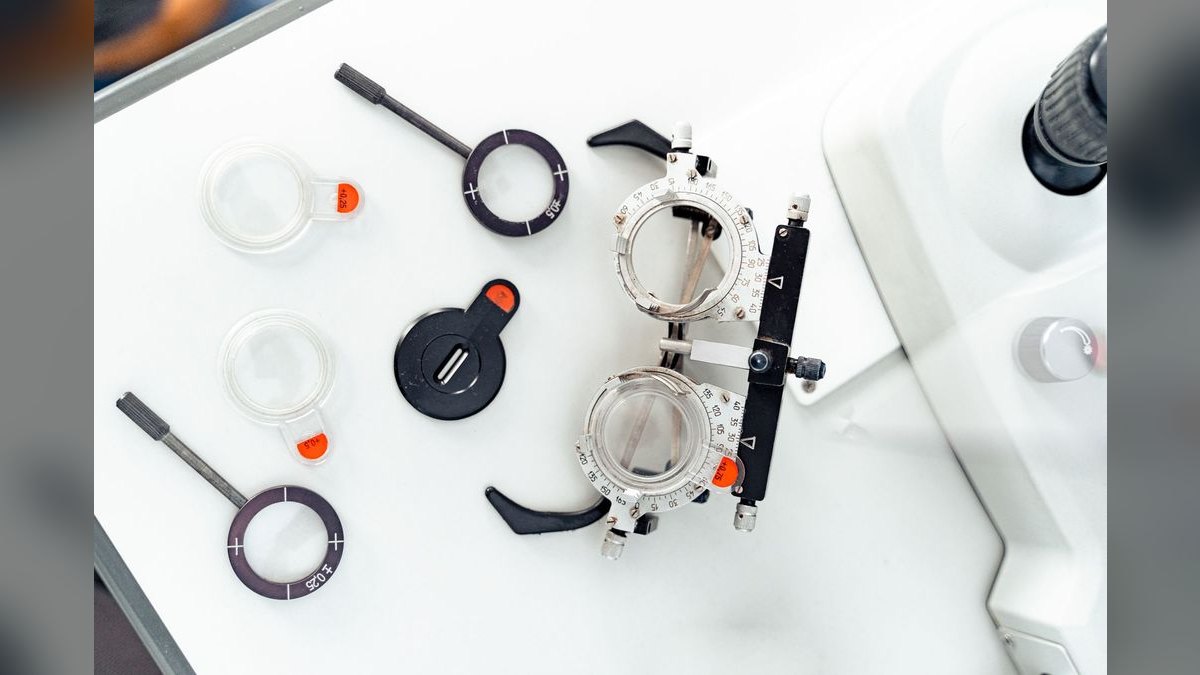
On-site finishing lab: $40,000–$120,000. The core lab setup includes an edger, tracer, blocker, lensometer, frame warmer, and tinting station. Beyond the visible equipment, the lab requires dedicated 20-amp circuits, compressed air or water supply for the edger, and a drain that can handle fine debris. Ventilation and dust collection systems add $2,500–$6,000, while water filtration for wet edgers costs $800–$2,500. These infrastructure elements are frequently overlooked in initial estimates but are essential for daily operation.
Optical dispensary and retail frame display: $25,000–$70,000. This is your highest-margin retail zone, so investment in lit frame boards, dispensing tables, mirrors, and a point-of-sale system is justified. The dispensary layout should encourage patient browsing while allowing staff to easily access inventory. Good lighting here directly impacts frame sales, as patients see colors and details accurately.
Reception, waiting, and contact-lens area: $20,000–$50,000. This space sets the first impression for patients. Comfortable seating, a reception desk with computer workstation, and storage for contact-lens inventory are the primary costs. Consider adding a small consultation area for contact-lens training and fitting.

Medical-grade finishes, HVAC zoning, ADA compliance, and signage: $40,000–$90,000. Medical use often requires added HVAC tonnage to handle the heat load from exam equipment and the lab. Additional restroom facilities and full ADA compliance are mandatory. Signage both inside and outside the suite must meet local codes and brand standards.
What Are the Hidden Infrastructure Costs That Derail Lab Budgets?
The visible lab equipment—edger, tracer, blocker—is only half the story. The hidden infrastructure to support an on-site finishing lab often adds $15,000–$45,000 to your budget before a single lens is cut. These costs are frequently overlooked in initial estimates and can stall your timeline if not planned.
Ventilation and dust collection: Lens edging generates fine acrylic and polycarbonate dust. A basic commercial-grade dust collection system runs $2,500–$6,000, plus ductwork installation at $1,500–$4,000. Without it, dust settles on exam equipment and creates a health hazard for staff. Some local codes require dedicated exhaust for lab areas—factor $3,000–$8,000 for that. The dust also accumulates in HVAC systems, potentially damaging equipment and reducing air quality for patients.
Plumbing and water filtration: Wet edgers need a constant water supply for cooling and flushing. You'll need a water filtration system ($800–$2,500) to prevent mineral buildup in the edger's internal components. Drainage must handle fine debris—a standard sink drain can clog within weeks. A dedicated debris trap or settling tank costs $600–$1,500. If your lab space lacks nearby plumbing, running lines from a restroom or janitor closet adds $2,000–$7,000. The drain line should be at least 2 inches in diameter to prevent blockages.
Electrical upgrades: Lab equipment often requires dedicated 20-amp circuits—sometimes 30-amp for industrial edgers. A typical exam room runs on one 15-amp circuit; adding a lab can require $1,500–$5,000 for new breaker panels, wiring, and outlets. Surge protection for sensitive digital equipment adds $300–$800. The electrical panel itself may need upgrading if the suite was originally designed for standard office use, adding another $2,000–$5,000.
Flooring and surface preparation: Lab areas need seamless, slip-resistant flooring that withstands chemical spills (lens cleaners, dyes). Epoxy or sheet vinyl runs $5–$12 per square foot installed—for a 200–400 square foot lab, that's $1,000–$4,800. If you're converting existing space, removing carpet or tile and leveling the subfloor adds $1,000–$3,000. The flooring must also be able to support the weight of edging equipment, which can exceed 200 pounds.
Pro tip: Have your equipment vendor provide a pre-installation checklist with specific electrical, plumbing, and ventilation requirements before signing a lease. Get a contractor to quote these line items separately—they're often buried in "general construction" allowances and can blow your budget by 10–20%. A medical-equipment planner can identify these needs during the initial walkthrough, saving you from costly surprises.
How Does the On-Site Lab Generate Revenue and Justify Its Cost?
The in-house finishing lab is the line item that turns an optometry office into a real business rather than a referral pad for outside labs. The financial argument rests on three pillars: same-day service, captured margin, and patient retention.

Same-day glasses become possible, which is a closing tool no online retailer can match. Patients who would otherwise comparison-shop online buy on the spot when they hear their glasses will be ready in one hour. This immediacy converts 15–30% more frame sales compared to practices that send work out. The psychological advantage of instant gratification cannot be overstated—patients leave with their purchase, eliminating buyer's remorse and the temptation to cancel orders.
You keep the lab margin. Sending jobs to a wholesale lab gives away $20–$60 per job in edging and finishing fees. At 15–25 jobs per week, in-house edging can capture $15,000–$70,000 per year that an outside lab would pocket. Over a five-year period, that margin alone can exceed $250,000, more than covering the initial equipment investment. The margin is even higher on progressive and specialty lenses, where wholesale markups are steeper.
Faster remakes and adjustments keep patients in your chair instead of waiting on a courier. A remake that takes 24 hours in-house might take 5–10 days through an outside lab. This speed protects your reputation and reduces the likelihood that patients seek care elsewhere. It also allows you to offer same-day adjustments for frames purchased elsewhere, building loyalty and driving future sales.

The lab also enables higher average transaction values. When patients know they can get glasses immediately, they are more willing to purchase premium lens options like anti-reflective coatings, blue-light filtering, and photochromic lenses. These upgrades carry 50–80% margins, compared to 20–30% on basic single-vision lenses. The lab captures this additional profit directly.
The catch: the lab needs dedicated power, compressed air or water, and proper drainage—get these onto the landlord's base-building scope, because retrofitting them later as a tenant cost runs $10,000–$30,000. Also budget for staffing, as a lab technician adds $25,000–$55,000 annually in labor costs.
What Lease Negotiation Strategies Protect the Lab Budget?
Your lease terms can make or break your lab budget. Landlords often treat lab spaces as "special use" and may add restrictions or costs. Three specific lease clauses to negotiate before signing:
HVAC capacity and separate metering: Lab equipment generates heat—a single edger can add 3,000–5,000 BTUs of heat load. Standard office HVAC (1 ton per 400 square feet) may be insufficient. Ask the landlord to upgrade HVAC for the lab area or provide a separate mini-split system (cost: $3,000–$8,000, which you can negotiate as a tenant improvement). More importantly, negotiate separate electric metering for the lab—it runs 8–12 hours daily and can add $150–$400 per month to your utility bill. Without separate metering, you're subsidizing other tenants' usage.
Waste disposal and chemical storage: Lens edging produces plastic shavings, filter waste, and small amounts of lens dye or cleaner chemicals. Some landlords prohibit "industrial waste" in standard trash. Negotiate a clause allowing proper disposal of non-hazardous lab waste—or request a dedicated dumpster or waste bin at $50–$150 per month. Also confirm you can store up to 5 gallons of lens cleaners and dyes in a locked cabinet—some leases restrict chemical storage to janitorial supplies only.
Hours of operation and noise restrictions: Running an edger at 7 AM or 7 PM may violate "quiet hours" clauses in multi-tenant buildings. Negotiate 24/7 lab operation rights or at least a 2-hour buffer before and after normal business hours for rush jobs. If the lab is near shared walls, ask the landlord to install acoustic insulation in the lab wall—cost is $1–$3 per square foot, but you can negotiate it as a TI credit.
The "lab use" disclosure: Some landlords require you to disclose all equipment and processes. Provide a list of your edger, tracer, and blocker (all less than 200 pounds each, no heavy machinery) to avoid being classified as "light manufacturing," which triggers higher rent ($2–$5 more per square foot in some markets). Get a written confirmation that your lab qualifies as "professional medical accessory use" under the lease—this keeps your rent at office rates, not industrial rates.
Pro tip: Hire a tenant rep broker who has negotiated optometry lab leases before. They'll know which landlords are lab-friendly and which will fight every modification. A good broker saves you $15,000–$40,000 in lease concessions and avoided buildout costs—their commission is paid by the landlord, not you. For more on lease strategies, see How Do I Negotiate an Office Lease in a Hybrid-Work Market?.
What Staffing and Training Budget Is Needed for Lab Operations?
An on-site lab only generates profit if someone can operate it efficiently. The labor cost for lab operations is frequently underestimated, especially in the first year. Plan for $25,000–$55,000 annually in lab-related staffing, depending on whether you hire a dedicated technician or train existing opticians.
Option 1: Hire a part-time lab technician—a skilled edger technician costs $18–$28 per hour (including payroll taxes and benefits). At 20–30 hours per week, that's $22,000–$43,000 per year. This is ideal if you anticipate 8–15 jobs per day. The technician can also handle frame adjustments and repairs, offsetting some cost.
Option 2: Train an existing optician—most opticians can learn basic edging in 2–4 weeks with manufacturer training. The cost is their regular salary ($20–$30/hour) plus $1,500–$4,000 for a formal training course and certification. However, they'll be slower initially—expect 10–20% reduced throughput for the first 3–6 months. Budget $3,000–$8,000 in "lost productivity" during the learning curve.
Option 3: Full-time lab manager—if you expect 20+ jobs daily, a dedicated manager at $45,000–$65,000 plus benefits is justified. They handle inventory, equipment maintenance, and quality control. This role typically saves $5,000–$12,000 per year in reduced breakage and waste.
Training costs you can't skip: Manufacturer training for your specific edger model costs $1,000–$3,000 (often included with equipment purchase, but verify). Annual refresher training or new software updates add $500–$1,500 per year. Cross-training a second staff member costs another $1,000–$2,500—essential for coverage during vacations or turnover.
The breakage factor: Inexperienced operators break 3–8% of lenses in the first 6 months, compared to 1–2% for veterans. At an average lens cost of $40–$80 each, that's $1,200–$6,400 in losses per year initially. Budget for this as a line item—it's a training cost, not a failure.
Related questions
How do I choose between a new and used edging machine for my lab?
Used edging equipment can cut costs by 30% to 50%, but budget $5,000 to $10,000 for servicing and calibration, and expect limited warranty coverage. New machines offer manufacturer support and the latest software but require a larger upfront investment.
What is the typical timeline for an optometry office buildout with a lab?
From lease signing to opening, expect 6 to 12 months, with delays often coming from permitting, equipment delivery, and lab installation. Add a 2-month buffer to your schedule to account for these variables.
How do I estimate monthly operating costs for the on-site lab?
Lab supplies, maintenance, and utilities add $2,000 to $5,000 per month, depending on patient volume and the number of jobs processed daily. Staff training and certification costs add $1,000 to $3,000 upfront.
Can I share lab space with another optometry practice to reduce costs?
Shared lab space is possible but requires a formal agreement covering equipment maintenance, supply costs, scheduling, and liability for breakage. Legal review is essential to avoid disputes over usage and financial responsibility.
What tax incentives exist for purchasing medical lab equipment?
Section 179 of the IRS tax code allows you to deduct up to $1,160,000 (2024 limit) of the cost of qualifying equipment in the year it is placed in service. Consult a tax professional to confirm eligibility and maximize deductions.
FAQ
How much does it cost to build an on-site edging lab? Lab equipment costs typically range from $30,000 to $80,000 for a basic edging setup, depending on whether you buy new or used. The space itself adds $15,000 to $30,000 for plumbing, ventilation, and electrical work.
What’s the biggest hidden expense in an optometry buildout? Permits and compliance with medical codes often surprise owners, adding $10,000 to $25,000 or more. You’ll also need to budget for specialty lighting and exam room wiring, which can run $5,000 to $15,000.
How much should I allocate for exam lane equipment? A single fully equipped exam lane costs between $40,000 and $80,000, including the chair, phoropter, and slit lamp. For a two-lane practice, plan on $80,000 to $160,000.
What’s a realistic timeline for the buildout? From lease signing to opening, expect 6 to 12 months. Delays often come from permitting, equipment delivery, and lab installation, so add a 2-month buffer to your schedule.
Can I save money by buying used lab equipment? Yes, used edging and finishing equipment can cut costs by 30% to 50%, but factor in $5,000 to $10,000 for servicing and calibration. Warranty coverage is limited, so inspect thoroughly.
How do I estimate monthly operating costs for the lab? Lab supplies, maintenance, and utilities add $2,000 to $5,000 per month, depending on patient volume. Staff training and certification can cost $1,000 to $3,000 upfront.
What is a tenant improvement allowance and how much should I ask for? A tenant improvement (TI) allowance is a landlord contribution to buildout costs, typically $50–$100 per square foot for medical suites. Negotiate based on the value your lab adds to the property.
Do I need a separate HVAC system for the lab area? Yes, lab equipment generates significant heat, and standard office HVAC may be insufficient. A separate mini-split system or upgraded zoning is recommended, costing $3,000–$8,000.
How do I protect my lab equipment from power surges? Install dedicated surge protectors on all lab circuits, costing $300–$800. Consider a whole-building surge suppressor for comprehensive protection of sensitive digital instruments.
What insurance do I need for the on-site lab? You'll need general liability, property insurance covering equipment, and professional liability for lens fabrication errors. Discuss with your insurance broker to ensure adequate coverage.
Sources
- CBRE — Healthcare and medical-office Tenant Improvement cost benchmarks
- JLL — Healthcare Real Estate and medical build-out cost reports
- Cushman & Wakefield — Healthcare Advisory and medical-suite TI guidance
- RSMeans (Gordian) — Medical-office construction unit cost data
- BOMA International — Medical office building operating-expense and CAM standards
- American Optometric Association (AOA) — Practice build-out and equipment planning resources
- Vision Council — Optical lab equipment and dispensary fixture cost guidance
- International Code Council (ICC) — Medical occupancy and accessibility requirements
- IRS — Section 179 Deduction for Medical Equipment
Related on PULSE
- [How Do I Budget a Cleanroom or Lab Buildout?](/knowledge/bo0196)
- [How Do I Budget a Call Center or BPO Office Buildout?](/knowledge/bo0191)
- [How Do I Budget an Orthodontics or Oral-Surgery Office Buildout?](/knowledge/bo0174)
- [How Do I Budget a Car Wash Site Buildout?](/knowledge/bo0114)
- [How Do I Budget a Medical or Dental Office Buildout?](/knowledge/bo0054)
- [How Do I Budget and Site a Self-Storage Facility?](/knowledge/bo0141)
This page will be disappearing soon. Save it to your device for $1 — or read it free while it is here.
@Kory-White- · if Venmo asks, the last 4 of my number are 2012
 buildoutsHow Do I Budget an Ice Cream or Gelato Shop Buildout?
 buildoutsHow Do I Budget and Site a Self-Storage Facility?
 buildoutsHow Do I Budget a Chiropractic Clinic Buildout?
 buildoutsWhat Is a Go-Dark Clause and Should I Fight for One?
 buildoutsHow Do I Budget a Veterinary Clinic Buildout?
 buildoutsHow Do I Budget a Print or Sign Shop Buildout?
 buildoutsHow Do I Budget a Garden Center or Nursery Buildout?
 buildoutsHow Do I Budget a Light Manufacturing Buildout?
 buildoutsHow Do I Budget a Sushi Restaurant Buildout?
 buildoutsHow Do I Budget a Dance Studio Buildout?